1. Context
2. Evidence Acquisition
3. Results
3.1. History
3.2. KISS1 Gene
| Activators | TTF1, CUX1-p200, Sp1, VIP, NKB |
| Suppressors | CUX1-p110, EAP1, YY1, Sp3, Eed, Cbx7, Prolactin |
3.3. Kisspeptin in the Hypothalamus
3.3.1. Kisspeptin and Gender Differentiation
3.3.2. Kisspeptin and Puberty
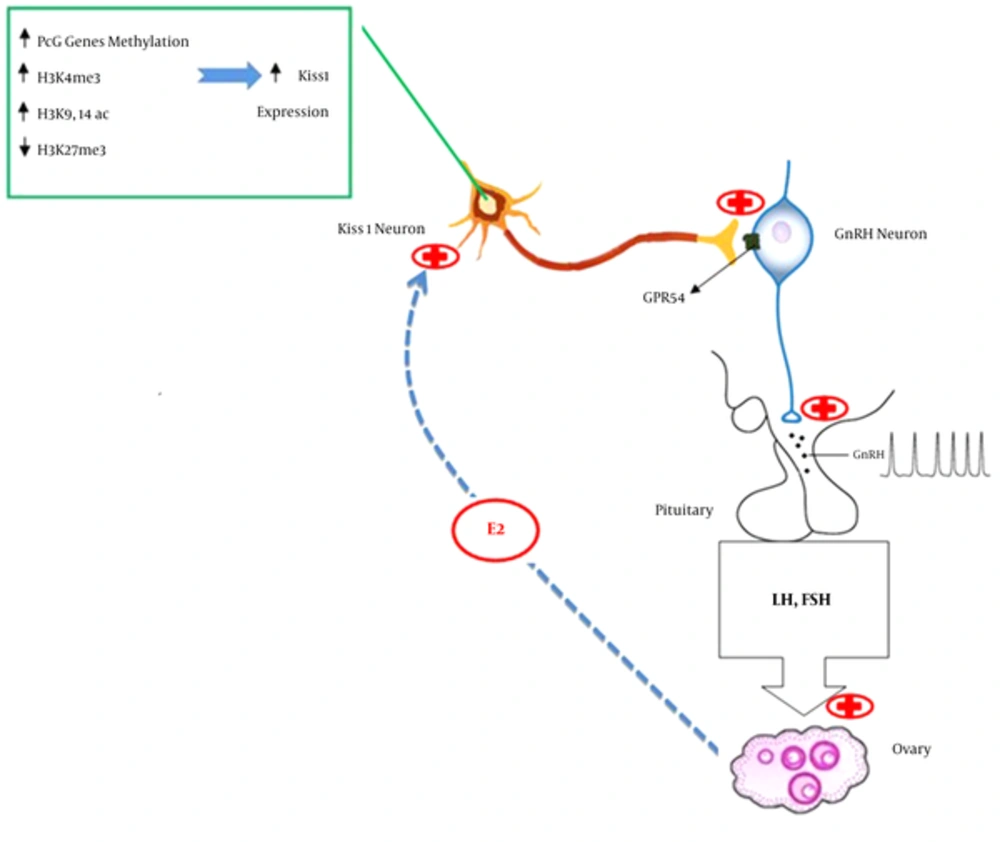
At around the time of pubertal onset, decreased expression of PcG proteins by DNA methylation along with histone 3 modifications increase Kiss1 mRNA expression resulting in elevated kisspeptin levels; this rise is accompanied by increased sensitivity to it and number of KISS1 neurons as well as enhancement of GPR54 signaling efficiency and expressio Abbreviations: PcG;Polycomb group, H3K9/14ac; Histon H3 acetylated at lysines 9/14, H3K4me3; Histon H3 trimethylated at lysine 4, H3K27me3; Histon H3 tri-methylated at lysine 27, E2; Estradiol.
3.4. Kisspeptin in the Pituitary
3.5. Kisspeptin in the Ovary
3.5.1. Kisspeptin and Ovulation
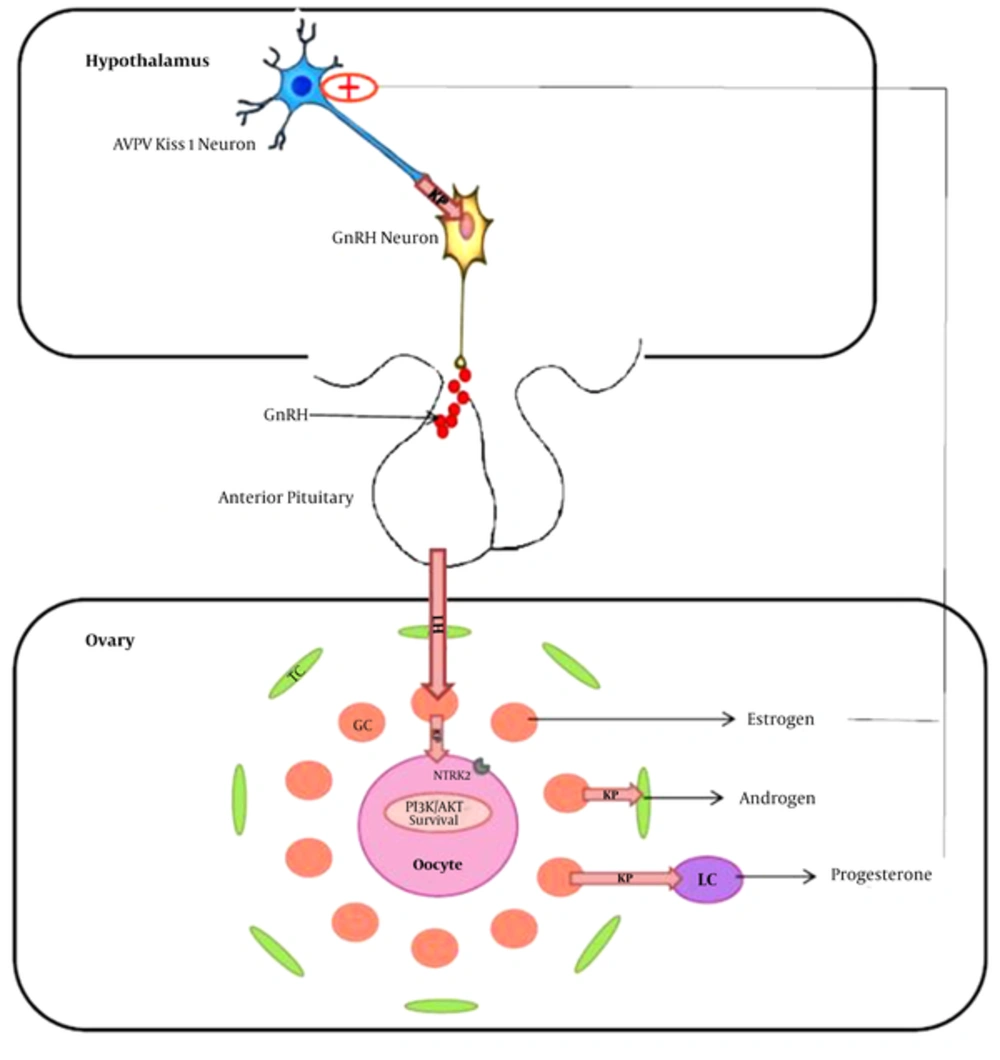
LH surge also induces the expression of the full length NTRK2 receptor, which with kisspeptin signaling drives oocyte survival through the PI3K/AKT pathway. In addition, kisspeptin stimulates steroid secretion by theca (TC) and luteal cells (LC).