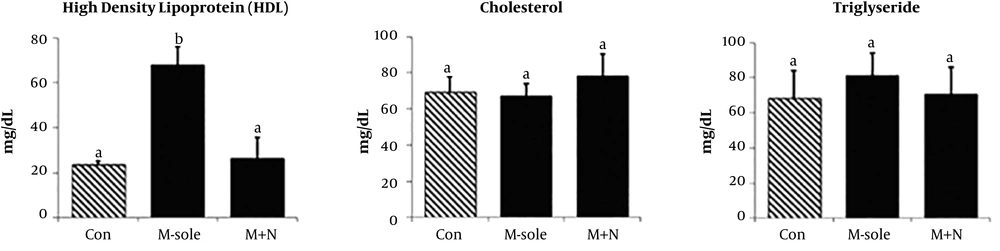
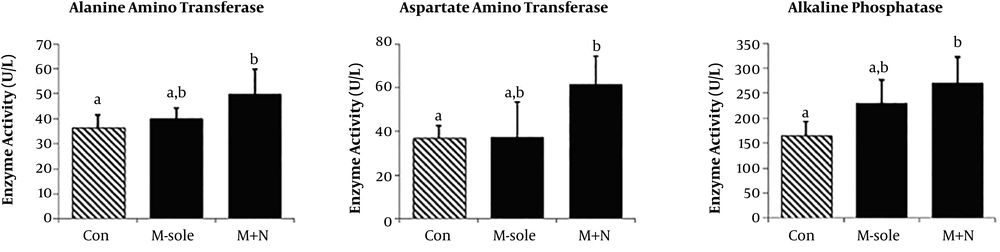
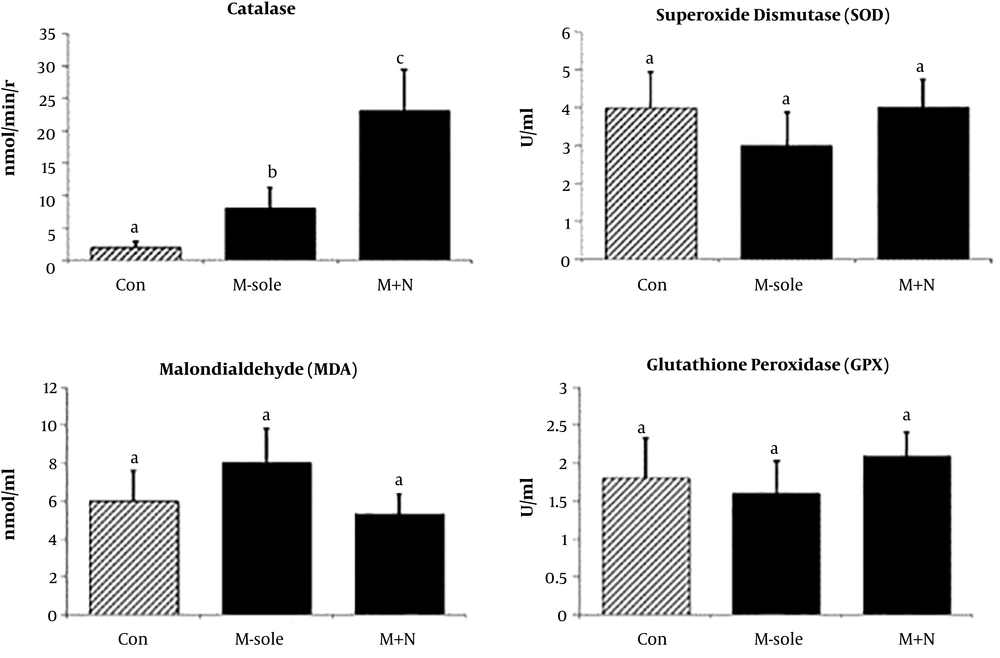
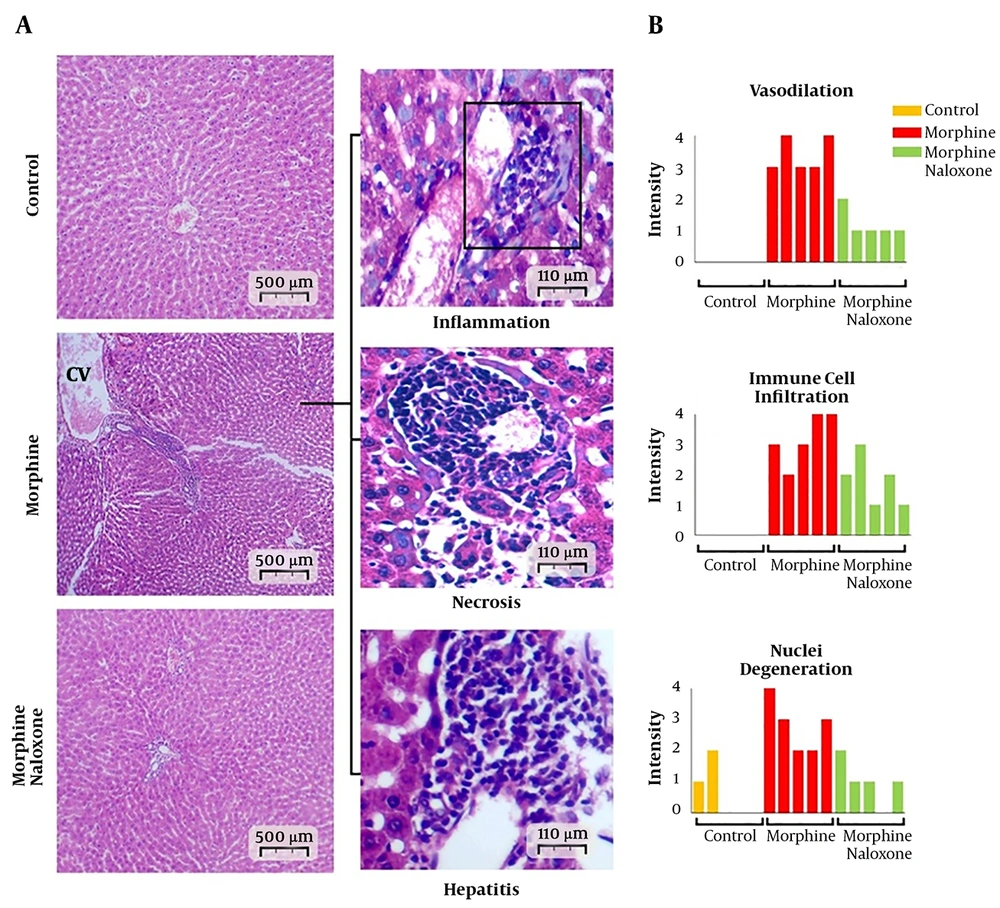
Our findings demonstrated that naloxone + morphine co-administration significantly decreased the morphine-mediated increase in HDL content. However, no significant changes were found in the serum cholesterol and TG levels in the groups. Also, the serum ALT, AST, and ALP levels increased in the morphine + naloxone group. Naloxone significantly up-regulated the serum CAT level, while the serum levels of MDA, SOD, and GPx did not significantly change in the morphine-sole and morphine + naloxone groups. Finally, morphine administration resulted in immune cell infiltration, nuclei degeneration, vasodilation, necrosis, and fibrosis in liver tissues. Although naloxone had no effects on serum parameters, it could fairly inhibit morphine-induced histopathological damages (
23,
24).
Morphine can temporarily diminish blood pressure while up-regulating the level of blood glucose and most blood lipids in a time-dependent manner. Moreover, the long-term use of morphine negatively affects these parameters and initiates and/or promotes aggravated diabetes, dyslipidemia, and hypertension (
25,
26). It should be noted that morphine indirectly reduces stomach-intestine movement and affects the homeostasis of cholesterol and HDL through this mechanism leading to fatty liver and corticosterone secretion (
12).
In this study, we evaluated hematological factors, including serum lipid profile. The morphine-treated animals showed significantly up-regulated serum levels of HDL, while the serum cholesterol and TG did not change significantly compared with the controls. In contrast, the morphine + naloxone group showed a significant decrease in the serum HDL level, with no change in other parameters. Therefore, we can suggest that 0.4 mg/kg/day of naloxone, when co-administrated with morphine (5 mg/kg/day), can converse the morphine-induced effects on the serum HDL level. In other words, morphine (at least at the administrated dose) does not affect the serum cholesterol and TG levels, while it can up-regulate the serum HDL level, possibly due to disruption in HDL hemostasis.
On the other hand, based on our findings, we can suggest that naloxone (even at the mentioned dose) could down-regulate the morphine-induced increase in HDL, possibly due to the amelioration of HDL homeostasis. Earlier studies have shown that morphine increases the serum cholesterol level in animals with inflammatory conditions compared with normal and healthy animals (
12). Concerning cholesterol and TG levels, since animals in this study were physiologically intact and no experimental inflammation was considered, morphine and naloxone did not affect the serum TG or cholesterol.
Considering the stimulatory effects of morphine on inflammatory enzyme activities in the liver, we measured the serum ALP, AST, and ALT levels. Biochemical analyses indicated a slight increase in the serum ALP, AST, and ALT levels in the morphine-sole group, which was insignificant. Naloxone caused a significant increase in the serum levels of hepatic enzymes than the morphine-sole and control groups. Our findings regarding the effect of morphine on the serum levels of these enzymes are contrary to previous reports indicating the stimulatory effect of morphine on ALP, AST, and ALT activities (
27-
29).
It should be noted that the administrated dose of morphine in the current study was lower (5 mg/kg/day) in comparison with other investigations (10 and 20 mg/kg). Therefore, concerning the lower dose of morphine in our study, we can suggest that higher doses of morphine and/or longer exposure are necessary to characterize the impact of morphine on inflammatory enzymes. The exact naloxone-mediated effects on inflammatory enzymes should be evaluated in future studies. Based on our results, these two agents could exert synergic effects on hepatic inflammatory enzyme activities, at least at the administered doses (5 and 0.4 mg/kg/day of morphine and naloxone, respectively).
According to several reports, acute and chronic morphine exposures may result in oxidative stress by down-regulating the activities of SOD, CAT, and GPx (
30,
31). For evaluating the possible effects of naloxone and morphine co-treatment on the serum levels of antioxidant enzymes, we evaluated the levels of GPx, SOD, and CAT. According to the results, neither morphine nor naloxone could affect GPx or SOD. However, naloxone in the morphine + naloxone group could significantly up-regulate the serum CAT levels.
Additionally, the serum level of MDA was evaluated in the current study. Our findings indicated a higher MDA content in the morphine-sole group in comparison with the morphine + naloxone group. Although these differences were not statistically significant, morphine could potentially up-regulate lipid peroxidation, and an increase in dose and/or exposure time would fairly imbalance the antioxidant and oxidant systems. We also showed that naloxone could improve the antioxidant activity, at least by up-regulating the CAT level.
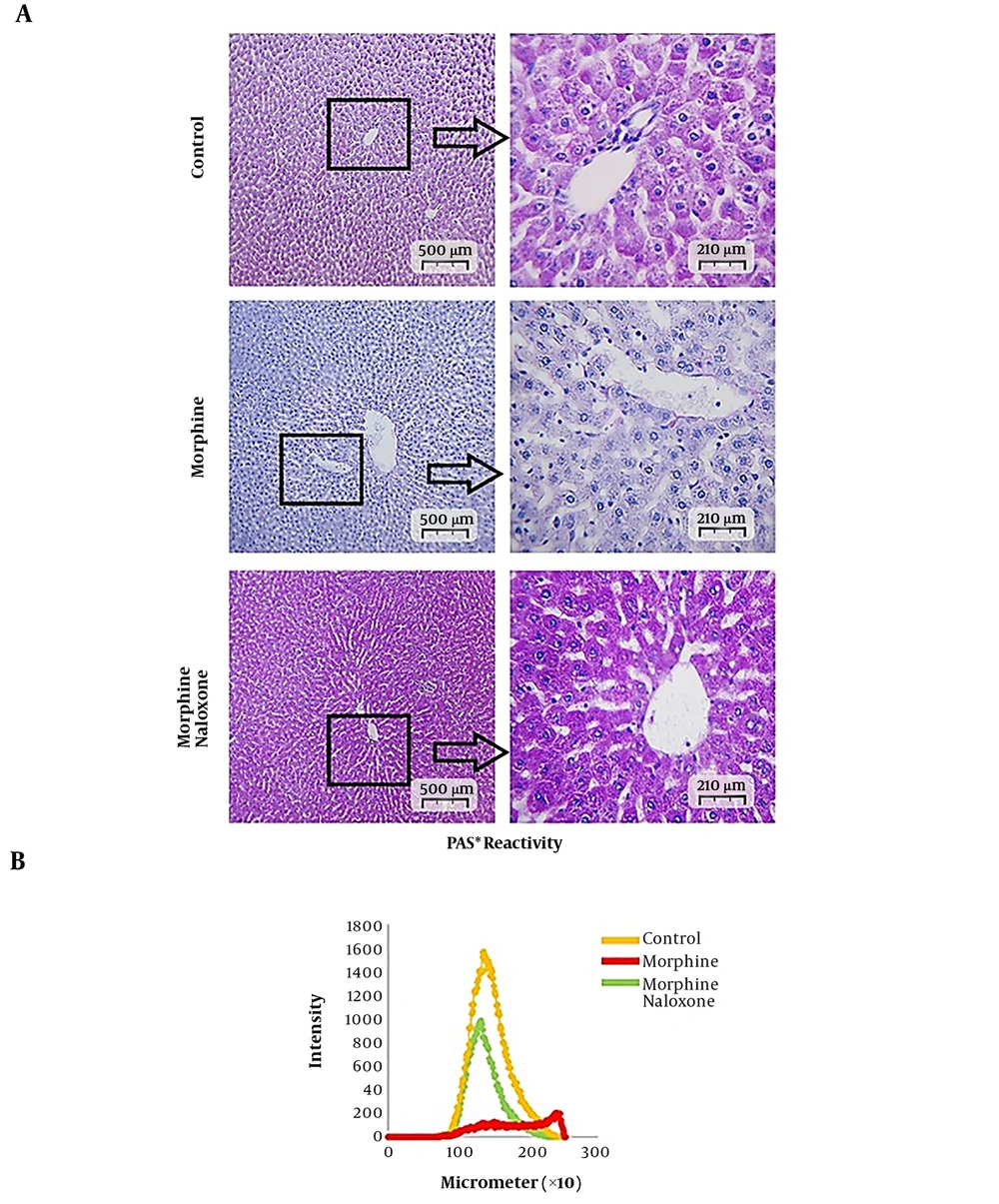
According to previous findings, chronic and acute exposures to morphine potentially result in hepatotoxicity, immunoreactivity, and genotoxic damages (
2,
4). Therefore, we investigated the histopathological changes in the liver. The light microscopic analyses showed that naloxone in the morphine + naloxone group significantly ameliorated the morphine-induced nuclear degeneration, necrosis, fibrosis, vasodilation, and immune cell infiltration. Moreover, we found a significant intra-hepatocellular carbohydrate withdrawal in the morphine-sole group. According to previous reports, morphine is able to enhance the blood glucose level (
12,
23,
24). Therefore, it can be suggested that morphine up-regulates blood glucose by discharging the hepatic carbohydrate content; severe carbohydrate withdrawal confirms this theory.
Overall, although chronic exposure to morphine (5 mg/kg/day) did not significantly change the serum antioxidant and hepatic enzyme levels, it could fairly induce hepatotoxic effects. Therefore, serum markers, including antioxidant enzymes, hepatic enzymes, and lipid profiles (cholesterol and TG) are not appropriate parameters to confirm the possible adverse effects of morphine on liver tissues. Moreover, naloxone, even at the administrated dose in this study, was able to protect liver tissues against morphine-induced damage, apart from its boosting effect on hepatic enzyme activities.
5.1. Conclusions
Our findings showed that morphine and naloxone co-treatment did not change the level of serum markers, such as GPx, SOD, cholesterol, and TG in rats. Meanwhile, naloxone, when co-administrated with morphine, could reduce the morphine-induced increase in HDL level and up-regulate hepatic enzyme activity. Moreover, it was found that apart from unchanged serum markers, morphine could potentially induce hepatotoxicity, and at the same time, naloxone was able to ameliorate morphine-induced histopathological damages. Based on our findings, it can be suggested that serum markers do not fully represent the detrimental effects of morphine and ameliorative effects of naloxone on liver tissues. However, further studies are needed to uncover the precise mechanism of naloxone effects on morphine-induced hepatotoxicity at cellular and molecular levels.