
1. Background
Circulating nurses are key surgical team members with essential duties in the operating room (1). Their roles are vital to a smooth flow of events in the operating room. Circulating nurses work outside the sterile field and link sterile and nonsterile realms (2). They can positively reduce the patient’s preoperative fear (3) and recover errors in the operating room (4). Circulating nurses ensure the patient’s positioning on the operating table and do equipment safety checks (5). They supervise the activity of other surgical team members and respond to their needs (6). They can promote patient safety by observing, monitoring, and managing possible threats to the surgical field (7). Ensuring sterility is another responsibility of the circulating nurses that is very important to reduce the probability of surgical site infections (2).
Infection is a serious postoperative complication that surgical team members should prevent by applying aseptic and sterile techniques (2). Infections can increase the stay of patients in hospitals (8). It is an important issue as the infections in the operating room contribute to surgical morbidity and mortality (9). Asepsis means without the presence of pathogens and implies that an object does not convey pathogenic microorganisms (2). One of the circulating nurses’ most important duties is supervising aseptic practices, which require proper nontechnical skills (10-12). Supervising aseptic practices could be helpful in preventing surgical site infections (13), which are known as significant concerns for the surgical team (14). Circulating nurses can assist the surgical team regarding the aseptic technique (13) by observing and monitoring them. Approximately one-third of patient infections can be prevented by infection control programs and hygiene, which are included in safe patient care (15).
Aseptic practices include observing hand hygiene, safe equipment storage, cleaning the procedure trolley, preparing the equipment without contaminating them, using personal protective equipment, preparing the environment (by reducing contamination), preparing the patient, waste disposal, and documentation (16). There are several challenges in applying aseptic recommendations (17). Meanwhile, circulating nurses should be vigilant regarding aseptic practices to ensure patient safety (4). Circulating nurses need to use aseptic practices from the beginning up to the end of surgery. Paying attention to the aseptic recommendations prevents the infection of surgical wounds and increases the well-being of surgical team members (13). Furthermore, the application of aseptic practices could be considered a competency for circulating nurses (18). Regarding the importance of this issue, Aholaakko and Metsala developed a list of behaviors based on operating room standards and aseptic recommendations for circulating nurses (13), which is one step forward in addressing the aseptic technique better.
The assessment of circulating nurses’ aseptic practices can be helpful in finding out their strengths and weakness in applying these practices. Research on this topic is necessary because the proper use of the aseptic technique can prevent surgical site infections, decrease patient mortality rate, reduce prolonged hospitalization, lower costs, and avoid patient discomfort (19, 20).
2. Objectives
This study aimed to assess aseptic practices in circulating nurses working in orthopedic and general surgical wards.
3. Methods
3.1. Study Design
This cross-sectional study was conducted during the 2020 summer. The psychometric characteristics of the aseptic practice recommendation scale were evaluated. Then, the questionnaires were distributed among the population study and collected after 3 weeks.
3.2. Participants
Two types of surgery, including general and orthopedic, were selected randomly. The investigation of two similar types of surgery can help make the results more comparable. Four public hospitals in Shiraz, Iran, had general and orthopedic surgical wards. The hospitals were educational. In Iranian operating rooms, operating room technologists work as operating room nurses. They might have the role of circulating nurses in surgeries. All circulating nurses who worked in the aforementioned operating rooms were invited to participate in this study (using the census method). In this way, it was tried to prevent reporting bias. The inclusion criterion was the willingness of the operating room nurses to participate in the study. The participants included 296 (out of 312) operating room nurses who agreed to be studied.
3.3. Data Collection Tools
Two questionnaires were used for data collection. The first was a demographics questionnaire that included items about age, work experience, gender, and educational level. The second tool used in this study was the aseptic practices among circulating nurses scale. This questionnaire contains 20 items about aseptic practices and consists of three main subscales, including “establishment of a sterile field” (items 1 - 10), “maintenance of a sterile field” (items 11 - 17), and “disestablishment of a sterile field” (items 18 - 20). This tool evaluates the agreement of circulating nurses regarding different aseptic practices. This scale was designed based on international recommendations and research findings and presented by Aholaakko and Metsala in 2015 (13). Aholaakko and Metsala (13) reported Cronbach’s alpha coefficient as 0.78, which is acceptable. The items can be rated based on a 5-point rating scale with strongly disagree, disagree, neutral, agree, and strongly agree options (from 1 to 5) by the circulating nurses. A mean score within 1 to 5 for each item and subscale could be calculated. Higher scores indicate better aseptic practices.
3.4. Psychometric Properties
The needed permissions were gained from hospital managers before the start of the study. The aseptic practices scale was translated to the Persian language. The face and content validity of the tool was examined by asking the opinion of 20 experts from the field of the operating room. Then, the content validity index (CVI) and content validity ratio (CVR) were calculated. Both indices were at an acceptable level (CVI = 0.87 and CVR = 0.64). Then, the construct validity of the tool was assessed. All goodness-of-fit indices were at an acceptable level. Based on the opinion of the research team, the scoring of the tool was changed to a 5-point Likert scale to facilitate the responses. The reliability of the tool was evaluated by calculating two measures. At first, Cronbach’s alpha was computed, and its coefficient was reported as 0.75, which is acceptable. Then, a test-retest was conducted by the assessment of 30 circulating nurses in a two-week time interval using the scale. The Intraclass Correlation Coefficient was 0.86; therefore, the scale’s reliability was confirmed.
3.5. Data Collection
This study was approved by the Ethics Committee of Shiraz University of Medical Sciences. After asking for necessary permissions, the researchers entered the operating rooms, introduced themselves to the circulating nurses, and provided essential information about the questionnaire. The researchers explained to the study population that they were free to participate and there was no obligation. The researchers assured the participants that their data and personal information would remain confidential. Then, the researchers distributed the questionnaires among the nurses. The informed consent forms were attached to the questionnaires. After 3 weeks, the filled questionnaires and signed informed consent forms were collected. The researchers ensured that everyone answered the questionnaires in the same way and avoided prompting the respondents to answer in order to prevent reporting bias.
3.6. Data Analysis
The SPSS software (version 22) was used for data analysis. Mean, standard deviation, median, and interquartile range were used for the descriptive analysis of the data. The Pearson correlation coefficient, Mann-Whitney U test, and Friedman test were used to analyze the data. The significance level of the statistical tests was 0.05.
4. Results
The mean values of age and work experience were 30.42 ± 6.82 and 6.22 ± 5.57 years, respectively. Table 1 shows the distribution of circulating nurses based on gender and educational level.
Table 1.
Distribution of Circulating Nurses Based on Gender and Educational Level
| Variables and Groups | No. (%) |
|---|---|
| Gender | |
| Male | 112 (37.8) |
| Female | 184 (62.2) |
| Educational level | |
| Associate degree | 44 (14.9) |
| Bachelor’s degree | 240 (81.1) |
| Master’s degree | 12 (4) |
The mean score of aseptic practices for the studied circulating nurses was 3.50 ± 0.44 (out of 5). The “disestablishment of a sterile field” subscale had the highest mean score (3.95 ± 0.65) among other subscales. Table 2 shows the circulating nurses’ scores in the triple subscales of aseptic practices.
Table 2.
Circulating Nurses’ Scores in the Triple Subscales of Aseptic Practices
| Subscale | Mean ± SD | Percentage of Related Proportion (%) | Median (Interquartile Range) |
|---|---|---|---|
| Establishment of a sterile field | 3.57 ± 0.40 | 71.4 | 3.60 (0.40) |
| Maintenance of a sterile field | 3.19 ± 0.69 | 63.8 | 3.14 (1) |
| Disestablishment of a sterile field | 3.95 ± 0.65 | 79 | 4 (0.66) |
| Total mean score | 3.50 ± 0.44 | 70 | 3.55 (0.65) |
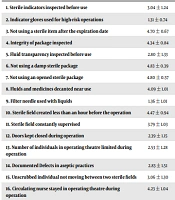
Table 3 shows the mean values of every single item of the tool. The items 1 - 10, 11 - 17, and 18 - 20 belong to the “establishment of a sterile field”, “maintenance of a sterile field”, and “disestablishment of a sterile field” subscales, respectively.
Table 3.
Description, Mean, Standard Deviation, Median, and Percentage of Related Proportion of Every Single Item of Aseptic Practices
| Items | Mean ± SD | Percentage of Related Proportion (%) | Median (Interquartile Range) |
|---|---|---|---|
| 1. Sterile indicators inspected before use | 3.04 ± 1.24 | 60.8 | 3 (2) |
| 2. Indicator gloves used for high-risk operations | 1.31 ± 0.74 | 26.2 | 1 (0) |
| 3. Not using a sterile item after the expiration date | 4.70 ± 0.67 | 94 | 5 (0) |
| 4. Integrity of package inspected | 4.34 ± 0.84 | 86.8 | 5 (1) |
| 5. Fluid transparency inspected before use | 2.80 ± 1.33 | 56 | 3 (2) |
| 6. Not using a damp sterile package | 4.83 ± 0.39 | 96.6 | 5 (0) |
| 7. Not using an opened sterile package | 4.80 ± 0.57 | 96 | 5 (0) |
| 8. Fluids and medicines decanted near use | 4.09 ± 1.01 | 81.8 | 4 (0) |
| 9. Filter needle used with liquids | 1.36 ± 1.01 | 27.2 | 1 (0) |
| 10. Sterile field created less than an hour before the operation | 4.47 ± 0.94 | 89.4 | 5 (1) |
| 11. Sterile field constantly supervised | 3.79 ± 1.03 | 75.8 | 4 (2) |
| 12. Doors kept closed during operation | 2.39 ± 1.15 | 47.8 | 2 (2) |
| 13. Number of individuals in operating theatre limited during operation | 2.53 ± 1.28 | 50.6 | 2 (2) |
| 14. Documented Defects in aseptic practices | 2.83 ± 1.51 | 56.6 | 2 (3) |
| 15. Unscrubbed individual not moving between two sterile fields | 3.06 ± 1.30 | 61.2 | 3 (2) |
| 16. Circulating nurse stayed in operating theatre during operation | 4.23 ± 1.04 | 82.4 | 5 (1) |
| 17. Intraoperative conversation is aseptically important | 3.54 ± 1.22 | 70.8 | 4 (3) |
| 18. Gloves used during the disestablishment of a sterile field | 4.35 ± 0.95 | 87 | 5 (1) |
| 19. Bloody gloves not removed outside operating theatre | 2.84 ± 1.43 | 56.8 | 3 (2) |
| 20. Not disestablishing a sterile field during wound closure | 4.68 ± 0.72 | 93.6 | 5 (0) |
In assessing the relationship between age and work experience with the subscales, it was revealed that these variables had a weak negative correlation with the subscale of “establishment of a sterile field” (P = 0.001 and r = -0.298 for age; P = 0.003 and r = -0.273 for work experience).
The Mann-Whitney U test results showed that the female circulating nurses did significantly better in the subscale of “establishment of a sterile field” (P = 0.002) and total aseptic practices score (P = 0.009). Table 4 shows the circulating nurses’ scores in the triple subscales of aseptic practices based on gender.
Table 4.
Circulating Nurses’ Scores in the Triple Subscales of Aseptic Practices Based on Their Gender
| Subscale | Male | Female | Mann-Whitney U Test | ||
|---|---|---|---|---|---|
| Mean ± SD | Median (IQR) | Mean ± SD | Median (IQR) | P Value | |
| Establishment of a sterile field | 3.50 ± 0.41 | 3.50 (0.40) | 3.62 ± 0.39 | 3.70 (0.50) | 0.002 |
| Maintenance of a sterile field | 3.11 ± 0.75 | 3 (1.21) | 3.25 ± 0.65 | 3.28 (1.11) | 0.056 |
| Disestablishment of a sterile field | 3.90 ± 0.69 | 4 (0.67) | 3.99 ± 0.63 | 4 (0.66) | 0.269 |
| Total mean score | 3.42 ± 0.48 | 3.40 (0.68) | 3.54 ± 0.41 | 3.57 (0.52) | 0.009 |
Abbreviations: SD, standard deviation; IQR, interquartile range.
The results of the Friedman test showed that the scores of all the subscales were significantly different based on circulating nurses’ academic educational level (P < 0.001). Table 5 shows the circulating nurses’ scores in the triple subscales of aseptic practices based on their academic educational level.
Table 5.
Circulating Nurses’ Scores in the Triple Subscales of Aseptic Practices Based on Their Academic Educational Level
| Subscale | Associate Degree | Bachelor’s Degree | Master’s Degree | |||
|---|---|---|---|---|---|---|
| Mean ± SD | Median (IQR) | Mean ± SD | Median (IQR) | Mean ± SD | Median (IQR) | |
| Establishment of a sterile field | 3.33 ± 0.41 | 3.35 (0.70) | 3.62 ± 0.38 | 3.60 (0.42) | 3.60 ± 0.32 | 3.60 (0.41) |
| Maintenance of a sterile field | 2.83 ± 0.63 | 2.78 (0.86) | 3.26 ± 0.68 | 3.28 (1.14) | 2.85 ± 0.20 | 2.86 (0.07) |
| Disestablishment of a sterile field | 3.74 ± 0.99 | 4 (1) | 3.99 ± 0.57 | 4 (0.67) | 4.00 ± 0.12 | 4.00 (0.12) |
| Total mean score | 3.22 ± 0.46 | 3.15 (0.70) | 3.55 ± 0.42 | 3.55 (0.60) | 3.40 ± 0.14 | 3.40 (0.14) |
Abbreviations: SD, standard deviation; IQR, interquartile range.
5. Discussion
This study aimed to assess aseptic practices in circulating nurses working in public hospitals in Shiraz. The psychometric properties of the Persian version of the tool were confirmed. The circulating nurses’ scores of aseptic practices were higher than the average level. However, in some behaviors, their scores were at a lower level than the average. Age and work experience were negatively correlated with the “establishment of a sterile field” subscale. Female nurses had better scores in the “establishment of a sterile field” subscale and total score, and the circulating nurses who held a bachelor’s degree had significantly higher scores than the nurses who had an associate degree.
The circulating nurses had higher than average scores in all three subscales. It could be said that the studied nurses paid attention to the aseptic technique and had good knowledge of them, which is vital to reducing morbidity, mortality, and surgery costs (14). This result is in line with the results of a study by Abraham et al. (14), who concluded that the majority of studied nurses had good aseptic practices. Labrague reported excellent knowledge of concepts of sterile practices (21). Aseptic practices are accepted as fundamental standards in operating rooms, and circulating nurses were expected to show a mastery of them. The monitoring of the sterile field is an essential responsibility of circulating nurses, as issues in aseptic practices challenge every surgical team member (22). “Disestablishment of a sterile field” was the subscale with the highest score. The aforementioned results are similar to the results of a study by Aholaakko and Metsala (13). Probably, this result is due to the small number of items in the aforementioned subscale (3 items) and the ease of ensuring these items.
Although the total mean and subscales scores were higher than the average level, several items scored lower than average. The reasons for low scores might be different. For example, the use of indicator gloves is limited in the studied population, probably due to insufficient supplies in the operating room. This result contrasts with Laine and Aarnio’s findings, which reported high rates of using indicator gloves (23). The use of indicator gloves can provide better protection, especially in high-risk operations, by detecting the glove perforation and enabling the quick change of perforated gloves (24). It is an essential issue because glove perforation occurs frequently and could cause the transmission of infectious agents. If the hospital managers equip the operating room with indicator gloves, the scores of this item will be increased.
Lower scores were reported in “keeping the operating room doors closed” and “limiting the number of the clinicians in the operating room” items, which can increase the risk of surgical site infections (25). The aforementioned result is in line with the results of several former studies in which there was a high number of door openings and clinician traffic in operating rooms (26, 27). It could be due to the hierarchy in the operating room that allows the surgeons and surgical residents to enter the rooms. Some of the circulating nurses do nothing in this regard. Revising some existing hierarchy-related behaviors in the operating room can be helpful, as it was claimed that setting some policies in operating rooms could be helpful (28). Retrieving or delivering supplies could also be a reason for high foot traffic in the operating room (29). Therefore, circulating nurses could prevent this issue by preparing all the needed supplies before surgery.
The documentation of perioperative nursing care is crucial to patient safety (30). Defects of aseptic practices should be recorded, as it can help prevent them. Similar to the present study, international papers reported variations in documentation practice in operating room nursing. Incomplete knowledge and poor understanding in this regard can endanger patient safety (30). Therefore, circulating nurses should be trained on the proper documentation of the aseptic technique.
The item related to using filter needles had the lowest score in this study. Filter needles reduce glass particle contamination and can reduce patient harm through injections (31). The availability of filter needles can affect their use. Training can increase the acceptability and more frequent use of filter needles (32). Therefore, preparing filter needles and providing training regarding their use can be helpful in the improvement of this aseptic practice item. Supervision and setting norms could help increase the scores of these behaviors. The development of guidelines could also be practical to enhance the scores of the aforementioned items (33).
In this study, there were relationships between demographics and aseptic practice scores. The results showed that aseptic practices’ scores negatively correlated with age and work experience. It seems that more experienced circulating nurses ignored some of the items of the “establishment of a sterile field” subscale, probably due to overconfidence. This result is different from the results of several previous studies (13, 34). It was claimed that senior nurses show more assertiveness and have definite opinions regarding the guidelines (35). Nevertheless, in this study, less-experienced circulating nurses had better scores in the “establishment of a sterile field” subscale. It seems that the newly-hired nurses pay more attention to aseptic practices. The different results might also be due to cultural differences and operating room norms. The result of better scores of the circulating nurses with a higher academic degree is in line with the results of previous studies (36). It could be said that more years of academic education can yield a more solid approach toward aseptic practices.
This study had some limitations. As this is a cross-sectional study, the cause and effect of the variables could not be determined. It is suggested to carry out further studies to evaluate the effectiveness of the interventions in improving aseptic practices. Moreover, the aseptic practices of all surgical team members could be assessed. The results might be generalizable to orthopedic and general surgeries.
Circulating nurses’ aseptic practices scores were higher than average in the subscales; however, they had low scores in several items. Supplying the hospitals with necessary materials, using appropriate guidelines about aseptic practices, supervising circulating nurses, using educational programs and retraining courses to increase and update their knowledge of aseptic practices, and setting appropriate policies can help improve the use of aseptic practices.