Fulltext
Full text is available in the PDF.
IJ Psychiatry and Behavioral Sciences
IJPBS is the Official Journal of Mazandaran University of Medical Sciences
Authors
Objective: Interventions for people suffering from borderline personality disorder (BPD), such as dialectical behavior therapy, often include a problem-solving component. However, there is an absence of published studies examining the problem-solving abilities of this client group in Iran. The study compared inpatients and outpatients with BPD and a control group on problem-solving capabilities in an Iranian sample. It was hypothesized that patients with BPD would have more deficiencies in this area.
Methods: Fifteen patients with BPD were compared to 15 healthy participants. Means-ends problem-solving task (MEPS) was used to measure problem-solving skills in both groups. Results: BPD group reported less effective strategies in solving problems as opposed to the healthy group. Compared to the control group, participants with BPD provided empirical support for the use of problem-solving interventions with people suffering from BPD.
Conclusions: The findings supported the idea that a problem-solving intervention can be efficiently applied either as a stand-alone therapy or in conjunction with other available psychotherapies to treat people with BPD.
Declaration of interest: None.
Citation: Akbari Dehaghi A, Kaviani H, Tamanaeefar Sh. Problem-solving deficits in Iranian people with borderline personality disorder. Iran J Psychiatry Behav Sci 2014; 8(4): 12-8.
© 2014, Author(s). This open-access article is available under the Creative Commons Attribution 4.0 (CC BY 4.0) International License (https://creativecommons.org/licenses/by/4.0/), which allows for unrestricted use, distribution, and reproduction in any medium, provided that the original work is properly cited.
Hajfiroozabadi M, Mohtashami J, Atashzadeh-Shoorideh F. Individual Factors Underlying Suicidal Behaviors in Patients with Borderline Personality Disorder: A Qualitative Study. Iran J Psychiatry Behav Sci. 2022;16(1):e118312. doi: https://doi.org/10.5812/ijpbs.118312
Jani S, Molaee M. The relationship of the Severe Personality disorders with behavioral activation and inhibition systems in patients with paranoid, borderline and schizotypal personality disorders. J Kermanshah Univ Med Sci. 2016;20(3):e69694. doi: https://doi.org/10.22110/jkums.v20i3.2918
Arfaie A, Shafiee-Kandjani AR, Jalali-Motlagh N, Arfaie A, SafiKhanlou S, et al. Five-Factor Personality Profile in Bipolar Mood Disorder and Borderline Personality Disorder. Iran J Psychiatry Behav Sci. 2019;13(3):e63958. doi: https://doi.org/10.5812/ijpbs.63958
Sajadi SF, Arshadi N, Zargar Y, Mehrabizade Honarmand M, Hajjari Z. Borderline Personality Features in Students: the Predicting Role of Schema, Emotion Regulation, Dissociative Experience and Suicidal Ideation. Int J High Risk Behav Addict. 2015;4(2):e20021. doi: https://doi.org/10.5812/ijhrba.20021v2
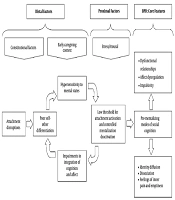
Khabir L, Mohamadi N, Rahimi C, Dastgheib SA. The Effectiveness of Group Therapy Based on Mentalization and Dialectical Behavior on Attachment Styles, Social Cognition, Mentalization: A Randomized Controlled Clinical Trial. Middle East J Rehabil Health Stud. 2021;8(1):e104149. doi: https://doi.org/10.5812/mejrh.104149
More by these authors
Last Update: 3 weeks ago
Last Update: 3 weeks ago
Last Update: 3 weeks ago
Last Update: 3 days ago