1. Background
One of the most common anxiety disorders is social anxiety disorder (SAD), which is characterized by intolerable anxiety and self- consciousness in daily social situations. With an annual prevalence of 6.8%, the disorder is ranked second among anxiety, mood, and substance abuse disorders (1). People with SAD suffer with severe, persistent, and chronic fear of being judged by others and worried that their work can lead to their embarrassment (2, 3). The deep fear of patients with SAD usually avoids them from social situations, which in addition to developing discomfort in these patients, causes significant functional problems in the social, occupational, and personal domains of their lives (4).
Numerous psychological treatments were used for this disorder, among which, the cognitive behavioral therapy (CBT), including exposure trainings, currently has the most empirical support for the social anxiety disorder (5, 6). However, much attention has been recently paid to poor progress and ongoing dissatisfaction with life in those who received this treatment (7).
Moreover, past studies indicated that self-criticism can be a weaker result predictor for the therapeutic approaches (8). By creating difficulty in establishing a strong therapeutic relationship, seemingly self-criticism prevents positive therapeutic outcomes (9). Furthermore, based on our knowledge, high self-criticism is one of the main characteristics of patients with social anxiety disorder (10). This is probably the reason why some studies indicated that traditional psychiatric approaches, namely, cognitive-behavioral approaches have sometimes failed to treat people with social anxiety disorder (7). In other words, CBT is inefficient for some people, leading to an increase in the interest in new therapies recognized as the “the third wave of cognitive-behavioral therapy” (11, 12).
Compassion focused therapy (CFT) is one of the third wave treatments, which has recently been put into much consideration. Such integrated therapy has a bio-psycho-social model, and was created through the integration of evolutionary and neuroscience models in the field of emotional regulation. CFT is primarily designed for individuals with high levels of shame and self-criticism, such as those suffering social anxiety (13, 14). This approach was developed based on observations that indicated individuals with high levels of self-criticism experience problems in regard with sense of security and intimacy in interpersonal relationships. Moreover, individuals suffering from high levels of shame and self-criticism did not usually have a good performance in CBT, they could not indicate emotional responses tailored to the appropriate thoughts (15-17).
From the CFT point of view there are different forms and functions of self-criticism. One form focuses on feeling inadequate. However, there is another form that is linked to hatred of the self. These are quite different and should be distinguished in therapy. Functional analysis of self-criticism is very important in CFT. Some when there is no specific function, however, clients may see self-criticism as having a range of functions, like ensuring that they pay attention to mistakes. Self-criticism can act as an alarm. Therefore, in CFT we teach how compassion suggests a different way for self- improvement (13). In summary, CFT sees self-criticism as safety strategies. CFT spends time with clients explaining these classical conditioning models as well as the importance of self-monitoring and self-criticism. The more of a framework clients have for understanding their self-criticism as linked to safety strategies, the more collaborative in engaging with these memories and developing self-compassion they can be (13, 15).
CFT is widely described, though limited empirical studies were published in this regard (18). In a preliminary study conducted through case study on six patients with SAD, the results suggested the satisfaction of patients with this treatment in coping with social anxiety as well as reducing embarrassment and self-criticism (18). In another study conducted by Gilbert and Procter on patients with chronic mental disorders in the hospital, it was found that 12 weekly therapy sessions significantly reduced depression, anxiety, self-criticism, embarrassment, and feelings of humility and self-humiliating behaviors (19).
By and large, the clinical studies conducted globally are rather limited due to the novelty of this approach. These studies yielded remarkable results, however, there is a great need to replicate and extend these studies, especially in a controlled way in different fields.
2. Objectives
To the best knowledge of the author, there are no similar controlled studies to the date of publication of this study in our country. In this line, the present study aims to evaluate the effectiveness of CFT on reducing severity of social anxiety symptoms and self-criticism also, improvement of mindfulness levels, self-compassion, and quality of life in patients with social anxiety disorder.
3. Materials and Methods
3.1. Design
The present study is a randomized control trial (RCT) in parallel method with a pre-test, post-test, and follow-up design with control group that was conducted between November 2017 to June 2018. The research was carried out based on the Helsinki declaration guidelines.
3.2. Sampling
The sample size was based on previous studies (5) and considering, the test power (0.80) and the significance level (0.95) were obtained 15 patients for each group. Considering the drop out, 2 patients were added to each group (Equation 1).
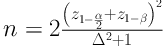
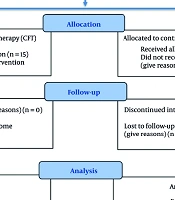
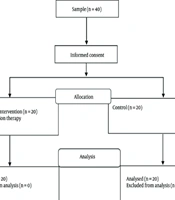
All patients (34 patients) after signing an informed consent form and based on the inclusion and exclusion criteria were completely randomly and equally assigned into experimental and control groups. Of course, two patients in the control group were not willing to continue the research process due to the fact that they wanted to start the drug treatment process and were excluded from the study. Figure 1 shows the flow of participants through each stage of the randomized trial.
The inclusion criteria included suffering social anxiety disorder based on DSM-IV-TRdiagnostic criteria (in case of other psychiatric diagnoses; SAD diagnosis should have been clearly identified as the primary diagnosis), age range 20 - 40 for participation in research, and the minimum diploma education. Exclusion criteria were selected in a minimal way considering the significance of external validity of the research, which included: suffering other psychiatric disorders of the DSM first axis that are an obstacle to the treatment of social anxiety disorder (e.g. psychotic disorders, bipolar disorders with psychotic features), alcohol and substance abuse or dependency, suffering severe levels of personality disorders with serious communication problems including schizotypal, schizoid, paranoid, borderline, antisocial, and avoidant personality disorders (20), and severe physical illnesses such as cancer and positive HIV, whose physical illness should be prioritized for treatment; also the initiation of treatment with psychiatric drugs within the last three months or change of drug dose during that time.
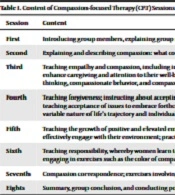
In order to implement the research after the necessary coordination at the implementation site include School of Behavioral Sciences and Mental Health Clinic, Counseling Center of University of Tehran, and two private clinics; SCID-I and unstructured clinical interview was used to examine other axis one and personality disorders in order to investigate the inclusion and exclusion criteria. All diagnoses were approved by both the psychiatrist and the Ph.D. in clinical psychology. Considering the individual sessions of the treatment, each member of the sample was randomly assigned to a group by a person who did not know about the research and through flipping a coin. The CFT experimental group received 12 once-weekly individual treatment sessions of one hour based on the protocol used in the study of Boersma et al. (18). During the therapeutic sessions, the concepts of compassion, self-criticism reduction, emotion regulation systems, and compassionate exposure to anxious situations was dealt with, based on this step-by-step protocol, which was directly provided to the researcher through contacting the designer. The control group did not receive any treatment interventions and were merely put on the waiting list. It was explained for patients on the waiting list that their treatment process would begin after five months due to research purpose and at that time they are treated appropriately based on the results of the research. At this moment, the treatment of these patients has begun. The follow-up session was conducted two months after the last session of treatment for both groups.
A Ph.D. student in clinical psychology (the first author) implemented the therapeutic sessions and in order for treatment integrity, the therapeutic sessions of whole samples were audio recorded after obtaining their consent and an experienced clinical psychologist familiar with the therapeutic approaches of the third wave treatment randomly investigated some treatment sessions (20% of the sessions) to determine the therapist’s loyalty to the relevant therapeutic principles.
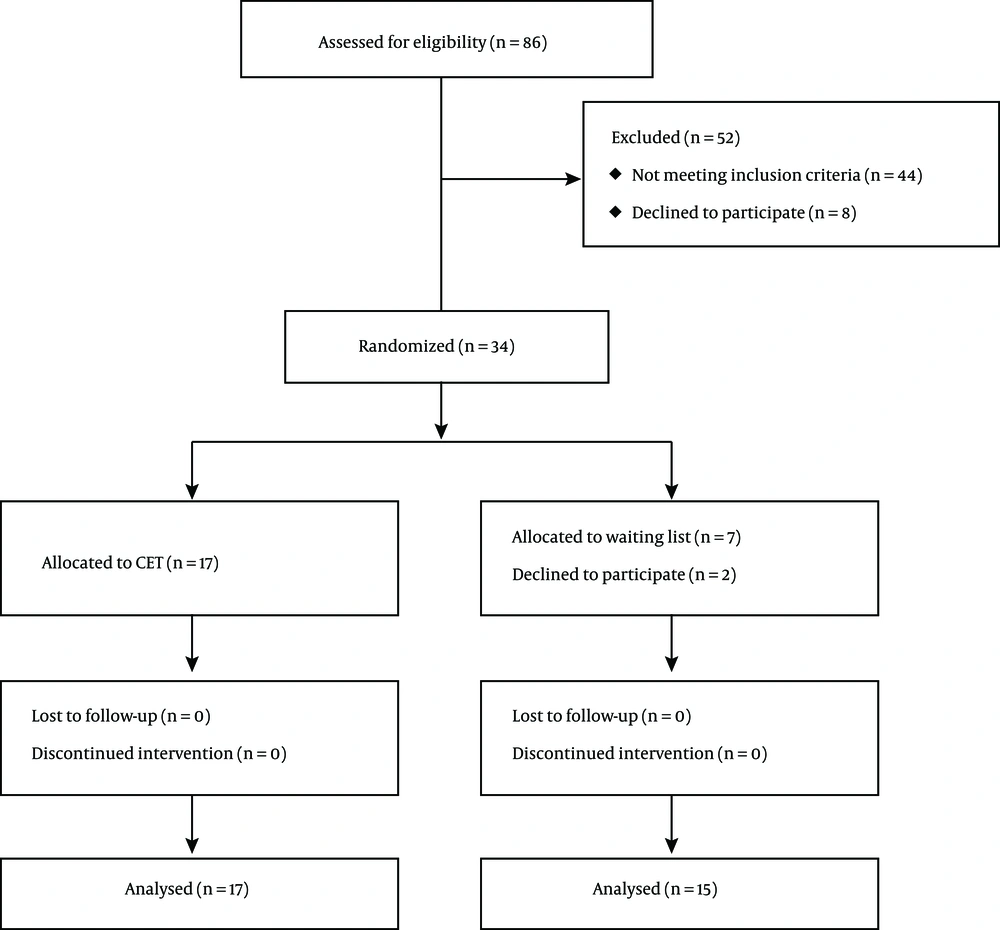
Figure 1.
Participants flowchart
3.3. Ethical Considerations
The study was conducted after registration in the Iranian registry of clinical trials center (IRCT, number: IRCT20180607040000N1) and approved by the Iran University of Medical Sciences Ethical Committee (ethics code: (IR.IUMS.REC 1396.9211521214)).
3.4. Measures
3.4.1. Demographic Characteristics Questionnaire
The researchers designed this instrument, which is used to investigate the demographic characteristics of sample members, namely, age, gender, marital status, education, and job.
3.4.2. Structured Clinical Interview for DSM-IV Axis I Disorders, Clinician Version (SCID-I/CV)
3.4.3. Liebowitz Social Anxiety Scale (LSAS)
It is the most widely used social anxiety instrument, which has 24 items and two versions of clinician-administered and self-report. The Persian version of this instrument has proper psychometric properties (23).
3.4.4. World Health Organization Questionnaire of the Quality of Life (WHOQOL-BREF)
3.4.5. Acceptance and Action Questionnaire-Second Version (AAQ-II)
Bond et al. (2007), developed this questionnaire, which consists of 10 questions and measures acceptance, empirical avoidance, and psychological inflexibility. In Iran, Abbasi et al. indicated that this instrument has reliability, validity, and satisfactory construct validity (26).
3.4.6. Self-Compassion Scale (SCS)
This scale is a 26-item (5-point Likert) self-reporting instrument developed by Neff (2003) to measure self-compassion. The research conducted by Azizi et al. indicated a high reliability and validity for the above Persian scale (27).
3.4.7. Mindful Attention Awareness Scale (MAAS)
This scale is a 15-question test (6-point Likert), developed by Ryan and Brown (2003), in order to measure the level of awareness and attention to current events and experiences in daily life. The psychometric properties of this Persian instrument have already been confirmed in various studies (28).
3.4.8. Level of Self-Criticism Scale (LOSC)
Thomson and Zuroff designed this scale (2004), which has 22 items (7-point Likert). The validity and reliability of self-criticism levels scale was evaluated and confirmed by Mousavi and Ghorbani on a Iranian sample (29).
3.5. Outcome Measures
The primary outcome reduced social anxiety symptoms and assessed by the LSAS one week after intervention. The secondary outcome measures were assessed by AAQ-II, MAAS, LOCS, SCS, LSAS, and WHOQOL-BREEF. For all of the outcome measures, it was hypothesized that the score differences between the two groups would remain significantly stable at two-month follow-up.
3.6. Statistical Analysis
In addition to descriptive statistics, repeated measure analysis of variance (RM-ANOVA) was used in order to analyze the findings, and SPSS-21 software was used for all conducted analysis.
4. Results
Table 1 presents demographic information. Based on the analysis results, there was no significant difference between age (P = 0.38), gender (P = 0.98), and education (P = 0.50) in both groups.
Table 1.
Demographic Variables Depending on Group Membershipa
| Variables | CFT | Waiting | Test-Statistic | P Value |
|---|---|---|---|---|
| Sex | χ2 = 0.001 | 0.98 | ||
| Men | 9 (53) | 9 (53) | ||
| Women | 8 (47) | 8 (47) | ||
| Age | 23.41 ± 4.58 | 22.00 ± 4.39 | t = 0.88 | 0.38 |
| Education | χ2 = 1.39 | 0.50 | ||
| Diploma | 6 (35) | 7 (41) | ||
| Bachelor | 8 (47) | 8 (47) | ||
| Master or above | 3 (18) | 2 (12) |
a Values are expressed as No. (%) or mean ± SD.
Table 2 presents the descriptive information of the research variables in the pre-test, post-test and follow-up stages divided by the groups. As seen, the mean scores of experimental group in the post-test and follow-up were higher than the control group, except for the two variables of LOSC and LSAS that lower scores indicating higher improvement.
Table 2.
Means and Standard Deviations of Studied Variables Scores in Pre-Test, Post-Test and Follow-Upa
| Variables | Pre-Treatment | Post-Treatment | Follow-Up |
|---|---|---|---|
| CFT group | |||
| AAQ-II | 26.59 ± 6.87 | 31.94 ± 6.16 | 31.35 ± 6.12 |
| MAAS | 36.94 ± 8.46 | 43.59 ± 8.78 | 43.94 ± 8.13 |
| LOSC | 76.76 ± 15.49 | 52.94 ± 8.51 | 55.24 ± 9.44 |
| SCS | 64.53 ± 9.47 | 82.71 ± 8.79 | 79.41 ± 8.98 |
| WHOQOL-BREF | 68.94 ± 12.65 | 81.65 ± 11.40 | 87.06 ± 10.40 |
| LSAS | 74.06 ± 10.97 | 64.53 ± 10.74 | 60.12 ± 8.47 |
| Waiting group | |||
| AAQ-II | 23.33 ± 5.23 | 22.87 ± 5.51 | 22.80 ± 6.33 |
| MAAS | 35.20 ± 7.21 | 33.80 ± 9.58 | 34.87 ± 9.29 |
| LOSC | 71.00 ± 15.63 | 76.00 ± 11.28 | 73.73 ± 10.10 |
| SCS | 63.80 ± 11.70 | 62.13 ± 11.48 | 60.33 ± 12.19 |
| WHOQOL-BREF | 66.33 ± 12.19 | 63.60 ± 8.57 | 60.13 ± 7.19 |
| LSAS | 73.13 ± 9.23 | 73.80 ± 6.92 | 78.93 ± 7.79 |
a Values are expressed as mean ± SD.
Repeated measures analysis of variance with repeated on a factor was used for investigating the significance of these differences. Research variables were considered as within subject factors and group variable as between subject factor. Before using this statistical method, its assumptions, namely, investigation of the normal distribution using the Kolmogorov-Smirnov (K-S) test, and the variance homogeneity by Leven’s test was examined for all variables, this method was allowed given their significance levels (P > 0.05).
The statistics related to Mauchly’s test of sphericity of the studied variables are reported in Table 3. Regarding the fact that this test was significant in all variables except for the quality of life, the results of the Greenhouse-Geisser test were reported and in respect to the quality of life, the Mauchly’s test was reported. As presented in the results of Table 3, there is a significant difference between the two groups regarding all the variables studied considering the pre-test, post-test, and follow-up stages. The test power 1.00 indicates the significance accuracy of such effects.
Table 3.
Greenhouse-Geisser and Sphericity Assumed Test Results According to Mauchly’s Test of Sphericity
| Variables | Mauchly’s Test of Sphericity | Greenhouse-Geisser Test | Partial Eta Squared | Observed Power | |||||
|---|---|---|---|---|---|---|---|---|---|
| Approx Chi-Square | df | P Value | Sum of Squares | df | F | P Value | |||
| AAQ-II | 11.01 | 2 | 0.004 | 165.24 | 1.52 | 22.41 | 0.001 | 0.43 | 1.00 |
| MAAS | 10.67 | 2 | 0.005 | 316.21 | 1.53 | 22.41 | 0.001 | 0.43 | 1.00 |
| LOSC | 23.88 | 2 | 0.001 | 3825.74 | 1.28 | 54.55 | 0.001 | 0.65 | 1.00 |
| SCS | 10.53 | 2 | 0.005 | 1946.15 | 1.53 | 40.81 | 0.001 | 0.58 | 1.00 |
| LSAS | 7.08 | 2 | 0.03 | 1553.33 | 1.64 | 24.58 | 0.001 | 0.45 | 1.00 |
| Sphericity Assumed | |||||||||
| WHOQOL | 3.14 | 2 | 0.21 | 2413.32 | 1.81 | 29.88 | 0.001 | 0.50 | 1.00 |
Pairwise comparisons were used for paired investigation of significant differences between pre-intervention and post-intervention scores and after two months of follow-up, the results of which were entered in Table 4. Based on the data in this there there is a significant difference between the two stages of pre-test and post-test in the experimental and control groups (P < 0.001) and the effect size ranges 0.41 - 0.72, which is considered as an effect size higher than moderate.
Table 4.
Difference Between Different Level of Assessment Depending on Group Membership
| Difference Between Two Sequential Level | Sum of Squares | df | F | P Value | Partial Eta Squared | Observed Power |
|---|---|---|---|---|---|---|
| AAQ-II | ||||||
| Pre-test vs. post-test | 269.88 | 1 | 27.96 | 0.001 | 0.48 | 0.99 |
| post-test vs. follow-up | 2.17 | 1 | 0.67 | 0.42 | 0.02 | 0.12 |
| MAAS | ||||||
| Pre-test vs. post-test | 516.02 | 1 | 25.65 | 0.001 | 0.46 | 0.99 |
| post-test vs. follow-up | 4.06 | 1 | 0.60 | 0.44 | 0.02 | 0.12 |
| LOSC | ||||||
| Pre-test vs. post-test | 6620.40 | 1 | 78.67 | 0.001 | 0.72 | 1.00 |
| post-test vs. follow-up | 165.76 | 1 | 8.60 | 0.006 | 0.22 | 0.81 |
| SCS | ||||||
| Pre-test vs. post-test | 3137.70 | 1 | 60.19 | 0.001 | 0.68 | 1.00 |
| post-test vs. follow-up | 17.79 | 1 | 0.77 | 0.39 | 0.02 | 0.13 |
| LSAS | ||||||
| Pre-test vs. post-test | 828.43 | 1 | 19.79 | 0.001 | 0.40 | 0.99 |
| post-test vs. follow-up | 726.02 | 1 | 12.89 | 0.001 | 0.30 | 0.93 |
| WHOQOL | ||||||
| Pre-test vs. post-test | 1899.51 | 1 | 28.71 | 0.001 | 0.49 | 0.99 |
| post-test vs. follow-up | 628.15 | 1 | 9.03 | 0.005 | 0.23 | 0.83 |
Based on the results of comparing the scores of the variables in the post-test and follow-up of the experimental and control groups, these changes were significant only in three variables of self-criticism, social anxiety symptoms, and quality of life (P < 0.01). By investigating the mean scores of the groups, it can be argued that there was no significant drop in the experimental group treatment outcome except self-criticism variable, or it even improved in the two-months follow up. On the contrary, it had no change or had higher drop in the control group change (P < 0.01).
5. Discussion
The present study was conducted aiming at evaluating the effectiveness of CFT on patients with SAD and comparing them with the control group. The results of the present study indicated that CFT was significantly more effective than non-treatment in reducing psychological inflexibility, self-criticism, and severity of social anxiety symptoms (P < 0.001) in both post-test and two months’ follow-up. Moreover, CFT was able to significantly increase the mindfulness levels, self-compassion, and quality of life in patients with social anxiety, whereas no-treatment conditions, these cases did not either have a significant change or declined during the follow-up period (P < 0.01).
There are not many controlled studies in the field of CFT, however, the results of the present study were consistent with most studies in this area (18, 30-32). The results indicated that CFT is an appropriate treatment for SAD symptom reduction and is therefore comparable in terms of effect size to ACT and CBT (33, 34). However, some studies also indicated the greater effect size of CBT compared to CFT (35). In the context of reducing shame and self-criticism, the results also showed that CFT is as effective as cognitive-behavioral group therapy and may even be stronger than it (36). These results can also be similar to the results of MBSR in the field of self-views in SAD patients (37).
It is better to begin with self-compassion and self-criticism variables, the obvious characteristic of CFT, in order to explain the results of the present research. Self-criticism thinking is usually a chronic thought that is a rather considerable barrier to preventing positive emotions. In other words, such thinking, for some people, makes them feel afraid of having a sense of intimacy with others, or makes this experience difficult for them. This fear is closely related to self-criticism (17). In addition, one of the constructs associated with self-criticism is self-compassion. Self-compassion means having a compassionate attitude towards self when exposed to internal weaknesses and physical and psychological pains (38). This construct is highly related to the mental health as well as adaptive psychological function and its high levels are associated with higher satisfaction with life, emotional intelligence, and social communication, while its low levels are associated with symptoms of depression, anxiety, embarrassment, self-criticism, and fear of failure (38, 39). The treatment protocol of the present study highly emphasized on self-criticism and self-compassion variables. Much emphasis was placed on psychoeducation training in order to eliminate shame and increase empathic understanding of self and self-problems during the treatment sessions. Seemingly, as shown by the previous studies, these two variables are key factors in the treatment of various psychological disorders. The construct of self-compassion can be considered as a protective factor, where its increase makes individuals more resistant to mental disorders, while self-criticism is considered a significant risk factor (40).
CFT also focused on mindfulness exercises that were repeatedly raised both in sessions and as homework in the form of imaginative exercises and a safe place for clients. As the definition of compassion implies, “compassion involves being sensitive to one’s own suffering and that of others with a deep commitment to the attempt to eliminate it, i.e. deep attention and vigilance with motivation” (41), mindfulness is a basic component of CFT. Mindfulness exercises increase the psychological flexibility of the clients and using the mindfulness experiment of self-assessments does not allow inconveniences and embarrassments to control their behavior, and by flexibly changing their viewpoints achieve a wider and more transcendental perspective (42).
By and large, it can be argued that CFT can reduce the symptoms of social anxiety disorder and increase the quality of life of clients through reducing self-criticism and increasing the compassionate and flexible perspective towards self and mindfulness.
The present study, like other studies, faced some limitations. For instance, the sample size is limited, which reduces the generalization of the results to a large community of patients with social anxiety disorder. In addition, the present study attempted to merely include those with social anxiety disorder, which also makes external validity somewhat problematic due to the high comorbidity rate of this disorder.
It is recommended that researchers in future studies apply this new therapy to various disorders and include further variables in projects with higher sample size as intermediary variables so that our knowledge of this area increase through maximized elimination of limitations.