

Introduction
Urease, the enzyme responsible for the rapid hydrolysis of urea to ammonia, is a key enzyme benefiting bacteria H. pylori through making its persistence possible in the acidic environment of the stomach and as a result, cause gastrointestinal diseases, in particular gastritis, duodenal, peptic ulcer, and gastric cancer (1,2). It has already been proven that urease deficiency effectively risks the bacteria existence (3). Additionally, urease activity leads to other disease like urinary stones, pyelonephritis (4). Also limiting nitrification procedure via restricting urease hydrolysis activity is also of great importance in the field of agriculture to control nitrogen leaching, greenhouse gas escape and ammonia volatilization from soil (5).
Although comprehensive studies have been performed on urease inhibition mechanisms and inhibitors until today, only a few of them are promising. According to the literature, most of the prescribed medicines and antibiotics for the mentioned disease treatment, not only evince adverse effects but also the bacteria grow resistance against (6). Furthermore, application of some compounds and especially synthetic ones for controlling urease function has been banned due to their toxicity and low chemical and physical stability in the natural environment (5). Medicinal plants have long been applied as remedies to cure diseases which nowadays are known as viral infections. Composites from Euphorbia decipiens (7) and sulfated polysaccharide found in different types of brown seaweed (fucoid an compounds) had been previously reported, are examples of natural substances with urease inhibition activities (8). While plants can be considered as the largest source of substances with pharmacological properties, their significant biological characteristics have not been investigated thoroughly. As a result, it is obvious that looking for efficient composites with natural origins to be used individually and/or as lead ones to design and develop new drugs with higher efficiency, stability and less toxicity is an important issue need to be more attention to.
Considering the vital role of urease enzyme in the immune system of the bacteria H. pylori, this work has focused on monitoring and evaluating inhibition activity of 15 herbs for their possible inhibitory activity against Jack bean urease. Therefore, the extracts of some selected medicinal herbs commonly consumed in Iranian traditional medicine were prepared and their inhibition strength was examined upon Jack bean urease (9).
Experimental
Material
All chemicals used were of analytical grade from Merck Co., Germany. Sodium nitroprusside and urease (EC 3.5.1.5) from Jack beans were purchase from sigma (St. Louis, MO, USA). Ultra-pure water (HPLC grade, Duksan, Korea) was used throughout the experiments. Potassium phosphate buffer (100 mM), pH=7.4, was prepared in distilled water. The studied plants were collected from Herbarium of School of Pharmacy, Tehran University of Medical Sciences. The absorbance spectra of the solutions were obtained employing Synergy H1 Hybrid multi-mode microplate reader.
Plants extraction
The studied medicinal plants (Table 1) were gathered from the Herbarium of Faculty of Pharmacy, Tehran University of Medical Sciences, air dried and then powdered. 0.5 g of the obtained powder was extracted in 10 mL, methanol:water (80:20; V/V) at room temperature (25 ± 1 ºC) for 24 hours, filtered and then dried under reduced pressure and finally freeze dried. The dry extracts were stored at -20 ºC till used (10).
Determination of urease activity
Initial urease inhibitory activity of all the obtained extracts was evaluated at the concentration of 1 mg/mL with the modified Berthelot spectrophotometric method at the absorbance of 625 nm. Finally, IC50 inhibitory activity of each extract was assessed. Also, inhibition activity of hydroxyurea was assayed as the standard compound which is already proved to have significant inhibitory characteristics for urease.
The assay solution mixture consisted of urea (850 µL), the extract (in the range of 0 to 100 µL) and phosphate buffer (100 mM, pH 7.4) to reach the total value of 985 µL. The enzymatic reactions started with the addition of 15 µL of urease enzyme and measured via determining ammonia concentration after 60 minutes using 500 µL of solution A (contained 0.5 g phenol and 2.5 mg of sodium nitroprusside in 50 mL of distilled water) and 500 µL of solution B (contained of 250 mg sodium hydroxide and 820 µL of sodium hypochlorite 5% in 50 mL of distilled water) at the temperature of 37 °C for 30 minutes. Activity of uninhibited urease was chosen as the control activity of 100%.
Data processing & IC50 Determination
The following equation was employed to calculate the enzymatic reaction value:
I (%) = [1 – (T / C)] * 100
Where I (%) is the inhibition of the enzyme, T (test) is the absorbance of the tested sample (plant extract or positive control in the solvent) in the presence of enzyme, C (control) is the absorbance of the solvent in the presence of enzyme. Data are expressed as mean ± standard error (SD) and the results were taken from at least three times.
The concentration that induces an inhibition halfway between the minimum and maximum response of each compound (relative IC50) was determined monitoring the inhibition effect of various concentrations of compounds in the assay. The IC50 values were then calculated using GraphPad Prism 5 software (Table 1).
Table 1Urease inhibitory activity of the studied plant extracts and the calculated IC50 values
| IC50 (μg/mL) | Common name | Plant Family | Scientific name | |
|---|---|---|---|---|
| 226.00 | Marshmallow | Malvaceae | Althaea officinalis L. | 1 |
| 537.80 | Toothpick | Apiaceae | Ammi visnaga L. | 2 |
| 935.10 | Sacred datura | Solanaceae | Datura inoxia Miller | 3 |
| 719.30 | Datura | Solanaceae | Datura stramonium L. | 4 |
| 131.60 | Purple coneflower | Asteraceae | Echinacea purpurea L. | 5 |
| 36.17 | Ginkgo | Ginkgoaceae | Ginkgo biloba L. | 6 |
| 100.60 | German chamomile | Asteraceae | Matricaria inodora L. | 7 |
| 80.29 | Sumach | Anacardiaceae | Rhus coriaria L. | 8 |
| 607.80 | Soapwort | Caryophyllaceae | Saponaria officinalis L. | 9 |
| 409.90 | Silver ragwort | Asteraceae | Senecio cineraria DC. | 10 |
| 140.50 | Milk thistle | Asteraceae | Silybum marianum L. | 11 |
| 307.20 | Spanish broom | Leguminosae | Spartium junceum L. | 12 |
| 161.70 | Spiraea | Rosaceae | Spiraea crenata L. | 13 |
| 341.80 | Common tansy | Asteraceae | Tanacetum vulgare L. | 14 |
| 264.50 | Common yew | Taxaceae | Taxus baccata L. | 15 |
| 37 | Hydroxyurea | 16 |
Results and Discussion
Natural therapy has recently absorbed many attentions to itself. Although, herbs have always been applied for the treatment of a vast variety of diseases throughout the history, but the drawbacks of the synthetized medicines, especially the side effects coming along their consumption, has again arisen a significant interest among scientists to more precisely monitor and extract herbal active compounds pharmacological properties from these appropriate sources of active chemicals to be used as templates for designing and/or developing more effective compounds, preferably with less side effects (11).
Gastrointestinal disorders, particularly gastritis, duodenal, peptic ulcer, and gastric cancer are mainly caused as a result of H. pylori infection. This bacterium agitates human pathogenic state and causes diseases from which the most common ones are urinary stone formation, peptic ulcer, pyelonephritis, and hepatic coma. H. pylori habitance in the acidic medium of the stomach is highly dependence on the urease enzyme activity. A unique feature of H. pylori infection is its persistence as a result of urease enzyme buffering activity. The enzyme changes the stomach medium to an endurable environment for the bacteria via neutralizing gastric acid through hydrolysis of urea to form carbon dioxide (CO2) and ammonia (NH3) (12).
Herein, urease enzyme inhibitory activity of 15 natural extracts were evaluated among which 3 extracts were elucidated as the most potent ones including Rhus coriaria, Ginkgo biloba, and Matricaria inodora. As it is presented in Table 1, G. biloba with IC50 value of 36.17 μg/mL (even lower than that of hydroxyurea, the positive control, with the IC50= 37 μg/mL) is the most effective compound followed by R. coriaria, and M. inodora with IC50 values of 80.29 and 100.6 μg/mL, respectively.
Ginkgo biloba (Figure 1) has shown to contain different biflavones with antilipoperoxidant, anti-necrotic and radical-scavenging properties together with diverse flavones that have proven to show anti-influenza A, anti-herpes simplex virus 1 and 2 (HSV-1 and HSV-2) activities (13, 14).
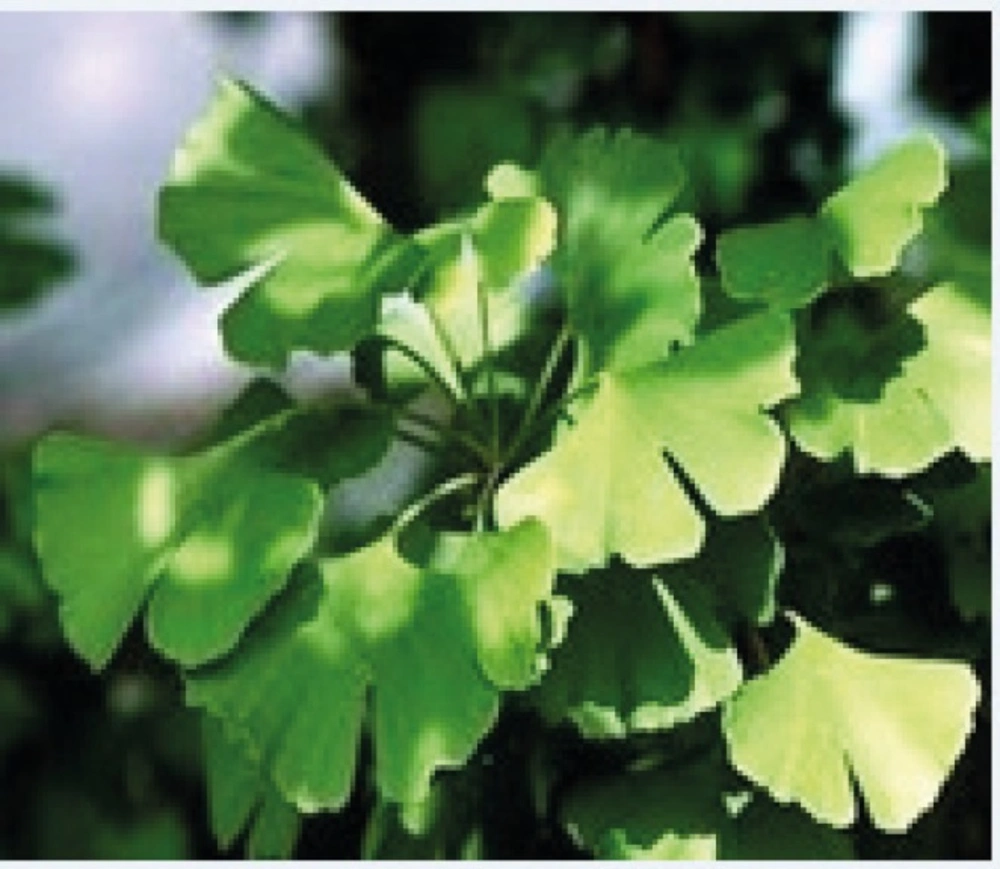
Figure 1
Ginkgo biloba leaf (14).
Rhus coriaria (Figure 2) has been applied as a medicinal plant since prehistoric times. Sumacis reported to have hydrolysable tannins, gallo-tannins, volatile oil, flavonoids, anthocyanin, gallic acid, and flavones, such asmyricetin, quercetin and kaempferol. According to the literature survey, Sumac has been documented to reveal antibacterial, hepatoprotective, antifungal, antioxidant anti-inflammatory/chondroprotective, and many other medicinal characteristics (15). Also anti-helicobacter pylori effect of it has been previously reported (16,17). The plant was traditionally used to treat diarrhea, dysentery, leucorrhea, and stomach tonic. Other studies also mentioned R. coriaria application as an antimicrobial agent (13).
Figure 2
Rhus coriaria fruit (18).
Matricaria inodora (Figure 3) includes aromatic substances called carminatives that help the eructation reflux and as a result act as a gastrointestinal tract pain reliever. It has also been reported to contain flavonoids constitutes and as a result can act as anti-inflammatory operator. The plant has long been used to relieve indigestion, promote appetite, and also for the treatment of stomach ulcers to help prevent food poisoning and treat gastric ulcer, swollen liver and spleen (13).
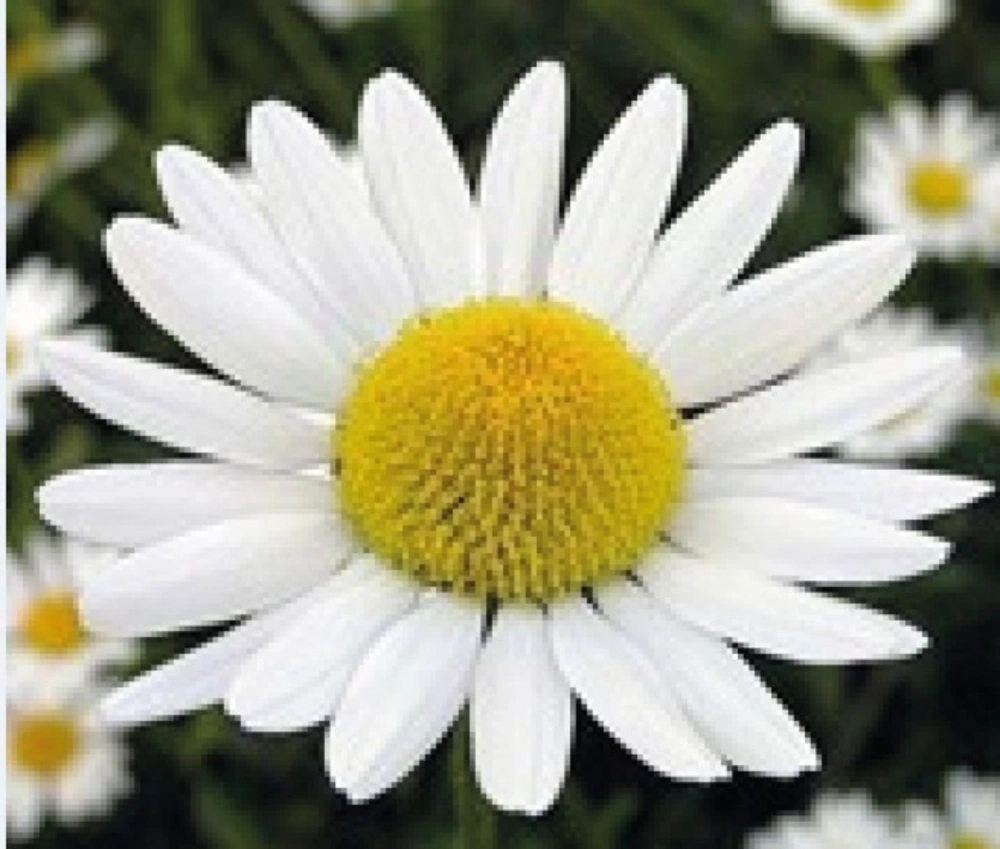
Figure 3
Matricaria inodora flowering stage (19).
The results from this study along with the ones from the literature (6,10,14-17,20,21) confirm some of the traditional applications of the above mentioned medicinal plants (Table 1) as gastric tonics, anti-ulcers, anti-bacterial, indigestion reliever and many others (14-17). These activities may be mediated by direct inhibition of bacterial urease such as H. pylori urease and their subsequent anti-H. pylori activity or indirect action as an anti-oxidant, anti-inflammatory agents or pH-mediator compounds through their active chemical constituents (14-17). The obtained IC50 values for the three most potent extracts were lower than those of others with urease inhibitory activity reported recently (6,10,20,21). This finding promotes the capability of these plants (M. inodora, G. biloba & R. coriaria) to be used as herbal remedies to manage gastrointestinal tracts ailment alone or along with other official anti-H. pylori drugs.
