
1. Background
Since late 2019, coronavirus disease 2019 (COVID-19) has resulted in more than 200 million confirmed cases and 4.5 million deaths worldwide (1). The data from previous studies showed that the novel coronavirus 2019 causes mainly no symptoms or mild disease in the pediatric population, which needs only supportive care (2). Furthermore, it could cause a more severe course of the disease and multisystem inflammatory syndrome in children (MIS-C) (3-5).
To date, numerous antiviral agents, including favipiravir, remdesivir, and interferons, have been tried to treat COVID-19 (6, 7). Currently, remdesivir is the only antiviral agent approved to be used in the pediatric population (≥ 12 years) in COVID-19 pharmacotherapy (8). Although some ongoing clinical trials are performed to assess the therapeutic options for children, no published study has been released.
Favipiravir is a prodrug that converts to an active metabolite with broad-spectrum activity developed to treat influenza and used against Ebola (9, 10). Published clinical trials on the adult population reported benefits in patients diagnosed with COVID-19 (11); however, the data were not conclusive. Additionally, some warnings have been issued, and adverse reactions, including bone marrow suppression, hepatotoxicity, and hypersensitivity reaction, were reported (12).
2. Objectives
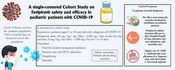
This study aimed to assess the safety and efficacy of favipiravir in children who were admitted to a hospital due to severe COVID-19.
3. Methods
In this historical cohort study, the patients aged 1 - 18 years with a diagnosis of COVID-19 who were admitted to Mofid Children’s Hospital, Tehran, Iran, were included within April 2020 to December 2020. The study was conducted in accordance with the Declaration of Helsinki and approved by the Board of Ethics Committee of Shahid Beheshti University of Medical Sciences, Tehran, Iran (IR.SBMU.RICH.REC.1399.069). The inclusion criteria were patients with symptoms compatible with the disease, including fever, cough, peripheral capillary oxygen saturation (SpO2) (measured using pulse oximeter) less than 93% or severe respiratory distress, cyanosis, and apnea. Furthermore, the patients with fever and/or malaise and/or upper respiratory disease and/or pneumonia were included. The patients who were symptom-free, with no pulmonary involvement in radiologic findings, or with a negative result for reverse transcription-polymerase chain reaction were excluded. Individual case report forms were completed for each patient. Moreover, the data regarding demographics, medical history, related laboratory data, clinical data on the course of hospitalization, and administered medications were recorded.
Favipiravir was administered based on the recommendation of the national guideline at a dosing of 60 mg/kg/day (max: 3200 mg/day) for 1 day followed by 23 mg/kg/day (max: 1200 mg/day) divided into three doses for 7 to 14 days (15). The patients in the control group (within February 2020 to March 2020) received a therapeutic regimen based on the national protocol except for the favipiravir (15). The patients in both groups received standard care, including oxygen supplementation, ventilation support, fluid and electrolyte correction, vasoactive agents and antibiotic administration, and renal replacement support if appropriate (15, 16).
The primary outcome was defined as the need for invasive mechanical ventilation. In addition, the patients were followed up for intensive care unit (ICU) admission, hospital stay, and mortality as secondary outcomes. The patients were followed for the occurrence of potential drug reactions as safety outcomes. The criteria for admission to the ICU are defined as acute refractory hypoxia, acute hypercapnia, respiratory exhaustion, hemodynamic instability, and diagnosis of moderate to severe MIS-C (17).
Statistical analyses were performed using SPSS software (version 20.0). Continuous variables were expressed as mean ± standard deviation or median [interquartile range (IQR)] for variables with normal and nonnormal distributions, respectively. Categorical data were expressed as frequency (percentage). The independent samples t-test and Mann-Whitney U test were used to compare the differences in continuous variables for parametric and nonparametric ones, respectively. The differences in the categorical data were analyzed using the chi-square test (or Fisher’s exact test if appropriate). Multivariable logistic regression was performed to evaluate the association between favipiravir administration and outcomes (i.e., need for invasive mechanical ventilation and in-hospital mortality). The model was adjusted for hypoxia (defined as SpO2 < 94%) and high-risk conditions (i.e., malignancy, cardiac disease, immune deficiency, asthma, failure to thrive, and metabolic disease). Odds ratio (OR) plus 95% confidence interval (CI) were reported. P-values of 0.05 were considered statistically significant in the analysis.
4. Results
In this study, 25 patients received favipiravir, and 70 patients were included in the control group. The median age of the included patients was 6.00 years (IQR = 9.00), with a median weight of 22.00 kg (IQR = 25.00). In addition, 59 patients (62.10%) were male. The symptoms of the included patients were initiated 1 days (IQR = 4 days) before the first physician visit. The patients experienced fever (58.90%), dyspnea (44.20%), and nonproductive cough (36.80%) as their three most common signs and symptoms, respectively. The routine vaccination was performed for 93 patients (96.8%). Table 1 shows the patients’ baseline demographics and related laboratory data in the case and control groups.
| Variables | Favipiravir Group (n = 25) | Control Group (n = 70) | P-Value |
|---|---|---|---|
| Age (y) | 8.00 (IQR = 7.50) | 6.00 (IQR = 10.00) | 0.980 |
| Gender | |||
| Male | 15 (60.0) | 43 (61.4) | 0.820 |
| Female | 10 (40.0) | 27 (38.6) | |
| Medical history | |||
| Malignancy | 10 (40.0) | 13 (18.6) | 0.035 |
| Cardiac disease | 1 (4.0) | 7 (10.0) | 0.676 |
| Immune deficiency | 4 (16.0) | 4 (57.1) | 0.201 |
| Asthma | 2 (8.0) | 2 (2.9) | 0.282 |
| Failure to thrive | 1 (4.0) | 6 (8.6) | 0.671 |
| Metabolic disease | 0 (0.0) | 3 (4.3) | 0.564 |
| Symptom initiation before admission | 2.00 (IQR = 3.50) | 1.00 (IQR = 3.00) | 0.016 |
| Baseline laboratory data | |||
| White blood cell (cell/micL) | 5500.00 (IQR = 8200.00) | 7400.00 (IQR = 6900.00) | 0.261 |
| Lymphocyte (%) | 26.67 ± 21.47 | 27.95 ± 11.38 | 0.450 |
| Neutrophile (%) | 66.89 ± 22.54 | 71.45 ± 7.70 | 0.331 |
| Hemoglobin | 10.35 ± 2.88 | 8.85 ± 0.64 | 0.904 |
| Platelet | 218.00 (IQR = 230.00) | 203.00 (IQR = 201.00) | 0.823 |
| C-reactive protein | 74.00 (IQR = 97.00) | 34.00 (IQR = 90.00) | 0.347 |
| Erythrocyte sedimentation rate | 41.00 (IQR = 53.50) | 35.00 (IQR = 45.00) | 0.437 |
| Serum creatinine | 0.60 (IQR = 0.19) | 0.50 (IQR = 0.20) | 0.380 |
| Blood urea nitrogen | 10.20 (IQR = 5.75) | 10.00 (IQR = 9.40) | 0.168 |
| Na | 136.48 ± 3.72 | 134.11 ± 5.11 | 0.038 |
| K | 4.13 ± 0.49 | 4.02 ± 0.73 | 0.487 |
| P | 4.45 ± 2.27 | 3.94 ± 1.44 | 0.315 |
| Ca | 8.36 ± 1.98 | 8.48 ± 0.97 | 0.773 |
| Prothrombin time (PT) | 13.00 (IQR = 2.50) | 13.90 (IQR = 4.50) | 0.109 |
| International normalized ratio (INR) | 1.10 (IQR = 0.30) | 1.20 (IQR = 0.70) | 0.144 |
| Partial thromboplastin time (PTT), sec | 32.00 (IQR = 9.50) | 30.00 (IQR = 12.00) | 0.327 |
| Lactate dehydrogenase | 421.00 (IQR = 256.50) | 703.00 (IQR = 381.00) | 0.005 |
| Creatine phosphokinase | 61.00 (IQR = 72.50) | 80.00 (IQR = 91.00) | 0.157 |
| Aspartate aminotransferase | 35.00 (IQR = 23.00) | 34.50 (IQR = 34.25) | 0.896 |
| Alanine aminotransferase | 29.00 (IQR = 14.00) | 25.00 (IQR = 30.75) | 0.553 |
| Alkaline phosphatase | 319.00 (IQR = 235.00) | 298.00 (IQR = 186.00) | 0.458 |
| Total bill | 0.60 (IQR = 0.40) | 0.65 (IQR = 0.91) | 0.724 |
| Direct bill | 0.40 (IQR = 0.40) | 0.24 (IQR = 0.64) | 0.814 |
| Oxygen saturation (%) | 0.009 | ||
| > 94 | 12 (48) | 12 (17) | |
| 90 - 94 | 10 (40.0) | 47 (67.1) | |
| < 90 | 3 (12.0) | 11 (15.7) | |
| Ventilation support | |||
| Room air (no support) | 12 (48.0) | 11 (15.7) | 0.001 |
| O2 with mask | 7 (28.0) | 37 (52.9) | 0.032 |
| O2 with hood | 1 (4.0) | 12 (17.1) | 0.173 |
| Noninvasive ventilation | 1 (4.0) | 0 (0.0) | 0.263 |
| Invasive ventilation (intubated) | 4 (16.0) | 10 (14.3) | 1.000 |
| Symptoms | |||
| Fever | 17 (68.0) | 39 (55.7) | 0.284 |
| Cough | 8 (32.0) | 37 (52.9) | 0.073 |
| Dyspnea | 26 (37.1) | 4 (16.0) | 0.051 |
a The independent samples t-test and Mann-Whitney U test were used to compare the differences in continuous variables for parametric and nonparametric ones, respectively. The differences in the categorical data were analyzed using the chi-square test (or Fisher’s exact test if appropriate).
b Continuous variables were expressed as mean ± SD or median [interquartile range (IQR)] and categorical data were expressed as No. (%).
In the course of the hospitalization, the patients received favipiravir for a median of 5.00 days (IQR = 4.00). After favipiravir initiation, potentially adverse reactions were reported in 13 patients (52.00%). Diarrhea, nausea, and vomiting were reported in 5 (20.00%), 11 (44.00%), and 3 (12.00%) patients in the favipiravir group, respectively. The aforementioned conditions were reported in 18 (25.7%), 22 (31.4%), and 21 (30.0%) patients in the control group, respectively. No significant differences were observed regarding the reactions between the two groups. Decreased appetite was reported in 19 (76.00%) and 20 (28.57%) patients in the favipiravir and control groups, respectively (P < 0.001). Cardiovascular complications, including hypotension, tachycardia, and chest pain, occurred in 10 (40.00%), 10 (40.00%), and 7 (28.00%) patients in the case group and 9 (12.86%), 18 (25.71%), and 5 (7.14%) patients in the control group, respectively. Hypotension and chest pain were significantly higher in patients who received favipiravir than in the controls (P = 0.004 and P = 0.007, respectively). No significant differences were observed in the increase in liver transaminases (P = 0.694). Regarding electorate abnormalities, hyperuricemia was not reported in any patients. Neutropenia was observed in 5 (20.00%) and 10 (14.29) patients in the case and control groups, respectively (P = 0.501; Table 2).
Table 2.
Potentially Adverse Reactions in Patients of Case and Control Groups a
| Variables | Favipiravir Group (n = 25) | Control Group (n = 70) | OR (95% CI) | P-Value |
|---|---|---|---|---|
| Decreased appetite | 19 (76.00) | 20 (28.57) | 6.92 (2.76 - 22.72) | < 0.001 |
| Diarrhea | 5 (20.00) | 18 (25.71) | 0.72 (0.24 - 2.20) | 0.567 |
| Nausea | 11 (44.00) | 22 (31.43) | 1.71 (0.67 - 4.38) | 0.257 |
| Vomiting | 3 (12.00) | 21 (30.00) | 0.32 (0.09 - 1.18) | 0.075 |
| Liver transaminases elevation | ||||
| < 3 × ULN b | 4 (16.00) | 11 (15.70) | 1.02 (0.29 - 3.56) | 0.973 |
| 3 - 5 × ULN | 0 | 2 (2.90) | - | 0.393 |
| > 5 × ULN | 0 | 0 | - | - |
| Acute kidney injury | 0 | 0 | - | - |
| Neutropenia | 5 (20.00) | 10 (14.29) | 1.50 (0.46 - 4.91) | 0.501 |
| Hypotension | 10 (40.00) | 9 (12.86) | 5.52 (1.56 - 13.08) | 0.004 |
| Tachycardia | 10 (40.00) | 18 (25.71) | 1.93 (0.73 - 5.05) | 0.179 |
| Chest pain | 7 (32.00) | 5 (7.14) | 5.06 (1.43 - 17.84) | 0.007 |
| Periorbital edema | 2 (8.00) | 0 (0) | - | 0.071 |
| Headache | 5 (20.00) | 5 (7.14) | 3.25 (0.85 - 12.38) | 0.072 |
| Hyperuricemia | 0 (0) | 3 (4.29) | - | 0.293 |
| Hypokalemia | 2 (8.00) | 8 (11.43) | 0.67 (0.13 - 3.41) | 0.632 |
Abbreviations: OR, odds ratio; CI, confidence interval.
a Values are exspressed as No. (%).
b Upper limit of normal = 40 units/L.
There were several reported outcomes for the patients in this study. The need for invasive mechanical ventilation was reported in 4 (16.00%) and 11 (15.71%) patients in the favipiravir and control groups, respectively (P = 1.000). The median duration of hospital stay for the total population reported 8 days (IQR = 7.25) which was significantly higher in patients who received favipiravir (10 days; IQR = 16.00) than in the controls (6 days; IQR = 5.50) (P = 0.002). Moreover, 9 patients (36.00%) in the favipiravir group needed to be transferred to the ICU, compared to 2 (2.86%) patients in the control group (P < 0.001).
Mortality was reported in 4 (16.00%) and 9 (12.86%) patients in the favipiravir and control groups, respectively, which was not significantly different [OR = 1.29; 95% CI (0.36 - 4.63); P = 0.695]. The causes of death were reported as septic shock (n = 9; 9.50%) and acute cardiac event, and arrhythmia (n = 4; 4.20%). No significant difference was observed in the intubation rate between the two groups [16.00% and 15.71%; OR = 1.022; 95% CI (0.29 - 3.56); P = 0.973]. Table 3 shows the results of the logistic regression model regarding the evaluation of the effect of favipiravir and other variables on mortality and the need for mechanical ventilation.
Table 3.
Association of Favipiravir Administration with Need for Invasive Mechanical Ventilation and Mortality Based on Logistic Regression Model
| Variables | OR* (95% CI) | P-Value |
|---|---|---|
| Need for invasive mechanical ventilation* | 1.29 (0.18 - 9.40) | 0.804 |
| In-hospital mortality# | 2.13 (0.38 - 11.90) | 0.388 |
Abbreviations: OR, odds ratio; CI, confidence interval.
a The model was adjusted for high-risk conditions, hypoxia, and C-reactive protein level.
b High-risk conditions including Malignancy, cardiac disease, immune deficiency, asthma, failure to thrive, and metabolic disease.
5. Discussion
This cohort study reported the first data on the safety and efficacy of favipiravir in the pediatric population diagnosed with COVID-19. Previously, favipiravir was used to treat other viral infections in the pediatric population. In 2015, the first report on medication utilization was published from Africa. Favipiravir was used in weight-based dosing to treat Ebola in children older than 1 year (18). The dosing regimen which was considered to treat Ebola based on the patient’s weight was used in the case group of the present study (19).
The first concern for the children receiving favipiravir is the safety profile and severe adverse drug reactions (ADRs) during medication administration. Favipiravir administration as a direct viral replication inhibitor is associated with some severe adverse reactions (12). The present results are significant in major respects. The current study reported no significant increase in gastrointestinal ADRs, such as diarrhea, nausea, and vomiting, in favipiravir-receiving patients, compared to control patients. The favipiravir-receiving patients showed a higher rate of decreased appetite than the control patients. Other important concerns, such as bone marrow suppression as the most important adverse reaction associated with favipiravir use, were reported to be higher but not statistically significant in patients who received favipiravir.
Cardiovascular adverse reactions, such as hypotension and chest pain, were reported higher in patients who received favipiravir than the controls, which need some precautions in patients with underlying cardiovascular conditions. Furthermore, the prevalence of periorbital edema was higher in patients who received favipiravir than in the controls. The prevalence of other adverse reactions, including electrolyte abnormality and an increase in liver transaminase levels, was not significantly different between the two groups.
The early results from trials that examined the efficacy of favipiravir showed some beneficial outcomes, such as severe acute respiratory syndrome coronavirus 2 (SARS-CoV-2) clearance on the fourth day, in infected patients. In a pilot stage of phase II/III clinical trial, favipiravir administration was associated with SARS-CoV-2 viral clearance in 62.5% of patients within 4 days. Additionally, in another open-label randomized clinical trial with a sample size of 80 patients, favipiravir was associated with better clinical responses, including disease progression and viral clearance (20, 21). It is important to bear in mind the possible bias in these responses, which is constant of the impact of immunomodulatory agents.
In a multicenter randomized open-labeled clinical trial conducted with a sample size of 380 patients in Iran, the results demonstrated that favipiravir add-on therapy resulted in no clinical benefits (i.e., ICU admission, intubation, or in-hospital mortality) in patients with moderate to severe COVID-19 (22). In the pediatric population, to date, there have been no clinical results on the efficacy of favipiravir in COVID-19 treatment. In the present study, no significant effect was observed regarding the need for mechanical ventilation in patients who received favipiravir. The median hospitalization and ICU admission duration was significantly higher in patients who received favipiravir than in the controls. Additionally, the results of the present study showed no significant difference between the case and control groups concerning the mortality rate.
In interpreting the above-mentioned results, it should be considered that patients who received favipiravir had a better oxygenation profile than the controls. About half of the patients in the favipiravir group received no oxygenation support at the baseline, which was significantly higher than the control group. This phenomenon shows that although these patients had a better oxygenation profile at the baseline, the result of efficacy outcome after the adjustment of the effect of hypoxia was not significant, and the medication had no significant effect on the patients’ outcomes. The initiation of the disease symptoms among patients in the favipiravir group before hospital admission was longer than the control group; nevertheless, in both groups, it could be considered that patients were in the viral phase of the disease.
Therefore, it can be considered that favipiravir as a ribonucleic acid-polymerase inhibitor could be used in the pediatric population; however, cautions about adverse reactions should be exercised. Due to favipiravir administration, the pediatric population is more susceptible to adverse cardiovascular reactions. This finding is important as COVID-19 could be associated with cardiac complications that complicate the disease course (23). In patients with a severe course of the disease, the occurrence of shock, hypotension, and cardiac complication could result in serious conditions which might be fatal.
The represented data of this study should be interpreted with the consideration of the study’s limitations. Firstly, randomized controlled clinical trials with a larger sample size should be performed to assess the whole aspects of the safety of favipiravir in the pediatric population. Secondly, this study was designed as a retrospective single-center cohort. It is required to obtain the data on the efficacy of favipiravir from multicentric clinical trials. Despite the results obtained from the present study, there is much room for further investigation to determine the effectiveness of favipiravir in the pediatric population, and more prospective randomized trials are needed in this regard. In addition, it might be possible to use other dosing regimens in future investigations.
5.1. Conclusion
In conclusion, the use of favipiravir in the pediatric population is associated with more cardiovascular adverse effects (i.e., hypotension and chest pain). There was no significant increase in other adverse reactions, such as bone marrow suppression, increase in liver transaminase, and electrolyte abnormality. No efficacy was observed in the administration of favipiravir in the pediatric population. The administration of favipiravir did not result in better outcomes, such as the need for mechanical ventilation, duration of hospitalization, and mortality rate.