Fulltext
The full text of this article is available on PDF.
Journal of Clinical Research in Paramedical Sciences
The Official Journal of Paramedical School, KUMS
Authors
Introduction: Angiogenesis, is involved in development, wound healing and pathological conditions such as tumor growth.Both hemostatic and angiogenic systems are applied to stop bleeding .They were activated through being exposed to subendothelial matrix. Any disturbance in hemostatic and angiogenic system lead to tumor growth and metastasis.
Methods: At first related articles about angiogenesis and coagulation systems, The due systems were searched from valid databases such as WILY ONLINE LIBRARY, ISI web of science, Springer Link, Sciencedirect, Pubmed, google scholar, SID and ISC. Then, the related articles were studied from 2002 to 2014.
Results: In normal condition,angiogenesis occurs through the establishment of balance among proangiogenic , anti-angiogenic,coagulation and anticoagulation factors. These factors and agents support angiogenic system and result consequently in tumor growth ,metastasis and the increase of susceptible patient to coagulopathy.
Conclusion: : The tight regulatory balance between pro- and antiangiogenic factors is disturbed in favor of angiogenic stimulators which lead to cancer development. Coagulation is synergistically activated, so the patient develops the increased risk of a thrombotic event. In addition to their recognized role to regulate coagulation, platelet-derived hemostatic and plasma factors also contribute to the regulation of angiogenesis. Because tumor growth and metastasis depend on angiogenesis, negative regulators angiogenesis have special interest as potential anti-angiogenesis and anti-cancer agents.
© 2016, Journal of Clinical Research in Paramedical Sciences. This open-access article is available under the Creative Commons Attribution-NonCommercial 4.0 (CC BY-NC 4.0) International License (https://creativecommons.org/licenses/by-nc/4.0/), which allows for the copying and redistribution of the material only for noncommercial purposes, provided that the original work is properly cited.
Mansouri K, Mostafaie A, Mohammadi-Motlagh H. Angiogenesis and tumor. J Kermanshah Univ Med Sci. 2011;14(4):e79444. doi:
Mansoori K, Mirshahi M, Poorfathollah A, Hassan M. Designing an Experimental Angiogenesis Model in a Three Dimensional Matrix of Fibrin to Evaluate Neoplastic Growth Inhibitors. J Kermanshah Univ Med Sci. 2005;9(3):e81577. doi:
Norooznezhad AH, Norooznezhad F, Bagheri N. Cannabinoids as Treatment for Hemophilic Arthropathy: Hypothesized Molecular Pathways. J Rep Pharm Sci. 2016;5(2):e147653. doi:
Taghizadeh MJ, Khodadadi S, Zamanifard S. Evaluation of Drugs and Strategies for Treating Coronary Artery Ectasia: Update and Future Perspective. Jundishapur J Chronic Dis Care. 2022;11(3):e123301. doi: https://doi.org/10.5812/jjcdc-123301
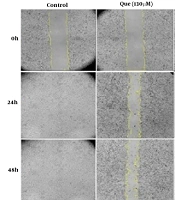
Sanaei A, Mohammadzadeh G, Rashidi M. Quercetin Improves the Anti-angiogenic Property of 5-Fluorouracil on the Human Umbilical Vein Endothelial Cells HUVEC Cell Line. Int J Cancer Manag. 2022;15(4):e120315. doi: https://doi.org/10.5812/ijcm-120315
Last Update: 3 weeks ago
Last Update: 3 weeks ago
Last Update: 3 weeks ago
Last Update: 4 days ago