


1. Background
2. Objectives
3. Methods
3.1. Bacterial Strains and Cells
3.2. ME-180 Cell Culture and Inoculation with Lactobacillus plantarum and Candida albicans
4. Results
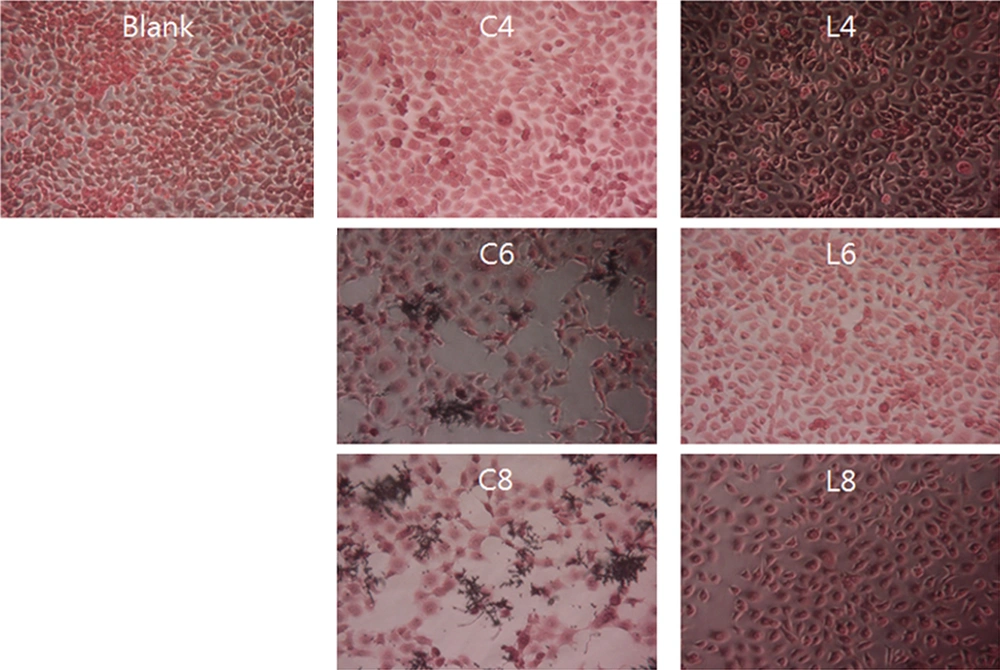
Morphology of M-180 cells inoculated with Candida albicans and Lactobacillus plantarum. Blank, uninoculated M-180 cells; C, C. albicans; L, L. plantarum. The numbers indicate 104, 106, and 108 CFU/mL, respectively.
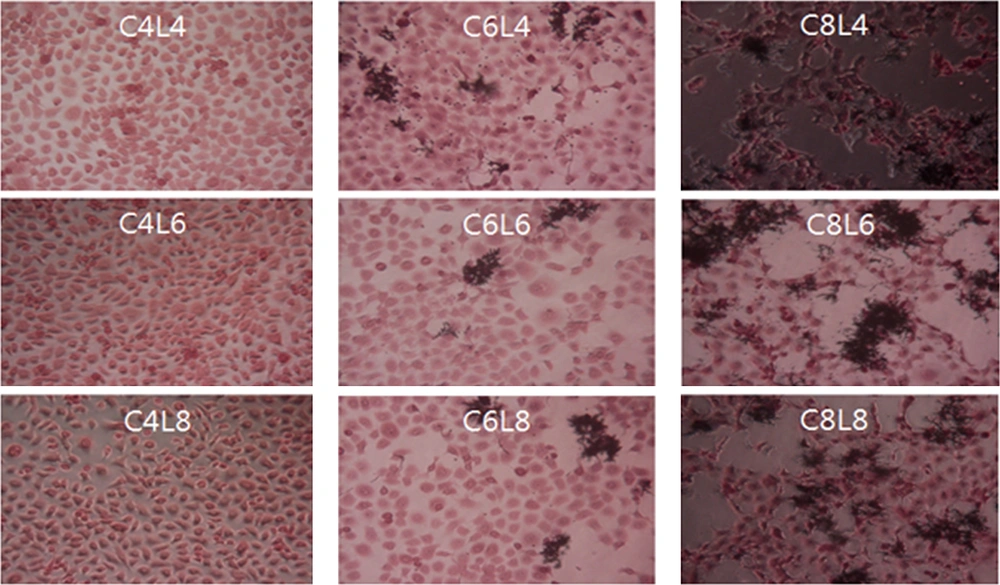
Morphology of ME-180 cells inoculated with Candida albicans and Lactobacillus plantarum. ME-180 cells were inoculated for 5 h, washed, and cultured for an additional 24 h. C, C. albicans; L, L. plantarum. The numbers indicate 104, 106, and 108 CFU/mL, respectively.
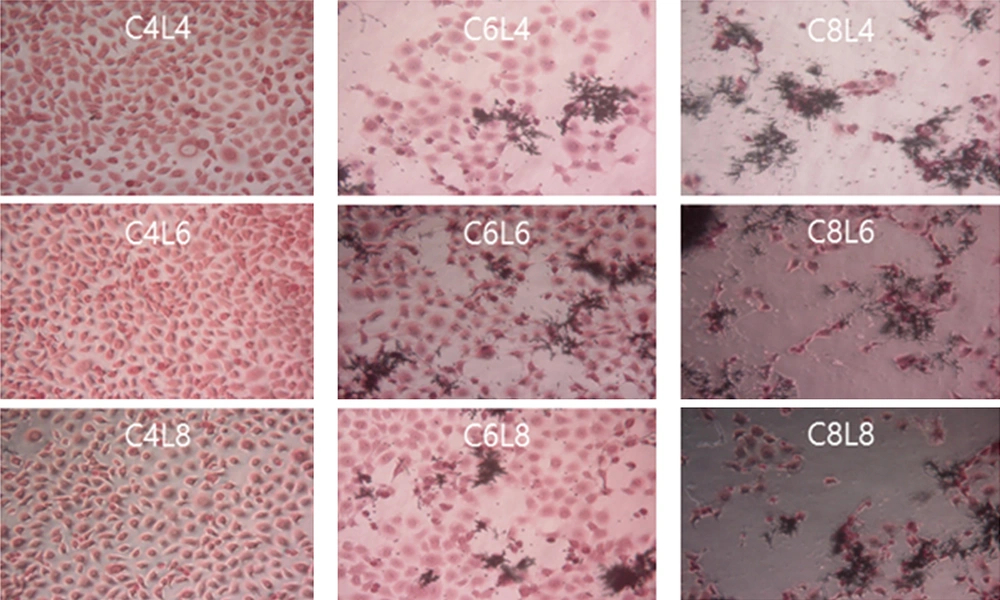
Morphology of ME-180 cells inoculated with Candida albicans and Lactobacillus plantarum. ME-180 cells were cultured with C. albicans for 5 h, then inoculated with L. plantarum, cultured for 5 h, washed, and cultured for an additional 24 h. C, C. albicans; L, L. plantarum. The numbers indicate 104, 106, and 108 CFU/mL, respectively.
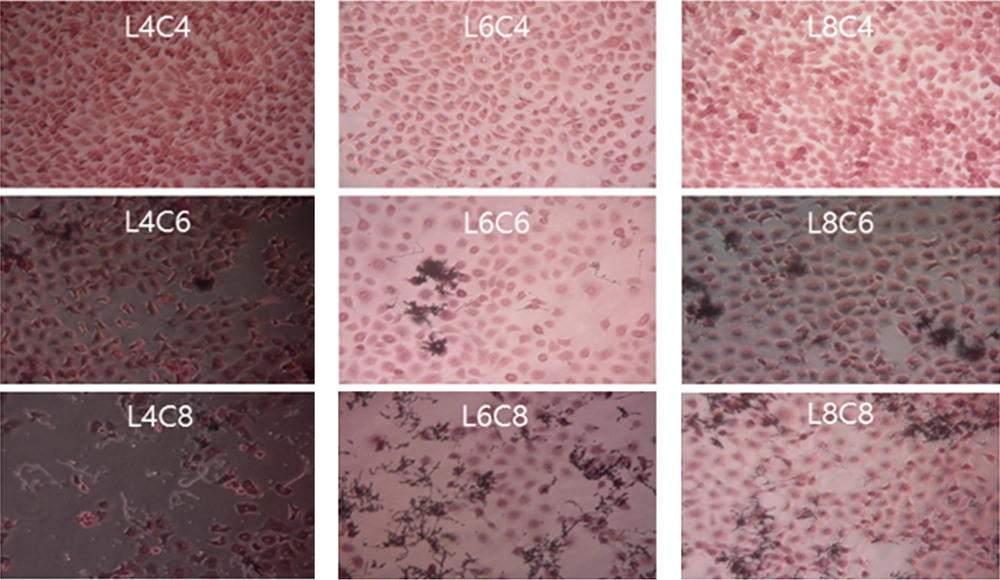
Morphology of ME-180 cells inoculated with Candida albicans and Lactobacillus plantarum. ME-180 cells were cultured with L. plantarum for 5 h, then inoculated with C. albicans, cultured for 5 h, washed, and cultured for an additional 24 h. C, C. albicans; L, L. plantarum. The numbers indicate 104, 106, and 108 CFU/mL, respectively.
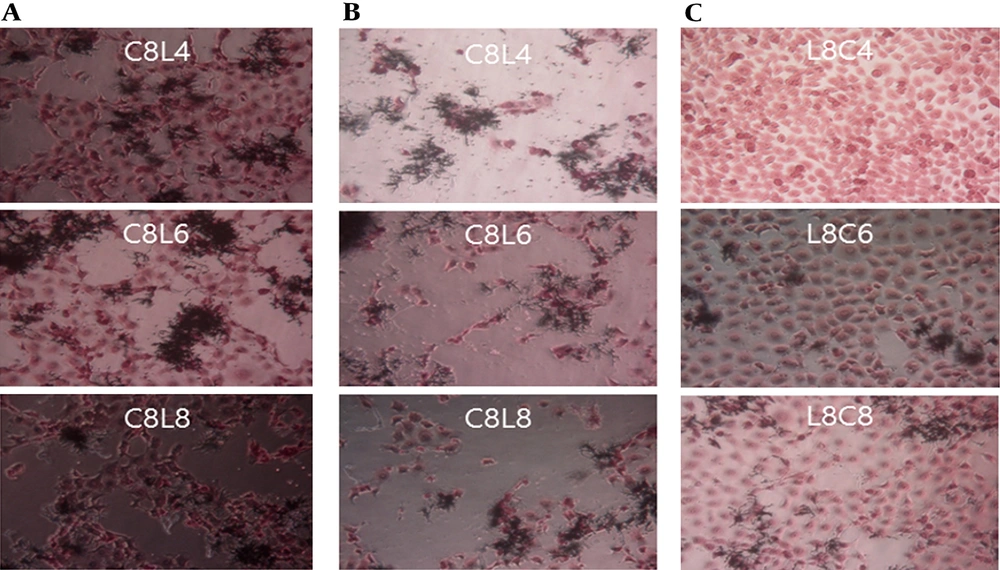
Antagonistic effects of Lactobacillus plantarum on Candida albicans in ME-180 cell cultures, depending on the order of inoculation. A. Simultaneous inoculation. B. Inoculation with C. albicans first. C. Inoculation with L. plantarum first. C, C. albicans; L, L. plantarum. The numbers indicate 104, 106, and 108 CFU/mL, respectively.


