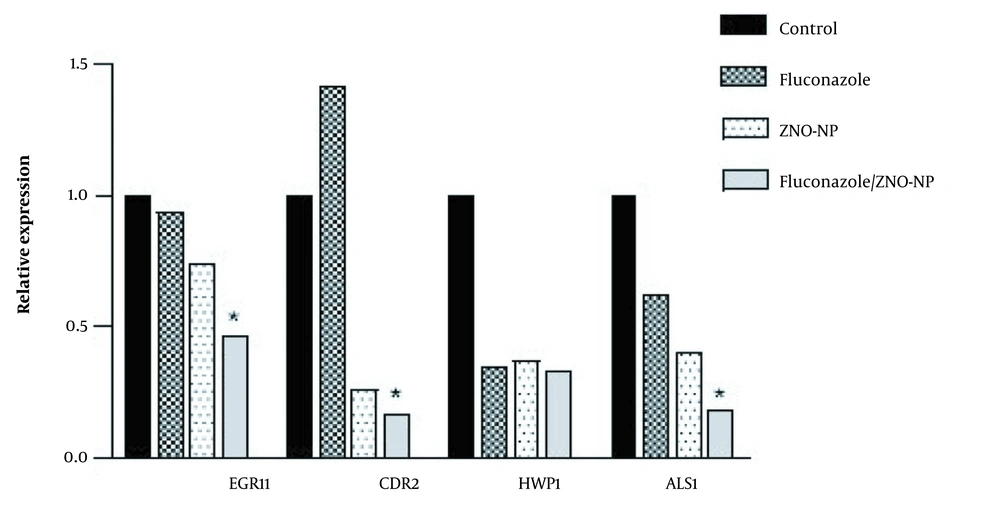
This study indicated evidence of the antifungal activity of ZnO-NPs with fluconazole on
C. albicans isolates and their effects on the expression levels of
ERG11,
CDR2,
HWP1, and
ALS1 genes. Different sub-MIC values of ZnO-NPs, fluconazole, and a mixture of ZnO-NPs and fluconazole were used to treat fluconazole-resistant
Candida isolates. In the present study, the expression of
ERG11,
CDR2,
HWP1, and
ALS1 in isolates treated with combining ZnO-NPs and fluconazole was downregulated in comparison to that of the control group. The present study indicated that, when compared to using ZnO-NPs or fluconazole alone, the synergistic activity of ZnO-NPs disc with fluconazole had a significant effect on isolated
C. albicans. The aforementioned results are in line with the results of previous studies (
17,
20).
Several studies revealed that the expression of the
ERG11 gene was upregulated in
C. albicans isolates (
23-
25). It was proposed that the higher expression of this gene might contribute to the antifungal effect of fluconazole in
C. albicans via the increased production of its target enzymes. According to the literature review, it seems that resistance to fluconazole is not only due to the changes in
ERG11 but also some other mechanisms, such as the prevention of the intracellular accumulation of the antifungal agent and changes in the target enzyme, which lead to reduced drug attachment (
26). The difference in the percentage of increased expression in different studies might be due to the synthesized method, concentration, and size of NPs. Song et al. showed that the administration of fluconazole had no significant effect on the expression rates of the
ERG11 gene (
27). Recently, Dižová revealed that fluconazole could cause a reduction in the expression level of the
ERG11 gene only in combination with farnesol (
28). In the current study, similar results were obtained, indicating that fluconazole only affects the expression level of this gene after being combined with ZnO-NPs. It might be proposed that the combined administration of fluconazole and ZnO-NPs might alter the biofilm formation via the regulation of the
ERG11 gene.
It was proved that fluconazole causes decreased expression of the
CDR2 gene alone and in combination with other drugs (
29,
30). Shao et al. revealed that
C. albicans isolates treated with fluconazole showed upregulation when compared to untreated control strains (
31). The findings of the present study also demonstrated that the expression rate of
CDR2 was upregulated in
C. albicans isolates treated with fluconazole; nevertheless, its expression was interestingly downregulated when isolates were treated with ZnO-NPs and a combination of these two drugs. In addition, treating isolates with the combination of fluconazole and ZnO-NPs caused a much higher decrease in the expression level of this gene. This fact suggests that ZnO-NPs might facilitate the suppression of the efflux pumps in combination with fluconazole. Since the present study demonstrated the effect of this combination on the expression of several genes, it seems that resistance to fluconazole is multifactorial, involving other molecular mechanisms (
26).
Differences in the gene expressions involved in
C. albicans virulence might depend on the immunity system and mutations in the specific genes and the immunocompromised patients referring to clinics and hospitals frequently to receive antifungal drugs; therefore, the
ERG11 gene expression level was changed (
24). Golabek et al. indicated an increase in the expression of
CDR2 and
ERG11 in the azole-resistant strains of
C. albicans in comparison to that of susceptible strains (
32). Furthermore, they reported some
ERG11 mutations which affect the expression of
ERG11; consequently, Golabek et al. concluded that the mechanism of developing resistance to azoles might be a complex process. It seems that the evaluation of changes in the
ERG11 and
CDR2 sequences associated with gene expression in the local population can widely help understand the factors affecting the resistance of
C. albicans to fluconazole.
The key step of
Candida species adhesion to surfaces is biofilm formation, which causes persistent infection and microorganism attack on cells, particularly in hospitalized patients and individuals with the impaired immune system (
33). As known, cell-surface-related glycosylphosphatidylinositol encoded by the ALS-family and
HWP1 genes binds to glycoprotein, which mediates the attachment of
C. albicans strains to mucosal surfaces. Functional analyses showed that the
HWP1 gene and
ALS1 gene have a key role in
C. albicans biofilms, both at
in vitro and
in vivo levels. The role of these two genes in the colonization and virulence of
C. albicans strains could be evaluated via the detection of their expression in
C. albicans strains isolated from clinical specimens. Several studies (
16,
34) indicated that, in comparison to fluconazole-sensitive isolates, their expression had a significant increase in fluconazole-resistant
C. albicans isolates. The results of the present study showed that the treatment of
C. albicans strains with the combination of ZnO-NPs and fluconazole in the tested isolates reduced the expression of the
ALS1 and
HWP1 genes significantly.
According to the literature review, it has been proposed that to trigger
in vivo formation of biofilm, the
HWP1 surface protein needs to be associated with the ALS gene family (
35). Nas et al. reported that the expression of
ALS1 and
HWP1 genes was detected as 69% and 62% in all cases with vulvovaginal candidiasis (VVC), respectively. In pregnant, postmenopausal, and reproductive age women with VVC, the expression of the
ALS1 gene was observed at 70%, 75%, and 67%, and the expression of the
HWP1 gene was observed at 60%, 25%, and 73%, respectively (
36). Finally, in line with the present study’s results, Hosseini et al. recently showed that the combination of fluconazole and ZnO-NPs caused a significant reduction in the expression levels of two
ALS1 and
ALS3 in comparison to those of the control strain (
12). Some similar studies using different drugs in combination with fluconazole showed that the expression level of the
HWP1 gene was significantly downregulated in
C. albicans isolates (
37,
38). Nevertheless, to the best of our knowledge, no study has examined the effect of ZnO-NPs on the expression rate of this gene. The current study showed that the treatment of
C. albicans significantly reduced the expression of
HWP1.
The main limitation of the present study was the low number of studied genes. There is a need for further comprehensive studies on other genes involved in biofilm formation in clinical isolates of C. albicans. Using a larger population with a higher number of isolated and a higher number of genes with a potential role in these pathways in future studies might lead to more reliable conclusions.
5.1. Conclusions
The findings of this study revealed that the simultaneous administration of ZnO-NPs and fluconazole could be more efficient in the inhibition of fungal growth and activity via decreasing the levels of ALS1, HWP1, and CDR2 gene expression. Therefore, ZnO-NPs eliminate the infection when combined with fluconazole or other antifungal agents. Based on the obtained results of this study and various tests of NPs, these ingredients are ideal for removing the infection in combination with new pharmaceutical formulations, along with antifungal chemical drugs conjugated with medications. As a result, further studies are required to investigate natural target cells on mouse models in vitro and in vivo.