The significance of
Candida infection among animal samples has not been well understood. On the other hand, many animal fungal infections due to
Candida species have been reported, but their pathogenesis is not as significant as in humans (
5). Also, numerous DNA-based genotyping techniques have shown effectiveness in evaluating and studying the population structure and molecular epidemiology of pathogenic fungi, thereby assisting in perceiving infection in humans and animals (
14,
29). This research assessed phylogenetic analysis and relationships among
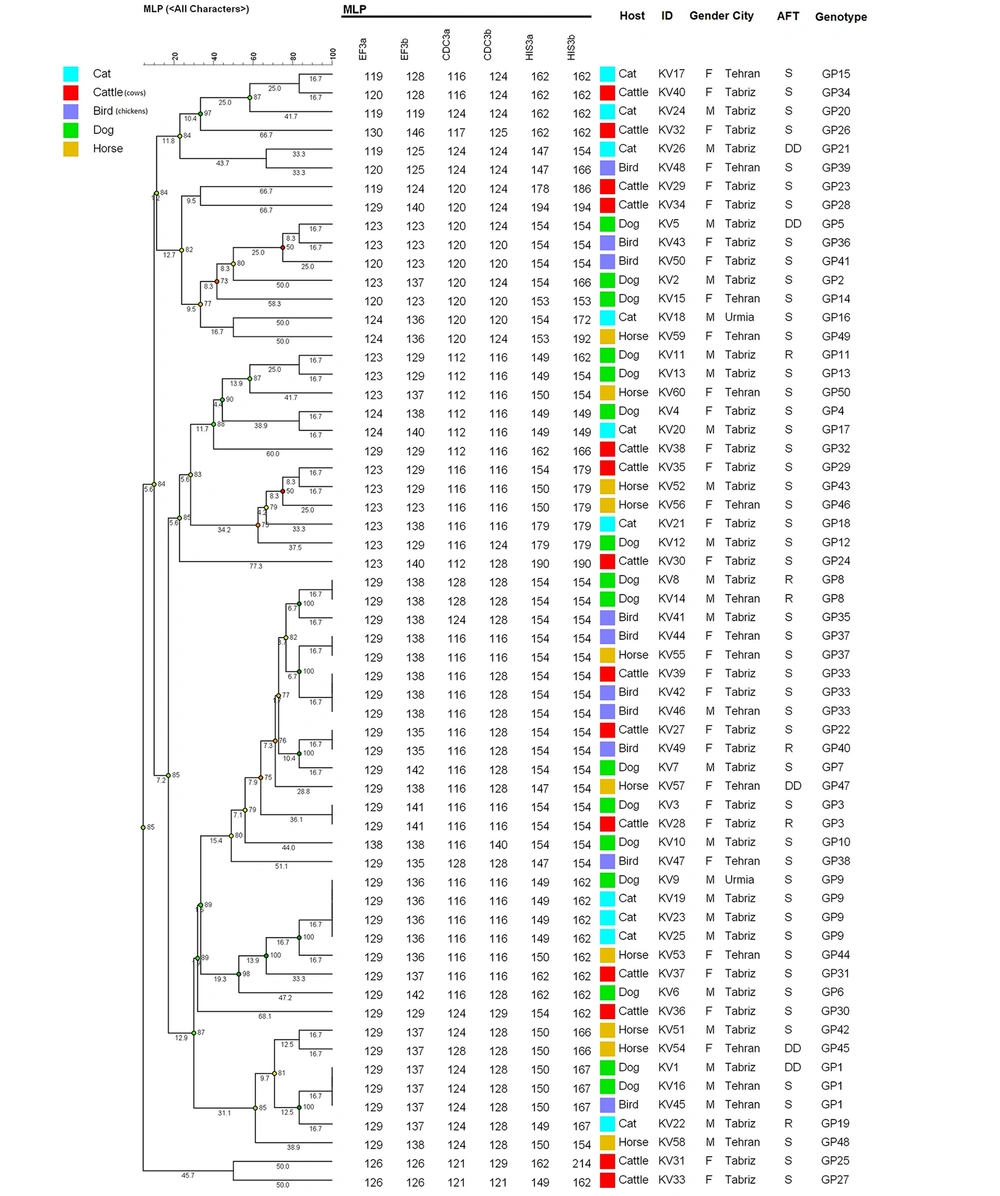
C. albicans strains collected from animals with candidiasis by MLP. This investigation was one of the first studies conducted using molecular typing for
C. albicans isolated from different animals, including cows, horses, dogs, cats, and chickens. Here, we investigated genetic differences, and population structure of
C. albicans strains isolated from animals.
In this study, when combining the three microsatellites for typing a series of 60 unrelated strains of
C. albicans, we obtained a discriminatory power of 0.991, which makes this method suitable for epidemiological studies. In agreement with our results, the discriminatory power index was reported at 0.991 in a study using the combination of CDC3, EF3, and HIS3 microsatellite polymorphic markers using multiplex PCR (
19). Sampaio et al. indicated a higher value of 0.998 using the multiplex system according to the CAI, CAIII, and CAVI microsatellite markers (
22). This difference may be due to the differential power of markers used, source of samples, sample size, and geographic area.
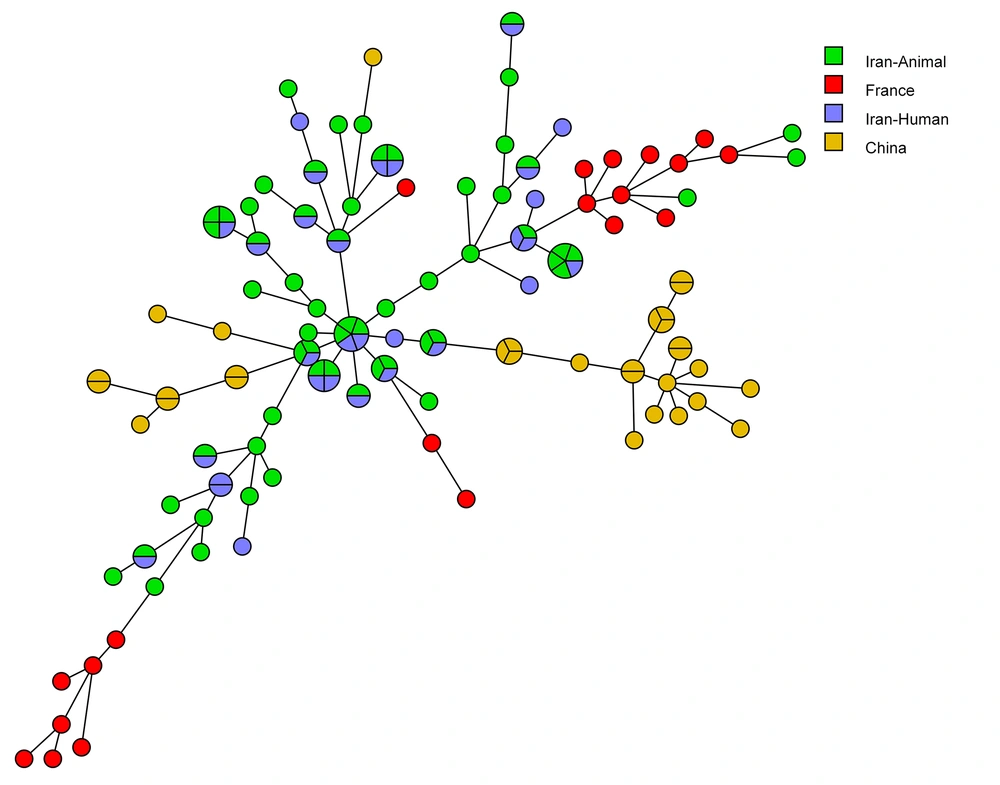
Of the 49 different genotypes in this study, 17 alleles and 26 different combinations were found for EF3 gene, six alleles and 13 combinations for CDC3 gene, and 17 alleles and 27 combinations for HIS3 gene. According to our findings, EF3 marker with high heterozygosity (Ho = 0.858) is the most efficient marker among the markers used in this study; so, this marker could better determine the genetic distance of hybrids than the other two markers used. Assessing genetic correlation in those isolates by this multiplex assay led to the discrimination of 49 of 60 strains, most of the identified genotypes were unique, thus indicating the high genetic diversity of
C. albicans strains in animals. Other countries did not have identical genotypes in all loci compared to Iranian strains (
Figure 3), and it can represent a relatively high level of genetic diversity of
C. albicans isolates and geographical area.
Microevolution was seen due to mild alterations in the strain genotypes, which means the changes in only an allele that can be resulted from the single mutational step. Farahbakhsh et al.’s study showed that MLP typing of 60
C. albicans isolates in Iran resulted in 54 various profiles with a discriminatory power index of 0.997 (
26). Ten alleles, as well as 18 different combinations, were found for EF3 gene, seven alleles and 18 combinations for CDC3 gene, and also 10 alleles and 14 combinations for HIS3 gene (
26). In a study by Gharaghani et al., 38 different genotypes were detected with the three polymorphic loci among
C. albicans isolates, and one genotype was homozygous (
20).
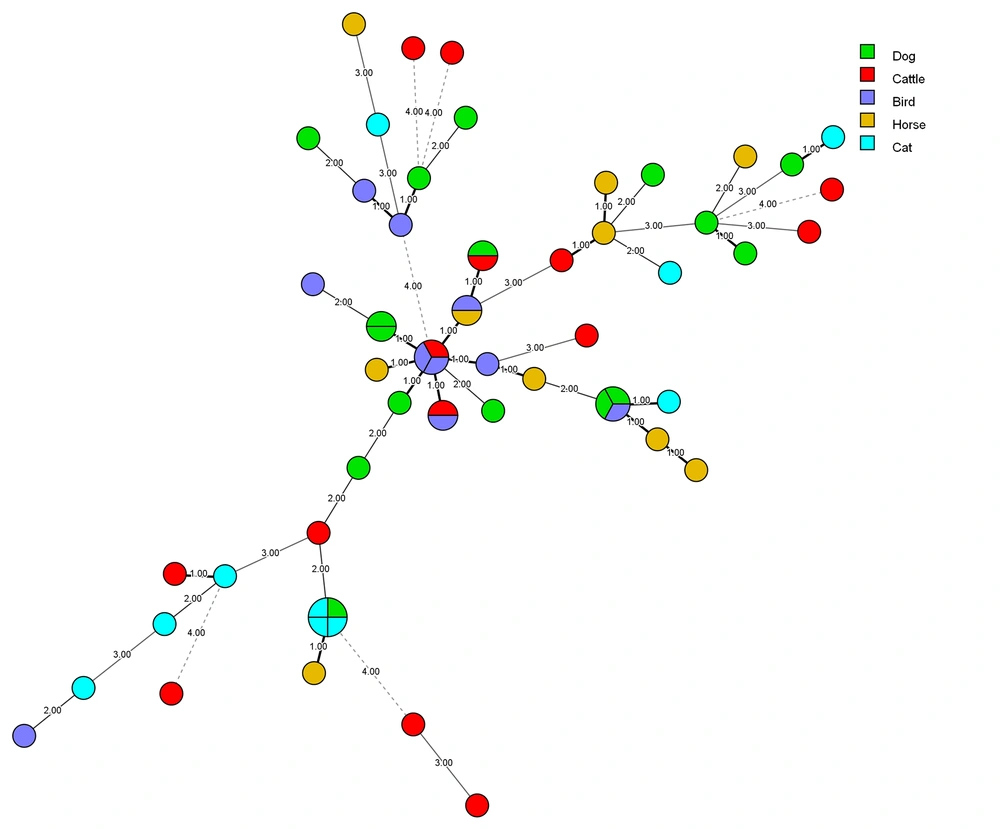
The use of MLP method for analyzing isolates from recurrent candidiasis indicated a similar framework as already described. In the present study, of the three recurrent evaluated samples, two cases were related to the same strain, and a case was related to the same strain that was undergoing microevolution (one allele was changed). Furthermore, the capacity of microsatellite polymorphism to find microevolutionary processes has made it practical and effective to detect strain microevolution against environmental stress events. Therefore, it can be used for therapeutic purposes, particularly in recurrent infections. Standardizing microsatellite typing systems, such as the primers and the used separation methods and also the allele nomenclature, need to be considered for laboratory analysis. Emerging public databases to provide microsatellite alleles information accessible worldwide, as it is used in human microsatellites, is a challenging concern. Studying C. albicans isolates collected from the infected dogs indicated an increased genotypic diversity, but the same or highly similar genotypes were detected as well. The same multilocus genotype was shared with isolates collected from infected cats, cows, horses, and chickens, which specifies them as probable methods of transmission, and the resulting infections due to C. albicans can be highly associated with exogenous transfer to the patient.
The findings obtained from this study may enable us to establish a genetic database for animal pathogenic fungal species in Iran. As mentioned above, several numbers of strains with identical MLP genotypes were perceived in the present study (60 isolates corresponding to 49 genotypes). We found the occurrence of isolates that were different simply at one allele that probably originated from the same ancestor. Besides, there was no association between fluconazole resistance and each genotype.
In the current study, animals had no predominant genotype or specific genotype. However, we observed fifty percent similarities between genotypes of
C. albicans isolates animals and Iranian humans in the study of Farahbakhsh et al. (
26). These results could be an indicator of the importance of geographical location in genotyping of
C. albicans isolates, and the possible role of transfer of
C. albicans strains between animals and humans that reside in the same geographic zone. In agreement with our findings, Liu et al. suggested that
C. albicans isolated from poultry were relatively independent but not completely separated from human isolates (
30). Edelmann et al. noted specific genotypes in animals and common genotypes between human and animals and finally concluded that animals were a source of human infection (
5). Of course, it should be noted that there was no significant similarity between the isolated alleles in this study and the study of Garaghani et al. on hospitalized pediatric patients with urinary tract infections in Ahvaz, Iran (
20).
Furthermore, we obtained a genetic homogeneity (F
ST values < 0.05) among
C. albicans isolated from animals, and just only a moderate genetic differentiation was found between birds and mammals. In agreement with our study, Kiasat et al. found genetic homogeneity among
C. glabrata isolates from two groups (single-episode and multiple-episode) of vaginal candidiasis (
31), and Amouri et al. showed genetic homogeneity between
C. albicans groups (acute and recurrent vulvovaginal candidiasis) (
32). Nevertheless, further studies on
C. albicans strains from various regions of Iran are needed to understand the epidemiology of candidiasis caused by
C. albicans in different animals. These findings indicated that there is a favorable context for growth of potential pathogenic
C. albicans in animals. Also, other studies showed that combined forms were detected in some individuals. Strains undergoing microvariation in the hosts usually involve some alterations in zygosity of diploid allele pairs, and the strains indicate elevated geographical relationships (
27,
28).
5.1. Conclusions
Finally, it should be noted that MLP typing has shown a high level of genotype variation in C. albicans isolates isolated from animals with candidiasis. The used C. albicans microsatellite markers, including EF3, CDC3, and HIS3, were polymorphic, and increased discriminatory power led to their use in epidemiologic evaluations of recurrent infections as well as field prevalence. So, microsatellite polymorphism comes out as a useful tool in the differentiation of the clinical isolates of C. albicans. Such typing methods are recommended to genotype more specimens isolated from animals. The results indicated a moderate genetic differentiation (0.05 < FST < 0.15) between C. albicans strains isolated from cats, cows, and horses as mammals vs. chickens. It seems that the comparison of human and animal genotyping using MLP should be considered in future studies. Moreover, the use of one particular animal host in various environments is recommended for exploring the relationship between genotypes and pathogenesis. Also, the present study is the first molecular epidemiology research on animals in Iran based on MLP.