1. Background
Transformation of microalgae have been an ongoing technology of recent decades (1-3) that is useful for large-scale production of recombinant proteins like vaccines and antibodies so called molecular farming (4, 5). The reason is the ability of growth in high rate of algae to and its post-transcriptional and post-translational modifications (6, 7). Spirulina is one of the most important microalgae and used as food and super food. Also it seems to have a potential as a microalgae based expression system by using proper selectable marker, promoter, reporter and transformation strategy (8-10). In transformation platforms a selectable marker is required to identify the transformed and untransformed cells (11-13). A selectable system is based on sensitivity of organism to an antibiotic and a resistant gene which contribute the resistant to this antibiotic. This research was aimed to find out the suitable selection resistant gene for Spirulina screening (14-17).
2. Objectives
The purpose of this study was to survey the response of Spirulina to serial concentrations of antibiotics including kanamycin, hygromycin, phosphinothricin, chloramphenicol and streptomycin in standard Zarrouk's medium.
3. Materials and Methods
3.1. Microalgae and Chemicals
Standard Zarrouk's medium (Table 1) used for Spirulina platensis broth culture. Chemical salts used for preparing Zarrouk's media obtained from Merk Co (Germany). Salts solved in 50 cc deionized water (DDW). The A5 micronutrient solution was added at the end and the PH adjusted to 9.2 using NaOH. Antibiotics including kanamycin, hygromycin, phosphinothricin, chloramphenicol and streptomycin were provided from Duchefa Co. and stored at 4°C. The Spirulina microalgae obtained from Iran Shrimp Research Center, Bushehr. The main stock cultured in Zarrouk's medium and stored at 25°C under the fluorescent light without shaking.
Table 1.
Standard Zaroouk's Medium
3.2. Spirulina Culture
McFarland 1 turbidity standard was prepared by adding 99 mL of 1% sulfuric acid to 1 mL of 1% barium chloride solution and was used for inoculation standardization. The standard solution was stored under dark conditions at room temperature (18, 19). Inoculums was done at the exponential phase of Spirulina in Zarrouk's medium which inoculated to 50 mL Zarrouk's medium in 100 mL glass Erlenmeyer up to standard 1 McFarland. Spirulina was grown on an illuminated Shaker Incubator, at 32°C, with a light intensity of 8200 Lux and a light period of 12:12 (15, 16, 20-22).
3.3. Preparation of Serial Dilutions
The antibiotics stock solutions were prepared and maintained in freezer (-20°C). Kanamycin was used with final concentrations of: 25, 50, 100 and 200 mg/L. Hygromycin was used with final concentrations of 5, 10 and 25 mg/L. Basta herbicide is the suitable formulation of the Phosphinothricin (PPT) containing 200 mg/mL L-Phosphinothricin and was used as PPT stock with concentrations of 10, 50, 100, 200 and 400 ml/L. Chloramphenicol was used with the final concentrations of 10, 50, 100, 200 and 400 ml/L and streptomycin was applied with final concentrations: 40, 80, 200 and 400 ml/L.
3.4. Testing, Biomass Determination and Data Analysis
The test was conducted for seven days by three replications and sampling 1 mL of media every day. The Optical Density (OD) of each sample was measured at 560 nm for determination of Spirulina biomass. Data was imported into “Winaspect” software and converted to “ASCII” format and then imported into Excel software and analyzed. The controls (without antibiotic) were used in all of experiments.
4. Results
4.1. Standard Culture
Standard culture of S. platensis was grown in standard Zarrouk's medium. The growth curve of S. platensis (Figure 1) containing 4 stages (Lag, exponential, stationary and death phases). Lag phase expanded for three days and the exponential phase began at 4 th day and lasted up to seventh day. Since stationary phase happened from seventh to eleventh day and the death phase started at eleventh day; treatments (antibiotic shock) were applied before exponential phase to study the antibiotic effects at this stage. The sensitive cultures should go to death phase before exponential phase or before the end of exponential phase.
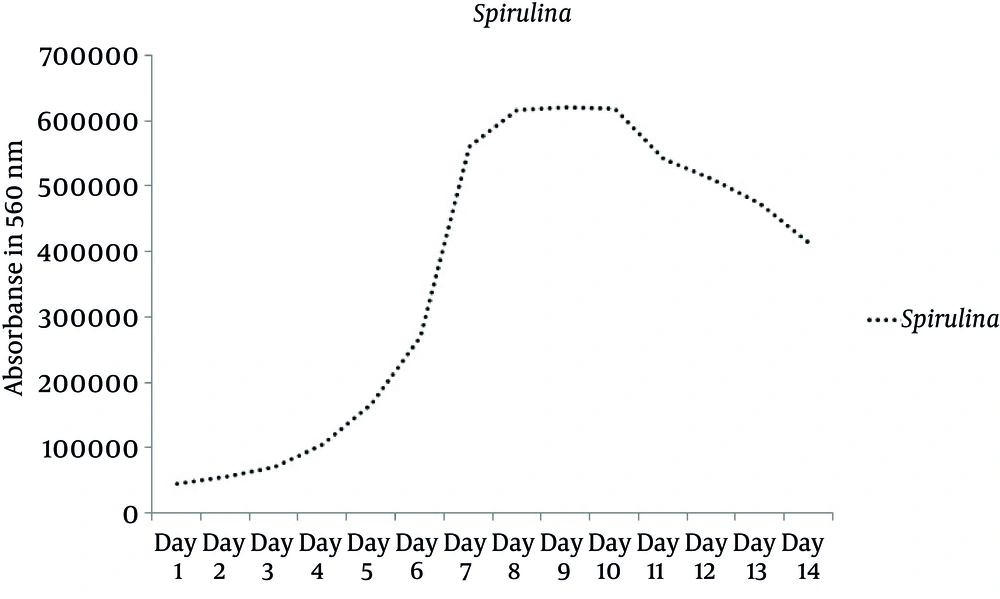
Figure 1.
Growth Curve of S. platensis Under Standard Condition Containing 4 Stages Including Lag Phase (Days 1 - 3), Exponential Phase (Days 4 - 7), Stationary Phase (Days 8 - 11) and Death Phase (Start at Day 11)
4.2. Control Experiment
Fresh S . cultures were grown under experimental condition for 7 days. Exponential phase began at day 4. Treatments were applied for Spirulina at high sensitive phase (Exponential phase) to find real sensitivity level or tolerance (Figure 2).
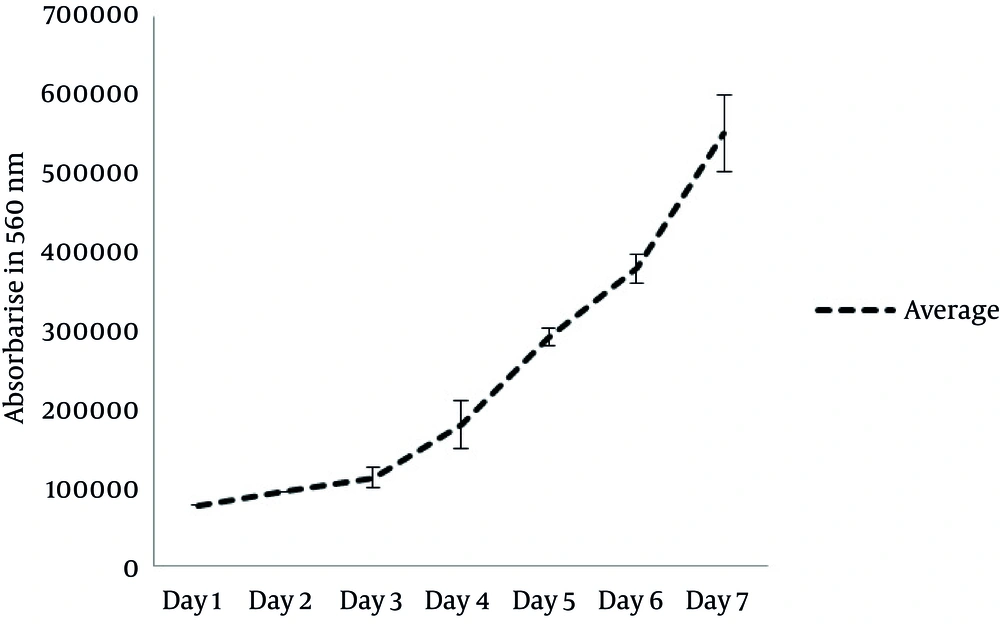
Figure 2.
Exponential Phase of Bath Culture of S. platensis Start at Day 4. Bars Indicate the Standard Error Deviation (SEM) (n = 4).
4.3. Kanamycin Resistant Experiment
Spirulina cultured in Zarrouck's media with 25, 50, 100 and 200 mg/L Kanamycin. Meanwhile the kanamycin antibiotic reduced the growth rate, the Spirulina was reached to the exponential phase at day 5 (Figure 3).
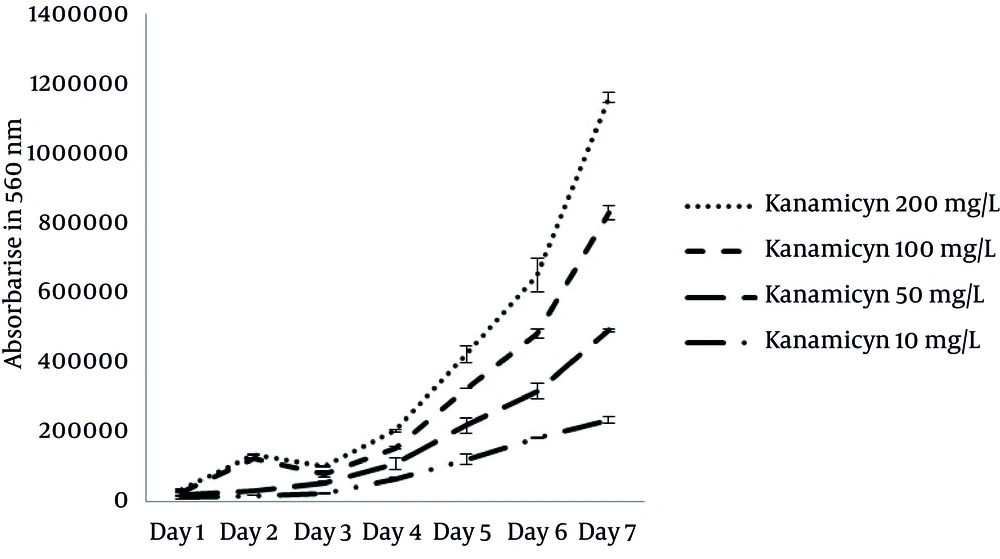
Figure 3.
The antibiotic was added before inoculation and delayed the growth but at last exponential phase happened. Bars indicate standard error deviation (SEM) (n = 4).
4.4. Hygromycin Resistant Experiment
Hygromycin applied to Spirulina culture at different antibiotic concentrations of 5, 10 and 25 mg/L but the growth continued. The concentration of 25 mg/L hygromycin delayed the growth rate and expanded the exponential phase for one more day. So the hygromycin is not a suitable candidate as a selection marker (Figure 4).
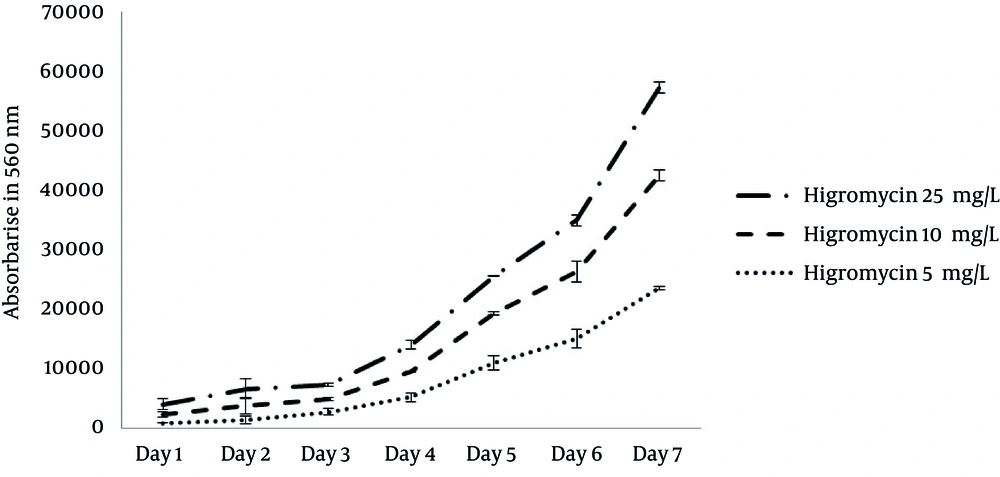
Figure 4.
The hygromycin antibiotic was added before inoculation and delayed the growth, but at last exponential phase happened on day 5. Bars indicate the standard error deviation (SEM) (n = 4).
4.5. Phosphinothricin Resistant Experiment
L-Phosphinothricin was added to Spirulina culture in the form of Basta basta formulation. Basta is a common herbicide selectable marker for GM crops. L-Phosphinothricin was used at different concentrations of 10, 50, 100, 200 and 400 mg/L and blocked the growth, but it was not lethal for Spirulina . The Figure 5 shows no growth and reveals the same amounts of growth and death rates. So, basta formulation cannot be used as selectable marker for Spirulina .
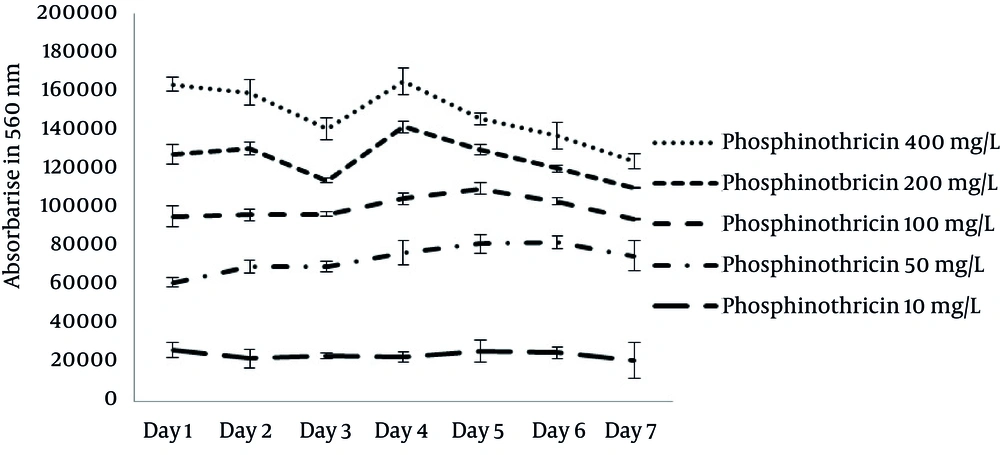
Figure 5.
Agent added before inoculation and caused a delayed growth but the exponential phase did not happen and the death phase did not observed. Bars indicate the standard error deviation (SEM) (n = 4).
4.6. Chloramphenicol Resistant Experiment
Chloramphenicol is a bacteriostatic antibiotic which stops the bacterial proliferation and bacterial resistance against this antibiotic may result by a plasmid containing CAT (chloramphenicol acetyltransferase) gene (2). Chloramphenicol stock solution was prepared and added to control Spirulina growth at concentrations of 10, 50, 100, 200 and 400 mg/L. Spirulina showed partial resistant to chloramphenicol. The concentration of 10 - 100 mg/L of chloramphenicol was not lethal but the concentration of 200 mg/L chloramphenicol was partial lethal (Figure 6).
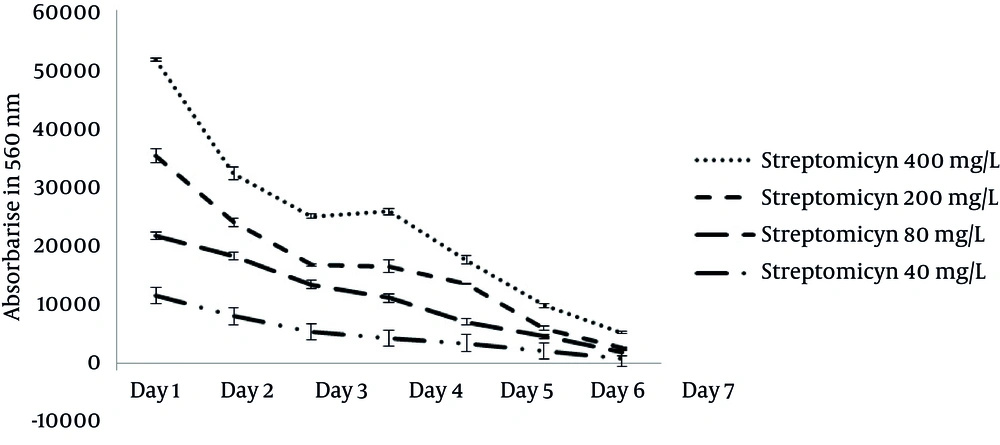
Figure 6.
The chloramphenicol antibiotic was added before inoculation and delayed growth but the exponential phase did not happen and the death phase did not observe. Bars indicate the standard error deviation (SEM) (n = 4).
4.7. Streptomycin Resistant Experiment
Streptomycin is a common aminoglycoside antibiotic. It is used as a selectable marker in molecular biology studies. Spirulina was affected by 40, 80, 200 and 400 mg/L streptomycin (Figure 7). The growth was stopped by streptomycin and the death phase occurred on day 4 of experiment. High concentrations including 80 mg/L and higher were so lethal.
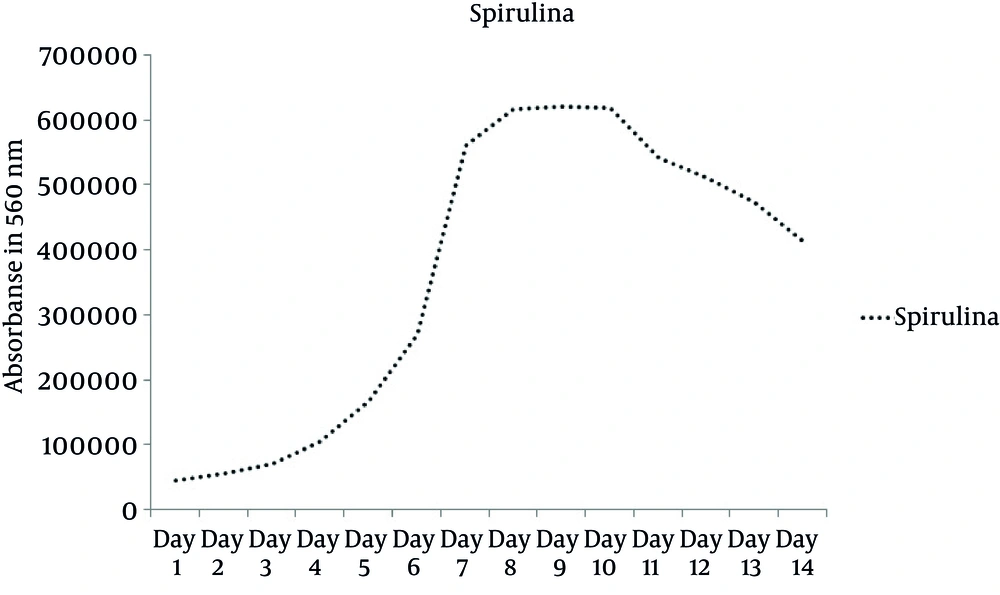
Figure 7.
Streptomycin was added before inoculation. The growth stopped and death phase began on day 4 immediately. Bars indicate the standard error deviation (SEM) (n = 4).
5. Discussion
The first step for making proper transgenic microalgae is to find an appropriate selection marker. There are some reports about using selectable marker for Spirulina species however the reported selectable marker were not completely effective for S. platensis. There are not too many studies for choosing a selectable marker for Spirulina and the existing reports shown the different level of bacterial resistance and sensitivity against the antimicrobial agents.
The highly resistance of S. platensis to kanamycin (Km), neomycin (Neo), geneticin, (G418), ampicillin (Ap) and sensitivity to chloramphenicol (Cm), hygromycin (Hm) and herbicide L-phosphinothricin (PPT) has already been reported (6). In the opposed report the sensitivity of this microalgae to kanamycin, streptomycin, ampicillin, hygromycin and chloramphenicol were reported and chloramphenicol has been considered as best choice for selectable marker (23). In another report it has been showed that S. platensis was extremely sensitive to chloramphenicol and streptomycin antibiotics and relatively sensitive to ampicillin whereas no inhibition reported for kanamycin (24). According to our experiments the streptomycin is a suitable antibiotic for screening S. platensis.
Streptomycin has an inhibition effect on protein synthesis. It binds to 16S rRNA of small subunit of prokaryotic ribosomes and preventing the binding of first amino acid formyl-methionyl-tRNA to peptide site. This tends to mismatching and consequently inhibits protein synthesis and cause lethal effect on prokaryotic system (25). Using the different concentrations of streptomycin including 40, 80, 200, and 400 mg/L could control the growth of S. platensis and tend to death phase of this microorganism. Therefore this antibiotic can be used as a transgenic Spirulina selectable marker.
The resistant to streptomycin is due to the presence of aminoglycoside adenyltransferase (aadA) gene (3, 6). These gene can be expressed by the use of suitable prokaryotic expression elements including promoter, terminator etc. The mentioned elements should be preferably isolated and set on the upstream and downstream of the inserted gene expressed(26). Finally we concluded that streptomycin antibiotic as a screening reagent can inhibit the Spirulina growth and consequently decrease the number of nontransformant colonies in comparison with other antibiotics during gene transformation process.