
1. Background
Wounds occur when physical injuries break the skin and damage structures such as the basement membrane, the epidermal keratinocyte layer, and the dermis (1). Wound healing is accomplished over a dynamic and complex procedure that consists of accurate and well-regulated events. The different phases of wound healing overlapped, but by considering the principal cellular and molecular mechanisms that regulate the basic biology of wound healing, three separate stages are considered for wound healing; inflammation and immune response, new tissue formation, neovascularization, and remolding (2). The new tissue that forms in the early stages of wound healing is called granulation tissue. When the wound begins to heal, its background is covered by soft, red, and thin granular tissue, and new capillary connections of the healing process appear in the underlying material that covers the skin wound (3).
The rate of wound healing depends on multiple factors, including the size of the wound, the amount of blood flow to the wound area, the percentage of foreign bodies and microorganisms, the patients’ health, diet, medications, and a variety of systemic diseases. Sometimes the wound healing process does not progress naturally, and the wound becomes chronic (4).
The study of medicinal plants and using these plants to develop new drugs from natural sources as a replacement for expensive chemical medicines is a way to reduce the side effects of these medicines and make production economically viable. Herbal extracts have considerable potential for the treatment of different diseases and disorders. Managing wound healing is one of the significant challenges in modern medicine. Natural substances accelerate wound healing and regeneration of the tissue by various mechanisms; however, to understand the mechanism of action of these compounds, scientific studies must be performed, and standardization of these compounds is also necessary (5).
Quercus castaneifolia C.A.Mey (6) are large trees with a height of 20 meters from the family Fagaceae. The leaves are generally uniform and ovoid with serrated margins. The elongated fruit is called an acorn, placed in a cup called a gland (7). Oak fruits are traditionally used to treat diarrhea, hemorrhages, gastric ulcers, dysentery, hemorrhoids, tonsillitis, and alkaloid poisoning. Oak bark decoction is effective in chronic skin diseases, eczema, and varicose veins (8, 9).
The oak fruit hull effectively controls minor aphthous ulcers of the oral mucosa, diarrhea, disinfecting the gastrointestinal tract, the inhibitory effect on herpes simplex virus type I, astringency, and antibacterial properties (10, 11). The various part of the oak plant contains large amounts of tannins that can coagulate albumin, heavy metals, and alkaloids. Tannins are water-soluble compounds and have astringent properties. They are used in colds, bronchitis, local bleeding, and burns, reducing irritation and pain and relieving oral swelling (12).
In an in vitro study, the antibacterial efficacy of hydroalcoholic extract of Persian oak (Q. lusitanica) has been evaluated and compared to several common antibiotics. The results show that Persian oak has compounds with antibacterial properties. The Jaft (oak fruit hull) contains compounds such as flobatanen, flubafen, and flavonoids and contains large amounts of tannins, mucilage pectin, and quercetin (the bitter taste agent of oak) (13).
Water-soluble polyphenolic compounds in oak bark, such as tannins, have wound and burn healing properties. Tannins, abundant in oak species and present in hydrolyzable and condensed forms, inhibit superoxide radicals and prevent cellular mutagenesis, and thus can be helpful in wound healing. In one study, the inflammation was lower in the animals receiving oak extract than in the other groups (14, 15).
2. Objectives
Given all the above, it was decided to study the effect of the aqueous extract of the oak hull (Jaft) on skin wound healing in rats.
3. Methods
3.1. Preparation of Topical Products
The inner shell of the Persian oak fruit (Jaft) was purchased from a local herbal store and identified by an expert at the Medicinal Plants Research Center of Ahvaz Jundishapur University of Medical Sciences. A voucher specimen (A2111101020FP) was deposited in the School of Pharmacy, Ahvaz Jundishapur University of Medical Sciences. The scientific name of the plant was rechecked in the plant list database.
The Jaft was washed with distilled water, dried at room temperature, and powdered by a mechanical mill. One kilogram of Jaft powder was poured into 10 liters of boiled distilled water and soaked for 24 hours. The extract was filtered with a two-layer sterile cloth and then passed through Whatman filter paper (No.1). The filtered liquid was dried in a vacuum oven. The dry extract was collected in suitable containers and stored in the refrigerator. Different dilutions of 2, 4, and 8% were prepared by dissolving dried Jaft extract in distilled water. This solution was kept in the refrigerator until the end of the study.
3.2. Animals and Experimental Protocol
In this study, 35 male Wistar rats weighing between 200 - 250 g were used. All rats were maintained individually in polypropylene cages, with free access to a standard commercial pellet diet and tap water in a room with controlled humidity (40 ± 5%) and temperature (24 ± 2°C) and a 12 h light/dark cycle. All the experiments were done following the US national research council guidelines for the care and use of laboratory animal resources. They were approved by the animal ethics committee of Ahvaz Jundishapur University of medical sciences with approval no: IR.AJUMS.ABHC.REC.1398.013 (link: ethics.research.ac.ir/ProposalCertificateEn.php?id=61783). This study is reported according to Animals in Research: Reporting In vivo Experiments (ARRIVE) guidelines (16).
3.3. Skin Wound Creation
Thirty-five male Wistar rats were anesthetized with an intraperitoneal injection of ketamine/xylazine (ketamine 80 mg/kg and xylazine 8 mg/kg). The back hair of the rats was shaved, and the skin was disinfected with ethanol. Then, using a biopsy punch, at a distance of 1.5 cm from the midline of the back, two full-thickness circular wounds (10 mm in diameter) were created. All the animals were randomly divided into five groups (7 Wistar rats in 5 groups) (17, 18).
3.4. Treatment
The treatment was started as follows: The control group was treated with normal saline, the standard group treated with phenytoin cream 1%, and the third to the fifth group were treated with 2%, 4%, and 8% Jaft aqueous extract, respectively. The prepared products were sprayed on the wound surface daily for 15 days from the first day (wounding day). At the end of the experiment, all animals were terminated with high doses of ketamine. The following parameters were assessed: wound area, tensile strength, Histopathological parameters, and growth factors (PDGF, VEGF).
3.5. The Wound Area Measurement
Wound surface imaging was performed on days 0, 5, 7, 10, 12, and 15. The animals were anesthetized and placed in a standard position on a flat surface. The wound was washed with normal saline serum. A ruler was set next to the wound and photographed from a distance of 15 cm using a digital camera. This situation was the same for all animals during the experiment. The wound area was quantified using Digimizer software, and the results were recorded (19).
The wound healing percentage was calculated using the following equation:
A0 is the wound area on the first day, and At is the wound area after the time interval.
3.6. Histopathological Study
At the end of the experiment, the animals were sacrificed with high doses of ketamine. The entire wound area with the surrounding normal skin was excised. Samples were fixed in a 10% formalin buffer solution for 48 hours. After fixation and molding tissue samples in paraffin (blocking), sections were prepared by microtome with a thickness of 5 microns, and the tissue was stained by the Mason-Trichrome method (evaluation of collagen fiber formation and organization) and hematoxylin and eosin (evaluation of general indicators). Quantitative evaluation of the slides was performed using a light microscope (Olympus, Japan), and factors such as inflammation, granulation tissue formation, re-epithelialization, angiogenesis, and collagen fiber formation were assessed. Using the Green Hog scoring system, each parameter was separately evaluated (20). Each parameter was given a score of zero to 3. A score of zero means non-existence, a score of 1 means a low value, a score of 2 means a medium, and a score of 3 has a high value of that parameter. The results were collected and analyzed.
3.7. Evaluation of Tensile Strength
The strength of the tissue indicates the degree of its integrity. On day 15, to perform the Tensile strength test, a strip of repaired tissue with a width of 5 mm (5 × 40 mm) was separated, and its two ends were attached to the clamps of the tensiometer. By applying the force, two arms of the tensiometer were pulled apart until the skin was ruptured. The results were collected, and the skin tensile resistance was calculated using the following formula (21-23):
3.8. Measurement of Growth Factors
On day 15, under aseptic conditions, a blood sample was taken directly from the heart and centrifuged at 1000 rpm for 15 minutes. Isolated plasma was stored at -80°C. Platelet-derived growth factor, and VEGF were measured by the ELISA method according to the manufacturer’s instructions.
3.9. Statistical Analysis
Data were analyzed using SPSS 22 statistical software and were expressed as mean ± SEM. The ANOVA method and the least significant fisher difference (LSD) were used to analyze and compare the results. Values (P < 0.05) were considered significant values.
4. Results
4.1. Effect of Jaft Extract on Wound Healing
The wound healing process on different days in all experimental groups exhibits in Figure 1. The data show that topical application of Jaft aqueous extract accelerates wound contraction and reduces wound area. The use of 2% and 4% aqueous extract of oak significantly (P < 0.05) improved wound healing compared to the control group (Figure 2).
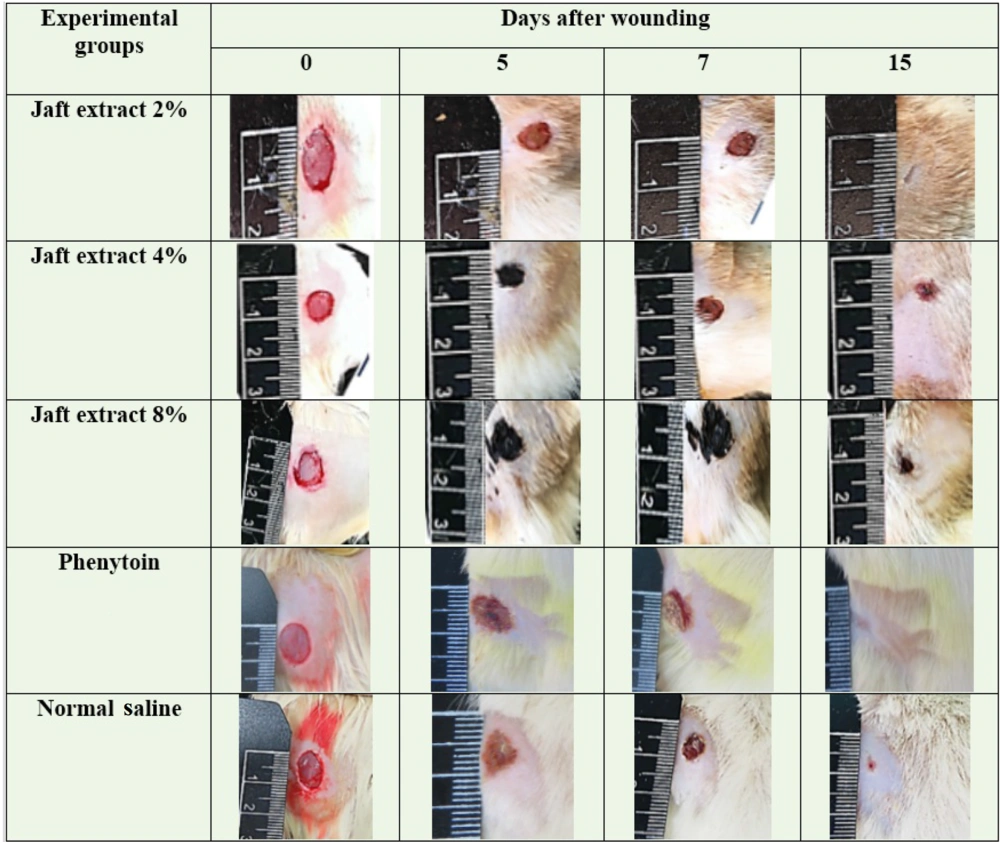
Figure 1.
Representative photographs of the transition of wound closure in the rat model
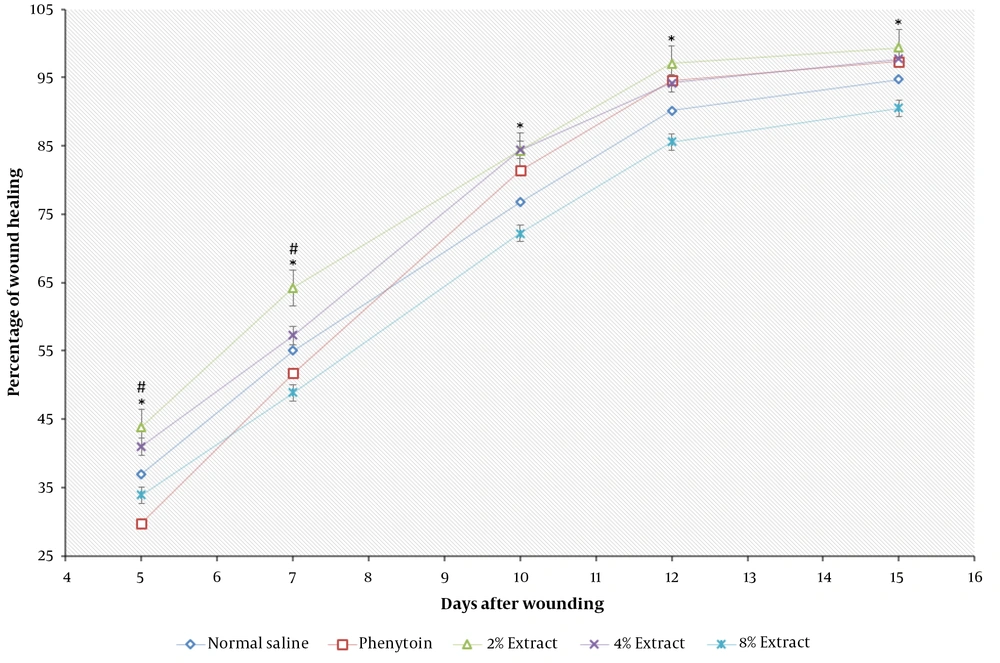
Figure 2.
The percentage of wound healing measured by digimizer. Values are expressed as mean ± SE. N = 7 in each group; *: P < 0.05 vs. normal saline group; #: P < 0.05 vs. phenytoin
Among the groups treated with Jaft aqueous extract, there was a significant difference between the 2% and 8% in the percentage of wound healing (P < 0.05). However, no significant difference was observed between the 2% and 4% Jaft aqueous extract groups. From the tenth day to the end of the treatment period, no significant difference was observed between the 2% and 4% of aqueous oak extract and phenytoin groups (Figure 2).
4.2. Histopathological Study
In the present study, the repaired wound area in the group treated with 1% phenytoin cream showed a better condition than the saline group. On the last day of treatment, the neoangiogenesis and granulation tissue formation are reduced; instead, the collagen level increases, and the epithelial tissue is repaired.
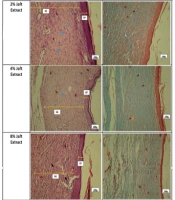
The results of the assessment of histological parameters are represented in Table 1. Comparison of the number of fibroblasts, granulation tissue formation, inflammation, and collagen concentration between Jaft aqueous extract treated groups and the control groups show that this extract improves wound healing rate and histologic parameters. The study results revealed that the aqueous extract of Jaft significantly increases the density of fibroblasts and collagen fibers. Photomicrographs of wound area in the treatment and control groups are shown in Figure 3.
Table 1.
Results of Histology and Comparison of Histological Parameters in Repaired Tissue after Topical Treatment for 15 Days a
| Granulation | Inflammation | Neo-vascularization | Collagen Disorganization | Re-Epithelialization | |
|---|---|---|---|---|---|
| Normal saline | 2.2 ± 0.2 | 1.8 ± 0.2 | 2.2 ± 0.2 | 2 ± 0.0 | 2 ± 0.0 |
| Phenytoin | 2 ± 0.31 | 1.8 ± 0.2 | 1.6 ± 0.24 | 2.2 ± 0.2 | 2.2 ± 0.2 |
| Jaft extract 2% | 1.6 ± 0.24 | 1.6 ± 0.24 | 1.6 ± 0.24 | 2.4 ± 0.24 | 2.4 ± 0.24 |
| Jaft extract 4% | 1.4 ± 0.24 | 1.6 ± 0.24 | 1.4 ± 0.24 | 2.6 ± 0.24 | 2.6 ± 0.24 |
| Jaft extract 8% | 1.2 ± 0.2 | 1.4 ± 0.24 | 1.4 ± 0.24 | 2.8 ± 0.2 | 2.8 ± 0.2 |
a Data are expressed as Mean ± SEM and n = 7 in each group.
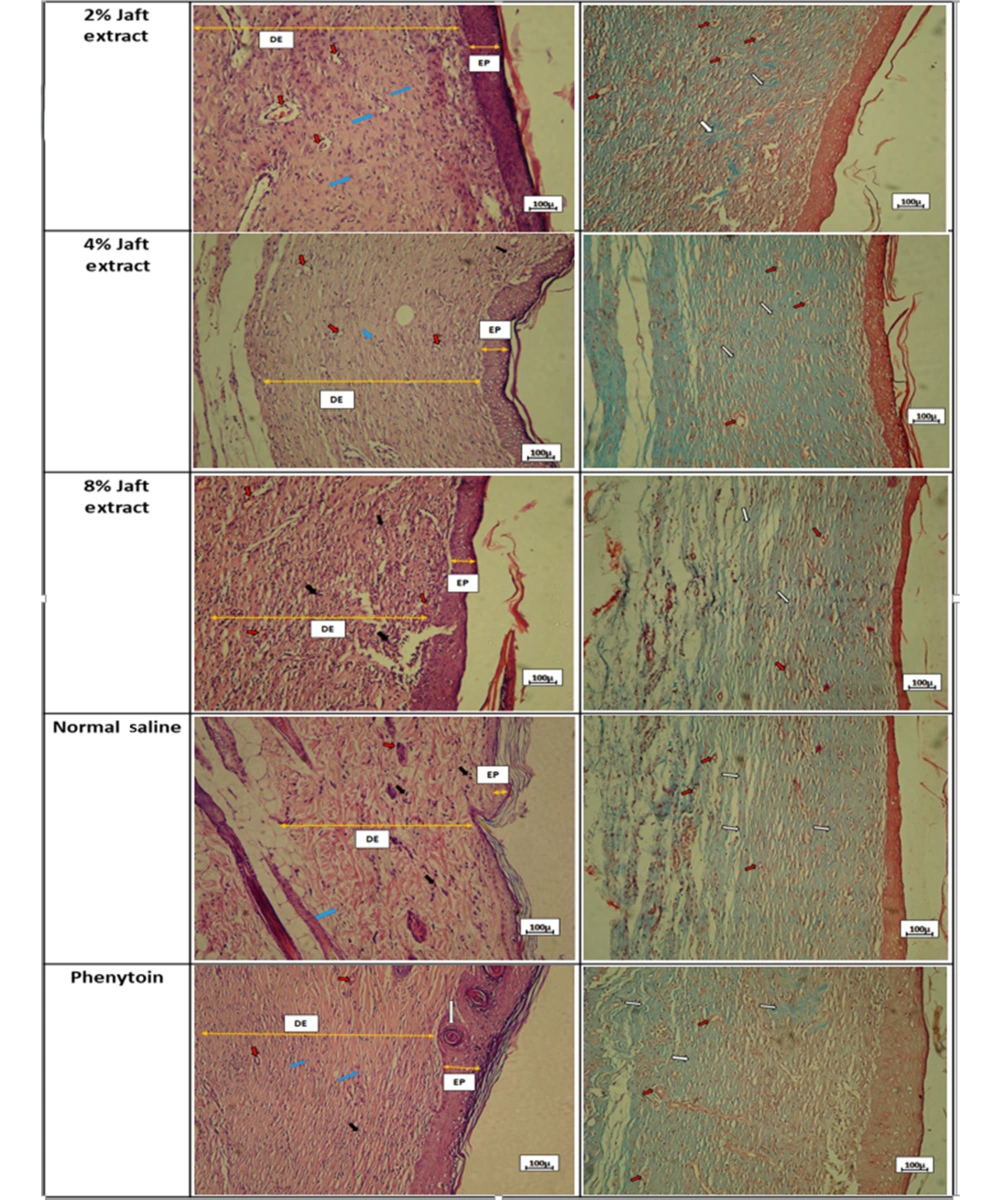
Figure 3.
Representative micrographs of wound healing on day 15; HE staining (first column) and trichrome staining (second column) in phenytoin, normal saline, 2%, 4%, and 8% Jaft extract groups under × 100 magnifications.
4.3. Tensile Strength Measurements
The tensile strength of the repaired tissue in the experimental groups showed that the resistance of the healed skin was significantly higher (P < 0.05) in the animals receiving 2% and 4% Jaft extract compared to the saline and phenytoin groups (Table 2).
Table 2.
Comparison of Tensile Strength of Healed Tissue in the Experimental Groups a
| Experimental Groups | Tensile Strength |
|---|---|
| Normal saline b | 1100.1 ± 48.5 |
| Phenytoin c | 972.7 ± 25.6 |
| 2% extract d | 1583.1 ± 33.79 e, f |
| 4% extract g | 1237.14 ± 22.19 e, f |
| 8% extract h | 1039.28 ± 21.65 e |
a The results are expressed as Mean ± SEM and n = 7.
b Treated group with normal saline.
c Treated group with 1% phenytoin cream
d Group treated with 2% Jaft extract solution
e P < 0.05 compared to the group treated with phenytoin
f P < 0.05 compared to the group treated with normal saline
g Treated group with 4% Jaft extract solution
h Treated group with 8% Jaft extract solution
4.4. Growth Factors Assay
The results of PDGF measurement showed a significant difference between the 2% extract group and the control group (P < 0.05) (Figure 4). No significant difference was observed between the 2% and phenytoin groups. The VEGF analysis revealed a significant difference between the 2% extract group and the control group (P < 0.05) (Figure 5).
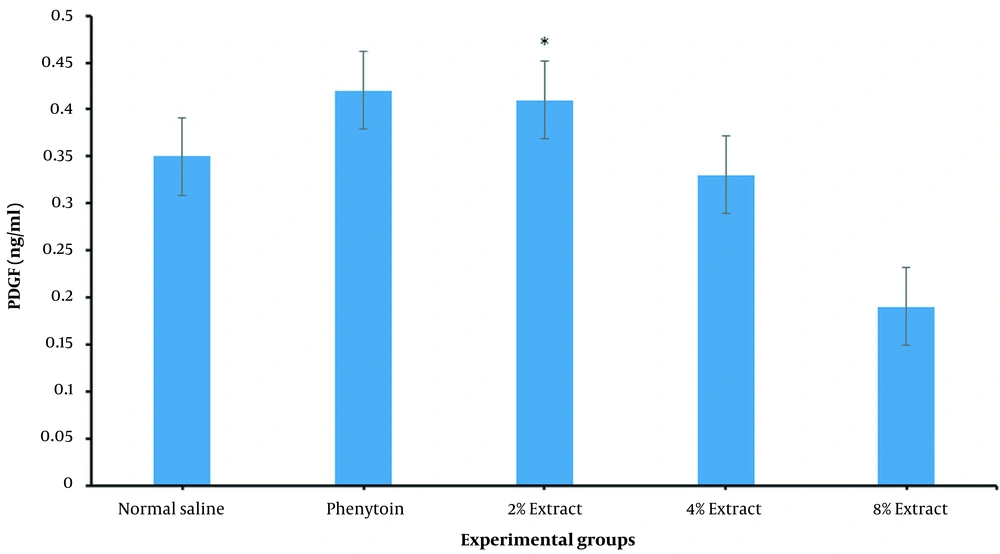
Figure 4.
Comparison of blood levels of platelet-derived growth factor in experimental groups. Data expressed as mean ± SEM. N = 7 in each group; * P < 0.05 indicates that values are significantly different from the normal saline-treated group. Jaft 2%: Group treated with 2% Jaft extract solution, Jaft 4%: Treated group with 4% Jaft extract solution, Jaft 8%: Treated group with 8% Jaft extract solution, phenytoin: Treated group with 1% phenytoin cream, normal saline: Treated group with normal saline.
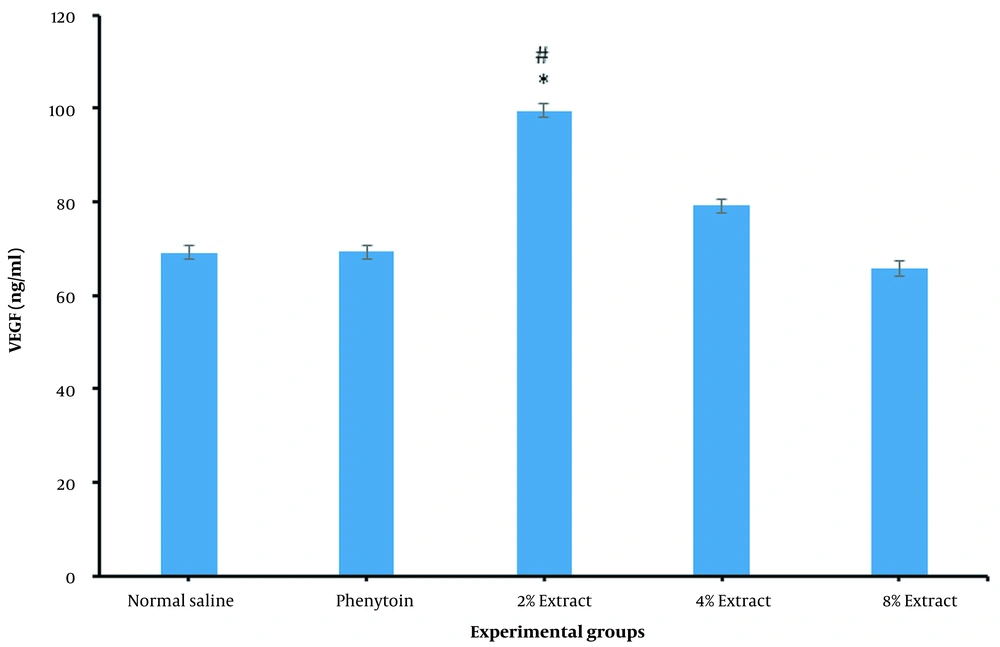
Figure 5.
Comparison of blood levels of vascular endothelial growth factor in experimental groups. Data expressed as mean ± SEM. N = 7 in each group. * P < 0.05 indicates that values are significantly different from the normal saline-treated group. # P < 0.05: Comparison to phenytoin treated groups. 2% extract: Group treated with 2% Jaft extract solution, 4% extract: Treated group with 4% Jaft extract solution, 8% extract: Treated group with 8% Jaft extract solution, phenytoin: Treated group with 1% phenytoin cream, normal saline: Treated group with normal saline
5. Discussion
The skin is the most extensive, complicated, and dynamic organ in the body. Healthy skin is a vital organ for humans and animals and has many functions in the body. These functions are so sensitive that they do not survive without the skin. These include regulating body temperature, eliminating waste products, maintaining body water, and protecting against mechanical damage and invading microorganisms. Recent scientific studies increased our knowledge of the physiology of connective tissues and the process of wound healing. Wounds are repaired by the process of restoring connective tissue and the formation of fibrous scars. Wound Healing follows the granular tissue formation in the wound area. Granulation tissue is a new connective tissue with the presence of fibroblasts, keratinocytes, endothelial cells, microscopic blood vessels, and inflammatory cells formed on the surface of a wound during the healing process. The size of the wound scar is proportional to the amount of granular tissue formed (4).
Natural wound healing consists of three phases; the first phase involves an immediate inflammatory response and the migration of inflammatory cells into the wound space. Several chemical mediators, including histamine, serotonin, quinine, prostaglandins, and the complement system, are probably responsible for this response. The second phase begins a few days after wounding, which involves replacing inflammatory cells with macrophages and fibroblasts, and it seems that connective tissue is synthesized in this phase. Recent studies have shown that macrophages initiate connective tissue repair, but fibroblasts are responsible for synthesizing new connective tissue. The tissue regeneration phase begins a few days after injury and lasts up to 2 years, resulting in the formation of normal epithelium. This phase involves a balance between synthesis and catalyzes so that collagen and other proteins in the wound are increasingly organized (14).
Humans have always considered wound care to increase the speed of healing and prevent its chronicity and infection. Antiseptic solutions such as betadine, saline, and antibiotic ointments are used to wash and treat skin lesions. However, many solutions used in skin lesions are toxic to fibroblasts, lymphocytes, and cells involved in wound healing. On the other hand, wound management drugs, in addition to being expensive, also cause problems such as allergies and drug resistance. In the meantime, cheap and available drugs, especially herbal products, have become more popular. Today, reducing the complications of wound healing and increasing the speed of its healing using medicinal plants has attracted the attention of many researchers. Wound healing effects of various plant extracts may be due to their antioxidant and antimicrobial properties (15).
Oak is a plant found in mountainous areas with different species and is abundant in the forests of Kohgiluyeh and Boyer-Ahmad provinces. For centuries, this plant has been used in traditional medicine to treat various diseases and has shown favorable results. This study evaluated the effect of using an aqueous oak bark extract (Jaft) as a spray on wound healing in Wistar rats.
The results showed that Jaft aqueous extract at a concentration of 2% had positive effects on reducing wound area and increasing wound healing percentage.
A study by Tavaf et al. compares the effect of phenytoin and oak Mazo extract in Wistar rats (24). They found that the 5% Mazo extract group had a higher recovery rate than the other groups; wound healing in the groups treated with higher concentrations of the extract did not go well in the healing process and hindered the healing progress. It was mentioned that the lack of appropriate wound healing in high concentrations of the extract was due to the high concentration of tannin, which probably has a cytotoxic effect and delays the healing process (24).
In the present study, the percentage of improvement in the 2% Jaft extract group was higher than in the 4% and 8% extract groups; in general, a significant difference was observed during the treatment period. Increasing the concentration of Jaft aqueous extract (4% and 8%) showed inhibitory effects on wound healing.
Tannins are a group of polyphenols that can form water-insoluble complexes with proteins and act as a coating on mucous membranes, exhibiting antimicrobial and antifungal effects. In contact with wounds, burns, and inflammation, tannins form a complex with a protective layer (tannin-protein or tannin-polysaccharide) and prevent further damage to the epithelial tissue. This mechanism can naturally be effective in the wound healing process (25). On the other hand, although flavonoids act as potent antioxidants at low concentrations, high concentrations of flavonoids have produced free radicals and induced cellular apoptosis (26). Free radicals cause lipid peroxidation, which causes damage to cell membranes, changes in osmotic pressure, cell swelling, and eventually cell death. Also, free radicals absorb inflammatory mediators and cause inflammatory reactions and tissue damage (27).
In 2000, Tonnesen et al. investigated the role of VEGF-induced angiogenesis in wound healing. This study showed that VEGF has a significant role in angiogenesis and wound healing (28).
A study showed that VEGF is produced by different types of cells and directly and indirectly stimulates angiogenesis through several mediators. Vascular endothelial growth factor stimulates wound healing via several mechanisms, including collagen deposition, neovascularization, and epithelization. Vascular endothelial growth factor contributes to vascular permeability at the early stages of wound healing. Vascular endothelial growth factor also affects the interactions between endothelial cells and circulating inflammatory cells (29).
In similar studies conducted by Shabanian et al. and Hemmati et al., it was found that oak extract has a positive effect on angiogenesis (30, 31). These studies showed that oak extract causes the formation of new capillaries at the wound site by creating vascular buds, increasing blood flow to the damaged tissue, and accelerating tissue repair (30, 31). The same result was observed in the present study. In our study, the results of VEGF measurements on the last day of treatment showed a high concentration of this factor in the blood sample of the group receiving 2% Jaft extract, which showed a significant difference compared to the control group (normal saline), phenytoin 1%, and other treatment groups. The restorative effect of this extract is due to the increase in angiogenesis.
A previous study showed that PDGF is a powerful stimulant in collagen production by fibroblasts. Platelet-derived growth factor increases the quantity of collagen in the wound site, inducing collagen accumulation and increasing the skin’s strength (32).
This study showed that the concentration of PDGF in the 2% Jaft extract group showed a significant difference compared to all treatment groups and the saline group but was similar to the 1% phenytoin group.
In an in vivo study by Nikrooze et al., the effect of oak (Q. brranti) aqueous extract and silver sulfadiazine on wound healing in male rats was investigated (15). The results demonstrated that the thickness of the epidermis and dermis in the groups receiving an aqueous extract of the oak fruit hull showed a significant increase compared to the control group. Jaft at low concentration showed better healing than at higher concentrations. According to the findings of this study, aqueous extract of Jaft (oak fruit hull) accelerates wound healing (15).
An in vivo study was performed on the effects of Jaft on healing second-degree burn wounds in an animal model. The results indicated that Jaft reduces the wound surface and has therapeutic effects in grade 2 burn wound healing compared to silver sulfadiazine and vaseline (30).
In our study, histological comparison between the control, phenytoin 1%, and 2% Jaft extract groups showed that wound healing was better and faster in the 2% Jaft extract group, and scar tissue has thicker and more organized collagen fibers. Clinical observations and residual scar in the 8% Jaft extract group indicate excessive deposition of collagen fibers in the repaired area. The results show that oak Jaft extract has a significant healing effect on skin wounds and is even more effective than phenytoin 1% cream in some therapeutic doses.
5.1. Conclusions
This study confirms the effectiveness of 2% Jaft (the oak fruit hull) extract compared to 1% phenytoin, normal saline, and higher concentrations of plant extracts in wound healing.
Today, effective herbal products in wound healing are being considered due to the side effects of chemical products, bacterial resistance to antibiotics, and secondary wound infections.
The oak plant and its fruit hull (Jaft) have appropriate antimicrobial, anti-inflammatory, and antioxidant effects and possess a good potential to be used in wound healing products. More studies must be performed to extract effective substances and make topical products for wound healing.