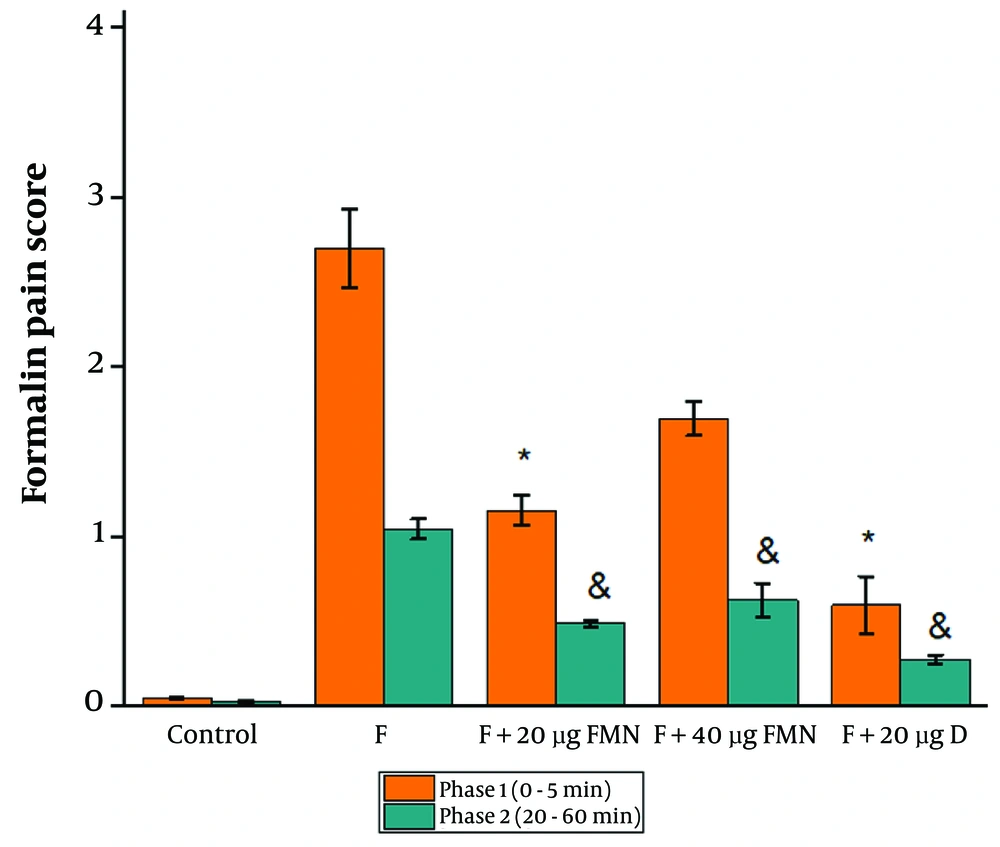
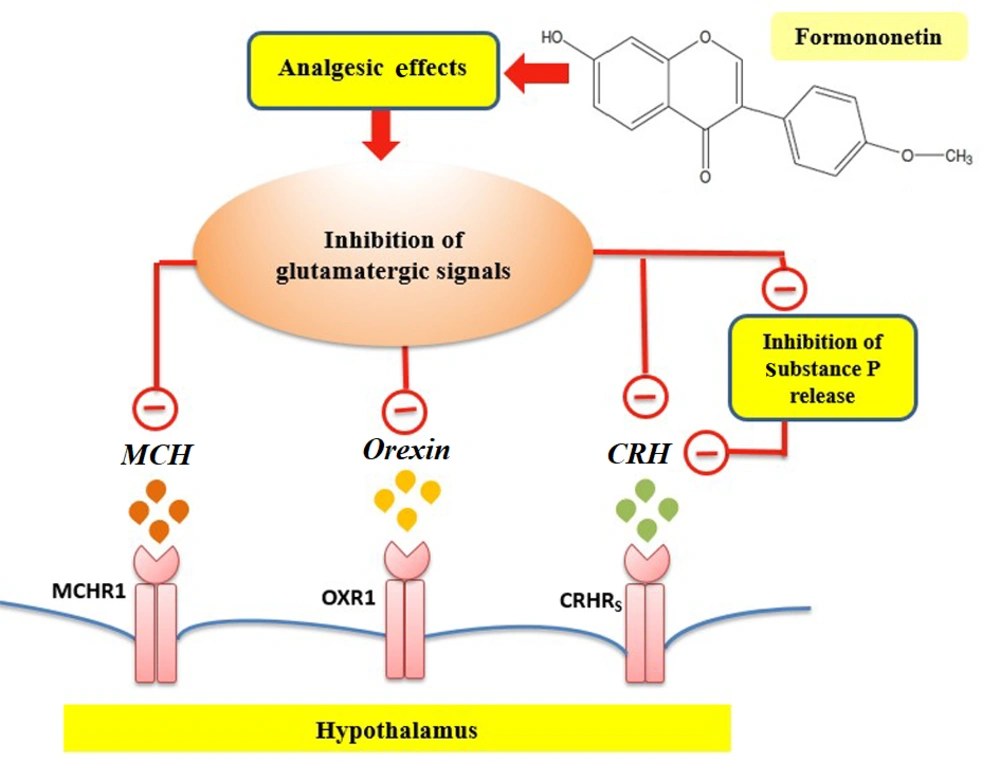
The results of the behavioral tests indicated that both the first and second phases of the formalin test's response were suppressed by the injection of formononetin. These findings suggest that formononetin may operate centrally and peripherally to inhibit nociception. The anti-inflammatory properties of formononetin may somewhat explain its effect in the second phase of the formalin-induced pain test. As previously documented, formononetin effectively improves formalin-induced inflammatory edema by decreasing the levels of inflammatory markers such as TNF-α, IL-6, IL-1β, and blocking the nuclear factor NF-κB (NF-κB) signaling pathway, which are involved in the induction of inflammation (
8,
12). In fact, the present data align with previous findings that confirmed the analgesic effects of formononetin (
8,
9).
Additionally, the analgesic effect of formononetin is similar to that of other phytoestrogens such as genistein, daidzein, and resveratrol. Genistein reduces neuropathic pain caused by peripheral nerve damage. Daidzein reduced neuropathic pain sensitivity, and its administration led to the inhibition of neuroinflammation through increasing antioxidant enzymes and reducing oxidative stress markers. Resveratrol acts on various pathways related to pain perception and transmission, such as suppressing inflammatory mediator production through inhibiting NF-κB, as well as inhibiting cyclooxygenase enzymes (
29-
31). In the hot plate test and in the glutamate-induced pain model, formononetin exerted antinociceptive and anti-inflammatory effects (
8,
9). Red clover has also been demonstrated to decrease pro-inflammatory cytokines, which in turn inhibits the production of inflammatory enzymes such as cyclooxygenase 2 and inducible nitric oxide synthase (iNOS) (
32).
To elucidate some molecular mechanisms for the analgesic impacts of formononetin, this work aimed to determine the changes in mRNA levels of
CRH,
HCRT, and
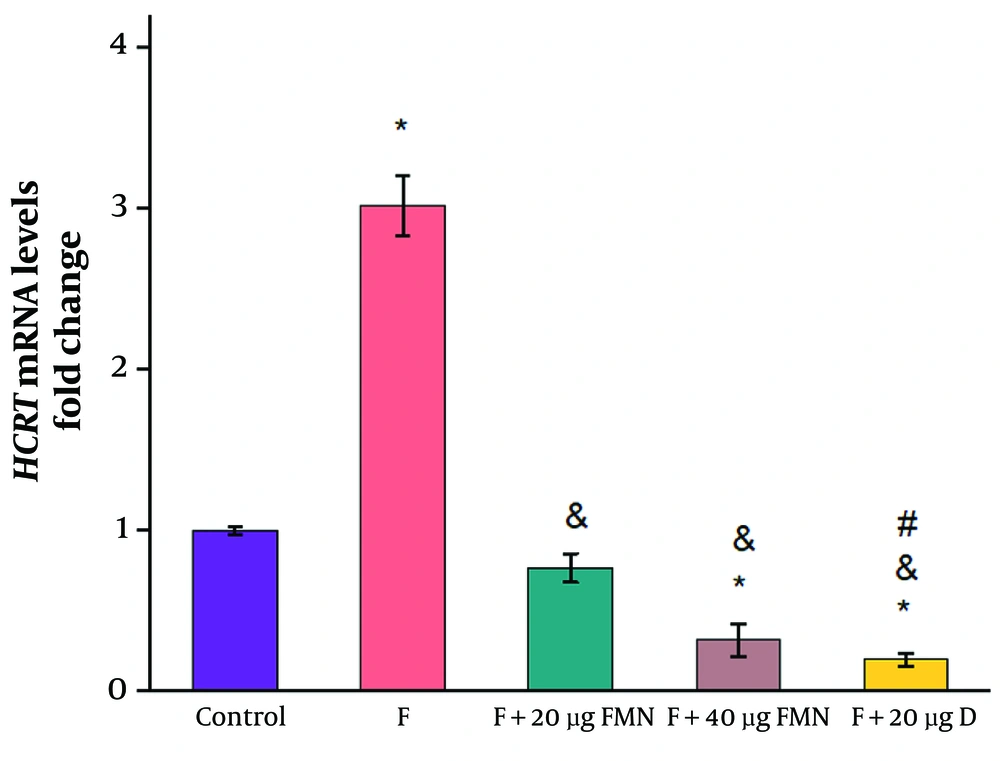
MCH. The results demonstrated that pain stimulates the gene expression of
HCRT in the hypothalamus. Orexin, produced mainly by the lateral hypothalamus, plays a role in crucial body functions such as reproduction, stress response, and pain regulation (
14,
17). Central administration of orexin reduced nociceptive responses in a mouse pain model, suggesting that orexin neurons may play a significant role in pain modulation due to their extensive innervation of brain regions involved in nociception (
15,
17). Inputs from GABAergic and glutamatergic neurons of the lateral hypothalamus regulate orexin activity (
33). Formononetin has been proven to have a regulatory effect on the glutamatergic system (
34,
35). A previous study highlights glutamate's role as a primary excitatory neurotransmitter in the hypothalamus, particularly influencing orexin neurons. Glutamate could impact orexin neuron activities via NMDA and non-NMDA receptors (
36). Additionally, synaptic connections of glutamatergic axon terminals were documented on orexin neurons (
36). On the other hand, formononetin is able to protect neurons against glutamate-induced excitotoxic damage (
34). Thus, formononetin may participate in the downregulation of
HCRT gene expression due to its anti-glutamatergic impacts (
Figure 5).
The hypothalamic putative pathways associated with the analgesic effects of formononetin
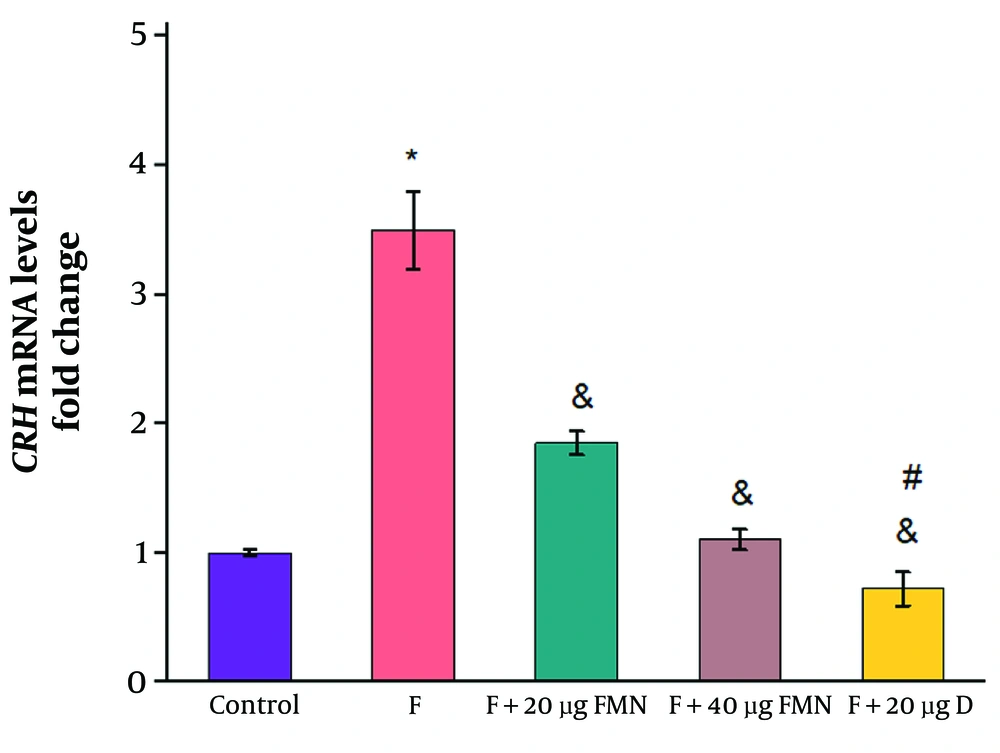
The present findings indicated that
CRH gene expression was elevated in the formalin-treated animals. Based on previous reports, the induction of pain is shown to increase
CRH release in the paraventricular nucleus (PVN) of the hypothalamus (
20). As previously established, glutamate activates
CRH neurons and increases pain responses (
37,
38). Previous studies showed that formononetin is involved in protecting against the impacts of glutamate (
34).
Formononetin may reduce
CRH via affecting the activity of the glutamatergic signaling pathway on
CRH neurons. It has been established that
CRH mRNA levels in the hypothalamus and hippocampus are increased by various types of pain stimuli, such as the injection of formalin, acetic acid, or substance P in mice (
20). Substance P and other members of the tachykinin family are found together with glutamate in primary afferent fibers (
38). Substance P, released along with glutamate, plays a key role in pain conduction (
38). Formononetin has estrogenic properties, and studies have shown a strong reduction of substance P and its mRNA in estrogen-treated animals (
39). Therefore, formononetin may downregulate
CRH gene expression by regulating substance P (
Figure 5).
Formononetin may also downregulate
CRH gene expression via interaction with the GABAergic system. Inputs from GABAergic neurons in the lateral hypothalamus regulate
CRH activity through an inhibitory mechanism. A previous study showed that Cajanus cajan, one of whose main derivatives is formononetin, activates the GABAA receptors. Thus, the downregulation of the
CRH gene by formononetin may be somewhat due to its influence on GABAergic neural pathways, which in turn affects the activity of the
CRH neurons (
40,
41).
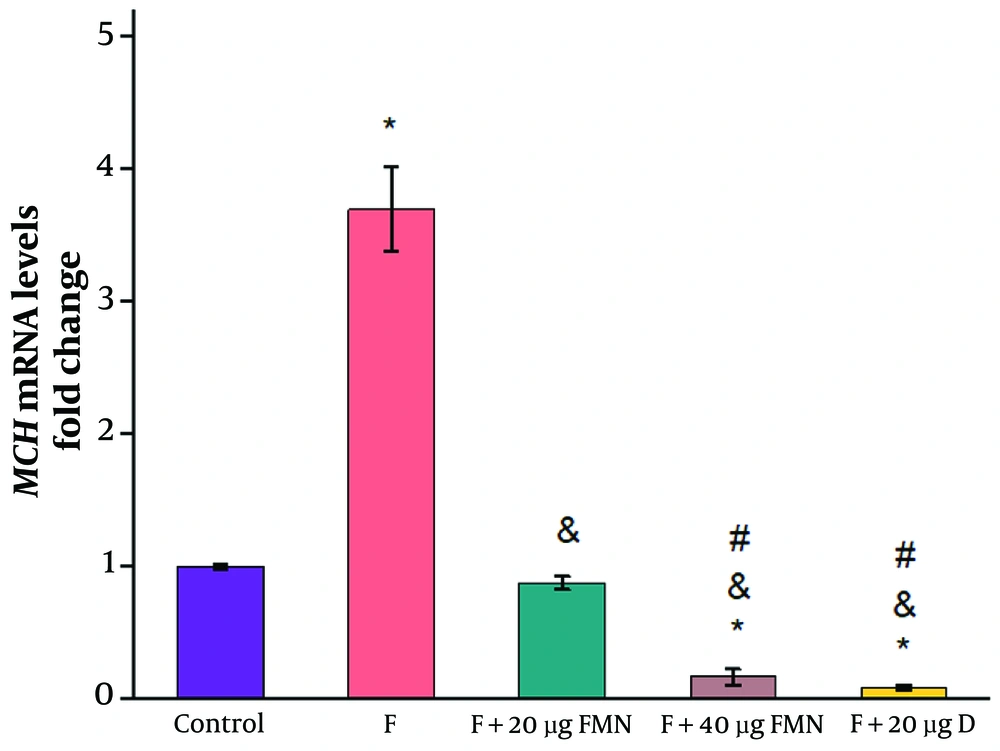
In formalin-induced pain, the mRNA levels of
MCH increased compared to the control group. The hypothalamic neuropeptide
MCH has analgesic effects, and this fact was confirmed using an
MCH receptor type 1 (MCHR1) antagonist (
22). Previous studies have shown that estradiol decreases
MCH synthesis (
42).
Melanin-concentrating hormone neurons are located in the lateral hypothalamus, and estrogen receptors (ERs) are expressed at high levels in this area (
43). Estrogen receptors are also present in many areas of the brain where MCHR1 is found (
43). Thus, estradiol may act locally to reduce
MCH neuron activity in this brain area (
42,
44).
Formononetin's antioxidant, anti-inflammatory, and estrogenic properties stand out among its effects (
7,
9,
10). Studies have shown that formononetin has a serotonergic regulatory role (
6). The serotonergic system plays a role in modulating pain and can exert an inhibitory effect on the nervous system involved in pain-related behaviors (
23). Therefore, it is possible that formononetin, with its serotonergic regulatory role and ability to bind to both ERα and ERβ subtypes, mediates the reduction of
MCH mRNA levels in the pain model of rats. Additionally, documented studies indicate that
MCH neurons co-express glutamate and are activated by glutamatergic signals (
23,
24). Formononetin may somewhat inhibit hypothalamic
MCH gene expression due to its anti-glutamatergic action (
Figure 5).
Reducing the activity of the adrenergic signaling pathway may be another proposed mechanism for formononetin to decrease hypothalamic
CRH and
HCRT gene expression. A previous study demonstrated that formononetin reduces the expression of α1-adrenoceptors. It has also been established that α1-adrenoceptor expression increases on orexin and
CRH neurons during painful conditions, activating the
CRH and orexin neural signaling pathways. Therefore, the inhibitory effects of formononetin on the adrenergic pathway may be a possible mechanism in the downregulation of
CRH and
HCRT gene expression to reduce pain (
15,
20,
45-
49).
5.1. Conclusions
The present study demonstrates the analgesic potential of formononetin in formalin-induced pain through modulating mRNA levels of hypothalamic HCRT, CRH, and MCH. The estrogenic effects of formononetin may be involved in the downregulation of intrahypothalamic neuropeptide signaling pathways upstream of CRH neurons to relieve pain. One important limitation of the present study was the inability to use the Western blot technique to detect protein levels in samples. Additionally, in the present study, diclofenac, a nonsteroidal anti-inflammatory drug, was used as a positive control to compare the pain-relieving effects of formononetin. The lack of using other analgesic drugs may be a limitation, and it is suggested that further studies aim to compare the pain-relieving effects of formononetin with analgesic drugs such as morphine, codeine, ibuprofen, naproxen, and pethidine.
Further studies are needed to investigate the precise analgesic mechanisms of formononetin by determining the mRNA and protein levels of other nociception-related neuropeptides such as substance P and dynorphin in the hypothalamus and spinal cord. To identify neural signaling pathways through which formononetin may exert inhibitory effects on HCRT, CRH, MCH, and other neuropeptides, it is strongly suggested that future research aim to study the analgesic effects of formononetin using antagonists of glutamatergic, opioid, noradrenergic, and GABAergic receptors in pain models. Additionally, the results of the present trial warrant further dose-response studies in humans and different animal pain models, such as fibromyalgia, inflammatory pain, spinal pain, and sciatica, to ensure the analgesic effects of formononetin without serious harmful consequences.