MMPs exert multiple physiologic and pathologic effects in various tissues and organs. They play the main role in maintaining the balance of dynamic changes of the ECM. Dysregulation of this balance and aberrant MMP activities result in the development of inflammation, atherosclerosis, vascular aneurysm, rheumatoid arthritis, and metastasis (
2). The roles of MMPs and the effects of various MMP inhibitors have been studied in different diseases, tissues, and experimental models, including periodontitis, aneurysm, ischemia-reperfusion injury, arthritis, cancer cell metastasis, cerebral ischemia, and neurologic disease models. These studies have reported different values of efficacy in MMP inhibition. Tetracyclines, as the most common inhibitors, have shown different inhibitory and therapeutic potentials (
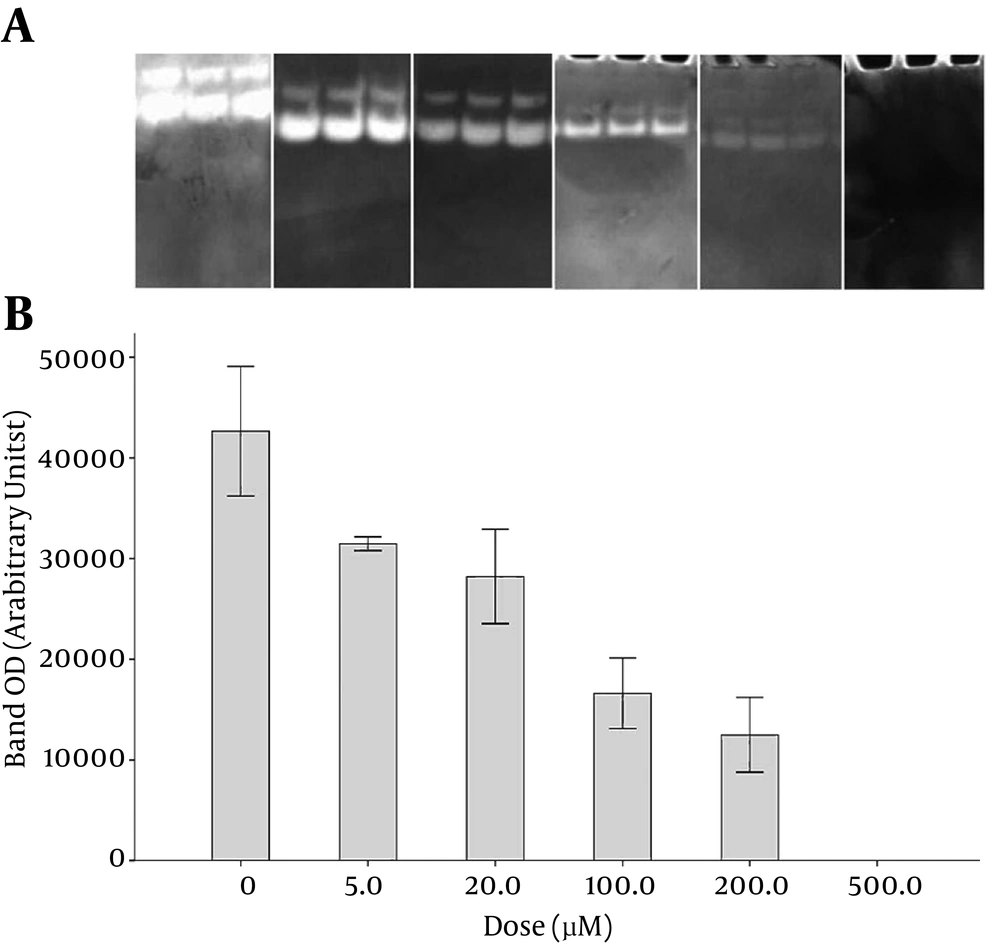
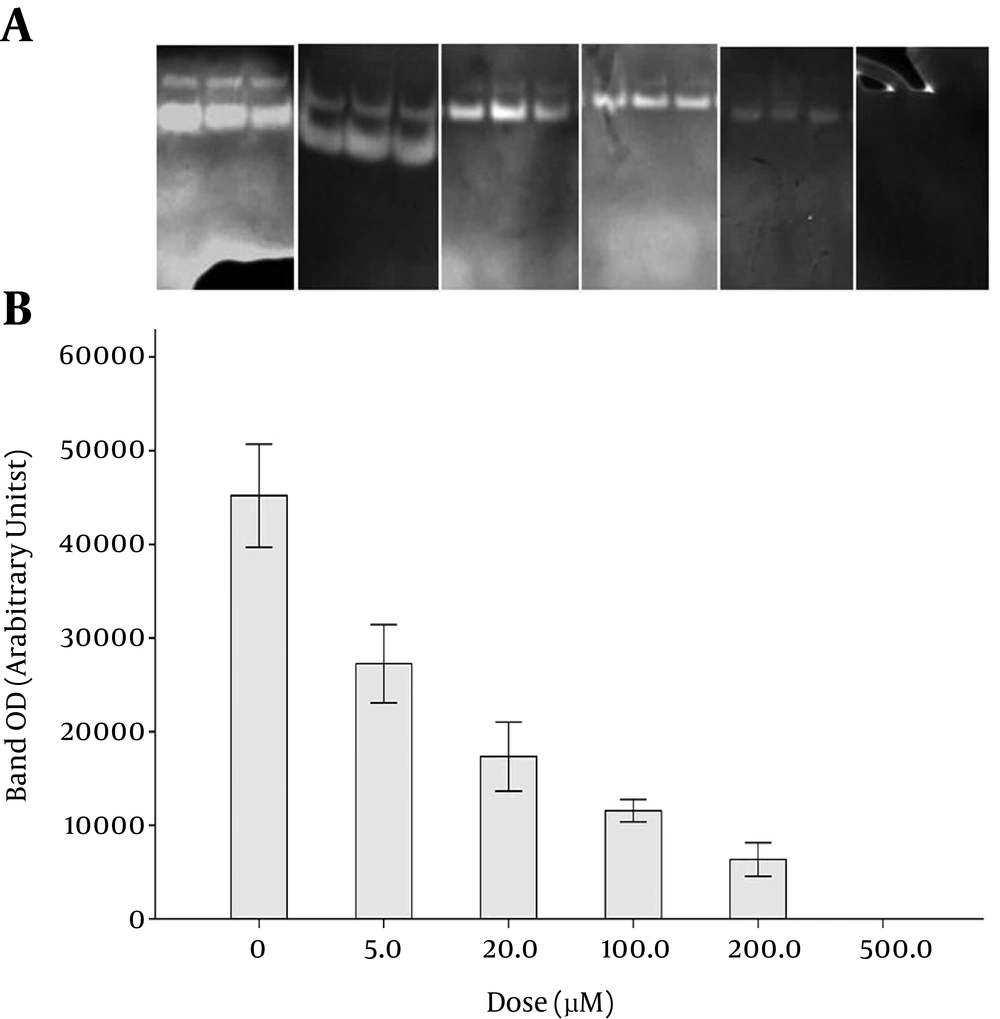
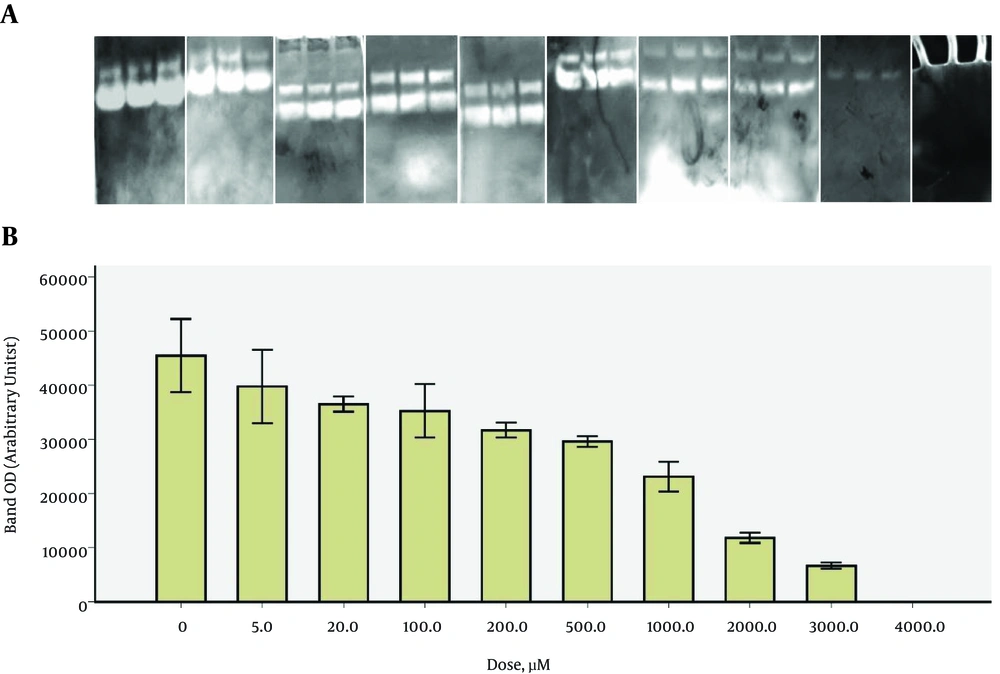
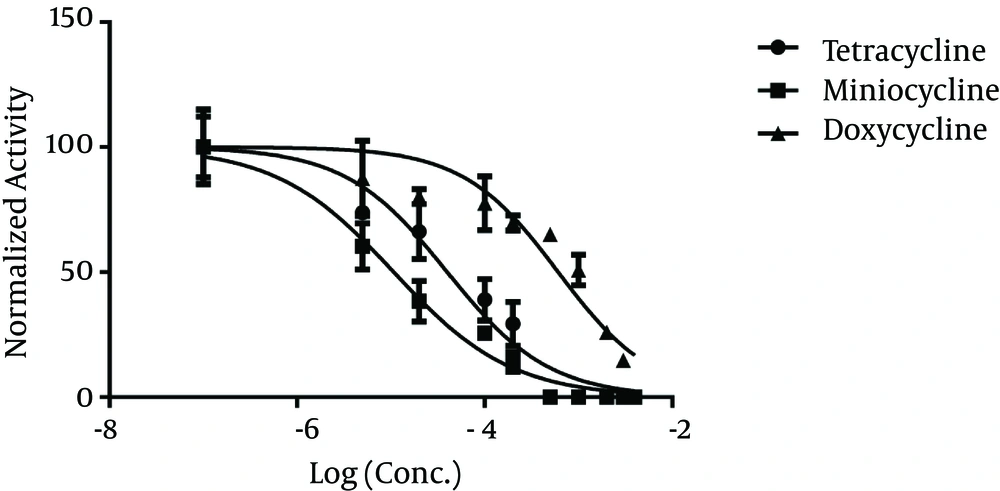
18-
22). In the current in vitro study, the inhibitory effects of tetracycline hydrochloride, doxycycline monohydrate, and minocycline hydrochloride on MMP-9 activity were investigated using zymography. Tetracyclines dose-dependently inhibited MMP-9, and IC50 values of 40.0, 10.7, and 608.0 µM were achieved for tetracycline, minocycline, and doxycycline, respectively. In previous studies on different MMPs using alternative experimental models, IC50 values ranging from 5 to 500 µM have been generally reported (
13,
23-
26). In a study on collagenase extracted from rabbit corneas, the inhibitory effects of tetracyclines on enzyme activity were measured using a chromogen substrate (
27). In that study, the results of which conflict with ours, doxycycline showed a much lower IC50 value (15 µM) than minocycline (IC50 = 190 µM) and tetracycline (IC50 = 350 µM). In our study, minocycline showed the highest potency in MMP-9 inhibition, which is in accordance with previous reports that introduced minocycline as an effective MMP inhibitor in pathological states, such as ischemic cardiac events, cerebral neurologic damage, and arthritis (
28). As a result of accumulation and concentration in cardiac cells, minocycline provides cardio protection at lower doses (
29). In addition, due to its lipophilicity, minocycline can pass through the blood-brain barrier and provide neuroprotection at a high potency (low IC50) in comparison to other tetracyclines (
18).
In our study, doxycycline showed a lower inhibitory effect on MMP-9 compared to tetracycline and minocycline, which is in contrast to previous findings (
20,
27). The different results of IC50 values between previous studies and ours can be attributed to different pathological states, the employed experimental models, different doses and routes of administration, different tissue absorptions, the type of protease involved, and the enzyme substrate used. The effect of tetracyclines in inhibiting MMPs depends on their ability to bind Zn
2+ and Ca
2+, which are necessary for maintaining functional conformation and hydrolytic catalysis. Further hydrogen bonds and van der Waals interactions with the enzyme mass have been proposed, which result in disruption of the normal conformation of the enzyme (
30). Tetracyclines have been shown to down regulate the expression of some MMPs, especially gelatinases. They also inhibit oxidative activation of pro-MMP zymogens (
31). The association constant of tetracyclines to MMPs is not high (Kd = 70 µM), but as result of accumulation in the ECM, they can inhibit proteases. The higher the tetracycline concentration in the matrix, the more inhibition can be achieved (
32).
In this study, we used the monohydrate form of doxycycline, which has much lower water solubility than tetracycline and minocycline hydrochloride. The high IC50 value of doxycycline monohydrate in MMP-9 inhibition in our work can be attributed to lower water solubility.
In this study, which was an in vitro experiment, the pharmacokinetic differences of the drugs were not taken into account, and only the direct associations between drugs and enzymes determined the outcomes. Further in vitro and in vivo research focusing on the interactions of individual MMPs with tetracycline derivatives are required to establish the potent and selective inhibition of MMP-mediated disorders.