1. Background
Functional endoscopic sinus surgery (FESS) is one of the most common surgeries in the field of otonasolaryngology (ear, nose, and throat, or ENT) and can result in significant improvements in the clinical symptoms of patients with rhinosinusitis (1). In ENT surgeries, similar to other surgeries, the anesthesiologist plays an important role in the accurate and smooth execution surgery (2). In case of major bleeding, risk of complications such as meningitis, blindness, intracranial injury, cerebrospinal fluid (CSF) leakage, and the duration of surgery increase (3).
To prevent bleeding, 3 methods are typically used: local injection of vasoconstrictive agents (4), antifibrinolytics (5), and creating induced hypotension with mean arterial pressure (MAP) less than 60 to 80 mmHg, which method leads to better visibility, greater ease, and less time for surgery (6).
To induce hypotension and consequently reduce intraoperative bleeding, inhaled anesthetics, such as halothane and isoflurane, and systemic vasodilators, such as sodium nitroprusside and nitroglycerin, and beta blockers such as esmolol are used (7). The α2 agonist drugs are also used for this purpose.
Dexmedetomidine is a α2-adrenoceptor agonist with sedative, anxiolytic, sympatholytic, analgesic-sparing effects, and minimal depression of respiratory function. It is potent and highly selective for α2-receptors (8). Dexmedetomidine exerts its hypnotic action through activation of central pre- and postsynaptic α2-receptors in the locus coeruleus. Dexmedetomidine is rapidly distributed and is mainly hepatically metabolized into inactive metabolites by glucuronidation and hydroxylation (9). The α2-receptors are involved in regulating the autonomic and cardiovascular system. In blood vessels, these receptors cause vasoconstriction, and in the sympathetic terminals they inhibit the release of norepinephrine (10).
The main benefits of this drug include the creation of analgesia, sedation, and low risk of respiratory depression (11, 12). This drug also causes cardiovascular stability during anesthesia, reduces the need for anesthetic and narcotic drugs, and results in decrease of minimum alveolar concentration (MAC) by inhaled anesthetics (13, 14). Its most common side effects are hypotension and bradycardia. The latter can be resolved either spontaneously or with anticholinergics without any complications (15, 16). Since the use of opioids during surgery is a risk factor for nausea and vomiting, reducing the need for such drugs can reduce the risk of resultant complications (14, 17).
2. Objectives
The current study aimed at investigating the effectiveness of dexmedetomidine in preventing bleeding during functional endoscopic sinus surgery (FESS), which can lead to better visibility in surgery, ease of operation, and less time for surgery.
3. Methods
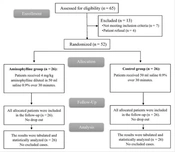
The present study was conducted from 2016 to 2017 after the ethics committee of Ahvaz Jundishapur University approved the project protocol under the ethics code of IR @ AJUMS. REC. 1395.558.(IRCT2017012929256N2). The current double-blind clinical trial included 60 patients aged 16 to 60 years with American society of anesthesiologists (ASA) class I or II who were the candidates for the elective functional endoscopic sinus surgery in the general operation ward of Imam Khomeini public referral hospital in Ahvaz, Iran. The participants were randomly (using the block randomization method) divided into 2 groups: group D (receiving intravenous dexmedetomidine) and group N (receiving intravenous normal saline). The exclusion criteria were having diabetes mellitus, coagulation disorders, kidney and liver dysfunction, cerebrovascular disease, cardiovascular problems, high blood pressure, asthma, chronic obstructive pulmonary disease (COPD), end organ damage, psychosis, taking antipsychotic drugs, allergy to dexmedetomidine, substance abuse, taking beta-blockers, and a heart rate of < 55 beat/minute. The objectives of the study were described to all the patients and they signed the written consent forms.
After arriving at the operating room, all patients received serum-Ringer solution 8 mL/kg. In group D, 1 μg/kg dexmedetomidine was administered immediately before the induction over 10 minutes. Next, 0.5 µg/kg/hour infusion of dexmedetomidine (Hospura, USA) was started after the induction (18). The general anesthesia was induced using 0.02 mg/kg midazolam, 2 µg/kg fentanyl, 0.5 mg/kg atracurium, and 2 mg/kg propofol. For maintenance, the patients received the compound of O2 50%: N2O 50% and 100 μg/kg/minute propofol, and 0.2 μg/kg/minute of remifentanil.
NIBP and heart rate were checked every 5 minutes. MAP was maintained within 65 to 75 mmHg.
If MAP was less than the specified level, remifentanil was first decreased to 0.1 μg/kg/minute and if that was not effective, it was discontinued. The next step to prevent a drop in blood pressure was the reduction of propofol to 20% and if necessary to 50% of the basal amount. If that step was not effective, 5 mg intravenous ephedrine was prescribed, and if the repetition of the dose was necessary, the patient was excluded. If the patient’s blood pressure was higher than the aforementioned range, remifentanil was increased to 0.4, and if necessary to 0.6 μg/kg/minute, and if that was not effective, serum nitroglycerin (TNG) 10 μg/minute was injected and the patient was excluded. When a patient’s heart rate dropped to less than 50 beat/minute, 0.5 mg atropine was administered.
In group N, exactly the same steps were taken, except that instead of dexmedetomidine in bolus and maintenance, normal saline at the same volume was used.
The administration of dexmedetomidine was stopped 15 minutes before the end of surgery; as for propofol and remifentanil, their administration was stopped 5 minutes before the end of the surgery.
Reversal of neuromuscular blockade occurred with 0.05 mg/kg neostigmine and 0.02 mg/kg atropine. The amount of bleeding was estimated based on the suction volume and the number of gauzes used. The volume of hemorrhage was estimated at 30 mL for each wet gauze, 15 mL for each semi-wet gauze, 200 mL for Longaz wet and 50 mL for semi-wet Longaz (19).
The duration of awakening time was calculated from the time of administration of reversal of neuromuscular blockade until sustained eye opening (for >5 seconds) (20).
Nausea was defined as a subjectively unpleasant sensation associated with an awareness of the urge to vomit. Severity of nausea and vomiting within 2 hours of recovery time was assessed using the standard visual analog system (VAS), which consisted of a horizontal line 10 cm long where zero correspond to no nausea and 10 correspond to the worst imaginable nausea. The severity of patient’s nausea was determined according to verbally rated scores; mild was defined as a score of 1 to 3, moderate as a score of 4 to 6, and severe as a score of 7 to 10. Vomiting was defined as the forceful expulsion of gastric contents from the mouth (12, 17, 21).
The anesthesiologist was aware of the assignment of groups and drugs, but the patient and the nurse who was monitored the patient and recorded and controlled the research parameters were unaware of the assignment of the groups and drugs.
Data were analyzed using JMP, version 7 (SAS Institute Inc., Cary, NC, 1989-2007). Significance level was set at less than 0.05 (P < 0.05), and all the tests were 2-tailed. The quantitative variables were presented descriptively by the mean and standard deviation (SD) or median (range), and the qualitative variables were presented by a number (percentage). The assumption of normality of continuous variables was assessed using the Shapiro-Wilk test. Chi square test or the Fisher exact test was used to assess the relationship between the 2 qualitative variables. The relationship between the 2 continuous variables was explored using the Spearman correlation test. The t test or its non-parametric equivalent; ie, the Mann-Whitney U test (depending on the existence, or non-existence, of the necessary requirements for the use of these tests) was used to compare the 2 groups.
4. Results
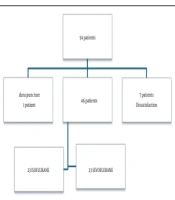
In the present study, 60 patients were randomly assigned into 2 groups: group D receiving intravenous dexmedetomidine and group N receiving intravenous normal saline (N).
There was no statistically significant difference between the 2 groups in terms of age, gender distribution, body mass index (BMI), and duration of surgery (P > 0.05) (Table 1).
Table 1.
Demographic Characteristics and Duration of Surgery of the Study Groupsa
| Characteristics | Dexmedetomidine (N = 30) | Normal Saline (N = 30) | P Value |
|---|---|---|---|
| Gender, No. (%) | 1.00 | ||
| Female | 12 (40) | 12 (40) | |
| Male | 18 (60) | 18 (60) | |
| Age, y | 31.33 ± 9.35 | 33.20 ± 9.57 | 0.45 |
| BMI | 30.10 ± 9.10 | 29.30 ± 9.038 | 0.4 |
| Duration of surgery, min | 85.21 ± 9.35 | 3.30 ± 9.02 | 0.5 |
aValues are expressed as No. (%) or mean ± SD.
One patient was excluded from the group N because the bleeding measurement was not reliable.
The mean intraoperative bleeding in the patients receiving intravenous dexmedetomidine was significantly lower than that of the group receiving intravenous normal saline (P < 0.0001) (Table 2). According to Table 2 the difference in the amount of bleeding was about 134.36 mL.
Table 2.
The Clinical Characteristics of the Study Groupsa
| Characteristics | Dexmedetomidine (N = 30) | Normal Saline (N = 29) | P Value |
|---|---|---|---|
| Bleeding, mL | 116.33 ± 29.43 | 250.69 ± 45.74 | < 0.0001 |
| Remifentanil, µg | 380.67 ± 63.78 | 617.83 ± 94.03 | < 0.0001 |
| Propofol, mg | 274.67 ± 88.85 | 342.67 ± 58.66 | 0.001 |
| Awakening time | |||
| Median, min (range) | 3 (1 to 6) | 2 (1 to 3) | 0.001 |
| Nausea, % | 20 | 40 | 0.052 |
aValues are expressed as No. (%) or mean ± SD.
The mean consumption of remifentanil in group D was significantly lower than that of the group N (P < 0.0001) (Table 2).
The mean consumption of propofol in the patients of group D was significantly lower than that of the group N (P = 0.001)
The median awakening time after FESS surgery in patients receiving dexmedetomidine was significantly higher than that of the group receiving intravenous normal saline (P = 0.001) (Table 2).
In group D, 80% of the subjects did not report nausea and 20% had moderate nausea.
In group N, 60% of the subjects did not report nausea, 23.33% had moderate nausea, and 16.67% had severe nausea.
No significant difference was observed between the 2 groups in the rate of nausea after FESS surgery (P = 0.052).
Vomiting was observed in none of the patients in the 2 groups.
5. Discussion
Induced hypotension with different drug regimen is broadly used to control bleeding during the FESS surgery and to generally improve the surgery.
In the present randomized prospective study, 60 patients were divided into 2 equal groups. During induction and maintenance in group D, dexmedetomidine was added to the routine drugs; in group N (control group), the patients received normal saline instead. The 2 groups were compared in terms of bleeding rate, postoperative nausea and vomiting, and the dose of intravenous anesthetics and opioids used, and the awakening time.
The amount of bleeding in the dexmedetomidine group reduced significantly. In addition, the consumption of intraoperative intravenous anesthetics and opioids was less in the dexmedetomidine group. While, no cases of severe nausea were reported in the dexmedetomidine group, the effectiveness of this drug in reducing nausea was not statistically significant.
Various available studies reported different results for the effects of dexmedetomidine during FESS; but many studies approved the important effects of this drug on the hemodynamic stability and reduction of other maintenance drugs than other methods of induced hypotension.
Karabayirli compared the effects of dexmedtomidine and remifentanil in FESS surgery on the amount of bleeding, surgical field, the consumption rate of sevoflurane, postoperative nausea and vomiting, recovery time, and postoperative analgesic consumption. No significant differences were observed between 2 study groups in the parameters, except for recovery time, which was significantly longer in the dexmedetomidine group.
In the current study, similar to the above mentioned research, awakening time increased significantly, but intraoperative bleeding and use of opioids showed a significant decline (22). In contrast to the above study, all drugs used for induction and maintenance in the current study were the same for both groups, except for dexmedetomidine, which can be the cause of different results.
Das et al. compared dexmedetomidine (D) and clonidine (C) in FESS surgery and indicated that the amount of TNG used to induce hypotension in group D was significantly less than that of group C (P = 0.034). The amount of fentanyl administered in group D was much less than that of group C, but the hypotension conditions created in both groups were similar. Group D experienced less bleeding and better visibility in surgery. The recovery time with dexmedetomidine was shorter than that of with clonidine because of the shorter half-life of dexmedetomidine (13). Similar to the present study, the amount of bleeding and the intake of opioids during surgery was significantly less by dexmedetomidine. Das et al. study showed the both clonidine and dexmedetomidine can induce hypotension, but the amount of bleeding and surgeon satisfaction were more with dexmedetomidine and lowering blood pressure was not enough to reduce bleeding.
Guven et al. explored the effect of dexmedetomidine on the outcome of patients undergoing FESS surgery. The result showed that the patients that received dexmedetomidine during induction and surgery had less bleeding, postoperative pain, and nausea, as well as a better hemodynamic compared with the group that received normal saline (23). Similarly, the result of the present study showed a significant reduction of bleeding with dexmedetomidine, but unlike the study by Guven, the rate of nausea was not significant in group D or N. The administration of propofol in the 2 groups may reduce the rate of nausea and lead to insignificant results for this parameter.
Bajwa et al. compared the effect of nitroglycerine (N), esmolol (E), and dexmedetomidine (D) for induced hypotension in FESS surgery in 3 randomized groups. The desired MAP was achieved in all the 3 study groups .The mean total dose of opioids used was significantly lower in group D, compared to the groups E and N. Similarly, in the present study, the dose of opioid was less in the dexmedetomidine group than in group N. The sedation scores were significantly higher in group D, compared with the group N. The anesthesia recovery time was significantly lower in group E and group N, compared with the group D. Time of the 1st analgesic request was significantly longer in group D. The recovery time was significantly longer in dexmedetomidine group, which was consistent with the results of the present study. It can be concluded that though induced hypotension is possible with different kinds of drugs, dexmedetomdine can reduce the need for analgesic and opioids in addition to hemodynamic stabilization (21, 24).
Vineelach et al. studied the effect of controlled hypotension with dexmedetomidine versus nitroglycerine on intraoperative blood loss during FESS. The results showed that the target MAP was achieved in both groups, but blood loss was significantly less in the dexmedetomidine group. It can be also concluded that though hemodynamic status could be controlled with different drugs, dexmedetomidine has a significant effect on the prevention of bleeding (25).
5.1. Conclusion
The results of the present study showed that intravenous dexmedetomidine during FESS significantly reduced the amount of bleeding and the need for administration of intravenous opioids and intravenous anesthetics. Dexmedetomidine is expensive and may not be cost-effective; on the other hand, it lowers the consumption of other anesthetic and opioid drugs.