
1. Context
Following the onset of the COVID-19 pandemic, numerous comprehensive reviews documented the efficacy of extracorporeal membrane oxygenation (ECMO). An illustration of a fully veno-arterial-ECMO (VA-ECMO) circuit can be seen in the context of cardiopulmonary bypass (CPB) during cardiac surgery. In the two decades preceding the pandemic, a compact and portable variant of CPB known as emergency cardiac life support (ECLS) was employed to facilitate the transfer from the operating room to the intensive care unit (ICU) in situations where separation from CPB was not feasible. In a tertiary care ICU, it is common to encounter a saline-primed circuit equipped with a centrifugal pump and oxygenator, prepared for prompt initiation of ECLS following a cardiac arrest diagnosis. ECLS necessitates the use of a single percutaneous femoral vein cannula and a femoral artery cannula. To enhance carbon dioxide removal, the flowmeters for oxygen and air are adjusted to higher “sweep speeds.” The centrifugal pump is carefully regulated to ensure optimal cardiac output, preventing elevated “line pressure,” which may indicate arterial cannula dislodgement or clotting. Similarly, a cause for concern is subzero venous cannula pressure, as it may indicate hypovolemia. Typically, the placement of this cannulae is performed by a cardiac surgeon, while a perfusionist ensures appropriate machine connections and settings. Several hours later, the responsibility for care is transitioned to the ICU teams. In cases requiring urgent right ventricular assistance, a cardiologist may insert an Impella device into the femoral vein. Similarly, urgent left ventricular assistance can be provided by employing an Impella device in the femoral artery.
When there is uncertainty regarding both abnormal contractility and respiratory status, the initial choice is ECLS (i.e., VA-ECMO). After a few days, patients with normal contractility may be transitioned to veno-venous ECMO (VV-ECMO). In this current study, we examine the inclusion and exclusion criteria for VV-ECMO in the context of the COVID-19 pandemic. The implications of this investigation extend beyond the pandemic, addressing patients with hypoxemia that is not effectively managed by mechanical ventilation. The main objective of our review is to aid in the selection of the most streamlined variant of VV-ECMO for cases of isolated respiratory failure. The Avalon Elite (Maquet, Germany) is an example of a single-catheter system that is inserted through the right internal jugular vein and terminates in the right atrium.
Our secondary objective is to outline the safety monitoring and sedation protocols employed on a day-to-day basis. Through targeted interviews conducted with ICU staff at two prominent university hospitals in California and Louisiana, we have gathered data to mitigate the risk of heparin-induced thrombocytopenia (HIT) or resistance. To achieve this, we propose the incorporation of daily thromboelastogram (TEG) and antithrombin III level assessments. Additionally, we suggest considering a transition to argatroban empirically on day two or three. Following discontinuation of heparin infusion, argatroban can be initiated at a rate of 1 μg/kg/min while monitoring activated partial thromboplastin time (PTT) every one to two hours. The target range for PTT is 61 - 80 seconds. The dosage of argatroban is adjusted by 10% when PTT falls within the range of 40 - 60 seconds or 80 - 90 seconds. If PTT is outside of this range, the adjustment is made by more than 20%. Local protocols should involve a licensed perfusionist to ensure compatibility with the specific brand of ECMO tubing, including whether it is heparin-coated or following manufacturer guidelines. For instance, the activated clotting time typically exceeds 450 seconds when heparin is used during full CPB, then decreases to above 200 - 220 seconds for VA-ECMO and above 160 - 180 seconds for VV-ECMO, depending on manufacturer guidelines (personal communication).
Lastly, we outline the process of tapering off narcotics and benzodiazepines by substituting them with dexmedetomidine at a rate of 0.5 to 1 μg/kg/hour, taking caution to prevent bradycardia. Once the patient can tolerate oral medications, the administration of quetiapine can commence at a daily dose of 25 mg, gradually increasing to a maximum of 200 mg twice a day while monitoring for prolonged QT intervals.
2. VV-ECMO Selection Criteria
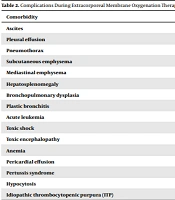
We conducted a PubMed search of VV-ECMO and COVID-19 review articles. In a prominent tertiary care hospital in France, retrospective data revealed a survival rate of approximately two-thirds of the population two months after initiating VV-ECMO (1). Among those patients, half were able to be discharged home, while the other half required long-term care facility placement. Comparable survival rates were observed in large tertiary care hospitals managing patients with acute respiratory distress syndrome before the COVID-19 pandemic. In general, the criteria for initiating VV-ECMO comprised the following: Age below seventy, presence of acidosis, hypercarbia, and partial pressure over an inspired fraction of oxygen ratio of less than 80 despite 10 cmH2O positive end-expiratory pressure. All patients received neuromuscular blocking agents in addition to heavy sedation. Exclusion criteria typically included advanced cancers and liver or cardiac diseases as comorbidities. Additionally, patients requiring mechanical ventilation for more than ten days or undergoing chest compressions for longer than fifteen minutes were generally not considered for initiation of VV-ECMO. A 29 French cannula was used to drain the femoral vein, while a 25 French cannula was employed to return oxygenated blood to the jugular vein, with confirmation of correct placement through X-ray imaging. In a small proportion of patients, a femoral artery cannula was necessary to restore flow following cardiac function support provided by VA-ECMO. In such cases, a second femoral artery catheter was used to ensure bypass flow to the distal leg, preventing ischemia. Placement of these multiple complex cannulas may pose challenges for less experienced centers.
Another review emphasized that during the H1N1 influenza pandemic, when implemented early and maintained for an average of ten days, VV-ECMO yielded comparable one in three mortality rates (2). Prior to and during the H1N1 pandemic, researchers found no statistically significant improvement when VA-ECMO was added to standard care (3). As the COVID-19 pandemic progressed into its second year, mortality rates were observed to increase even at these large tertiary care centers. This could be attributed to understaffing in hospitals during the later phases of the pandemic. Another contributing factor may be the inclusion of centers with lower annual ECMO experience. For instance, in Germany, where inclusion criteria varied considerably across hospitals, and the annual ECMO volume per hospital was lower, mortality rates were twice as high compared to the study conducted in France or the study conducted in Switzerland (1, 4).
In a minority of COVID-19 ECMO cannulations, it was determined that contractility was impaired. In such cases, VA-ECMO was initiated. Following a few days, adjustments were made to the cardiac output settings, and inotropic medications were gradually reduced. If serial blood gases, transthoracic, or (if technically challenging visualization) TEE indicated restoration of native contractility, transition to a simpler VV-ECMO circuit was pursued. Throughout the ECMO procedure, vigilant monitoring for abnormal bleeding or clotting is crucial. During the placement of additional central venous lines, there is a risk of large air emboli entering the bloodstream if healthcare providers neglect to administer fluids titrated to a positive central venous pressure (CVP) or Trendelenburg position, given the slightly negative pressure typically maintained within the ECMO circuit (personal communication, perfusionist). When centers have limited experience in performing ECMO procedures multiple times a year, the implementation of simpler circuits and adherence to strict protocols may help mitigate certain complications.
3. Single Cannula VV-ECMO
We conducted a PubMed search using the keywords VV-ECMO, TEE, and Avalon Elite (Maquet, Germany). A simplified and efficient approach can be achieved with the use of the 23 French Avalon Elite Catheter. Following heparinization, the catheter is inserted into the right internal jugular vein, allowing for drainage from both the inferior and superior vena cavae (5). Accidental placement leading to vascular structure puncture can result in suboptimal flow on the ECMO circuit monitors, potentially leading to cardiac tamponade (6). After oxygenation in the VV-ECMO machine, the blood is returned through the central port of the catheter, directed toward the center of the right atrium above the tricuspid valve. In cases where transferring the patient from the ICU to the cardiac catheterization lab or performing continuous X-ray fluoroscopy poses challenges, the catheter position can be effectively adjusted using TEE performed by a cardiologist or anesthesiologist.
This qualitative evidence synthesis review emphasizes the importance of TEE in confirming cannula placement while preventing complications such as right atrial rupture or low flows. Although there is a small risk of esophageal perforation associated with TEE in approximately one out of every two thousand patients, the benefits of excellent image quality during ECMO initiation or weaning outweigh this risk. The National Board of Echocardiography website provides a means to verify the certification status of individual anesthesiologists, enabling identification of those who have successfully completed exams of varying levels of perioperative TEE difficulty or who have attained Diplomate status through the submission of case logs and extensive education. If there are atypical vital signs or if X-ray imaging is inadequate, TEE may be warranted.
The placement of the Avalon catheter in the neck instead of the groin offers significant advantages, including increased opportunities for physical therapy, reduced infection risk, and prevention of deconditioning (7). Furthermore, the absence of a femoral catheter allows for a reduction in the amount of sedation medication needed when the patient remains in a supine position (8, 9). All patients receiving VV-ECMO must continue to be ventilated with an endotracheal tube or tracheostomy, using tidal volume settings of two to four milliliters per kilogram. This ventilation strategy helps prevent inflammation, injury from atelectasis, and hypoxemia resulting from intrapulmonary shunting. Prior to weaning off VV-ECMO, anesthesiologists should ensure that exhaled tidal volumes reach at least 6 mL/kg. Similarly, after weaning VA-ECMO, TEE is utilized to optimize left ventricular fluid filling and contractility using the midpapillary short-axis view while assessing biventricular function and valve function in the four-chamber view. Remarkably, prone positioning is achievable even with neck cannulation.
4. Anticoagulation Protocol
We integrated a PubMed search of VV-ECMO anticoagulation protocols with interviews of nurses and anesthesiologists from two prominent academic ECMO centers in California and Louisiana. It is advisable to involve a licensed perfusionist in the development of a local ECMO initial heparinization protocol. For instance, the activated clotting time (ACT) goal on the point-of-care testing machine is typically set above approximately 450 seconds for CPB or ECLS. However, for VA-ECMO, it is generally allowed to drift to above 200 seconds, and for VV-ECMO, it is maintained above 180 seconds, depending on the circuit and the manufacturers’ guidelines for the ACT machine.
Following the initial heparinization, ICU nursing staff should regularly monitor the activated PTT every 2 hours. Once the patient’s condition stabilizes, the frequency can be reduced to every 6 to 8 hours. In addition, conducting a daily thromboelastogram along with a platelet count, as well as monitoring the antithrombin III level, can aid in detecting HIT and resistance, respectively. To mitigate these potential side effects, we suggest an empirical switch from heparin to argatroban on day two or three, starting at a dose of 1 μg/kg/min while maintaining the PTT goal between 61 - 80 seconds. Adjustments to the argatroban dose should be made by 10% if PTT falls within the range of 40 - 60 or 80 - 90 seconds and by 20% if it falls outside that range.
Based on our interviews and the protocols identified through our PubMed search, we found consistent recommendations regarding anticoagulation. The majority of centers suggest maintaining the activated PTT within the range of 60 to 80 seconds. This aligns with the bedside test of ACT, which typically ranges between 160 to 200 seconds, depending on the calibration of the laboratory machines. Following the initial heparin bolus, PTT should be reassessed every hour, with the frequency reduced to approximately every two hours once the patient’s condition stabilizes. However, PTT should not be repeated less frequently than every six to eight hours (10). The potentially life-threatening condition of HIT tends to emerge around day five. Most recent literature suggests replacing heparin with argatroban, a direct thrombin inhibitor, as a way to avoid HIT. Conveniently, the argatroban dose is adjusted to maintain the same PTT range. For patients not already on heparin maintenance, the initial dose of argatroban is a bolus of 25 μg/kg. The maintenance dose of argatroban is titrated between 1 to 10 μg/kg/min (personal communication from the pharmacy at LSU Health Sciences Center Shreveport). Due to the impact of inflammatory mediators on the entire coagulation cascade, it is recommended to monitor laboratory values daily, including platelets, hemoglobin, antithrombin III, fibrinogen, and a thromboelastogram. Hemolysis may occur on the ECMO machine, so daily monitoring may include bilirubin, plasma-free hemoglobin, haptoglobin, and lactate dehydrogenase (personal communication, the University of California). Platelet transfusions are necessary, particularly in cases of intracranial or intrathoracic bleeding.
5. Sedation Protocol
Finally, we conducted a PubMed search on ICU delirium and quetiapine. Here, we describe the literature supporting the replacement of narcotics and benzodiazepines with dexmedetomidine at a rate of 0.5 to 1 μg/kg/hour, with the limitation being bradycardia. Once patients can tolerate oral medication, dexmedetomidine can be substituted with quetiapine, starting at a daily dose of 25 mg and increasing to a maximum of 200 mg twice a day, limited by the prolonged QT interval. According to a researcher’s extensive survey, most intensivists begin with midazolam and fentanyl and later transition to propofol and dexmedetomidine (8). In cases where patients have opioid tolerance, ketamine is sometimes added (9). The more patients are able to mobilize and have fewer invasive lines; the less likely delirium is to occur.
Unfortunately, there are few protocols available for sedation aimed at reducing delirium during prolonged mechanical ventilation, especially in VV-ECMO cases. Sedative titration should be generous in the first few days on ECMO to ensure amnesia during the administration of neuromuscular blocking agents, which is essential for preventing post-traumatic stress disorder. Paralytics are necessary to prevent cannula dislodgement or resistance against the ventilator. Monitoring the bispectral index (BIS) on the scalp, with a reading below 50, provides reassurance of amnesia, although it is not perfectly accurate. After a day or two, the appropriate combination of sedatives should achieve the goal of discontinuing the use of paralytics.
Neurologic injury with significant impacts, such as cerebral hemorrhage or ischemic stroke, was reported in 6% of patients based on a meta-analysis (11). Hence, sedation should be minimized to allow for daily neurologic examinations. High requirements of dexmedetomidine, up to 17 μg/kg/day, and propofol, up to 54 mg/kg/day, are associated with respiratory distress (8). ICU delirium is consistently prevalent in one out of four patients.
Among COVID-19 patients in the ICU, delirium is common even in the absence of ECMO. Dr. Lawrence Kaplan, director of consultation-liaison psychiatry at the University of California, the San Francisco Medical Center, stated in the New York Times on June 28, 2020, that more than three-quarters of COVID-19 ICU patients experience severe paranoid hyperactive delirium. He further argued that quetiapine, an atypical antipsychotic sold under the brand name Seroquel, is particularly effective in treating most cases of delirium. First-line preventive measures include placing family photographs in frames around the patient’s surroundings, providing up-to-date newspapers and television for orientation, and playing music or recordings of familiar voices during routines that promote adequate sleep. Second-line options involve the administration of melatonin, trazodone, and short-acting opioids (12).
The anesthesiology literature provides various descriptions of the multifactorial and widespread nature of delirium. Replacing benzodiazepines and narcotics with dexmedetomidine or propofol proves beneficial. Successful outcomes have also been observed by avoiding anticholinergic-induced delirium or by utilizing physostigmine for reversal. In cases where ICU delirium is prolonged or severe, there is an increased likelihood of it becoming permanent in up to one-quarter of patients. Persistent delirium, when accompanied by cognitive impairment, can significantly limit daily activities. Essentially, temporary ICU delirium may progress into permanent dementia (12, 13).
Due to the necessary sedation required to tolerate catheters, ICU delirium may only become apparent after weaning from ECMO. COVID-19 infection does not appear to present significant challenges in terms of sedation or allowing physical therapy in VV-ECMO patients. Among opioids, melatonin, benzodiazepines, and antidepressants, only antipsychotics have been shown to be effective in preventing delirium after discontinuing dexmedetomidine (14). Haloperidol, at a dose of 1 mg, is also utilized to prevent nausea in postoperative general surgery patients and to prevent delirium (as reported in the recovery room anesthesia order set by the University of California). Among olanzapine, risperidone, haloperidol, and quetiapine, quetiapine has been the most extensively studied. A dose of 12.5 mg each evening was found to be insufficient in reducing the risk of delirium (14). The authors suggest that a higher dose in a more selective subgroup might be beneficial for quetiapine. In a larger prospective study, a dose of 25 mg each evening demonstrated a modest reduction in delirium (15).
Considering the association of ICU delirium with long-term disability, it is crucial to explore methods to reduce its incidence (16). Despite a significant publication in 2010 demonstrating the safety and effectiveness of quetiapine doses larger than 50 mg twice a day in cardiac ICU patients, some physicians still exhibit hesitation due to concerns about falls or QT prolongation (17). In fact, in this prospective trial, if haloperidol was required on the preceding day, the quetiapine dose was increased to 200 mg twice a day, resulting in a three-fold reduction in the duration and intensity of delirium. The authors of this seminal article concluded that mortality and ICU length of stay were comparable, but patients were more likely to be discharged home with adequate rehabilitation.
In a separate study conducted at Vanderbilt University involving over 2000 patients, no significant decrease in delirium-free hospital days was observed among those who received quetiapine (18). However, a limitation of this study was that clinicians had the freedom to administer medications as they deemed necessary. Bias was introduced due to the retrospective design, with sicker patients receiving medication at later stages. Nevertheless, this study provided further evidence that quetiapine is not associated with increased one-year mortality (18). In a different prospective trial, quetiapine-treated patients exhibited less severe delirium compared to those who received a placebo, resulting in improved weaning from mechanical ventilation (15).
6. Discussion
We suggest that in situations where staffing or equipment shortages require triage, small centers may consider selecting VA-ECMO candidates distinctively from VV-ECMO candidates. For instance, individuals who are not of advanced age, do not require prolonged mechanical ventilation and do not have multiple organ (including cardiac) comorbidities may be better suited for a trial of a few weeks of VV-ECMO. Additionally, we recommend the use of a single internal jugular cannula as it allows for better physical and pulmonary therapy compared to a femoral cannula. The placement of an Avalon Elite catheter should be guided by TEE if transfer to the cardiac catheterization lab is not possible. Enteric feedings should be initiated from the first day of ECMO (19).
Delirium may be mitigated by customizing the choice of anesthetic agents (16). Initially, sedation drugs such as midazolam and fentanyl may be used, but a prompt transition to dexmedetomidine or propofol is advisable. We suggest considering an early switch to oral quetiapine if delirium manifests (20-23).
Interval monitoring involves comprehensive sets of locally designed coagulation laboratory values and bedside monitors. Argatroban demonstrates superiority over heparin without inducing heparin-induced thrombocytopenia, thrombosis, or resistance. Brain CT scans or TEE should be performed when clinically indicated. Cerebral oximetry, with a target above 60%, offers continuous monitoring that enables early detection, incorporating cardiac output, arterial oxygenation supply, and hemoglobin data. We advise caution when interpreting pulse oximetry waveforms in poorly perfused patients, although signal quality can be improved using a neonatal band-aid type probe on the earlobe. It is important to remain vigilant regarding femoral artery blood gases, as they may be influenced by blood flow from a nearby femoral artery cannula, potentially leading to artificially elevated oxygen values.
The established goals in the ICU persist during ECMO, including maintaining a mean arterial pressure above 65mmHg, central venous pressure above 8mmHg, and urine output above 0.5 mL/kg/hour. If TEE is performed to evaluate contractility, the images should be obtained after weaning from VA-ECMO, known as the “bridge” phase, and after reducing inotropes to manageable doses. Otherwise, contractility may falsely appear low during full-flow VA-ECMO. Left ventricular cardiac output can be calculated using the deep transgastric view obtained at zero or 110 degrees. The velocity-time integral of pulsed-wave Doppler during ejection should be traced and multiplied by the aortic valve annulus area, then further multiplied by heart rate. Continuous wave Doppler assessment of a peak velocity tricuspid regurgitation jet at the right ventricular inflow-outflow view at 60 degrees provides estimations of pulmonary artery systolic pressure, which is calculated as four times the velocity squared plus CVP. It is important to maintain a high suspicion for depressed cardiac contractility as vasoplegia or low contractility from inflammation or sepsis can occur. Initiation of VV-ECMO should be performed when staffing allows, especially if hypoxemia is the indication. Centers should aim to perform a minimum of twenty ECMO cannulations per year to ensure a subgroup of staff is familiar with the local protocol. Otherwise, consideration should be given to transferring the patient to a larger center soon after VA-ECMO initiation (3).
6.1. Limitations
A limitation of this review is the need for a comprehensive discussion of ECMO-related issues to address the various steps relevant to an anesthesiologist caring for a patient. However, a strength of the review is that by combining PubMed searches with face-to-face interviews at two universities, we were able to identify simplified local argatroban dosing and monitoring protocols that may help prevent HIT and resistance. Additionally, through case reports, we found that TEE-guided cannula positioning and contractility assessments can aid in the transition from VA-ECMO to VV-ECMO. Another strength of the review is that it emphasizes the benefits of a sedation agent that is rarely discussed as a complement to and after the discontinuation of dexmedetomidine. Oral quetiapine has been unjustly criticized for adverse effects such as syncope and mortality. However, the limited available literature does support the use of quetiapine, provided that the QT interval is monitored initially, as it has been shown to decrease the long-term impact in terms of various morbidities and overall mortality.