1. Background
Cognitive disorder is a fluctuating cognitive disorder commonly seen in hospitalized patients. Cognitive disorder is a type of cognitive disorder occurred in a short time characterized by features such as altered consciousness, reduced concentration and memory, impaired orientation, rapid incidence for several hours to several days, short period and notable fluctuations (mostly at night) (1). The incidence of cognitive disorder in hospitalized patients is accompanied with increased mortality (2-4), prolonged hospital stay (5, 6), increased hospitalization (7), impaired rehabilitation of patients, increased nursing measures (8), prolonged intubation (9), higher risk of falls (2), impaired cognitive functions (5), increased risk of dementia (6), inability to return to work (3), poor quality of life (10) and long-term care (11).
Mortality rate in patients who experienced an episode of cognitive disorder is 23-33% with an annual mortality rate of 50%. Mortality rate in patients who develop cognitive disorder during hospitalization is 20-75%; of whom 15% and 25% die within one and six months, respectively (12). The incidence of cognitive disorder varies in different wards, but the highest rate of cognitive disorder occurs after thoracotomy and cardiology surgeries, which may even reach 90% (4).There are different opinions about causes of cognitive disorders including metabolic encephalopathy, drug toxicity, hypoglycemia, preoperative hypoxemia, visual and hearing impairment, and the type and duration of anesthesia (6, 9). The main postoperative causes include surgical stress, postoperative pain, insomnia, pain control medications, electrolyte disturbances, fever and bleeding (13).
In major operations like heart surgery, considering the complex surgical procedure, the use of anesthetics and relaxants during and after the operation and postoperative complications may increase the incidence of cognitive disorders (14). Besides, postoperative pain may lead to sleep disturbance, increased metabolism, myocardial ischemia, anxiety and cognitive disorder (5). Therefore, it is necessary to identify the prevalence and risk factors associated with cognitive disorders in patients undergoing cardiac surgery and admitted in ICU. Identifying cognitive disorder risk factors may help early diagnosis and reduce complications.
2. Objectives
This study aimed to assess the incidence and risk factors of cognitive disorders in patients after open heart surgery (off pump CABG).
3. Patients and Methods
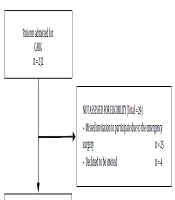
This descriptive study was performed on 171 patients undergoing elective surgery in Heart Center of Imam Reza Hospital in Mashhad for an 8-month period. The samples size was calculated using NCSS and PASS statistical software with minimum 80% for multiple logistic regression test, significance level of 5%, coefficient of determination of 80%, odds ratio of 2.91 and 0.28, and 0.531 probability of cognitive disorder incidence (15) among 170 patients. Furthermore, samples were selected according to a purposive sampling method. For all patients, echocardiography and carotid Dopplerecho were performed for all patients before the operation.The night before the operation, a psychologist visited patients. In addition, the Millon test was used to evaluate patients regarding any history of cognitive, mood and psychiatric disorders. Furthermore, patients were examined for any sign of psychological disorders.
Patients were ASA class of at least III and even IV. Exclusion criteria were emergency operations, redo operations, carotid stenosis more than 40%, preoperative creatinine >2, history of cognitive disorders, and late extubation >8 hours. Anesthesia was induced using 0.1 mg/kg midazolam, 10 μg/kg fentanyl, 1 mg/kg propofol, and 0.5 mg/kg Atracurium. Anesthesia was maintained during the operation using midazolam 5 mg/h, Atracurium 20 mg/h or propofol 50 μg/kg/min until the end of operation. After transferring to ICU, eligible patients were extubated 4 to 8 hours after the operation. Besides, patients' cognitive disorder score was recorded during the first 24 hours of ICU stay (calculated after extubation) using the Mini Mental State Examination (MMSE). All data entered SPSS software (version 21) and analyzed. To compare creatinine levels, ESR, extubation time and patients’ age in the two groups, one with postoperative cognitive disorder and the other without it, independent T-test was used, and to compare the two groups for any history of diseases such as diabetes, hypertension and hyperlipidemia, Chi square test was used.
4. Results
In this study, there were 171 patients in 64.04 ± 9.84 age group, of which 75% in the age range of 64.26 ± 9.04 had postoperative cognitive disorder. As shown in Table 1, T-test revealed that only preoperative creatinine levels in the two groups, those with and without cognitive disorder symptoms, were significantly different (P = 0.02); while, other factors such as ejection fraction (EF), erythrocyte sedimentation rate (ESR), age and extubation duration were not significantly different. As shown in Table 2, patients with and without postoperative cognitive disorder were significantly different regarding the history of high blood pressure and CRP; while, the two groups were not significantly different regarding the history of stroke, diabetes, and hyperlipidemia.
Table 1.
Results of Independent T-test Comparing Age, Extubation Duration, EF and ESR a
| Variable | Without Cognitive Disorder Group, n =42 | With Cognitive Disorder Group, n =129 | Total, n =171 | P Value |
|---|---|---|---|---|
| Cognitive disorder | 63.97 ± 10.14 | 64.26 ± 9.04 | 64.04 ± 9.84 | 0.868 |
| Creatininelevel | 1.11 ± 0.33 | 1.22 ± 0.35 | 1.13 ± 0.34 | 0.029 |
| Extubation duration | 4.95 ± 2.48 | 5.42 ± 2.39 | 5.16 ± 2.43 | 0.236 |
| Preoperative EF | 48.01 ± 11.33 | 47.43 ± 8.91 | 47.87 ± 10.76 | 0.468 |
| ESR | - | - | 44.69 ± 11.95 | 0.354 |
aData are presented as Mean ± SD
Table 2.
Chi-Square Test Results Comparing History of Stroke, Hypertension, Diabetes, Dyslipidemia and Positive CRP in the Two Groups With and Without Postoperative Cognitive Disorder a
| Variable | Without Cognitive Disorder Group, n = 42 | With Postoperative Cognitive Disorder, n = 129 | P Value | Total, n =171 |
|---|---|---|---|---|
| CVA | 2.3 | 7.1 | 0.171 | 3.5 |
| DM | 29.5 | 35.7 | 0.44 | 31 |
| HTN | 83.7 | 61.9 | 0.003 | 78.4 |
| HLP | 49.6 | 40.5 | 0.3 | 47.4 |
| CRP+ | 32 | 80 | 0.045 | 40 |
aData are presented as %.
5. Discussion
In total, 75% of patients had cognitive disorder after off-pump CABG; whereas, the incidence of this syndrome after open-heart surgery had been reported 20% to 45% in other studies (16-18). This was 47% in the study of Ganavati in Iran (19). This difference could be due to a variety of reasons such as study sample size, or using various diagnostic criteria to identify cognitive disorders. Moreover, this study was conducted on an aging population and since most studies introduce age as a risk factor associated with postoperative cognitive complications, older age may increase cognitive disorders (20-22). In the study performed by Miyazaki, high level of serum creatinine was found to be a predisposing factor in patients with cognitive disorder (23), which is confirmed by the present study as well.
In a large body of study, including Miyazaki (23) and Koster (15), it is suggested that history of stroke and high blood pressure can be predisposing factors for severe disorders such as cognitive disorder, whereas the present study suggested that two groups were not significantly different for the history of stroke. Moreover, high blood pressure in the group without cognitive disorder was higher than the groups with postoperative cognitive disorder, which could be due to insufficient sample size. A study conducted in China showed that diabetes could be considered as a risk factor for cognitive disorder (18). Consistent with this finding, in this study, history of diabetes in patients with postoperative cognitive disorder was more common than those without it.According to our results and other studies, main etiology factors for the development of cognitive disorder were hypertension, atherosclerosis(24) and history of drug abuse and senesces.
Overall, given the results of this study and the high incidence of cognitive disorders after open-heart surgery, especially among elderly, preoperative assessment of cognitive function of patients is of utmost importance. Furthermore, complications of cognitive disorder can be controlled in nonemergency surgeries by psychiatric consultation and identifying associated risk factors. Of course, more studies are needed to investigate the effect of these interventions on postoperative cognitive state of patients.