
1. Background
Mechanical ventilation is life saving for critically ill patients, but care-givers should consider early discontinuation from mechanical ventilation earliest possible time in order to avoid ventilator-induced lung injury (1).
Many routine predictors for weaning such as tidal volume, minute ventilation, negative inspiratory pressure and rapid shallow breathing index (RSBI) confirm an association between respiratory capacity and work of breathing (WOB) and their imbalance is regarded as the main cause of weaning failure (2). However, extubation failure despite optimal respiratory predictors, indicate their poor performance perhaps because other factors might be involved in successful extubation (2, 3). Extubation failure means the need for reintubation within 24 - 72 hours due to respiratory failure with a rate of 6% - 47% expressed in some studies (2, 4-7). Risk factors for extubation failure include the type and severity of the disease, age more than 70 years, prolonged intubation and continuous sedation (6). Reintubation increases mortality, duration of mechanical ventilation, length of stay in ICU, cost and the need for tracheostomy (1, 2, 6, 7). Prognostic indices for weaning such as rapid shallow breathing index (RSBI) were inefficient (8).
Anemia is common in critically ill patients and may be considered as an incriminating agent in patient’s weaning (8, 9). During the extubation process, insufficient muscular activity leads to increased work of breathing (WOB) and oxygen consumption (8, 10). In addition, oxygen delivery to the vital organs such as the heart (11, 12), the respiratory muscles (13) and splanchnic region (14) must be increased to cope up with the increased oxygen demands because of increased WOB and oxygen consumption. It is believed that correction of anemia through blood transfusion will improve oxygen supply during discontinuation from ventilator (15, 16).
2. Objectives
The current study aimed to evaluate the association between hematocrit (Hct) level and extubation success in intubated patients and duration of mechanical ventilation.
3. Materials and Methods
3.1. Study Design and Setting
After an approval from the department of anesthesiology and intensive care, and the ethics committee of Tehran university of medical sciences, code No. 23844, the study was conducted as part of a prospective, multicenter cohort study to evaluate consecutive mechanically ventilated patients. Eligible patients were recruited from four ICUs of Imam Khomeini hospital complex, Tehran, Iran, from May 2011 to December 2013. Informed consent letters were obtained from the patients’ relatives or guardians.
3.2. The Study Population
Among the 384 intubated patients admitted in ICUs, 163 patients under mechanical ventilation were enrolled based on the inclusion and exclusion criteria. Inclusion criteria comprised of mechanical ventilation for at least 24 hours and age 20 - 60 years. The patients with chronic anemia, acute blood loss, chronic obstructive pulmonary disease, ischemic heart disease, ejection fraction < 50% and a need for packed red blood cell transfusion were excluded from the study. Nine of the patients were excluded from the study as they needed blood transfusion to raise their Hct. Data of 154 patients were analyzed.
3.3. Weaning and Extubation Planning
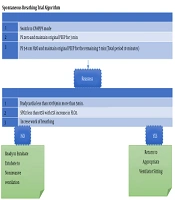
Patients were hemodynamically stable before weaning and all of the measured respiratory indices and non-respiratory parameters included: Tidal volume, minute ventilation, vital capacity, negative inspiratory pressure (NIP), RSBI, static lung compliance, airway resistance, frequency, PaO2/FiO2 ratio, volume of tracheal excretion and the number of daily tracheal suctioning attempts. After the improvement of underlying disease and hemodynamic stability, standard pressure support ventilation (PSV) was started as a weaning protocol. If weaning process was successful, patients were classified based on Hct concentration into two groups; group 1: Hct = 21% - 27% and group2: Hct > 27%. The Hct values were obtained using the commonly used device (Sysmex XT1800, Japan). After two hours, if cardiopulmonary indexes were stable and the patient was alert and calm with RSBI < 100 and NIP < −30 mmHg, as successful weaning indicators, tracheal tube was removed. Mechanical ventilation management and the decision of extubation were performed by one anesthesiologist for all the cases. Before extubation, an observer recorded the number of attempts of endotracheal suctioning for at least 24 hours. After extubation, oxygen was applied 6 lit/minute via facemask. ABG was performed twice; first just before tracheal tube extubation and later one hour after extubation. Extubation failure was defined as the need of re-intubation within 24 hours after extubation for respiratory failure. SpO2 < 90%, PaO2 < 60 mmHg, PaCo2 > 50 mmHg, RR > 35/minute, increase in heart rate more than 25% of basic value (heart rate before extubation), 30% increase or decrease in blood pressure compared to base value, a decline in consciousness, anxiety and diaphoresis were defined as impending signs of respiratory failure, and indications for reintubation. All related factors such as age, gender, heart rate, mean arterial pressure (MAP), respiratory rate, ABG parameters, duration of mechanical ventilation and admission-day acute physiology and chronic health evaluation (APACHE) II score were recorded.
3.4. Statistical Analysis
Results were expressed as the mean ± SD. Chi-Square test was used for nominal and grouped data, and student’s t-test for numerical data to find any association between Hct and extubation failure and duration of mechanical ventilation. A power of 0.80 with P value < 0.05 was considered statistically significant. The associations of individual variables (potential confounder variables) include age, gender, duration of mechanical ventilation, suctioning attempts , P/F ratio and PaO2 difference, and APACHE II score with the primary outcome (extubation failure) were evaluated using logistic regression and associations presented as odds ratios. Statistical analyses performed by the SPSS 20 (SPSS Inc. Chicago). Definite P Values, odds ratio and 95% confidence intervals (95% CI) were also reported for comparison risk.
4. Results
One hundred fifty four patients including 41 females and 113 males participated in this study. There were no statistical differences regarding age (P = 0.290), gender (P = 0.181) and ICU admission day of APACHE-II score (P = 0.984) between the two groups. Differences of hemodynamic parameters between the two groups before and after extubation were not significant (Table 1).
Table 1.
Demographic Data of Patients Studied Before and After the Extubationa
| Variables | Hct | P Value | |
|---|---|---|---|
| 21% - 27% | > 27% | ||
| Gender | .181 | ||
| Male | 45 (80.4) | 68 (69.4) | |
| Female | 11 (19.6) | 30 (30.6) | |
| Age, y | 40.3 ± 10.8 | 42.4 ± 11.6 | .290 |
| APACHE-II, ICU admission day | 11.1 ± 3.9 | 10.9 ± 3.4 | .984 |
| RSBI | 76.6 ± 7.9 | 74.9 ± 9.4 | .532 |
| Heart rate | |||
| Before | 82.1 ± 7.2 | 83.3 ± 7.3 | .332 |
| After | 79.2 ± 8.7 | 79.4 ± 8.5 | .933 |
| MAP | |||
| Before | 73 ± 4.2 | 74.2 ± 4.6 | .084 |
| After | 74.4 ± 3.4 | 75.1 ± 3.8 | .212 |
| Respiratory rate | |||
| Before | 21 ± 2.9 | 21.4 ± 3.6 | .303 |
| After | 19.7 ± 4.1 | 20.6 ± 4.6 | .381 |
| P/F ratio | |||
| Before | 527.1 ± 127.7 | 428.9 ± 192.6 | .001 |
| After | 268.5 ± 118.2 | 280.7 ± 88.3 | .025 |
| P/F ratio-D | 258.6 ±182.6 | 148.1 ± 225.3 | .004 |
| pH | |||
| Before | 7.4 ± 0.1 | 7.4 ± 0.1 | .421 |
| After | 7.4 ± 0.1 | 7.4 ± 0.1 | .803 |
| PaCO2 | |||
| Before | 37.2 ± 3.8 | 37.3 ± 7.1 | .482 |
| After | 37.8 ± 3.7 | 36.5 ± 6.3 | .493 |
| Attempts at suctioning | 8.04 ± 2.9 | 8.3 ± 2.7 | .683 |
| Duration of MV, h | 129.7 ± 40.6 | 138.6 ± 41 | .282 |
| Successful extubation b | 51 (91.1) | 89 (90.8) | .112 |
aValues are presented as mean ± SD or No. (%)
bOdds ratio = 1.03, 95% CI = 0.3 - 3.2.
Successful extubation rate was 51 (91.07%) and 89 (90.81%) in patients in-group 1 (Hct = 21% - 27%) and group 2 (Hct > 27%) respectively, but the difference had no significant association with extubation failure (P = 0.112, OR = 1.03, 95% = 0.3 - 3.2) (Table 3). Causes of respiratory failure were showed in Table 2.
Table 2.
Causes of Respiratory Failure and Reintubation
| Variable | Patients |
|---|---|
| SpO2 < 90% | 10 |
| RR > 35 | 12 |
| Diaphoresis | 8 |
| Anxiety | 4 |
| Hypertension | 6 |
Table 3.
Comparison of Variables on Extubation Outcomea
| Variable | Extubation Failure | P Value | |
|---|---|---|---|
| Yes | No | ||
| Gender | .034 | ||
| Female | 7 (20.6) | 34 (79.4) | |
| Male | 7 (6.2) | 106 (93.8) | |
| Age, y | .014 | ||
| ≤ 50 | 7 (7) | 93 (93) | |
| > 50 | 7 (12.9) | 47 (87.1) | |
| Duration of MV, h | 127.3 ± 34.3 | 136.2 ± 41.6 | .438 |
| Hematocrit | .507 | ||
| 21% - 27% | 5 (8.9) | 51 (91.1) | |
| > 27% | 9 (9.2) | 89 (90.8) | |
| Attempts of suction | 9.8 ± 2.5 | 8 ± 2.8 | .031 |
| P/F ratio-B | .512 | ||
| < 200 | 0 | 8 | |
| 200 - 300 | 2 | 26 | |
| > 300 | 12 | 106 | |
| P/F ratio-D | 186.5 ± 210.8 | 205.9 ± 279.2 | .403 |
| PaO2-D | 63.4 ± 82.6 | 65.6 ± 59.9 | .259 |
| Suction No.b | .331 | ||
| ≤ 10 | 7 | 100 | |
| > 10 | 7 | 40 | |
| RSBI | .864 | ||
| ≤ 75 | 4 | 53 | |
| > 75 | 10 | 87 | |
aValues are presented as mean ± SD or No. (%).
bSuction No: attempts of tracheal suction per day.
Mean of mechanical ventilation duration (P = 0.438), severity of illness based on APACHE II score (P = 0.427), RSBI (P = 0.053) and mean arterial pressure (P = 0.527) rate were not different between the two groups of failure and successful extubation. Extubation failure increased three times with increased attempts of endotracheal tube suctioning (P = 0.031) (Table 3).
According to the initial analysis using the chi-square test, there was no significant difference in the groups according to age group (≤ 50 vs. > 50 years) (P = 0.242) and gender (P = 0.055) on the rate of extubation failure. However, when multiple logistic regression analysis was employed to test these confounding variables (age group and gender), a statistically significant difference in both the genders and age groups was found as far as extubation failure was concerned to state that extubation failure in females was nine times more compared with that of males (P Value = 0.034, odds ratio = 9.1, 95% CI = −0.027 - 0.557) and in the age group (age > 50 year) (P = 0.014, odds ratio = 12.5, 95% CI = −0.472 - 0.143) showed a significant rise (Table 3).
PaO2 differences before and after extubation (P = 0.001, 95% CI = 14.423 - 52.598) were statistically significant between the two different groups of Hct values, but had no effect on the failure of extubation (P = 0.259, 95% CI = −46.288 - 50.601) (Table 3).
5. Discussion
The underlying disease, blood loss and multiple blood sampling are the most common causes of anemia among ICU patients (9). Anemia is reported to be associated with adverse outcome (8, 15, 16). However, it is not precisely defined whether anemia per se may increase the mortality in anemic patients (9). The severity of the underlying disease may justify the increase in the mortality rate of such patients. Therefore, liberal blood transfusion is not recommended in ICU patients, since the adverse consequences such as transfusion and/or related infection may surpass its benefits (9). However, there are certain subsets of patients who may benefit from blood transfusion including the patients with circulatory shock and acute coronary syndrome (11). In addition, patients with prolonged intubation period and failed attempts at discontinuation may be candidates to receive blood transfusion (15, 16).
Higher cardiac index and oxygen capacity lead to a more successful extubation (17). Cardiac insufficiency may occur because of a catecholamine surge due to a physiological stress incurred because of weaning from the ventilator (18-20). In weaning failure, delivery of oxygen is low in tissues and this condition can influence the respiratory muscle function (17). An onslaught of these factors together with hypoxia may lead to acute pulmonary edema (17-19). This phenomenon is commonly observed in patients with borderline cardiac index. The outcome is exhausted respiratory muscles and extubation failure. Therefore, oxygen delivery and oxygen consumption must be augmented accordingly to meet the increased oxygen demand by the cardiopulmonary system during the extubation process.
Cardio-pulmonary fitness is a strong predictor of weaning and extubation success in mechanically ventilated patients. Higher cardiac index, stronger body and respiratory muscles and ventilation that are more efficient translate into a more favorable extubation outcome. This is the probable reason why males tolerated extubation better than females with similar degree of anemia and intubation time in the current study (Table 3). Healthy males have a higher cardiac index and muscle mass compared to males of similar age. On the other hand, they develop critical illness neuropathy less frequently than women in comparable situations associated with delayed extubation (21, 22). Female gender and duration of mechanical ventilation before awakening are independent predictors of ICU-acquired paresis (21).
About the significance of age, similar to the study by Epstein (7) that revealed age more than 70 years is a risk factor in weaning failure, the current study also found a significant correlation between age and extubation failure and found it more in patients above 50 years.
Most parameters of mechanical ventilation cessation are about prediction of weaning and very few parameters dwell on the issue of successful extubation (2, 4, 5, 8). Two semi quantitative evaluations that correlate with successful extubation as reliable airway protection are spontaneous cough (P = 0.01) and attempts of tracheal suctioning (P = 0.001) (23). Although, in the current study suctioning attempts were the same in the two Hct groups, it had a significant association with extubation failure rate (Table 3).
Tissue hypoxia commonly occurs during critical illnesses. Thus, an understanding of the relationship between oxygen delivery (DO2) and volume of oxygen (VO2) is crucial in this population. Previous studies suggested a pathological oxygen supply dependency in critically ill patients. However, many of these studies had methodological problems and still many were detecting physiological, rather than pathological supply dependency (24). Although arterial blood oxygen content depends on the hemoglobin concentration, the partial pressure of oxygen (PaO2) determines how much oxygen is transferred to the tissues by Hb (O2-Hb dissociation curve) (24). Under normal physiological condition, there is a decrement of PaO2 from 100 mmHg in the lungs to a PaO2 of 40 mmHg in the tissues. Following binding of oxygen with Hb, its binding inclination to free spaces increases 20 folds and in this scenario, it tends to provide 1.7 times more oxygen to the tissues (25). In our data, despite a difference of PaO2 values before and after extubation between the two groups (Table 1) it had no effect on the extubation failure (Table 3). Under normal conditions, with 98% - 99% saturation, oxygen delivery reaches almost 950 - 1150 mL/minute, whereas the oxygen consumption is approximately 200 - 250 mL/minute (26). A linear dependence relationship between DO2 and VO2 can occur when there is a primary change in metabolic rate and DO2 changes proportionately to match this oxygen requirement. This situation happens during discontinuation from mechanical ventilation when VO2 is increased to compensate for increased WOB. On the other hand, when patients become anemic, a number of physiologic responses such as increased cardiac output and increased oxygen extraction ratio helps maintain DO2 until the critical Hb concentration is reached. The oxygen content and cardiac output determine oxygen delivery to the various organs (15). There are also supportive evidences that patients with higher cardiac index and oxygen delivery overcome the discontinuation process successfully (17). Therefore, anemia may seemingly interfere with successful weaning or extubation as it decreases arterial blood oxygen content but a proportionate increase in cardiac output in anemia somehow maintains oxygen delivery in near normal range; therefore, its correction does not necessarily relieve tissue hypoxemia. The unanswered question is that whether blood transfusion helps in expediting the extubation process? The collected data on Hct showed that anemia was not a significant factor in extubation success which corroborates with that of Hebert results (10) and is against that of Khamiees (8) findings. Increased oxygen extraction ratio occurs in matching oxygen delivery to oxygen demand with a redistribution of blood flow to the areas of high demand such as the heart and brain. At the microcirculatory level, blood flow is increased and the precapillary oxygen loss is reduced which results in a more efficient utilization of the remaining red cell mass (27). During weaning, assuming that patients are normovolemic, it is important to consider what level of Hb is safe to achieve an adequate DO2. Based on transfusion requirements in critical care (TRICC) trial considering critical hemoglobin and safety margin and the mentioned microcirculation changes, it is recommended to keep the hemoglobin concentration 7 - 9 g/dL (27). Therefore, Hb should be maintained above the critical hemoglobin level. In critical hemoglobin situation, any issues that lead to tissue hypoxia should be avoided. Therefore, avoiding alkalosis and hypothermia because of left sided shift of O2-Hb dissociation curve are recommended during extubation process to meet the increasing VO2 and DO2 changes.
In summary, better control of underlying disease and limiting the days under mechanical ventilation may guarantee extubation success more effectively than correction of anemia. This issue should be considered especially in female patients.
The current study had some potential limitations. First, many physiologic variables and health status factors such as underlying disease and cardiopulmonary condition, muscular status and history of nutrition can influence the outcome of extubation. Authors tried to reduce the effect of confounding variables with logistic regression analysis. Secondly, authors did not measure indices of tissue hypoxia such as mixed venous O2 concentration or blood lactate level to be compared between the two subgroups. In addition, the cardiac index values were not compared between the two subgroups. It means that the patient’s cardiac reserve may innocently affect the correlation of anemia and discontinuation outcome. Further studies are necessary to address these issues.
No association was observed between anemia and extubation failure. The current study ascertains that males, regardless of Hct level, have a better extubation success rate than females, perhaps due to gender related anatomy and cardiopulmonary physiology. These findings suggest the need for particular attention to Hct level in critically ill female patients with anemia during weaning and extubation.