
1. Background
Children are faced with various challenges in their life, including hospitalization, which is considered a crisis for them due to the age of the child and lack of experience in dealing with life events (1-3). One of these factors is chronic diseases, that is a leading cause of hospitalization for children, especially in pediatric intensive care unit (PICU) (4). PICU admission causes basic challenges for the patient and his/her caregivers, which include the psychological problems of the parents or the disease-induced complications (5).
One of the challenges facing PICU patients is delirium. Delirium is an acute and fluctuating disorder characterized by an alteration of attention, consciousness, and cognition by various reasons, including an underlying disease, treatment, or medical disorder. This disorder occurs in a short period of time with alternating severity and weakness, and may persist for hours to days and involve about one third of ICU patients (6-8). It is possible that hyperactive delirium patients develop symptoms of aggression and restlessness, in which vital protective devices such as catheters and tracheal tubes are removed, and the patient is exposed to health-threatening factors. On the other hand, the patients may be exposed to hypoactive delirium and be neglected by the treatment staff due to their calm appearance and, therefore, be susceptible to pressure ulcers or pneumonia more frequently. This group of patients, moreover, has symptoms of lethargy, impatience, and depression (9-11).
Delirium is often not diagnosed or treated in PICU (12), and leads to a longer hospital stay period, which in turn can lead to an increase in hospital treatment costs and an increase in the risk of nosocomial infections (13, 14). Delirium complications decrease with the elimination of the underlying disease or its risk factors (15). To deal with emergence delirium, an increase in the number of PICU staff is required to prevent any harm to the child, which in turn imposes overwork and financial pressure on the healthcare system. Therefore, proper management of pediatric delirium takes on added importance in this regard. The first and foremost step in proper management of the given issue is to make a correct and rapid identification (16, 17).
Several studies have explored the prevalence of delirium in Iranian adults. In the meta-analysis of 23 articles with a sample size of 5339, Khalighi et al. reported that the prevalence of delirium was 21.8% (18). In a study on the prevalence and mortality rate among patients with COVID-19 (n = 11553 patients), Shao et al. also showed that the prevalence, mortality, and incidence of COVID-19 were 24.3%, 44.5%, and 32.4%, respectively (19), which highlights the importance of the delirium prevalence among adults. However, children worldwide – Iranian children, in particular – have not received enough research attention in this regard. On the other hand, no specific tools have ever been used in any previous relevant studies to deal with the given issue, which doubles the necessity of such studies (20).
2. Objectives
Taking into account the importance of paying attention to the complications of hospitalized patients as well as the importance of paying attention to hospitalized children, the present study aimed to determine the prevalence of delirium and its risk factors in PICU children.
3. Methods
3.1. Study Design
This cross-sectional descriptive study was conducted in 2021 - 2022.
3.2. Study Population
A total of 87 patients aged 1 - 16 years and hospitalized in hospitals affiliated to Kermanshah University of Medical Sciences were included in this study.
3.3. Inclusion and Exclusion Criteria
3.3.1. Inclusion Criteria
Inclusion criteria were: (1) Patients who signed the informed consent form of the legal guardian; (2) patients hospitalized in PICU for more than 24 hours; and (3) absence of RASS (Richmond Agitation-Sedation Scale) score of - 4 and -5 (no coma).
3.3.2. Exclusion Criteria
Exclusion criteria were: (1) Patients hospitalized in PICU for less than 24 hours; (2) patients lacking the parental consent to participate in the study; (3) patients taking sedative drugs to the extent that they were unable to produce verbal or tactile responses; and (4) patients facing life-threatening emergency conditions (intubation, etc.)
3.4. Data Gathering
The data collection instruments included the Richmond Agitation-Sedation Scale (RASS) (21, 22) and the Cornell Assessment of Pediatric Delirium (CAPD) questionnaire. CAPD is an observational screening instrument that consists of two parts, each of which has four questions. The Cornell score is calculated by summing the scores of all questions. Cornell scores greater than 8 indicated the presence of delirium in the patients. The delirium status in each of the eligible patients was measured using the CAPD tool twice a day; the CAPD scores above 9 and the RASS scores above -3 were indicative of delirium in children (23-25).
3.5. Method of Research
Delirium was assessed by the researcher twice a day, in the morning and in the evening. The assessment was carried out by a trained person, and the examination results were confirmed by an anesthesiologist who was a member of the research team.
3.6. Data Analysis
Data analysis was carried out using SPSS v. 16. Descriptive and analytical statistical tests were performed for analyzing the data.
4. Results
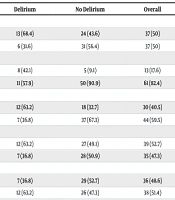
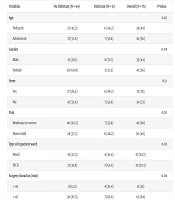
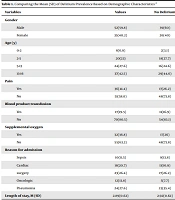
According to Table 1, most of the patients were male (n = 52 cases, 59.8%), aged 13-16 years (n = 37 cases, 42.5%), and were admitted due to pneumonia (n = 24 cases, 27.6%). The prevalence of delirium was higher in patients with pain and those requiring oxygen therapy (P < 0.05); and the overall prevalence of delirium in PICU patients was 25.3% (n = 22 cases) (Table 1).
Table 1.
Comparing the Mean ± SD of Delirium Prevalence Based on Demographic Characteristics a
| Variables | Values | No Delirium | Delirium | P-Value |
|---|---|---|---|---|
| Gender | 0.94; 0.006 | |||
| Male | 52 (59.8) | 39 (60) | 13 (59.1) | |
| Female | 35 (40.2) | 26 (40) | 9 (40.9) | |
| Age (y) | 0.40; 0.68 | |||
| 0-2 | 6 (6.9) | 2 (3.1) | 4 (18.2) | |
| 2-5 | 20 (23) | 18 (27.7) | 2 (9.1) | |
| 5-13 | 24 (27.6) | 16 (24.6) | 8 (36.4) | |
| 13-16 | 37 (42.5) | 29 (44.6) | 8 (36.4) | |
| Pain | 0.000; 33.44 | |||
| Yes | 36 (41.4) | 17 (26.2) | 19 (86.4) | |
| No | 51 (58.6) | 48 (73.8) | 3 (13.6) | |
| Blood product transfusion | 0.29; 1.10 | |||
| Yes | 17 (19.5) | 11 (16.9) | 6 (27.3) | |
| No | 70 (80.5) | 54 (83.1) | 16 (72.7) | |
| Supplemental oxygen | 0.000; 14.24 | |||
| Yes | 32 (36.8) | 17 (26) | 15 (68.2) | |
| No | 55 (63.2) | 48 (73.8) | 7 (31.8) | |
| Reason for admission | 0.027; 5.07 | |||
| Sepsis | 10 (11.5) | 9 (13.8) | 1 (4.5) | |
| Cardiac | 18 (20.7) | 11 (16.9) | 7 (31.8) | |
| surgery | 23 (26.4) | 17 (26.2) | 6 (27.3) | |
| Oncologic | 12 (13.8) | 5 (7.7) | 7 (31.8) | |
| Pneumonia | 24 (27.6) | 23 (35.4) | 1 (4.5) | |
| Length of stay, Mean ± SD | 2.89 ± 0.62 | 2.92 ± 0.62 | 2.81 ± 0.66 | 0.50; 0.45 |
a Values are expressed as No. (%) unless otherwise indicated.
5. Discussion
Various relevant studies have shown that cardiac, respiratory, and surgical diseases lead to PICU hospitalization, which was consistent with our study results. In the present study, the most common causes of hospitalization included pneumonia, surgery, cardiac, sepsis, and oncologic in order of frequency. In this regard, and in a study conducted in Mazandaran (Iran) by Navaeifar et al., it was shown that the mean ± SD of patients' age was 3.81 ± 2.11 years and the most common causes of hospitalization were respiratory disorders (n = 30 cases, 41.7%), neurological disorders (n = 27 cases, 38.9%), sepsis (n = 9 cases, 12.5%), gastrointestinal disorders (n = 3 cases, 4.2%), and cardiac disorders (n = 3 cases, 4.2%) (20). Traube et al also reported that 46% and 31% of patients were hospitalized due to respiratory and post-surgery problems, respectively (25). In the study by Simonsen et al., the patient age range was 0 and 16 years, and the most common cases of hospitalization were cardiac problems (n = 11 cases, 36.7%), hemolytic uremic syndrome (n = 4 cases, 13.3%), pneumonia (n = 4 cases, 13.3%), oncologic conditions (n = 4 cases, 13.3%), CNS (n = 6 cases, 20%), and sepsis (n = 1 case, 3.3%) (26). The study by Ge et al. also found that mean ± SD of patients' age was 23.58 ± 19.51 months, and the most common causes of hospitalization were surgery (n = 366 cases, 57.3%), sepsis/ARDS (n = 141 cases, 22.1%), and lung diseases (n = 43 cases, 6.7%) (23).
As for the delirium prevalence, the results showed that the percentage of positive delirium cases was 25.3%. Our study results were compared with the findings from several national and international research. In a study by Navaeifar et al., delirium was observed in 18 cases (25%) in Mazandaran, Iran, and the mean ± SD of delirium score was 6.22 ± 2.95 (20). The delirium prevalence was 267 cases (17.3%) in the study by Traube et al. (25). Simonsen et al. investigated 92 patients and discovered delirium cases in 55 patients (59.8%) (26). Ge et al. and Siegel et al. also found delirium in 639 (31.3%) (23) and 33 (34%) cases, respectively (27). Bryant’s (28) explored the prevalence of delirium in children and determined that the prevalence of delirium was 49%; however, Tayebwa (29) reported the prevalence of 29.8% for delirium. The discrepancy between our study results and the findings from some of the given studies, such as the study by Traube et al., may have been attributed to the difference in the study populations, underlying diseases of the patients, as well as other demographic characteristics (24, 25).
5.1. Conclusions
In sum, investigating the prevalence of delirium in all age groups – pediatric and adolescents, in particular – was found to be extremely important. It was also found that the prevalence of delirium in PICU patients was significant; therefore, it was recommended that necessary preventive and medical interventions should be made to deal with these patients.