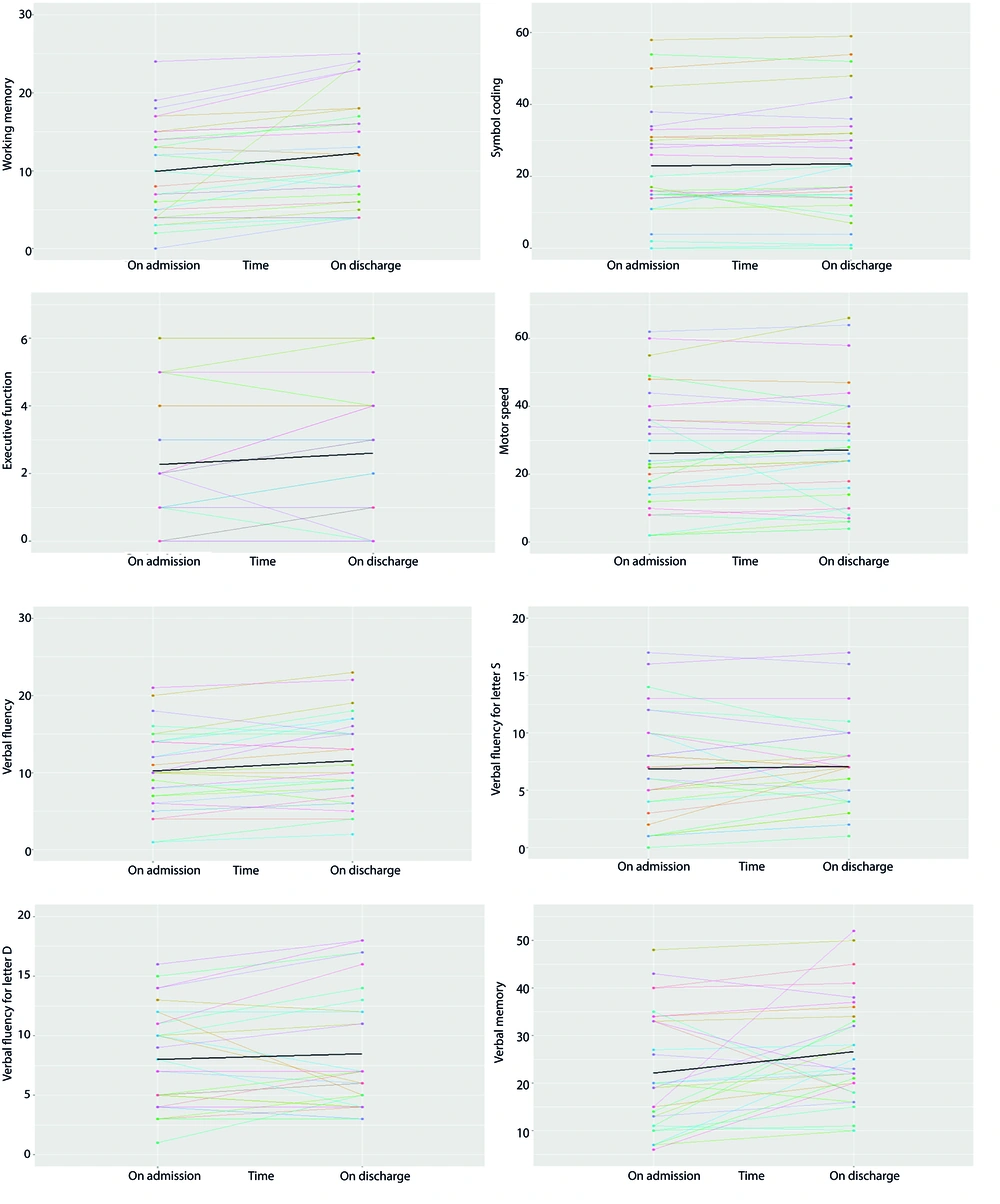
The present study aimed to investigate the changes in cognitive status of patients with schizophrenia and the factors influencing these changes over the course of hospitalization and treatment. Understanding the trajectory of cognitive deficits and their determinants is crucial, as cognitive impairments are a core feature of schizophrenia and contribute significantly to the overall burden of the disease. The findings provide valuable insights into the complex interplay between cognitive function, clinical symptoms, and demographic factors in individuals with schizophrenia.
Notably, the study results indicate significant improvements in specific cognitive domains, including verbal memory, working memory, and executive function, following hospitalization and standard treatment. These improvements suggest that a combination of inpatient care and pharmacological interventions can positively impact certain aspects of cognitive functioning in this patient population. The enhancements in these cognitive areas are particularly important, as deficits in verbal memory, working memory, and executive function are often associated with poor social and vocational outcomes in schizophrenia (
2-
5). Addressing these cognitive impairments in treatment plans could therefore be critical to improving long-term functional outcomes.
The findings align with previous research highlighting the potential of pharmacological agents, such as those targeting the glutamatergic and cholinergic systems and psychostimulants, to alleviate cognitive deficits in schizophrenia, though with modest and variable effects. For instance, Modafinil has been shown to enhance cognitive functions, including verbal memory, which is consistent with the improvements observed in this study. This reinforces the idea that targeted pharmacological interventions may play a role in improving cognitive outcomes, although individual responses can vary (
14-
23).
Demographic factors were also found to significantly influence cognitive status in schizophrenia. The study revealed that older age was associated with poorer performance on cognitive tasks, particularly in motor speed, verbal fluency, and symbol coding. This finding is consistent with existing literature suggesting that aging exacerbates cognitive decline, especially in individuals with pre-existing psychiatric conditions. Moreover, a later age of onset for the first symptoms of schizophrenia was linked to declines in verbal fluency, emphasizing the importance of comprehensive intervention strategies to mitigate long-term cognitive deficits (
8). The study's findings on the limited improvement in verbal fluency following treatment with atypical antipsychotics are also consistent with previous reports (
23).
Additionally, male patients and smokers exhibited lower cognitive function, particularly in verbal fluency, symbol coding, and executive function. The gender differences in cognitive function may be due to a combination of neurobiological differences, sociocultural factors, and healthcare disparities. Prior studies suggest that men may experience more severe cognitive impairments due to a combination of biological and psychosocial influences (
24-
26). Smoking was also found to negatively impact cognition, which aligns with previous research showing that smoking exacerbates cognitive deficits in schizophrenia. Potential mechanisms underlying this relationship include oxidative stress, neuroinflammation, and disruptions in neurotransmitter systems, indicating that smoking cessation may be a critical component of cognitive rehabilitation for patients with schizophrenia (
27).
The longitudinal design of this study, along with the use of the GEE model, allowed for a thorough examination of cognitive changes over time while accounting for demographic and clinical variables. This approach provides a more nuanced understanding of the multifactorial nature of cognitive deficits in schizophrenia, revealing that while some cognitive domains improve with treatment, factors like age, gender, and smoking status continue to play significant roles (
13).
In conclusion, this study underscores the potential for certain cognitive domains to improve with comprehensive inpatient treatment and standard pharmacological interventions in individuals with schizophrenia. However, the persistence of cognitive deficits, especially in relation to demographic factors such as age, gender, and smoking status, highlights the need for continued research and the development of targeted cognitive remediation strategies. By identifying the factors that influence cognitive function in schizophrenia, this study contributes to a growing body of knowledge aimed at enhancing overall functioning and quality of life for individuals affected by this complex and debilitating disorder.
5.1. Conclusions
The findings of the present study hold important clinical implications for managing cognitive deficits in individuals with schizophrenia. The observed improvements in verbal memory, working memory, and executive function following hospitalization and standard treatment suggest that a comprehensive, multifaceted approach to care can positively impact cognitive functioning in this patient population. This underscores the need to ensure access to high-quality inpatient services and evidence-based pharmacological interventions for individuals with schizophrenia. However, the poorer outcomes observed in cognitive domains like verbal fluency highlight the necessity for more extensive research and interventions to address disabling cognitive impairments, considering both pharmaceutical and non-pharmaceutical approaches.
Furthermore, the identification of demographic factors—such as age, gender, and smoking status—as key determinants of cognitive function provides valuable insights for developing targeted cognitive remediation strategies. The finding that older age is associated with poorer performance in motor speed, verbal fluency, and symbol coding suggests that age-specific cognitive rehabilitation programs may be beneficial, with a focus on enhancing these domains. Additionally, the observed gender differences in cognitive function call for tailored interventions that address the unique needs of male and female patients with schizophrenia.
The negative impact of smoking on cognitive function, particularly in verbal fluency, symbol coding, and executive function, emphasizes the importance of incorporating smoking cessation programs into the comprehensive management of schizophrenia. Addressing this modifiable risk factor may help mitigate the worsening of cognitive deficits and improve functional outcomes for these individuals.
By clarifying the complex interplay between cognitive function, clinical symptoms, and demographic factors in schizophrenia, this study provides a foundation for the development of personalized, multidimensional approaches to managing cognitive deficits. Integrating these findings into clinical practice could enhance the effectiveness of cognitive remediation strategies, improve overall functioning, and ultimately elevate the quality of life for individuals living with this challenging disorder.