
1. Introduction
Behcet's disease (BD) is a chronic, systemic inflammatory disorder characterized by recurrent oral and genital ulcers, ocular inflammation, and multisystem involvement, including the gastrointestinal tract. Gastrointestinal Behcet's disease (GI-BD) is less common but can present diagnostic challenges due to its overlap with other conditions like Crohn's disease (1, 2). This case highlights a patient whose GI symptoms emerged after bariatric surgery, raising questions about the potential influence of surgical procedures on BD development.
2. Case Presentation
A 41-year-old woman underwent sleeve gastrectomy shortly before presentation. Her past medical history was unremarkable, except that she had undergone an oophorectomy and hysterectomy eight years ago. About six months after the procedure, she experienced recurrent oral aphthous ulcers. Four months later (ten months postoperatively), she developed arthralgia in the hips, knees, wrists, and hands, consistent with an inflammatory pattern. She reported diarrhea, hematochezia, and skin lesions (pseudofolliculitis). Notably, she had no history of genital aphthae. The diagnosis of GI-BD was based on clinical presentation, a positive pathergy test, human leukocyte antigen (HLA)-B5/B51 positivity, and the exclusion of other conditions such as Crohn’s disease. Treatment with corticosteroids and immunosuppressive therapy (azathioprine, methotrexate) led to significant clinical improvement.
1. Physical examination:
- Multiple oral aphthae.
- Decreased mobility in the wrists, PIP joints, cervical and lumbar spine, and hip joints.
- Tenderness in the sacroiliac joints and swelling in both knees.
2. Laboratory results:
- WBC: 8000; Lymph: 30%; Hb: 13 g/dL; MCV: 89 fL; PLT: 213 × 109/L.
- ESR: 13 mm/h; CRP: 23 mg/L.
- Pathergy test: Positive.
- The HLA B5, B51: Positive.
- Calcium: Normal; viral markers: Negative; U/A: Trace protein; 24-hour urine protein: 55 mg.
3. Endoscopic findings:
- Upper GI: Congestion and erythema in the gastric mucosa with multiple erosions and superficial ulcers (5 mm).
- Lower GI: Diffuse congestion, erythema, and multiple ulcers (largest diameter 5 mm) extending from the rectum to the ileum.
- Histologic findings showed no granulomas, dysplasia, or transmural inflammation, and imaging did not support a diagnosis of Crohn’s disease, thus supporting a diagnosis of GI-BD.
4. Biopsy results:
- Moderate chronic gastritis and severe active colitis with no dysplasia or intestinal metaplasia. A subsequent MRI of the lumbosacral spine showed disc herniation at the L4-L5 and L5-S1 levels. The patient was later admitted with acute arthralgia, lower extremity edema, abdominal pain, and hematochezia. Vital signs were stable with no fever.
5. Follow-up findings:
- Laboratory tests revealed elevated inflammatory markers and anemia (Hb: 9.5 g/dL, ESR: 54 mm/h, CRP: 16 mg/L).
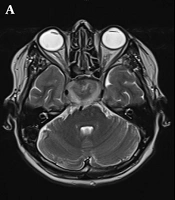
- Brain MRI showed subcortical and periventricular foci consistent with microvasculitis or ischemia.
- Pelvic MRI indicated mild hip joint effusion with normal sacroiliac joints.
5. Management:
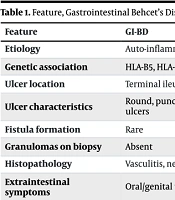
The patient received 1 gram of methylprednisolone pulse therapy for three days, followed by 60 mg of oral prednisolone. Symptoms, including inflammatory arthritis and GI symptoms, improved significantly. The treatment regimen included azathioprine (100 mg), methotrexate (15 mg), and additional supportive therapies such as Rifaximin, probiotics, and citalopram. Follow-up labs showed stabilization of inflammatory markers and improved clinical outcomes (Table 1).
Table 1.
Feature, Gastrointestinal Behcet’s Disease and Crohn’s Disease
| Feature | GI-BD | CD |
|---|---|---|
| Etiology | Auto-inflammatory, vasculitic process | Immune-mediated chronic inflammation |
| Genetic association | HLA-B5, HLA-B51 | NOD2/CARD15 and other susceptibility genes |
| Ulcer location | Terminal ileum and cecum most common | Can affect entire GI tract (mouth to anus) |
| Ulcer characteristics | Round, punched-out, deep ulcers with discrete borders, volcano-shaped ulcers | Longitudinal, serpiginous ulcers with cobblestone mucosa |
| Fistula formation | Rare | Common (perianal, enterocutaneous) |
| Granulomas on biopsy | Absent | Often present (non-caseating granulomas) |
| Histopathology | Vasculitis, neutrophilic infiltration | Transmural lymphoid inflammation |
| Extraintestinal symptoms | Oral/genital ulcers, uveitis, arthritis, and vasculitis | Arthropathy, erythema nodosum, and pyoderma gangrenosum |
Abbreviations: GI-BD, gastrointestinal Behcet’s disease; CD, Crohn’s disease; HLA, human leukocyte antigen.
3. Discussion
Complications resulting from the development of significant neurological diseases and a wide range of these complications have been reported (3). This case underscores the complexity of diagnosing and managing GI-BD, particularly when preceded by surgical interventions. The GI-BD is an uncommon but significant manifestation of BD, often presenting with nonspecific symptoms like abdominal pain, diarrhea, and ulceration of the intestinal mucosa. In this patient, symptoms emerged after bariatric surgery, raising the question of whether surgical stress or alterations in the gastrointestinal environment might trigger BD activation.
Due to overlapping clinical and endoscopic findings, gastrointestinal involvement in BD is often challenging to differentiate from other conditions, particularly Crohn's disease. Li et al. (4) described a case of a 50-year-old woman with a single ileocecal ulcer forming a sinus tract, a rare but possible presentation of GI-BD. Similarly, Kim et al. (5) reported a 39-year-old woman with multiple elongated ulcers and an anorectal fistula, features more typical of Crohn’s disease but occasionally observed in BD. These cases highlight the necessity of a thorough differential diagnosis, particularly in patients with a history of surgical interventions or atypical presentations.
The surgical aspect is particularly noteworthy. Zeng et al. (6) reviewed patients with GI-BD and reported that surgical interventions are often reserved for emergencies, such as perforation or severe bleeding. However, they found that patients with GI-BD are more prone to postoperative complications, including recurrence, than those with Crohn’s disease, necessitating more aggressive postoperative management. This reinforces the importance of prioritizing medical therapy to control inflammation and prevent complications.
Additionally, Kim et al. (5) and Zeng et al. (6) emphasized that while BD and Crohn’s disease share overlapping features, they are distinct conditions with different treatment approaches. Recognizing the subtle differences is crucial for effective management. In this case, the patient’s history of sleeve gastrectomy and subsequent onset of GI-BD symptoms raises a potential association. Although direct evidence is lacking, surgical procedures could theoretically influence immune homeostasis, potentially unmasking latent autoimmune or autoinflammatory conditions. Further research is required to explore this hypothesis.
Treatment strategies for GI-BD aim to control inflammation and prevent complications. Corticosteroids remain the cornerstone of initial therapy, as demonstrated by the patient’s significant improvement following methylprednisolone administration. Immunosuppressants such as azathioprine and methotrexate are crucial for long-term disease control, as highlighted in this case. The addition of probiotics and Rifaximin addressed secondary bacterial overgrowth, which may exacerbate GI symptoms.
Overall, this case contributes to the growing understanding of GI-BD and its potential triggers, particularly in the context of surgical interventions. Further studies are needed to clarify the relationship between bariatric surgery and BD activation and to establish evidence-based management guidelines for this rare but challenging condition.
3.1. Conclusions
The relationship between surgical interventions and the onset of BD requires further investigation. This case underscores the importance of considering BD in the differential diagnosis of post-surgical GI symptoms and highlights the role of tailored immunosuppressive therapy in achieving symptom control. Future studies must clarify the interplay between surgical procedures and immune-mediated diseases like BD.