





1. Introduction
The 2019-nCoV acute respiratory disease is caused by a novel beta coronavirus from a family of Coronaviridae, in the same subgenus of the severe acute respiratory syndrome (SARS) coronavirus but in a different category, which was first detected in China in December 2019. Then the virus rapidly spread across the globe and turned into the most recent viral pandemic (1, 2). Although it mostly affects adults, according to the report of the American Academy of Pediatrics (AAP), about 9% of all COVID-19 cases are children (3). The accurate prevalence rate of neonatal COVID-19 is unknown. Although the incidence of the more severe form of the disease is higher in infants (< 1 year) compared to older children (10.6% vs. 7.3, 4.2, 4.1, and 3.0% among the 1 - 5, 6 - 10, 11 - 15, and > 15 years olds, respectively) (4), but according to several recently published case reports from various countries, the severity of this potentially lethal virus in adults is much lower than in children (5). The virus affects several organs, including the respiratory system (as the most severe involvement), cardiovascular, gastrointestinal (GI) tract, neurological, skin, hematologic, immunologic, and renal system, and liver failure (6).
Nearly 80% of patients are asymptomatic. Based on the World Health Organization report, the mortality rate of the severe form of the disease is about 3 % in adults (7). In a recent report by the AAP, the mortality rate of COVID-19 in children is reported to range from zero to 0.24% of all COVID-19 deaths. The AAP also reported that COVID-19 claims the lives of 0% - 0.16% of all infected children (Children and COVID-19: State Data Report version 10/1/20).
Most neonates experience a mild form of the disease. Both term and preterm neonates can be involved with the most severe form of the disease in premature babies (gestational age lower than 37 weeks) or neonates with underlying disorders, such as pulmonary or cardiac diseases. However, the risk of vertical transmission of COVID-19 (via trans-placental, ascending, and intrapartum routes) is almost negligible (less than 1%) (8). However, recent research on maternal- and neonatal -related infection introduced the post-natal transmission of the virus by respiratory droplets or airborne from parents or caregivers as one of the most important routes for transmission (9).
Although fever, malaise, myalgia, cough and dyspnea, diarrhea, and vomiting are the common chief complaints of adult patients with COVID-19, the clinical presentation of this infection in neonates is nonspecific, including temperature instability, acute respiratory distress syndrome, cardiovascular dysfunction, or GI involvement with less severe disease in most cases (4, 10). Because the coronavirus family, including SARS-CoV2, uses angiotensin-converting enzyme 2 (ACE2) as the cell receptor or host for living, in cases with severe respiratory system involvement, the age-related levels of this enzyme are significantly lower in children and neonates compared to adults (11).
This is not clear why is COVID-19 less severe in children and neonates. However, some hypotheses, such as different levels of response to the SARS-CoV2, limitation of the growth of this virus by direct virus-to-virus interactions due to the simultaneous presence of additional viruses in the airways or mucosa of the lungs of young children and neonates, and different levels of expression of the ACE-2 receptor in neonates and children, which is necessary for SARS-Cov2 binding and infection, have been proposed (12).
Regarding the new presentation of COVID-19 in the neonatal period, in this case series, 10 symptomatic neonates with positive PCR tests for COVID-19 admitted to our neonatal intensive care units (NICUs) are reported. Besides, their clinical, as well as laboratory and radiological presentations, are compared.
2. Case Presentation
In this article, 10 neonates were admitted to NICUs of hospitals affiliated to the Shahid Beheshti University of Medical Science, Tehran, Iran, and a NICU of Sajjadieh Hospital in the Torbat-e-Jam City (Khorasan Razavi Province of Iran) are studied. All reported neonates had general symptoms of neonatal sepsis such as fever, poor feeding, respiratory distress, and restlessness, which caused the neonates to be hospitalized in the neonatal ward or NICU. To diagnose the disease, the COVID-19 polymerase chain reaction (PCR test for SARS-CoV-2) was taken from the nasopharynx area and nose. Demographic characteristics, the signs and symptoms of the disease, and the radiologic and laboratory findings are shown in Table 1. Regarding the mild symptoms of the majority of patients, the chest computed tomography (CT) scan was performed for only one patient. Fortunately, all patients survived, except for one case who died at the age of 7 days due to respiratory failure.
Table 1.Clinical Manifestations and Laboratory and Radiologic Finding and Outcome of the Patients
| Findings | Patients | |||||||||
|---|---|---|---|---|---|---|---|---|---|---|
| 1 | 2 | 3 | 4 | 5 | 6 | 7 | 8 | 9 | 10 | |
| Demographic data | ||||||||||
| Gender | M | F | F | M | M | F | F | M | F | M |
| Birth weight, gram | 2950 | 2870 | 2650 | 3000 | 3200 | 1100 | 3180 | 3350 | 3500 | 2500 |
| Gestational age, week | 39 | 38 | 37 | 38 | 39 | 28 | 39 | 39 | 37 | 36 |
| Underlying disorder | × (cardiac surgery) | prematurity | - | CHD?? Without echo | - | Prematurity | ||||
| Postnatal age at admission, d | 4 | 22 | 6 | 14 | At birth | Immediately after birth | 25 | 3 | Immediately | At birth |
| Positive maternal history of COVID-19 | × | suspicious | ||||||||
| Positive family history of COVID-19 | × | × (5 months ago) | ||||||||
| Hospitalization, d | 5 | 5 | 6 | 4 | 28 | 55 | ||||
| Clinical manifestations | ||||||||||
| Fever | × | × | × | × | × | |||||
| Respiratory distress | × | × | × | × | × | |||||
| Need to MV | × | × | × | |||||||
| GI symptoms | ||||||||||
| Seizure | ||||||||||
| Laboratory findings | ||||||||||
| WBC/microliter | 9500 | 5200 | 8100 | 6800 | 6500 | 4200 | 7200 | 9800 | 18300 | 14900 |
| Absolute LYM count | 2812 | 1664 | 3645 | 3876 | 1300 | 1507 | 3139 | 2744 | 3843 | 9685 |
| Absolute PMN count | 4883 | 3120 | 4131 | 2380 | 4907 | 2230 | 3340 | 6566 | 1281 | 4470 |
| PLT/mm3 | 359000 | 360000 | 280000 | 361000 | 246000 | 297000 | 283000 | 277000 | 247000 | 854000 |
| CRP, mg/dL | 2 | 3 | 3 | 13 | 1.6 | 5 | Negative | 16.6 | 1 | |
| LDH, mg/dL | 448 | 460 | ||||||||
| Radiologic finding | ||||||||||
| CXR | Normal | Normal | Normal | Mildly abnormal | Abnormal | Abnormal | Normal | Abnormal | Normal | Normal |
| Chest computed tomography (CT) scan | - | Abnormal | ||||||||
| Outcome | ||||||||||
| Dead | × | |||||||||
| Alive | × | × | × | × | × | × | × | × | × | |
Abbreviations: CRP, C-reactive protein; CXR, chest-X ray; GI, gastrointestinal; LDH, lactate dehydrogenase; LYM, lymphocyte; MV, mechanical ventilation; PLT, platelet; PMN, polymorphonuclear; WBC, white blood cell.
The underlying disorders were observed just in one case (patient number 5), as the congenital heart disease (transposition of great vessels (TGA) and cardiac surgery). All neonates had a term gestational age of > 37 weeks, except for two who were premature neonates with a gestational age of 28 and 36 weeks (no.: 6 and 10).
Patient number 6 was a preterm neonate (28 weeks of gestation) who needed NICU admission at birth for respiratory problems and prematurity. Unfortunately, the mother of this neonate was died due to COVID-19 a week after delivery. The first PCR for coronavirus in the first 24 h after birth was negative. Regarding the progressive respiratory symptoms and secretions, despite the respiratory supports such as mechanical ventilation, surfactant therapy, and maternal positive history of COVID-19, the second sample for the PCR test was taken at the age of 4 days, and the positive result of the test confirmed the diagnosis. The next PCR for COVID-19 after 7 days was negative. Fortunately, because of continuing treatment as well as providing supportive care, with no need for antiviral drugs, the patient was survived. The chest X-ray of neonates on the fourth day of birth is shown in Figure 1, with a shadow in the middle lode of the right lung concurrent with a positive PCR test.
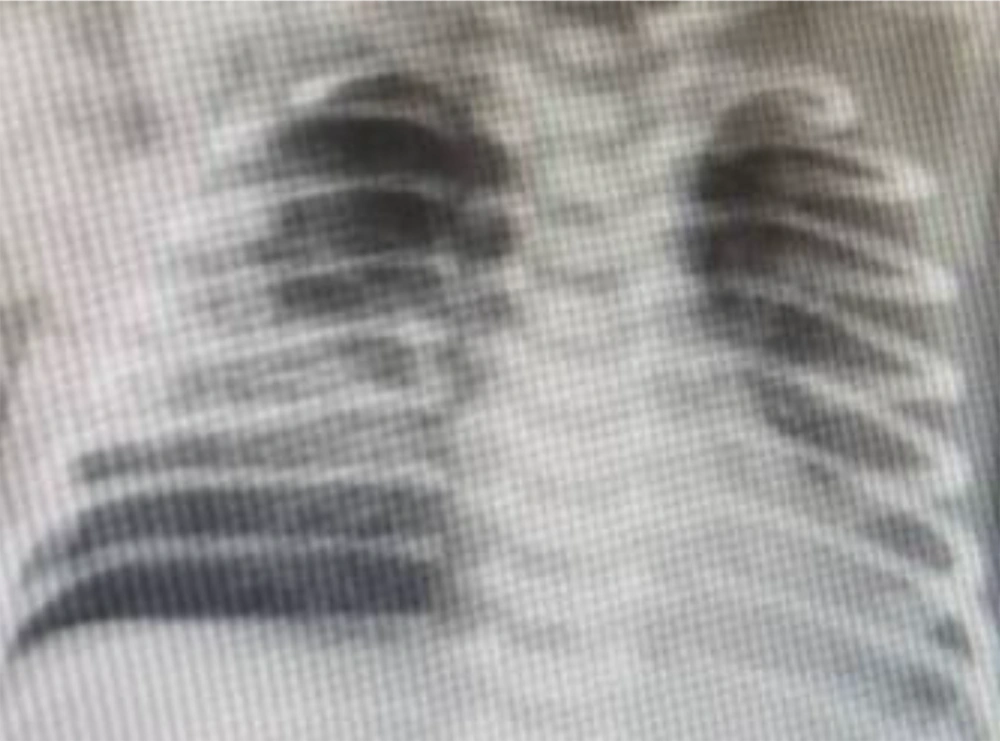
Figure 1.
Chest X-ray of patient No. 5 with consolidation and involvement of both lungs
The most frequent presented symptom was low grade (temperature 38°C - 38.5°C), followed by short-term fever (maximally 1 - 2 days) and respiratory symptoms in 50% of cases. Abnormal radiologic findings in chest X-ray were detected just in two cases. Regarding the lack of significant respiratory symptoms in most of the patients, a lung CT scan was taken from one patient, for whom the lung involvement was detected (Figure 2). Leukopenia (WBC < 5000 /mm3) was found in one patient (10%), with no lymphopenia (lymphocyte count lower than 1000/mm3) in all cases. Also, positive CRP was not found in all patients.
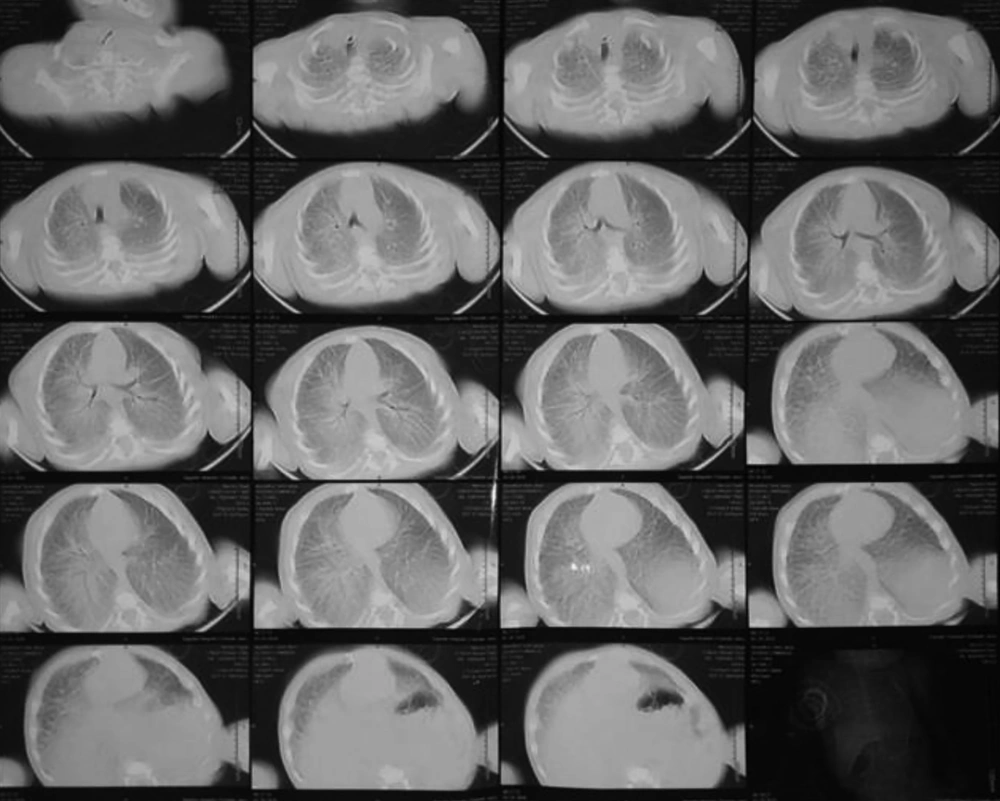
Figure 2.
lung CT scan of patient No. 8 with a bilateral ground-glass appearance
The chest X-ray and lung CT scan of patient number 8 are shown in Figures 2 and 3, respectively. As shown in the figures, bilateral ground-glass appearance in accordance with COVID-19 is obvious in both chest X-ray and CT scan. This patient was a term male neonate admitted to NICU of Torbat-e-Jam Hospital at the age of 3 days with cyanosis and respiratory distress. He needed invasive mechanical ventilation with endotracheal tube insertion and jaundice. It worth noting that he had no obvious family history of COVID-19. The patient had a history of normal vaginal delivery at the term gestation from a healthy mother with a normal and uncomplicated pregnancy. The newborn was discharged from the nursery in a good condition with no abnormal signs and symptoms. During the third day of life, with the initiation of the respiratory distress symptoms and cyanosis, the neonate revisited in the emergency department. In physical examination, a heart murmur was heard in the chest examination. Regarding the ground-glass appearance of chest X-ray in accordance with severe respiratory distress and probable hyaline membrane disease (HMD), exogenous surfactant was administered. As echocardiography was not available, we could not confirm the diagnosis of congenital heart disease. In the first hour of admission, due to the lack of response to the mentioned treatments, ground-glass appearance of chest X-ray, and regarding the COVID-19 pandemic, nasopharyngeal PCR test for coronavirus and chest CT scan were performed. Positive PCR test and ground-glass appearance of chest CT scan confirmed the diagnosis of COVID-19. Unfortunately, despite antibiotic therapy and mechanical ventilation, besides the other supportive care, after 4 days of hospitalization, the patient died at the age of 7 days.
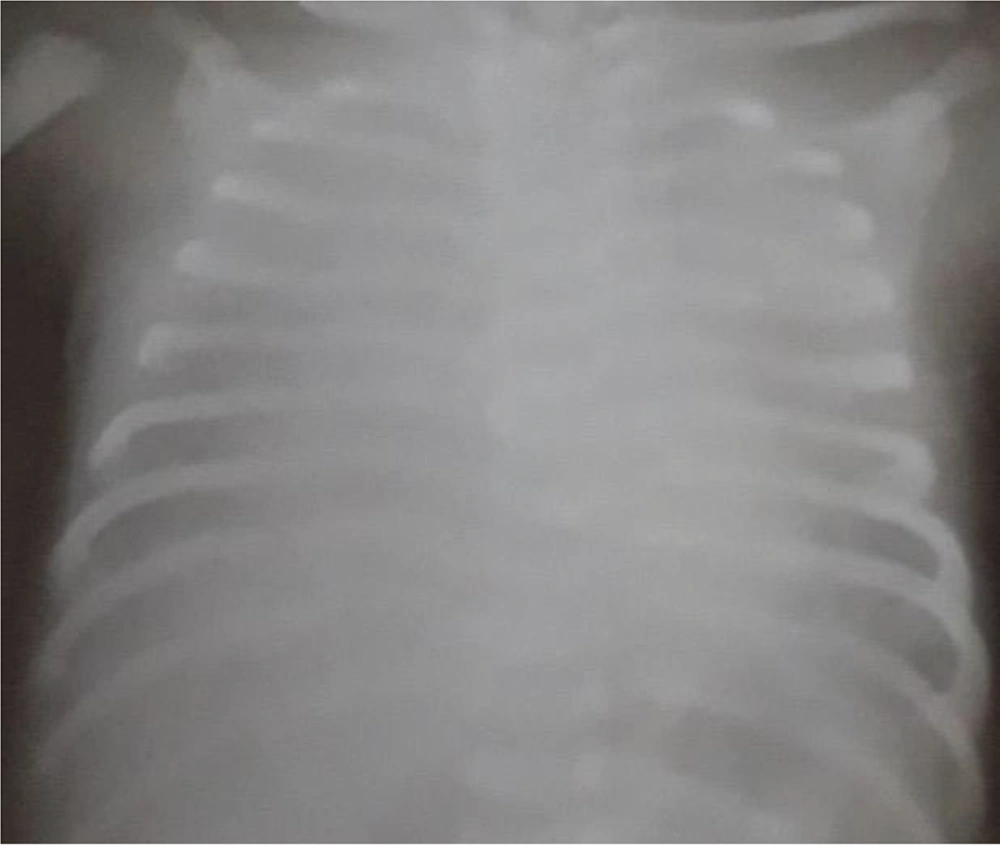
Figure 3.
Chest X-ray of patient No. 8 with a bilateral ground-glass appearance
3. Discussion
In the current case series study, 10 neonates with documented COVID-19, using the positive PCR for the virus, are described. Besides, their concurrent symptoms, such as fever and respiratory symptoms (as the most common symptoms (50%)) are reported. Consistent with the results of the present study, there are studies that mentioned fever as one of the most common symptoms of the disease in children and neonates (10). However, in the present study, in all of the investigated cases, the duration of fever was short. Severe respiratory distress was detected just in one patient, which led to the death of the patient. This finding is in agreement with other published reports on children infected with COVID-19, such as the study by De Rose et al. (4), who reported that acute and severe respiratory symptoms related to coronavirus presented a children-sparing pattern. Neurological symptoms, such as seizure, loss of consciousness, GI problems, and other symptoms, which were reported in adult or children cases, were not observed in most of our patients. In a report by De Bernardo et al. (13), the clinical presentations of neonates with COVID-19 in 25 different published case reports are compared.
Similar to our cases, De Bernardo et al. (13) reported problems related to the GI, such as vomiting, in 4 (out of 25) cases. Although in the mentioned report 6 neonates were asymptomatic, in the present study, we did not find asymptomatic patients, and all were susceptible neonates born to mothers with a positive PCR test and all of our patients had symptoms of the disease even the mild manifestations, besides the positive nasopharyngeal or nasal PCR test, which confirmed the COVID-19.
Regarding the low probability of false-positive PCR results for COVID-19, it seems that the less severity of disease in our patients confirmed the results of other case reports of neonatal COVID-19 with mild signs and symptoms of the disease.
Having a family history of the disease was detected just in one of our patients, in which confirmed COVID-19 led to the death of the mother, and in another case, the mother was suspected of the disease. This finding confirmed the disease transmission from asymptomatic patients to our neonates or horizontal spread of the disease during labor at the hospital with the presentation of symptoms in neonates after some days of incubation periods. Contrary to our case series, in a report by De Bernardo et al. (13), of 25 neonatal COVID-19 cases, just one case had no positive history of the disease in mother or father and family.
In a case report by Mirahmadizadeh et al. (14), an 11-day- old neonate with severe watery diarrhea and vomiting, leukocytosis, and positive PCR for COVID-19 is presented. The patient was discharged six days after diagnosis with good condition. None of our patients had GI symptoms, such as diarrhea or vomiting. In another case report by Dumpa et al. (15) a 22-day-old neonate is presented with fever and poor feeding and positive PCR result for COVID-19 with no abnormal laboratory and radiologic finding, which are similar to most of our patients. This patient had a full recovery and was discharged two days after admission (15).
The most common findings of chest X-ray or lung CT scan in COVID-19 are ground-glass appearance alone or in combination with pulmonary consolidations (16). Although all of our patients were subjected to chest X-ray, just one preterm infant with a history of respiratory distress syndrome had an abnormal chest X-ray in accordance with HMD at the first time and opacity and ground-glass appearance in the right lung after 4 days (patient number 5), and another patient (case 8) with abnormal radiology according to ground-glass appearance, due to COVID-19, had the abnormal findings in the chest X-ray. In a case report performed in China by Wang et al. (17), a term neonate with vertical transmission of COVID-19 is reported. Despite the lack of respiratory symptoms, three lung CT scans of the patient showed abnormalities, such as high-density nodular shadow under the pleura and patchy density of the right lungs. Fortunately, the neonate was discharged in good condition (17).
In children with COVID-19, lymphopenia is reported in 75% of patients, but in some Iranian reports, lymphopenia was detected in 35% of patients (11). Lymphopenia, as an early biomarker of COVID-19 that also indicates its severity, was not detected in our patients. A recent report indicated the poor outcome of patients with COVID-19 and lymphopenia as well as the increased mortality rate in these patients (18). In a case report by Farsi et al., in a triplet premature pregnancy-related to a mother with symptomatic COVID-19 and positive PCR result, one twin had positive PCR for COVID-19, and the other babies, despite the negative PCR result, had symptoms of the disease. They also had a white lung with a ground-glass appearance in the chest X-ray; the lymphopenia was not detected in the complete blood cell (CBC) of all patients (19).
The cardiac involvement by COVID-19 is reported in some published case reports, such as the report by Amiraskari et al. (20), which presented a neonate with myocarditis and respiratory distress initiated at birth from a mother with COVID-19 infection and labor at 36 weeks of gestation. Treatment with mechanical ventilation, endotracheal surfactant, milrinone, and dobutamine saved the patient. However, unfortunately, the mother of the patient died by COVID-19 on the fourth day of delivery (20). In our case series study, there was no cardiac involvement in all 9 patients. Just one neonate had a cardiac murmur in physical examination (case number 8). As echocardiography was not available, we could not confirm cardiac involvement by echocardiography.
Fortunately, the overall outcome of our patients was good with full recovery and early discharge for continuing quarantine at home, except for one patient who died (patient number 8). Despite providing supportive care and mechanical ventilation, he died on the fourth day of admission. As our sample size is small, judgment about the exact outcome of COVID1-9 in the neonatal period is not possible. Besides, as few case series studies have investigated COVID-19 in neonates, our case series adds new information about this new infection in neonatal periods. The current study had limitations, including the lack of chest CTS of nine patients as well as the absence of PCR results of parents of patients.
3.1. Conclusions
According to our cases, clinical manifestations, as well as laboratory and radiologic findings of neonates infected with COVID-19, are mild. Since having a family history of COVID-19 was not obvious in most of our patients, it seems that, during the COVID-19 pandemic, asymptomatic parents, siblings, or caregivers can be a main source of infection for neonates.




