Sixty-three patients with laboratory-confirmed for COVID-19 pneumonia (28 men, 35 women; age range, 21 - 85 years; mean, 59 years) were included in the study. Classification of estimating for COVID-19 pneumonia according to CT findings is shown in
Table 1. Nineteen (30%) patients, classified as out of COVID-19 pneumonia, had normal CT findings. Twenty-eight (44%) patients, classified as highly suggestive for COVID-19 pneumonia, had typical findings for COVID-19 pneumonia. When the patients were divided into three groups as < 40 years old, 40 - 60 years old and < 60 years old, the number of patients highly suggestive COVID-19 pneumonia in the 40 - 60 age group was higher than the other groups (P = 0.022). Suspicious and highly suggestive COVID-19 pneumonia numbers were similar in patients with hypertension and diabetes. All results are summarized in
Table 1.
| No pneumonia (N = 19) | Suspicious COVID-19 Pneumonia (N = 16) | Highly Suggestive COVID-19 Pneumonia (N = 28) |
|---|
| Age, yb | | | |
| 20 - 40 (n = 6) | 3 (15.8) | 2 (12.5) | 1 (3.6) |
| 40 - 60 (n = 26) | 4 (21.0) | 4 (25.0) | 18 (64.3) |
| > 60 (n = 31) | 12 (63.2) | 10 (62.5) | 9 (32.1) |
| Gender | | | |
| Male (n = 28) | 8 (42.1) | 6 (37.5) | 14 (50.0) |
| Female (n = 35) | 11 (57.9) | 10 (62.5) | 14 (50.0) |
| Hypertension | 5 (26.3) | 4 (25.0) | 11 (39.3) |
| Coronary artery disease | 3 (15.8) | 1 (6.3) | 3 (10.7) |
| Diabetes mellitus | 3 (15.8) | 3 (18.8) | 14 (22.2) |
| Hypothyroidism | 1 (5.3) | 0 | 2 (7.1) |
| Behçet’s disease | 0 | 1 (6.3) | 1 (3.6) |
| Chronic renal failure | 0 | 0 | 1 (3.6) |
aValues are expressed as No. (%).
bP = 0.022.
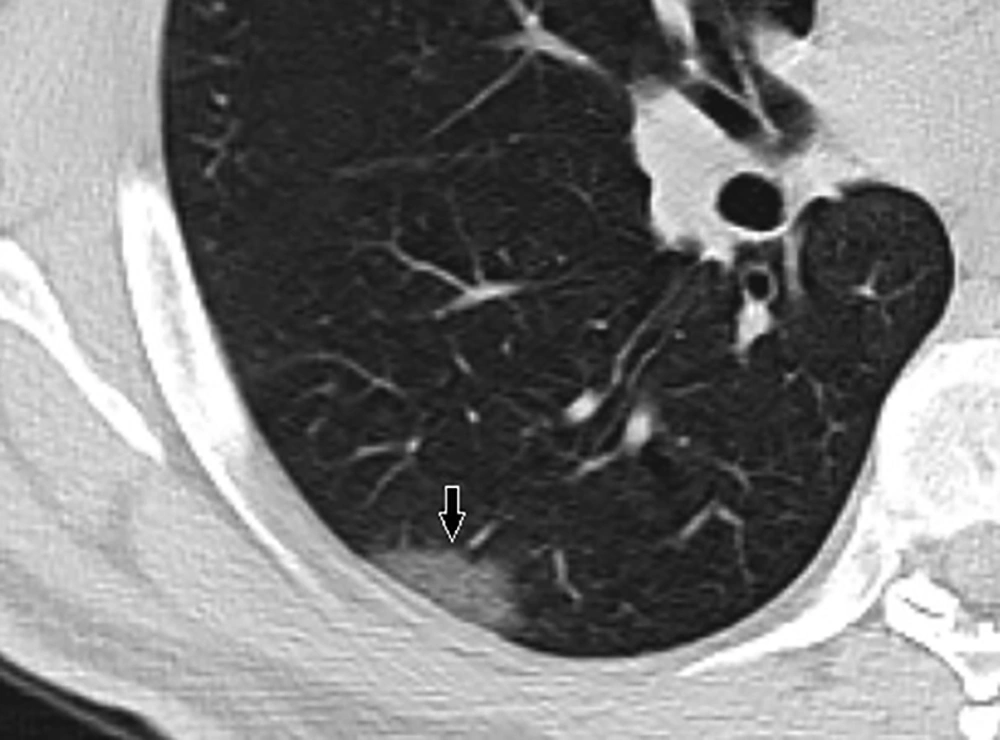
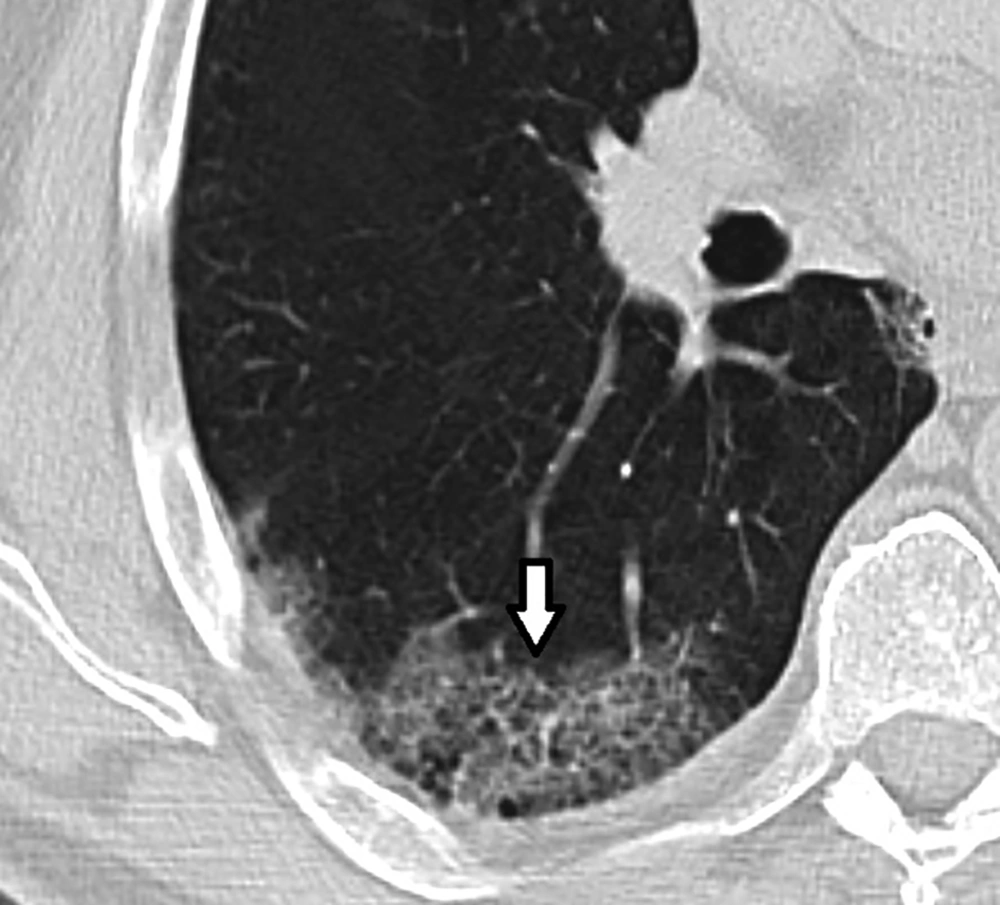
Thirty-two (73%) patients had lesions in peripheral distribution (
Figure 1), and 31 (70%) patients had multilobar involvement (
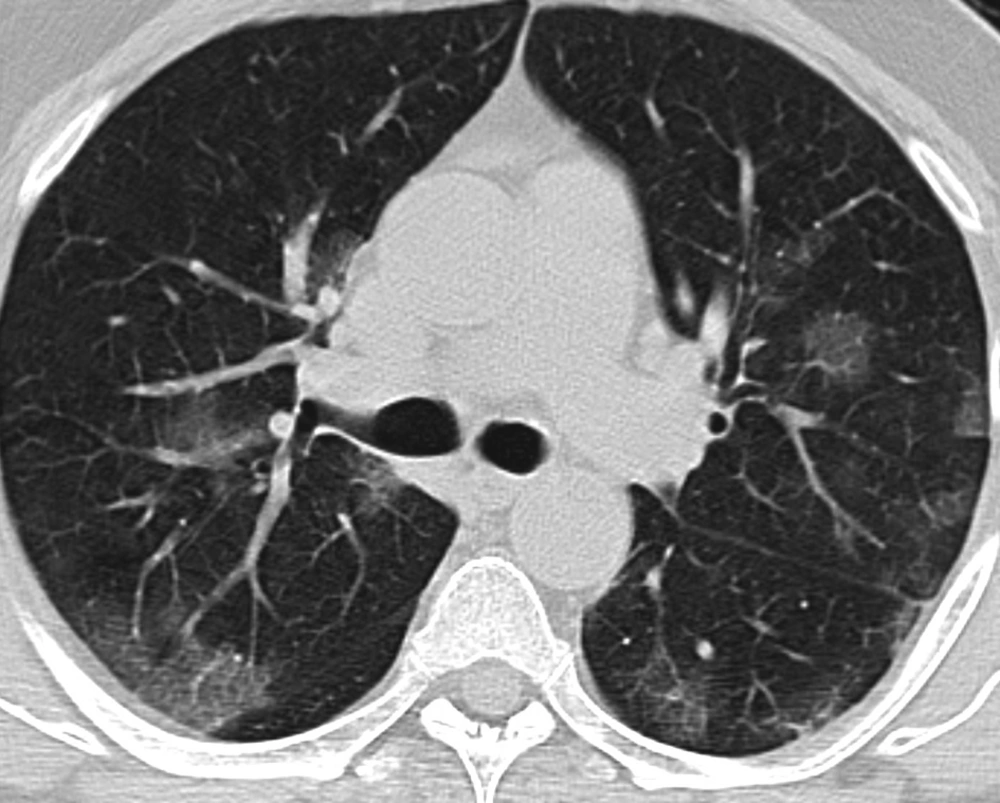
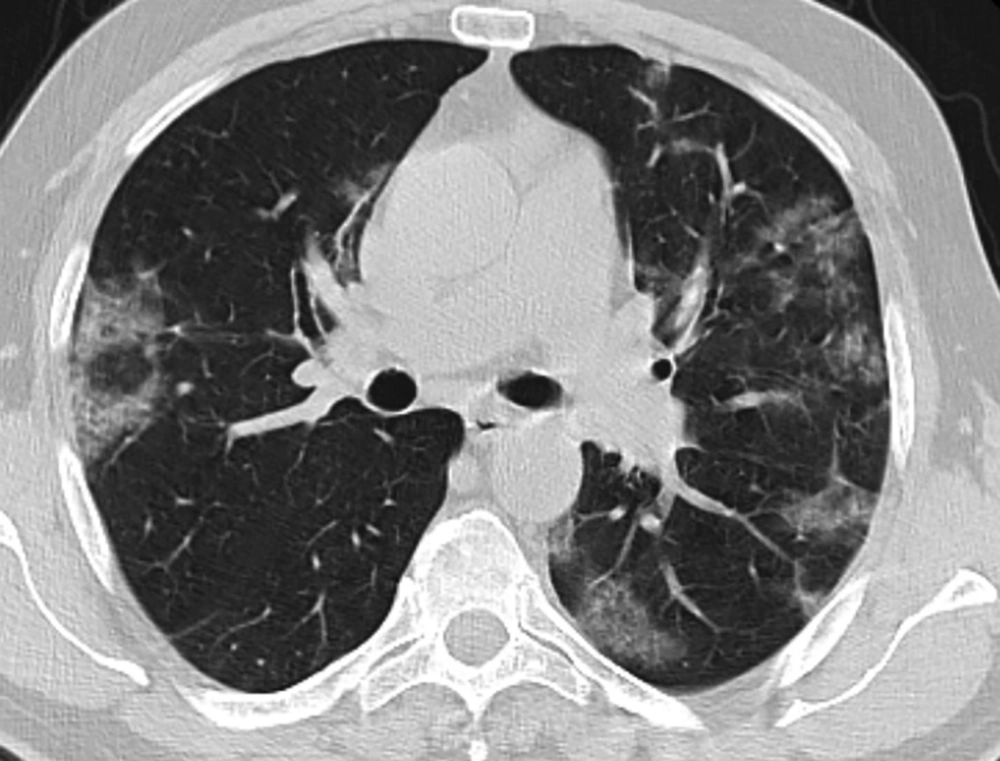
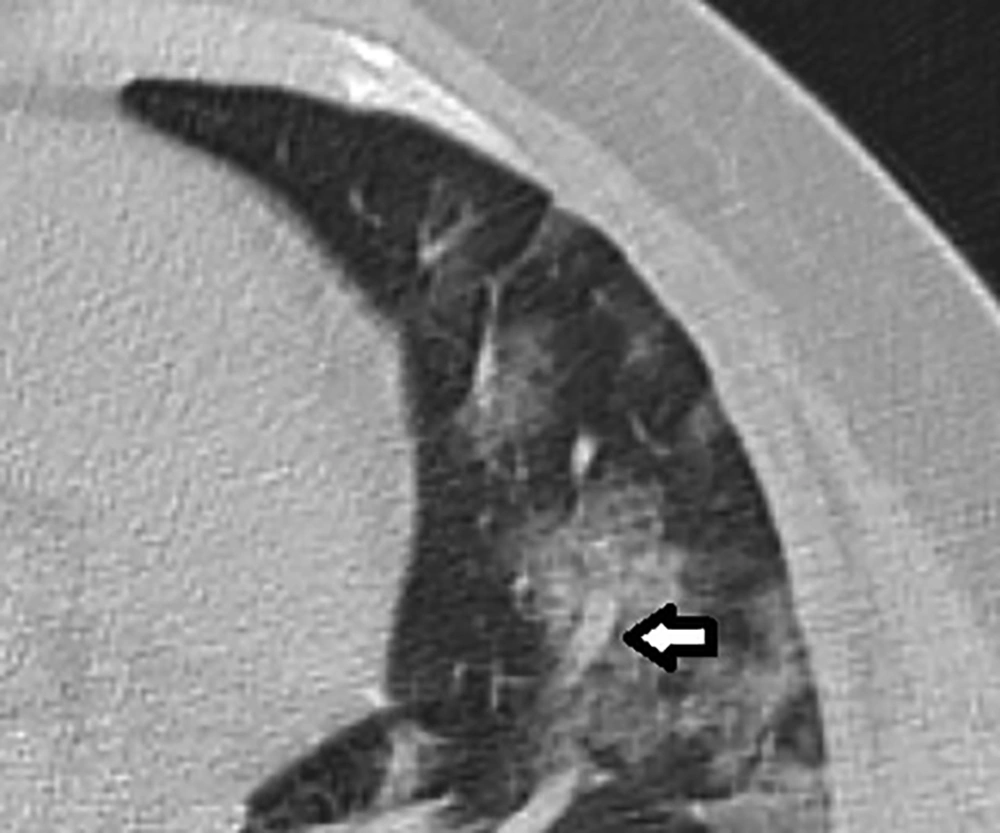
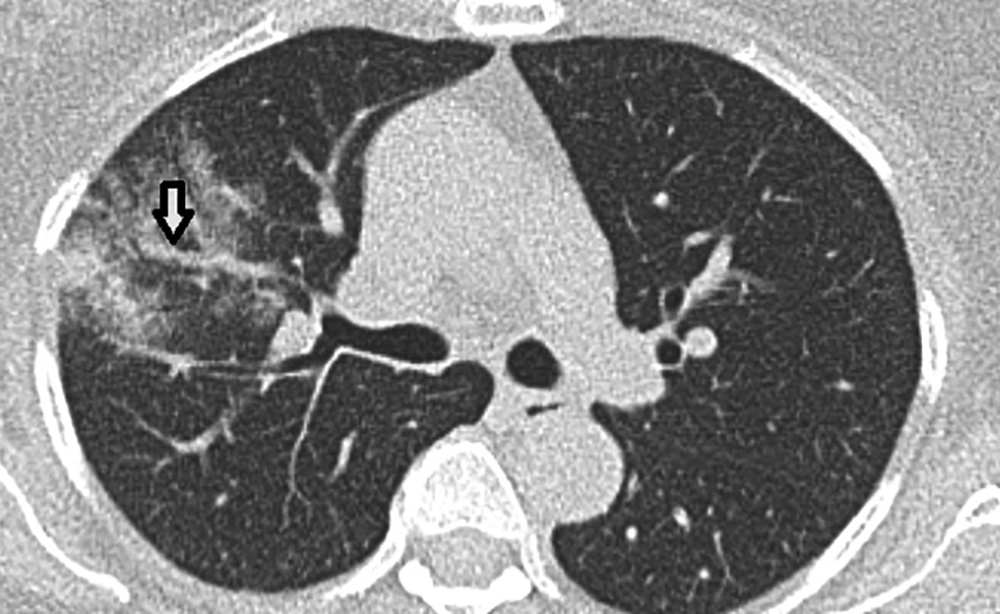
Table 2). The most common lung parenchyma changes on CT were patchy and round (39%) shaped, GGO (61%) lesions (
Figures 2 and
3). Specific and other findings in the initial CT of patients with COVID-19 pneumonia are shown in
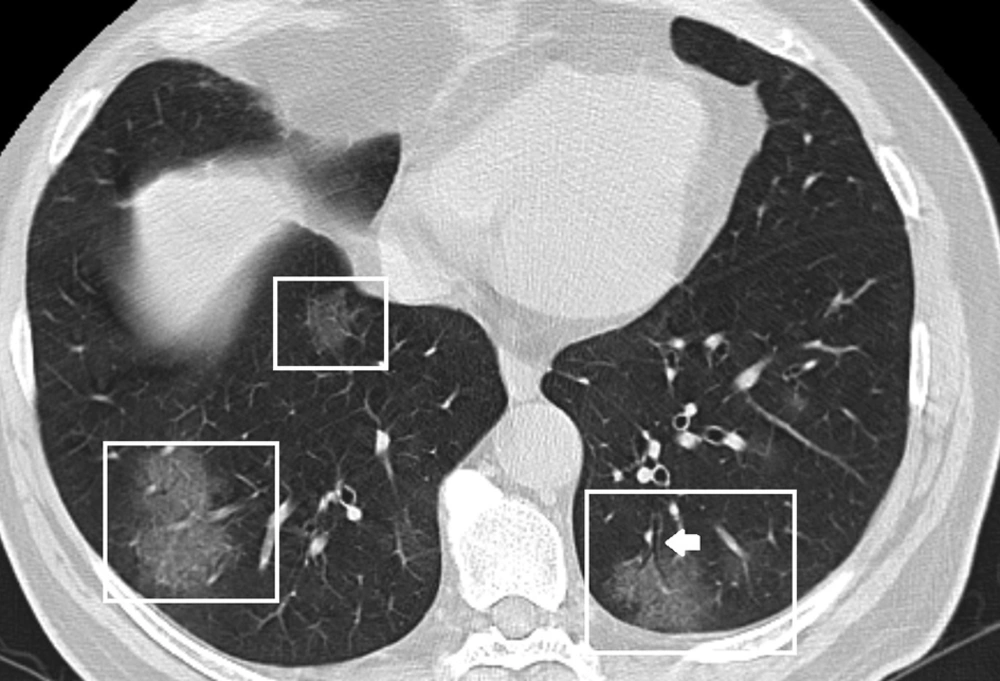
Table 2. Twenty-seven (61%) patients had air bronchogram signs (
Figure 4), 22 (50%) had the crazy-paving pattern (
Figure 5). Vascular thickening (
Figures 6 and
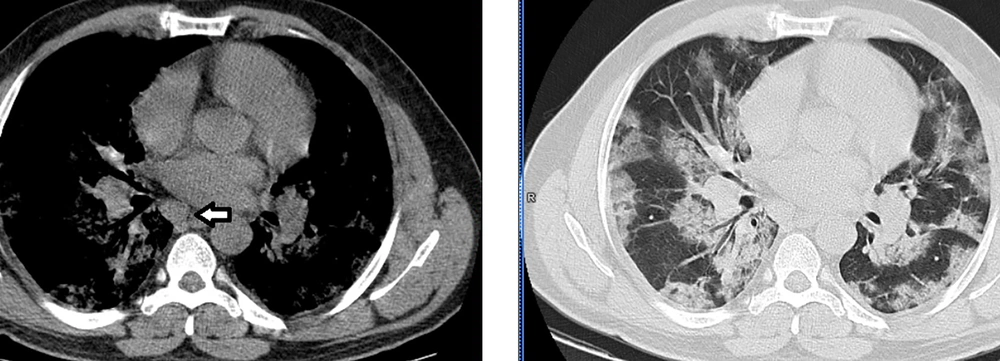
7) was found in 17 (39%) patients. Halo sign, reverse halo sign, LAP (
Figure 8), and pleural effusion was seen only by one patient (2%). Pericardial effusion and pleural thickening were visualized in 2 (5%) patients. Four (9%) patients had fibrotic lines.
A 39-year-old man with dry cough and fatigue. The black arrow on the axial CT of the right lung shows ground-glass opacity with the peripheral distribution.
| Findings | All Pneumonia Groups (N = 44) | Highly Suggestive COVID-19 Pneumonia (N = 28) |
|---|
| Distribution of lesions | | |
| Peripheral | 32 (73) | 18 (64) |
| Central | 2 (4) | 1 (4) |
| Peripheral and central | 10 (23) | 9 (32) |
| Number of lobes | | |
| One lobe | 13 (30) | 1 (4) |
| Multilobes | 31 (70) | 27 (96) |
| Shapes of lesions | | |
| Patchy | 11 (25) | 11 (39) |
| Round | 16 (36) | 2 (7) |
| Patchy and round | 17 (39) | 15 (54) |
| Appearance of lesions | | |
| GGO | 27 (61) | 16 (57) |
| Consolidation | 4 (9) | 1 (4) |
| GGO and consolidation | 13 (30) | 11 (39) |
aValues are expressed as No. (%).
A 65-year-old man with fever and myalgia. Axial CT scan shows bilateral patch and round ground-glass opacities.
43-year-old man with fever and dry cough. Axial CT image shows bilateral, multilobar, patchy ground-glass opacities.
A 56-year-old man with fever and cough. Axial CT shows bilateral, multilobar, ground-glass opacities with air bronchogram (White arrow).
A 55-year-old woman with fever, cough, and myalgia. Axial CT of the right lung shows peripheral ground-glass opacity with a crazy-paving pattern (Arrow).
A 45-year-old man with a cough. Axial CT of left lung shows ground-glass opacity with vascular thickening (Arrow).
A 45-year-old man with fever, dry cough, and fatigue. Axial CT shows ground-glass opacity with vascular thickening (Arrow).
46-year-old man with fever and cough. Axial CT scans in mediastinal (left) and lung (right) window settings show bilateral, multilobar patchy ground-glass opacities. Arrow shows lymphadenopathy, not a typical finding in Covid 19 pneumonia.
When highly suggestive for the COVID-19 pneumonia group was evaluated, the most common CT features (
Table 3) were peripheral (64%), multilobar (96%), patchy, and round (54%) GGO (57%). Air bronchogram (93%), crazy-paving patterns (79%), and vascular thickening (61%) were the most common special findings.
| Findings | All Pneumonia Groups (N = 44) | Highly Suggestive COVID-19 Pneumonia (N = 28) |
|---|
| Crazy-paving pattern | 22 (50) | 22 (79) |
| Air bronchogram | 27 (61) | 26 (93) |
| Vascular thickening | 17 (39) | 17 (61) |
| Halo sign | 1 (2) | 1 (4) |
| Reverse halo sign | 1 (2) | 1 (4) |
| Fibrotic lines | 4 (9) | 0 |
| lymphadenopathy (LAP) | 1 (2) | 1 (4) |
| Pleural effusion | 1 (2) | 1 (4) |
| Pleural thickening | 2 (5) | 2 (7) |
| Pericardial effusion | 2 (5) | 2 (7) |
aValues are expressed as No. (%).
When we examine the CT findings according to chronic diseases; One patient with pleural effusion had a chronic renal failure (CRF), hypertension (HT), and diabetes mellitus (DM) and was older than 60 years. Pleural thickening was present in two patients. One of these patients was the CRF, and the other was a patient with Behcet’s disease (BD). Pericardial effusion was present in two female patients. One patient had DM and HT, but the other patient had no chronic disease. These patients were over 60 years old. LAP was present in only one BD patient. We detected the halo sign in a patient with diabetes and hypertension. One of the two patients with fibrotic lines had DM and HT, and the other had BD. In the other two patients with the fibrotic line, there was no chronic disease. However, it was over 75 years old in four patients with the fibrotic line.
The mean age of patients with HT (n = 20) was greater than patients without HT (65.4 ± 9.0 vs 56.5 ± 12.9 years, P = 0.003). However, there was no difference between the two groups in terms of CT findings. When the age range of 40 - 60 was examined, two patients had HT, two patients had DM, two patients had DM, and HT, one patient, had Behcet’s disease, and HT, one patient, had hypothyroidism and HT. Although only 6 (23.0%) out of 26 patients in this age range had a chronic disease, 18 (67.0%) cases had CT findings (highly suggestive for COVID-19 pneumonia). In this age group, four patients had CT findings for suspicious COVID-19 pneumonia despite the absence of chronic disease. In the group, 16 patients had COVID-19 CT findings (suspicious and highly suggestive); however, there were no chronic diseases. Interestingly, there were findings related to COVID-19 pneumonia in three patients who did not have any chronic diseases between the ages of 20 - 40 years.