


1. Background
2. Methods
2.1. Bacterial Strains and Culture Conditions
2.2. Screening of cagPAI Gene Loci by PCR
2.3. RNA Extraction and cDNA Synthesis
2.4. Cell culture and Infection Assays
2.5. Detection of CagA
4. Results
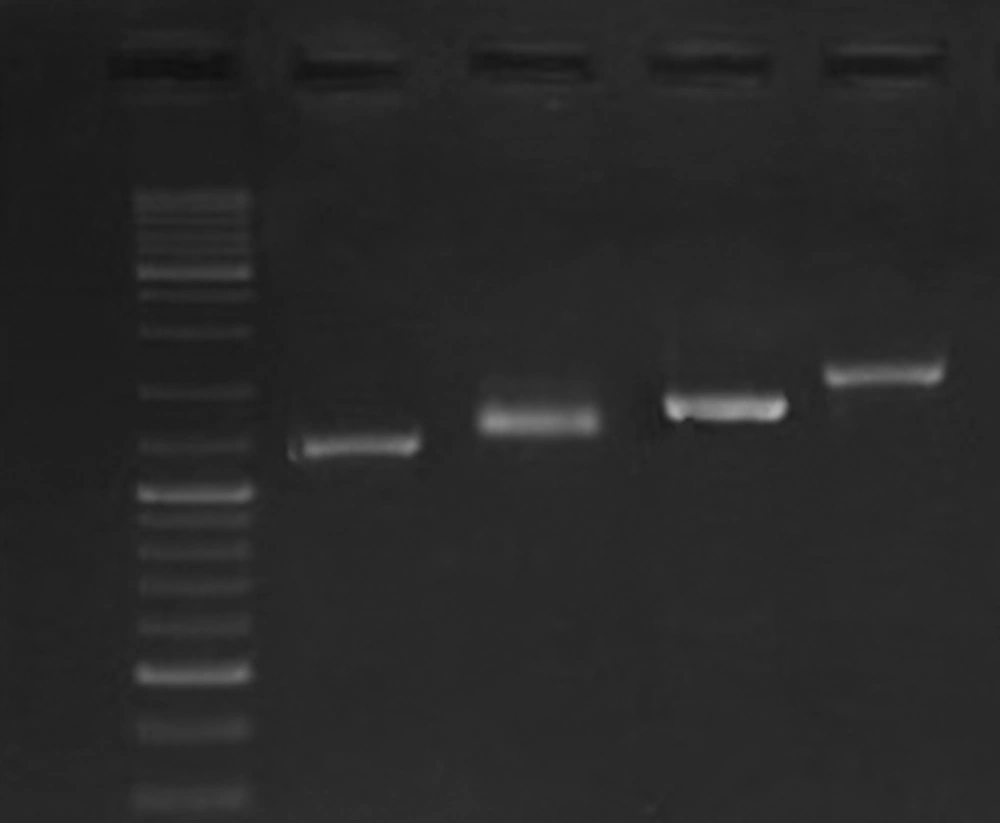
Lane 1, Gene Ruler DNA Ladder Mix (Thermo Scientific); Lane 2, EPIYA type AB; Lane 3, EPIYA type ABC; Lane 4, EPIYA type ABCC; Lane 5, EPIYA type ABCCC.
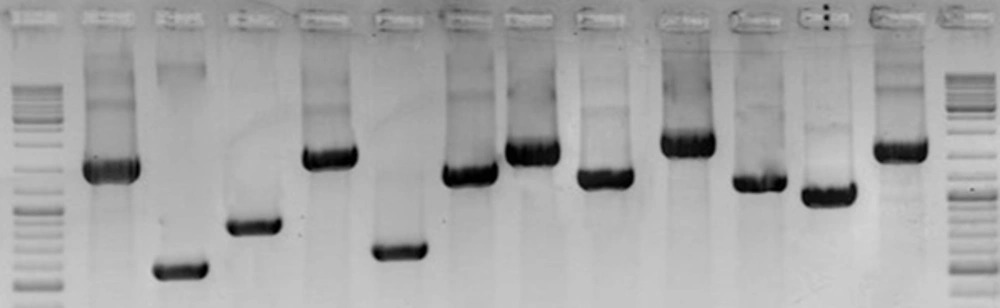
Lane 1 and 14, GeneRuler DNA Ladder Mix (Thermo Scientific); Lane 2, cagζ-cagδ (Wild (intact): 1092 bp); Lane 3, D2 (525 bp); Lane 4, D3 (750 bp); Lane 5: cagQ-cagM (1721bp); Lane 6, cagp-cagM (601 bp); Lane 7, cagδ-cagγ (1417 bp); Lane 8: cagα-cagY (1818 bp); Lane 9, cagX-cagW (1306 bp); Lane 10: cagW-cagT (228 bp); Lane 11, cagL-cagH (1329 bp); Lane 12: cagE-cagC (1083 bp); Lane 13: cagC-cagA (1917 bp).
| H. pyloricagPAI Genotype | ID of Strains (Pathological Findings) | CagA Expression | CagA EPIYA Type |
|---|---|---|---|
| Intact cagPAIa | HC-113 (IM) | Positive | ABC |
| HC-168 (SAG) | Negative | ABC | |
| HC-180 (CAG) | Negative | ABCC | |
| HC-136 (SAG) | Negative | ABCC | |
| cagζ-cagδ (W)/cagα-cagY-/ cagX-cagW-/ cagC-cagA- | HC-176 | Negative | ABC |
| HC-174 (Moderate active chronic gastritis) | Negative | ABC | |
| cagζ-cagδ (D2)/cag -cag-/cagW-cagT-/cagL-cagH-/cagE-cagC- | OC-180 (Moderate active chronic gastritis) | Negative | ABC |
| cagζ-cagδ (D3)/cagX-cagW- | OC-179 (Moderate active chronic gastritis) | Negative | A/B |
| HC139 | Negative | ABCC | |
| cagζ-cagδ (D3)/cagQ (rev. ori.)+/cagQ-cagA-b | OC-287 | Negative | ABC |
| cagζ-cagδ (D3)/cagL-cagH-/cagE-cagC- | OC-217 (chronic active gastritis) | Negative | ABC |
| cagζ-cagδ (D3)/cagQ-cagA+c | OC-149 (chronic active gastritis) | Positive | ABCCC |
aIntact cagPAI: H. pylori strains with complete cagPAIgene segments.
bcagQ-cagA-: H. pylori strains with mutation at all genetic segments denoted between cagQ-cagM and cagC–cagA.
ccagQ-cagA+: H. pylori strains without mutation at all genetic segments denoted between cagQ-cagM and cagC-cagA. IM, intestinal metaplasia; SAG, severe active gastritis; CAG, chronic active gastritis.
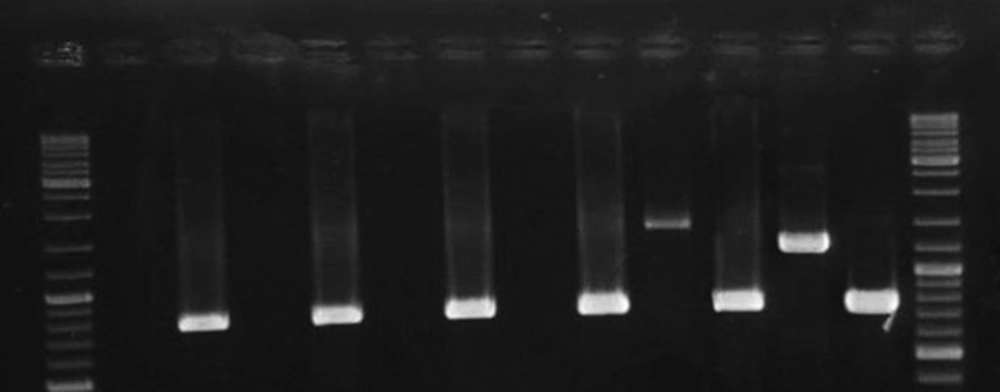
Lane 1 and 14, GeneRuler DNA Ladder Mix (Thermo Scientific, USA); Lanes 2, 4, 6, 8, non-coding cagAstrains (Strains OC217, HC168, HC136, HC180, respectively); Lanes 10 and 12, cagA coding strains (Strains OC149 and HC113, respectively). mRNA expression of 16srRNA was observed for all the strains; Lanes 3, 5, 7, 9, 11, and 13 represents the RT-PCR product for strains OC217, HC168, HC136, HC180, OC149 and HC113, respectively. Size variation of products for cagA is related to the nucleotide sequence diversity in these strains.
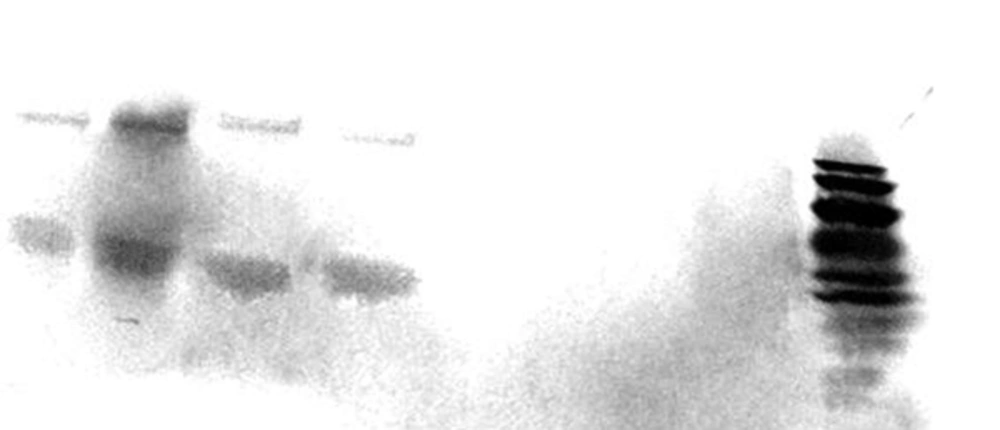
Lanes 1 - 4 represented CagA (complete and truncated form) protein in lysates of grown H. pylori strains in Brucella broth (Lanes 1 and 3) and total protein extracts of infected cell line (Lanes 2 and 4) after 6 h incubation. MOI of 100 was used in cell culture experiments; Lane 8, PageRuler™ Prestained Protein Ladder (10 - 170 kDa, Thermoscientific, USA); Lane 5, infectedAGS cell with cagA negative H. pylori strain (Strain OC236); Lane 6, Lysate of grown H. pylori strain OC236 in Brucella broth; Lane 7, Protein extracts of non-infected AGS cell line. Size variation for lanes 3- 4 are related to CagA EPIYA motif ABCCC.



