
1. Background
1.1. What Is Known About This Subject" And "What This Study Adds to Existing Knowledge"
The biomechanical effect related to tensile strength from peroneus longus tendon and hamstring tendons as autograft donors has been explained in previous literature in cadaveric studies. Our study compared the tensile strength of peroneus longus and hamstring autografts in living donors when performing ACL reconstruction.
The use of peroneus longus grafts in ACL reconstructive surgery is not yet popular. The lack of data from studies on this graft selection is the main reason for the low popularity of the use of this graft compared to the use of other donor grafts (1, 2).
Getting optimal results in ACL reconstruction surgery using arthroscopy is the goal expected by the experienced surgeon (3, 4). The most common choices for grafts that are best used for reconstruction purposes are autografts such as bone patellar-tendon-bone (BPTB), hamstring tendons, and quadriceps tendon, as well as allografts originating from various sources (5, 6).
Previous studies have shown that removing the peroneus longus tendon has no effect on walking (gait parameters) and ankle joint stability. This suggested that the peroneus longus tendon could be safely used as an autograft donor in reconstructive surgery of the knee joint ligament due to its length and strength (7-11). However, research on the superiority and side effects of this tendon is still limited (9, 10).
The biomechanical effect related to tensile strength from peroneus longus tendons and hamstring tendons as autograft donors has been explained in previous studies in cadavers, but no research discusses the tensile strength in living donors, even though it is an important biomechanical component when assessing the outcome of surgery. Most previous literature compared the tensile strength of the peroneus longus tendon and hamstring tendon in a cadaver study.
2. Objectives
Our study aimed to evaluate the stiffness of peroneus longus tendon grafts and hamstring tendon grafts in an ACL reconstruction using autografts, and the measurement was conducted at the time before graft insertion.
Moreover, biomechanical studies on peroneus longus grafts are still scarce compared to other grafts. Therefore, this is a biomechanical study to compare the tensile strength of peroneus longus grafts and hamstring grafts (3, 12). Our hypothesis is that the peroneus longus tendon graft has comparable tensile strength to hamstring tendon graft.
3. Methods
3.1. Study Population
After ethical clearance was obtained, the study was conducted from June to December 2019. There were 51 patients who met the inclusion criteria, which were: patients who had suffered an ACL tear that will undergo ACL reconstruction and agreed to be included as participants of the study. The exclusion criteria were: patients who had undergone ACL reconstruction in the past and patients that did not agree to be included as a part of this study. Other exclusion criteria were: patients under 12 years old and patients who had suffered other disorders in the same leg, such as fracture, malunion, or non-union, and congenital abnormality of the knee and leg. The subjects of this study were enrolled by the two surgeons who were in charge at the two hospitals where they performed the ACL reconstruction surgery in this study.
3.2. Study Design
This research was a cross-sectional study, and the subjects were divided into two groups, the peroneus longus tendon autograft donor group, and the hamstring tendon autograft donor group. Consecutive sampling design was used to select all subjects who had undergone surgery, and subjects who met the inclusion and exclusion criteria were included in the study until the deadline for the study was completed. The allocation of the subject into either group was not based on any specific criteria.
There were 25 subjects assigned to the hamstring tendon graft group, from which 19 patients were male (ages 16 to 57 years old) and 6 patients were female (ages 18 to 43 years old). Twenty-six subjects were in the peroneus longus tendon graft group, from which 20 patients were male (ages 16 to 41 years), and 6 patients were female (ages 18 to 52 years). The mean age in the male group was 28.21, and the mean age in the female group was 31.50.
From the total 51 subjects, 41 subjects were enlisted in a tertiary level healthcare center in an urban area in Central Java, consisting of 16 hamstring tendon autograft donors and 25 peroneus longus autograft donors. Additionally, from a tertiary level health care in an urban area in East Java, there were 10 subjects, consisting of 9 hamstring tendon autograft donors and 1 peroneus longus tendon (PLT in procedure description below) autograft donor.
3.3. Operative Technique
The PLT graft was harvested by the following steps: the surgeon had to distinguish the PLT from the peroneus brevis tendon (PBT). The PBT was identified at its insertion site and was isolated from the PLT. The PLT was completely transected 1 to 1.5 cm proximal to its insertion, and harvested with a tendon stripper. The graft was then prepared for ACL insertion. The PBT and remaining PLT stump were sutured together to maintain some function of the PLT (13).
In the hamstring group, the hamstring graft was harvested and then measured with a dynamometer.
Biomechanical test of the reconstructive operation between the two donor groups, specifically the peroneus longus tendon autograft and hamstring tendon autograft was conducted with an Analog Push Pull Force Gauge Tester Meter dynamometer manufactured by Fabrication Enterprise Inc. in White Plains New York 10601 (Figure 1). Measurement was performed by hooking the graft into the dynamometer, and then the graft was given a pull force 10 N for 15 minutes. The initial marking at 2 cm was recorded before the test (Figures 2 and 3).
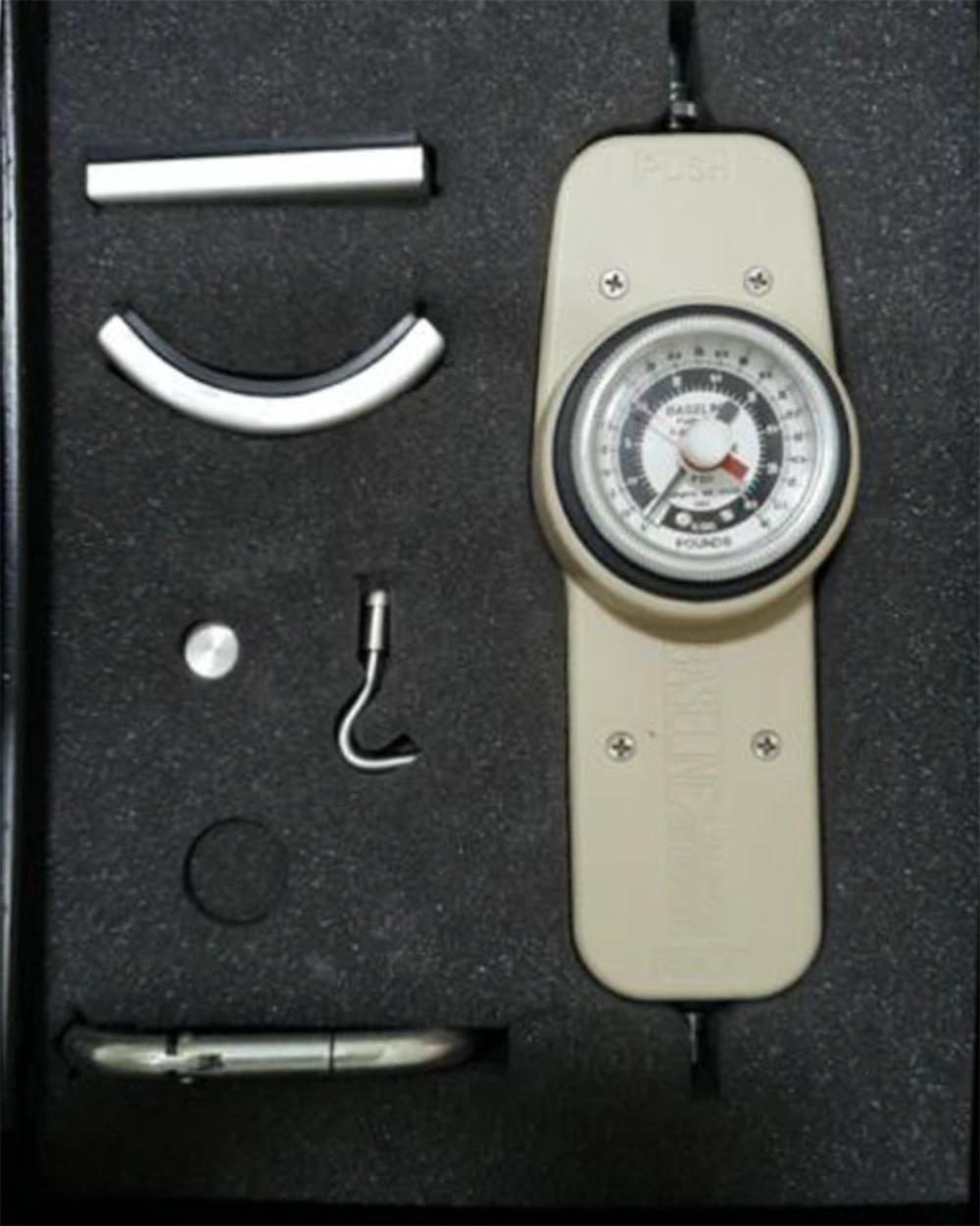
Figure 1.
Dynamometer
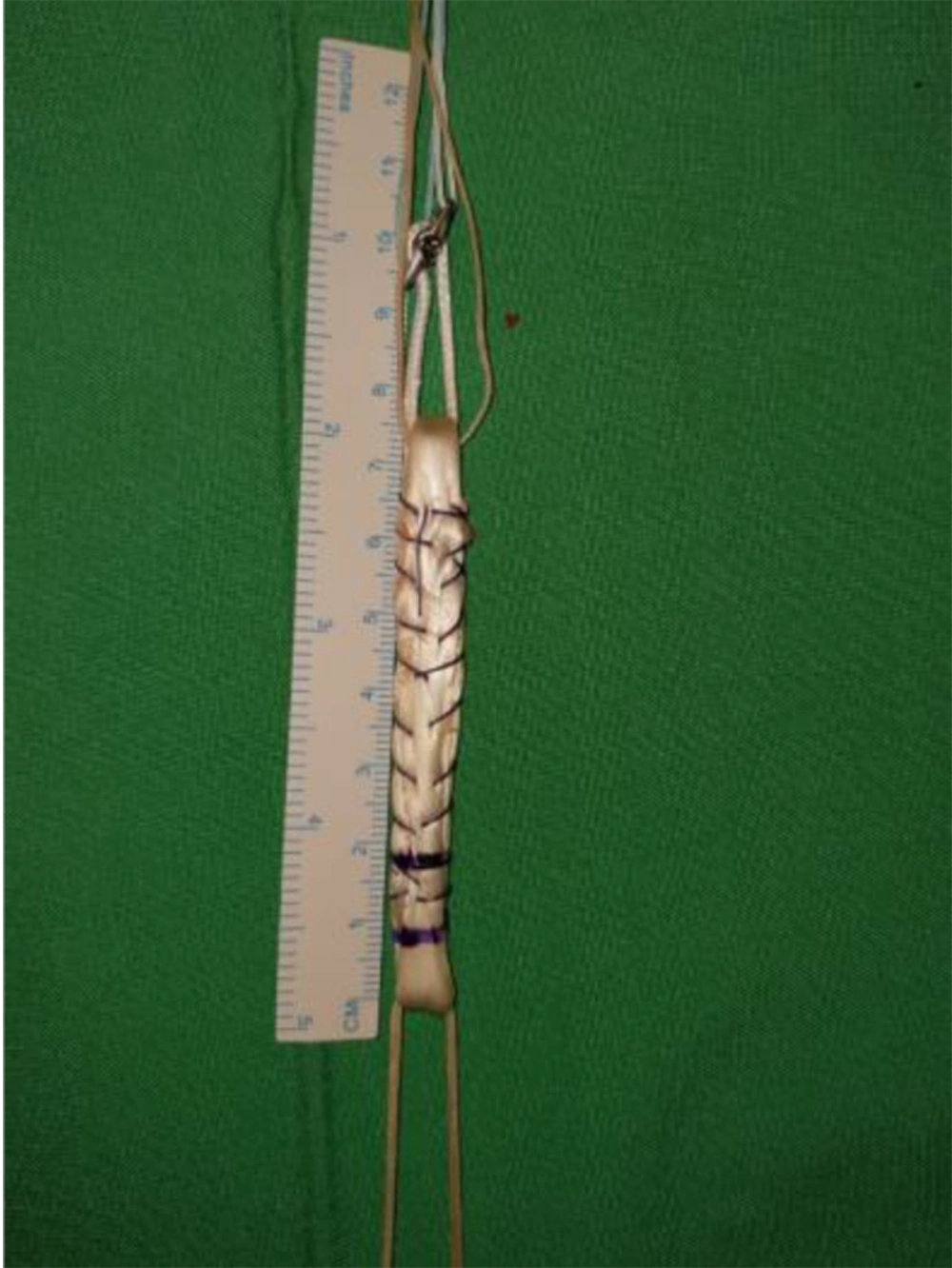
Figure 2.
Two marks on tendon graft
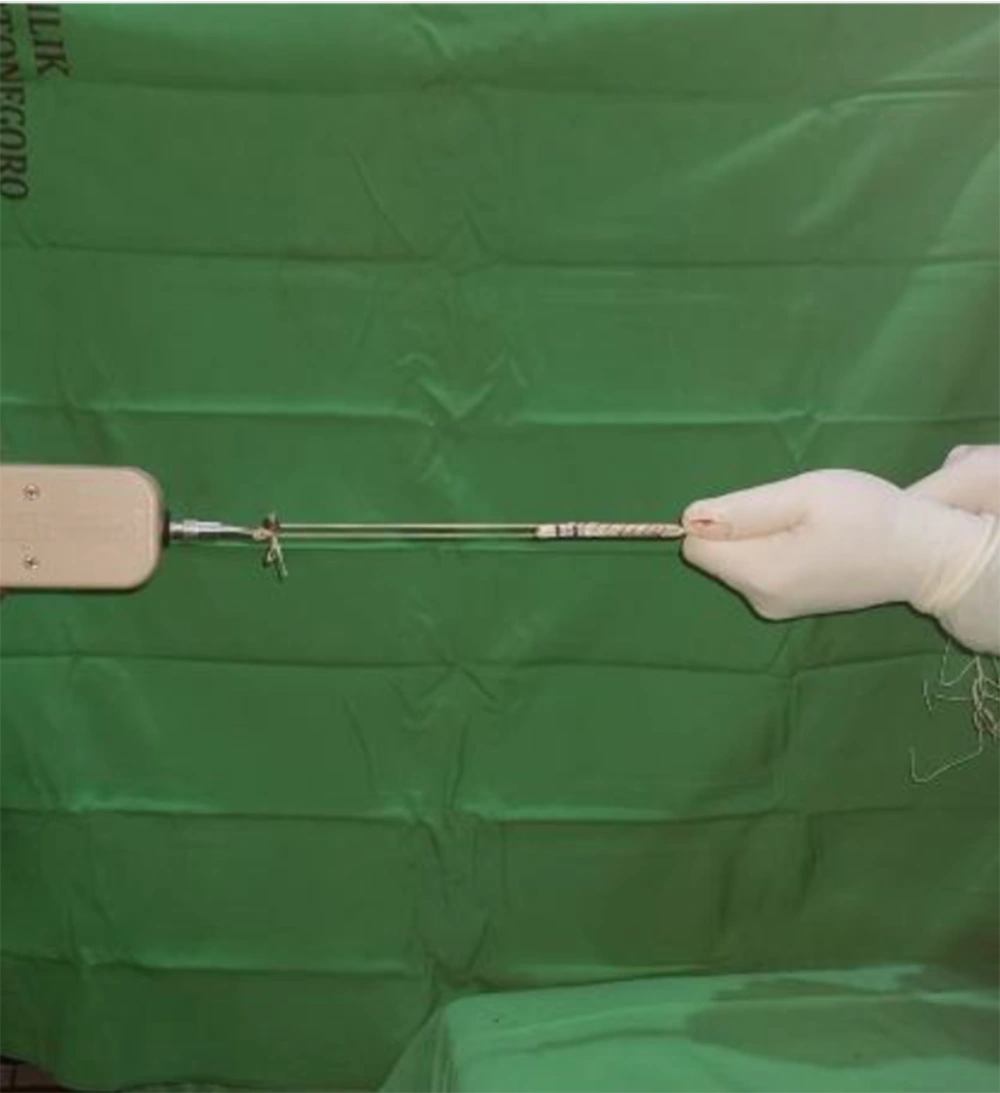
Figure 3.
Measurement with dynamometer
The results were statistically analyzed using a non-parametric test. The results were the displacement of the graft after given the 10 N pull force with the dynamometer for 15 minutes. These displacement measurements recorded in centimeters (cm) were the main data collected.
The results were collected, recorded, and analyzed, and afterward, there were discussions and decision making regarding the procedure.
3.4. Evaluation Point
This study aimed to evaluate the stiffness of the peroneus longus tendon graft, and hamstring tendon graft to be used as a donor for ACL reconstruction surgery. Another evaluation conducted in this study was the diameter of the graft harvested peroneus longus tendon and hamstring tendon. The graft stiffness was measured by counting the displacement when the graft was given a pull force10 N for 15 minutes, and the displacements were measured in centimeters (cm). The diameter of the graft was measured within one millimeter (mm).
3.5. Statistical Analysis
Statistical data were analyzed using independent sample t-tests with means and standard deviations (SD). The analysis was performed using the Statistical Package for the Social Sciences (SPSS) for Windows version 25.0 manufactured by IBM Corp. in Armonk, New York, USA. The results of difference between graft tensile strength of the two groups were considered statistically significant if P < 0.05.
4. Results
In this study, 51 patients were enrolled in the study who met the inclusion criteria. In the two groups, there were 25 (49.01%) patients who were given hamstring tendon autografts, with the male / female distribution of this group of 19 male patients aged between 16 - 57 years and 6 female patients aged 18 - 43 years. Meanwhile, 26 (50.98%) subjects were given the peroneus longus tendon autografts with a male / female distribution of 20 male patients aged between 16 - 41 years, and 6 female patients aged 18 - 52 years (Table 1).
Table 1.
Topographic Distribution
| Age | N | Mean ± SD | SE | P-Value |
|---|---|---|---|---|
| Hamstring (HT) | 25 | 29.18 ± 11.26 | 2.40 | 0.355 |
| M (16 - 57) | 19 | 28.31 ± 11.79 | 2.95 | |
| F (18 - 43) | 6 | 31.50 ± 10.33 | 4.22 | |
| Peroneus longus (PL) | 26 | 26.21 ± 0.412 | 0.08 | |
| M (16 - 41) | 20 | 24.39 ± 7.36 | 1.54 | |
| F (18 - 52) | 6 | 34.50 ± 12.50 | 5.10 |
Intraoperatively, the diameter of the graft harvested was measured and recorded. The results showed that the mean diameter of the peroneus longus graft (7.86 mm ± 0.69) was not significantly different from that of the hamstring tendon (7.67 cm ± 0.63) (P = 0.30), as shown in Table 2.
Table 2.
Graft Diameter
| Graft Diameter (mm) | N | Mean ± SD | P-Value |
|---|---|---|---|
| Hamstring (HT) | 25 | 7.86 ± 0.69 | 0.30 |
| Peroneus longus (PL) | 26 | 7.67 ± 0.63 |
The mean displacement at the time of the 10 N load with a predetermined initial distance of 2 cm on the hamstring tendons was 2.44 cm with SD = 0.42, while the mean displacement of the peroneus longus tendon is 2.06 cm with SD = 0.14. The peroneus longus tendon grafts had significantly better stiffness compared to the hamstring tendon grafts (P < 0.000), as shown in Table 3.
Table 3.
Tensile Strength Test
| Graft | N | Mean ± SD | P-Value |
|---|---|---|---|
| Displacement after 10 N load 15 minutes (cm) | 0.000 | ||
| Hamstring (HT) | 25 | 2.44 ± 0.42 | |
| Peroneus longus (PL) | 26 | 2.06 ± 0.14 |
5. Discussion
Our findings show that peroneus longus tendon grafts have significantly better stiffness compared to the graft from the hamstring tendons (P < 0.05). The mean diameter of the hamstring tendon autograft was 7.86 mm, while the mean diameter of peroneus longus tendon autograft was 7.67 mm.
The main goal of ACL reconstruction surgery is to restore functional stability of the knee joint, with minimal side effects.
The popularity of graft use from the patellar tendon is based on the strength and tensile strength of this tendon. The hamstring tendon is also popular because of its great mechanical strength and less risk of experiencing patellofemoral pain and extension weakness (14-16).
However, several disadvantages of grafts taken from the patellar tendon have also been reported, especially complaints related to the donor site morbidity. One of the most widely reported complaints is pain in the patellofemoral region. Complaints related to the use of hamstrings as a source graft are hamstring muscle weakness and medial instability of the knee joint (14-16). This may indicate the need of a new autograft source for Asian populations since BPTB is associated with patellofemoral pain, that may disturb the daily activity of Asian people, who often engage in kneeling for daily activities such as praying and housekeeping. On the other hand, hamstring tendon grafting can produce a significant decrease in hamstring muscle strength, and moreover, the hamstring tendons in the Asian population are sometimes small in diameter, which may need more tendon grafting to reach the ideal graft diameter for ACLR.
Some clinicians have concerns that if a peroneus tendon graft is taken, it will reduce the strength of eversion and plantar flexion, which will cause ankle instability. However, Kerimoglu et al. found that taking a graft from the peroneus longus tendon had minimal or no effect on the foot and ankle function (14).
The above findings are also supported by the study of Shi et al.(13), which stated that the ankle function before and after graft taking had no significant difference in both strength and range of motion of the ankle joint.
In terms of tensile strength, the peroneus longus tendon has a good outcome where the anterior half of the peroneus longus tendon has sufficient length and strength to be used as a graft in ACL reconstruction operations. In this study, it was mentioned that the tensile strength of the graft taken from the peroneus longus tendon has significantly better tensile strength than the graft from the hamstring tendon. This finding provides clinical information that shows both grafts have similar biomechanical properties (17, 18).
The peroneus longus tendon has good tensile strength, as mentioned by other studies. In one of their studies, Shi et al (13) stated that the tensile strength of the peroneus longus and hamstring was four times that of ACL. By comparison, a double strand of peroneus longus is equivalent to four strands of hamstring. Tensile strengths of double PLT strands, four HT strands, and native ACLs are 4.268 ± 285, 4.090 ± 265, and 2.020 ± 264 N, respectively.
From the results of our study, we found a significant difference in the tensile strength of the graft taken from the peroneus longus tendon compared to the hamstring tendon (P < 0.05). This finding is slightly different from the results of research conducted by Phatama et al.(17), which stated that the tensile strength of the graft peroneus longus tendon and hamstring tendon did not have a significant difference. The difference above can be caused by several factors, one of which may be due to incomplete assessment regarding the use of hamstring tendon graft, whether only semitendinosus tendons or gracilis tendons involved or both are used simultaneously. Another difference is that in our study, the number of strands used was not counted, nor was it mentioned whether it used the gracilis, semitendinosus, or both.
Kerimoglu et al.(14) stated that peroneus longus tendon grafts can be used for ACL reconstruction surgery, and it had minimal side effects. The main functions of the peroneus longus tendon are for foot eversion and plantar flexion.
In addition, from the cadaveric study conducted by Phatama et al.(17), the graft they used was a graft taken from a cadaver, whereas in our study the autograft sample used was taken and measured shortly after harvesting in the ACL reconstruction surgery.
Other results of our study indicated that the diameter of the graft taken from the peroneus longus tendon and hamstring tendons did not have a significant tensile strength difference. These results are different from the research by Rhatomy et al.(6) that found the mean diameter of the peroneus longus tendon graft was significantly larger than that of the hamstring tendon graft. In their research, the semitendinosus and gracilis tendons were harvested. Otherwise, it did not differ whether the hamstring tendon used as graft was the gracilis tendon, semitendinosus tendon, or both.
Our study also did not analyze other factors that may affect the diameter of the graft. Song et al.(19) stated that patients who were short and thin were more likely to own smaller graft diameters. Another factor that could affect the diameter of the peroneus longus tendon graft harvested are height, weight, and duration of injury.
The limitations of our study are small sample size and only measuring stiffness, and this is because of the limitations in the operating room. Other limitations are that we did not do a long-term follow-up in this study, and there were unequal numbers of women and men as the subjects of this study.
The strengths of our study are that we performed the study in a group of living patients, and the measurement of the stiffness of the graft was performed after graft preparation right at the time of ACLR surgery.
5.1. Conclusions
There was a significant difference in stiffness between the peroneus longus tendon and hamstring tendons when used as the donor for autograft in ACL reconstructive surgery when compared using biomechanical assessment. On the other hand, there was no significant difference in the graft diameter of the peroneus longus tendon and hamstring tendon.
Peroneus longus tendon autograft is a very reliable choice for donors in ACL reconstructive surgery, with relatively good stiffness and minimal risk of complications.