
1. Context
The world has seen the spread of three types of coronavirus diseases. The newest one is COVID-19, observed on December 31, 2019, in Wuhan, China, which has spread worldwide (1, 2). The latent period of the disease is between one and 14 days, after which symptoms such as fever, fatigue, loss of smell, muscle cramps, dry cough, and shortness of breath can appear (3, 4). The severity of COVID-19 is closely related to age and underlying diseases (hypertension, diabetes, and cardiovascular disease), which can progress rapidly to severe respiratory illnesses such as acute respiratory syndrome (4). To date, extensive efforts have been made to discover vaccines or treatments for the disease. Still, none has been clinically successful, and the only way to prevent the disease and control the infection is to follow hygiene principles by the general public.
Although many countries have adopted travel restrictions, school closures, and social distancing to reduce the pressure on public healthcare systems, these approaches have been unsuccessful and disturbed daily life (5). However, the medical community is looking for a definitive cure for COVID-19. Until a definitive solution is found, one way to prevent or minimize COVID-19 is to strengthen the immune system (5, 6). Various factors affect immune cells, including nutrition and exercise (6). Regular exercise reduces the risk of non-communicable diseases, including viral and bacterial infections (6, 7). The outbreak of COVID-19 affected various activities and restricted social activities, thus reducing physical activity levels (8, 9).However, stopping physical activities aiming at preventing COVID-19, in turn, causes many diseases associated with a sedentary lifestyle, e.g., type 2 diabetes and cardiovascular disease (10, 11).
2. Objectives
Therefore, researchers and exercise scientists recommend exercising under special consideration to prevent the immunosuppressive effect of inactivity. This article provides an overview of physical activity during different stages of COVID-19, particularly among COVID-19 recovered individuals (CRI) in the winter.
3. The Effect of Exercise on the Immune System
The COVID-19 disease and its relationship with the immune and respiratory systems have raised many questions. Exercise boosts immunity and strengthens the cardiorespiratory system, protecting us against viral infections and death (12). This becomes important when limited access to sports facilities has reduced physical activity to a minimum level (13). Aside from quarantine, social distancing, staying home, and social restrictions might attenuate the immune system (14).
The human immune system involves complex mechanisms to reduce the risk of disease and infection (15). Exercise has a significant effect on the normal functioning of the immune system (16). Moderate exercise reduces chronic inflammation, improves immune system responses to vaccines, and enhances immune markers in chronic diseases (e.g., cancer, AIDS, cardiovascular disease, obesity, and mental illness) (16-18). The studies reported that a sedentary lifestyle leads to increased abdominal fat and obesity, activating inflammatory factors (19, 20). According to studies, glucocorticoids such as cortisol increase during hospitalization, staying home, and during sedentary periods, weakening the immune system (20, 21). Stress reduces the ability of T cells to increase in response to infectious agents (22) and the ability of specific lymphocyte cells (natural killer cells and CD8+ T cells) to detect and kill infected cells in the body (23). Therefore, maintaining the body's immune system in response to viruses and other pathogens is very important to reduce the severity of infection and recovery stage (24, 25).
Every exercise bout, especially dynamic exercise, helps the mobility of immune cells to kill infected cells (25). Stimulated cells first enter the bloodstream from the vascular periphery of the spleen and bone marrow (26). They are then transmitted to various tissues, e.g., lymphatic organs, lungs, and intestines (25, 26), where increased immune defense might be required (27). The constant mobility of these cells between the blood and tissues increases the tissue's immune function, theoretically protects against infection, and prepares the body for further infections (7, 28). Also, exercise stimulates various immune factors' secretions, especially muscle cytokines such as IL-15, IL-7, and IL-6, which maintain immunity and increase the body's resistance to infection (29).
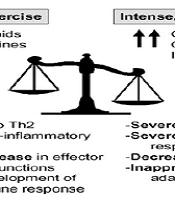
In addition to the effect of exercise in healthy individuals, remarkable efficacy has been found in people with underlying diseases (e.g., high blood pressure, heart disease, diabetes, and cancer) and the elderly, who are generally more prone to infections (30-32). Therefore, regular moderate-intensity activity helps maintain fit and healthy within the recommended guidelines (31). Regular moderate-intensity exercise promotes the immune response, dysfunctional T cells (33), T cell proliferation, circulating inflammatory cytokine levels (18, 33), neutrophil phagocytic activity, cytotoxic activity, and IL-2 production (34). One of the most apparent complications of COVID-19 is an increase in inflammation and inflammatory markers, including C-reactive protein and white blood cell counts (35, 36). While moderate-intensity exercise has been shown to reduce inflammatory markers, strenuous exercise increases inflammatory markers (18, 37).
4. Considerations of Exercise Activity at Different Stages of COVID-19
Exercise is vital in preventing non-communicable diseases and strengthening the immune system to fight infectious agents. However, with the outbreak of COVID-19, physical activity and exercise in the community have declined sharply, a serious alarm (21, 33). This section analyzes the effect of exercise in three essential stages.
First is the prevention stage. Although some people think exercising during home quarantine is generally forbidden, regular exercise in this stage significantly improves the immune system and prevents various infectious and viral diseases, as recommended by most health organizations (5, 33). Some scientific sources recommend maintaining five meters of physical distancing during exercise (7). According to global guidelines, exercise is not prohibited in the prevention stage (4, 33). They also state that stopping exercising during the onset of symptoms is necessary (33). The presence of symptoms like shortness of breath, severe congestion, and fever might cause exercise difficulty in the second stage (38). In this case, one should rest completely (39) and not exercise at home or outside for at least two to three weeks (7, 40). The immune system's cytotoxic T cells are regenerating, and it is better to focus only on some standard breathing exercises until the recovery of the respiratory system (7).
The third is the post-recovery stage, in which moderate to vigorous physical activity should be avoided for two to four weeks (41). After this period, the CRI can put physical activity and exercise in the schedule (33, 42). A light resistance exercise (such as weight-bearing exercises) is suggested during this period, which can be gradually increased in intensity (43). If one plans to do outdoor physical activity, he should follow all the tips related to social distancing protocols (at least 1.5 - 5 meters away from others) and use a mask (42). The lost weight due to COVID-19 must be compensated during the post-recovery stage (43, 44). The lost weight might contain muscle mass, reducing muscle endurance and resistance (44). Therefore, nutrition and physical activity must be balanced accordingly (45).
General advice on the intensity and duration of exercise during the prevention and post-recovery stages includes 30 minutes of moderate-intensity aerobic exercise per day, flexibility exercise, and home exercises. Also, to protect the immune system, avoiding high-intensity, long-term exercises during an epidemic are essential for all individuals, even athletes (21, 33).
5. COVID-19 Activity in Cold Weather
Since coronavirus is psychrophilic, it chooses organs with lower temperatures (i.e., the respiratory system) (46, 47). Cold and dry air causes dehydration, inflammation, and restriction of the respiratory tract (48). On the other hand, humidity increases the growth of fungal allergens (49). According to studies, environmental conditions such as temperature, humidity, and sunlight can affect the activity of the COVID-19 virus (48, 50).
Also, it is known that COVID-19 has a higher opportunity to grow and spread in cold weather. In contrast, higher temperatures significantly reduce the infection rate and the prevalence of COVID-19 and other viruses (46, 47). Studies show that the virus stays active longer at 4°C or 10°C, while its activity decreases at 30°C (51, 52). In general, this is a basal rule for all types of viruses; the lower the air temperature (especially at sub-zero temperatures), the higher the rate of virus growth and proliferation in the environment, and vice-versa.
6. Guidelines for Exercising in Winter for COVID-19 Recovered Individuals
Admittedly, COVID-19 is a dangerous and deadly viral disease (36). Moreover, during quarantine, unhealthy behaviors such as an unhealthy diet and a sedentary lifestyle may lead to chronic diseases or even death (53). Inadequate physical activity and obesity are important causes of non-communicable diseases, which aggravate the risk of COVID-19 (33, 38). At the onset of the COVID-19 outbreak, the cold weather in the winter, on the one hand, and the fear of being infected in sports clubs and group activities (47), on the other hand, compromised the individual's physical activity level (33). However, physical activities should not be suspended altogether, and the fear of attending sports clubs should not lead to shutting down all physical activities (7). Regardless of the existing situation, exercise helps promote health status, which should be neglected under no circumstances (7, 47). There are particular preventive strategies for exercising in the cold weather that will diminish the side effects of exercising in the cold weather in CRI. This section will discuss the etiquette and recommendations for exercising during the year's cold seasons for CRI.
6.1. Type of Exercise Activity
Performing outdoor physical activities, especially climbing at high altitudes, is unsuitable for CRI in the winter. Due to cold weather, the cough reflex, and COVID-19-induced pulmonary perturbation, these individuals might not be able to reach a steady state, which raises the risk of cardiorespiratory dysfunction.
6.2. Intensity and Duration of Exercise Activities
High-intensity exercise should be avoided in the CRI. The applied intensity must be low to moderate. The body needs enough time and energy to adapt to the new condition to function accurately in cold weather. If noticing each of the symptoms, including headache, shortness of breath, and palpitations, exercise should be stopped immediately. High-intensity or long-term activity is recommended for neither beginner nor athlete CRI. New studies indicate that intense, prolonged exercise might negatively affect the immune system parameters when exposed to viral infections. In contrast, moderate-intensity exercise reduces inflammation and improves the immune response to pulmonary infection, thus strengthening the immune system. Therefore, exercise activities will be safe and beneficial considering the abovementioned points.
6.3. Breathing Patterns in Exercise Activities
The breathing pattern in CRI must be nasal inhalation and oral exhalation. This way, cold air does not enter the respiratory system directly since the air first passes through the upper respiratory tract. Also, CRI should avoid exercising in the wind direction; this reduces the risk of direct exposure to cold air.
6.4. Warm-Up and Cool-Down
Before the exercise bout, a minimum of five minutes of warming up must be considered in CRI. The intensity must be increased gradually so that the heart, lungs, and muscles adjust correctly to the energy and oxygen demands. Ten minutes of cooling down are also recommended at the end of each session to help the body clear the wastes produced in the muscles. Warming up and cooling down the body before and after exercise prevent muscle pain.
6.5. Hydration
Even in cold weather, adequate hydration in exercise sessions must be considered in CRI. Fluid consumption during exercise prevents dehydration and airway stiffness. Also, the colder the weather, the lesser the feeling of thirst. Therefore, the CRI must never forget to drink water regularly during exercise sessions.
6.6. Proper Nutrition for Exercising in Winter
Exercising in cold weather increases metabolism. Since most CRI have experienced muscle mass loss, paying attention to the individual diet and exercise is essential. According to studies, consuming minerals and vitamins such as vitamins C, D, zinc, selenium, and omega-3 food sources (soybean oil, canola oil, and fish) strengthens the immune system. Vitamin C is believed to increase the production of white blood cells, which are the key to fighting infection in the body. Another critical point is that carbohydrates (sugar) must be consumed carefully since high or low carbohydrate intake leads to immune system dysfunction.
6.7. Outdoor Exercise; Is Not For Everyone!
Outdoor exercise is not recommended in the cold season for over 40 CRI. Besides the direct effect on the lungs, cold environments make the heart beat faster than in warm weather. Therefore, the health status of these individuals may be endangered while exercising. If one likes winter sports and outdoor activities, he must wear a proper outfit and shoes. Therefore, over 40 CRI, those with a history of heart problems (such as heart attack and coronary heart disease), should avoid exercising outdoors, choose the right home workouts, or exercise in a low-traffic area.
7. Conclusions
Returning to exercise in CRI must be under preconscious consideration. First, hospitalized CRI must have at least 14 days of rest, and non-hospitalized CRI must have at least seven days of rest to improve the symptoms comprehensively. However, in CRI confronting side effects in the lungs, heart, kidneys, and rarely the brain, starting a physical activity plan must be supervised accurately. Second, the exercise intensity must be increased gradually, starting from very low-intensity and safe levels. Several weeks are required for CRI to engage in high-intensity exercise activities. Third, the critical points in a faster recovery are known to be enough rest, balanced and high-quality nutrition, and vitamins. Finally, in the cold weather, always keep your neck and chest warm, remain hydrated, and wash your hands before touching the T zone.