
1. Background
Table tennis is a complex racket sport characterized by an intermittent activity profile multifaceted in its skill, physiological and cognitive demands, with success dependent on the interaction of these (1, 2). Table tennis matches vary from 20 to 60 minutes and rallies from 3 to 10 seconds in duration, with a work-to-rest ratio of 1:2 (3-6). Numerous matches take place in a single day over successive days in competition and are characterized by repetitive efforts of alternating short spells of high intensity rallies and long bouts of rest in-between, with longer rest periods in-between games (4, 7). The dynamic, explosive and fast-paced nature of the sport emphasizes a significant requirement of high levels of physical abilities. A well-developed anaerobic energy system is vital (5) to cope with the demands of training and competition (4, 7) which aids recovery, reduces injury risk and enables players to perform during training/competition (7).
Injury incidence data in table tennis is limited and shows that risks of injury in senior and junior (8-10) table tennis players are insignificant compared to team-sports (11, 12) and other racket sports (13-17). Most injuries are related to muscle tissues or affect the waist and shoulder girdle (8, 10). Other body parts affected are the ankle and spine (8). Many epidemiologic studies have examined the injury incidence in highly trained adolescent athletes in racket sports (9, 13-17) through means of questionnaires (13, 15-17), putting into question the validity and reliability of measurements. Therefore, recent studies use a surveillance record to collect data and are deemed more appropriate (9, 14). A study performed by Rejeb et al. (9) prospectively collected injury data on 166 male adolescent athletes, 12 - 18 years old, from different sports, 20 of which were table tennis (9). The major findings showed high rates of time-loss injuries (87.0%) in youth athletes. Further, it was found that the rate of overuse injuries (70%) and growth-related conditions was higher than other racket sports. However, injury incidences in youth table tennis were found to be lower compared to squash.
To improve performance, changes in training duration, intensity and frequency are required by adjusting training load at various phases during the season (18). With training load linked to injury rates, many studies have found a relationship in elite athletes (11, 12, 19-23). Studies investigating the influence of training load on injury rates generally reported a significant correlation between training load and injury, suggesting the harder individuals train, the higher the likelihood of injury (18, 22, 23) or illness (23, 24). Despite the wealth of research documenting the training-injury in elite sport, there is a lack of research reporting typical training loads and injury in (youth) table tennis. Various measures of training load have been proposed over the years (25). However, combining information about training intensity and duration can represent a low-tech method to evaluate training load. Heart rate based methods provide such information and are a reliable source of quantification for cardiovascular load and training intensity in sport (26). Previous work has reported typical cardiorespiratory and metabolic demands of elite junior players (27) and the influences of playing styles on such parameters (28). It therefore seems feasible to utilize simple heart rate-based methods to quantify training activities in youth table tennis.
There is a lack of research and understanding surrounding the impact of training/competition on adolescent athletes (29) in table tennis. The prescription of training to achieve optimal performance has largely been instinctive and there is a strong belief that increased training time results in increased performance/well-being. Nevertheless, this comes with varying degrees of success and increases the likelihood of injury and overtraining (19, 30). The effect of training on the physiological adaptation, subsequent performance, and injuries requires optimized training prescription that involves an integrative approach to quantification of playing and training load and can provide us with a better framework to understand the demands of playing table tennis in different age groups. Collecting more scientific information could help athletes and coaches effectively improve performance, through modifications in training prescription and training load. Altering frequency, duration, and intensity of training sessions can help decrease injury risk and rates and provide ultimate adaptations to training as well as for competition performance.
2. Objectives
Therefore, the purpose of this study was to analyze and report the training load over a season and the injury incidence in highly trained youth table tennis athletes. In addition, we aim to use a Poisson regression model to establish and predict which independent variable related to table tennis has a statistically significant effect on injury.
3. Methods
3.1. Hypothesis
We hypothesized as training load and intensity increased pre-competition, the risk of injury in athletes would also display an increase. In addition, training load and relative training load will vary at different time-points during the training season, with higher values observed when less competition was scheduled.
3.2. Selection and Description of Participants
Eight male adolescent table tennis players of Arabic origin [age (mean ± SD) 14.5 ± 1.4 years, maximal oxygen uptake (VO2max) 50.0 ± 6.4 mL.kg.min-1, stature 166.7 ± 6.6 cm, body mass 53.6 ± 7.9 kg, Σ of 7 skinfolds 9.9 ± 5.1% body fat and PHV -0.48 ± 1.65] were included in this one-year prospective study (January 2016-January 2017). Players who were full-time members of Aspire Academy and the Qatar table tennis Association took part in the study. These players have been identified as the best young Qatari table tennis players in the country and are recruited to represent the national table tennis Association. As a result, due to our stringent selection process, only players which exhibit exceptional table tennis talent, and the players who successfully pass the selection process are admitted. Therefore, only eight males fitted the criteria set to ensure training load information and injury information collected was of athletes of national level. All boys had previous clearance from a physician to participate in table tennis having been through medical screening procedures to determine their health and injury status. Written informed consent was sought and obtained from their parents. The study was approved by the Aspire Academy Scientific Committee and Ethics approval was obtained from the IRB of the antidoping laboratory in Qatar and conformed to the recommendations of the Declaration of Helsinki. This study is part of a larger study on growth and maturation of young athletes.
3.3. Classification and Definition of Injury Types
All injuries were assessed by a physical therapist (one of the authors) with experience in working within youth Table Tennis at Aspire Academy. Injuries were recorded as a physical complaint requiring the attention of the medical staff, which occurred during table tennis training, a strength and conditioning training session or during a competition. Injuries were divided into time-loss (TL) injuries and no time-loss (NTL) injuries. A clinical examination and/or treatment of an athlete which did not result in a full training session or competition being missed was described as a “medical attention” with NTL injury. A clinical examination and/or treatment of an athlete resulting in a training session or competition being missed the following day(s) was labelled as a TL injury (31). The lay-off was calculated by the number of days missed from the date of injury (day zero) until the day of return to full participation in training or competition. Overuse injuries were defined as injuries resulting from insidious onset without a recognizable mechanism (32) and occuring during the pubertal phase of adolescence during sports practice as well as falling under the etiology of growth-related conditions/injuries (e.g. Osgood-Schlatter disease). Growth condition injuries are unique to young athletes and result from an increase in the involvement in sports activities by children and adolescents. A traumatic injury was defined as any injury resulting from a specific and identifiable mechanism, including contact and non-contact circumstances with acute onset (33) falling under other injury types (e.g. muscle strain). Injury severity was defined, based on days of absence from usual sport participation, as slight (1 day), minimal (2 - 3 days), mild (4 - 7 days), moderately serious (8 - 28 days), serious (> 28 days - 6 months) or long-term (> 6 months) in accordance with Timpka et al. (34).
3.4. Training Load
Prior to training-data collection, all players completed a multi-stage fitness test (MSFT) to determine their maximal heart rate (HRmax) at the point of self-selected exhaustion, as per previously established methods (35), used for subsequent training-load analysis. During training, all players were required to wear a HR monitor (Polar H7; Polar Electro, Oy, Kempele, Finland) at all times. Individual training was monitored continuously throughout each daily training session using Bluetooth® Smart technology through real time-data collection, which was delivered to and stored in the Polar Team application (Polar Team 1.0 app; Polar Electro, Oy, Kempele, Finland). All data were collected by Aspire Academy staff who were highly familiar with HR monitoring procedures and values were then entered into the Academy’s proprietary training-load database (Smartabase, Fusion Sport, Coopers Plains, Australia). These HR data were subsequently analyzed to quantify internal training load via the Edwards’ (36) training impulse (TRIMP) Equation:
where zone 1 = 50% to 60% HRmax, zone 2 = 60% to 70% HRmax, zone 3 = 70% to 80% HRmax, zone 4 = 80% to 90% HRmax and zone 5 = 90% to 100% HRmax.
The Edwards training load is based on a method of heart rate zones to calculate training load. The amount of time spent in each respective pre-defined arbitrary zone, is multiplied by an arbitrary coefficient to quantify training load.
On the 56 occasions (3.6%) where a player did not wear a HR unit during a training session, or the data were deemed unreliable, data were predicted, according to the type of session performed (technical, tactical, match play, physical conditioning) and previously collected data session averages for that athlete. The intensity of training sessions was estimated using the relative training load per minute. This enables to provide a more accurate representation of the intensity of training, considering training times significantly differed throughout the season.
3.5. Training Time
Training duration was determined using both a training diary and heart rate registration records (when appropriate) collected through the Team Polar app, to ensure full agreement. Training times were collected and communicated in hours and minutes daily. The maximal weekly training program of the athletes consisted of 8 training sessions per week which were characterized according to three basic types: 5 - 6 table tennis specific sessions, 1 - 2 strength and conditioning sessions and 1 recovery session. All sessions had a maximum duration of 90 minutes; accounting to a maximum total of 12 hours per week, ranging on average from 1 hours 30 minutes to 10 hours 02 minutes per week (due to competition schedule). Training exposure data from absent and/or ill athletes were not accounted for. The exposure periods to training were during school periods, with athletes not in training during the summer months of June, July and August. The training/competition season at the academy runs from September to May of the following year. A further breakdown of match exposure times can be found in Table 1.
Table 1.
Mean ± SD of Monthly Training Hours Per Athlete Over the Course of a Year
| Athlete | Jan | Feb | March | April | May | June/Aug | Sept | Oct | Nov | Dec | Total |
|---|---|---|---|---|---|---|---|---|---|---|---|
| 1 | 31 ± 4 | 24 ± 5 | 38 ± 3 | 9 ± 2 | 24 ± 3 | n/a | 17 ± 2 | 11 ± 3 | 30 ± 3 | 38 ± 2 | 221 |
| 2 | 32 ± 4 | 20 ± 5 | 31 ± 3 | 21 ± 3 | 20 ± 1 | n/a | 16 ± 0 | 18 ± 4 | 38 ± 2 | 24 ± 4 | 206 |
| 3 | 33 ± 2 | 33 ± 3 | 31 ± 1 | 26 ± 4 | 45 ± 2 | n/a | 19 ± 1 | 26 ± 1 | 38 ± 4 | 30 ± 1 | 286 |
| 4 | 25 ± 4 | 36 ± 2 | 31 ± 1 | 29 ± 4 | 55 ± 1 | n/a | 17 ± 1 | 33 ± 1 | 38 ± 4 | 42 ± 1 | 293 |
| 5 | 20 ± 3 | 32 ± 3 | 31 ± 1 | 32 ± 5 | 48 ± 3 | n/a | 20 ± 0 | 27 ± 3 | 38 ± 4 | 38 ± 1 | 290 |
| 6 | 15 ± 2 | 19 ± 2 | 31 ± 1 | 23 ± 3 | 33 ± 1 | n/a | 18 ± 0 | 32 ± 2 | 45 ± 3 | 37 ± 1 | 242 |
| 7 | 20 ± 2 | 20 ± 2 | 31 ± 0 | 16 ± 2 | 18 ± 2 | n/a | 12 ± 1 | 26 ± 3 | 29 ± 5 | 30 ± 2 | 186 |
| 8 | 28 ± 3 | 21 ± 4 | 31 ± 2 | 25 ± 2 | 21 ± 1 | n/a | 15 ± 1 | 5 ± 2 | 18 ± 3 | 31 ± 1 | 177 |
| Total | 26 ± 3 | 26 ± 4 | 35 ± 3 | 23± 4 | 22 ± 3 | n/a | 17 ± 2 | 22 ± 4 | 34 ± 4 | 34 ± 2 | 1902 |
3.6. Game Time
During official games (Aspire Academy, Club and Federation), players were unable to wear a HR monitor and video data was only recorded for a small number of games. Therefore, the duration of playing time in such games without video data was predicted, according to previously collected data in junior table tennis matches, which have shown to range from 20 to 40 minutes on average, depending on the tournament format (3). The exposure periods of matches were only accounted for during school periods, with matches played during the months of June, July and August not considered for further analysis. The average total games played per athlete over the observed season was 35 ± 23 games; accounting for a total of 17 hours 30 minutes per player over that period.
3.7. Statistical Analysis
Data were analyzed using statistical software (SPSS, Chicago, IL, USA). Differences between training weeks were evaluated using a general linear model with repeated measures (time [36 levels]) for measures of training load and relative training load per min. Post hoc comparisons were used for injury type and sport type; Bonferroni correction was applied. To correct violations of sphericity, the degrees of freedom were corrected in a normal way, using Huynh-Feldt (ε > 0.75) or Greenhouse-Geisser (ε < 0.75) values for ε, as appropriate. Graphical comparisons between means and Bonferroni pairwise comparisons were made where main effects were present. Descriptive statistics were presented as frequencies, proportions (%) and incidence rates were calculated as the number of injuries per 1000 hours of exposure time and reported as rates per 1000 training hours. The injury rates were described for each region independently, by injury type, injury severity and type of sport. The results are presented as the mean ± the standard deviation throughout the text unless otherwise stated. Ninety-five percent confidence intervals are presented where appropriate. The alpha level of significance was set at 5%. A Poisson regression model was used to assess the linear relationship between injuries (count) and estimate the regression coefficient using the amount of training hours, training load, relative training load per minute and total of official matches played (independent variables). Poisson regression was deemed appropriate for this data as the Kolmogorov-Smirnov test for normality showed injury distribution to follow Poisson distribution.
4. Results
Throughout the 1-season study period, 8 athletes were subjected on average to 237 h 42 min ± 16 h 15 min of training (table tennis specific, strength & conditioning or recovery sessions) and 17 h 30 min ± 11 h 29 min of game time. A further breakdown of athlete training times can be found in Table 1. From these 8 players, 6 (75%) players reported one or more injuries totaling 17 injuries. Of these, 9 (53.0%) were TL injuries and 47% NTL. Overuse injuries accounted for 56%, from all the TL injuries and the overall growth-related injuries’ incidence was 24%.
The overall injury incidence was 8.3 (95% confidence interval CI: 4.6 - 12.0) per 1000 hours of exposure, accounting for 2.1 injuries per athlete. TL injuries had an incidence of 4.4 (95% CI: 1.9 - 6.9) per 1000 hours exposure and NTL 3.9 (95% CI: 1.6 - 6.3) per 1000 hours exposure. Overall, growth-related injuries had an incidence of 2.0 (95% CI: 0.6 - 3.3). Further details on injury incidence are presented in Table 2.
Table 2.
Injury Incidence Given As the Number of Injuries Per 1000 Hours of Exposure
| Variable | Injuries, No. (%) | Exposure, h | Incidence/1000 h (95% CI) |
|---|---|---|---|
| All injuries | 17 (100.0) | 2041 | 8.3 (4.6 - 12.0) |
| No Time loss | 8 (47.0) | 2041 | 3.9 (1.6 - 6.3) |
| Time loss | 9 (53.0) | 2041 | 4.4 (1.9 - 6.9) |
| Acute time loss | 4 (44.0) | 2041 | 2.0 (0.6 - 3.3) |
| Overuse time loss | 5 (56.0) | 2041 | 2.4 (0.8 - 4.1) |
| Growth conditions | 4 (24.0) | 2041 | 2.0 (0.6 - 3.3) |
4.1. Location and Diagnosis of Injury
The majority of injuries with TL were located in the lower extremities (n = 5, 56.0%) and affected the hip and groin the most. The spine was the most common region for overuse injuries, accounting for 24% of all overuse injuries with most of these causing TL (Table 3). Muscle spasm was the most common acute injury, accounting for 38% of all acute injuries reported. The most frequently injured body part structures were the apophysis with 24% of all injuries related to this condition.
Table 3.
Location of injury, diagnosis of injury and severity of injury, which was defined, based on days of absence from usual sport participation, as slight (1 day), minimal (2 - 3 days), mild (4 - 7 days), moderately serious (8 - 28 days), serious (> 28 days - months) or long-term (> 6 months)
| Injury Number | Location of Injury | Diagnosis of Injury | Severity of Injury |
|---|---|---|---|
| 1 | Back | Cramp | TL, mild |
| 2 | Back | Mechanical pain | NTL |
| 3 | Arm | Contusion | NTL |
| 4 | Elbow | Osteochondrosis | NTL |
| 5 | Elbow | Muscle pain | NTL |
| 6 | Neck | Spasm | TL, slight |
| 7 | Back | Osteochondrosis | TL, moderately serious |
| 8 | Neck | Cramp | NTL |
| 9 | Ankle | Sprain | TL, slight |
| 10 | Shoulder | Inflammation | NTL |
| 11 | Hand | Contusion | TL, slight |
| 12 | Back | Mechanical pain | TL, minimal |
| 13 | Neck | Spasm | NTL |
| 14 | knee | Contusion | TL, minimal |
| 15 | Knee | Osteochondrosis | NTL |
| 16 | Back | Osteochondrosis | TL, moderately serious |
| 17 | Shoulder | Muscle pain | TL, slight |
Abbreviations: NTL, no time-loss; TL, time-loss.
Injuries with TL located in the lower extremities showed an overall incidence of 1.5 (60%, 95% CI: 0.5 - 2.4) per 1000 hours of exposure. The apophysis showed an incidence of 2.0 (95% CI: 0.6 - 3.3).
4.2. Injury Severity
In this study the highest incidence of injury was sustained in the month of March (n = 5, 29%). No injuries were reported in May, October, November or December. The first quarter of the year (Jan-March) accounted for 11 out of 17 injuries (65%) during periods of increased daily training and intensities and direct contact with physio (training camps).
Our results showed that the most reported injuries (29.0%) were minor. Within the minor injuries, the minimal (40%) and mild (60%) were the most frequent. 12.0% of all injuries were moderately serious injuries. No serious injury was found in this study. The overall average of days lost through injury over the course of a year amounted to 2.4 days, while the median of days lost through injury over the course of a year amounted to 1 day. The longest periods of time loss due to injury were 12 and 16 days reported by the same athlete because of osteochondrosis.
4.3. Training Loads
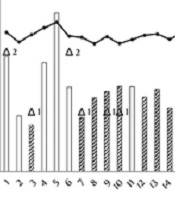
Mean ± SD values for Edwards training load were significantly different between training weeks (P = 0.001; see Figure 1). Training loads mid-season (weeks 38 and 39) were significantly higher compared to training weeks around competition periods (P < 0.05). Relative training load per minutes was also significantly different between training weeks (P = 0.007; see Figure 1). The weeks leading up to competition showed lower relative training loads per minute compared to other weeks (P < 0.05).
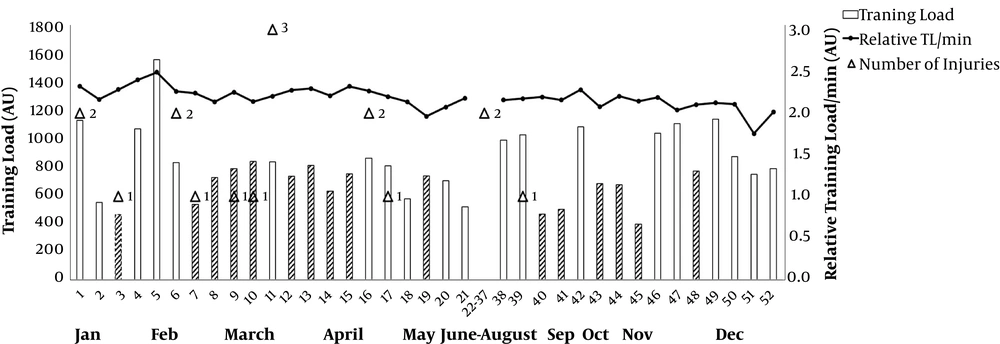
Figure 1.
Weekly training load and average weekly relative training load/min over the course of a year in youth adolescent table tennis athletes. Pattern fills represent the weeks during which the competitive season occurs. * AU, Auxiliary Unit; Relative TL/min, Relative Training Load per minute.
4.4. Poisson Regression
Poisson regression analysis using one-year of training data to analyze and establish the association between monthly injury incidence and estimate the regression coefficients of the amount of training hours, training load, relative training load per minute and total of official matches played. The data has shown to follow normal Poisson distribution (P = 0.404) and indicates that our model is statistically significant (P = 0.0005). For every extra auxiliary unit of relative training load per minute during training, a significant increase (P = 0.014) in injury was present. However, the amount of training time, training load, and total matches played, did not explain injury (P < 0.05)
5. Discussion
The purpose of this study was to report the yearly training load and injury incidence in highly trained youth table tennis athletes and assess if any relationship existed with injury occurrence. Previous studies have investigated the injury incidence in table tennis athletes (youth and senior) without reporting the training load over the course of a competitive season. In addition, to the authors’ knowledge, this represents the first report of typical training loads experienced by adolescent table tennis players over the course of a season or looked at estimating the regression coefficients of variables related to injury.
The results of this study demonstrate that differences in training load are evident during a training season. Training over the course of a year is designed to elicit improvements in strength, power, endurance, skill, technical and tactical readiness of players to maximize performance (11, 37). It has previously been found that an increase in training load generally shows a higher likelihood of injury (18, 22, 23) and illness (23, 24) in adult athletes. Data in young athletes in other sports have suggested that training volume was positively correlated to time to first injury report (38). However, Brooks et al. (11) found that optimizing the recovery process after training and playing helps arbitrate the negative impact of higher training loads resulting in the low injury incidence in athletes. Furthermore, our data are in line with previous work in table tennis presenting relatively low occurrences of injury incidence in adult athletes (8, 10). It is interesting to notice that most of the injuries in this cohort occurred during the 1st quarter of the year (65%), when training loads were significantly higher. Through Poisson regression analysis, we further established that the relative training load per minute partly explained injury occurrence but not overall training loads, the amount of training hours, or the total amount of games played. Prior to competition, the coaching staff places a large focus on table tennis specific agility and specifically on improving or maintaining endurance capacity, which results in increased relative training loads and acute injuries during this time-period. The progressive increase in training load from September to January reflects the typical progression from pre-season to competitions also observed in other sports and the consequent increase in acute injuries has been also observed in young tennis players (17) with a potential link to training load (39). Therefore, individually monitoring relative training load per session and fatigue in players can help with applying more individualized training sessions and reducing injury.
In this preliminary study, the rate of injury with TL was 53% with an injury incidence rate of 8.3 per 1000 hours of table tennis exposure. Data on incidence of injury in middle school sports collected over a 20-year period reported similar rates of TL injuries of 45.1% but exhibited a lower injury incidence rate of 2.7 per 1000 hours of athletic exposure (40). Other investigations found the prevalence of injuries with TL to be higher in elite youth soccer players ranging from 63.4% - 66.5% (41, 42). The discrepancies between studies in the literature may be explained by inconsistencies with respect to possibility of reporting bias (9). In the study conducted by Beachy and Rauh (39) some athletes may have had injuries that were not reported to athletic training staff. Therefore, approximation of the number of injuries could have led to an underestimation of injury incidence rates. Further, the variations in methods utilized to investigate and collect data on injury incidence explains the lack of well-controlled studies conducted, which are available in the literature. The large differences between data collection methods make comparisons difficult. Furthermore, previous studies did not examine the injury characteristics in youth table tennis athletes; therefore, making it difficult to compare our findings with similar cohorts.
Injury incidence in table tennis shows injuries in table tennis to be insignificant when compared to other sport disciplines in youth and senior athletes (8, 9, 13-17). It has been previously established that TL injuries in youth table tennis accounted for 89.1% with an injury incidence rate of 4.3 per 1000 hours of table tennis exposure (9). However, our results found injury incidence rates to be much higher at 8.3 per 1000 hours of table tennis exposure in our cohort. In this study, all training and competition data was recorded using heart rate software records and a registration record, respectively. Only in 3.6% of training sessions did players not wear a HR unit, or was the data deemed unreliable because of Bluetooth connectivity issues data which meant it had to be predicted, according to the type of session performed (technical, tactical, match play, physical conditioning) and previously collected data averages for the type of session. The analysis of training load indicated that overall, the intensity of the training sessions was moderate to low (report time spent in various zones and Edwards TRIMP). This is expected, as previous work reported the cardiovascular demands of youth table tennis competitions to be relatively low (27). Therefore, if technical and match play represents the main bulk of training activities, it is unlikely that table tennis training alone can represent a training stimulus capable of inducing improvements in aerobic capacity.
The prevalence of overuse injuries acquisition in the present study was 56%, and higher than other studies in youth athletes, where estimates of the proportion of injuries because of overuse range from 13.4% to 54% (13-17, 43) and like youth athletes in table tennis (62.2%) in similar cohorts (9). The prevalence of overuse injury rates in table tennis is attributed to the characteristics of the sport, as the frequency and type of overuse injuries in elite youth athletes are related to type of training and conditioning (44). The peculiarity of table tennis as a sport of many ball repetition bouts is an underpinning cause of the higher rate of overuse injuries when compared to other sports (9). Overuse injuries in table tennis are because of the cumulative, repetitive sub maximal micro trauma nature of the sport, where inadequate time for recovery between stress episodes is provided to players (8, 45). Understanding the significance of excessive loads on the human body and how they are distributed, the sports-injury mechanisms and the biochemical responses of the body tissues impacted will help further knowledge surrounding overuse injuries in table tennis (8). While our observations only include cardiovascular demands of each training sessions, they are limited by the absence of more information about workload with reference to changes of directions and accelerations/decelerations which may be the main cause of injury in the lower limbs. For this reason, implementation of wearable technology for training monitoring (46) might allow better quantification of table tennis demands and help explain the occurrence of acute and chronic injuries in this cohort.
The results of our study observing this small cohort of table tennis players indicated a prevalence of growth-related conditions of 24%, consistent with results found in similar study looking at youth table tennis athletes in a similar cohort (9). Although our results highly differ from findings in other studies where incidence of growth-related conditions ranged from 0% to 16.8% (42, 47), it is difficult to discuss the discrepancies between studies, however large differences exist in data collection procedures, maturation status and training environments. As this work was part of day to day support to the table tennis youth team, it is possible that the daily collection of data of this work is more accurate than retrospective cohort studies. Growth and maturation injuries do occur more commonly during sudden periods of growth and constitute additional risk factors for injury occurrence in youth athletes (48). These cause additional concerns that require prevention strategies such as growth monitoring for long-term consequences to help decrease the long-term injury risk. Therefore, it is important to take a closer look at injury inciting factors and prevention plans for youth athletes for injury prevention/decrease (9, 14).
It was established that there were no differences in the amount of injuries in the lower extremities (35%) when compared to the higher extremities (35%), and spinal injuries consisted of the rest (30%). Research which has previously looked at injuries in table tennis found that the highest number of injuries affect the shoulder girdle (8, 10). We also found that shoulder joint injuries were a common injury especially in our junior athletes (15 - 17 years). It is believed that due to the increase in specific table tennis skill demands in training required at this age, the shoulder joints are negatively affected as a result. The short, abrupt and rapid movements required during strokes result in repetitive sub-maximal trauma of the shoulder joint due to lack of recovery and continuous training/competition schedules. Further, the processes of growth and maturation, and the physical and physiological differences between children and adults in table tennis further explains differences found in injury rates, injury severity and affected areas of injury.
Fortunately, in our cohort, 88% of injuries were minor in nature and required less than a week to return to sports activity. Table tennis is an ideal sport for adolescents because of its extremely low injury risk and severity (8) and our data support this view. The severity of injuries in table tennis are considerably lower than other sports (9) and further justify the use of table tennis as a sport for rehabilitation (8). Furthermore, the relatively low cardiovascular demands might suggest its implementation in increasing activity patterns in inactive children. However, from a performance standpoint, it is fundamental to consider additional conditioning activities to improve work capacity and the ability to sustain more intense training and competition situations.
5.1. Conclusions
In conclusion, the results of this preliminary study showed that training loads increase during a season until competitions in a young cohort of table tennis players; with relative training loads being linked to the likelihood of injuries. The content and characteristics of training activities indicate a low to moderate cardiovascular demand, which reflects competitive demands in this age group. Further, the rate of overuse injuries and injuries as a result of growth-related conditions in our adolescent table tennis athletes was higher than previously reported in adolescents in other sports. Considering the peculiarity of youth adolescent athletes, it is important to improve the planning of training activities improving the understanding of the link between training load and injury occurrence. We hope that the results of this preliminary observation can be used as a reference for comparative studies in other and larger cohorts and as an initial input to conduct further studies in this popular sport.