
1. Background
The emergence of severe acute respiratory syndrome coronavirus 2 (SARS-CoV-2) in late 2019 precipitated an unprecedented global health crisis that fundamentally altered healthcare delivery across all medical specialties (1). By mid-2021, when this study was conducted, the pandemic had resulted in more than 170 million confirmed cases and 3.5 million deaths worldwide, according to World Health Organization data. The impact extended disproportionately to vulnerable populations, including pregnant women, who have increased susceptibility to respiratory infections due to pregnancy-induced immunological and physiological changes (2). Pregnant women with COVID-19 experience elevated risks of intensive care unit admission, mechanical ventilation, and adverse perinatal outcomes, including preterm birth (16% - 22%), low birth weight, and neonatal intensive care unit admissions, while vertical transmission remains rare at less than 5% (3). In Iran, studies have documented increased postpartum complications among infected pregnant women, attributed to fears of intrapartum transmission and resource reallocation during the crisis response (4).
Midwives, as frontline maternal healthcare providers, bore substantial psychological and occupational burdens, including increased workloads, personal protective equipment (PPE)-related physical strain, and psychosocial stress during the pandemic. Their responsibilities encompassed antenatal surveillance, intrapartum support, and postpartum monitoring, all of which were substantially affected by infection control measures, PPE shortages, and evolving policy frameworks (5). The Knowledge, Attitude, and Practice (KAP) framework has proven valuable for assessing healthcare worker preparedness, with global evidence indicating moderate knowledge levels regarding SARS-CoV-2 transmission in pregnancy, generally positive attitudes toward vaccination and protective measures, strong performance in basic hygiene, but weaker adoption of advanced protocols such as telemedicine (6).
International studies examining midwives' KAP during the pandemic have reported knowledge scores ranging from 55% to 65% of the maximum across multiple countries, with consistent findings that specialized training and employment stability are key correlates of higher knowledge (7, 8). However, these studies have predominantly focused on general COVID-19 care rather than specialized intrapartum and postpartum management, and few have used person-centered analytical approaches such as cluster analysis to identify distinct KAP profiles among providers.
In the Iranian context, a national study assessing COVID-19 KAP among pregnant and postpartum women found moderate knowledge levels and good preventive practices (9). However, this study focused on patients rather than providers, and no comprehensive Iranian study has systematically examined midwives' KAP in relation to individual characteristics such as employment status, educational level, and specialized training. This gap is particularly pronounced in the postpartum care context, where COVID-19 poses unique risks to lactation management and maternal mental health that require specialized provider competencies. Existing studies have not adequately examined how midwives' KAP addresses these unique postpartum challenges, leaving an evidence gap for designing targeted educational interventions.
2. Objectives
This study addresses these gaps by comprehensively assessing KAP among midwifery personnel in Ahvaz, Iran, and examining associations with sociodemographic, professional, and pandemic-related factors. The following research questions guided the investigation: (1) What are the levels of knowledge, attitudes, and practices regarding intrapartum and postpartum care for mothers with COVID-19 among midwifery personnel? (2) What sociodemographic and professional factors are associated with KAP levels? (3) Do distinct KAP profiles exist among midwifery personnel that could inform differentiated interventions? We hypothesized that (a) employment status and specialized training would be significantly associated with higher knowledge scores, consistent with the international literature; (b) educational level would be the strongest predictor of attitudes and practices, given its established role in shaping professional competencies; and (c) attitudes would be more strongly associated with practices than knowledge alone, consistent with health behavior theories positing attitudes as proximal determinants of behavior. The findings will inform targeted interventions to enhance midwifery preparedness and resilience during future public health emergencies.
3. Methods
3.1. Study Design and Setting
This descriptive-analytical cross-sectional study was conducted between March and June 2021 (spanning the Persian calendar months of Esfand 1399 to Khordad 1400) among midwifery personnel employed at four COVID-19-designated hospitals (Imam Khomeini, Razi, Taleghani, and Sina) affiliated with Ahvaz Jundishapur University of Medical Sciences, Iran, a region with a high pandemic burden. The study was designed in accordance with the Strengthening the Reporting of Observational Studies in Epidemiology (STROBE) guidelines and received ethical approval from the institutional review board of Ahvaz Jundishapur University of Medical Sciences (IR.SSU.REC.1403.006). Electronic informed consent was obtained from all participants via a written online form with a mandatory checkbox before data collection.
3.2. Participants and Sampling Strategy
The target population comprised all licensed midwives with a minimum of one year of clinical experience in intrapartum and postpartum care (estimated population ≈250 individuals). The inclusion criterion was active engagement in direct patient care. The exclusion criteria were administrative roles without direct patient contact and incomplete questionnaire responses. Purposive sampling was used to ensure representation across hospitals and employment types; this non-probability sampling approach, and its limitations regarding generalizability and inferential statistics, are explicitly acknowledged (see Study Limitations). Of the 250 invited midwives, 162 completed the questionnaire (response rate = 64.8%). A formal non-response analysis could not be conducted because the survey was anonymous; however, available demographic data from hospital records suggested no substantial differences between responders and the target population in terms of age and employment distribution. Potential non-response bias is acknowledged as a limitation. The sample size was calculated using G*Power software version 3.1 to detect Pearson correlations of r ≥ 0.20 with 80% power and α = 0.05 (two-tailed), yielding a minimum required sample size of 138 participants; the final sample of 162 provided enhanced statistical robustness.
3.3. Data Collection Instrument
A self-administered, researcher-developed questionnaire was distributed online via a secure, encrypted platform (Porsline, Iran) to minimize infection risk. The questionnaire comprised two sections:
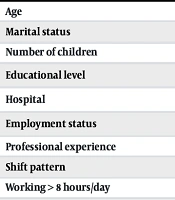
Section A: Demographic and Professional Variables (presented in Table 1), including age, marital status, number of children, educational level, hospital of employment, employment status, shift pattern, working hours, and COVID-19-related exposure history.
Table 1.
Demographic and Professional Characteristics of Study Participants (N = 162) a
| Variables | Values |
|---|---|
| Age (y) | 162 (100); 31.43 ± 6.07 |
| < 25 | 22 (13.6) |
| 25 - 29 | 51 (31.5) |
| 30 - 34 | 48 (29.6) |
| 35 - 39 | 23 (14.2) |
| 40 - 44 | 10 (6.2) |
| ≥ 45 | 8 (4.9) |
| Range: 23 - 52 | |
| Number of Children | 162 (100); 0.70 ± 0.92 |
| None | 95 (58.6) |
| 1 | 38 (23.5) |
| 2 | 25 (15.4) |
| 3 | 3 (1.9) |
| 4 | 1 (0.6) |
| Professional experience (y) | 162 (100); 6.81 ± 5.30 |
| < 5 | 78 (48.1) |
| 5 - 10 | 55 (34.0) |
| 11 - 15 | 20 (12.3) |
| > 15 | 9 (5.6) |
| Marital status | |
| Single | 61 (37.7) |
| Married | 101 (62.3) |
| Educational level | |
| Associate | 2 (1.2) |
| Bachelor | 131 (80.9) |
| Master's or higher | 29 (17.9) |
| Hospital | |
| Razi | 55 (34.0) |
| Taleghani | 27 (16.7) |
| Imam Khomeini | 57 (35.2) |
| Sina | 23 (14.1) |
| Employment status | |
| Permanent | 72 (44.4) |
| Contracted | 25 (15.4) |
| Temporary | 11 (6.8) |
| Corporate | 13 (8.0) |
| Project-based | 41 (25.4) |
| Shift pattern | |
| Fixed | 1 (0.6) |
| Rotating | 161 (99.4) |
| Working > 8 hours/day | |
| Yes | 81 (50.0) |
| No | 81 (50.0) |
a Values are expressed as No. (%) or mean ± SD. Detailed 95% confidence intervals for all proportions are provided in Table S3 in the Supplementary File.
3.4. Section B: KAP Assessment:
Knowledge domain (21 items): True/False/Don't know format; scores ranging 0 - 21, with correct responses assigned 1 point.
Attitude domain (28 items): 5-point Likert scale anchored from 0 (strongly disagree) to 4 (strongly agree); raw summed scores ranged from 0 - 112 and were divided by 4 to produce reported scores on a 0 - 28 scale for interpretability. This transformation ensured that reported means and percentages could be meaningfully compared across domains.
Practice domain (40 items): 5-point frequency scale anchored from 0 (never) to 4 (always); raw summed scores ranged from 0 - 160 and were divided by 4 to produce reported scores on a 0 - 40 scale for interpretability. The divisor of 4 was applied consistently across both domains to maintain proportional scaling.
Content validity was established by a panel of experts (n = 10; CVR > 0.78, CVI = 0.89). Face validity was assessed through pilot testing (n = 20). Reliability was evaluated using Cronbach's alpha (knowledge 0.82, attitudes 0.88, practices 0.91) and test-retest reliability ICC > 0.85 (n = 30, 2-week interval). KAP levels were classified as poor (< 50%), moderate (50% - 75%), or good (> 75%) of maximum scores, consistent with conventional thresholds commonly used in healthcare worker KAP studies during pandemics (10), although these widely used cut-offs are not universally standardized.
Participants were asked to select their single primary or most important source of COVID-19 information from the listed options. This approach, while common in KAP research, enforces mutual exclusivity and may not fully capture the multi-source nature of information-seeking behavior; this limitation is acknowledged in the Discussion.
3.5. Statistical Analysis
Analyses were performed using SPSS version 26 and R version 4.0.3 (R Foundation for Statistical Computing). Data normality was assessed using Shapiro-Wilk tests, with P values < 0.05 indicating non-normal distributions. Descriptive statistics included means (standard deviations), medians (interquartile ranges), frequencies (percentages), and 95% Clopper-Pearson exact confidence intervals for proportions. Independent t-tests and Mann-Whitney U tests were used for binary variables, whereas one-way ANOVA and Kruskal-Wallis tests with post hoc Tukey or Dunn corrections were applied for categorical variables with more than two groups. Pearson and Spearman correlations were used to examine relationships between continuous variables. Effect sizes were reported as Cohen's d for t-tests, partial eta-squared (η2p) for ANOVA, and Pearson/Spearman correlation coefficients.
Stepwise forward selection multivariable linear regression was used to examine interrelationships among KAP domains, with knowledge and attitude entered as candidate predictors of practice scores. This model was specifically designed to test the hypothesis that attitudes would be more strongly associated with practices than knowledge alone, rather than to identify independent sociodemographic predictors. A supplementary regression model including all significant sociodemographic predictors from bivariate analyses is reported in the Supplementary Materials. Collinearity diagnostics included the Variance Inflation Factor (VIF < 2) and the Durbin-Watson statistic (≈2). Model assumptions were verified through residual analyses (normality, homoscedasticity) and the assessment of influential points using Cook's distance (< 1). Standardized and unstandardized coefficients were reported with 95% confidence intervals.
Hierarchical cluster analysis using Ward's method with squared Euclidean distance was performed as a person-centered analytical complement to the variable-centered regression approach, enabling the identification of distinct KAP profiles among midwifery personnel that could inform differentiated interventions. This method was selected because it identifies naturally occurring subgroups based on patterns across all three KAP domains simultaneously, providing information beyond that obtainable from variable-centered analyses. Dendrograms and scree plots informed the selection of the optimal number of clusters. The agglomeration schedule confirmed the three-cluster solution, and average silhouette coefficients were calculated to assess cluster stability. The dendrogram is provided as a supplementary Figure in the Supplementary File. Cluster profiles were characterized using descriptive statistics and ANOVA comparisons. Cross-tabulations of cluster membership with key demographic and professional variables (employment status, educational level, training status) were examined using chi-square tests to substantiate cluster characterizations. Multiple imputation (chained equations, 20 imputations) was used to address minimal missing data (< 5%) in sensitivity analyses, and subgroup analyses by hospital, employment status, and education level confirmed the robustness of the findings. Statistical significance was set at two-tailed P < 0.05.
4. Results
4.1. Participant Characteristics
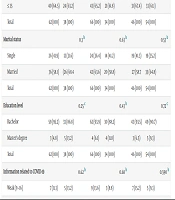
A total of 162 midwifery personnel from four COVID-19-designated hospitals in Ahvaz, Iran, completed the survey. Participant characteristics are summarized in Table 1. The mean age was 31.43 years (SD = 6.07; range: 23 - 52 years), and most participants (82.1%) had less than 10 years of professional experience. Age categories were defined based on standard groupings used in Iranian health workforce research. Professional experience categories were defined as < 5, 5 - 10, 11 - 15, and > 15 years, consistent with established categories in midwifery workforce studies. Over half of participants (62.3%) were married, and 80.9% held a bachelor's degree. Participants were distributed across Imam Khomeini (35.2%), Razi (34.0%), Taleghani (16.7%), and Sina (14.1%) hospitals. Employment status included permanent (44.4%), contracted (15.4%), project-based (25.4%), corporate (8.0%), and temporary (6.8%). Notably, 99.4% worked rotating shifts.
4.2. COVID-19 Exposure and Related Characteristics
Table 2 presents COVID-19-related characteristics. Most participants (75.3%) reported a history of COVID-19 infection, and 6.8% required hospitalization. A family history of infection was reported by 86.4% of participants. Chronic underlying diseases were reported by 16.7%. Notably, 93.2% had received PPE training, and 84.6% had received specialized training in caring for mothers with COVID-19. The World Health Organization (53.1%) and the Ministry of Health (29.6%) were the predominant primary information sources. Vaccination coverage was nearly universal (99.4%). Given this near-uniform distribution, COVID-19 vaccination status was excluded from all regression models because it could not serve as a meaningful predictor due to negligible variance; this limitation is acknowledged in the Discussion.
Table 2.
COVID-19 Exposure and Related Characteristics a
| Variables | No. (%) |
|---|---|
| History of COVID-19 infection | |
| Yes | 122 (75.3) |
| No | 40 (24.7) |
| Hospitalization for COVID-19 | |
| Yes | 11 (6.8) |
| No | 151 (93.2) |
| Chronic underlying disease | |
| Yes | 27 (16.7) |
| No | 135 (83.3) |
| Family COVID-19 infection | |
| Yes | 140 (86.4) |
| No | 22 (13.6) |
| Received PPE training | |
| Yes | 151 (93.2) |
| No | 11 (6.8) |
| Received maternal care training | |
| Yes | 137 (84.6) |
| No | 25 (15.4) |
| Primary information source | |
| WHO | 86 (53.1) |
| Ministry of Health | 48 (29.6) |
| News media | 17 (10.5) |
| Social media | 11 (6.8) |
| Complete COVID-19 vaccination | |
| Yes | 161 (99.4) |
| No | 1 (0.6) |
a Detailed confidence intervals are provided in Table S3 in the Supplementary File. Participants selected their single primary information source.
4.3. KAP Scores and Classification
Table 3 presents KAP scores and classification levels. The mean knowledge score was 11.92 (SD = 3.83; 56.8% of maximum), with 56.8% of participants classified as having moderate knowledge, 30.2% as poor, and only 13.0% as good. A chi-square goodness-of-fit test confirmed that these category proportions differed significantly from a uniform distribution (χ2 = 46.88, df = 2, P < 0.001), with significantly fewer participants in the "good" category than expected (standardized residual = -3.1). The mean attitude score was 19.39 (SD = 3.98; 69.3% of maximum), with 67.9% demonstrating moderate attitudes, 27.2% good, and 4.9% poor. Item-level analysis indicated that the lowest attitude scores were for items related to telemedicine adoption (mean = 0.47, SD = 0.33 on the 0 - 4 scale), with 72.8% of participants expressing some degree of disagreement or strong disagreement with incorporating telemedicine into routine postpartum follow-up. The mean practice score was 33.34 (SD = 5.72; 83.4% of maximum), with 73.5% showing good practices, 24.1% moderate, and only 2.5% poor.
Table 3.
Knowledge, Attitude, and Practice Scores and Classification Levels (N = 162) a
| Variables | Values |
|---|---|
| Knowledge (Max = 21) | 162 (100); 11.92 ± 3.83 |
| Poor | 49 (30.2) |
| Moderate | 92 (56.8) |
| Good | 21 (13.0) |
| Attitude (Max = 28) | 162 (100); 19.39 ± 3.98 |
| Poor | 8 (4.9) |
| Moderate | 110 (67.9) |
| Good | 44 (27.2) |
| Practice (Max = 40) | 162 (100); 33.34 ± 5.72 |
| Poor | 4 (2.5) |
| Moderate | 39 (24.1) |
| Good | 119 (73.5) |
a Values are expressed as No. (%) or mean ± SD. Detailed confidence intervals are provided in Table S3 in the Supplementary File. KAP levels classified as poor (< 50%), moderate (50% - 75%), or good (> 75%) of maximum scores.
4.4. Hierarchical Cluster Analysis: KAP Profiles
Hierarchical cluster analysis using Ward's method with squared Euclidean distance identified three distinct KAP profiles based on the dendrogram, scree plot, and agglomeration schedule, which showed a marked increase in the fusion coefficient between the three-cluster and two-cluster solutions (Δ = 42.3), supporting the three-cluster solution. The average silhouette coefficient for the three-cluster solution was 0.31, indicating fair cluster separation. Table 4 presents the cluster profiles.
Table 4.
Hierarchical Cluster Analysis of KAP Profiles a
| Cluster | Label | Proportion (%) | Knowledge | Attitude | Practice | Distinctive Characteristics |
|---|---|---|---|---|---|---|
| 1 | High Performers with Moderate Knowledge | 58.6 | 13.04 ± 2.91 | 21.13 ± 2.81 | 36.14 ± 3.48 | Strong practice adherence; above-average knowledge; positive attitudes; significantly higher proportion of permanent staff (χ2 = 12.47, P = 0.002) and specialized training (χ2 = 8.91, P = 0.012) |
| 2 | Knowledgeable but Hesitant | 22.8 | 12.78 ± 2.54 | 16.58 ± 2.63 | 32.94 ± 4.29 | Moderate knowledge; notably lower attitudes; good practice but hesitant; significantly higher proportion of project-based staff (χ2 = 9.34, P = 0.009) |
| 3 | Low Overall Engagement | 18.5 | 7.29 ± 3.17 | 17.13 ± 4.27 | 27.56 ± 4.86 | Low knowledge; moderate attitudes; poor practices; significantly higher proportion of staff with < 5 years experience (χ2 = 7.82, P = 0.020) and those without specialized training (χ2 = 11.23, P = 0.004) |
a Values are expressed as mean ± SD unless otherwise indicated.
ANOVA comparisons confirmed significant differences among clusters across all KAP domains (knowledge: F(2, 159) = 56.89, η2p = 0.42, P < 0.001; attitudes: F(2, 159) = 28.34, η2p = 0.26, P < 0.001; practices: F(2, 159) = 38.76, η2p = 0.33, P < 0.001). Post hoc Tukey tests showed that Cluster 1 performed significantly better than Clusters 2 and 3 on all measures, whereas Cluster 2 had significantly higher knowledge than Cluster 3 (mean difference = 5.49, P < 0.001), with no significant difference in attitudes between Clusters 2 and 3 (mean difference = 0.55, P = 0.82). The dendrogram is provided as a supplementary figure in the Supplementary File.
4.5. Associations Between KAP and Participant Characteristics
Table 5 presents the bivariate associations between KAP scores and participant characteristics, including effect sizes.
Table 5.
Bivariate Associations Between Participant Characteristics and KAP Scores a
| Variables | Knowledge P-Value (Effect Size) | Attitude P-Value (Effect Size) | Practice P-Value (Effect Size) |
|---|---|---|---|
| Age | 0.317 (r = 0.08) | 0.014 (r = 0.19) | 0.809 (r = 0.02) |
| Marital status | 0.907 (d = 0.02) | 0.691 (d = 0.08) | 0.858 (d = 0.03) |
| Number of children | 0.596 (r = -0.04) | 0.036 (r = -0.17) | 0.037 (r = -0.16) |
| Educational level | 0.350 (η2p = 0.01) | < 0.001 (η2p = 0.10) | < 0.001 (η2p = 0.10) |
| Hospital | 0.195 (η2p = 0.03) | 0.176 (η2p = 0.03) | 0.423 (η2p = 0.02) |
| Employment status | 0.007 (η2p = 0.09) | 0.201 (η2p = 0.03) | 0.177 (η2p = 0.03) |
| Professional experience | 0.808 (r = 0.02) | 0.139 (r = 0.12) | 0.674 (r = 0.03) |
| Shift pattern | 0.318 (d = 0.11) | 0.792 (d = 0.06) | 0.836 (d = 0.04) |
| Working > 8 hours/day | 0.874 (d = 0.03) | 0.242 (d = 0.18) | 0.581 (d = 0.09) |
| History of COVID-19 infection | 0.939 (d = 0.02) | 0.311 (d = 0.17) | 0.357 (d = 0.15) |
| Hospitalization for COVID-19 | 0.047 (d = 0.42) | 0.736 (d = 0.11) | 0.321 (d = 0.14) |
| Chronic underlying disease | 0.146 (d = 0.30) | 0.250 (d = 0.23) | 0.172 (d = 0.27) |
| Family COVID-19 infection | 0.036 (d = 0.49) | 0.872 (d = 0.04) | 0.088 (d = 0.34) |
| PPE training | 0.011 (d = 0.81) | 0.804 (d = 0.08) | 0.184 (d = 0.25) |
| Specialized maternal care training | 0.007 (d = 0.78) | 0.561 (d = 0.12) | 0.499 (d = 0.14) |
| Information source: WHO | 0.835 (d = 0.04) | 0.207 (d = 0.20) | 0.484 (d = 0.11) |
| Information source: Government media | 0.683 (d = 0.07) | 0.017 (d = 0.44) | 0.201 (d = 0.21) |
| Information source: News media | 0.655 (d = 0.11) | 0.861 (d = 0.05) | 0.804 (d = 0.08) |
| Information source: Social media | 0.764 (d = 0.09) | 0.535 (d = 0.15) | 0.416 (d = 0.19) |
a Effect sizes: d = Cohen's d, r = Pearson/Spearman correlation coefficient, η2p = partial eta-squared. COVID-19 vaccination was excluded from regression analyses due to near-uniform distribution (99.4% vaccinated).
Knowledge showed significant associations with employment status (ANOVA F(4, 157) = 3.69, η2p = 0.09, P = 0.007), with permanent staff achieving the highest scores (13.18 ± 3.01) compared with project-based staff (10.34 ± 3.78, Cohen's d = 0.83). Specialized maternal care training was associated with higher knowledge (12.31 ± 3.47 vs. 9.44 ± 3.90; Cohen's d = 0.78, P = 0.007). In addition, a family COVID-19 infection history (Cohen's d = 0.49, P = 0.036) and PPE training (Cohen's d = 0.81, P = 0.011) were significantly and positively associated with knowledge.
Attitudes showed the strongest association with educational level (F(2, 159) = 8.76, η2p = 0.10, P < 0.001), with Master's-educated midwives scoring significantly higher (22.17 ± 3.42) than bachelor's degree holders (19.20 ± 3.89, Cohen's d = 0.81). Age (r = 0.19, P = 0.014) and number of children (r = -0.17, P = 0.036) were also significantly associated with attitudes, although effect sizes were small. Government media as an information source showed a significant positive association (Cohen's d = 0.44, P = 0.017).
Practices were significantly associated with educational level (F(2, 159) = 9.12, η2p = 0.10, P < 0.001). The number of children showed a weak negative correlation (r = -0.16, P = 0.037). No significant associations were observed with age, professional experience, shift patterns, personal COVID-19 history, vaccination status, or information sources.
4.6. Multivariable Linear Regression Analysis
A stepwise forward selection multivariable linear regression model examining interrelationships among KAP domains was constructed, with knowledge and attitude scores entered as candidate predictors of practice scores. Table 6 presents the final model.
Table 6.
Multivariable Linear Regression Examining Associations Among KAP Domains (N = 162)
| Predictors | Unstandardized β (SE) | Standardized β | t | P value | VIF | 95% CI for β |
|---|---|---|---|---|---|---|
| Constant | 17.94 (2.32) | - | 7.74 | < 0.001 | - | 13.36 - 22.52 |
| Knowledge | 0.17 (0.10) | 0.12 | 1.68 | 0.095 | 1.05 | -0.03 - 0.37 |
| Attitude | 0.69 (0.10) | 0.48 | 6.93 | < 0.001 | 1.05 | 0.49 - 0.89 |
The model was statistically significant (F(2, 159) = 25.41, P < 0.001) and explained 23.2% of the variance in practice scores (adjusted R2 = 0.232). Attitude emerged as the strongest predictor of practices (β = 0.48, P < 0.001), whereas knowledge was not a significant predictor (β = 0.12, P = 0.095). The low R2 (23.2%) indicates that 76.8% of the variance in practice scores remains unexplained by KAP variables alone, suggesting that other unmeasured factors, such as institutional protocols, organizational culture, resource availability, and peer influence, likely play substantial roles in determining practice behaviors. Collinearity diagnostics were satisfactory (VIF = 1.05 for both predictors). Residual analysis confirmed model assumptions (normality: Shapiro-Wilk P = 0.612; homoscedasticity: Breusch-Pagan P = 0.287). A supplementary regression model including sociodemographic predictors is available in the Supplementary Materials in the Supplementary File.
4.7. Sensitivity Analyses
Multiple imputation for minimal missing data (< 5%) yielded consistent results. Specifically, the mean knowledge score from pooled estimates across 20 imputed datasets was 11.89 (SD = 3.79), compared with 11.92 (SD = 3.83) in the complete-case analysis (mean difference = 0.03, 95% CI: -0.12 to 0.18). Pooled estimates for attitude and practice similarly showed negligible differences (attitude: 19.41 vs. 19.39; practice: 33.31 vs. 33.34). The regression coefficient for attitude as a predictor of practices remained significant in pooled estimates (β = 0.47, 95% CI: 0.38 - 0.56, P < 0.001). The proportion of missing data per variable did not exceed 3.5% for any individual item.
Subgroup analyses confirmed the robustness of the findings. When the regression model was re-run within each hospital subgroup, attitude remained a significant predictor of practices across all sites (Razi: β = 0.44, P = 0.001; Taleghani: β = 0.51, P = 0.008; Imam Khomeini: β = 0.49, P < 0.001; Sina: β = 0.46, P = 0.032). Similarly, the attitude-practice association was robust across employment categories, with no significant employment status × attitude interaction (P = 0.341). Stratified regression coefficients and interaction P values are presented in Table S1 in the Supplementary File. Educational level moderated the knowledge-attitude relationship, with the association being stronger among Master's-educated midwives than among bachelor's degree holders, although this difference did not reach statistical significance (P = 0.089 for interaction).
5. Discussion
The findings of this comprehensive study reveal a nuanced pattern of midwifery preparedness during the COVID-19 pandemic, characterized by moderate knowledge and attitudes alongside good practices regarding intrapartum and postpartum care for mothers with COVID-19. The mean knowledge score of 11.92 out of 21 (56.8%) aligns with international studies documenting moderate knowledge levels (55% - 65%) among midwives across multiple countries, attributed to an emphasis on general protocols but insufficient focus on specialized maternal care nuances (11). The significant association between knowledge and employment status (P = 0.007), with permanent staff demonstrating substantially higher scores than project-based personnel, underscores the vulnerability of non-permanent healthcare workers during public health emergencies and aligns with findings that employment stability facilitates continuous professional development (12). Specialized training emerged as a strong determinant of knowledge (P = 0.007); however, knowledge remained moderate even among trained participants, indicating that training content or delivery may require optimization through practical skills laboratories and regular refresher courses rather than reliance on initial training alone, particularly given the rapid evolution of clinical guidelines during the study period (13). Notably, neither age nor professional experience correlated with knowledge, challenging assumptions that experience automatically confers expertise and emphasizing the need for periodic knowledge refreshers rather than reliance on experiential learning (14). The absence of age and experience effects likely reflects the rapidly evolving nature of COVID-19 knowledge, whereby recent training becomes more relevant than accumulated experience, consistent with studies showing that knowledge during health crises is more closely tied to continuing education than years in practice.
The mean attitude score reflected moderate attitudes (69.3% of maximum), with 67.9% classified as moderate, indicating generally positive orientations toward quarantine and PPE. However, item-level analysis revealed notable hesitancy toward telemedicine, with 72.8% of participants expressing some degree of reluctance to incorporate telemedicine into routine practice. This finding is consistent with cultural preferences for face-to-face care in Iran and similar settings and represents a significant barrier to healthcare modernization (15). Educational level emerged as the strongest predictor of attitudes (P < 0.001), with advanced training fostering a more comprehensive understanding of the public health rationale and enhancing receptivity to novel approaches. Age (P = 0.014) and number of children (P = 0.036) also significantly influenced attitudes: older participants demonstrated more positive attitudes, whereas those with more children showed more negative orientations, potentially reflecting heightened anxiety about family transmission and the dual burden of professional and parental responsibilities during lockdown conditions (16). The positive association between government media as an information source and favorable attitudes (P = 0.017) underscores the importance of official communication channels in shaping healthcare worker attitudes and the need for consistent, accurate, and accessible communication during health crises (17). Persistent hesitancy toward telemedicine, despite its demonstrated effectiveness during pandemic conditions, suggests that cultural barriers may require targeted interventions that address both informational and psychological factors, including demonstrations of telemedicine effectiveness, peer testimonials, and gradual integration into routine practice.
The good practice levels (83.4% of maximum), with 73.5% classified as good, likely reflect the strong educational infrastructure and near-universal vaccination coverage (99.4%) in the Iranian health system. Educational level was the only significant sociodemographic predictor (P < 0.001), and the modest negative correlation with number of children (r = -0.16, P = 0.037) suggests that caregiving responsibilities may moderately impede adherence to professional practices (18). No significant associations were found with age, professional experience, shift patterns, personal COVID-19 history, or vaccination status, suggesting that institutional protocols and professional norms effectively standardize practices across demographic and professional boundaries, a resilience feature that merits reinforcement through continuing education and quality improvement initiatives (19). Good practice scores despite moderate knowledge suggest that institutional protocols may compensate for knowledge gaps; however, this creates a vulnerable situation in which adherence may decline if protocols change rapidly without corresponding knowledge updates, as occurred during the evolution of pandemic guidelines (20). The three distinct KAP profiles identified through cluster analysis reveal important heterogeneity in midwifery preparedness. The "knowledgeable but hesitant" cluster (22.8%) is particularly concerning because knowledge alone does not translate into confident practice, likely reflecting psychological barriers, including anxiety about infection risk and family transmission, that require interventions focused on psychological support and confidence-building rather than knowledge enhancement alone (21). The "low overall engagement" cluster (18.5%) comprised predominantly less experienced, project-based staff with limited training, highlighting a vulnerable group requiring urgent and intensive intervention and underscoring the need for inclusive training programs that reach all categories of healthcare workers regardless of employment status (22).
In the regression model examining interrelationships among KAP domains, attitudes emerged as the strongest predictor of practices (β = 0.48, P < 0.001), whereas knowledge did not reach significance (β = 0.12, P = 0.095). Although this pattern is consistent with health behavior theories positing attitudes as proximal determinants of behavior, this remains an association rather than proof of causation given the cross-sectional design. The observed pattern, whereby knowledge showed significant bivariate associations with practices but did not reach significance in the multivariable model, suggests that attitudes may serve as an intermediary between knowledge and behavior, a hypothesis that should be tested in future research using formal mediation analysis (23). The non-significance of knowledge in the direct model, despite significant bivariate associations, further suggests that the effect of knowledge on practices may be mediated by attitudes, reinforcing the theoretical framework in which attitudes bridge cognitive understanding and behavioral implementation (24). The modest proportion of variance explained (23.2%) indicates that additional factors, including organizational culture, resource availability, psychological factors, and social support, influence practices beyond KAP alone, necessitating comprehensive approaches to workforce development that address both individual and systemic factors (25). This substantial unexplained variance (76.8%) is a key finding, suggesting that institutional-level factors such as protocol availability, supervision quality, and workplace culture may be more proximal determinants of clinical practice than individual KAP characteristics. The finding that educational level moderated the knowledge-attitude relationship, although not statistically significant, suggests that advanced education may enhance the translation of knowledge into positive attitudes, providing further support for investments in higher education for midwifery personnel (26).
5.1. Implications
These findings have several important implications for clinical practice and policy. First, structured educational programs extending beyond initial training should be developed specifically for project-based and less experienced staff, incorporating regular refresher courses and practical skills laboratories that accommodate rotating shift schedules. The moderate knowledge levels even among trained participants (mean 12.31/21) indicate that training content requires optimization through active learning methods rather than didactic approaches alone. Second, attitude-focused approaches integrating psychological and behavioral components are essential for hesitant personnel, including simulation training, structured debriefing sessions, peer support networks, and mentorship programs that address the psychological barriers underlying hesitancy (17). The cluster analysis findings directly support differentiated interventions: Cluster 2 ("knowledgeable but hesitant," 22.8%) would likely benefit most from confidence-building interventions, whereas Cluster 3 ("low overall engagement," 18.5%) requires comprehensive, intensive training programs. Third, inclusive workforce development that ensures consistent training and support for all midwives, regardless of employment status, requires systemic changes to address structural inequities that perpetuate knowledge and attitude gaps, particularly for the 25.4% of staff in project-based positions who demonstrated the lowest engagement (18). Fourth, strengthening official communication channels to reach those relying on social media rather than official sources is crucial; health authorities should ensure that evidence-based guidelines reach midwives through multiple, accessible channels, with particular attention to younger staff who may prefer digital platforms (13). Fifth, the telemedicine hesitancy identified in item-level attitude analysis indicates the need for gradual telemedicine integration programs, including demonstrations of effectiveness, peer testimonials, and supervised practice opportunities. Finally, investing in sustainable capacity for crisis response, including telemedicine infrastructure, flexible workforce deployment models, and integrated mental health support for healthcare workers, will build long-term resilience (5).
5.2. Study Limitations
The limitations of this study include the cross-sectional design, which precludes causal inference; purposive sampling, which may limit generalizability beyond the four participating hospitals; reliance on self-report, which may introduce social desirability bias, particularly in the practice domain, although participant anonymity likely mitigated this risk; and the conduct of the study during a specific pandemic phase (27), which may not fully reflect subsequent developments, including new variants, evolving guidelines, and post-pandemic normalization. The exclusive focus on midwifery personnel limits applicability to other healthcare professions, and the lack of objective measures of practice adherence warrants caution in interpreting self-reported practices. Future research should employ longitudinal designs to examine KAP trajectories over time; incorporate objective measures of practice adherence through direct observation or electronic health record review; evaluate the effectiveness of targeted interventions in diverse contexts through randomized controlled trials; and use qualitative approaches to provide a richer understanding of attitudinal and contextual factors shaping midwifery KAP during crises. Comparative studies across different healthcare settings and countries would inform context-specific strategies, and investigations examining the long-term impact of pandemic experiences on midwifery practice and professional identity would provide valuable insights for workforce development.
5.3. Conclusions
The cluster-based KAP profiles represent a novel contribution to the literature, providing a person-centered framework for targeting interventions that has been absent from previous variable-centered studies. Employment status and specialized training significantly influenced knowledge, educational level strongly predicted both attitudes and practices, and attitudes emerged as the strongest predictor of practices among the KAP domains examined; however, the model explained only 23.2% of the variance, indicating that unmeasured factors likely play substantial roles in determining practice behaviors. The findings suggest that interventions addressing attitudinal barriers alongside knowledge gaps may be more effective than knowledge-focused approaches alone, particularly among project-based, less experienced, and Cluster 3 personnel. Based on the study findings, we recommend strengthening official communication channels to reach midwives who rely on non-official information sources, developing telemedicine familiarization programs to address the hesitancy documented in attitude item analysis, and establishing systematic training programs that reach all categories of healthcare workers regardless of employment status. By targeting the specific KAP profiles identified in this study and addressing the identified gaps, health systems can better prepare midwifery personnel for future public health emergencies, ultimately improving maternal and neonatal outcomes during crises and building sustainable capacity for healthcare delivery under challenging circumstances.