
1. Background
In late December 2019, the COVID-19 pandemic began in Wuhan, Hubei province, and quickly spread throughout various regions of China (1). On January 21, 2020, Qingdao reported its first official case of COVID-19. By January 30, 2020, the virus had been confirmed in 18 additional countries and all 31 provinces of China (2). The WHO subsequently declared COVID-19 a global public health emergency. Disease outbreaks not only affect those who are ill but also have a significant impact on the mental health of the general population. While the physical damage from major public health crises can often be addressed relatively quickly, the psychological effects may persist for a much longer time (3).
Pregnant women are typically more vulnerable to respiratory infections, such as SARS-CoV and MERS-CoV (4). Those who are more susceptible to these conditions may perceive a higher risk of contracting the disease. This heightened risk perception during pregnancy can lead to increased anxiety levels (5).
According to previous research, anxiety is a common negative emotion experienced during pregnancy, especially in the third trimester (6). However, the effect of COVID-19 risk perception on maternal anxiety levels during the pandemic remains unclear. As a result, pregnant women and their fetuses are considered a high-risk group due to the presence of infectious diseases (7). The impact of COVID-19 on the neurological and psychological well-being of pregnant patients and their offspring, beyond its direct and indirect effects on physical health, remains uncertain. SARS-CoV-2 can invade the nervous system and induce an excessive immune response known as a cytokine storm, leading to increased inflammation and potential effects on the central nervous system. The concurrent development of an acute immune response and respiratory dysfunction can have long-lasting effects on cognitive and neuropsychological performance (8).
Women's immunological and physiological changes during pregnancy can increase their susceptibility to mental illness. Consequently, the pathophysiology of SARS-CoV-2 infection, combined with fears and uncertainties about its short- and long-term effects on both mothers and infants, exacerbates psychological distress and mood disorders. Multiple SARS-CoV-2 infections during pregnancy may have enduring effects on maternal mental health and the neurobehavioral development of the baby (9). Additionally, infants who are separated from their mothers early on, whether due to mandated or voluntary quarantine, may face negative impacts on their nutrition and early development (10).
Most studies on COVID-19 have concentrated on its physical effects and the potential for vertical transmission, with limited information available on the impact of the pandemic on the mental health of pregnant women. A study by Ng et al. included 980 pregnant women who were at least 16 weeks into their pregnancy. The findings revealed that 65.2% of these pregnant women experienced an average level of anxiety, 26.2% had a high level of anxiety, and 12.2% had a low level of anxiety. The study also found a significant relationship between anxiety levels and the socio-economic status of the women's education. Specifically, women with higher levels of anxiety were found to have lower socio-economic educational status (11).
Pregnant women are a vulnerable group in society, and their mental health is crucial for the well-being of both their families and the broader community. As primary caregivers and educators of children and future generations, it is essential to assess their mental health status and anxiety levels during the COVID-19 pandemic.
2. Objectives
This study examined COVID-19 anxiety and its relationship with demographic variables among pregnant women at Asalian Hospital in Khorramabad during 2021 - 2022.
3. Methods
3.1. Study Design and Participants
This cross-sectional descriptive study was conducted from 2011 to 2012 on pregnant women with less than 35 weeks of gestation who visited Asalian Teaching Hospital. The sample size was determined to be 253 participants based on the study by Lebel et al. (12), with a 95% confidence level. An available sampling method was used to include pregnant mothers in the study.
Z1-α/2 = 1.96, σ = 5.1, d = 0.7.
3.2. Inclusion and Exclusion Criteria
The prerequisites for inclusion in the study were a confirmed pregnancy of fewer than 35 weeks and informed consent to participate. Pregnant women were excluded if they had a history of acute depression prior to the coronavirus, chronic neurological conditions, or incomplete records regarding the required information.
3.3. Data Collection Instruments
The data collection tool for this study was a two-part questionnaire. The first part collected demographic information from the participants, including age, residence, education level, marital status, total number of pregnancies, and gestational age. The second part of the questionnaire comprised the Corona Virus Anxiety Scale (13). This questionnaire includes 18 items divided into two sections: Items 1 to 9 assess psychological symptoms, while items 10 to 18 evaluate physical symptoms. Responses are rated on a 4-point Likert Scale, with scores ranging from 0 to 3. Therefore, the total score can range from 0 to 54, with higher scores indicating greater levels of anxiety. The validity and reliability of the questionnaire were evaluated in a study by Alipour et al., with reliability measured using Cronbach's alpha, which yielded a value of 0.919 (13).
3.4. Procedure
After obtaining ethics approval from the Research Deputy of Lorestan University of Medical Sciences and coordinating with the hospital management and security, the researcher visited the hospital. Following an explanation regarding the confidentiality of the information and obtaining informed consent from the pregnant women, the questionnaires were distributed for completion and subsequently collected.
3.5. Statistical Analyses
After collecting the data, SPSS version 22 statistical software was used for analysis. The variables of age and anxiety scores were analyzed using the mean and standard deviation, while gestational age, education level, employment, and place of residence were represented by frequency and percentage. Analysis of variance (ANOVA) and independent t-tests were performed at a significance level of 0.05 to examine the relationship between anxiety scores and demographic variables.
4. Results
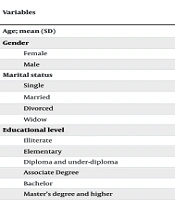
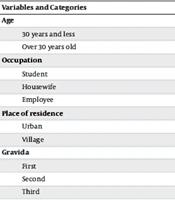
In this study, 253 pregnant women were included, with an average age of 27.7 ± 3.56 years. According to 199 participants (87.7%) were under 30 years old. Among them, 105 (41.1%) had a high school diploma, 204 (80.7%) were housewives, 235 (92.9%) lived in urban areas, and 178 (70.4%) were in their first trimester of pregnancy, which represented the highest frequency. Further details about the participants are provided in Table 1.
Table 1.
Demographic Characteristics of Study Participants
| Variables and Categories | No. (%) |
|---|---|
| Age | |
| 30 years and less | 199 (87.7) |
| Over 30 years old | 54 (21.3) |
| Education | |
| High school | 58 (22.9) |
| Diploma | 105 (41.1) |
| Associate degree | 57 (22.5) |
| Bachelor's degree | 18 (7.1) |
| Master's degree | 15 (6.4) |
| Occupation | |
| Student | 34 (13.4) |
| Housewife | 204 (80.7) |
| Employee | 15 (5.9) |
| Place of residence | |
| Urban | 235 (92.9) |
| Village | 18 (7.1) |
| Gravida | |
| First | 78 (30.8) |
| Second | 83 (32.8) |
| Third | 64 (25.3) |
| Fourth and more | 28 (11.1) |
| Gestational age | |
| First three months | 178 (70.4) |
| Second quarter | 59 (23.3) |
| Third quarter | 16 (6.3) |
In Table 2, the average score of the questionnaire and its sub-dimensions were analyzed. The overall average score, as well as the scores for the two dimensions of anxiety related to COVID-19 in pregnant women, was very low, with a mean of 4.39 ± 3.99.
Table 2.
Average Total Score and Sub-dimensions of Anxiety due to COVID-19 in Pregnant Women
| Score | (Minimum–Maximum) Score | Mean ± SD |
|---|---|---|
| The total of the anxiety | 0 - 27 | 4.39 ± 3.99 |
| Physical dimension | 0 - 15 | 1.67 ± 1.89 |
| Psychological dimension | 0 - 20 | 2.71 ± 2.15 |
Table 3 presents the relationship between demographic variables and anxiety scores. According to the one-way ANOVA test, the average anxiety score was higher among pregnant women in their third trimester compared to those in the other two trimesters, although this difference was not statistically significant (P = 0.169). To evaluate the average anxiety score related to COVID-19 among pregnant women with respect to education level, a one-way ANOVA was used. The results revealed a significant relationship between COVID-19-related anxiety scores and education level (P = 0.001). Tukey's post hoc test was used to determine the differences in average anxiety scores between the groups. The results showed a significant difference only between individuals with an associate degree and those in other educational categories, indicating that the anxiety levels in the associate degree group were higher than in the other educational groups (Table 3).
Table 3.
Comparison of Mean and Significance Level of Anxiety Score due to COVID-19 in Pregnant Women Based on Demographic Variables
| Variables and Categories | Mean ± SD | F | df | P-Value |
|---|---|---|---|---|
| Age | - 0.766 | 251 | 0.44 | |
| 30 years and less | 4.29 ± 4.25 | |||
| Over 30 years old | 5.00 ± 4.49 | |||
| Occupation | 0.227 | 2 | 0.797 | |
| Student | 5.50 ± 4.30 | |||
| Housewife | 4.29 ± 4.22 | |||
| Employee | 5.46 ± 3.27 | |||
| Place of residence | - 8.91 | 251 | 0.001 | |
| Urban | 3.51 ± 3.09 | |||
| Village | 15.94 ± 11.13 | |||
| Gravida | 8.76 | 2 | 0.001 | |
| First | 4.07 ± 4.04 | |||
| Second | 6.57 ± 4.97 | |||
| Third | 1.39 ± 1.28 | |||
| Fourth and more | 5.47 ± 5.15 | |||
| Gestational age | 1.78 | 2 | 0.169 | |
| First three months | 4.19 ± 3.94 | |||
| Second quarter | 4.20 ± 4.57 | |||
| Third quarter | 7.36 ± 4.53 | |||
| Education | 7.356 | 4 | 0.001 | |
| High school | 2.37 ± 1.93 | |||
| Diploma | 3.73 ± 3.38 | |||
| Associate degree | 8.07 ± 7.08 | |||
| Bachelor's degree | 5.05 ± 5.01 | |||
| Master's degree | 5.06 ± 2.05 |
Additionally, a statistically significant correlation was found between the average anxiety score related to COVID-19 and the number of pregnancies (P = 0.001), indicating a relationship between anxiety levels and the number of pregnancies. Post hoc analysis revealed significant differences between individuals with two pregnancies and those with three pregnancies, as well as between those with four or more pregnancies and those with three pregnancies. Women with two pregnancies experienced the highest levels of anxiety, while those with three pregnancies had the lowest.
According to the independent t-test, pregnant women living in rural areas exhibited higher levels of anxiety compared to their urban counterparts, with this difference being statistically significant (P = 0.001).
The average anxiety score for individuals over 30 was higher than for those under 30, but this difference was not statistically significant (P = 0.44), indicating no significant relationship between age and anxiety levels. Additionally, there was no statistically significant correlation between anxiety levels and occupation (P = 0.797). However, employees exhibited higher average anxiety scores related to COVID-19 compared to other groups.
5. Discussion
The discussion of the psychological effects of the COVID-19 pandemic on mental health is crucial due to its widespread impact on various economic, political, and social aspects globally. Women, especially those who are pregnant, are considered a vulnerable population that requires specific attention (14). The overlap of the COVID-19 pandemic and pregnancy creates unique psychological conditions for expectant mothers. According to a 2020 study by Wang et al., the COVID-19 pandemic has significantly impacted overall societal mental health, leading to widespread anxiety and depression (15).
It appears that social distancing measures, movement restrictions, and quarantine are some of the factors contributing to the increased levels of anxiety and stress experienced by most pregnant women during the COVID-19 pandemic (16). Some expectant mothers may avoid visiting healthcare facilities or consulting with physicians due to fears of contracting COVID-19, potentially neglecting their own health and that of their unborn child. There have been reports of pregnant women considering abortion due to heightened anxiety and concern. Additionally, some mothers have expressed apprehension about the screening and vaccination of their infants amidst the COVID-19 outbreak (17).
Given that pregnancy and childbirth are significant events in women's lives, it is essential to address this physiological phenomenon comprehensively. Currently, prenatal care in many healthcare centers primarily focuses on physical health, often overlooking the mental well-being of mothers. However, studies highlight the importance of mental health for pregnancy outcomes and the physical health of both mother and child. Maternal psychological well-being is crucial for the overall health of the family and the unborn child. Therefore, understanding the mental health status of pregnant women and its impact on pregnancy outcomes is necessary. This research aimed to assess the level of anxiety related to COVID-19 among pregnant women attending Asalian Hospital in Khorramabad city during 2021 - 2022.
The results of this study suggest that pregnant women experienced a low level of anxiety related to COVID-19, which is consistent with the findings of Kotabagi et al. In their research, Kotabagi et al. demonstrated that mothers affected by COVID-19 in London exhibited similarly low levels of anxiety (18). Furthermore, the results of this study contradict those of Durankos and Aksu In their research, Durankos et al. explored the levels of worry and anxiety among pregnant women related to COVID-19 and found that during the pandemic, pregnant women experienced heightened stress and anxiety (19). The study found that pregnant women had higher average anxiety scores in the psychological dimension compared to the physical dimension. This result is consistent with Abedzadeh-Kalahroudi et al.'s findings, which showed that pregnant women are more vulnerable to psychological risks than to physical risks (20).
The results showed that the anxiety level of patients was not significantly correlated with their age (P > 0.05), which is consistent with the findings of a study by Parazdeh et al. (21).
The findings revealed that the average COVID-19 anxiety score among pregnant women varied significantly based on education level (P < 0.05). These results differ from those reported by Parazdeh et al. and Karimi et al. A possible reason for this discrepancy could be the differences in sample sizes across the studied populations (21, 22).
The study's findings indicated that there was no statistically significant difference in the average anxiety scores of expectant mothers based on their occupation, which aligns with the results of Karimi et al.'s study (22).
The study's findings showed a statistically significant difference in the mean anxiety score of expectant mothers based on their area of residence, with mothers in villages having higher average scores than those in cities. These results contradict the findings of Parazdeh et al.'s investigation, which demonstrated that the average anxiety score of pregnant women did not significantly vary according to their place of residence (21).
The study's findings revealed a statistically significant difference in the average COVID-19-related anxiety scores among pregnant women based on the number of pregnancies (P < 0.05). These results are consistent with those reported in Karimi et al.'s study (22).
Furthermore, the observed differences in the average anxiety scores among pregnant women, based on their gestational age, did not reach statistical significance (P > 0.05). This finding contrasts with the results of Corbett et al.'s investigation (23). In their study conducted in Ireland during the COVID-19 pandemic, Corbett et al. reported that pregnant women in their second and third trimesters experienced higher levels of anxiety concerning their own health and that of their unborn children (23).
Caring for vulnerable populations is a critical aspect of managing any infectious disease threat (24). The COVID-19 pandemic has intensified fears of infection and heightened concerns about the health of family, friends, and loved ones. Additionally, the pandemic has led to widespread social isolation, uncertainty, and disruption, which have become common in many parts of the world. Undoubtedly, this has had a profound impact on individuals' mental well-being. Expectant mothers, in particular, who are under increased stress, may experience secondary effects on both their physical and mental health (25).
Consequently, it is essential to acknowledge this issue and ensure that expectant mothers receive accurate and up-to-date support from governmental and policy-making bodies. Television broadcasts remain the most commonly used medium for delivering health messages aimed at alleviating anxiety related to the spread of COVID-19, and they can be particularly effective in this regard.
5.1. Limitations
One of the study's limitations was the presence of errors in the files and the incompleteness of patient data. To address this issue, patients with incomplete files were excluded from the study.
5.2. Conclusions
The present study found that pregnant women experienced a low level of anxiety in response to COVID-19; the average score for the psychological aspect of COVID-19-related anxiety among these women was greater than that for the physical aspect. Factors influencing COVID-19-related anxiety included having a job and frequent contact with clients, higher gestational age, and lower education levels. In contrast, being a housewife and having a lower gestational age were associated with lower levels of COVID-19-related anxiety in pregnant women.
Therefore, increasing public awareness about COVID-19 and providing positive psychological programs through media aimed at managing the stress caused by the pandemic could effectively reduce anxiety in pregnant women.