
1. Background
Many genetic and non-genetic factors play an important role in cancer to produce and form it. Early diagnosis and therapy of cancer is very important and identification of susceptible individuals before obtaining the disease is one of the most important goals of cancer research centers (1). Based on 2010 statistics, in Iran, five common cancers are, respectively gastric, esophagus, colorectal, bladder and leukemia in males and breast, bladder, stomach, colorectal and womb cancers in females (2). Gastric cancer is the second cancer privileged in the world and the most common reason of death from cancer. This cancer shows resistance against radiotherapy and chemotherapy (3).
One factor involved in cancer is genetic and epigenetic changes in tumor-suppressing gene and cell membrane proteins. Proteins coded by tumor-suppressing genes suppress out of control growth of cell and play a role in genome stability. BRCA1, BRCA2, PTEN and P16 are samples of tumor suppressor genes (4). Every genetic change preventing synthesis or natural function of tumor-suppressing gene and proteins leads to cancer. These proteins control cell propagation through several pathways. Accordingly, tumor-suppressing genes have several functions such as suppressing development of a special stage of cell cycle, inducting cell planned death and DNA repairmen (5). Genetic and epigenetic changes in tumor-suppressing genes include several mutations, changing methylation position of promoter area and heterozygote deficiency (6).
These changes also include expression changes of membrane integral protein genes including E-cadherin because methylation changes can play a role in cell connections followed by increase and development of cancer (7).
In DNA methylation, the methyl group (CH3) is added to 5-carbon of cytosine ring. Cytosine methylation usually occurs in 5 CG3 sequence (called CpG islands). The CpG islands (a sequence rich of CG) are often located in genes promoter area. Information about methylation position of promoter area in tumors helps the detection and treatment of cancer. Early detection is very important to treat several cancers (8).
Methylene-tetrahydrofolate reductase (MTHFR) gene has a role of changing 5, 10-methylentetrahydrofolate to 5-methyltetrahydrofolat. The 5-methyltetrahydrofolate is a big form of folate in body and changes homocysteine to methionine. Metionin plays a role as the primary material of adnosyl methionine in DNA methylation. The MTHFR gene is also involved in synthesis of DNA. Therefore, deficiency or decrease of this gene affects methylation and synthesis of DNA. This gene (MTHFR) has a common signal polymorphism in codon 677 within exon 4, which causes replacement of alanine by valin in protein structure through 222 status from MTHFR amino-acid because of changing cytosine to thymine. This polymorphism may cause a change gene activity, therefore it can affect DNA methylation and as a result genome stability, and finally it provides conditions for several cancers (9-11).
E-cadherin is an integral membrane protein, which plays a role to connect cells and may act deficiently in cancer for changing expression and methylation change (7). Considering that abnormal expression of tumor-suppressing gene and integral membrane protein due to changing promoter methylation status is one of the main reasons for the development of cancer and considering the fact that MTHFR is regarded as an important factor of DNA methylation and also because several genotypes result from single nucleotide polymorphism of codon 677 of MTHFR gene that have different abilities in DNA methylation, they can affect gene methylation status and lead to genome instability and development of cancer.
2. Objectives
On the other hand, according to change of methylation rate in cancer in several geographical regions and changing numbers of methylated cases in several regions, this paper aimed to study promoter methylation status of E-cadherin in gastric cancer in Iran within single nucleotide polymorphism of codon 677 in MTHFR gene to find whether promoter methylation status is specific in several genotypes of this gene. This paper surveyed people prone to cancer by a simple examination of determining MTHFR genotype.
3. Methods
In this descriptive-cross sectional study, 34 cancer samples were selected as the case group and 34 non-cancer tissue samples as the evidence group. The non-cancer group was selected from Non-cancerous gastric tissue. This group had any illness other than gasteric cancer. Cancer and non-cancer samples of gastric tissue were provided as paraffin embedded samples. DNA was extracted by two methods; manual method of k-proteinase and heating, and the cinnapure DNA-FFPE Tissue. PR911683 kit. In using of the kit, tissue sections were incubated in xylene (deparaffinization), ethanol and double distilled water, respectively, followed by paralysis buffer and ributinase and incubation for one to three hours and then other steps were carried out according to the kit instructions . In the manual method, five- micron cuts were added by 1cc xylene after placement in micro-tubes; after 5 - 15 minutes, they were placed in a centrifuge (13000 rpm) for five minutes in order to de-paraffinize them. This was repeated for a second time and then 1 cc of 100% ethanol was added to wash the sample, followed by centrifugation. This stage was also repeated and then alcohol was removed from the tissue sample. In the next step, buffer containing k-proteinase was added to tissue in order to analyze 100 micro-liter tissue proteins and kept for four hours in 55 degree centigrade. Next, the solution was neutralized in 95 degree centigrade for five to ten minutes to inactivate the enzyme; then it was centrifuged (13000 rpm) for five minutes. The solution at this stage was tissue DNA resource (12, 13).
3.1. Evaluation of MTHFR c677t Polymorphism
To perform the polymerase chain reaction (PCR), lyophilizing tubes containing master mix, made in Korea were used. Polymorphism primer sequences include: F: TGAAGGAGAAGGTGTCTGCGGGA and R: AGGACGGTGCGGTGAGAGTG. Then micro-tubes were placed in a thermo-cycler followed by primary denaturation at 95°C for five minute in 35 cycles, denature at 94°C for 30 seconds in 35 cycles, annealing at 62°C for 30 seconds in 35 cycles, extend at 72°C for 30 seconds.
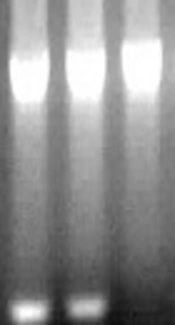
Annealing temperature was 62°C for 30 seconds. Finally, to approve performance of the PCR reaction, about 3 µL of samples was placed on 1.5% agarose gel and kept to enter other stage to after making sure. After this stage, Hinfl enzyme was used for restriction and studying MTHFR c677t polymorphism for 16 hours based on the instructions. Then, to inactivate the enzyme, micro-tubes were kept for 20 minutes at 65°C. Then samples were placed on 1.5% agar gels and examined by UV gel duct. Following pieces were obtained for every genotype: for genotype cc a 198 bp piece, for genotype ct three, 23, 175 and 198 bp pieces, and for genotype tt two, 175 and 23 bp pieces (9).
3.2. Studying Genes Methylation Status
To determine gene methylation status, the related gene was first put through PCR and then Hpall shearing enzyme was added to the related sample after gene propagation and then the related solution was electrophoresed on agar gel. During gene methylation, gene restriction enzyme was not cut; therefore, the main band would emerge on the gel. Lack of methylation followed by the main band was observed on the gel. The main band, E-Cadherin, had a size of 423 bp.
The primer sequence of this gene was as follows:
Forward: TGCTCTTGCTGTTTCTTCGG,
Reverse: TGCCCCATTCGTTCAAGTAG.
Amplification protocols were as follows: denaturation at 95°C for 30 seconds, annealing at 52°C for 30 seconds, and extend at 72°C for one minute.
Gathered information was statistically analyzed by the SPSS software version 16. To compare abundance distribution of methylation status in cancer and non-cancer samples, Chi-square test was used. Significance level in all tests was 0.05.
4. Results
The effect of promoter methylation status of E-cadherin on the disease was determined to compare methylated and unmethylated samples in case and control group. If E-Cadherin gene promoter in a sample is unmethylated, it is indicated by U and if methylated it is shown by M.
Based on Table 1, methylation status of E-cadherin gene numbers of methylated cases in the cancer group was equal to one and unmethylated cases equal to 33, and numbers of unmethylated cases in the non-cancer group was equal to 34 while there were no methylated cases.
Based on Table 2, in assessment of methylation status of E-cadherin and different genotypes of MTHFR in codon number 677 in cancer samples, number of CC, CT and TT genotypes were equal to 0, 1 and 0 in methylated group and equal to 6, 27 and 1 in unmethylated group, respectively.
Table 1.
Promoter Methylation Status of E-Cadherin Gene in Cancer and Non-Cancer Group
| Gene | Methylation Status | PV Statistical Confidence | |
|---|---|---|---|
| Numbers of Unmethylated Cases U | Numbers of Methylated Cases M | ||
| E-cadherin | ≥ 0/05 | ||
| Cancer | 33 | 1 | |
| Non-cancer | 34 | 0 | |
Table 2.
Different Genotypes of Codon 677, MTHFR Gene and Kind of E-cadherin Methylation Status in Cancer Samples
| Gene | Number | MTHFRc677t Genotype | P Value | ||
|---|---|---|---|---|---|
| 34 | Cc | Ct | Tt | ||
| E-cadherin | ≤ 0/05 | ||||
| Methylated | 1 | - | 1 | - | |
| Unmethylated | 33 | 6 | 27 | 1 | |
5. Discussion
In cancer, genome methylation balance is unregulated and the major part of the genome is hypomethylated; normal methylated parts are demethylated. Many genes in cancer can be involved and inactivated such as tumor-suppressing genes and membrane integral protein genes. One important factor to inactivate genes can be methylation. Changing methylation status of genes can be influenced by effective gene qualitative and quantitative changes on MTHFR methylation. Some effective factors have been suggested previously, including deficiency of folate or genetic damages and/or deficient effective factors in folate metabolism canal (MTHFR is responsible for folate metabolism) (14). Folate plays an important role in DNA methylation and changing its metabolism may increase the risk of cancer (15). Folate plays an important role in DNA methylation, which can influence oncogenes expression and plays an important role in purine and thymidilate synthesis to repair DNA. It is assumed that folate is important in the development of cancer. Folate in form of tetra hydro folate provides methyl for methylation internal reactions (16, 17). Decreasing folate may cause to connect uracil to DNA deficiently and lead to break chromosome and DNA deficient repairmen; it may be a factor in producing cancer (16). Folate absorption decrease is followed by increased risk of several cancers such as breast and endometrium cancer (18).
The important role of folate in DNA methylation and DNA synthesis is regarded and studied. Big genes involved in methyl group metabolism include Methylene Tetra Hydro Folate Reductase (MTHFR) and methionine synthase. The MTHFR enzyme is a part of metabolism set containing S Methionine adnosyl (MS) (methyl donor for more biological reactions in body) and DNA synthesis by producing di-nucleutides. Therefore, polymorphism in MTHFR followed by cancer is regarded important. The MTHFR gene is located on the short arm of chromosome one. MTHFR accelerates 5 - 10 methylene tetra hydro folate to 5- methylene tetra hydro folate. Five-methylene tetra hydro folate is the big form of folate in the body, and is the carbon donor for changing homocysteine to methionine. Methionine is the precursor of S-adnosyl Methionine (SAM), a general methyl donor for DNA methylation. The potential effect of MTHFR on DNA methylation and on usability of thymidylate and uridylate for DNA synthesis makes it a potential factor prone for cancer (16). Therefore, deficiency of MTHFR gene can influence DNA methylation and synthesis (9, 16).
People with decreased MTHFR activity, have too much homocysteine in their blood and urine and are prone to hypophrenia (mental subnormality) and vascular suppression. Less folate absorption is accompanied by methylation, synthesis and repairmen of DNA in addition to deficiency and abnormality, leading to increased risk of cancer (8). Two common single nucleotide polymorphisms cause a decrease in enzyme activity related to increased 5, 10-MTHF and decreased 5-MTHF. These polymorphisms increase the risk of cancers such as colon, prostate, endometrium and breast cancers (16). Two common single nucleotide polymorphisms in MTHFR include A1298C and TC677. The first common polymorphism in MTHFR gene includes replacement of cytosine with thymine in status 677 of exon 4 leading to change of alanine to valine (9). The C677T polymorphism can cause an increased risk of breast cancer by activating protoatcogenes by hypo-methylation of promoter areas and/or by inactivating tumor-suppressing genes by hyper-methylation (16_ENREF_16). People carrying changed MTHFRT677T gene have only 30% enzyme activity compared to CC, and people with the CT genotype have almost 65% enzyme activity. Homozygote change of the TT genotype with changing DNA methylation is a characteristic, which may promote emergence of cancer, because insufficient DNA methylation may cause genotype instability.
Different genotypes of codon 677 may alter MTHFR activity. In this paper we examined whether these polymorphisms in gastric cancer affect adherence of genes and cause their methylation and increase emergence of gastric cancer or they are ineffective for finding if there is a relationship between status and kind of E-cadherin methylation in several genotypes of MTHFR c677t polymorphisms. Based on Tables 1 and 2, a statistical significant relationship was not observed in methylation status between the two groups (P > 0.05). According to Table 2, in assessment of methylation status of E-cadherin and different genotypes of MTHFR in codon number 677 in cancer samples, we observed a statistical significant relationship between polymorphic and non-polymorphic genotypes of MTHFR in codon number 677 in methylated and unmethylated samples of the cancer group (P < 0.05).
5.1. Conclusion
According to this study, another factor such as ancogenes activity may cause cancer in samples. Nevertheless, the most common genotype in methylated and unmethylated cancer samples was the CT genotype and it can be considered as an effective factor in creating cancer.