1. Background
Globally, chronic diseases are a leading cause of death and the most common problem faced by health care systems (1). Chronic conditions (including respiratory and cardiovascular diseases, diabetes, and arthritis) will lead to an even greater burden on public health in the near future (2). The prevalence of chronic diseases is particularly high in Middle Eastern countries compared to other regions. According to the World Health Organization (WHO), Saudi Arabia was ranked second in the Middle East and 17th worldwide in terms of the prevalence of diabetes (3). Furthermore, Saudi Arabia was among the top 15 countries regarding the prevalence of obesity and hypertension, which are common in adults (4). Individuals with hypertension were found to have a higher mortality rate than those without hypertension (5). The economic impact of hypertension in the United States has been estimated at $76.6 billion (6). Interestingly, a previous study estimated that the ministry of health in Saudi Arabia spent approximately 17 billion riyals ($4.53 billion) to control diabetes, which is equal to 17% of the ministry budget (7).
The management of patients with chronic diseases is often complex and challenging, though chronic disease management and prevention programs have been developed to improve patient care, reduce associated risk, and minimize disease spread (8). These preventative strategies have been shown to reduce costs, hospital admissions, mortality, and use of health services while improving quality of life and adherence to medication (8). Providing health education to individuals, for example, has been shown to be a successful approach for controlling illnesses and improving societal quality of life (9). Primary care is crucial because it brings forth most of the evidence-based medicine on chronic disease screenings as well as prevention services in a health care plan (10). The best way to reduce the number of chronic diseases is through primary prevention and screening, as the prevention of disease implies avoiding and forsaking bad habits by individuals who are well-educated on their health (11). Chronic disease prevention strategies have been developed to improve peoples’ knowledge and habits regarding heart disease (12), diabetes (13), depression (14), asthma (15), obesity (16), and hypertension (17); these strategies have all been shown to be effective in achieving the targeted outcomes.
Many countries have made efforts to emphasize the importance of primary care and preventive services. In the United States, preventive care has become a significant part of clinical guidelines and medical education (18). The current evidence-based clinical guidelines recommend maintaining a healthy lifestyle (18). Saudi Ministry of Health has established preventive clinics to enhance public awareness of smoking, obesity, diabetes, and breast cancer; their success would reduce the consequences of chronic diseases (19).
A recent study showed that the majority of the Saudi population, especially the elderly, had at least 1 chronic disease. The number of chronic diseases positively correlated with increased age, weight, and smoking (20). These alarming findings require quick and effective actions. Continued evaluation of the public’s access to primary care units is crucial to ensure the effective implementation of chronic disease preventive strategies (10). However, there is insufficient information regarding public utilization of preventive services for diseases such as diabetes, hypertension, and smoking.
2. Objectives
The purpose of this study was to assess the population’s utilization of preventive services and its association with age and gender in Saudi Arabia.
3. Methods
This cross-sectional study was conducted for 2 weeks, from July 7th to 19th, 2019, at King Abdulaziz University Hospital, Jeddah, Saudi Arabia. Individuals aged 18 years and above who visited the hospital during the study period were included in the study. However, those below 18 years were excluded. Participants were randomly selected using simple random sampling; each individual who visited the hospital was given a number, and those with odd numbers were invited to fill out a short questionnaire.
3.1. Survey Instrument
To create the final survey, a questionnaire was first developed based on the literature on the topic in question. The first version of the questionnaire was validated by 2 reviewers (family medicine and epidemiology specialists) to select the best in terms of clarity of the questions, accuracy of the knowledge measured, and interpretability. The final versions of those questions were then piloted to ensure that the questionnaire was both clear and met the goals of the study. After 2 weeks, this pilot group was asked to fill the same questionnaire to assess test-retest reliability.
The questionnaire consisted of 3 sections. The first section explored demographic characteristics such as age, marital status, occupation, income, and education level. The second section was about health care utilization over the last 6 months, including the number of times the individual visited the hospital, primary health care center, private doctor, and emergency room, as well as how many times they were admitted to the hospital for an overnight stay. Individuals were also asked to rate their health conditions on a scale (poor, good, very good, excellent). The third section discussed preventive services, including consultations (regarding smoking, physical activity, weight, sleep, etc) and screenings (for breast cancer, colon cancer, diabetes, hypertension, and body mass index [BMI]) over the last year. Additional questions were asked about family and personal history of breast cancer, colon cancer, diabetes, hypertension, and chronic vascular disease.
3.2. Statistical Analysis
The data were manually entered into SPSS version 25 (SPSS Inc, Chicago, Ill, USA). Descriptive data were used to calculate the number of participants, frequencies, and percentages. The chi-square test was used to identify significant associations between age and gender and any type of preventive screening (smoking, physical activities, weight, diet, and sleep) or preventive counseling (breast cancer, colon cancer, diabetes, hypertension, and BMI). The result was considered significant when P value < 0.05.
3.3. Ethical Approval
This study was conducted in accordance with the Declaration of Helsinki. Ethical approval for the study protocol, questions, and consent statement was granted by the Ethics Committee at King Abdulaziz University under ethical approval number 452-19. Participants willing to voluntarily enroll in the study were asked to sign the informed consent form.
4. Results
4.1. Sociodemographic Characteristics of the Study Participants
A total of 250 individuals took part in the study; they had a mean age of 39.64 years (SD = 15.57; age range 20 - 65 years). The majority (57.2%) of the respondents were between 20 to 30 years old. There were more males (61.2%), and almost two-thirds of the participants were married (62.4%). The majority of the participants hold a bachelor’s degree (Table 1).
Table 1.
Demographics of the Participants
| Variables | No. (%) |
|---|---|
| Age (y) | |
| 20 - 30 | 143 (57.2) |
| 31 - 45 | 56 (22.4) |
| 46 - 65 | 51 (20.4) |
| Gender | |
| Male | 153 (61.2) |
| Female | 97 (38.8) |
| Marital status | |
| Married | 156 (62.4) |
| Never married | 89 (35.6) |
| Divorced | 4 (1.6) |
| Widowed | 1 (0.4) |
| Occupation | |
| Teacher | 29 (11.6) |
| Student | 58 (23.2) |
| Military personnel | 11 (4.4) |
| Retired | 25 (10.0) |
| Housewife | 26 (10.4) |
| Other jobs | 72 (28.8) |
| Unemployed | 29 (11.6) |
| Monthly income a | |
| Less than 3000 Saudi riyals | 92 (36.8) |
| 3000 riyals to less than 5000 riyals | 34 (13.6) |
| 5000 riyals to less than 10 000 riyals | 74 (29.6) |
| 10 000 riyals to less than 20 000 riyals | 38 (15.2) |
| 20 000 riyals or more | 12 (4.8) |
| Education level | |
| Postgraduate | 35 (14.0) |
| Bachelor’s | 141 (56.4) |
| Secondary | 64 (25.6) |
| Less than middle | 10 (4.0) |
aOne Saudi riyal approximately equals $0.26.
Of the 250 participants, 74.4% had visited the hospital, and 54.4% had visited the primary health care center in the last 6 months. Only 46.0% had not visited the emergency room during that time. Over half of the participants (54%) had visited a private doctor, and 40.8% had stayed overnight in the hospital over the same period. In general, 44% described their health as excellent, 44.4% as very good, 10% as good, and 1.6% as poor (Table 2).
Table 2.
Number of Visits to Health Care Facilities in the Last 6 Months
| Question | Category | Count (%) |
|---|---|---|
| 1. How many times did you visit the hospital in the last 6 months? | 0 | 64 (25.6) |
| 1 - 2 | 99 (39.6) | |
| 3 - 4 | 52 (20.8) | |
| More than 5 | 35 (14.0) | |
| 2. How many times did you visit the primary health care center in the last 6 months? | 0 | 114 (45.6) |
| 1 - 2 | 96 (38.4) | |
| 3 - 4 | 24 (9.6) | |
| More than 5 | 16 (6.4) | |
| 3. How many times did you visit your private doctor in the last 6 months? | 0 | 115 (46.0) |
| 1 - 2 | 78 (31.2) | |
| 3 - 4 | 26 (10.4) | |
| More than 5 | 31 (12.4) | |
| 4. How many times did you visit an emergency room in the last 6 months? | 0 | 115 (46.0) |
| 1 - 2 | 91 (36.4) | |
| 3 - 4 | 27 (10.8) | |
| More than 5 | 17 (6.8) | |
| 5. How many times did you have to stay overnight in the hospital in the last 6 months? | 0 | 148 (59.2) |
| 1 - 2 | 78 (31.2) | |
| 3 - 4 | 18 (7.2) | |
| More than 5 | 6 (2.4) | |
| 6. In general, how would you describe your own health during the last 6 months? | Excellent | 110 (44.0) |
| Very good | 111 (44.4) | |
| Good | 25 (10.0) | |
| Poor | 4 (1.6) |
4.2. Total Population Utilized Preventive Services
Of the 250 participants, 28.4% did not receive any counseling services for one or more than one of the following: smoking, physical activity, weight, diet, and sleeping. The percentages of participants who received counseling were 19.2%, 38.4%, 37.2%, 47.6%, and 23.2% for smoking, physical activity, weight, diet, and sleeping, respectively. Moreover, 41.2% of the participants had not undergone a preventive screening for any of the following: breast cancer, colon cancer, diabetes, hypertension, and BMI. Further, 14 (5.6%) participants said that they had had a breast cancer screening, 5 (2.0%) a colon cancer screening, 87 (34.8%) a diabetes screening, 85 (34.0%) a hypertension screening, and 59 (23.6%) a BMI screening (Table 3).
Table 3.
Preventive Screening and Counseling Services Used by the Study Population
| Counseling Services | Screening Services | ||
|---|---|---|---|
| Variable | Count out of 250 (%) | Variable | Count out of 250 (%) |
| Smoking | Breast cancer | ||
| No | 202 (80.8) | No | 236 (94.4) |
| Yes | 48 (19.2) | Yes | 14 (5.6) |
| Physical activities | Colon cancer | ||
| No | 154 (61.6) | No | 245 (98.0) |
| Yes | 96 (38.4) | Yes | 5 (2.0) |
| Weight | Diabetes | ||
| No | 157 (62.8) | No | 163 (65.2) |
| Yes | 93 (37.2) | Yes | 87 (34.8) |
| Diet | Hypertension | ||
| No | 131 (52.4) | No | 165 (66.0) |
| Yes | 119 (47.6) | Yes | 85 (34.0) |
| Sleep | BMI | ||
| No | 192 (76.8) | No | 191 (76.4) |
| Yes | 58 (23.2) | Yes | 59 (23.6) |
| Non | Non | ||
| No | 179 (71.6) | No | 147 (58.8) |
| Yes | 71 (28.4) | Yes | 103 (41.2) |
4.3. Distribution of Preventive Services and Association Between Age and Sex
A chi-square analysis was conducted, and the results showed that gender and age had a significant positive statistical relationship with the utilization of diabetes screening services, with P values of 0.048 and 0.003 for female and those aged 46 - 65 years old, respectively. Moreover, gender had a significant positive statistical (P < 0.01) relationship with the utilization of breast cancer screening services with females (14.40%), showing a higher percentage than males (0%). The chi-square analysis also indicated a significant statistical relationship between gender and smoking counseling (P < 0.01) and gender and weight counseling (P = 0.007). Males were more likely to have had smoking-related counseling (28.10%) than females (5.20%); the same was true for weight loss counseling (male, 43.80%; female, 26.80%; Tables 4 and 5).
Table 4.
Use of Preventive Screening Services and Associations Between Age and Sex a
| Variable | Gender | Age | |||||
|---|---|---|---|---|---|---|---|
| Male | Female | P Value | 20 - 30 | 31 - 45 | 46 - 65 | P Value | |
| Breast cancer | < 0.01 | 0.751 | |||||
| No | 153 (100.00) | 83 (85.60) | 134 (93.70) | 54 (96.40) | 48 (94.10) | ||
| Yes | 0 (0.00) | 14 (14.40) | 9 (6.30) | 2 (3.60) | 3 (5.90) | ||
| Colon cancer | 0.326 | 0.104 | |||||
| No | 151 (98.70) | 94 (96.90) | 141 (98.60) | 53 (94.60) | 51 (100.00) | ||
| Yes | 2 (1.30) | 3 (3.10) | 2 (1.40) | 3 (5.40) | 0 (0.00) | ||
| Diabetes | 0.048 | 0.003 | |||||
| No | 107 (69.90) | 56 (57.70) | 101 (70.60) | 39 (69.60) | 23 (45.10) | ||
| Yes | 46 (30.10) | 41 (42.30) | 42 (29.40) | 17 (30.40) | 28 (54.90) | ||
| Hypertension | 0.408 | 0.073 | |||||
| No | 104 (68.00) | 61 (62.90) | 101 (70.60) | 37 (66.10) | 27 (52.90) | ||
| Yes | 49 (32.00) | 36 (37.10) | 42 (29.40) | 19 (33.90) | 24 (47.10) | ||
| BMI | 0.735 | 0.938 | |||||
| No | 118 (77.10) | 73 (75.30) | 110 (76.90) | 43 (76.80) | 38 (74.50) | ||
| Yes | 35 (22.90) | 24 (24.70) | 33 (23.10) | 13 (23.20) | 13 (25.50) | ||
aValues are expressed as No. (%)
Table 5.
Use of Preventive Counseling Services and Association Between Age and Sex a
| Variable | Gender | Age | |||||
|---|---|---|---|---|---|---|---|
| Male | Female | P Value | 20 - 30 | 31 - 45 | 46 - 65 | P Value | |
| Smoking | < 0.01 | 0.468 | |||||
| No | 110 (71.90) | 92 (94.80) | 112 (78.30) | 48 (85.70) | 42 (82.40) | ||
| Yes | 43 (28.10) | 5 (5.20) | 31 (21.70) | 8 (14.30) | 9 (17.60) | ||
| Physical activity | 0.095 | 0.126 | |||||
| No | 88 (57.50) | 66 (68.00) | 87 (60.80) | 30 (53.60) | 37 (72.50) | ||
| Yes | 65 (42.50( | 31 (32.00( | 56 (39.20) | 26 (46.40) | 14 (27.50) | ||
| Weight | 0.007 | 0.777 | |||||
| No | 86 (56.20) | 71 (73.20) | 92 (64.30) | 33 (58.90) | 32 (62.70) | ||
| Yes | 67 (43.80) | 26 (26.80) | 51 (35.70) | 23 (41.10) | 19 (37.30) | ||
| Diet | 0.635 | 0.771 | |||||
| No | 82 (53.60) | 49 (50.50) | 73 (51.00) | 29 (51.80) | 29 (56.90) | ||
| Yes | 71 (46.40) | 48 (49.50) | 70 (49.00) | 27 (48.20) | 22 (43.10) | ||
| Sleep | 0.166 | 0.067 | |||||
| No | 113 (73.90) | 79 (81.40) | 112 (78.30) | 37 (66.10) | 43 (84.30) | ||
| Yes | 40 (26.10) | 18 (18.60) | 31 (21.70) | 19 (33.90) | 8 (15.70) | ||
aValues are expressed as No. (%).
5. Discussion
Primary care is an essential part of health care that relies on evidence-based medicine to prevent chronic diseases. Screenings and other preventative strategies are effective in reducing the prevalence of chronic diseases within a given population (11). Therefore, this study aimed to assess the population’s access to preventive services for various chronic diseases in Saudi Arabia.
More than half of the recruited population was young (20 - 30 years old) males, suggesting that most university hospital visitors were young. Interestingly, a third of participants had low-income (< 3000 riyals), reflecting the fact that the university hospital is a general hospital. This is in line with a previous report that found socioeconomic status to be a major factor affecting health care utilization in Iran (21). Treatment and consultation are free of charge in general hospitals; accordingly, the majority of Saudis prefer to visit general hospitals, especially for chronic diseases, where consecutive visits are required (22). Most of the participants in the current study had visited the hospital over the last 6 months (74%), and just about half had stayed overnight.
These results suggested that most participants were suffering from at least 1 health issue, despite the fact that almost all of them (88%) rated their health condition to be either very good or excellent. Beliefs in disease and health differ between groups such that some people tend to believe they are healthy even if they are not (23). Previous studies have shown that most of the Saudi population with very good health was taking prescribed medication (24). Thus, preventive clinical services are crucial because members of the public may have health complications without being aware of them. Additionally, the high number of visitors to the university hospital may be due to the availability of specialists and advanced procedures. It has been shown that the increased number of patients negatively influences the quality of preventive health services provided by physicians in Turkey (25).
Almost one-third of the participants did not receive any consultation, and the numbers of visitors to counseling clinics differed across smoking, physical activity, weight, diet, and sleeping services. Possible explanations include that some of this population did not require such services or that doctors did not explain all preventive service options while examining these patients. Although doctors in primary care units tend to listen to patients carefully, they do not have enough information to advise patients about tests or recommended procedures (26). In order to establish a high level of health awareness and reduce illnesses in society, doctors should pay attention to all available preventive screenings and counseling sessions. The main goal of health centers, especially primary care units, is to identify diseases early and educate patients on disease management. Moreover, this may help the doctors and health centers to know their strengths and weaknesses.
Diet and weight counseling services were the most frequently provided, followed by physical activity-related services. This is unsurprising as the majority of the participants were young and can be assumed to care about their looks and body shapes. In line with previous studies, most of the primary care unit visitors inquired about weight and healthy diet (24). Diet counseling often recommends increasing one’s fiber intake and reducing one’s fat intake while improving one’s level of physical activity, all of which indirectly improve quality of life (27).
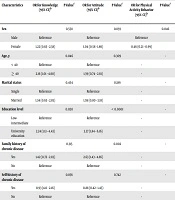
Interestingly, only 58.8% of the participants used screening services for chronic diseases. The prevalence of chronic diseases, including diabetes, is high among Saudis and positively correlated with BMI. Diagnosis and management of diabetes are highly dependent on a given patient’s primary health care clinic at which they were educated about disease and treatment options (24). Although about a third of the population was referred to diabetic clinics, over 40% reported that a member of their families had diabetes (Appendix 1). This may support previous findings, showing that general primary care physicians do not examine the patients properly and fail to adhere to diabetes management guidelines (18), though the availability of random glucose tests at primary care units may assist in a more rapid diagnosis of diabetes. Our results are consistent with (28) where a third of the population used health care applications for diabetes management. However, a recent study found that 47% of the Saudi population used the SEHA application to schedule appointments at chronic disease clinics (29). The COVID-19 pandemic has increased public awareness of diseases and encouraged them to use technology for health care services, scheduling appointments, virtual consultation, and medication ordering (30).
The chi-square analysis revealed that females and the elderly (aged 46 - 65 years old) had a significant positive relationship with the utilization of diabetes screening services. The prevalence of diabetes is higher in females and the elderly in Saudi Arabia, attributed to increases in BMI (> 25) (31). In fact, diabetes is strongly associated with obesity; over 80% of those diagnosed with type 2 diabetes were overweight (32). The prevalence of obesity worldwide has recently increased, linked to many factors, including reduced physical activity, especially among the elderly (31). Thus, an effective method for reducing diabetes and obesity is health education through doctors and nurses in preventive clinics.
Breast cancer is the most common cancer among Saudi women, reaching more than 21%, and the number of cases is expected to increase in the coming decade (33). This could explain this study’s results, showing that females were positively associated with breast cancer screening services’ visits. Increased public awareness, especially in women, about breast cancer screening has been linked with early diagnosis of malignancy, which can improve the treatment outcome. Providing information about breast cancer focusing on the female population is highly recommended to reduce the prevalence of the disease in Saudi Arabia (34).
Smoking prevalence is higher in Saudi males (38%) than in Saudi females (13%) (35). Internationally, smokers, including cigarette and shisha users, are usually young (36) and account for half of the smokers in Saudi Arabia (37). This may explain the current findings, indicating a higher proportion of male smokers than female smokers. Although smoking is prohibited in many government-owned buildings and public places, its prevalence remains high in Saudi Arabia, and more education is required 36. Primary care units and preventive clinics are important in this effort and can provide support and information to smokers in order to assist them in quitting.
Although the current study measured different preventive clinical utilizations, there were some limitations. As the data were collected over a short period and had a small sample size, the findings may not represent the Saudi population as a whole. Additionally, the method of collection was a self-reported questionnaire, which is subject to biases. Despite these limitations, the study still emphasizes the importance of preventative services in maintaining good public health.
5.1. Conclusions
In general, each individual’s use of preventive services, either consultations or screenings, appeared to be insufficient. Moreover, this study demonstrated that sociodemographic differences (such as age and gender) influenced the utilization of preventive services. Although visitors were in generally good health, they used diet, weight, and physical activity services more frequently, which can be attributed to their young age. The prevalence of diabetes and breast cancer in Saudi Arabia is higher in females than in males, and therefore females had a significant positive association with accessing these screening services. Additional public education and awareness campaigns are required to highlight the importance of preventive services and promote an enhanced understanding of chronic diseases overall.