
1. Context
Future hospitals will differ significantly from those of today. Given the rapid pace of technological transformation and advancement, the increasing trend of consumerism, and ongoing demographic and economic shifts, fundamental changes are expected to occur in hospitals worldwide. The growing number of hospitalized patients has led to a shift toward delivering healthcare services at patients’ homes or providing inpatient care alternatives outside the traditional hospital setting. Despite outdated infrastructure in some countries and increased demand for hospital beds in others, hospital administrators and governments must reconsider how to optimize both outpatient and inpatient services. This includes improving engagement with service recipients and integrating digital technologies with conventional hospital care models (1-3).
To meet challenges such as new disease patterns, evolving medical technologies, an aging population, and continuing budget constraints, hospital departments should address patient affairs, workforce aspects, required levels of specialization and technology, opportunities, and challenges to optimize and provide services in the future hospital, and be able to manage these changes (4, 5). Future hospitals are information-based or information-oriented organizations that update their performance through feedback. In these hospitals, the conversion from manual systems and clerks to machine systems and scientific workers is underway, highlighting the need for specialists and experts in future organizations.
The design of hospital models focuses on addressing the problems of hospitals from a futurology-organizational point of view. Analyzing events and being aware of the future provides the basis for the progress and development of hospitals. Hospital managers rely on their knowledge of futurology to identify future threats and opportunities and test possible future events. In this way, various changes are considered in the decision-making process. As large service organizations, hospitals will face various challenges due to the complexity of urban society’s problems, the uncertainty of conditions, and the possibility of future occurrences. This issue requires creating a farsighted organizational complex in hospitals and expanding the thinking and culture of designing future hospital models (6-8).
In recent years, the safety of patients and the acceleration of their disease’s healing process have been considered top priorities. Therefore, the architects of therapeutic spaces have turned to evidence-based design due to the need to provide patient-centered and family-centered services and reduce incidents, ensuring a strong focus on patient care (5, 9). Examining and choosing different approaches to make changes in hospitals requires extensive research in this field.
2. Objectives
In this regard, the present study was conducted with the aim of examining the experiences of global evidence in the field of future hospitals, providing a comprehensive understanding of the topic.
3. Methods
This study is a scoping review conducted in March 2024. It is based on the approach of systematic review studies, as outlined in the book "Systematic Review to Support Evidence-Based Medicine" (10). The primary research question was formulated as follows: What are the global evidence and experiences regarding future hospitals? Specifically, the study addressed the following questions:
1. What fields of future hospitals are mentioned in the studies?
2. What are the challenges in implementing and executing future hospitals?
3. What are the recommendations for implementing future hospitals?
3.1. Search Strategy
Information was collected from PubMed, Scopus, Web of Knowledge, Embase, and Google Scholar search engines, without time limits, but limited to the English language. A manual search of several specialized journals related to the scope of the subject and a review of the list of sources of the finalized articles were conducted manually. The resulting information was analyzed and reported using the content analysis method. The World Health Organization’s website was also examined (Appendix 1 in Supplementary File, sample search strategy). The search keywords included:
A: “New hospital”, “health promoting hospitals”, “hospital type”, “friendly hospital”, “People Centered Hospital”, “Practical Frame”, “Responsive hospital”, “Accountable Hospital”, “integrative hospital”, “electronic hospital”, “modern hospital”, “green hospital”, “Learning Hospital”, “future hospital”, “Smart hospital”, “digital hospital”, “intelligent hospital”
AND
B: “University Hospital*”, “University*”, “Public University Hospital*”
3.2. Inclusion Criteria
1. All studies that have examined experiences and evidence in future hospitals worldwide.
3.3. Exclusion Criteria
1. Articles in protocol, expressing views and letters to the editor, conference summaries, and articles that do not contain first-hand information.
2. Articles whose full text cannot be accessed by the responsible author, even by email.
3. Articles that did not provide sufficient information on the subject.
3.4. Selection/Screening of Studies
Two independent reviewers screened and selected studies based on the eligibility criteria. Any disagreement among the two investigators was addressed and resolved by discussing it with the other authors. First, the titles of all the articles were examined, and articles incompatible with the study’s objectives were removed. In the next steps, the abstract and full text of the articles were examined to identify and exclude studies that met the exclusion criteria and had a weak relationship with the study objectives. Endnote X8 resource management software was used to organize study titles and abstracts and identify duplicates. The PRISMA: 2020 flowchart was used to report the results of the selection and screening process (11).
3.5. Data Extraction
A data extraction form was designed in Word: 2016 software to extract data based on the study’s objectives and preliminary review of several studies. First, the data of 5 articles were experimentally extracted, and the problems in the primary form were resolved. Information was extracted independently by two people, and ambiguous cases were resolved by consulting the research team members. Extracted information in the form includes author and year, purpose of the study, country under study, results, challenges, and suggestions.
3.6. Data Analysis Methods
After extracting the information using the data extraction form, the textual data were manually analyzed using content analysis — a method for identifying, analyzing, and reporting themes within the text widely used in qualitative research (12, 13). Data coding and categorization were conducted independently by two researchers. The analysis process involved familiarization with the articles (immersion in the results), identification and extraction of initial themes (selecting articles most closely related to the initial themes), categorizing the articles into the defined themes, reviewing and finalizing the findings for each theme using the thematic results from the articles, and ensuring the reliability of the themes and extracted findings through consensus between the two coders via discussion and resolution of disagreements (14).
4. Findings
Here is the edited text with improved clarity and structure: Among the 1817 articles extracted from databases and other sources, 1126 were excluded due to commonalities between different sources. During the review of titles and abstracts, 658 articles were excluded. In the full-text review, 23 articles were removed, resulting in 10 articles being included in the study process (Table 1 and Figure 1).
Table 1.
Characteristics of Studies
| No. | First Author and Year | Setting | Type of Study | Results |
|---|---|---|---|---|
| 1 | Kumar et al., 2021 (15) | - | A comprehensive study | 5G Requirements: (1) Data speed greater than 1000 times volume per area; (2) more battery life; (3) reduction of latency up to 1 ms; (4) excellent service in crowded area; (5) ubiquitous thing communicating/Parameters: (1) Waveforms: OFDM, NOMA, UFMC and FBMC; (2) bandwidth: 4 MHz; (3) sub-carriers: 64; (4) filter: Chebyshev |
| 2 | de Grey, 2015 (16) | UK and USA | Descriptive (narrative) | CircleBath Hospital: Exemplifies the move away from the ‘machine for treatment’, towards a more humane and civilized experience; Emphasis on natural light and views; Emphasis on the therapeutic benefit of the natural environment an overall approach; Other projects: University of Iowa Hospital, Maggie’s Centers and the Cleveland Clinic; A pediatric hospital: As a bright, uplifting environment for patients and their families and staff; A new center close to the Christie Hospital in Manchester: As a welcoming ‘home away from home’, to emotional and practical support for cancer patients; In the United States, new Health Sciences Campus: Training of doctors, dentists and nurses alongside one another in an integrated facility with promote less distinction between the healthcare professions, encourage interaction, emerging technology to foster communications and training of remote practitioners |
| 3 | Chu and Pai, 2015 (17) | China | Descriptive (narrative) | Pioneering initiatives at HKU-SZH hospital: Triage system: Primary care (family medicine) first, followed by specialist care; Transparent charging mechanism and finances; Zero tolerance to ‘red packets or any form of grey income, while aspiring to the highest form of probity and professionalism; Patient-centered, team-based clinical management; Patient relations management, to deal with patient complaints or concerns without delay; Hospital-based indemnity, similar to the crown indemnity in the NHS system whereby liability rests with the hospital rather than the individual doctor; Encouraging to interactive debate and discussion in learning environment |
| 4 | Hanada et al., 2010 (18) | Japan | Descriptive (narrative) | Shimane University Hospital (SUH): An advanced system that has created a “ubiquitous environment; Categorizing users with their job description and affiliation for HIS access; Data sharing using wireless LAN: Insuring a safe electromagnetic environment; Labor efficiency improvement by mobile voice communication (installation of the PHS and telemedicine system); Standardization patient care with CP systems: Eliminating unnecessary examinations and shortening the duration of hospitalization and raise medical efficiency; Installation a new, safe and secure server room to increase security |
| 5 | Dieser and Mobily, 2019 (19) | USA | Practice perspective: Viewpoints | Mayo Clinic (Rochester MN campus) and leisure services offered: Providing a wide range of diverse leisure services and resources (e.g., Xbox and board games, knitting lessons, book club); Providing an abundance of outdoor recreation, wellness, and even travel within this large medical campus/Leisure services offered at University of Iowa Hospital and Clinics/Stead Family Children’s Hospital: Providing leisure programs in sport spectating, outdoor parks/gardens, visual arts, physical activity, and solitude; An outdoor accessible playground/outdoor area for all children, a cafe that offers a Belgian waffle bar and breakfast pizza, a children’s theater, and a leisure/play-based children’s library/The leisure programming in the children’s theater: Themed TV and movie nights, interactive gaming, pep rallies, musical and theatrical performances, and puppet shows |
| 6 | Guo et al., 2007 (20) | Beijing | Qualitative | Better establish of long-term health promotion planning and health promotion specialized funds in pilot hospitals than in the control group; Better understand of the concept of HPH by managerial staff in pilot hospitals than by those in control hospitals |
| 7 | Lee et al., 2012 (21) | Taiwan | Case-control | Contribution of HPH to organizational capacity building of hospitals for health promotion |
| 8 | Chias and Abad, 2017 (22) | Spain | Evidence-based design | Suggested actions for an integrated design: Using of cross discipline design, decision making, and collaborative planning and design sessions as a good strategy; Reinforcing the commitments to environmental health and community responsibility with collaborative planning/Proposed actions for site expansion and outdoor environment arrangement: An accurate evaluation of neighboring brownfield sites for determining a new appropriate use; The use of vegetation and other shading techniques for passive cooling and ventilation of buildings and public and paved areas; Proposing a design of interior and exterior lighting such that zero direct beam illumination leaves the building site; Include sustainable transport measures should be included in a transport plan; Define discrete segregated access for goods vehicles to receiving and delivery areas; Locate the short-term parking bays and parking areas for disabled people near the main entrance or the out-patient facilities; Give priority to take profit of existing buildings and infrastructures by means of reuse and renovation/Improving outdoor water use: To choose native plants that are tolerant of local climate, soils and water; To install drip irrigation and highly efficient irrigation control with moisture sensors and weather-based controllers; To implement appropriate, safe strategies to recycle site waste water, gray water or condensate, and/or use municipal secondary treated water for irrigation and sewage; Figure conveyance. Storm water runoff can be collected from roofs and site, and used for irrigation, sewage conveyance, or recharge in to acquifer; To minimize hardscapes by installing permeable paving and other pervious surface materials/Designing for energy efficiency: Feasibility of cogeneration with the factories located in the neighboring municipalities for energy efficient design/strategies for the use of sustainable materials, construction practices and products: Reuse existing structures when possible, and recycling of construction, demolition and land clearing debris |
| 9 | Whitelaw et al., 2011 (23) | UK (Scotland) | Mix method | Deeper organizational developments or changes in service planning, design, implementation and outputs; Changes in policy development, environmental change, partnership development, health improvement programmes and training and development; Auspices of HPHS, including ‘set’ events such as Men’s Health Week, Alcohol Awareness Week, World Mental Health Day, World Aids Day and ‘one-off’ events associated with physical activity and diet; Greater staff, patient and visitor exposure to health promotion messages, higher levels of health improvement activity and potential changes in various health behaviors such as staff cycling to work; Using of HPHS principles in planning of new hospital build programs, the establishment of hospital fruit and vegetable shops, improvements in eating options in canteens and vending machines and the achievement of smoke free environments |
| 10 | Hanada et al., 2013 (24) | Japan | Descriptive | Access to and the sharing of information “anytime, anywhere”, i.e., an “ubiquitous environment” |
Abbreviations: HIS, hospital information system; PHS, public health and safety; HPH, health promoting hospitals, CP, critical path.
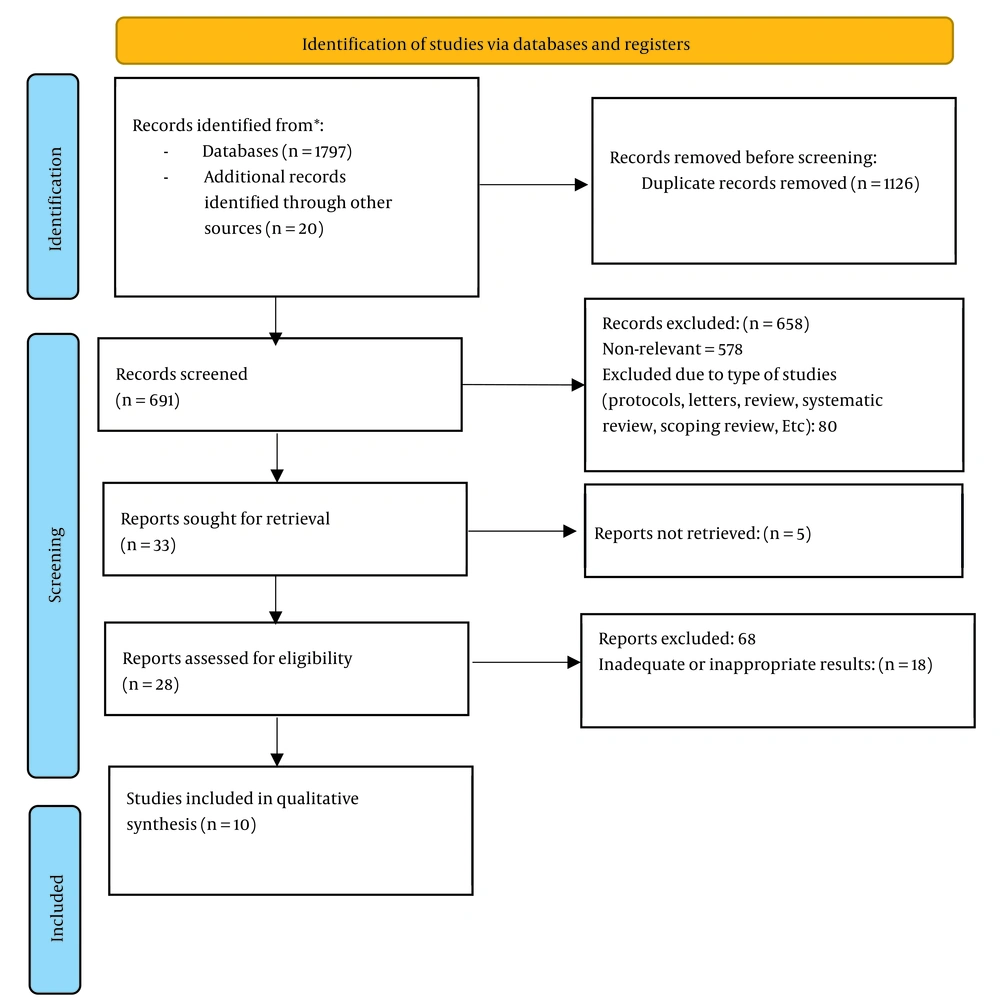
Figure 1.
Searches and inclusion process
The final articles included descriptive studies (about 40%, four studies), qualitative studies, mixed methods, evidence-based design, a case-control study, a comprehensive study, and practice perspective viewpoints. The information obtained from the review of the articles was analyzed and reported based on the countries under study, the purpose of the study, the results, challenges, and recommendations. In the review of the final articles, the division of the countries that had experiences in the field of future hospitals and health promotion was as follows (Figure 2).
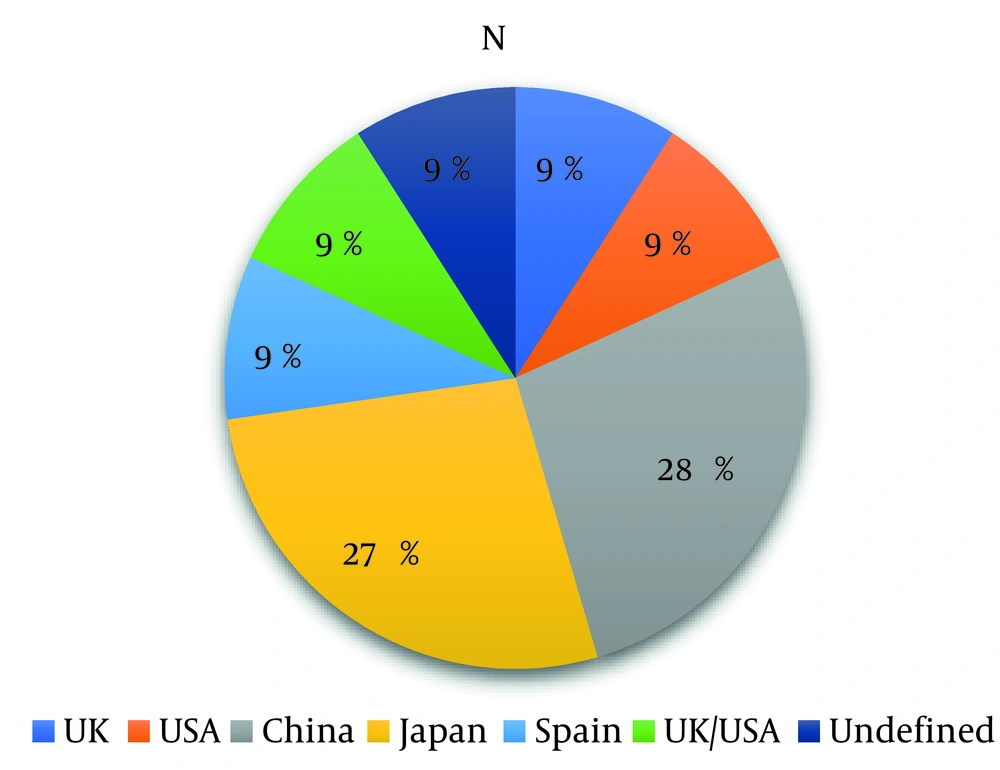
Figure 2.
Classification of final articles based on the countries of study
4.1. Global Experiences and Evidence in Moving Towards Future Hospitals
The data obtained from the final studies were coded and categorized into the following four categories based on the nature of the data and the field of focus on specific dimensions: Designing physical space in future hospitals, training in future hospitals, providing services in future hospitals, and technologies in future hospitals.
4.2. Designing Physical Space in Future Hospitals
The hospital industry is highly competitive. A hospital, like any other organization, has no meaning without clients. CircleBath Hospital has demonstrated the experience of moving from a "treatment machine" approach to a human and civilized experience. The design of the space without a corridor has created a community-oriented space for the clients. In the design of the mentioned hospital, emphasis is placed on natural light and landscape. The hospital also provides controlled natural ventilation if necessary. Compassionate landscaping often emphasizes the therapeutic benefits of the natural environment. It has a holistic approach that differs significantly from today’s hospital and institutional environments, which patients liken to a five-star hotel. In addition to making the most of the benefits of a natural environment, it reminds patients of the experience of being with family and friends (16); according to these items, this hospital has been able to create a new initiative in the treatment field.
Maggie’s Centers are considered a "home away from home" with welcoming staff, a haven where people with cancer can receive emotional and practical support. This center includes different departments, from intimate and private places to a library, exercise rooms, and public places for meeting and having a cup of tea. The heart of the building is the kitchen, the environment of which is centered around a sizeable standard table (16).
The review of the Principe de Asturias University Hospital study regarding green hospitals showed that these types of hospitals should provide a therapeutic environment in which the overall design of the building and its location contribute to the healing process rather than merely being a place where treatment is performed (25). A "green hospital" is a healthcare facility that integrates environmental concerns into its quality services and demonstrates a commitment to sustainable design principles. Such facilities are distinguished by several key features, including strategic location, efficient water usage, minimal energy consumption, minimal air pollution, and selection of superior materials (26).
Hospitals are complex systems where changes are neither quick nor easy. Achieving a green healthcare system requires a deep knowledge of its strengths and weaknesses and internal dynamics. In this regard, the following actions were suggested for integrated design (22):
- Using interdisciplinary interaction design, decision-making, planning meetings, and collaborative design as a good strategy
- Strengthening commitments to environmental health and social responsibility with joint planning
- Incorporating sustainable transport measures into the transport plan
- Improving outdoor water consumption
- Feasibility of simultaneous production with factories located in nearby municipalities for efficient energy design (22)
4.3. Training in Future Hospitals
In the United States, Maggie’s centers, Cleveland Clinic, and Case Western Reserve University have implemented a new model in which physicians, dentists, and nurses receive training together in an integrated center. This new health sciences campus combines unique areas of learning with interactive teaching-learning spaces that stimulate interaction and promote minimal differentiation among the healthcare professions. The main goal of this campus is to encourage greater collaboration and develop new levels of interprofessional understanding and respect. The new learning spaces are centered around a beautiful covered yard and will be landscaped to create a natural focus in this climate and connect with nature. The project considers emerging technology to foster connections beyond the campus because many physicians have chosen the distance learning process, and some think such training is inaccessible (16).
4.4. Providing Services in Future Hospitals
Operating rooms are generally considered the most expensive and technology-oriented spaces in hospitals. However, many of them have the highest workload in the morning shift, and some do not work in the afternoon shift. Moreover, this issue is mainly based on the existing work methods and schedules and is unlikely to remain stable. The operating room process can be simplified by scheduling operating rooms and surgeons as teams. The "production line" approach leads to better use of facilities and resources, cost reduction, and better bedding for quick recovery of patients (16).
Among other experiences, we can mention the initiatives of HKU-SZH Hospital (17), which designed a comprehensive package for service delivery management and quality improvement, which included the following:
- Development of comprehensive family medicine services and training of general specialists to provide care services for the elderly population
- Dynamic triage and referral system
- Transparent charging mechanism and financial affairs
- Patient-centered and team-centered clinical management
- Patient relationship management to address patient complaints or concerns without delay
- Hospital-based indemnity, a crown-like indemnity in the NHS system whereby liability rests with the hospital rather than the physicians
Some quality indicators in HKU-SZH Hospital have improved significantly. It is one of the hospitals known for the minimum use of antibiotics per patient in China, the minimum wastage of blood products, and the minimum amount of medication errors (17).
Many Japanese hospitals are introducing "critical path (CP)" systems to standardize patient care. A CP is prepared for each disease and surgery and describes the care provided to the patient during hospitalization. Sometimes, a CP is divided into time frames during the patient’s treatment process. In developing CP for each patient, an expected "result" is considered the basis of treatment, and attention to treatment protocol exceptions is also recommended as "variance" (18). The CP increases effectiveness by eliminating unnecessary examinations and shortening hospital stays. The CP has been fruitful in efforts to increase medical efficiency in Japanese hospitals (27).
The Mayo Clinic, in partnership with the Midwest Peregrine Society, offers a Peregrine Falcon Outdoor Recreation/Education Program. Through the library of St Mary’s Hospital and Methodist, the Rochester campus offers a range of diverse leisure services and resources (e.g., Xbox and board games, knitting lessons, and book club). Mayo Clinic also offers many outdoor activities using the parks, atriums, and gardens around the campus. A park and recreation framework is rooted in leisure planning in hospital environments (19).
The 12th floor of Stead Family Children’s Hospital offers leisure programs like watching sports, outings in parks, hypaethral/outdoor gardens, visual arts, and physical activity. The hospital’s first floor has an outdoor playground accessible to all children, a cafe with a Belgian waffle bar and pizza and breakfast, a children’s theater, and a children’s library based on leisure and play. Leisure programs at the children’s theater include TV and movie nights, interactive games, pep rallies, musical and theater shows, and puppet shows (19, 28).
In 2002, the Beijing Committee for Disease Prevention provided guidelines based on the Ottawa Charter for Health Promotion in Health Promoting Hospitals (HPHs). The HPH pilot projects started. The evaluation results show that long-term planning for health promotion and the creation of specialized funds for health promotion have been done better in experimental/pilot hospitals than in the control group. Also, the concept of HPH is better understood by the pilot hospitals’ management staff than by the control group hospitals (20, 21).
In a study that examined the role of the National Health Service of Scotland (NHS HS) in bedding the implementation of HPH projects, it was found that HPHS has been successfully integrated into policies and procedures of organizational health service; in fact, HPHS has the potential to identify more focused and realistic priorities (instead of thinking that we expect health improvement to "do everything" superficially) (23).
In summary, the activities of HPH projects can be classified according to the following:
- Health promotion related to "process improvement" (e.g., promoting consultation and user participation)
- "Developing capacity to improve health" (e.g., training, providing additional staff and improving staff health, promoting innovation and sharing best performance)
- "Patient and client information and education" (e.g., development of resources and information centers)
- "Provision of services related to health improvement" (e.g., complementary therapy for staff, yoga group, gym for patients/staff)
- "Development of health and promotion of environments and facilities" (e.g., facilities for allocating a place for employees to breastfeeding, creating a vegetable garden) (23)
4.5. Technologies in Future Hospitals
SUH Hospital in Japan has a state-of-the-art system that has created an "inclusive environment". Only a few hospitals in Japan have achieved an electronic environment on this scale. SUH launched a patient information sharing system in 2003 by linking the system to other hospitals and clinics (an Interregional Collaborative System, ICS). Among the actions planned in this hospital, the following can be mentioned:
- Sharing data using a wireless network mobile communication system
- Improving labor productivity through mobile voice communication
- Installing PHS (personal telephone system handsets) and a telemedicine system for specialized telemedicine consultation (18)
The number of physicians currently working in SUH is not enough. Therefore, communication between physicians and medical staff is essential, and PHS contributes to efficiency and patient safety. Using these phones, you can communicate with doctors/physicians for free. For example, a pharmacist can quickly approve a prescription. Also, the nurse can benefit from the physician’s help during sudden changes in the patient’s condition. Using these phones reduces the waste of physical time to search for a doctor, which has dramatically helped improve work efficiency (18, 24).
4.6. Challenges, Recommendations, Experiences, and Evidence of Future Hospitals
The review of experiences showed that, in the implementation of future hospital plans, challenges may be encountered, similar to all other programs (Figure 3). These challenges include:
- Challenges of information resources: Issues such as data security, data leakage, unauthorized visual access to portable terminal screens, inaccurate screen hard copy, and information speed (15, 24).
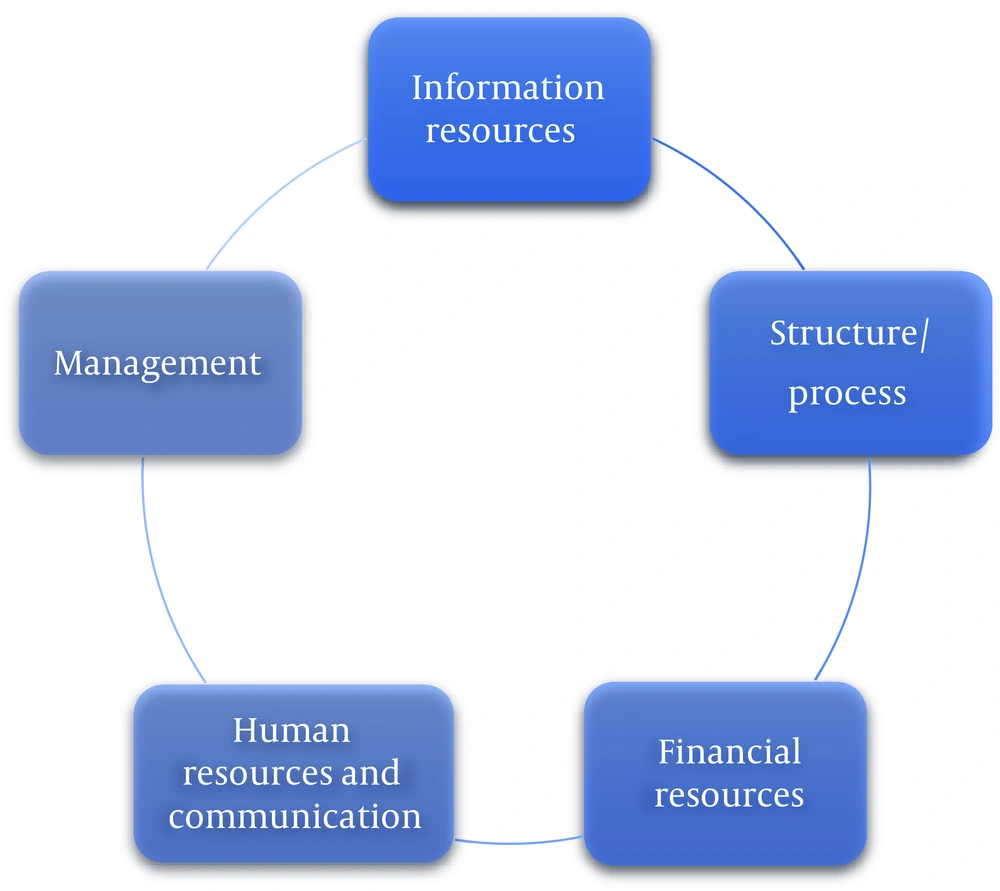
Figure 3.
Challenges of implementing the future hospital
- Challenges of structure/process: These include the lack of a proper framework, legal challenges, absence of a program implementation platform, tension between achieving a "quick hit" health improvement and profound organizational change, and varying laws, contracts, and organizational procedures (15, 21).
- Challenges of financial resources: The lack of financial resources is a significant challenge (15).
- Challenges of human resources and communication: These challenges include a lack of skilled personnel and cultural barriers within the target community (19, 20).
- Challenges of management: Issues such as lack of commitment and support from senior management and lack of comprehensive management structures to strengthen actions related to HPHS and structures (20, 21).
To address these challenges, the conducted studies have proposed several strategies, including:
- Creating a committed attitude and accompanying managers with the project
- Continuous support of the organization in providing guidance
- Keeping local staff updated with national and international developments
- Facilitating communication with others and providing access to resources and learning
- Effective lobbying at the state level and various national policies and guidelines for HPHS work
- Using successful steering groups to facilitate and create opportunities for strategic communication to continue progress and movement (21)
- Dividing the network according to the purpose of the terminal to ensure efficiency
- User training and building a system to manage the needs of terminal devices (24)
5. Discussion
The global experiences and evidence of the final articles regarding future hospitals were examined, divided, and reported in the form of four categories: Designing the physical space in future hospitals, training in the space of future hospitals, providing services in future hospitals, and technology and technologies in future hospitals. Their challenges in implementing these initiatives and proposed solutions were also evaluated. Suppose we want to design a future hospital based on the needs of patients. In that case, the training of healthcare professionals and the expectations of patients, the aging population, and economic pressures will not be successful in the design of hospitals today. The design process needs to anticipate and respond to emerging issues. While inexpensive, such things benefit patients, staff, and visitors. They prove that the difference is not in cost but in the quality of the design. A better environment is not necessarily more expensive; it depends on how wisely precious resources such as time and money are spent (8, 16). As patient care changes and evolves, flexibility is a critical issue. With strategies such as minimizing the length of hospital stay, creating a capacity for easy referral to a local facility to consult with the best specialists, new options such as telediagnosis can reduce the pressure from the large number of outpatients congregating in specialized centers, allow patients to see specialists remotely and avoid long travel time (16, 17, 29-32). Also, changing the treatment-oriented approach and using new plans, including entertainment in educational and leisure programs, can facilitate and accelerate the treatment process. Moreover, it makes the hospital a familiar space for patients to cooperate and participate in treatment (19, 33). Therefore, health promotion programs can play an effective role at the macro level, including policy-making, to improve the health level of society, attention to improving the health of patients and hospital employees, and be considered as a roadmap for prioritizing and planning other health programs (20, 21, 23). Nowadays, with rapid changes and the special role of information and technologies, one of the main Achilles heels/weaknesses of future hospitals will be the advancement of technologies, and countries are forced to have strong perspectives in communication and technology. Japan is planning medical equipment management systems, including wireless LAN and RF-ID tags and a nurse call system (NCS) connected to HIS, using VoIP. In the medical equipment management system, an RF-ID tag is attached to each medical device to prevent the loss of expensive equipment. This system also allows controlling the current location of each device. The device user can track the patient’s information, and the performance status of each device can be monitored (18, 34). Wireless technologies are rapidly being introduced as part of the data communication infrastructure of modern hospitals. Even with concerns about the security problems of wireless communications and encryption, demand is remarkably high. In addition, it is important to ensure that the network is always available (24). Despite all the benefits and positive aspects of the technological advances discussed, the implementation of future hospitals will face challenges. There are important challenges, such as structural (lack of proper framework, legal challenges, absence of program implementation platform) and informational challenges (data security, the leakage of data, disparities in access, Information speed) (15-24, 35). In future hospitals, the necessary platform and infrastructure for the safe use of these technologies should be considered, which requires effort, time, and extensive research (18, 24). On the other hand, the challenges that may occur during the implementation of the plans should be considered. The necessary investigations should be done to solve them, which include electromagnetic interference (EMI) with medical devices, loudspeakers, or bells, inappropriate disclosure of personal information using the video/camera recording function, and not concentrating on work while talking on the phone; data leakage, unauthorized visual access to the screen of portable terminals and incorrect screen copying (15, 18, 24). Due to the relationship of success of future hospital implementation and the implementation process itself, planning a successful pilot plan, the structural and procedural requirements necessary for broader adoption can be established, ensuring that new technology integrates seamlessly with existing tools and workflows (36-39). In this path, to increase the likelihood of project success, attention should be paid to training users, creating a committed attitude and supporting managers with the project, using successful steering groups to facilitate communication. The ongoing support from the organization in providing guidance, keeping local staff up to date with national and international developments, facilitating connections with others and providing access to learning and resources can also provide the platform for the adoption of new technologies in the hospital environment and among staff (21, 24). Hence, moving away from expensive and overly complex software towards readily available programs to perform simple tasks. In the future, large healthcare institutions may earn much less from simple procedures like outpatient blood tests and rely more on major procedures to cover their costs. In line with these advances and modern designs, it is possible to pave the way for the development of hospitals in all parts of the world with economic savings and witness health improvement for all societies.
5.1. Conclusions
Based on global experiences, policymakers will face challenges in implementing future hospitals, including challenges in information resources, financial resources, human resources, communication, and management, which require strategies such as creating a committed attitude and accompanying managers with the project, using successful steering groups to facilitate and create opportunities for strategic communication to continue progress and movement, effective lobbying at the state level, and developing various national policies and guidelines.
5.2. Limitations
Although this study aimed to be comprehensive, several limitations were present. One of the main limitations was the restricted number of articles reviewed due to access limitations and strict inclusion and exclusion criteria, which may have reduced the comprehensiveness of some findings. For example, the searches conducted in this study were limited to English, so experiences published in national or local languages may have been excluded. If results from studies published in other languages were included in the analyses, the results might differ. Another limitation is the limited generalizability of the study’s findings due to potential biases, such as manual data coding subjectivity or the limited number of included studies. Given the nature of qualitative studies and the importance of interpreting results through coding, linguistic bias or bias in data coding can affect the type of perspective and analysis process, limiting the scope for achieving solutions and suggestions that can be generalized to all societies. It is suggested that each country, considering its specific conditions and capabilities, should use the proposed solutions, and future studies should consider solutions to reduce these biases and examine a wider range of studies published in other languages.