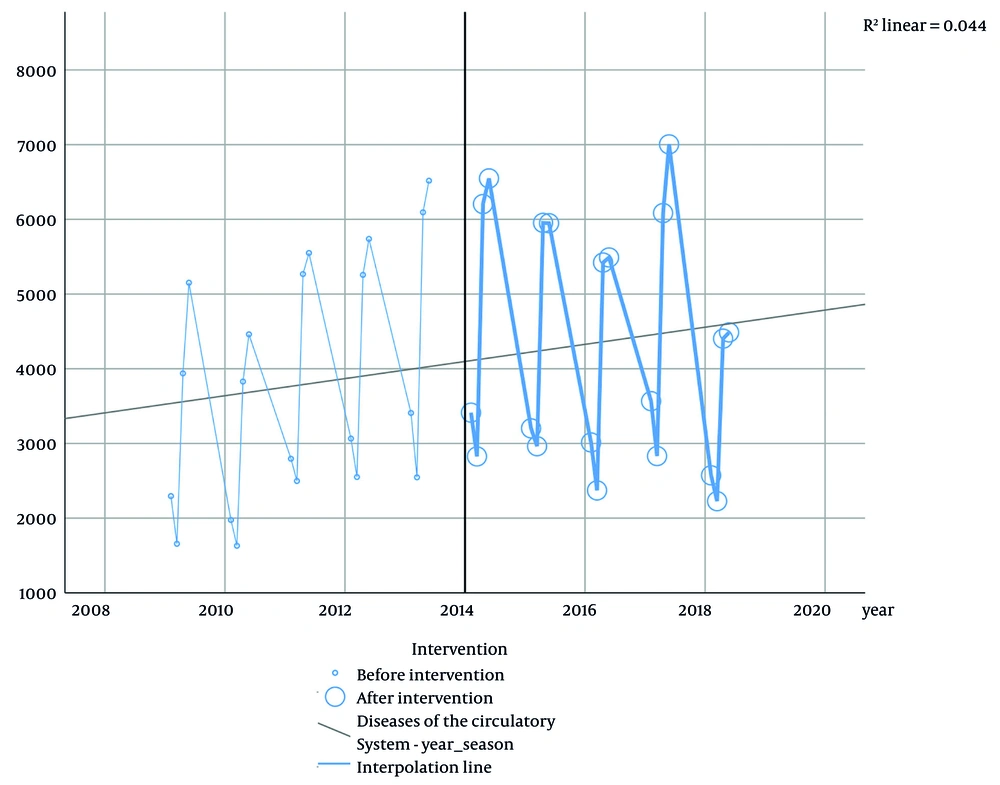
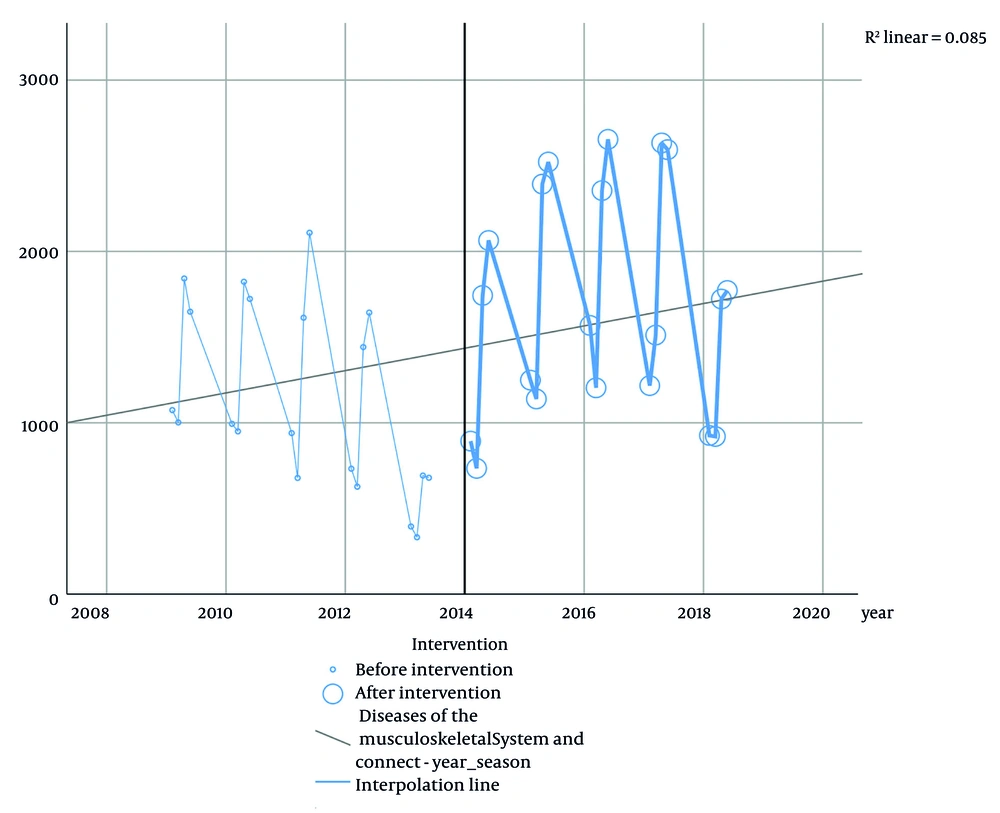
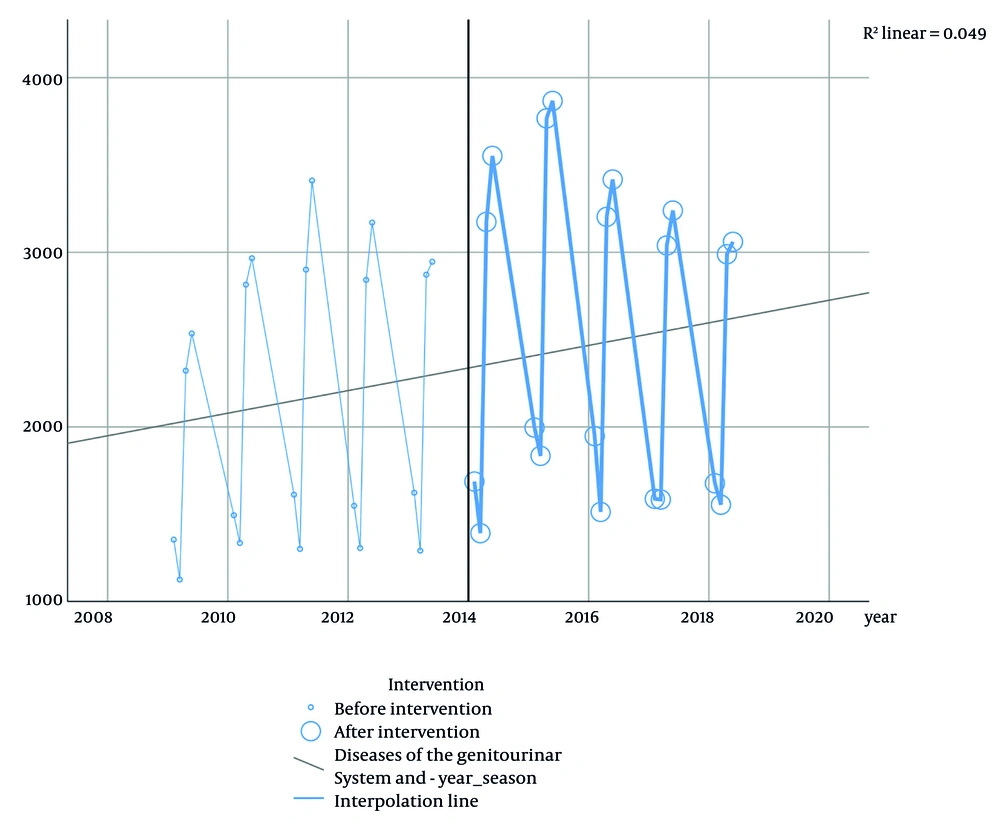
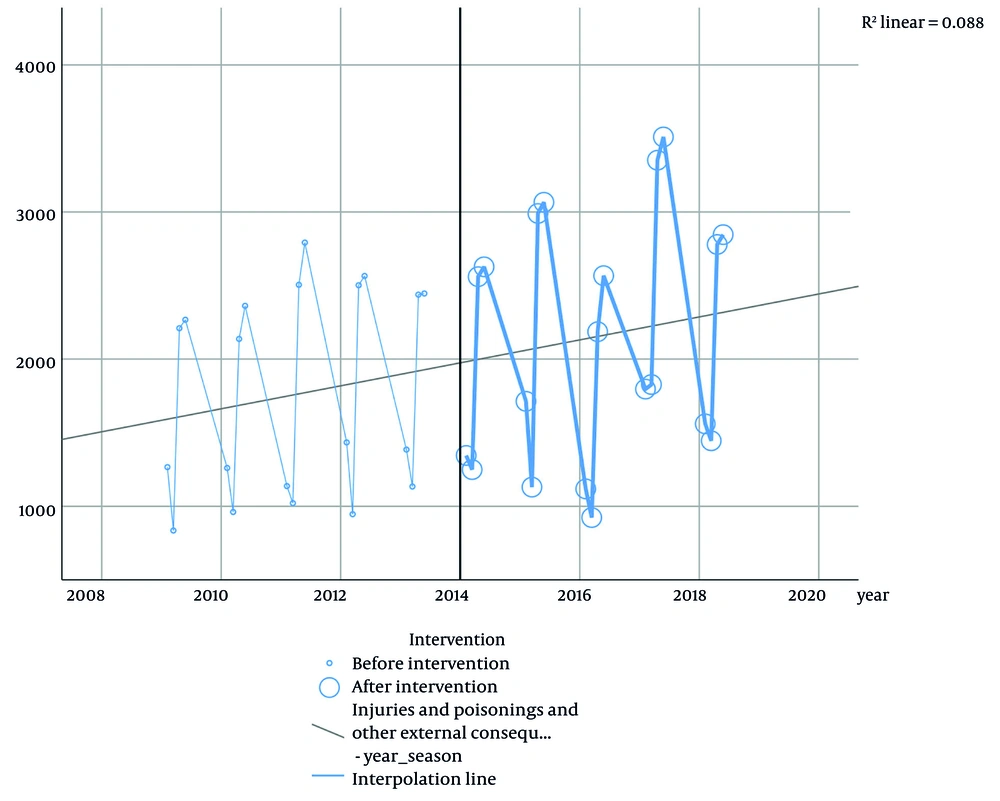
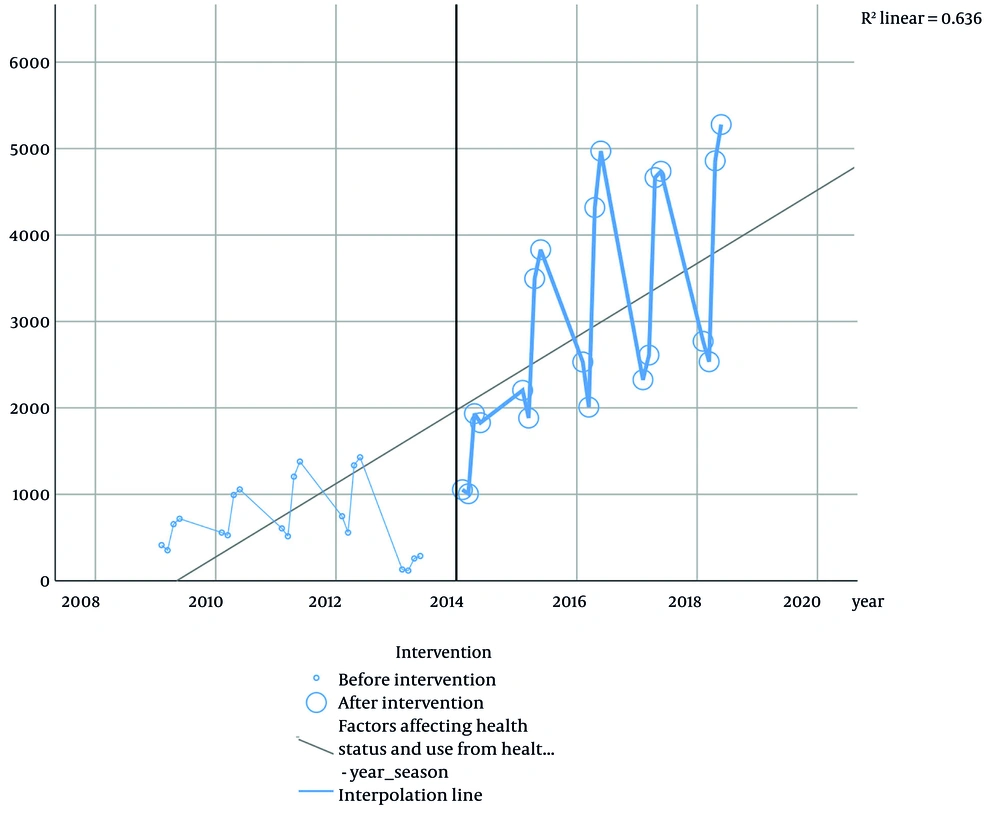
This study aimed to evaluate the impact of health financing policies under the HTP on the burden of elderly visits to hospitals in Tabriz, affiliated with Tabriz University of Medical Sciences. As observed in the results, there has been an increasing trend in the visit burden since the beginning of the study period, and with the implementation of the HTP, the rate of increase has slightly risen both overall and specifically. In the initial phase of the plan's implementation, there was an average increase of 17.67% across all groups, which reduced to a 12.07% increase in the following year compared to the previous year. In the third year, the trend showed a decline, with a 9.49% decrease compared to the previous year, yet still showing a 19% increase compared to the pre-intervention year.
During the study, it was found that the financing policies of the HTP at the beginning of its implementation increased the burden of referrals for the elderly in Tabriz among five disease groups. The prediction line of referrals was also observed with a constant increasing trend in the data, but over time, the number of referrals stabilized after the implementation of the HTP, and in some periods, a decrease was also observed compared to the same period of the previous year. Changes in referrals were largely limited in the early stages and were not consistent over time. Even in statistical analysis, the changes were not significant for most disease groups.
The HTP sought to support patients with the policies that were considered, and in the main text of those policies included reducing out-of-pocket payments for patients, supporting the persistence of doctors in deprived areas, ensuring the presence of specialist doctors in hospitals, improving the quality of outpatient services, improving hospital accommodation standards, implementing financial support programs for severe and special patients, and promoting natural childbirth. Among these policies, programs related to reducing out-of-pocket payments for people, insurance coverage, and financial support programs were considered as interventions effective in financing.
Over the years, a study of the percentage of out-of-pocket payments by hospitalized patients in 2013 and 2014 showed that in 2013, the average out-of-pocket payment was 15.2 percent of total hospitalization costs, but this figure decreased to 4.7 percent in 2014, which was an indication of the goal of the HTP (
21,
22). Since the goal of the HTP was specified in the programs, by examining the average percentage of basic insurance payments in those years, it can be concluded that the implementation of this plan was very successful in the first year, as this average increased from 80.6 percent in 2013 to 86 percent in 2014, indicating that supporting patients was in line with reducing out-of-pocket payments (
21).
Despite these promising early outcomes, our findings show that the effect of the HTP on elderly visits was inconsistent. One of the main reasons may lie in the fact that the HTP was a broad, system-wide reform and not explicitly focused on the aging population. While elderly patients benefited from general cost reductions and improved service coverage, the program lacked tailored components specifically addressing geriatric needs. Notably, Iran has developed a national document on aging to guide such policies, but as of this study, its implementation remains limited and fragmented.
Many studies have reached results during their review that reflect the current situation. In a study conducted by Gharibi et al. between the years before the implementation of the HTP in 2011 and 2013, the percentage of out-of-pocket payments was 55 and 59.7 percent, respectively (
23,
24), while in other studies, including the study by Amery et al. and Kavosi et al., the out-of-pocket costs in these years were estimated to be 8.3 and 14.2 percent, respectively (
25,
26). In another study conducted by Hajizadeh and Nghiem, out-of-pocket payments of over 50 percent in Iran were considered one of the important barriers to access to services (
27). Furthermore, a study by Leive and Xu in 15 African countries found that these countries have very weak financial systems to protect families from medical costs (
28).
In another study conducted in hospitals under the auspices of Shahid Beheshti University of Medical Sciences in Tehran, during the examination of out-of-pocket payments for hospitalized patients, it was found that the average out-of-pocket payment for patients in these hospitals at the beginning of the HTP was 10.2 percent, and out-of-pocket payments for health and medical services increased to more than 58 percent (
1). This figure for hospitalization in government hospitals before the implementation of the HTP was about 37 percent. With the implementation of the HTP, out-of-pocket payments for hospitalized services in these hospitals decreased to below 10 percent (
1,
22).
Previous studies have shown that hospitalization increases out-of-pocket payments, leading to catastrophic costs (
29). Therefore, one of the primary objectives of the HTP was to reduce direct out-of-pocket payments for hospitalization services and, as a result, lower the risk of catastrophic costs. According to the Health Research Institute's report, although catastrophic costs have decreased by 4.5% among rural households and by 1.8% among urban households after the plan's implementation, the incidence of catastrophic costs still stands at 4.8% (
30,
31).
As the results of our study showed, the findings from the Levene test indicated that among the five disease groups, only in the group of "factors affecting health status and use of health services" was the variance of the data during the two different periods different. In fact, this difference in variance may depend on several factors, from access to services to changes in health policies, or the behavior of the clients.
5.1. Diseases of the Circulatory System
According to the study of the burden of visits, the effect of time in this disease group was incremental, and with the implementation of the HTP, the burden of visits initially increased, but this increase was not statistically significant. Although the interaction between time and intervention had a negative effect, this effect was also not statistically significant. In this analysis, it can be found that the process of time has played a major role in changes in the burden of visits. Therefore, a more accurate assessment is needed to consider the effects of other external factors, including the state of public health, crises, and economic conditions.
5.2. Diseases of the Musculoskeletal System and Connective Tissue
The lack of a significant effect may suggest that musculoskeletal conditions were not sufficiently targeted by the HTP benefit packages, or that patients with these conditions face non-financial barriers such as cultural norms, limited access to physiotherapy, or low awareness. These patterns, although statistically insignificant, can have policy relevance, especially considering the rising burden of disability in the elderly population. On the other hand, the observed changes were also more influenced by the time factor than the intervention implemented, which could also be due to changes in other factors, such as population growth, seasonal changes, or other variables. Therefore, it is necessary to explore other potential causes for the insignificant effect of the HTP on referral burden. These may include limited inclusion of musculoskeletal/genitourinary services in the HTP benefit package, lower perceived urgency among patients, or continued financial and geographic access barriers specific to these conditions. Future research should investigate whether these disease groups have unique service utilization patterns or unmet needs that were not adequately addressed by HTP interventions.
5.3. Diseases of the Genitourinary System
Similar to musculoskeletal conditions, the absence of a statistically significant effect in genitourinary diseases does not necessarily mean a lack of impact. It is possible that these services were underrepresented in the HTP benefit package, or that social stigma, limited diagnostic access, or gender-specific barriers prevented patients from seeking care. These patterns highlight the importance of reviewing whether the design of the HTP was sufficiently inclusive of elderly patients with urological or kidney-related conditions. Despite statistical insignificance, the real-world implications warrant further investigation. On the other hand, the observed changes were also more influenced by the time factor than the intervention implemented, which could also be due to changes in other factors, such as population growth, seasonal changes, or other variables. Therefore, it is necessary to explore other potential causes for the insignificant effect of the HTP on referral burden. These may include limited inclusion of musculoskeletal/genitourinary services in the HTP benefit package, lower perceived urgency among patients, or continued financial and geographic access barriers specific to these conditions. Future research should investigate whether these disease groups have unique service utilization patterns or unmet needs that were not adequately addressed by HTP interventions.
5.4. Injuries and Poisonings and Other External Consequences
Regarding the fourth disease group, the P-value for the time coefficient and the interactive effect of both factors showed that the changes in the burden of visits were not significant, and these factors could not have significantly affected the changes in the burden of visits to centers to receive services for this group. While the intervention itself did not significantly impact the burden of visits for injuries and poisonings, the high baseline level of referrals suggests a persistent demand for acute and emergency care. This implies that trauma-related conditions may fall outside the financial reach or structural scope of the HTP. The practical implication is that resource allocation for emergency departments and trauma care services needs to be maintained or strengthened, particularly in urban settings where these incidents are more frequent.
5.5. Factors Affecting Health Status and Use of Health Services
For this group of diseases, the P-value for the intervention coefficient and the interaction effect of both factors showed that the changes in the referral burden were significant and that these factors caused the changes in the referral burden, and the observed changes also reflect the effect of these two factors. With the implementation of the HTP, the referral burden decreased, but over time, the referral burden increased, and the referral trend returned to the increasing state before the intervention.
5.6. Conclusions
To improve outcomes and improve the current situation, it is necessary to review the effects of implemented policies so that, in the event of new policymaking, policies can be formulated that identify strengths and weaknesses, opportunities, and threats and that take into account and apply efficiency and effectiveness in allocating resources. Therefore, in order to design interventions more effectively, it is essential to review implemented policies.
In a study that examined the impact of the HTP on the burden of referrals among the elderly in different disease groups, the findings indicated that the impact of this plan on the burden of referrals to medical centers among the elderly group was insignificant, and in only one group out of five disease groups were these changes statistically significant. Even in this group, despite the increase in referral burden in the initial stages of implementation, these changes were not sustainable over the following years. Furthermore, since the HTP did not specifically target a particular group and was implemented as a general plan in the country, considering various aspects from the presence of resident doctors to financing aspects, this may explain its limited and insignificant effectiveness on the burden of referrals in the age group. Although a national document on aging has been developed, it has not yet been fully implemented.
All these points indicate that for the elderly to benefit more effectively from medical and health services, there is a need for health reforms appropriate to their conditions. Regardless of these issues, it is possible that in the future, due to the increase in the proportion of elderly people in the population, the burden of referrals will increase, leading to higher costs for the health system. Given the findings, we recommend that planners and policymakers: (1) Design targeted interventions for high-need disease groups such as circulatory and musculoskeletal conditions among the elderly; (2) expand financial protection mechanisms for elderly patients, especially for services currently underrepresented in benefit packages; (3) ensure the implementation of the National Aging Strategy, with cross-sector cooperation and dedicated funding; (4) improve access to rehabilitation and outpatient services, especially in underserved areas.
Finally, since the HTP initially increased the number of referrals, for sustainable effectiveness, it is necessary to pay targeted attention to age groups in the development of national programs. Future policies should seek to improve health and access to services based on the prioritization of groups.
5.7. Limitations and Suggestions for Future Research
Sensitivity analyses were not conducted in this study. Future research is recommended to include sensitivity analyses to assess the robustness of the findings. Additionally, future research should investigate whether disease groups have unique service utilization patterns or unmet needs that were not adequately addressed by HTP interventions.