
1. Background
Chronic liver diseases, particularly non-alcoholic fatty liver disease (NAFLD), have emerged as a major public health challenge worldwide over the recent decade. Epidemiological studies have estimated a significant increase in the global prevalence of NAFLD among the adult population, from 25.26% in 1990 - 2006 to 38.00% in 2016 - 2019 (1). In Iran, research suggests that approximately 30 - 40% of adults may have some degree of NAFLD (2), often associated with increasing age, obesity, type 2 diabetes, and metabolic syndrome.
The pathophysiology of NAFLD is complex and multifactorial. Key mechanisms include insulin resistance, increased peripheral lipolysis, oxidative stress, chronic inflammation, mitochondrial dysfunction, and hepatotoxicity induced by bile acids (3-8). The accumulation of hydrophobic bile acids, such as deoxycholic and lithocholic acid, within liver tissue is considered a major contributor to hepatocellular injury and chronic inflammation in these patients (9).
Among therapeutic options, ursodeoxycholic acid (UDCA), a hydrophilic bile acid, exerts hepatoprotective effects through various mechanisms. These include shifting the bile acid composition toward less toxic forms (10), reducing cholesterol absorption (11, 12), stabilizing hepatocyte membranes (13), inhibiting apoptosis (14), and modulating inflammatory signaling pathways such as NF-κB (15). Additionally, UDCA enhances bile flow and has an established role in treating cholestatic liver diseases such as primary biliary cholangitis (PBC) and primary sclerosing cholangitis (PSC) (16).
Numerous pieces of evidence have demonstrated the efficacy of UDCA in improving liver biochemical markers [e.g., alanine aminotransferase (ALT), aspartate aminotransferase (AST), GGT, alkaline phosphatase (ALP)], reducing fibrosis, and increasing transplant-free survival in patients with PBC and NAFLD. Studies have shown that using this drug significantly reduces liver enzymes and improves liver enzyme markers in patients with NAFLD. Clinical studies indicate that daily UDCA administration, alongside lifestyle modification, leads to significant reductions in the Fatty Liver Index (FLI), triglyceride levels, LDL cholesterol, and histological liver abnormalities (17-20).
In Iran, Ursophar® (produced by Koushan Pharmed) has long served as the reference brand for UDCA. However, the recent introduction of Cholicray® (manufactured by Reyhaneh Pharmaceutical Company) as a generic formulation necessitates rigorous evaluation of its efficacy, safety, and tolerability in comparison with the standard. The use of domestically produced generics may help reduce treatment costs for both patients and the healthcare system.
2. Objectives
This study was designed as a proof-of-concept, randomized, double-blind, controlled clinical, phase IIa trial to compare the safety and efficacy of Cholicray® versus Ursophar® in patients with grade II NAFLD. This study aimed to determine whether the new formulation provides comparable therapeutic benefits and safety profiles, thereby offering clinically relevant data to inform treatment decisions.
3. Methods
3.1. Study Design and Targeted Endpoints
This study was conducted as a proof-of-concept phase IIa, randomized, double-blind clinical trial, designed in accordance with the Standard Protocol Items: Recommendations for Interventional Trials (SPIRIT) 2025 guideline (21). This setting was chosen to assess the relative efficacy and safety of a newly developed generic medicine compared to an established standard treatment. The primary endpoint of this study was the change in serum ALT level from baseline to the end of treatment. Secondary endpoints included changes in other hepatic biochemical markers (AST and ALP) and the incidence of adverse events as indicators of safety.
3.2. Inclusion and Exclusion Criteria
Participants were eligible for enrollment if they were over 18 years old, provided informed consent, and had ultrasound-confirmed grade II NAFLD at Baqiyatallah Clinic. Since the ultrasonographic assessment of liver steatosis is inherently approximate and relies on the comparative echogenicity of tissues, to ensure a homogeneous patient randomized control trial (RCT) with reliable grading, we selected the intermediate grade II, which represents a moderate level of steatosis that is less prone to inter-observer variability. Exclusion criteria included the inability to complete follow-up, withdrawal of consent, irregular medication use, the onset or worsening of acute symptoms, or the treating physician’s decision to discontinue the medication due to clinical concerns.
3.3. Study Population, Randomization, Blinding, and Concealment
In this double-blind phase IIa trial, the sample size was determined based on the study design and primary evaluation objectives. According to standard guidelines indicating that phase II trials typically enroll between 50 to 100 participants in total (22-25), we initially planned for 62 patients (31 per group). However, accounting for potential attrition (dropout rate) and adding an additional 15 - 20% to ensure adequate power, we screened 82 participants to meet the study's recruitment targets. This approach ensured sufficient data collection for preliminary assessments of safety and early efficacy signals, consistent with similar phase IIa trials. Upon enrollment, 73 eligible patients with ultrasound-confirmed grade II NAFLD were randomized into two intervention groups using a block randomization method, following written informed consent. The study was double-blind, with both participants and researchers blinded to treatment allocation. Medications were packaged in random numeric identical coded containers to ensure concealment.
3.4. Intervention and Assessments
Participants were randomized into two treatment groups. The first group received Cholicray® as the newly-developed generic drug, at a dose of 13 - 15 mg/kg/day for 3 months, while the second group received Ursophar® as the standard drug, at an equivalent dose of 13 - 15 mg/kg/day for the same duration. Liver enzyme tests, including ALP, ALT, and AST, were evaluated before and after treatment. Additionally, the occurrence of adverse events across various organ systems (dermatological, gastrointestinal, ocular, renal, pulmonary, neurological systems) was monitored and recorded.
3.5. Statistical Analysis
Data analysis was conducted on a per-protocol basis. Data from the 55 patients who completed the study were entered into SPSS software (version 23). Descriptive statistics (means ± SD and frequencies) and analytical comparisons of drug effects as well as side effects were reported. Categorical variables were analyzed using McNemar’s test or Fisher’s exact test, while continuous variables were assessed by calculating the mean changes before and after the intervention within each group. After evaluating the normality of data distribution, the proper statistical approaches were utilized to analyze variables. A P-value < 0.05 was considered as the threshold to determine statistical significance.
3.6. Ethical Considerations and Registration
The study protocol was designed and implemented in accordance with the SPIRIT 2025 guideline. Ethical approval was obtained from the National Committee for Ethics in Biomedical Research (ethics code: IR.BMSU.BAQ.REC.1401.127). The trial was also registered in the Iranian Registry of Clinical Trials (IRCT) under the registration code IRCT20210914052480N3.
3.7. Participant Insurance and Transparency Measures
The study was covered under civil liability insurance, ensuring that all participants, regardless of group allocation, were insured. Participants were also provided with detailed information about their rights and the nature of their involvement in clinical research. Methodological details, including block randomization procedures, blinding protocol, detailed inclusion and exclusion criteria, adverse event monitoring, and data documentation protocols, were outlined in the study protocol. To ensure transparency and scientific reproducibility, all stages, from study design to statistical analysis, were conducted in accordance with a predefined statistical analysis plan (SAP) and documented in the trial master file (TMF).
4. Results
4.1. Demographic Characteristics, Baseline Comorbidities, and Study Flow Diagram
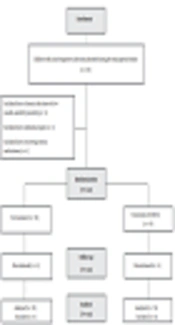
In this phase IIa clinical trial conducted on 73 patients with non-alcoholic and cholestatic fatty liver disease, the efficacy and potential side effects of Cholicray® were evaluated in comparison to Ursophar®. Of the total participants, 18 individuals discontinued the study due to reasons such as exacerbation of side effects or unwillingness to continue. The remaining 55 patients (31 males and 24 females) continued the trial, with 27 patients receiving Cholicray® and 28 patients receiving Ursophar®. Demographic characteristics and baseline comorbidities of participants have been summarized in Table 1. Additionally, Figure 1 illustrates the flow diagram of the overall study design.
Table 1.
Demographic Characteristics and Baseline Comorbidities of Completer Participants a
| Variables | Groups | P-Value | |
|---|---|---|---|
| Ursophar® | Cholicray® | ||
| Gender | 0.816 | ||
| Male | 16 (57.14) | 15 (55.55) | |
| Female | 12 (42.85) | 12 (44.44) | |
| Ulcerative colitis | 2 (7.14) | 0 | 0.491 |
| Hypertension | 4 (14.28) | 7 (25.92) | 0.329 |
| Gallstones | 5 (17.85) | 4 (14.81) | 1.000 |
| Cardiovascular disease | 1 (3.57) | 1 (3.7) | 1.000 |
| Hypercholesterolemia | 1 (3.57) | 3 (11.11) | 0.352 |
| IBD | 0 | 1 (3.7) | 0.491 |
| Anemia | 2 (7.14) | 0 | 0.491 |
| LFTs | 2 (7.14) | 2 (7.40) | 1.000 |
| Polyp | 1 (3.57) | 1 (3.7) | 1.000 |
| Diabetes mellitus | 3 (10.74) | 5 (18.51) | 0.469 |
| Asthma | 0 | 2 (7.40) | 0.236 |
| Allergy | 1 (3.57) | 2 (7.40) | 0.611 |
| Hepatitis | 1 (3.57) | 0 | 1.000 |
| Migraine | 0 | 1 (3.7) | 0.491 |
| Depression | 0 | 1 (3.7) | 0.491 |
| Liver cirrhosis | 0 | 2 (7.40) | 0.236 |
| Hypothyroidism | 1 (3.57) | 0 | 1.000 |
| Sinusitis | 1 (3.57) | 0 | 1.000 |
| Osteoarthritis | 0 | 1 (3.7) | 0.491 |
Abbreviations: IBD, inflammatory bowel disease; LFTs, abnormal liver function tests.
a Values are expressed as No. (%).
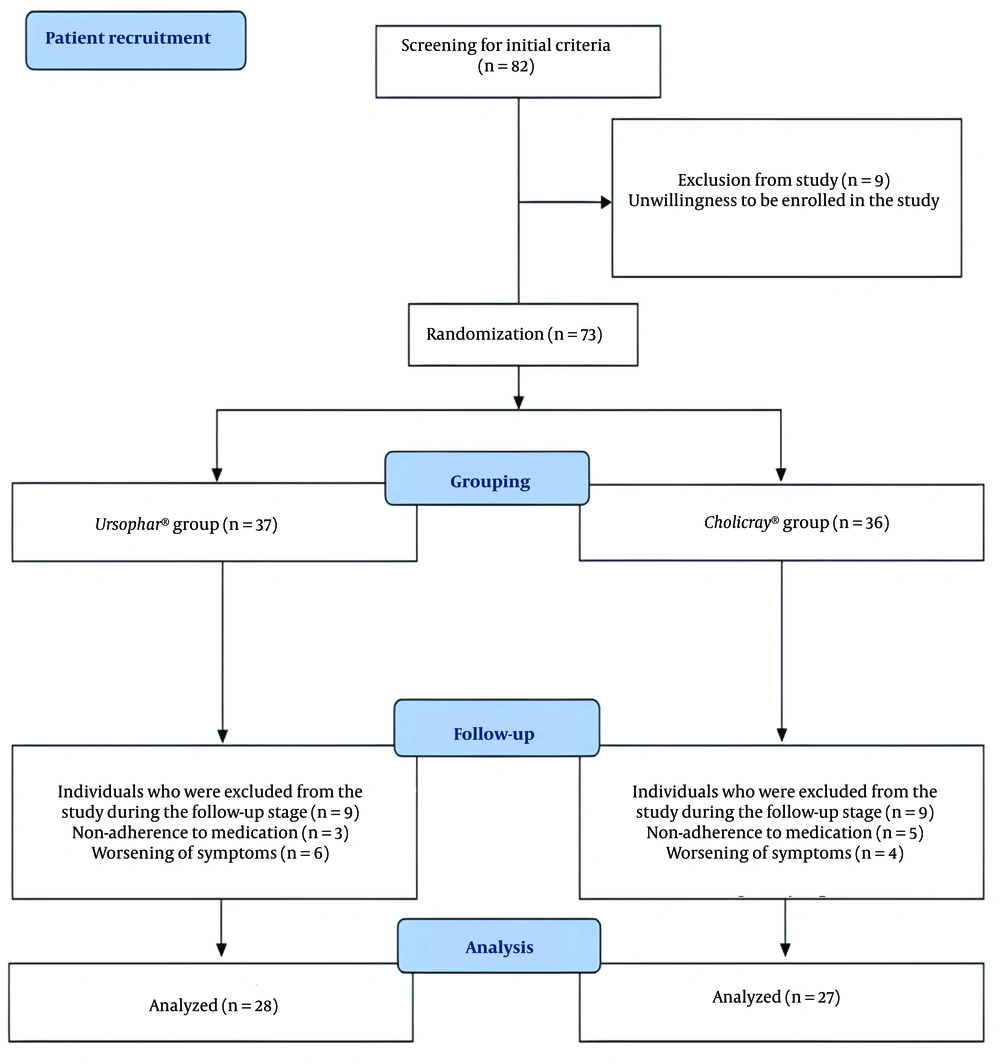
Figure 1.
The flow diagram of overall study design
4.2. Baseline in Completers and Non-completers
In the evaluation of biochemical parameters, baseline levels of liver enzyme biomarkers (LEBs), including AST, ALT, and ALP, were compared between the Cholicray® and Ursophar® groups (completers plus non-completers). Statistical analysis revealed no significant differences in the baseline values of these markers between the two groups (P > 0.05). Therefore, the initial biochemical status of patients with respect to these enzymes was comparable in both groups (Table 2).
Table 2.
Comparison of Baseline Levels of Liver Enzymes Between the Cholicray® and Ursophar® Groups (Completers Plus Non-completers)
| LEB; Groups | (Completers N), (Non-completers N) | Mean ± SD | P-Value |
|---|---|---|---|
| Before-AST (IU/L) | 0.908 | ||
| Ursophar® (n = 31) | (28), (3) | 38.01 ± 20.107 | |
| Cholicray® (n = 31) | (27), (4) | 38.60 ± 19.778 | |
| Before-ALT (IU/L) | 0.729 | ||
| Ursophar® (n = 31) | (28), (3) | 43.02 ± 21.020 | |
| Cholicray® (n = 31) | (27), (4) | 45.06 ± 25.088 | |
| Before-ALP (IU/L) | 0.065 | ||
| Ursophar® (n = 31) | (28), (3) | 211.13 ± 76.925 | |
| Cholicray® (n = 31) | (27), (4) | 178.81 ± 56.863 |
Abbreviations: LEB, liver enzyme biomarkers; Before-AST, aspartate aminotransferase before intervention; Before-ALT, alanine aminotransferase before intervention; Before-ALP, alkaline phosphatase before intervention.
A comparative analysis of the available baseline LEBs (ALT, AST, and ALP) was conducted between the 7 non-completer and the 55 completer participants. Statistical analysis revealed no significant differences in these baseline characteristics between the two groups (Table 3).
Table 3.
A Comparative Analysis of the Available Baseline Liver Enzyme Biomarkers Between Non-completer and the Completer Participants
| LEB; Study Groups; Completers (C) vs. Not-Completers (NC) | No. | Mean ± SD | P-Value |
|---|---|---|---|
| Before-AST (IU/L) | 0.661 | ||
| C | 55 | 37.91 ± 20.876 | |
| NC | 7 | 41.43 ± 6.554 | |
| Before-ALT (IU/L) | 0.963 | ||
| C | 55 | 43.99 ± 24.282 | |
| NC | 7 | 44.43 ± 7.764 | |
| Before-ALP (IU/L) | 0.328 | ||
| C | 55 | 198.06 ± 71.738 | |
| NC | 7 | 170.71 ± 36.909 |
Abbreviations: LEB, liver enzyme biomarkers; Before-AST, aspartate aminotransferase before intervention; Before-ALT, alanine aminotransferase before intervention; Before-ALP, alkaline phosphatase before intervention.
4.3. Liver Enzyme Biomarkers
The impact of Ursophar® and Cholicray® on LEBs in the study participants demonstrated that both medications led to reductions in key liver enzymes such as AST, ALT, and ALP in both groups. However, the comparison of pre- and post-treatment values revealed that Ursophar® and Cholicray® caused a statistically significant reduction in ALT levels (P = 0.001 and P = 0.004 for them, respectively). However, no significant change was observed between the two study groups (Table 4).
Table 4.
The Impact of Ursophar® and Cholicray® on Liver Enzyme Biomarkers
| LEB; Groups | Mean ± SD | P-Value | Mean Change ± SD | P-Value | Mean Difference (CI 95%) | |
|---|---|---|---|---|---|---|
| Before Intervention | After Intervention | |||||
| AST (IU/L) | 0.764 | 0.993 (-6.89, 8.88) | ||||
| Ursophar® (n = 28) | 37.51 ± 21.004 | 33.43 ± 21.137 | 0.136 | -4.082 ± 14.166 | ||
| Cholicray® (n = 27) | 38.31 ± 21.135 | 35.23 ± 22.833 | 0.258 | -3.089 ± 15.005 | ||
| ALT (IU/L) | 0.970 | -1.326 (-12.86, 10.20) | ||||
| Ursophar® (n = 28) | 42.95 ± 22.038 | 29.25 ± 20.132 | 0.001 | -13.696 ± 17.045 | ||
| Cholicray® (n = 27) | 45.07 ± 26.793 | 30.05 ± 20.008 | 0.004 | -15.022 ± 24.998 | ||
| ALP (IU/L) | 0.793 | 6.67 (-14.26, 27.60) | ||||
| Ursophar® (n =28) | 212.50 ± 80.877 | 197.43 ± 61.005 | 0.070 | -15.076 ± 41.195 | ||
| Cholicray® (n = 27) | 183.07 ± 58.635 | 174.67 ± 52.626 | 0.055 | -8.407 ± 35.920 | ||
Abbreviations: LEB, liver enzyme biomarkers; AST, aspartate aminotransferase; ALT, alanine aminotransferase; ALP, alkaline phosphatase.
4.4. Comparison of Potential Adverse Effects Before and After Drug Administration in Study Participants
In accordance with the predefined objectives of this study, the safety profile of the generic formulation Cholicray® was systematically evaluated in comparison with the reference drug Ursophar®, both prior to and following administration. Adverse events were assessed across key physiological systems, including dermatological, gastrointestinal, visual, renal, and neurological domains, each of which was independently monitored throughout the study period. Comparative analysis of the incidence of adverse effects between the two treatment groups revealed no statistically significant differences in any of the evaluated systems. The most frequently reported events were mild. Importantly, all adverse events were self-limiting and comparable between groups. These findings are detailed in Tables 5 through 10.
Table 5.
Dermatological Adverse Effects Before and After Intervention
| Variables | After Use | Total | P | |
|---|---|---|---|---|
| No | Yes | |||
| Ursophar® (n = 28) | ||||
| Pruritus | 0.289 | |||
| Before use | ||||
| No | 20 | 2 | 22 | |
| Yes | 6 | 0 | 6 | |
| Xerosis | NC | |||
| Before use | ||||
| No | 25 | 0 | 25 | |
| Yes | 3 | 0 | 3 | |
| Urticaria | 0.625 | |||
| Before use | ||||
| No | 24 | 3 | 27 | |
| Yes | 1 | 0 | 1 | |
| Jaundice | NC | |||
| Before use | ||||
| No | 28 | 0 | 28 | |
| Yes | 0 | 0 | 0 | |
| Rash and acne | NC | |||
| Before use | ||||
| No | 27 | 0 | 27 | |
| Yes | 1 | 0 | 1 | |
| Desquamation | NC | |||
| Before use | ||||
| No | 27 | 0 | 27 | |
| Yes | 1 | 0 | 1 | |
| Cholicray® (n = 27) | ||||
| Pruritus | 0.625 | |||
| Before use | ||||
| No | 19 | 1 | 20 | |
| Yes | 3 | 4 | 7 | |
| Xerosis | 1 | |||
| Before use | ||||
| No | 25 | 1 | 26 | |
| Yes | 0 | 1 | 1 | |
| Urticaria | 1 | |||
| Before use | ||||
| No | 22 | 1 | 23 | |
| Yes | 2 | 2 | 4 | |
| Jaundice | NC | |||
| Before use | ||||
| No | 26 | 0 | 26 | |
| Yes | 1 | 0 | 1 | |
| Rash and acne | 0.625 | |||
| Before use | ||||
| No | 23 | 1 | 24 | |
| Yes | 3 | 0 | 3 | |
| Desquamation | NC | |||
| Before use | ||||
| No | 27 | 0 | 27 | |
| Yes | 0 | 0 | 0 | |
Abbreviation: NC, not calculated due to insufficient events.
Table 6.
Gastrointestinal Adverse Effects Before and After Intervention
| Variables | After Use | Total | P | |
|---|---|---|---|---|
| No | Yes | |||
| Ursophar® (n = 28) | ||||
| Gastroesophageal reflux | 1 | |||
| Before use | ||||
| No | 25 | 0 | 25 | |
| Yes | 0 | 3 | 3 | |
| Diarrhea | NC | |||
| Before use | ||||
| No | 26 | 0 | 26 | |
| Yes | 2 | 0 | 2 | |
| Constipation | 1 | |||
| Before use | ||||
| No | 25 | 1 | 26 | |
| Yes | 2 | 0 | 2 | |
| Abdominalgia | NC | |||
| Before use | ||||
| No | 25 | 0 | 25 | |
| Yes | 3 | 0 | 0 | |
| Bloating | 0.125 | |||
| Before use | ||||
| No | 23 | 0 | 23 | |
| Yes | 4 | 1 | 5 | |
| Nausea | 1 | |||
| Before use | ||||
| No | 26 | 1 | 27 | |
| Yes | 1 | 0 | 1 | |
| Dyspepsia | NC | |||
| Before use | ||||
| No | 26 | 0 | 26 | |
| Yes | 0 | 0 | 0 | |
| Cholicray® (n = 27) | ||||
| Gastroesophageal reflux | 1 | |||
| Before use | ||||
| No | 24 | 1 | 25 | |
| Yes | 2 | 0 | 2 | |
| Diarrhea | 1 | |||
| Before use | ||||
| No | 25 | 1 | 26 | |
| Yes | 0 | 1 | 1 | |
| Constipation | 0.625 | |||
| Before use | ||||
| No | 22 | 1 | 23 | |
| Yes | 3 | 1 | 4 | |
| Abdominalgia | NC | |||
| Before use | ||||
| No | 25 | 0 | 25 | |
| Yes | 2 | 0 | 2 | |
| Bloating | 0.375 | |||
| Before use | ||||
| No | 21 | 1 | 22 | |
| Yes | 4 | 1 | 5 | |
| Nausea | NC | |||
| Before use | ||||
| No | 26 | 0 | 26 | |
| Yes | 1 | 0 | 0 | |
| Dyspepsia | 1 | |||
| Before use | ||||
| No | 24 | 1 | 25 | |
| Yes | 1 | 0 | 1 | |
Abbreviation: NC, not calculated due to insufficient events.
Table 7.
Visual Adverse Effects Before and After the Intervention
| Variables | After Use | Total | P | |
|---|---|---|---|---|
| No | Yes | |||
| Ursophar® (n = 28) | ||||
| Blurred vision | 0.125 | |||
| Before use | ||||
| No | 23 | 0 | 23 | |
| Yes | 4 | 1 | 5 | |
| Diplopia | NC | |||
| Before use | ||||
| No | 27 | 0 | 27 | |
| Yes | 1 | 0 | 1 | |
| Presbyopia | NC | |||
| Before use | ||||
| No | 26 | 0 | 26 | |
| Yes | 2 | 0 | 2 | |
| Ocular pruritus | NC | |||
| Before use | ||||
| No | 28 | 0 | 28 | |
| Yes | 0 | 0 | 0 | |
| Redness | NC | |||
| Before use | ||||
| No | 27 | 0 | 27 | |
| Yes | 1 | 0 | 1 | |
| Cataract | NC | |||
| Before use | ||||
| No | 27 | 0 | 27 | |
| Yes | 1 | 0 | 1 | |
| Ophthalmalgia | NC | |||
| Before use | ||||
| No | 28 | 0 | 28 | |
| Yes | 0 | 0 | 0 | |
| Xerophthalmia | ||||
| Before use | NC | |||
| No | 28 | 0 | 28 | |
| Yes | 0 | 0 | 0 | |
| Cholicray® (n = 27) | ||||
| Blurred vision | 1 | |||
| Before use | ||||
| No | 23 | 1 | 24 | |
| Yes | 1 | 2 | 3 | |
| Diplopia | 1 | |||
| Before use | ||||
| No | 26 | 0 | 26 | |
| Yes | 0 | 1 | 1 | |
| Presbyopia | NC | |||
| Before use | ||||
| No | 27 | 0 | 27 | |
| Yes | 0 | 0 | 0 | |
| Ocular pruritus | NC | |||
| Before use | ||||
| No | 25 | 0 | 25 | |
| Yes | 2 | 0 | 2 | |
| Redness | NC | |||
| Before use | ||||
| No | 26 | 0 | 26 | |
| Yes | 1 | 0 | 1 | |
| Cataract | NC | |||
| Before use | ||||
| No | 26 | 0 | 26 | |
| Yes | 1 | 0 | 1 | |
| Ophthalmalgia | 1 | |||
| Before use | ||||
| No | 25 | 0 | 25 | |
| Yes | 1 | 1 | 2 | |
| Xerophthalmia | 1 | |||
| Before use | ||||
| No | 25 | 0 | 25 | |
| Yes | 1 | 1 | 2 | |
Abbreviation: NC, not calculated due to insufficient events.
Table 8.
Renal Adverse Effects Before and After Intervention
| Variables | After Use | Total | P | |
|---|---|---|---|---|
| No | Yes | |||
| Ursophar® (n = 28) | ||||
| Renal colic | NC | |||
| Before use | ||||
| No | 26 | 0 | 26 | |
| Yes | 2 | 0 | 2 | |
| Polyuria | 0.625 | |||
| Before use | ||||
| No | 24 | 1 | 25 | |
| Yes | 3 | 0 | 3 | |
| Nephrolithiasis | NC | |||
| Before use | ||||
| No | 26 | 0 | 26 | |
| Yes | 2 | 0 | 2 | |
| Urine discoloration | NC | |||
| Before use | ||||
| No | 28 | 0 | 28 | |
| Yes | 0 | 0 | 0 | |
| Creatinine excretion | NC | |||
| Before use | ||||
| No | 28 | 0 | 28 | |
| Yes | 0 | 0 | 0 | |
| Dysuria | 1 | |||
| Before use | ||||
| No | 27 | 0 | 27 | |
| Yes | 0 | 1 | 1 | |
| Cholicray® (n = 27) | ||||
| Renal colic | NC | |||
| Before use | ||||
| No | 23 | 0 | 23 | |
| Yes | 4 | 0 | 4 | |
| Polyuria | NC | |||
| Before use | ||||
| No | 23 | 0 | 23 | |
| Yes | 4 | 0 | 4 | |
| Nephrolithiasis | NC | |||
| Before use | ||||
| No | 26 | 0 | 26 | |
| Yes | 1 | 0 | 1 | |
| Urine discoloration | NC | |||
| Before use | ||||
| No | 25 | 2 | 27 | |
| Yes | 0 | 0 | 0 | |
| Creatinine excretion | NC | |||
| Before use | ||||
| No | 26 | 1 | 27 | |
| Yes | 0 | 0 | 0 | |
| Dysuria | NC | |||
| Before use | ||||
| No | 26 | 0 | 26 | |
| Yes | 1 | 0 | 1 | |
Abbreviation: NC, not calculated due to insufficient events.
Table 9.
Pulmonary Adverse Effects Before and After Intervention
| Variables | After Use | Total | P | |
|---|---|---|---|---|
| No | Yes | |||
| Ursophar® (n = 28) | ||||
| Sputum | 1 | |||
| Before use | ||||
| No | 25 | 2 | 27 | |
| Yes | 1 | 0 | 1 | |
| Dyspnea | 1 | |||
| Before use | ||||
| No | 25 | 2 | 27 | |
| Yes | 1 | 0 | 1 | |
| Cough | 1 | |||
| Before use | ||||
| No | 26 | 0 | 26 | |
| Yes | 0 | 2 | 2 | |
| Rhinorrhea | NC | |||
| Before use | ||||
| No | 28 | 0 | 28 | |
| Yes | 0 | 0 | 0 | |
| Chest pain | NC | |||
| Before use | ||||
| No | 27 | 0 | 27 | |
| Yes | 1 | 0 | 1 | |
| Seasonal allergy | NC | |||
| Before use | ||||
| No | 28 | 0 | 28 | |
| Yes | 0 | 0 | 0 | |
| Wheezing | NC | |||
| Before use | ||||
| No | 28 | 0 | 28 | |
| Yes | 0 | 0 | 0 | |
| Cholicray® (n = 27) | ||||
| Sputum | 1 | |||
| Before use | ||||
| No | 23 | 1 | 24 | |
| Yes | 2 | 1 | 3 | |
| Dyspnea | NC | |||
| Before use | ||||
| No | 24 | 0 | 24 | |
| Yes | 3 | 0 | 3 | |
| Cough | 1 | |||
| Before use | ||||
| No | 25 | 0 | 25 | |
| Yes | 0 | 2 | 2 | |
| Rhinorrhea | NC | |||
| Before use | ||||
| No | 26 | 0 | 26 | |
| Yes | 1 | 0 | 1 | |
| Chest pain | NC | |||
| Before use | ||||
| No | 27 | 0 | 27 | |
| Yes | 0 | 0 | 0 | |
| Seasonal allergy | NC | |||
| Before use | ||||
| No | 26 | 0 | 26 | |
| Yes | 1 | 0 | 1 | |
| Wheezing | NC | |||
| Before use | ||||
| No | 27 | 0 | 27 | |
| Yes | 0 | 0 | 0 | |
Abbreviation: NC, not calculated due to insufficient events.
Table 10.
Neurological Adverse Effects Before and After Intervention
| Variables | After Use | Total | P | |
|---|---|---|---|---|
| No | Yes | |||
| Ursophar® (n = 28) | ||||
| Cephalalgia | 1 | |||
| Before use | ||||
| No | 22 | 3 | 25 | |
| Yes | 2 | 1 | 3 | |
| Dysosmia | NC | |||
| Before use | ||||
| No | 28 | 0 | 28 | |
| Yes | 0 | 0 | 1 | |
| Hearing impairment | NC | |||
| Before use | ||||
| No | 28 | 0 | 28 | |
| Yes | 0 | 0 | 0 | |
| Back pain | NC | |||
| Before use | ||||
| No | 28 | 0 | 28 | |
| Yes | 0 | 0 | 0 | |
| Lower extremity numbness | NC | |||
| Before use | ||||
| No | 27 | 0 | 27 | |
| Yes | 1 | 0 | 1 | |
| Podalgia | 1 | |||
| Before use | ||||
| No | 27 | 0 | 27 | |
| Yes | 0 | 1 | 1 | |
| Stress | NC | |||
| Before use | ||||
| No | 26 | 0 | 26 | |
| Yes | 2 | 0 | 2 | |
| Hand tremor | NC | |||
| Before use | ||||
| No | 27 | 0 | 27 | |
| Yes | 1 | 0 | 1 | |
| Myalgia | 1 | |||
| Before use | ||||
| No | 25 | 1 | 26 | |
| Yes | 2 | 0 | 2 | |
| Migraine | NC | |||
| Before use | ||||
| No | 27 | 0 | 27 | |
| Yes | 1 | 0 | 1 | |
| Sleep disorder | 1 | |||
| Before use | ||||
| No | 22 | 3 | 25 | |
| Yes | 2 | 1 | 3 | |
| Paresthesia in the foot | 1 | |||
| Before use | ||||
| No | 26 | 1 | 27 | |
| Yes | 1 | 0 | 1 | |
| Cholicray® (n = 27) | ||||
| Cephalalgia | 0.375 | |||
| Before use | ||||
| No | 22 | 4 | 26 | |
| Yes | 1 | 0 | 1 | |
| Dysosmia | 1 | |||
| Before use | ||||
| No | 25 | 1 | 26 | |
| Yes | 1 | 0 | 1 | |
| Hearing impairment | NC | |||
| Before use | ||||
| No | 25 | 0 | 25 | |
| Yes | 2 | 0 | 2 | |
| Back pain | NC | |||
| Before use | ||||
| No | 25 | 0 | 25 | |
| Yes | 2 | 0 | 2 | |
| Lower extremity numbness | NC | |||
| Before use | ||||
| No | 27 | 0 | 27 | |
| Yes | 0 | 0 | 0 | |
| Podalgia | 1 | |||
| Before use | ||||
| No | 25 | 0 | 25 | |
| Yes | 1 | 1 | 2 | |
| Stress | NC | |||
| Before use | ||||
| No | 26 | 0 | 26 | |
| Yes | 1 | 0 | 1 | |
| Hand tremor | NC | |||
| Before use | ||||
| No | 27 | 0 | 27 | |
| Yes | 0 | 0 | 0 | |
| Myalgia | 0.687 | |||
| Before use | ||||
| No | 21 | 2 | 23 | |
| Yes | 4 | 0 | 4 | |
| Migraine | NC | |||
| Before use | ||||
| No | 26 | 0 | 26 | |
| Yes | 1 | 0 | 1 | |
| Sleep disorder | 1 | |||
| Before use | ||||
| No | 19 | 3 | 22 | |
| Yes | 3 | 2 | 5 | |
| Paresthesia in the foot | 1 | |||
| Before use | ||||
| No | 25 | 1 | 26 | |
| Yes | 1 | 0 | 1 | |
Abbreviation: NC, not calculated due to insufficient events.
5. Discussion
The present study demonstrates that Cholicray®, a locally manufactured generic formulation of UDCA, exhibits comparable safety and efficacy to the reference drug Ursophar® in patients with NAFLD. The decision to target patients with grade II NAFLD, rather than those with cholestatic liver diseases such as PBC or PSC, was based on scientific, methodological, and ethical considerations.
First, NAFLD has a significantly higher prevalence in the general population, both globally and in Iran, facilitating access to an adequate sample size and allowing for sufficient statistical power within a practical timeframe. In contrast, PBC and PSC are considered rare diseases, and conducting a large-scale clinical trial in these populations would require extended durations and specialized referral centers. Second, the efficacy of UDCA in treating PBC has already been well-established through multiple international trials and is recognized in clinical practice guidelines. In contrast, evidence supporting the use of UDCA in NAFLD and related metabolic liver disorders remains limited and heterogeneous, necessitating locally conducted, well-designed studies. From this standpoint, evaluating Cholicray® in an NAFLD population provides greater scientific value than replicating existing cholestatic studies.
Furthermore, assessing the safety profile of UDCA-based therapies in patients without advanced cholestatic pathology allows for a more accurate detection of subclinical or mild adverse effects. Some adverse effects, like itching, diarrhea, and visual disturbances, are known potential side effects of UDCA-based therapies, and their documentation helps physicians weigh benefits against risks, monitor patients appropriately, and manage symptoms.
However, our findings align with those of Nakano et al. (26), who reported no statistically significant differences in biochemical response between branded and generic UDCA formulations. Similarly, the safety profile of Cholicray® observed in our trial corresponds well with the Nakano et al. study. This study provides direct evidence of comparable safety between generic/formulated UDCA and standard branded UDCA in a controlled clinical setting (26).
Our results are also consistent with broader clinical evidence regarding UDCA’s role in NAFLD. For instance, a meta-analysis of nine randomized controlled trials (up to September 2019, n = 1106 patients) found that UDCA significantly reduced ALT levels (P = 0.07), though changes in AST, GGT, and other biochemical markers were not statistically significant. Notably, patients over 50 years old, of European ancestry, or those undergoing therapy for more than six months experienced more pronounced benefits (18). Among the enzymes secreted by the liver, ALT has the highest specificity for hepatocellular injury, surpassing the other enzymes. The lack of changes in AST and ALP may reflect their lower sensitivity in such settings. In NAFLD, hepatocytes are primarily affected, making ALT a valuable marker for assessing liver status.
The observed reduction, though modest, is clinically relevant in the context of a proof-of-concept phase IIa trial, indicating potential efficacy. The modest ALT reduction might indeed stem from the short three-month treatment duration, which may not suffice for more pronounced effects; an insufficient dose relative to disease severity; or the limited sample size, which reduces power to detect smaller changes.
An open-label, multicenter international trial with 174 NAFLD patients, receiving 15 mg/kg/day of UDCA in combination with lifestyle modification, demonstrated significant reductions in liver enzymes, FLI, triglycerides, and LDL cholesterol after 6 months, although no improvement was observed in fibrosis scores (17). A recent study on the efficacy of UDCA in NAFLD followed patients for 3 months and measured outcomes based on clinical findings and serum ALT levels, demonstrating significant reductions in liver enzymes (27). A reduction in liver enzyme levels within three months, as seen in the present study, suggests that the treatment is likely effective and impactful. However, from a clinical perspective, more invasive assessments like biopsy would provide stronger evidence of improvement, but as these were not feasible in the present and many other studies, the observed drop in hepatic enzymes serves as a practical proxy for treatment efficacy.
A 2018 systematic review of 1548 RCTs noted that approximately 85% of studies documented biochemical and histological improvements in the liver, while 15% showed no benefit. The authors highlighted the farnesoid X receptor (FXR) pathway as a potential mechanistic target of UDCA action in these outcomes (19). Another systematic review noted that UDCA monotherapy improved liver enzymes in multiple studies with follow-up periods as short as 3 - 6 months (ALT: P ≤ 0.0001, AST: P = 0.0009) (28).
In our study, both medications, Ursophar® and Cholicray®, demonstrated comparable effects in improving LEBs in patients with NAFLD. The reduction in liver enzymes without significant adverse events observed in both groups indicates that these two drugs exhibit efficacy in enhancing hepatic status. Although this phase IIa trial, due to its limited sample size, lacks the statistical power to draw definitive conclusions on efficacy, the results showed that the reduction in ALT levels was statistically significant in both groups. On the other hand, no statistically significant differences were observed in the mean changes before and after the intervention between the study groups.
Despite the relatively high attrition rate in the present study, the comparative analyses between completers and the subset of non-completers with available data revealed no significant differences in their baseline characteristics. This reduces concerns about the potential risk of bias related to attrition and strengthens the validity of the final findings. However, the results revealed the potential of generic medications as safe and cost-effective alternatives to branded drugs. As a generic formulation, Cholicray® may enhance access to effective treatment options for NAFLD and reduce the economic burden on healthcare systems.
5.1. Conclusions
Cholicray® demonstrated a comparable generic formulation to Ursophar® in improving hepatic biochemical markers in NAFLD patients, with a similar safety profile. These findings suggest that this generic version can be considered a clinically equivalent alternative in controlled treatment settings for NAFLD. While Cholicray® demonstrated comparable safety and efficacy to Ursophar® in improving hepatic biomarkers, the study has several limitations, including a relatively short duration (3 months), lack of histological endpoints, and a modest sample size. Therefore, the findings should be considered preliminary and require confirmation in larger and longer-term studies with histological or imaging-based assessments.