1. Background
The diagnostic criteria for metabolic dysfunction-associated steatotic liver disease (MASLD) are based on the presence of hepatic steatosis and the exclusion of other known etiologies of liver disease, such as excessive alcohol consumption, viral hepatitis, and drug-induced liver injury (1-4). MASLD has replaced the previous nomenclature of nonalcoholic fatty liver disease (NAFLD). In addition, the presence of at least one cardiometabolic risk factor is required, such as hypertension, dysglycemia, hypertriglyceridemia, or dyslipidemia.
Owing to the increasing incidence of obesity, diabetes mellitus, and metabolic syndrome, the global prevalence of MASLD is increasing annually. As a common chronic liver disease characterized by excessive lipid accumulation in the liver, MASLD is a major cause of end-stage liver disease, promoting hepatic steatosis and inflammatory responses, and affects approximately 30% of the global population (5). Marked regional variation in MASLD incidence has been demonstrated (6), with alarmingly rapid growth observed in Asian countries. Prevalence rates in China and India approach or even exceed those in Western countries (7). Although MASLD occurrence and prognosis are closely related to the obesity epidemic, Asians have been found to develop MASLD at lower BMI levels, suggesting increased susceptibility to metabolic dysregulation in this population (8).
The pathogenesis of MASLD is multifactorial and involves genetic susceptibility, such as PNPLA3 and TM6SF2, dietary factors, and systemic inflammation. The transition from simple steatosis to steatohepatitis and fibrosis is driven by complex immune responses. A widely accepted “two-hit” hypothesis has been proposed for MASLD development (9, 10). This hypothesis suggests that factors such as energy surplus, mitochondrial dysfunction, inflammatory responses, and gut-liver axis dysregulation promote increased hepatic free fatty acid influx and hepatic lipogenesis. Research confirms that impaired insulin-mediated suppression of lipolysis and insulin resistance-induced mitochondrial dysfunction in MASLD exacerbate hepatic steatosis. The bidirectional role of dysglycemia should not be underestimated (11). A clinical analysis based on the UK Biobank identified visceral adipose tissue, total body mass, BMI, and waist-to-hip ratio as independent predictors of steatosis and cirrhosis (12). Obesity is a crucial prognostic risk factor, as each unit increase in BMI confers a dose-dependent increase in risk (13). High-fructose and high-fat diets promote MASLD development and progression, with high-fat diets driving disease advancement even in nonobese patients with MASLD (14).
Neutrophils are closely associated with steatotic hepatocytes and the severity of liver fibrosis (15). In an in vivo murine model fed a choline-deficient high-fat diet, significant increases in monocyte-derived hepatic macrophages were observed (16). Complex interactions occur between lymphocytes and neutrophils, and some studies have found that lymphocyte aggregates are positively correlated with the inflammatory and fibrotic stages of the liver lobule. The neutrophil-to-lymphocyte ratio (NLR) serves as an indicator of systemic inflammatory activation (17) and is closely associated with adverse clinical outcomes.
2. Objectives
This study aimed to systematically evaluate the association between NLR and mortality in MASLD using two well-characterized cohorts: a population-based US sample from the NHANES database and a clinical cohort from the First Affiliated Hospital of Soochow University in China.
3. Methods
3.1. Study Design and Setting
This study adhered to the Strengthening the Reporting of Observational Studies in Epidemiology (STROBE) guidelines. The analysis used data from 2 independent cohorts: a population-based cohort from the United States and a clinical cohort from China.
3.2. Criteria and Definitions
Patients aged > 18 years who were clinically diagnosed with MASLD based on a controlled attenuation parameter (CAP) ≥ 285 dB/m and the presence of at least 1 cardiometabolic risk factor, and who had complete clinical data, were included (Figure 1). Exclusion criteria were missing diagnosis or mortality status data, > 20% missing data for key covariates, evidence of other chronic liver diseases, and excessive alcohol intake. NLR was calculated as the neutrophil count divided by the lymphocyte count. Based on previous studies (18), patients were stratified into low, moderate, and high NLR groups using cutoff values of 3 and 5. Key definitions are listed in Table 1. The primary endpoint was all-cause mortality. Survival time was calculated as the number of months from diagnosis to the date of death or last confirmed contact.
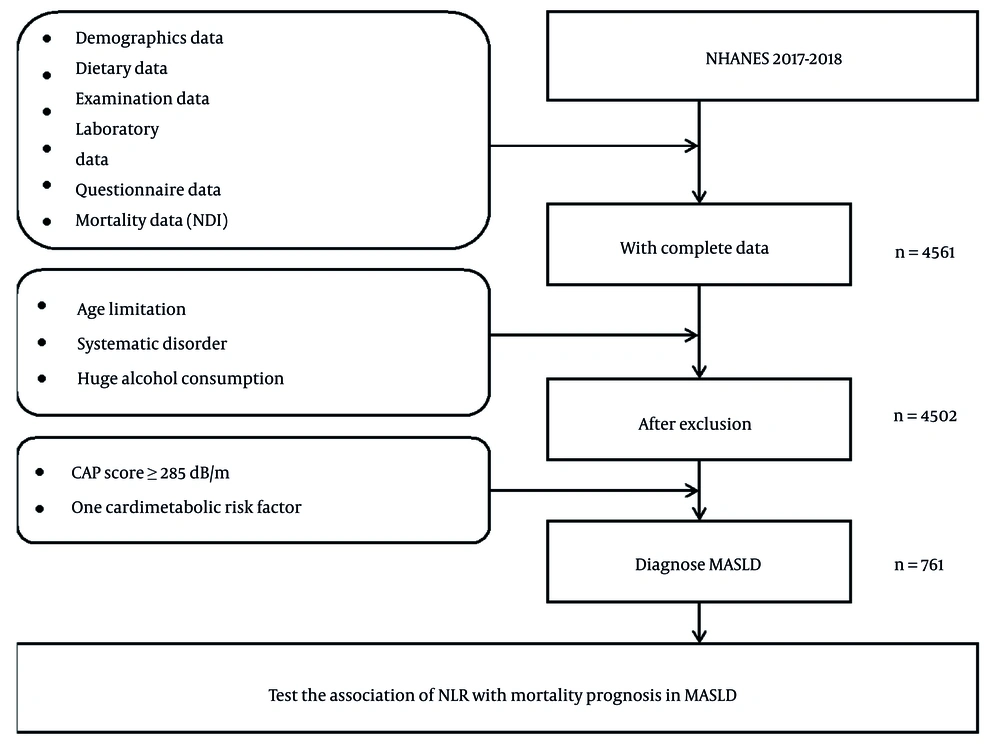
Figure 1.
Flowchart of the study population from National Health and Nutrition Examination Survey (NHANES)
| Items | Operational Definition |
|---|---|
| Exclusion | |
| Age limitation (y) | ≤ 18 |
| Systematic disorder | history of viral hepatitis; history of hepatitis virus infection; severe diseases; other endocrine disorders |
| Endpoint | lost to follow-up; an unclear outcome |
| Habit | huge alcohol consumption exceeding defined limits |
| Overweight or obesity | details in BMI classification |
| Cardiometabolic risk factors | |
| Central obesity (WC); cm d | |
| Male | > 94 |
| Female | > 80 |
| Dysglycemia or diabetes | |
| Fasting glucose | ≥ 5.6 mmol/L [100 mg/dL] |
| HbA1c | ≥ 5.7% [39 mmol/mol] |
| Hypertension (mmHg) | Blood Pressure ≥ 130/85 |
| Hyperlipidemia (mmol/L): TG ≥ 1.7 [150 mg/dL] | |
| Male | HDL-C ≤ 1.0 [40 mg/dL] |
| Female | HDL-C ≤ 1.3 [50 mg/dL] |
| Excessive alcohol intake (g) | |
| Male | |
| Per week | 210 - 420 |
| Per day | 30 - 60 |
| Female | |
| Per week | 140 - 350 |
| Per day | 20 - 50 |
| BMI classification (kg/m2) | |
| The US: 2025 WHO Obesity and Overweight guidelines | |
| Normal | 19 - 25 |
| Overweight | 25 - 30 |
| Obese | ≥ 30 |
| China: China’s 2024 Weight Management Guidelines | |
| Normal | 18.5 - 24 |
| Overweight | 24 - 28 |
| Obese | ≥ 28 |
| Age dichotomization (y) | |
| Young | < 65 |
| Elderly | ≥ 65 |
| Smoking status e | |
| YES | |
| Former | > 100 cigarettes but not currently smoking. |
| Now | > 100 cigarettes and currently smoking. |
| No (never) | ≤ 100 cigarettes. |
| Sedentary time (NHANES only); h/day f | |
| Low | < 4 |
| Moderate | 4 - 8 |
| High | > 8 |
a MASLD diagnosis: median Controlled Attenuation Parameter (CAP) score ≥ 285 dB/m and presence of at least one cardiometabolic risk factor.
b Baseline characteristics: Defined according to standard clinical criteria (corresponding variables in Table 3)
c Laboratory indicators: Harmonisation was achieved by standardising units (e.g., mg/dL ↔ mmol/L using standard conversion factors) (corresponding variables in Table 3).
d Waist Circumference (WC): Measured at the midpoint between the lowest rib and the iliac crest.
e Based on self-report of having smoked > 100 cigarettes in a lifetime.
f Based on the question: “How much time do you usually spend sitting on a typical day?”
3.3. Data Sources
After applying the inclusion and exclusion criteria, the analytic sample consisted of 761 participants from NHANES 2017 - 2020, representing a weighted population estimate, and 455 inpatient cases consecutively enrolled at the First Affiliated Hospital of Soochow University between August 2012 and August 2025 (Figure 2). The methodological overview is presented in Table 2.
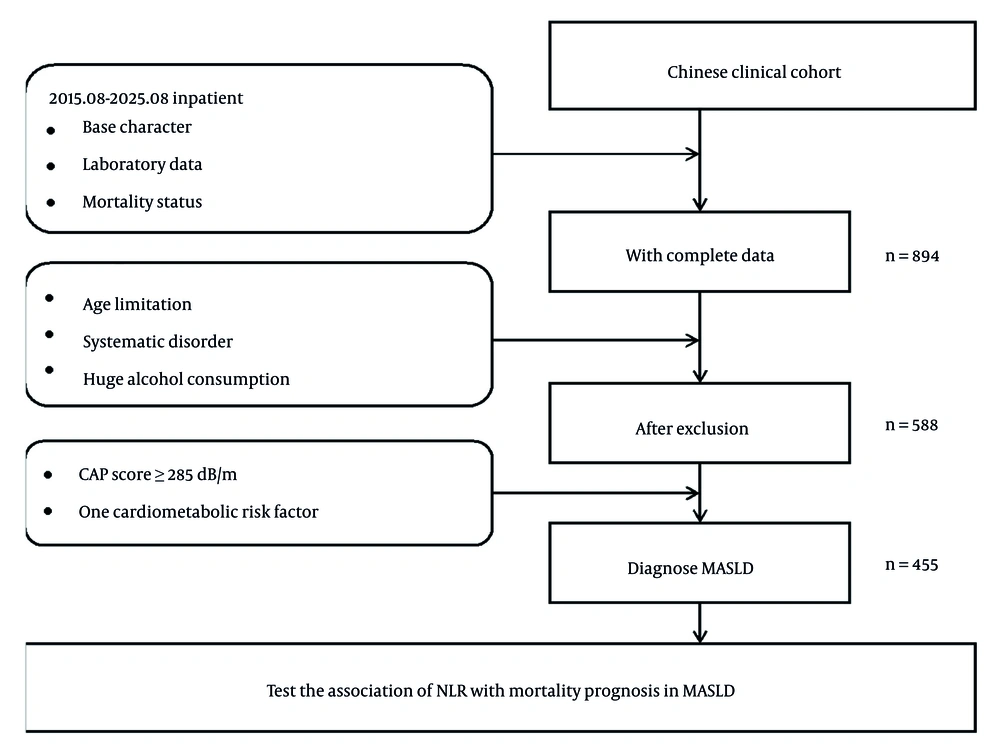
Figure 2.
Flowchart of the study population from the Chinese hospital.
Table 2.
Data Source from the Two Cohorts and Methodological Overview a
| Feature | NHANES Cohort (United States) | Hospital Cohort (China) |
|---|---|---|
| Recruitment and setting | Noninstitutionalized US civilian population from the NHANES 2017 - 2020 pre-pandemic cycle; multistage probability sampling. | Consecutive enrollment of patients from inpatient services between August 2012 and August 2025. |
| Final analytic sample | 761 participants (unweighted count), weighted to represent the US population (Figure 1). | 455 patients (Figure 2). |
| Index date (time zero) | Date of the NHANES Mobile Examination Center (MEC) visit. | Date of initial MASLD diagnosis at the hospital. |
| Mortality ascertainment | Probabilistic linkage to the National Death Index (NDI) through December 31, 2020. | Review of hospital medical records and standardized telephone follow-up interviews. |
| Censoring rule | Participants alive on December 31, 2020, were administratively censored on that date. | Patients confirmed alive at last contact were censored on the date of last contact. |
| Maximum follow-up | Approximately 30 months. | 5000 days. |
| Cause-specific mortality | Not analyzed. | Not available. |
a Abbreviation: NHANES, National Health and Nutrition Examination Survey.
3.4. Data Collection and Measurements
All participants were interviewed to collect information on baseline characteristics, laboratory indicators, outcome variables, and follow-up records. Details are provided in Table 3. Laboratory data were obtained from tests performed before treatment initiation in the hospital cohort or during survey participation in NHANES. All covariates were assessed at baseline. Hyperlipidemia was defined as total cholesterol ≥ 200 mg/dL or ≥ 5.2 mmol/L, or current use of lipid-lowering medication. Smoking status and sedentary behavior were self-reported based on the NHANES distribution. Alanine aminotransferase (ALT) and aspartate aminotransferase (AST) were measured using standard enzymatic assays, and units were harmonized to U/L. Body mass index was calculated as weight divided by height squared. Waist circumference was measured at the midpoint between the lowest rib and the iliac crest. Other variables, including age, sex, hypertension, and diabetes, were defined according to standard clinical criteria. Harmonization across cohorts was achieved by standardizing measurement units and aligning categorical definitions.
Table 3.
Variables in the Two Cohorts a
| Feature | NHANES Cohort (United States) | Hospital Cohort (China) |
|---|---|---|
| Baseline characteristics | Gender, age, body mass index (BMI), waist circumference (WC), history of hypertension, history of diabetes mellitus (DM), smoking history, alcohol consumption history, and sedentary time. | Gender, age, hospital length of stay, height, weight, BMI, history of hypertension, history of DM, smoking history, and alcohol consumption history. |
| Laboratory indicators | Lymphocyte count (LY), neutrophil count (NE), alanine aminotransferase (ALT), aspartate aminotransferase (AST), glucose (GLU), triglycerides (TG), total cholesterol (TC), high-density lipoprotein cholesterol (HDL-C), and low-density lipoprotein cholesterol (LDL-C). | White blood cell count (WBC), LY, NE, ALT, AST, albumin (ALB), GLU, TG, TC, HDL-C, LDL-C, creatinine, and potassium (K). |
| Outcome variables | Gender, age, hypertension history, DM history, smoking history, alcohol history, and various laboratory indicators. | |
| Follow-up recordings | Up to 30 months after MASLD ascertainment. | Up to 5000 days after MASLD ascertainment. |
a Abbreviation: NHANES, National Health and Nutrition Examination Survey.
3.5. Mortality Outcome Definitions
For the NHANES cohort, mortality status and cause of death were ascertained through probabilistic linkage to the National Death Index (NDI) through December 31, 2020. Survival time was calculated in months from the index date to the date of death for all-cause mortality or to the administrative censoring date of December 31, 2020, whichever came first. Right censoring was applied to participants who were alive at the end of follow-up. For the Chinese cohort, deaths were identified through review of hospital medical records or structured monthly telephone follow-up with patients or next of kin. If a participant could not be reached and had no death record, the date of last successful contact was used as the censoring date. The maximum follow-up window extended to August 31, 2025. The endpoint was all-cause mortality. Specific cause-of-death data were not available for this cohort.
3.6. Statistical Analysis
All analyses were performed using R software version 4.5.0 (R Foundation for Statistical Computing). Survival analysis was central to the assessment of prognosis. Kaplan-Meier curves were used to compare overall survival (OS) across NLR groups, and differences were tested using the log-rank test. Multivariable Cox regression models were used to evaluate the combined effects of multiple factors on survival time, with adjustment for potential confounders. Restricted cubic splines were used to model potential nonlinear relationships between continuous NLR and mortality risk, assessed via likelihood ratio tests. Subgroup analyses explored prespecified interactions between NLR and covariates related to mortality risk, based on their known biological and clinical relevance to MASLD and systemic inflammation. Results were visualized using forest plots. The robustness of the categorical NLR findings was examined by repeating the multivariable Cox models using NLR as a continuous variable, a log-transformed continuous variable, and tertiles defined by the cohort-specific distribution. Details of the model settings and statistical methods are provided in Table 4.
Table 4.
Sequential Multivariable Cox Regression Models a
| Model | NHANES Cohort | Hospital Cohort |
|---|---|---|
| Multivariable Cox regression models | ||
| Model 1 | Unadjusted. | Unadjusted. |
| Model 2 | Age, gender, WC, BMI. | Age, gender, BMI. |
| Model 3 | Age, sex, WC, BMI, smoking status, hyperlipidemia, ALT, AST, and sedentary time. | Age, sex, BMI, smoking status, hyperlipidemia, ALT, and AST. |
| Subgroup analysis | Gender, smoking, hyperlipidemia, and sitting time. | Age, gender, BMI, smoking, alcohol, hypertension, and diabetes. |
a Abbreviation: NHANES, National Health and Nutrition Examination Survey.
4. Results
4.1. Baseline Characteristics
The weighted NHANES cohort (Table 5) represented a population with a higher prevalence of obesity than the Chinese clinical cohort (Table 6). In both cohorts, the deceased group had significantly higher baseline NLR, higher neutrophil counts, and lower albumin levels than the survivor group (P < 0.05 for all).
Table 5.
Baseline Characteristics of Participants from National Health and Nutrition Examination Survey by Neutrophil-to-Lymphocyte Ratio a
| Variables | Total | Alive | Death | P-Value |
|---|---|---|---|---|
| NLR | 2.17 (0.05) | 2.84 (0.45) | 2.15 (0.05) | 0.14 |
| WC | 105.64 (1.04) | 107.85 (1.46) | 105.59 (1.08) | 0.27 |
| AST | 18.87 (0.49) | 18.21 (2.20) | 18.89 (0.50) | 0.77 |
| ALT | 18.44 (0.53) | 16.49 (3.18) | 18.48 (0.52) | 0.53 |
| Sitting time | 363.31 (10.26) | 363.66 (56.74) | 363.30 (10.50) | 1 |
| Age | 0.42 | |||
| Young | 529 (74.34) | 5 (66.40) | 524 (74.50) | |
| Elderly | 232 (25.66) | 8 (33.60) | 224 (25.50) | |
| Gender | 0.94 | |||
| Female | 451 (58.08) | 7 (56.51) | 444 (58.11) | |
| Male | 310 (41.92) | 6 (43.49) | 304 (41.89) | |
| BMI | 0.4 | |||
| Normal | 67 (10.87) | 0 (0.00) | 67 (11.09) | |
| Overweight | 184 (25.84) | 3 (13.78) | 181 (26.08) | |
| Obese | 510 (63.30) | 10 (86.22) | 500 (62.83) | |
| Smoking status | 0.42 | |||
| Never | 450 (56.39) | 4 (44.57) | 446 (56.64) | |
| Former | 202 (28.66) | 6 (23.58) | 196 (28.77) | |
| Current | 109 (14.94) | 3 (31.85) | 106 (14.59) | |
| Hyperlipidemia | < 0.001 | |||
| No | 164 (22.90) | 1 (1.25) | 163 (23.34) | |
| Yes | 597 (77.10) | 12 (98.75) | 585 (76.66) |
a Values are expressed as No. (%). Abbreviations: NLR, neutrophil-to-lymphocyte ratio; NHANES, National Health and Nutrition Examination Survey.
Table 6.
Baseline Characteristics of Participants from the Hospital by Neutrophil-to-Lymphocyte Ratio a
| Variables | Total (n = 455) | Alive (n = 397) | Death (n = 58) | P-Value |
|---|---|---|---|---|
| NLR | 4.64 ± 6.94 | 3.83 ± 4.91 | 10.28 ± 13.41 | < 0.001 |
| Gender | 0.47 | |||
| Female | 228 (50.11) | 200 (50.88) | 28 (48.83) | |
| Male | 227 (49.89) | 196 (49.12) | 30 (51.17) | |
| Age, continuous | 68.79 ± 11.93 | 68.37 ± 11.78 | 71.67 ± 12.59 | 0.048 |
| Age, categorical | 0.088 | |||
| Young | 151 (33.2) | 139 (35.1) | 12 (20.7) | |
| Elderly | 304 (66.8) | 258 (65.0) | 46 (79.3) | |
| BMI, continuous | 23.87 ± 4.09 | 23.83 ± 4.08 | 24.12 ± 4.15 | 0.619 |
| BMI, categorical | 0.304 | |||
| Normal | 252 (55.4) | 217 (54.7) | 35 (60.3) | |
| Overweight | 148 (32.5) | 134 (33.8) | 14 (24.1) | |
| Obese | 55 (12.1) | 46 (11.6) | 9 (15.5) | |
| Hypertension | 0.84 | |||
| No | 174 (38.24) | 153 (38.54) | 21 (36.21) | |
| Yes | 281 (61.76) | 244 (61.46) | 37 (63.79) | |
| DM | 0.83 | |||
| No | 331 (72.75) | 290 (73.05) | 41 (70.69) | |
| Yes | 124 (27.25) | 107 (26.95) | 17 (29.31) | |
| Smoking status | 0.30 | |||
| No | 413 (90.77) | 363 (91.44) | 50 (86.21) | |
| Yes | 42 (9.23) | 34 (8.56) | 8 (13.79) | |
| Alcohol use | 0.03 | |||
| No | 398 (87.47) | 353 (88.92) | 45 (77.59) | |
| Yes | 57 (12.53) | 44 (11.08) | 13 (22.41) | |
| Lymphocyte | 1.88 ± 2.49 | 1.97 ± 2.45 | 1.29 ± 1.86 | 0.02 |
| Neutrophil | 3.72 ± 3.49 | 3.51 ± 3.27 | 5.13 ± 4.55 | 0.01 |
| ALT | 46.63 ± 108.58 | 47.84 ± 114.98 | 38.28 ± 44.38 | 0.24 |
| AST | 64.04 ± 155.23 | 63.97 ± 164.53 | 64.51 ± 62.10 | 0.96 |
| ALB | 39.23 ± 41.48 | 40.18 ± 44.17 | 32.73 ± 10.30 | < 0.01 |
| Creatinine | 72.79 ± 78.79 | 69.07 ± 78.46 | 97.58 ± 77.20 | 0.01 |
| LDL-C | 1.93 ± 1.07 | 1.95 ± 1.01 | 1.77 ± 1.44 | 0.35 |
| K | 3.87 ± 6.56 | 3.90 ± 7.01 | 3.69 ± 1.36 | 0.60 |
a Values are expressed as No. (%) or mean ± SD. Abbreviations: NLR, neutrophil-to-lymphocyte ratio.
4.2. Survival Analysis
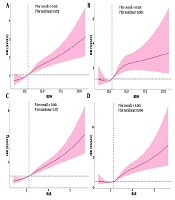
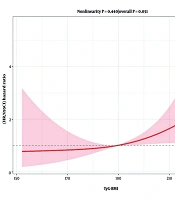
Kaplan-Meier curves in both datasets showed steeper declines in survival in the high-NLR group, indicating a significantly higher mortality risk (P < 0.05). In both the NHANES data (Figure 3) and the Chinese cohort data (Figure 4), survival differed significantly between groups. Restricted cubic spline models confirmed a linear relationship between NLR and mortality risk in both datasets (Figure 5 for the NHANES data and Figure 6 for the hospital cohort).
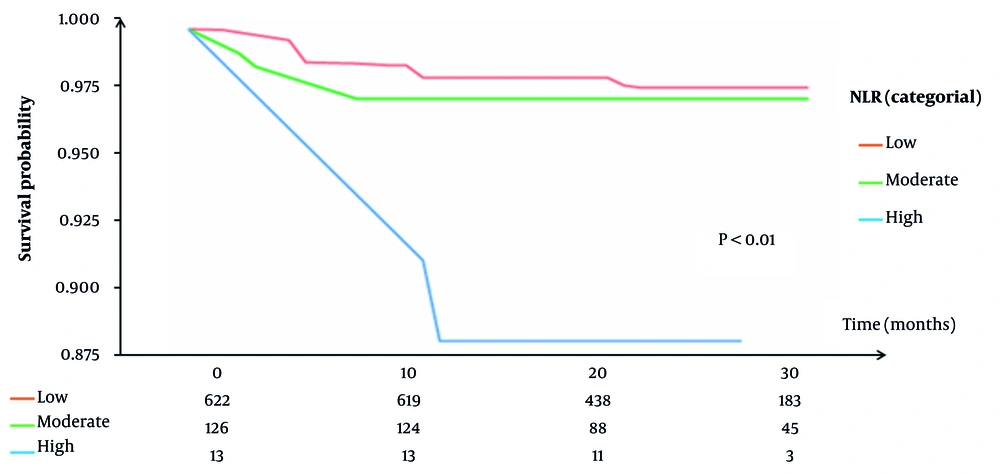
Figure 3.
Kaplan-Meier curves showing the association between neutrophil-to-lymphocyte ratio (NLR) and MASLD from National Health and Nutrition Examination Survey (NHANES).
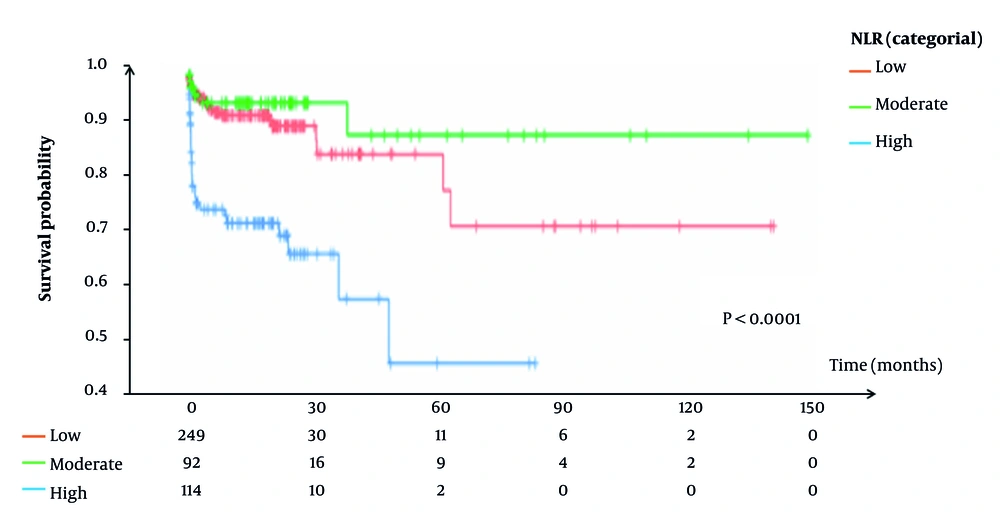
Figure 4.
Kaplan-Meier curves showing the association between neutrophil-to-lymphocyte ratio (NLR) and MASLD from the Chinese hospital.
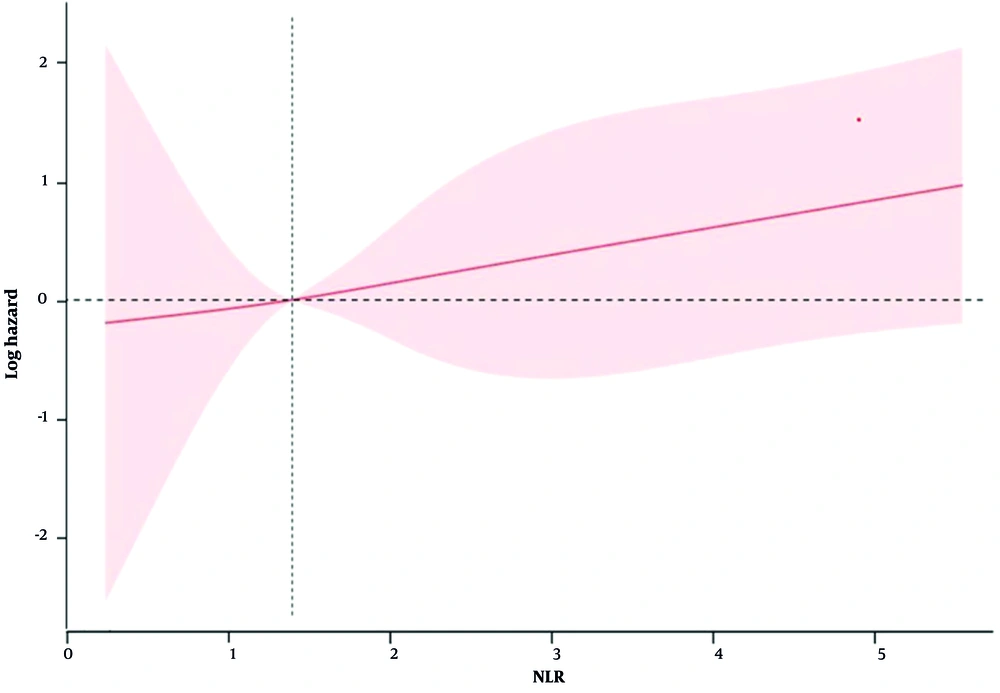
Figure 5.
Restricted cubic spline analysis showing the association between neutrophil-to-lymphocyte ratio (NLR) and mortality risk in the National Health and Nutrition Examination Survey (NHANES) dataset.
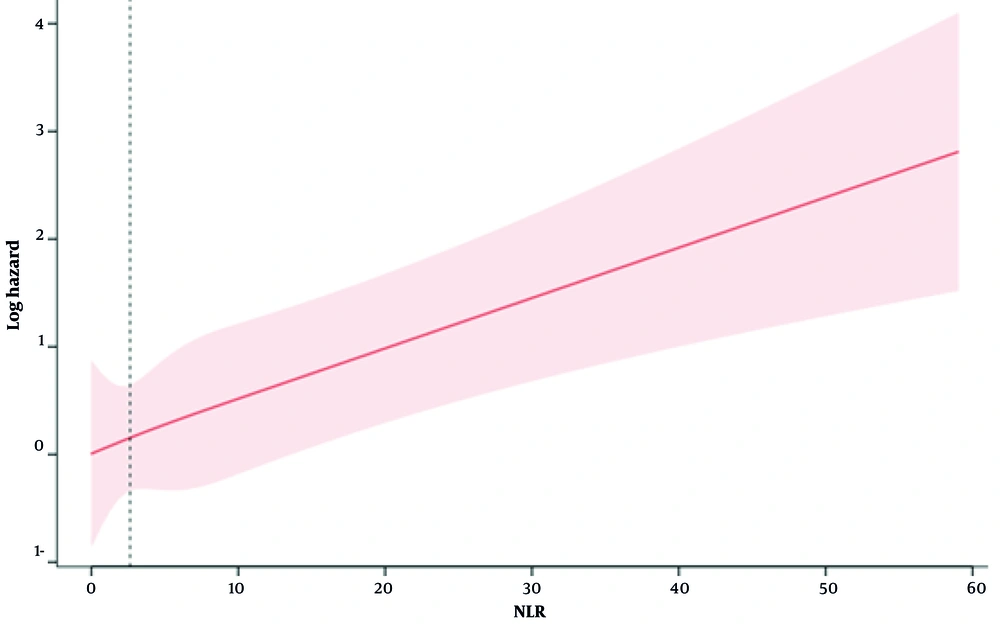
Figure 6.
Restricted cubic spline analysis showing the association between neutrophil-to-lymphocyte ratio (NLR) and mortality risk in the Chinese hospital cohort.
4.3. Multivariable Regression Analysis
Multivariable regression models, adjusted for factors including age, were constructed to examine the relationship between NLR and mortality outcomes in patients with MASLD using data from both the NHANES database and the single-center hospital-based cohort (Table 7). NLR was analyzed as both a continuous and a categorical variable.
Table 7.
Association of Neutrophil-to-Lymphocyte Ratio with MASLD a
| Cohort and Variable | Model 1 b | P-Value | Model 2 c | P-Value | Model 3 d | P-Value |
|---|---|---|---|---|---|---|
| NHANES database | ||||||
| NLR, continuous | 1.61 (1.09, 2.37) | 0.016 | 1.44 (1.08, 1.921) | 0.013 | 1.377 (0.962, 1.97) | 0.08 |
| NLR, categorical | ||||||
| Low | Reference | Reference | Reference | |||
| Moderate | 1.441 (0.232, 8.932) | 0.6947 | 1.035 (0.16, 6.687) | 0.9714 | 0.851 (0.117, 6.176) | 0.8731 |
| High | 5.764 (0.83, 40.04) | 0.0765 | 3.787 (0.426, 33.676) | 0.2323 | 2.795 (0.237, 32.945) | 0.4142 |
| Hospital-based data | ||||||
| NLR, continuous | 1.05 (1.03, 1.07) | < 0.001 | 1.05 (1.03, 1.07) | < 0.001 | 1.05 (1.03, 1.07) | < 0.001 |
| NLR, categorical | ||||||
| Low | Reference | Reference | Reference | |||
| Moderate | 0.57 (0.21, 1.50) | 0.25 | 0.5 (0.19, 1.32) | 0.16 | 0.4 (0.15, 1.08) | 0.07 |
| High | 3.89 (2.25, 6.74) | < 0.0001 | 3.48 (1.99, 6.07) | < 0.0001 | 2.65 (1.39, 5.06) | < 0.001 |
a Values are expressed as (OR, 95% CI). Abbreviations: CI, confidence interval; OR, odds ratio; NLR, neutrophil-to-lymphocyte ratio; MASLD, metabolic dysfunction-associated steatotic liver disease; NHANES, National Health and Nutrition Examination Survey.
b Model 1: No covariates adjusted.
c Model 2: Adjusted for age, sex, WC, and BMI.
d Model 3: Adjusted for age, sex, WC, BMI, smoking status, hyperlipidemia, sedentary time (NHANES only), ALT, and AST.
4.4. Subgroup and Interaction Analysis
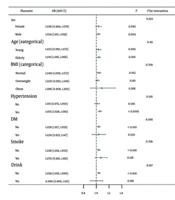
Results from both cohorts showed that NLR was significantly associated with an increased risk of MASLD mortality. In the NHANES database, significant interaction effects were observed for hyperlipidemia, smoking status, and sedentary level, whereas no significant interaction was found for sex (Figure 7). In the single-center clinical data, no statistically significant interaction effects were observed, indicating effect homogeneity across these subgroups (Figure 8).
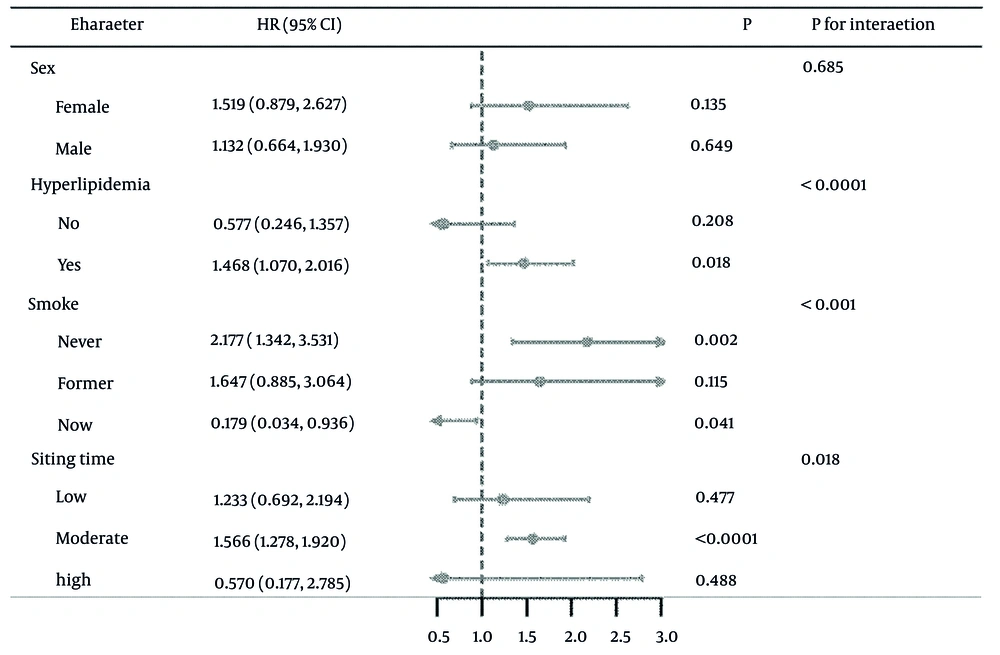
Figure 7.
Association between neutrophil-to-lymphocyte ratio (NLR) and MASLD from National Health and Nutrition Examination Survey (NHANES).
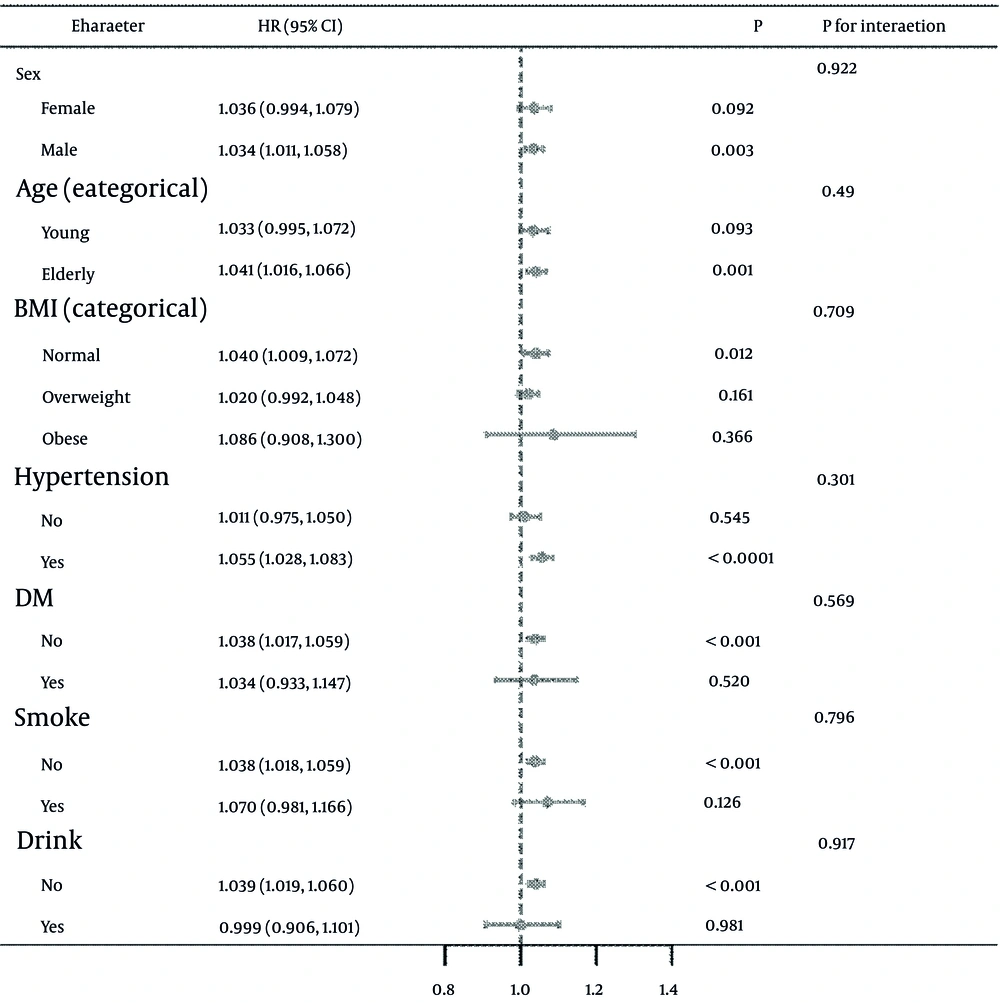
Figure 8.
Association between neutrophil-to-lymphocyte ratio (NLR) and MASLD from the Chinese hospital
4.5. Sensitivity and Robustness Analyses
To assess the stability of the findings, Cox models were refit using NLR as a continuous variable, log-transformed NLR, and tertiles. Log-transformed NLR showed similar significant associations. The tertile-based analysis indicated a significant graded increase in mortality risk, with the highest tertile consistently showing the greatest risk. Detailed ORs and 95% CIs are presented in Table 8. These results indicate a robust, linear dose-response relationship that is not driven by extreme strata.
Table 8.
Sensitivity and Robustness Analyses a
| Type | OR (95% CI) | P-Value |
|---|---|---|
| Log-transformed NLR | ||
| logNLR | 2.433 (0.512, 11.576) | 0.2638 |
| NLR quartiles | ||
| Q2 | 3.909 (0.499, 30.651) | 0.1944 |
| Q3 | 0.824 (0.09, 7.555) | 0.8637 |
| Q4 | 7.029 (0.706, 70.022) | 0.0964 |
| Exclude extreme values (99th percentile) | ||
| excludeNLR | 1.287 (0.658, 2.516) | 0.461 |
a Abbreviations: NLR, neutrophil-to-lymphocyte ratio.
5. Discussion
MASLD, primarily characterized by abnormal intrahepatic fat deposition, is closely associated with obesity, diabetes, dyslipidemia, and hypertension (19). This study provides robust cross-national evidence that elevated NLR is an independent risk factor for all-cause mortality in patients with MASLD. The consistency of findings between a Western population-based database (NHANES) and an Asian clinical cohort strengthens the generalizability of NLR as a prognostic biomarker. Notably, our study design enabled comparisons across distinct settings, including short-term follow-up in the US population and long-term follow-up in a Chinese clinical setting, demonstrating consistency across different timeframes, populations, and data sources.
Baseline analyses revealed more pronounced inflammation and organ dysfunction in the high-NLR group. Higher mean concentrations and greater interindividual variability in ALT and AST were also observed in the Chinese cohort relative to NHANES. Given that more than half of Chinese adults are estimated to be overweight or obese, with a particularly high prevalence of central adiposity, this observation may reflect the contribution of visceral fat accumulation and associated metabolic perturbations to hepatocellular injury.
Our findings align with and extend previous work linking systemic inflammation to adverse liver outcomes (20). Kaplan-Meier curves demonstrated a significantly higher mortality risk in the high-NLR group in both cohorts, and multivariable Cox regression analyses confirmed that elevated NLR independently predicted all-cause mortality after comprehensive adjustment for potential confounders. Restricted cubic spline models supported a linear relationship between NLR and mortality risk, suggesting that any increment in NLR, even within ostensibly normal ranges, may indicate a slight increase in long-term risk, although the clinical significance is most pronounced above the established threshold of 3 to 5.
NLR was identified as an independent risk factor, but obesity substantially influenced this relationship. The NHANES cohort included a high proportion of obese patients and had an elevated average waist circumference, whereas the Chinese cohort included larger proportions of patients in the normal and overweight BMI categories. Notably, the association remained significant within the normal BMI subgroup in the Chinese cohort. Previous research indicates marked regional differences in MASLD incidence (6), with Asian populations developing the disease at lower BMI levels, suggesting greater metabolic susceptibility (8). Multivariable analysis of the Chinese data revealed a significant NLR-mortality association specifically in nondiabetic patients. Patients with diabetes have lower antioxidant levels and impaired antioxidant capacity, and inflammation is intricately linked to diabetic complications.
Subgroup analyses suggested that the NLR-mortality association may be more prominent in older, male, nonsmoking, or nondrinking populations, although no formal interaction effects were detected for age, gender, or BMI. Notably, we observed paradoxical, although weak, protective effects associated with smoking and alcohol consumption. This raises the question of whether nicotine or ethanol might confer protection or exert anti-inflammatory effects under conditions of heightened inflammatory response. Both datasets showed associations between smoking status and the NLR-mortality relationship. The primary high-risk events caused by nicotine, such as acute cardiovascular events, might mask the impact of NLR elevation in patients with MASLD, or survivor bias could be present. Alternatively, smoking-induced oxidative stress may exacerbate inflammation and vascular damage, thereby confounding the NLR-mortality association.
In the Chinese cohort, the NLR-mortality association appeared more pronounced in males, whereas gender showed no significant interaction effect in NHANES. Estrogen plays crucial roles in regulating muscle mass, strength, and mitochondrial function and has potent anti-inflammatory and antioxidant properties. This protective effect may manifest over longer periods, potentially explaining the gender difference observed in the long-term Chinese follow-up but not in the short-term NHANES analysis.
In NHANES, sedentary behavior level significantly interacted with NLR in relation to MASLD mortality. This may be related to the effects of sedentary behavior on cardiovascular health and metabolic status. Prolonged sitting time elevates systemic inflammation and adversely affects glucose and lipid metabolism. Interestingly, the moderate sedentary group exhibited the highest risk, rather than the high sedentary group, suggesting a potential J-shaped effect of sedentary time on MASLD mortality.
Our study has limitations. First, the small size of the high-NLR subgroup in NHANES (n = 13) limited the categorical analysis, resulting in wide confidence intervals. However, the consistent results from analyses using continuous NLR, log-transformed NLR, and NLR tertiles confirmed a significant linear association and substantially strengthened the robustness of the overall conclusion that higher NLR is detrimental. Second, the outcome was all-cause mortality, and linkage to cause-specific liver mortality was not available for the Chinese cohort. Third, despite adjustment for multiple confounders, residual confounding inherent to observational studies cannot be entirely excluded. Finally, the subgroup analyses were prespecified in the statistical plan, but the interaction findings should be interpreted with caution. Because they were exploratory and were not adjusted for multiple comparisons, they should be viewed as hypothesis-generating observations for future dedicated studies rather than confirmatory evidence.
Future research should explore the roles of neutrophils and lymphocytes within the hepatic immune microenvironment in driving MASLD progression (2) and investigate targeted therapies. Clinically, dynamic NLR monitoring could serve as a noninvasive biomarker for risk stratification and treatment decisions. Combining NLR with existing pathological, imaging, and serological fibrosis scores may improve prognostic prediction (4). Incorporating quantified metrics of physical activity intensity and sedentary behavior would enable further investigation of interactions with NLR.