
1. Background
Cervical cancer is the fourth leading cause of cancer-related mortality among women worldwide. Ineffectiveness of common therapeutic techniques attracts scientists' attention to combinational therapy (1). Current studies have been proved contributions of aberrant expression of stem cell marker genes, such as Sox2 and Nanog, to progression of several tumors such as esophagus (2), bladder (3), colorectal (4), lung (5), breast (6) and cervix (7, 8). So it is not unexpected that targeting these factors can be served as a powerful approach in cancer treatment. Cisplatin is an anti-neoplastic agent that interferes with DNA replication and kills the proliferating cells. However, because of drug resistance and unwanted side effects, combination therapies of cisplatin with other anti-tumor agents, especially herbs, have been highly suggested (9). Crocin is one of the main carotenoids of saffron (Crocus Sativus L.) that its anti-tumor effects have been reported on various cancer cells through interaction with multiple signaling pathways (10, 11).
2. Objectives
In the present study, for the first time, we aimed to evaluate the combinational effects of crocin and cisplatin on suppression of pluripotency genes, Sox2 and Nanog, in OV2008 cervical cancer cells.
3. Methods
Cervical cancer cell line (OV2008) was kindly provided by Doctor Benjamin K. Tsang’s laboratory (University of Ottawa, Canada). The cytotoxic effects of crocin (0 - 4 mg/mL) and 0.003 mg/mL cisplatin measured with MTT assay. Cisplatin was obtained from Sigma (Oakville, ON, Canada) pharmaceutical company and crocin was extracted and purified according to our previous paper (12). Then OV2008 cells were treated with an effective dose of both crocin (1.5 mg/mL) and cisplatin (0.003 mg/mL) for various hours. Annexin-V-FLUOS and PI staining kit (IQ-Product, Netherlands) were used for apoptosis detection. Total RNA was extracted by RNX Plus (Cinnagen, Iran) and cDNA was synthesized using Thermo-scientific Kit (USA). qRT-PCR was performed by designed primers in the ABI Step One™ Real-Time PCR System (Foster City, CA). The relative expression of genes was calculated by 2ΔΔCT method and SYBR Green kit (Parstoos, Iran).
SOX2:AGCTACAGCATGATGCAGGA(forward), GGTCATGGAGTTGTACTGCA(reverse)
NANOG: AATACCTCAGCCTCCAGCAGATG(forward), TGCGTCACACCATTGCTATTCTTC (revers)
Bactin: TGGCACCCAGCACAATGAA(forward),CTAAGTCATAGTCCGCCTAGAAGCA(reverse)
Results expressed as the means ± SEM of at least three independent experiments (n = 3). Data were analyzed using one-way ANOVA and with Tukey’s post hoc test to assess differences between experimental groups. Statistical significances inferred at P≤0.05, (PRISM 6.07; Graph- Pad Software Inc.).
4. Results
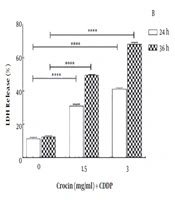
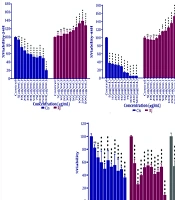
The viability of treated cells with various concentrations of crocin (0 - 4 mg/mL) and 0.003 mg/mL cisplatin significantly reduced in a time- and dose-dependent manner after 24, 48 and 72 hours. The IC50 values of crocin in this combinational treatment were 3, 1.5 and 1 mg/mL, at 24, 48 and 72 hours, respectively. Our previous study showed that IC50 values of crocin alone were higher than these doses (Under reviewed paper).
Staining of cells with Annexin V-FLOUS and PI showed that 1.5 mg/mL crocin and 0.003 mg/mL cisplatin increased early apoptosis in a time dependent manner (Figure 1). Also cell cycle analysis showed that after 24, 48, and 72 hours of treatment, the percentage of apoptotic cells in the SubG1 phase was determined as 9%, 10% and 33% respectively.
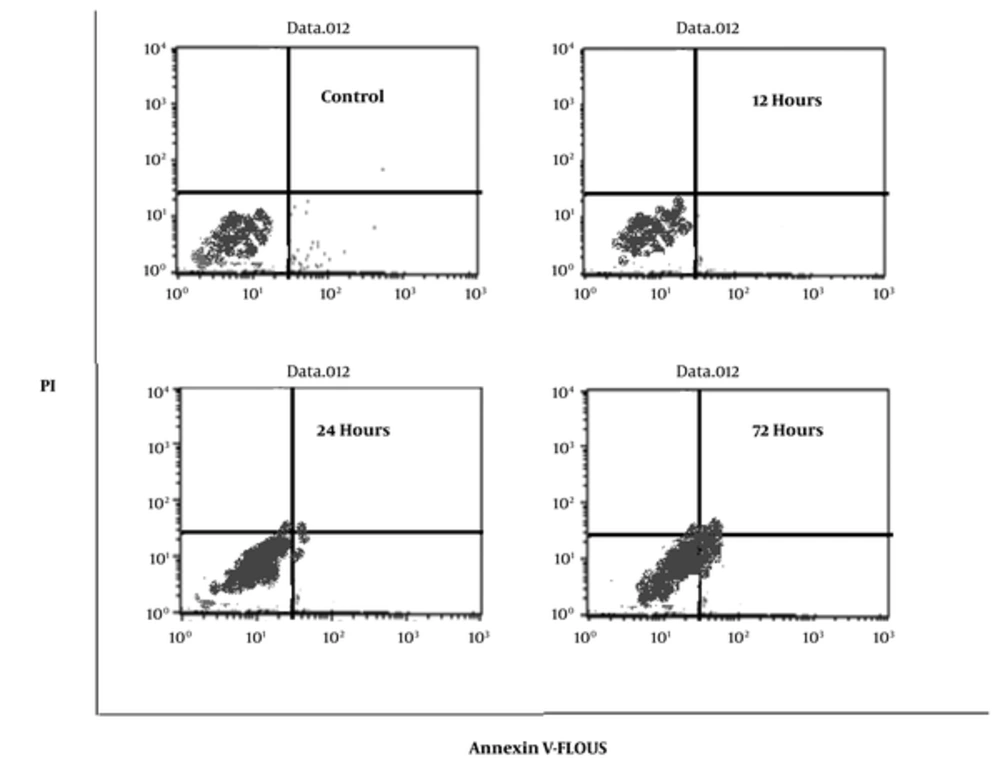
Figure 1.
Effect of 1.5 mg/mL Crocin Alone (Up) and with 0.003 mg/mL Cisplatin (Down) on Apoptosis; Viable cells (Annexin V- /PI - ), early apoptotic cells (Annexin V+ /PI - ), secondary necrotic cells (Annexin V+ /PI + ), and primary necrotic cells (Annexin V-/PI + ) are located in the lower left, lower right, upper right, and upper left quadrants, respectively.
Real-Time PCR data showed that this combinational treatment of cells led to reductions in the mRNA levels of Sox2 (Figure 2A; P < 0.01, P < 0.0001) and Nanog (Figure 2B; P < 0.0001) at 12, 24 and 36 hours. Nonetheless individual treatment of cells with 1.5 mg/mL crocin down-regulated expression levels of Sox2 (Figure 2A; P < 0.0001) at all time intervals and Nanog (Figure 2B; P < 0.0001) at just 36 hours.
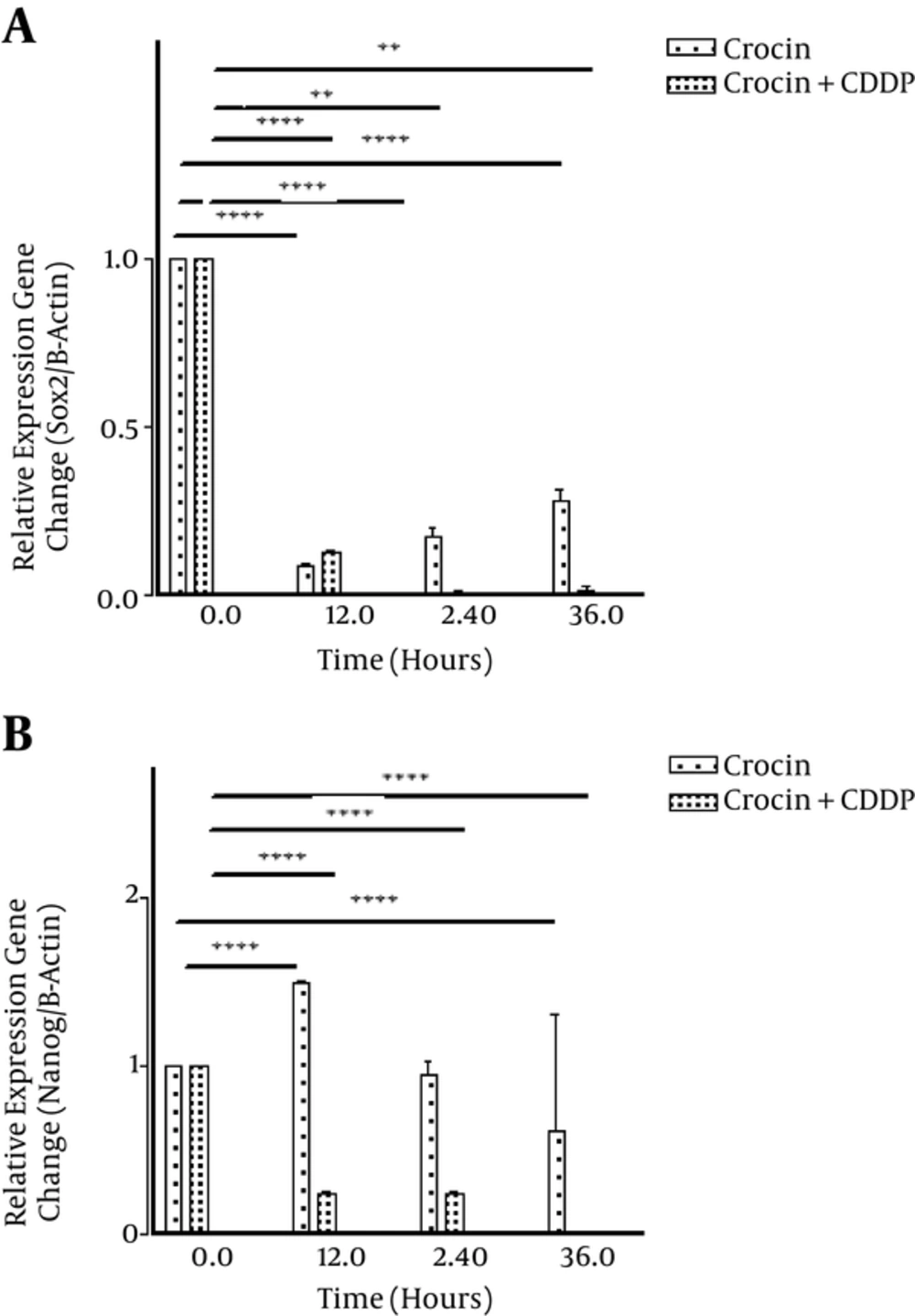
Figure 2.
Effect of 1.5 mg/mL Crocin in the Present and Absent of 0.003 mg/mL CDDP on mRNA Expression of A, Sox2 and Nanog; #Suppressive Effect of Crocin and Cisplatin on. Revision 0; Journal: Iranian Journal of Ca. Page 10 of 11 24 February 2017 12:29:57; B, in OV2008 cell line.) **P < 0.01, ****P < 0.0001); CDDP: Cisplatin.
5. Discussion
Cervical cancer is one of the main female cancers in developing countries such as Iran (13). Despite the usefulness of current therapies for this cancer, chemoresistance of tumor cells and unwanted side effects of chemical drugs remain a big challenge for oncologist (1). Several studies have proved anti-cancer properties of crocin (14-16).
In this study we investigated combinational effects of crocin and cisplatin on suppression of pluripotency genes, in cervical cancer cells. A large amount of data has showed up-regulation of key stemness factors, like Sox2 and Nanog in several types of cancer cells and the importance of targeting these regulators in cancer therapy (2-8). Sox2 and Nanog are transcription factors that are essential for maintaining self-renewal or pluripotency of undifferentiated embryonic stem cells (17). Up-regulation of these factors and disregulation of downstream regulatory pathways affects several aspects of cancer development such as cell proliferation, self-renewal, motility, epithelial-mesenchymal transition, and drug-resistance (18). The effects of Cisplatin as a chemotherapy drug on pluripotency genes have been evaluated before (19, 20). So finding the novel agents in combination with this drug as pluripotency regulators could help us to improve efficiency of cancer therapy. In the present study we aimed to investigate the molecular mechanism of crocin via alternation of ploripotency genes. Our result showed that treatment of cervical cancer cells with crocin and cisplatin could reduce the expression level of Sox2 and Nanog and also increase the percentage of apoptotic cells and cytotoxicity of cisplatin in these cells. Also according to our previous study, we could claim that combinational treatment of crocin and cisplatin is more effective than each of them individually. In conclusion, it could be proposed that crocin might serve as an adjuvant therapy for cervical cancer besides cisplatin.