DOX is a potent free radical inducer in many organs. The body's antioxidants cannot eradicate radicals separately (
23). When the mitochondrial enzymes metabolize the DOX, many hepatocytes are destroyed (
24). Mitochondrial oxidation-reduction and ROS could lead to the degradation of DNA, Apoptosis, and Necrosis in the liver. (
25). The effects of Vit E, Ω-3, and both of them were studied as anti-inflammatory aspects. Their protection abilities were assessed against hepatic damage. Vit E is an antiradical agency that modifies the liver's results of free oxygenous radicals (
26). Vit E can decrease ischemia-reperfusion tissue damage (
27). Some investigators have shown that small vessels' killed endothelium will enhance after the Vit E regime (
28,
29). Vit E regime therapy controls neoplasms growth and protects against chemotherapic side effects (
30). The Ω-3 can enhance the liver lesions that drugs and pathogens generate ROS (
31-
33). The Ω-3 displayed a significant defensive influence against the effects of CCL4 lesions. The Ω-3 showed a significant reduction of AST, ALT, ALP, and total bilirubin in the CCL4-related animals. (
33,
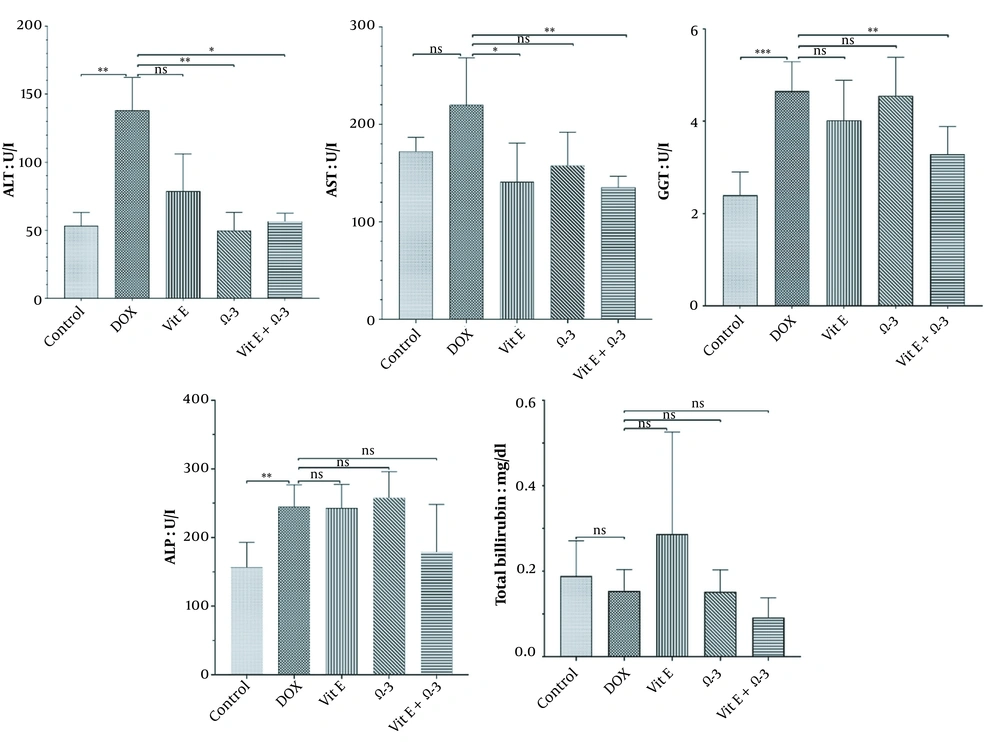
34). Co-administration of Vit E or Ω-3 with DOX could prevent increased serum ALT and AST levels (
12,
18). The level of ALP is a marker to determine cholestasis in mice (
35). Co-administration of Vit E and Ω-3 could diminish the level of ALT, AST, GGT, ALP, and total bilirubin, more imaginable than each of them alone. DOX did not induce cholestasis because of the low level of the serum ALP. The Vit E regime may facilitate hepatic lesions. Administration of Vit E can protect against the vascular degeneration which DOX produces. The Ω-3 could enhance the liver lesions of ROS (
33,
34). The Ω-3 400 mg/kg histologic appearance may reduce lipid oxidation in the liver. NADPH enzyme of the mitochondria produces ROS with Doxorubicin-administration (
36). NADPH is a reducing factor that the enzyme named nitric oxide synthase (NOS) could utilize to produce NO from L-arginine. L-arginine deficiency can lead to superoxide construction (
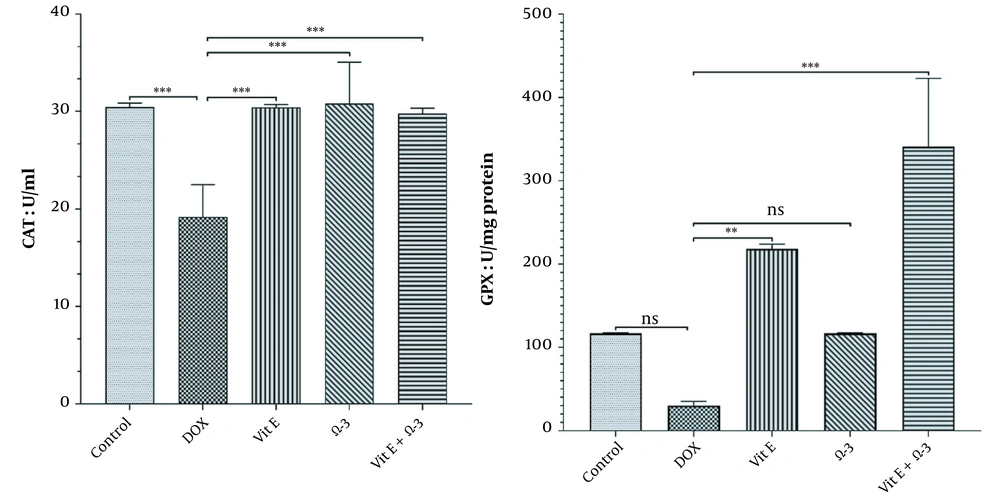
37). Vit E and Ω-3 are detoxifiers and antioxidants that inhibit ROS synthesis (
18,
32,
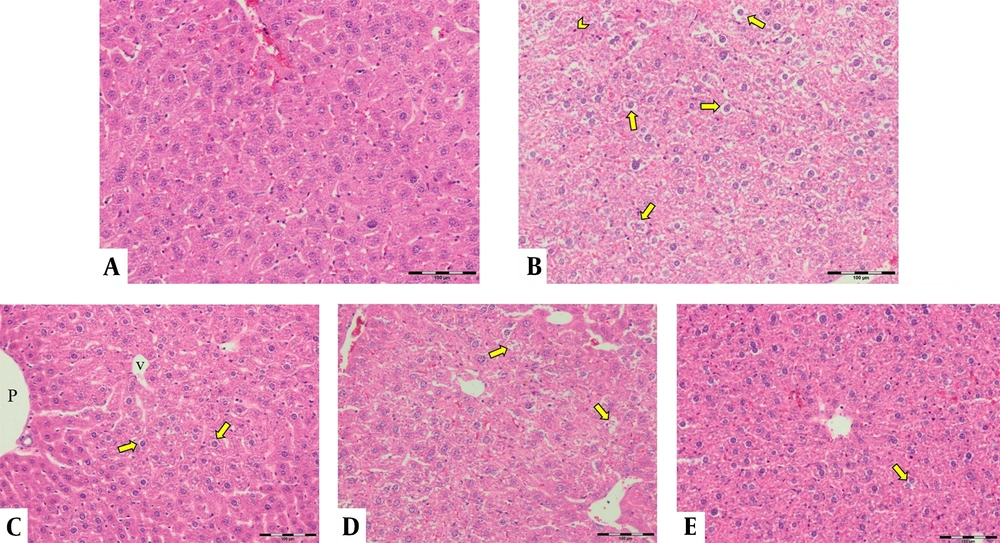
34). According to this study, using Vit E and Ω-3 significantly heals hepatic damage. Microscopically, treatment with DOX could produce leukocyte infiltration, congestion, and vacuolar degeneration (
23). Ω-3 treatment can improve the antitumor ability of DOX (
38). In addition to the pathologic outcomes of DOX toxicity, many growth factors that may induce bile duct hyperplasia and inflammation are synthesized (
39).
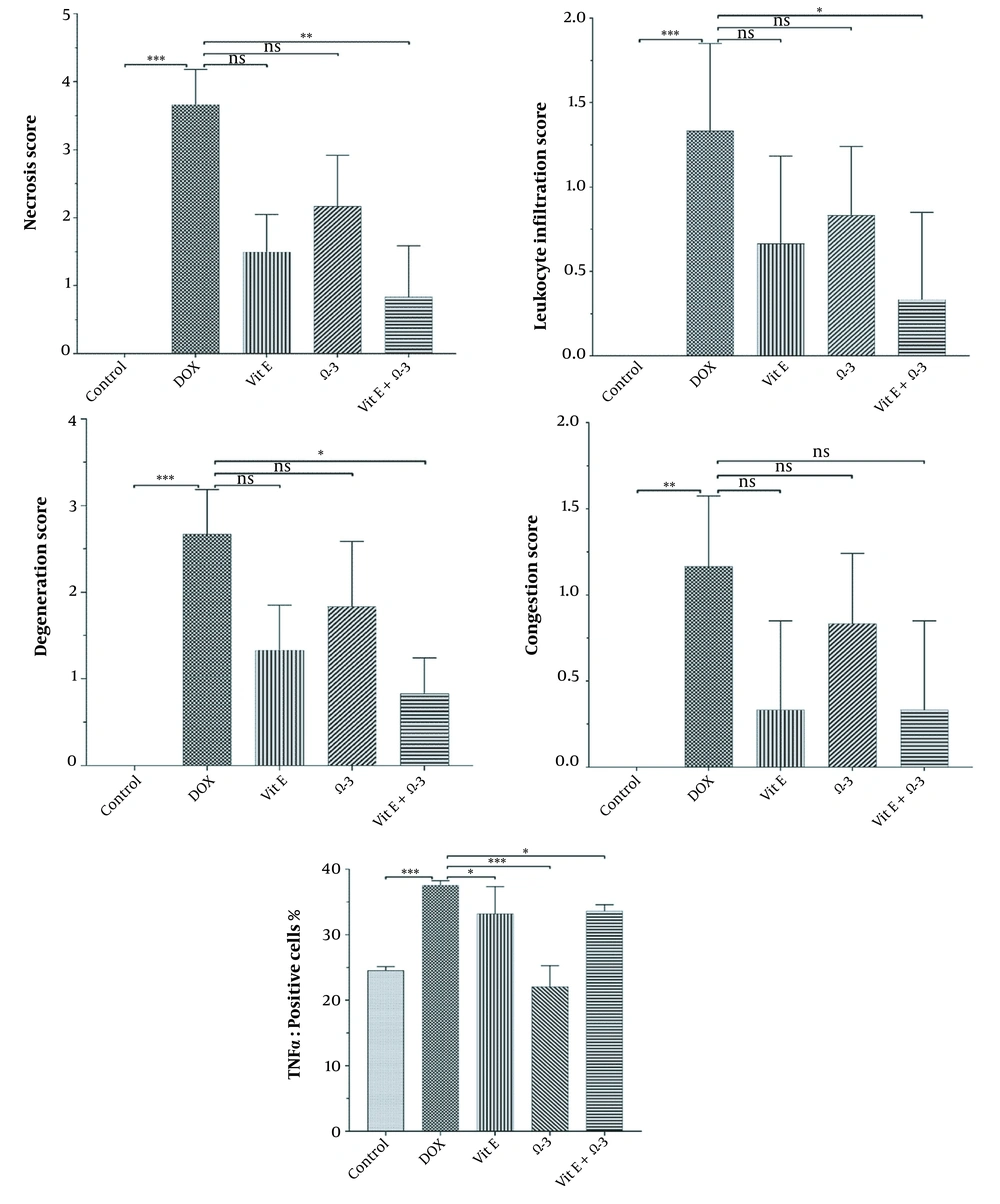
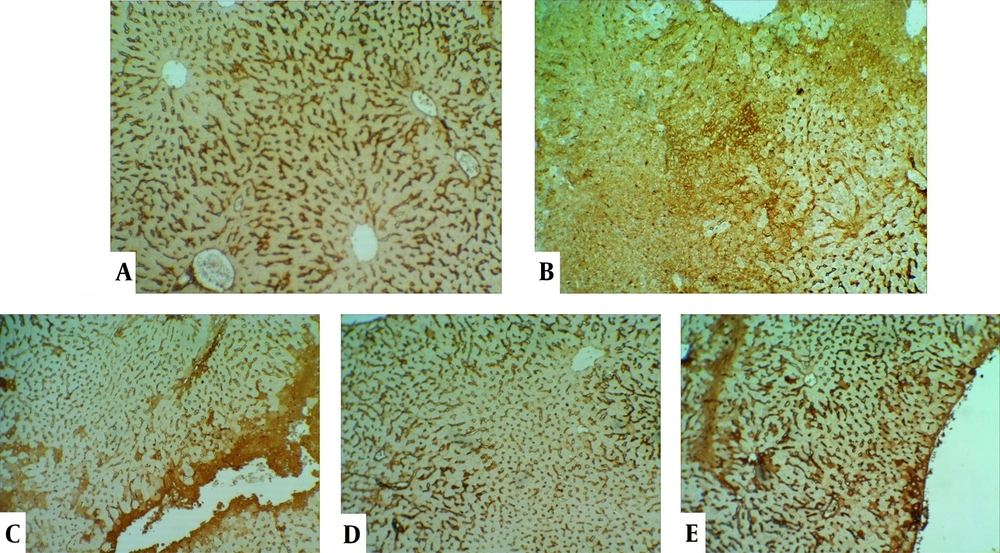
The degree of lobular necrosis in the DOX group was moderate despite the severe degree of sinusoidal engorgement, vacuolar degeneration, and inflammation. The degree of all lesions in the treated groups was mild. The rate of necrosis in the doxorubicin group was much higher than in the other groups. Necrosis in the Vit E group was less than Ω-3. However, combined administration of both could be more effective than Vit E alone. The rate of leukocyte infiltration in the doxorubicin group was much higher than in the control group. The Ω-3 group has no more infiltrated leukocytes compared to the vitamin E group. However, combined administration of both could be more effective in reducing leukocyte infiltration than either alone. Hepatocytes in the doxorubicin group underwent vacuolar degeneration. In the control and both Vit E- Ω-3 together groups, the degree of degeneration was significantly lower. This badge means that Vit E or Ω-3 alone cannot inhibit hepatocyte degeneration compared to using both of them. There was no significant difference in the degree of sinusoids and central vein hyperemia in all groups (
Figure 4). Cytokines are small and membrane-bound immunomodulating proteins that aid cell-to-cell communication in immune responses and stimulate the movement of cells toward sites of inflammation, infection, and trauma (
39). TNF-α is an initiator cytokine that could start other cytokine cascades, including IL-1β synthesis, which can overstate the inflammation (
40). The most way that DOX produces injuries to many organs is because of the induction of releasing inflammatory cytokines after necrosis and degeneration of the tissues. Both Vit E and Ω-3 can reduce the serum levels of TNF- α, IL-6, IL-1β, and IL-17 in mice. They can increase the levels of IL-10 (
10,
33,
41,
42). When toxins create necrosis or other injuries, an inflammasome named NOD-like receptor protein three could exaggerate the inflammation. After that, the activated inflammasome could induce more action in cancer and diabetes. Vit E diminishes inflammation by inhibiting the synthesis of a kind of Nod-like receptor-mounted NLRP3 (
41). In this study, the DOX group's TNF-α expression in the liver means more inflammation (
43).
We found that the administration of Ω-3 or Vit E separately in the other experimental group decreased the level of TNF-α in the liver. Using synchronous of both could reduce lesions more than individual supplementation only. The reduction of the TNFα, the anti-inflammatory effects, and the antioxidant and anti-inflammatory effects we describe in this experiment for the Ω-3 group have been observed in the Vit E group better than in the Ω-3 group. In addition, it was more than improved by their co-administration of them. On the other hand, the administration of the Ω-3 alone could not give us the same optimal effects.
The combination of vitamin E and Ω-3 may reduce the cytotoxicity induced by doxorubicin (
44). These facts require further studies. This article tried to prove that the co-administration of Vit E and Ω-3 could pull out the improving effects against DOX-induced hepatopathy. The protection managed by Ω-3 and Vit E might happen via antioxidant-producing enzymes by the cytokines. The produced antioxidants can invert hepatic lesions. Our findings suggest that the proper dose of Vit E and Ω-3 can have a protective complex for anticancer treatment. Vitamin E and Omega-3 are well-known compounds, whose anti-radical and anti-cancer effects were known, but combining them and observing the effects of anti-hepatotoxicity had not been done, which was tried in this research considering the possibilities. In the literature review, it can be seen that the compounds are prescribed in nano form or at least with nano-size transporters. It is suggested to pay attention to the nano composition of omega and vitamin in the field of recent research. It might reduce the cytotoxicity of doxorubicin better and in more detail.