
1. Background
Cancer presents a significant public health challenge within the Arab world, with projections indicating a potential rise in cancer incidence within the Eastern Mediterranean Region and Gulf region, potentially reaching up to 1.8 million new cases by 2030 (1, 2). In Saudi Arabia, cancer incidence reached 24 485 cases in 2018, with an almost equal distribution between males and females, and a predominance of colorectal cancer in men and breast cancer in women (3). Despite this, cancer did not rank among the top 10 causes of mortality in Saudi Arabia (4), which may point towards advancements in healthcare delivery and cancer treatments within the region.
The experience of pain is prevalent among cancer patients, a symptom that not only signifies physical distress but also impinges on emotional well-being (5, 6). The significance of pain management in cancer care is underscored by the high prevalence of chronic pain experienced during treatment, escalating in advanced stages of the disease (7, 8). Consequently, the role of analgesics is pivotal, not only in pain mitigation but also in enhancing the overall quality of life (8). An accurate and comprehensive assessment is essential in prescribing pain medication, which serves as a fundamental aspect of the therapeutic process (9, 10). However, despite the recognized necessity for effective pain management, a gap exists in achieving optimal control due to various patient and clinician-related barriers (11-13).
Addressing the gap in effective pain management for cancer patients requires a nuanced understanding of the barriers to analgesic adherence. Concerns over the potential for addiction and the adverse effects of analgesics significantly influence patient compliance. Research has highlighted that patients, as well as some healthcare providers, exhibit apprehension toward the use of strong opioid medications, often due to misconceptions about dependency and side effects (14). This apprehension is compounded by inadequate pain assessment and management strategies, which fail to address the complex needs of patients experiencing chronic pain (15). Moreover, factors such as age, socioeconomic status, and the presence of supportive care networks play a crucial role in adherence to cancer treatment regimens, including pain management (16). The intricate interplay between these factors underscores the need for a comprehensive approach that includes patient education, improved communication between patients and healthcare providers, and tailored pain management plans considering individual patient needs and concerns.
2. Objectives
Medication adherence is crucial for effective pain control, directly impacting physical and psychological health and healthcare costs (17). Fernandez-Lazaro et al. (18) highlighted the positive outcomes of adherence, including reduced patient distress and decreased healthcare expenses. Despite these implications, there is a dearth of literature specifically examining adherence to analgesics among cancer patients in the Saudi context. Therefore, this study is positioned to fill this gap by evaluating the levels and correlates of adherence to pain medication among this population. The insight gained from this study will be instrumental in guiding future interventions to improve adherence among cancer patients within Saudi Arabia.
3. Methods
This study was designed as a descriptive correlational study to explore the relationship between demographic and health-related factors and analgesic adherence among oncology patients at King Abdulaziz Medical City (KAMC), a tertiary-level hospital. The aim was to examine adherence to analgesic medications among Saudi cancer patients, focusing on those admitted to the oncology department of KAMC. The study population encompassed all oncology patients at KAMC from December 2022 to March 2023, with a simple random sampling method employed to select participants.
Eligible participants were KAMC oncology patients, 18 years or older, of Saudi nationality, literate in Arabic, diagnosed with cancer for at least 1 year, experiencing at least a moderate level of pain in the last 2 weeks, and prescribed at least 1 pain relief medication. Non-Saudi cancer patients were excluded to maintain data homogeneity within the Saudi population. Within the specified study period, a cohort of 613 patients was identified, from which a random sample of 200 individuals was approached during their clinical appointments for participation. Upon providing preliminary consent, these individuals were provided with a digital link to the survey and consent form. Subsequently, 132 respondents completed the questionnaire online, constituting the study’s analytical sample.
3.1. Ethical Considerations
The ethical framework for this study was established with the KAMC Research Center IRB's permission (letter 21-836, dated 14-10-2021). Post IRB approval, the online survey was disseminated, including the study's aim and detailed information for participants' understanding. Measures were taken to ensure participant anonymity and confidentiality throughout the study.
3.2. Data Collection Instrumentation
Data collection was executed, using a structured questionnaire comprising 2 sections. The first section collected demographic data, including age, gender, comorbidity, marital status, education level, nationality, medical insurance, occupation, cancer type, diagnosis duration, prescribed medications, and barriers to adherence. The second section incorporated the Arabic version of the Morisky Medication Adherence Scale (MMAS-8) (19, 20), a validated instrument for evaluating medication adherence with an established reliability (Alpha = 0.83). In this research, the Cronbach’s alpha for the MMAS-8 was estimated to be 0.712, indicating satisfactory internal consistency within our study population. Medication adherence was operationalized as the extent, to which individuals' medication-taking behaviors align with healthcare provider recommendations (21).
Participants provided informed consent implicitly through the submission of the completed online survey. The digital dissemination of the survey was executed via a hyperlink, enabling remote participation by the patients. The survey targeted patients admitted to the oncology department, with the sampling methodology being simple random sampling. Data collection spanned from December 2022 to March 2023.
3.3. Statistical Analysis Approach
The analytical approach employed both qualitative and quantitative methods. Using the SPSS 26 software, demographic data were assessed, using descriptive statistics, and the relationships between categorical variables were examined via the Spearman’s Rho test, with a P-value of less than 0.05 indicative of statistical significance.
This methodology is designed to rigorously assess adherence levels and elucidate the factors influencing analgesic adherence among cancer patients in Saudi Arabia, thereby contributing valuable data to inform and enhance pain management practices.
4. Results
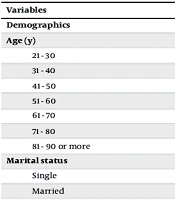
The present study undertook a comprehensive analysis of the demographic characteristics, health-relevant data, and adherence patterns to analgesics among patients diagnosed with cancer. The demographic profile, as outlined in Table 1, reveals a balanced age distribution among the participants, with each of the age groups 31 - 40 years and 41 - 50 years constituting 25.7% of the study population. Marital status appeared to be an evenly split demographic, with half of the patients being married. Gender representation among the participants was marginally skewed towards females, comprising 52.3% of the sample. A significant portion of the patients (47.8%) had completed secondary education, and about half (51.5%) were not employed at the time of the study. Notably, 90.9% of participants resided with their families, and 79.5% reported receiving adequate social support.
Table 1.
Demographic Profile of Cancer Patients (N = 132)
| Variables | No. (%) |
|---|---|
| Demographics | |
| Age (y) | |
| 21 - 30 | 20 (15.1) |
| 31 - 40 | 34 (25.7) |
| 41 - 50 | 34 (25.7) |
| 51 - 60 | 24 (18.1) |
| 61 - 70 | 13 (9.8) |
| 71 - 80 | 6 (4.5) |
| 81 - 90 or more | 1 (0.7) |
| Marital status | |
| Single | 32 (24.2) |
| Married | 69 (52.2) |
| Divorced | 19 (14.3) |
| Widow | 12 (9.0) |
| Gender | |
| Male | 63 (47.7) |
| Female | 69 (52.3) |
| Level of education | |
| Illiterate | 22 (16.7) |
| Secondary | 63 (47.8) |
| Diploma | 9 (6.8) |
| Bachelor | 35 (26.5) |
| Master or PhD | 3 (2.3) |
| Employment status | |
| Yes | 64 (48.5) |
| No | 68 (51.5) |
| Living status | |
| With family | 120 (90.9) |
| Alone | 12 (9.1) |
| Do you receive adequate social support from your family? | |
| Yes | 105 (79.5) |
| No | 27 (20.4) |
| Health-relevant information | |
| Duration of illness | |
| Less than one year | 42 (31.8) |
| 1 - 3 years | 79 (59.8) |
| 3 - 5 years | 7 (5.3) |
| 5 years | 4 (3.0) |
| Do you have health insurance? | |
| Yes | 30 (22.7) |
| No | 102 (77.3) |
| Prescribed medications | |
| Tramal | 53 (40.1) |
| Morphine | 59 (44.7) |
| Fentanyl | 4 (3.0) |
| Hydro morphine | 16 (12.1) |
| Number of medications | |
| One medication | 108 (81.8) |
| Two medications | 15 (11.3) |
| Three medications | 2 (1.5) |
| Four medications | 3 (2.3) |
| Five medications | 1 (0.8) |
| Seven medications | 2 (1.5) |
| Eight medications | 1 (0.8) |
| Types of cancer | |
| Bladder cancer | 4 (3.0) |
| Lung cancer | 7 (5.3) |
| Breast cancer | 17 (12.9) |
| Liver cancer | 8 (6.1) |
| Colorectal cancer | 43 (32.6) |
| Lymphoma | 12 (9.1) |
| Oral and oropharyngeal cancer | 6 (4.5) |
| Cervical cancer | 16 (12.1) |
| Thyroid cancer | 2 (1.5) |
| Brain cancer | 4 (3.0) |
| Bone cancer | 2 (1.5) |
| Pancreas cancer | 11 (8.3) |
As shown in Table 1, health-relevant information indicates that most patients (59.8%) had been living with the illness for 1 - 3 years. Health insurance coverage was prevalent, with 77.3% of participants having insurance. Morphine and tramal were the most commonly prescribed medications, used by 44.7% and 40.1% of patients, respectively. A significant majority (81.8%) were managing their condition with just one type of medication, and colorectal cancer emerged as the most frequently reported type of cancer among the participants, affecting 32.6%.
Non-adherence to medication regimens was explored in Table 2, with over half (57.5%) citing feeling better or forgetting as the primary reasons for non-adherence. Additionally, a substantial proportion of patients reported fears related to drug addiction and side effects as significant barriers to medication adherence.
Table 2.
Factors Influencing Non-adherence to Medication Among Cancer Patients (N = 132) a
| Causes of Non-adherence to Medications | Yes | No |
|---|---|---|
| Unavailability of medication | 4 (3.0) | 128 (97.0) |
| Fear of drug addiction | 51 (38.6) | 81 (61.4) |
| Feeling better | 76 (57.5) | 56 (42.5) |
| Fear of side effects | 50 (37.9) | 82 (62.1) |
| Forgetting | 72 (54.5) | 60 (45.5) |
| Drowsiness | 31 (23.4) | 101 (76.5) |
| The medicine is very expensive | 3 (2.3) | 129 (97.7) |
| The doctor warned me of the danger of treatment | 0 (0) | 132 (100) |
| I am already committed to treatment | 17 (12.8) | 115 (87.2) |
a Values are expressed as No. (%).
The MMAS-8 responses, depicted in Table 3, highlight that the majority of patients felt hassled by their pain treatment plan (90.9%), and a substantial number (80.4%) had taken their pain medication on the preceding day. However, a smaller segment (26.5%) sometimes forgot to take their pain medication when traveling or away from home.
Table 3.
Patient Adherence Responses Using the Morisky Medication Adherence Scale (MMAS-8) (N = 132) a
| Morisky Medication Adherence Questions (MMAS-8) | Yes | No |
|---|---|---|
| Do you sometimes forget to take your pain pills? | 78 (59.1) | 54 (40.9) |
| People sometimes miss taking their medications for reasons other than forgetting. Over the past two weeks, were there any days you did not take your pain medicine? | 75 (56.8) | 57 (43.1) |
| Have you ever cut back or stopped taking your medication without telling your doctor because you felt worse when you took it? | 97 (73.4) | 35 (26.6) |
| When you travel or leave home, do you sometimes forget to bring along your pain medication? | 35 (26.5) | 97 (73.4) |
| Did you take your pain medicine yesterday? | 106 (80.4) | 26 (19.6) |
| When you feel like your pain is under control, do you sometimes stop taking your medicine? | 105 (79.5) | 27 (20.5) |
| Taking medication every day is a real inconvenience for some people. Do you ever feel hassled about sticking to your pain treatment plan? | 120 (90.9) | 12 (9.1) |
| How often do you have difficulty remembering to take all your medications? | ||
| Never | 37 (28.0) | |
| Once in a while | 49 (37.1) | |
| Sometimes | 41 (31.1) | |
| Usually | 3 (2.3) | |
| All the time | 2 (1.5) | |
a Values are expressed as No. (%).
Furthermore, Table 4 illustrates a striking finding: A vast majority of the patients (94.6%) demonstrated low levels of medication adherence, with only a negligible 0.8% showcasing high adherence levels.
Table 4.
Adherence Levels to Medication Among Oncology Patients (N = 132)
| Levels of Adherence | Scores | No. (%) |
|---|---|---|
| High adherence | 7 - 8 | 1 (0.8) |
| Medium adherence | 6 - 7 | 6 (4.5) |
| Low adherence | 0 - 6 | 125 (94.6) |
The analysis of the correlation between demographic and health variables with medication adherence among the study population (n = 132) is presented in Table 5. Spearman's rho correlation coefficient was employed to assess the relationship between these variables and medication adherence. Notably, the number of medications showed a significant positive correlation with medication adherence (Spearman's rho = 0.436, P < 0.001), indicating that as the number of prescribed medications increased, so did the adherence to medication regimens. This finding suggests a strong association between the complexity of medication regimens and adherence behavior.
Table 5.
Correlation Between Demographic and Health Variables with Medication Adherence (N = 132)
| Variables | Spearman's rho | P-Value |
|---|---|---|
| Age (y) | 0.17 | 0.052 |
| Marital status | 0.103 | 0.241 |
| Gender | -0.046 | 0.599 |
| Level of education | -0.109 | 0.214 |
| Employment status | 0.028 | 0.748 |
| Living status | -0.075 | 0.394 |
| Health insurance | 0.128 | 0.143 |
| Types of cancer | -0.003 | 0.972 |
| Duration of illness | -0.085 | 0.33 |
| Prescribed medications | 0.058 | 0.51 |
| Social support | -0.12 | 0.171 |
| Number of medications | 0.436 | < 0.001 |
Conversely, most demographic and health-related factors, such as age (Spearman's rho = 0.17, P = 0.052), marital status (Spearman's rho = 0.103, P = 0.241), and level of education (Spearman's rho = -0.109, P = 0.214), displayed weak and statistically non-significant correlations with medication adherence. This pattern implies that these factors may not substantially influence medication adherence among the participants. The lack of significant correlation with variables such as gender, employment status, living status, health insurance, types of cancer, duration of illness, prescribed medications, and social support further underscores the complexity of factors influencing adherence, suggesting that interventions to improve adherence may need to be multifaceted and tailored to individual needs.
5. Discussion
The escalating incidence of cancer juxtaposed with the progress in anti-cancer therapies underscores a paradox of increasing survivorship with persistent challenges in symptom management. Pain, experienced by over half of cancer patients, remains a profound determinant of quality of life despite advances in analgesic pharmacotherapy. The intricacy of pain, coupled with the multifactorial nature of medication adherence, presents a conundrum in palliative care that warrants a nuanced understanding (22).
Our findings of this study elucidate a stark reality: A substantial majority of cancer patients display low medication adherence, with merely 3.6% demonstrating high adherence levels. This aligns with Zhao et al.'s (23) observations, indicating a pervasive trend of poor adherence among cancer patients in mainland China. Moreover, Meghani et al.'s (24) comparative study reinforces this pattern, albeit noting racial disparities in adherence rates, which were not a focus of our study.
Contrastingly, Chou et al. (25) reported higher adherence rates in Taiwanese cancer patients, suggesting potential cultural or systemic differences affecting medication adherence. Similarly, Kan et al. (26) noted higher adherence among Malaysian cancer patients, which may reflect varying healthcare delivery systems and patient education initiatives, Kardas, Van Den Beuken-Van Everdingen, and WHO (2) suggest better adherence and fewer drug interaction issues, contrasting with our findings and emphasizing the heterogeneity of adherence patterns globally (30). This underscores the influence of cultural and healthcare system differences on medication adherence, aligning with the health belief model (HBM), which posits that personal beliefs about health conditions and treatment efficacy can significantly influence health-related behaviors, including medication adherence (31).
Our study's novel contribution lies in its focus on the Saudi Arabian context, where age emerged as a statistically significant factor in medication adherence, with a Spearman's rho of 0.17 (P = 0.052), suggesting a modest but notable relationship between age and medication adherence. This contrasts with Zhao et al. (23), who found no such association, highlighting the possibility of unique age-related dynamics within our sample population.
Gender differences in adherence, a significant factor according to Chou et al. (22), did not show statistical significance in our study, with a Spearman's rho of -0.046 (P = 0.599), contradicting Vanneste et al.'s (32) findings, which suggested higher adherence in men compared to women. Such discrepancies could be indicative of broader socio-cultural influences that merit further investigation. Incorporating a cross-cultural perspective, our findings invite further research into how societal norms and gender roles in different regions might affect adherence behaviors, as the social cognitive theory (SCT) emphasizes the role of observational learning and social influences on behavior, which could offer insights into the varied adherence rates observed across different cultures (33).
The psychological barriers of fear of addiction and side effects, as well as medication noncompliance when feeling better, were substantiated in our findings, resonating with Meghani and Knafl's (34) insights into patient-related obstacles. These concerns are echoed by Vanneste et al. (32), who underscored patient apprehensions regarding addiction and the adverse effects of pain medications (35).
Non-adherence in cancer patients is influenced by a spectrum of factors, extending beyond individual concerns to encompass familial support and healthcare system barriers (35-37). Interestingly, Seangrung et al. (38) found no correlation between adherence and family support, aligning with our findings that social support did not significantly influence adherence levels, with a Spearman's rho of -0.12 (P = 0.171), suggesting that other, more complex factors are at play. This observation is reflective of the complex adaptive systems (CAS) theory, which suggests that patient behavior is the result of dynamic interactions within a system composed of various elements, including personal beliefs, social support networks, and healthcare infrastructure (39).
The misperceptions leading to noncompliance, notably feeling better and forgetfulness, align with Meghani and Bruner's (40) observations on intentional versus unintentional non-adherence. This underscores the need for targeted educational strategies to address misconceptions and improve adherence behaviors.
Our study also revealed a significant correlation between patient age and medication adherence, with a Spearman's rho of 0.436 (P < 0.001), suggesting that age-related factors, potentially encompassing cognitive function, social support, and healthcare access play a role in adherence behaviors (41). The predominance of morphine prescriptions in our sample may reflect its established efficacy and cost-effectiveness, as noted by Kan et al. (26).
The diversity in cancer types and prescribed analgesics, indicative of the absence of a standardized approach, mirrors the findings of Kan et al. (26) and Chou et al. (25). Such variability could complicate adherence due to confusion or a lack of tailored patient education. This further illustrates the need for healthcare interventions that are not only culturally sensitive but also personalized, taking into account the diverse backgrounds and healthcare needs of patients.
The observation that over half of the patients were unemployed suggests that cancer pain and its management may significantly impact work performance and socioeconomic status, factors that can also influence medication adherence (26).
5.1. Study Limitations
Our study is not without limitations. The reliance on self-report questionnaires may introduce response bias, and future studies could benefit from direct interviews to delve deeper into patient experiences and perceptions. The non-randomized design of our research raises the possibility of unmeasured confounding variables influencing the results. Furthermore, the relatively small sample size limits the generalizability of our findings, calling for more extensive multi-center studies to validate these results.
Another limitation is the lack of exploration into the adequacy of opioid prescriptions, including the type and strength of opioids, which are critical in evaluating the appropriateness of pain management and its influence on adherence. Additionally, this study did not account for the severity of pain experienced by patients, a factor that could significantly impact adherence to prescribed analgesics. The relationship between pain severity and medication adherence is complex and warrants further investigation to understand how different levels of pain influence patients' medication-taking behaviors.
In conclusion, the present study contributes to the body of literature by highlighting the low levels of analgesic medication adherence among cancer patients in Saudi Arabia, a pattern consistent with global trends yet influenced by distinct regional factors. Our findings call for culturally sensitive, age-specific, and gender-responsive interventions to bolster medication adherence. Moreover, addressing patient beliefs and knowledge gaps about analgesics could serve as pivotal strategies in enhancing pain management outcomes for cancer patients.
5.2. Conclusions
This study highlights the critical issue of low analgesic medication adherence among cancer patients in Saudi Arabia, with only a minority demonstrating high adherence levels, mirroring global trends but also underscoring regional specifics. The identification of age and the number of medications as significant determinants of adherence underscores the complex interplay between patient behavior and systemic factors, including cultural, educational, and healthcare system dynamics. The lack of significant gender differences and the minimal impact of social support on adherence suggest the need for a reevaluation of existing assumptions and strategies in pain management practices. These findings advocate for the development of age-appropriate, individualized interventions and robust patient education programs to address psychological barriers and promote consistent medication-taking behaviors. Ultimately, this research not only enriches our understanding of medication adherence within the Saudi context of cancer pain management but also advocates for an integrated approach in future research and policy development, highlighting the necessity for culturally sensitive and patient-centered healthcare solutions.