
Int J Cancer Manag

Image Credit:Int J Cancer Manag

Design and Evaluation of an mHealth Intervention for HPV Knowledge and Cervical Cancer Screening

Author(s):
Leila AlizadehLeila AlizadehLeila Alizadeh ORCID1, Zohreh KeshavarzZohreh KeshavarzZohreh Keshavarz ORCID2,*, Ahmad ShalbafAhmad ShalbafAhmad Shalbaf ORCID3, Sohrab IranpourSohrab IranpourSohrab Iranpour ORCID4
1Student Research Committee, Department of Midwifery and Reproductive Health, School of Nursing and Midwifery, Shahid Beheshti University of Medical Sciences, Tehran, Iran
2Department of Midwifery and Reproductive Health, School of Nursing and Midwifery, Shahid Beheshti University of Medical Sciences, Tehran, Iran
3Department of Biomedical Engineering and Medical Physics, School of Medicine, Shahid Beheshti University of Medical Sciences, Tehran, Iran
4Imam Khomeini Hospital, Ardabil University of Medical Sciences, Ardabil, Iran

International Journal of Cancer Management:Vol. 18, issue 1; e162703
Published online:Oct 20, 2025
Article type:Research Article
Received:May 17, 2025
Accepted:Aug 26, 2025
How to Cite:Alizadeh L, Keshavarz Z, Shalbaf A, Iranpour S. Design and Evaluation of an mHealth Intervention for HPV Knowledge and Cervical Cancer Screening.Int J Cancer Manag.2025;18(1):e162703.https://doi.org/10.5812/ijcm-162703.

Abstract

Background:

Human papillomavirus (HPV) is a leading cause of cervical cancer, ranking fourth globally and eleventh in Iran. Although the incidence in Iran is about one-tenth of that in western countries, the average age of onset is approximately ten years higher than the global average. Nevertheless, screening rates remain low, largely due to limited knowledge among women.

Objectives:

This study aimed to develop a mobile application to enhance women's knowledge of HPV, cervical cancer, and Pap smear.

Methods:

A mixed-method study was conducted in Ardabil (northwest Iran) from 2023 to 2024, involving the development of a user-centered mobile application and a single-blind clinical trial to assess its effectiveness. The application was designed based on the health belief model (HBM), with educational and screening content developed in accordance with World Health Organization (WHO) guidelines and evidence-based sources and validated by both app users [Content Validity Index (CVI) = 0.88] and healthcare professionals (CVI = 0.87). In the randomized clinical trial, 380 eligible women (aged 15 - 45 years) were assigned to either the intervention (app user) or control groups using simple random sampling. The intervention group received access to the mobile application while the control group received routine health center care. Women’s HPV knowledge and health belief about Pap smear were evaluated at baseline, immediately after the intervention, and eight weeks later using expert-validated questionnaires. Data were analyzed using SPSS software employing chi-square tests, and repeated measures ANOVA analysis (RM-ANOVA).

Results:

Among the 357 women analyzed, the mean age was 30.59 years. The majority were housekeepers [234 (65.5%)] and college graduates [195 (54.6%)]. Among participants, 30% reported no history of childbirth. Before the intervention, no significant differences were observed between the intervention group (n = 175) and the control group (n = 182) in knowledge or HBM constructs. Post-intervention, the user group showed significant improvements in knowledge (MD: 0.79; 95% CI: 0.41 to 1.17), perceived susceptibility (MD: 4.17; 95% CI: 3.26 to 5.08), severity (MD: 4.03; 95% CI: 3.13 to 4.93), benefits (MD: 3.46; 95% CI: 2.59 to 4.33), self-efficacy (MD: 2.66; 95% CI: 1.92 to 3.40), and cues to action (MD: 2.35; 95% CI: 1.62 to 3.08; all P < 0.001), along with a reduction in perceived barriers (MD: -4.60; 95% CI: -5.53 to -3.67) compared with control group (all P < 0.001). The Pap smear uptake rate in the user group increased significantly (30.28%) compared to the control group (10.44%, P = 0.001).

Conclusions:

The mobile application developed based on the HBM effectively enhanced women's knowledge and health beliefs regarding cervical cancer and Pap smear screening. It also significantly increased screening uptake, underscoring the potential of mobile health (mHealth) interventions in promoting preventive behaviors and supporting public health initiatives.

1. Background

Human papillomavirus (HPV) is a non-enveloped DNA virus primarily transmitted through sexual or skin-to-skin contact (1). More than 200 genotypes have been identified, with high-risk types predominantly transmitted through sexual contact (2). Persistent HPV infection is a known carcinogenic factor (3). In the United States, approximately 48,000 new HPV-related cancer cases are reported annually, with around 37,800 directly attributable to HPV (4).

According to the World Health Organization (WHO), approximately 291 million women worldwide are infected with HPV, and 32% of these cases involve high-risk genotypes, while not all infections inevitably lead to cervical cancer (5). In Iran, the prevalence of HPV among healthy women is around 7%, whereas it increases to about 76% in women with cervical cancer (6). A meta-analysis by Malary et al. reported an overall HPV prevalence of 9.4%, with genotypes 16 and 18 being the most common high-risk types associated with cervical cancer (7).

The HPV is the primary initiating factor in cervical cancer (8, 9), the fourth most common cancer in women globally, after breast, colorectal, and lung cancers. In 2020, approximately 600,000 new cases with cervical cancer and 340,000 related deaths were reported (2), with 85% of these deaths occurring in low- and middle-income countries. However, in Iran, cervical cancer ranks 11th among all cancers, and the average age of patients is about 10 years higher than in western countries (10). According to WHO projections, mortality in these regions is expected to increase by 27% by 2030, in contrast to a projected 1% increase in high-income countries (11).

Cervical cancer is highly preventable through vaccination, regular screening, and timely diagnosis (12, 13). However, previous studies indicated a lack of public awareness and knowledge about this disease, even among highly educated women. This knowledge gap leads to reduced vaccine uptake, delayed diagnosis, and increased mortality (14-18). In traditional and religious societies such as Iran, HPV infection is also considered taboo and stigmatized due to its nature as a sexually transmitted infection, leading to fear, shame, and reluctance to seek care (19, 20). This stigma can negatively impact follow-up and treatment, highlighting the need for effective educational interventions (18).

Traditional educational methods are resource-intensive and may lack scalability (21). Advances in telehealth technology, especially mobile health (mHealth) tools, offer a promising solution due to their effectiveness (22, 23), feasibility, user acceptability (24, 25), and cost-efficiency (26). Previous studies, including trials conducted in Argentina and South India, demonstrated that mHealth tools can improve knowledge and increase Pap smear uptake (27, 28). However, their intervention was limited either to sending text messages or to apps whose educational content was not grounded in a specific theoretical model. Although studies based on the health belief model (HBM) have been conducted in Iran, they have primarily employed conventional educational methods (21) rather than electronic or mobile platforms. Due to this gap, we developed a mHealth application based on the HBM, one of the successful models for motivating people toward preventive programs (29, 30), to improve women’s knowledge, beliefs, and behaviors related to HPV and cervical cancer screening (31, 32).

2. Objectives

This study aimed to design, develop, and evaluate a mobile application intended to enhance knowledge about HPV and cervical cancer, while also encouraging women of reproductive age to participate in cervical cancer screening.

3. Methods

3.1. Study Design and Setting

A mixed-methods study was conducted, combining the design and development of a mobile application with a single-blind randomized clinical trial to evaluate its effectiveness. As the nature of the intervention (mobile app), blinding of participants and researchers was not feasible. However, the data analyst was blinded.

3.2. Study Participants and Sampling

One healthcare center was randomly selected from each of Ardabil's five districts. Considering a 10% attrition rate, 380 sexually active women aged 15 to 45 were enrolled (76 per center). Participants had no prior history of HPV infection, cervical cancer, or HPV vaccination, and were smartphone-literate. The sample size was calculated based on an expected increase in Pap smear uptake rates from 28% (33) to 50% (Cohen's h = 0.46) (34), with 80% power, 5% alpha, and 10% dropout, resulting in 380 participants (190 per group) (35). Recruitment was conducted over a 3-month period:

3.3. Inclusion and Exclusion Criteria

Women aged 15 - 45, sexually active, literate, and able to use a smartphone were included in the study. Exclusion criteria were participants who withdrew or expressed unwillingness to continue at any stage.

3.4. Data Collection Tool and Technique

Validated questionnaires were used to assess HPV knowledge and HBM-based screening behaviors. The HPV Knowledge Questionnaire (10 items) was adapted from Guvenc et al. (36) and the HBM-Based Screening Behaviors Questionnaire (26 items) was adapted from Khani Jeihooni et al. (37). Both were translated into Persian using the forward-backward method by two experts in reproductive health and health education with proven English language proficiency and validated by ten experts (content and face validity). After removing two questions [Content Validity Index (CVI) < 0.79 or CVR < 0.62] and revising for clarity and appearance, CVIs were 0.94 (knowledge) and 0.93 (HBM), and Cronbach’s alpha and McDonald’s omega showed high internal consistency (0.94 and 0.91, respectively).

HBM construct scores were interpreted based on percentage cutoffs: Low (< 50%), moderate (50 - 74%), and high (≥ 75%) (38).

3.5. Intervention

3.5.1. Design of the Mobile Application: Human Papillomavirus-Bye

The "HPV-Bye" mobile app was developed for Android systems, using a user-centered design and based on the HBM. It includes 18 interactive screens with modules on HPV, cervical cancer, and the importance of Pap smear testing. Content was informed by WHO (39, 40), CDC guidelines (41) and previous comprehensive literature reviews (42) and validated by 15 users (CVI = 0.88) and 15 experts (CVI = 0.87, acceptable if CVI ≥ 0.73) (43). The design was grounded in the HBM, incorporating constructs such as perceived susceptibility to HPV, perceived severity of its complications, perceived benefits of screening, perceived barriers, cues to action, and strategies for behavioral empowerment (29). This model is widely regarded as an effective theoretical framework in promoting preventive health behaviors (44, 45).

To facilitate user engagement and comprehension, the content is presented in a question-and-answer format using clear and accessible language tailored to the target population. Upon completing initial data entry forms and questionnaires, users are guided through the educational modules. After reviewing the content, they are invited to decide on Pap smear testing. If they choose to undergo the test, they may upload the results directly within the app. If not, they are asked to indicate their reason from a predefined list. The application’s name, HPV-Bye, was selected based on feedback from both app users and expert reviewers, chosen from several options proposed by the research team.

3.5.2. Application Validation

To assess the preliminary version of the HPV-Bye mobile application, a two-phase validation process was conducted involving both app users and healthcare professionals, and necessary modifications were made wherever required.

3.5.3. User Validation

User feedback was collected using the Telehealth Usability Questionnaire (TUQ), a standardized tool developed and validated by Parmanto et al. and their feedback for assessing the usability of telehealth educational tools. The TUQ comprises 21 items across six domains: Usefulness (3 items), ease of use and learnability (3 items), interface quality (4 items), interaction quality (4 items), reliability (3 items), and satisfaction and future use (4 items) (46). Responses were obtained using a four-point Likert scale. The questionnaire was adapted through the standard forward-backward translation procedure (47), as detailed previously. The finalized questionnaire and the mobile application were subsequently administered to 15 women, selected according to the criteria described in the “Study Participants” section. Data were analyzed using Microsoft Excel. The overall CVI of the application was calculated as 0.88, indicating an acceptable level of content and face validity from the users’ perspective (43).

3.5.4. Expert Validation

For expert validation, a Separate Standard Questionnaire designed by Maciel et al. was employed. This tool was specifically developed to assess the content and face validity of mobile applications related to the prevention of sexually transmitted infections. It also underwent the forward-backward translation process to ensure linguistic and conceptual equivalence, as described previously. 15 experts in reproductive health and gynecology with prior experience in sexual health and STIs were selected. They completed the questionnaire, which contains 21 items divided into the following domains: Objectives and content (6 items), structure and functionality (11 items), and communication (4 items) (28). Responses were recorded using a four-point Likert scale. The overall CVI from expert evaluation was 0.87, indicating a satisfactory level of content and face validity from a professional standpoint. To assess the reliability of the instruments used, Cronbach’s alpha (48) and McDonald’s omega coefficients (49) were calculated, with values of 0.94 and 0.91, respectively (acceptable if α and ω ≥ 0.7). These results indicate excellent internal consistency.

3.6. Procedure

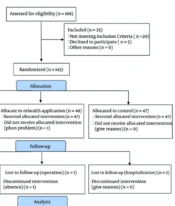
Following the development and validation of the HPV-Bye mobile application, the intervention phase of the study was carried out as a single-blind randomized clinical trial. Participants were randomly assigned to either the intervention (user) or control group in 1:1 ratio after providing written informed consent. While the control group continued to receive routine care from health centers, the intervention group was provided access to the final version of the HPV-Bye mobile application (Figure 1). To support user access, an audio guide was included, and for participants unable to install the app on their smartphones, a web-based version of HPV-Bye was made available.
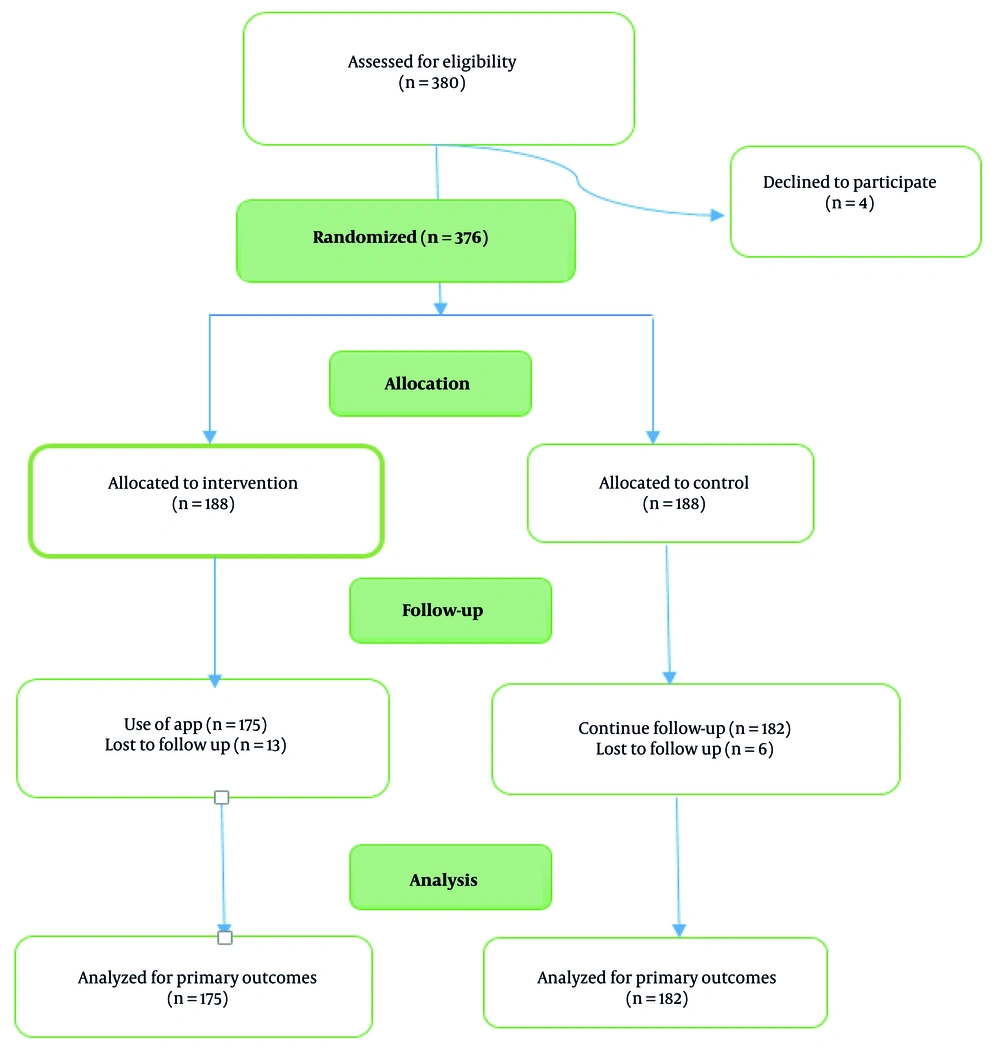
Study plan diagram
Figure 1.

Study plan diagram

All participants completed the validated questionnaires assessing HPV-related knowledge and HBM-based screening behaviors at three time points: Baseline, immediately post-intervention, and eight weeks later. Data were analyzed to assess the effect of the intervention on knowledge improvement and behavioral intention regarding cervical cancer screening.

3.7. Outcome Measures

Both groups completed assessments at baseline, immediately after the intervention, and eight weeks post-intervention. Outcomes included changes in knowledge, HBM constructs, and Pap smear uptake, with results uploaded to the app.

3.8. Ethical Consideration

The study adhered to the Helsinki Declaration and was approved by the Ethics Committee of Shahid Beheshti University of Medical Sciences (IR.SBMU.PHARMACY.REC.1401.194) and RCT (IRCT20230125057224N1). Written informed consent was obtained, and participant confidentiality was maintained. Application launch and questionnaire usage were licensed by the ministry of culture and original developers. After the study, the control group was granted access to the app.

3.9. Statistical Analysis

Baseline differences were assessed using chi-square tests. Changes in knowledge and HBM constructs over time were analyzed using repeated measures ANOVA (RM-ANOVA). Greenhouse-Geisser correction was applied if Mauchly’s test indicated a violation of sphericity (50, 51). Analyses were performed using SPSS v26, with significance set at P < 0.05. The app required full completion of each questionnaire to continue; therefore, participants with incomplete data (n = 23) who discontinue the study were excluded from the analysis.

4. Results

Of the 380 women who initially enrolled in the study, 23 participants were excluded (4 declined to participate and 19 were lost to follow-up), as a result, 357 of them were included in the final analysis. The mean ± SD age of the participating women was 30.59 ± 5.63 years. Most of them (65.5%) were housekeeper, approximately half (54.6%) held a university degree, and 30% had no history of childbirth. According to Table 1, there were no significant differences between the intervention and control groups in terms of baseline characteristics such as age, educational level, occupation, and known risk factors for cervical cancer such as early sexual intercourse (< 18 years), parity, recurrent vaginal infections, consistent condom use, and family history of cervical cancer. Also, there were not significant differences between two groups in knowledge and HBM constructs before intervention (Table 2). Table 2 shows that participants in the intervention group exhibited a significant and meaningful increase in their knowledge immediately compared to the control group (P = 0.001). While a modest reduction in knowledge was noted at the 8-week follow-up, this did not substantially diminish the overall gains achieved immediately after the intervention. More importantly, the user group showed significant improvements in knowledge (MD: 0.79; 95% CI: 0.41 to 1.17), perceived susceptibility (MD: 4.17; 95% CI: 3.26 to 5.08), severity (MD: 4.03; 95% CI: 3.13 to 4.93), and benefits (MD: 3.46; 95% CI: 2.59 to 4.33; all P < 0.001), along with a reduction in perceived barriers (MD: -4.60; 95% CI: -5.53 to -3.67) compared with control group (all P < 0.001). Additionally, there was a noteworthy increase in both perceived cues to action (MD: 2.35; 95% CI: 1.62 to 3.08) and self-efficacy (MD: 2.66; 95% CI: 1.92 to 3.40), further demonstrating the positive impact of the intervention (P < 0.001).

Table 1.Comparison of Baseline Demographic Characteristics and Cervical Cancer Risk Factors Between Intervention and Control Groups a
VariablesIntervention Group (N = 175)Control Group (N = 182)P-Value
Age (y)0.42
24 - 1525 (14.3)23 (12.6)
25 - 35111 (63.4)127 (53.4)
36 - 4539 (22.3)32 (17.6)
Education0.26
≤ Diploma72 (41.1)90 (49.5)
Bachelor's degree84 (48)76 (41.8)
≥ Master's degree19 (10.9)16 (8.8)
Occupation0.16
Housekeeper110 (62.9)124 (68.1)
Employee30 (17.1)18 (9.9)
Teacher19 (10.9)17 (9.3)
Health care provider16 (9.1)23 (12.6)
Family history of cervical cancer0.81
Yes166 (94.9)171 (94)
No9 (5.1)11 (6)
Early sexual intercourse0.16
Yes46 (26.3)37 (20.3)
No129 (73.7)145 (79.7)
Recurrent vaginal infection0.16
Yes34 (19.4)47 (25.8)
No141 (80.6)135 (74.2)
Parity0.13
Yes59 (33.7)48 (26.4)
No116 (66.3)134 (73.6)
Consistent condom use0.11
Yes29 (16.5)21 (11.5)
No146 (83.4)161 (88.5)
History of regular Pap smear test0.58
Yes18 (10.3)15 (8.2)
No157 (89.7)167 (91.8)

a Values are expressed as No. (%).

Table 2.Comparison of Knowledge and Health Belief Model Constructs Between Intervention and Control Groups at Baseline, Immediately After and 8 Weeks Post Intervention a, b
VariablesBefore InterventionImmediately After Intervention8 weeks After InterventionF (Time × Group)P-Value for InteractionPartial Eta Squared (η2p)
Knowledge (0 - 10)196.810.0010.34
Experimental4.97 ± 1.457.94 ± 1.316.80 ± 1.46
Control5.07 ± 1.285.06 ± 1.226.02 ± 1.18
P-value0.490.0010.001---
Perceived susceptibility (0 - 25)339.250.0010.36
Experimental10.90 ± 2.1915.34 ± 2.1115.14 ± 2.22
Control10.58 ± 2.1610.94 ± 2.2310.92 ± 2.23
P-value0.160.0010.001---
Perceived severity (0 - 25)227.160.0010.37
Experimental17.33 ± 1.8321.91 ± 2.1421.76 ± 2.27
Control17.08 ± 2.0817.77 ± 2.2217.73 ± 2.33
P-value0.230.0010.001---
Perceived benefit (0 - 25)118.540.0010.25
Experimental17.44 ± 2.7521 ± 2.2920.91 ± 2.29
Control17.03 ± 2.7517.54 ± 2.2317.45 ± 2.31
P-value0.160.0010.001---
Perceived barrier (0 - 25)426.660.0010.46
Experimental14.69 ± 1.869.60 ± 1.729.73 ± 1.83
Control14.35 ± 2.3014.24 ± 1.8614.43 ± 1.91
P-value0.120.0010.001---
Cue to action (0 - 10)88.280.0010.31
Experimental4.74 ± 1.838.24 ± 1.537.97 ± 1.62
Control4.92 ± 1.915.70 ± 1.485.62 ± 1.43
P-value0.350.0010.001---
Perceived self-efficiency (0 - 10)118.790.0010.43
Experimental4.77 ± 1.808.35 ± 1.498.09 ± 1.59
Control4.59 ± 1.775.51 ± 1.445.43 ± 1.49
P-value0.340.0010.001---

a Values are expressed as mean ± SD.

b Statistical analysis was performed using repeat measures ANOVA to assess time, group, and group × time interaction effects.

Although significant within-group changes were observed in both the intervention and the control group, the time-by-group interaction was statistically significant (P < 0.05), indicating a significantly greater improvement in the intervention group over the study period. Pap smear uptake increased to 30.28% in the intervention group, compared to 10.44% in the control group (P = 0.001), confirming the effectiveness of the mobile application in encouraging screening behavior (Figure 2).
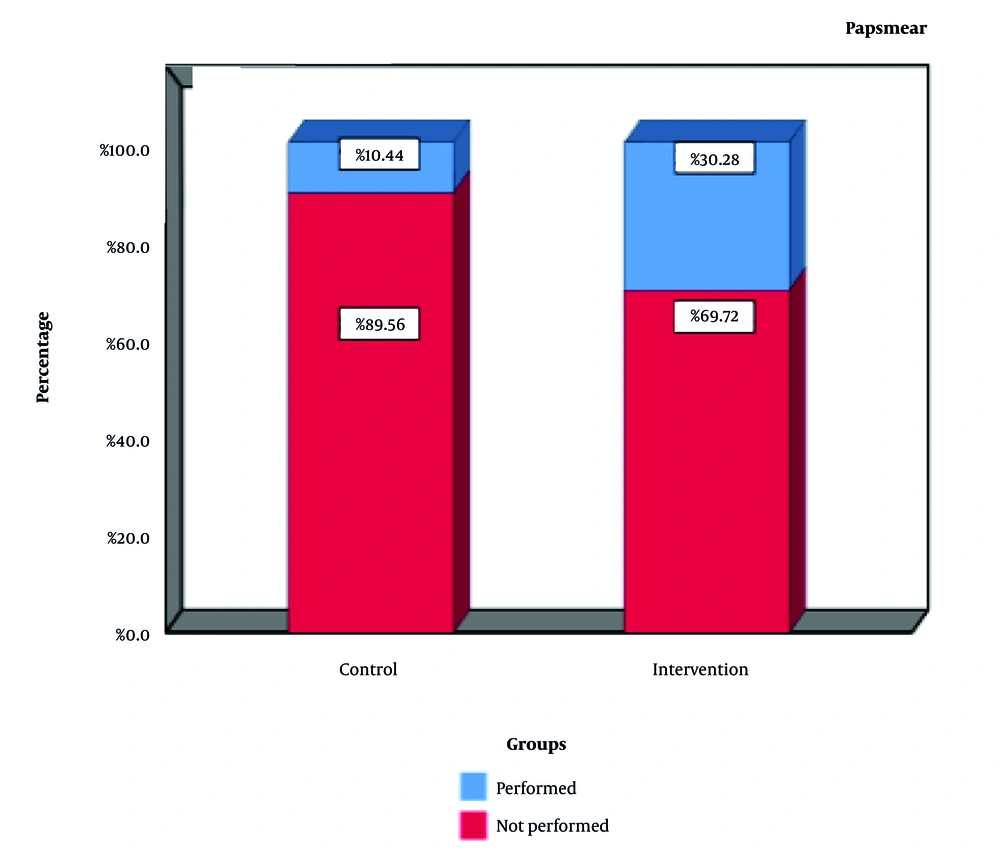
Comparison of Pap smear screening rates between intervention and control groups
Figure 2.

Comparison of Pap smear screening rates between intervention and control groups

5. Discussion

Cervical cancer is a preventable disease (13), primarily because of the slow progression of precancerous cervical lesions to invasive cancer (52). Therefore, timely screening and early detection play a critical role in reducing mortality (52, 53). The present study aimed to evaluate the effectiveness of a mobile application-based educational intervention in enhancing women’s knowledge and awareness of HPV, the primary etiological factor of cervical cancer (3, 4), and in promoting Pap smear uptake, which remains a cornerstone of cervical cancer screening (47, 54).

The study was conducted among 375 sexually active women with no history of HPV infection or vaccination. Participants were randomly assigned to either the intervention group (app users) or the control group. The groups were comparable at baseline in terms of demographic and behavioral variables, including age, education, occupation (55), and risk factors such as early sexual activity (56), parity (57), recurrent vaginal infections (58), condom use (59), and family history of cervical cancer (60).

The evaluation was based on the HBM, a widely recognized framework for predicting health-related behaviors (29), particularly in preventive measures related to HPV (44, 52, 61). Both groups were assessed for baseline HBM constructs: Perceived susceptibility, severity, benefits, barriers, cues to action, and self-efficacy (62). No significant differences were observed between groups before the intervention.

The intervention group not only demonstrated significant improvements in knowledge but also showed positive changes across key HBM constructs, including perceived susceptibility, perceived severity, perceived benefits, self-efficacy, and cues to action. Importantly, perceived barriers decreased significantly, suggesting that the mobile application-based educational program was effective in addressing both cognitive and motivational determinants of cervical cancer screening behaviors. These findings support existing evidence that educational interventions, including those delivered via digital platforms, can be effective in improving health knowledge and behavior (12, 25).

For example, Hombaiah et al. reported similar improvements among socioeconomically disadvantaged adolescent girls in India following an app-based educational intervention (27). Likewise, Sanchez Antelo et al. showed that mobile applications could reduce anxiety and increase knowledge among HPV-positive women (18). Recent studies have reaffirmed the impact of digital interventions on HPV-related behaviors. For instance, a cluster randomized controlled trial in China involving 2552 women through an AI-powered WeChat chatbot showed significant increases in HPV vaccination uptake (P < 0.001) (63). Similarly, a mixed-methods trial of the HPVCF mobile application in Vietnam reported improvements in both vaccination intention and cervical cancer screening participation among women (64).

While social media platforms like Twitter and Facebook have been explored for public health promotion, the evidence for their impact on behavior change is still limited (65). In contrast, mHealth tools, especially mobile apps with user-centered design, demonstrate a more consistent and measurable impact on behavior, as supported by our findings and other recent studies (66, 67).

Our results further showed significant increases in perceived susceptibility and severity in the intervention group, as shown in Table 2. This is consistent with the findings of Wang et al., who demonstrated that perceived susceptibility can act as a powerful motivator for behavior change (68). A study on 1,850 Chinese mothers of adolescent daughters found that a lack of knowledge and low perceived susceptibility were major barriers to HPV vaccine uptake. Many mothers believed their daughters were too young to be at risk of HPV infection or cervical cancer.

Although knowledge and HBM improvements were still evident at the eight-week follow-up, a slight decline was observed, highlighting the need for reinforcement. This is consistent with studies showing that knowledge and behavior tend to diminish over time without continued engagement (69). Incorporating reminders or refresher content within the app could sustain the gains over the long term (70, 71).

Similar to finding in recent studies (72), the significant time by group interaction indicated that the mobile-based educational intervention resulted in greater improvement over time compared to routine care. The large effect sizes observed likely stem from the intervention’s interactive design, the well-educated sample, and the sensitive topic of cervical cancer, which enhanced participant engagement and learning. Caution is warranted when generalizing these findings to broader populations. Improvements in the control group may reflect repeated assessments or minimal effects of standard care (73) or minimal effects of standard care.

Mobile apps like HPV-Bye show strong potential for advancing sexual and reproductive health (SRH) (74). However, a global barrier remains: Many healthcare providers and users lack training on how to integrate SRH apps into practice (74). This study addressed that challenge by including an audio-based guide for installation and use.

Logie et al. found that users value SRH apps for their privacy, accessibility, and ability to empower underserved populations (74). This highlights the opportunity to further engage both providers and users in effective use of mHealth tools — especially in low- and middle-income countries, where the need is greatest (75).

5.1. Conclusions

This study highlights the potential of mHealth applications to promote preventive health behaviors among women, particularly in resource-limited settings where access to care is constrained and stigma surrounding sexually transmitted infections remains high. The mHealth tools like HPV-Bye offer a safe, accessible, and cost-effective platform for health education and behavior change. The significant increase in Pap smear testing observed in the intervention group underscores the practical impact of such technologies in raising awareness and empowering women to take preventive action. Grounded in behavioral theory and developed using a user-centered approach, mHealth interventions can move beyond information dissemination to become effective tools for long-term behavioral change. Leveraging these technologies presents a valuable opportunity to strengthen public health programs and increase participation in preventive care initiatives.

5.2. Limitations

While the intervention demonstrated effectiveness, certain limitations should be acknowledged. The app was developed exclusively for women, although men also play a critical role in HPV prevention. Moreover, the study relied on self-reported data, which may introduce bias. Incorporating verified clinical outcomes and extending the follow-up period could strengthen the validity of findings.

5.3. Recommendations

A unique feature of the app is its integrated audio installation guide, which facilitates accessibility for users with limited literacy. The study findings are primarily generalizable to urban Iranian women aged 15 to 45. The intervention demonstrated a significant impact on HPV knowledge and screening behaviors. To maintain long-term engagement, the use of periodic reminders and content updates is recommended. Although cervical cancer is not among the top ten most prevalent cancers in Iran despite western countries, it is essential that prevention strategies consider local conditions and the role of men.
Acknowledgments

Footnotes

References

  • 1.
    Gross G. Genitoanal human papillomavirus infection and associated neoplasias. Curr Probl Dermatol. 2014;45:98-122. [PubMed ID: 24643181]. https://doi.org/10.1159/000358423.
  • 2.
    Sung H, Ferlay J, Siegel RL, Laversanne M, Soerjomataram I, Jemal A, et al. Global Cancer Statistics 2020: GLOBOCAN Estimates of Incidence and Mortality Worldwide for 36 Cancers in 185 Countries. CA Cancer J Clin. 2021;71(3):209-49. [PubMed ID: 33538338]. https://doi.org/10.3322/caac.21660.
  • 3.
    de Martel C, Plummer M, Vignat J, Franceschi S. Worldwide burden of cancer attributable to HPV by site, country and HPV type. Int J Cancer. 2017;141(4):664-70. [PubMed ID: 28369882]. [PubMed Central ID: PMC5520228]. https://doi.org/10.1002/ijc.30716.
  • 4.
    Centers for Disease Control and Prevention. How Many Cancers Are Linked with HPV Each Year?. Atlanta, Georgia: Centers for Disease Control and Prevention; 2023. Available from: https://www.cdc.gov/cancer/hpv/statistics/cases.htm.
  • 5.
    World Health Organization. WHO updates recommendations on HPV vaccination schedule. Geneva, Switzerland: World Health Organization; 2022. Available from: https://www.who.int/news/item/20-12-2022-who-updates-recommendations-on-hpv-vaccination-schedule.
  • 6.
    Khorasanizadeh F, Hassanloo J, Khaksar N, Mohammad Taheri S, Marzaban M, H. Rashidi B, et al. Epidemiology of cervical cancer and human papilloma virus infection among Iranian women - analyses of national data and systematic review of the literature. Gynecol Oncol. 2013;128(2):277-81. [PubMed ID: 23200918]. https://doi.org/10.1016/j.ygyno.2012.11.032.
  • 7.
    Malary M, Moosazadeh M, Hamzehgardeshi Z, Afshari M, Moghaddasifar I, Afsharimoghaddam A. The Prevalence of Cervical Human Papillomavirus Infection and the Most At-risk Genotypes Among Iranian Healthy Women: A Systematic Review and Meta-analysis. Int J Prev Med. 2016;7:70. [PubMed ID: 27217936]. [PubMed Central ID: PMC4872517]. https://doi.org/10.4103/2008-7802.181756.
  • 8.
    Liu B, Taioli E. Associations between human papillomavirus and history of cancer among U.S. adults in the National Health and Nutrition Examination Survey (2003-2010). Br J Cancer. 2014;111(7):1448-53. [PubMed ID: 25058348]. [PubMed Central ID: PMC4183846]. https://doi.org/10.1038/bjc.2014.414.
  • 9.
    Gargano JW, Meites E, Watson M, Unger ER, Markowitz LE. Manual for the Surveillance of Vaccine-Preventable Diseases, Chapter 5: Human Papillomavirus. Atlanta, USA: Centers for Disease Control and Prevention; 2022. Available from: https://www.cdc.gov/vaccines/pubs/surv-manual/chpt05-hpv.html.
  • 10.
    Akbari A, Khayamzadeh M, Salmanian R, Moradi A, Akbari ME. Epidemiology and survival of cervical cancer in Iran based on national cancer registry data (2008-2014). Front Oncol. 2023;13:1132369. [PubMed ID: 37152030]. [PubMed Central ID: PMC10156133]. https://doi.org/10.3389/fonc.2023.1132369.
  • 11.
    Krivacsy S, Bayingana A, Binagwaho A. Affordable human papillomavirus screening needed to eradicate cervical cancer for all. Lancet Glob Health. 2019;7(12):e1605-6. [PubMed ID: 31708136]. https://doi.org/10.1016/S2214-109X(19)30423-1.
  • 12.
    Becker ER, Shegog R, Savas LS, Frost EL, Coan SP, Healy CM, et al. Parents' Experience With a Mobile Health Intervention to Influence Human Papillomavirus Vaccination Decision Making: Mixed Methods Study. JMIR Pediatr Parent. 2022;5(1). e30340. [PubMed ID: 35188469]. [PubMed Central ID: PMC8902654]. https://doi.org/10.2196/30340.
  • 13.
    Nour NM. Cervical cancer: a preventable death. Rev Obstet Gynecol. 2009;2(4):240-4. [PubMed ID: 20111660]. [PubMed Central ID: PMC2812875].
  • 14.
    Haddad SF, Kerbage A, Eid R, Kourie HR. Awareness about the human papillomavirus (HPV) and HPV vaccine among medical students in Lebanon. J Med Virol. 2022;94(6):2796-801. [PubMed ID: 34877678]. https://doi.org/10.1002/jmv.27509.
  • 15.
    Taebi M, Riazi H, Keshavarz Z, Afrakhteh M. Knowledge and Attitude Toward Human Papillomavirus and HPV Vaccination in Iranian Population: A Systematic Review. Asian Pac J Cancer Prev. 2019;20(7):1945-9. [PubMed ID: 31350949]. [PubMed Central ID: PMC6745226]. https://doi.org/10.31557/APJCP.2019.20.7.1945.
  • 16.
    Trucchi C, Restivo V, Amicizia D, Fortunato F, Manca A, Martinelli D, et al. Italian Health Care Workers' Knowledge, Attitudes, and Practices Regarding Human Papillomavirus Infection and Prevention. Int J Environ Res Public Health. 2020;17(15). [PubMed ID: 32707867]. [PubMed Central ID: PMC7432815]. https://doi.org/10.3390/ijerph17155278.
  • 17.
    Huchko MJ, Saduma I, Blat C, Oketch S, Bukusi EA. How Providing Cervical Cancer Screening Results via Cell Phone Affects Patient Follow-Up Rates in Western Kenya. J Glob Oncol. 2019;5:1-8. [PubMed ID: 31246553]. [PubMed Central ID: PMC6613669]. https://doi.org/10.1200/JGO.18.00264.
  • 18.
    Sanchez Antelo V, Szwarc L, Paolino M, Saimovici D, Massaccesi S, Viswanath K, et al. A Counseling Mobile App to Reduce the Psychosocial Impact of Human Papillomavirus Testing: Formative Research Using a User-Centered Design Approach in a Low-Middle-Income Setting in Argentina. JMIR Form Res. 2022;6(1). e32610. [PubMed ID: 35023843]. [PubMed Central ID: PMC8796044]. https://doi.org/10.2196/32610.
  • 19.
    Verhoeven V, Baay MF, Baay PE, Lardon F, Van Royen P, Vermorken JB. Everything you always wanted to know about HPV (but could not ask your doctor). Patient Educ Couns. 2010;81(1):101-5. [PubMed ID: 20056371]. https://doi.org/10.1016/j.pec.2009.12.006.
  • 20.
    Marvan ML, Ehrenzweig Y, Catillo-Lopez RL. Fatalistic Beliefs and Cervical Cancer Screening Among Mexican Women. Health Care Women Int. 2016;37(1):140-54. [PubMed ID: 25256106]. https://doi.org/10.1080/07399332.2014.959169.
  • 21.
    Ab Ab L, Kohan S, Taeri K, Boroumandfar Z. [Effect of educational intervention based on perceived benefits and barriers on human papillomavirus inoculation in vulnerable women: Application of health belief model]. Iran J Obstet Gynecol Infertil. 2020;23(7):78–87. FA.
  • 22.
    Bar-Shain DS, Stager MM, Runkle AP, Leon JB, Kaelber DC. Direct messaging to parents/guardians to improve adolescent immunizations. J Adolesc Health. 2015;56(5 Suppl):S21-6. [PubMed ID: 25863550]. https://doi.org/10.1016/j.jadohealth.2014.11.023.
  • 23.
    Gerend MA, Madkins K, Crosby S, Korpak AK, Phillips GL, Bass M, et al. Evaluation of a Text Messaging-Based Human Papillomavirus Vaccination Intervention for Young Sexual Minority Men: Results from a Pilot Randomized Controlled Trial. Ann Behav Med. 2021;55(4):321-32. [PubMed ID: 32914838]. [PubMed Central ID: PMC8025080]. https://doi.org/10.1093/abm/kaaa056.
  • 24.
    Arrossi S, Paolino M, Orellana L, Thouyaret L, Kohler RE, Viswanath K. Mixed-methods approach to evaluate an mHealth intervention to increase adherence to triage of human papillomavirus-positive women who have performed self-collection (the ATICA study): study protocol for a hybrid type I cluster randomized effectiveness-implementation trial. Trials. 2019;20(1):148. [PubMed ID: 30808379]. [PubMed Central ID: PMC6390557]. https://doi.org/10.1186/s13063-019-3229-3.
  • 25.
    Kim M, Lee H, Allison J. Challenges and Lessons Learned From a Mobile Health, Web-Based Human Papillomavirus Intervention for Female Korean American College Students: Feasibility Experimental Study. JMIR Form Res. 2020;4(1). e14111. [PubMed ID: 32012036]. [PubMed Central ID: PMC7016616]. https://doi.org/10.2196/14111.
  • 26.
    Hall CS, Fottrell E, Wilkinson S, Byass P. Assessing the impact of mHealth interventions in low- and middle-income countries--what has been shown to work? Glob Health Action. 2014;7:25606. [PubMed ID: 25361730]. [PubMed Central ID: PMC4216389]. https://doi.org/10.3402/gha.v7.25606.
  • 27.
    Hombaiah C, Madhu B, Gopi A, Narayana Murthy MR. Effects of mobile Health (mHealth) application on cervical cancer prevention knowledge and screening among women social support groups with low-socioeconomic status in Mysuru city, Southern India. PLoS One. 2022;17(9). e0273070. [PubMed ID: 36048892]. [PubMed Central ID: PMC9436151]. https://doi.org/10.1371/journal.pone.0273070.
  • 28.
    Maciel NS, Ferreira D, Oliveira AWN, Santos MP, Da Costa CC, de Sousa LB. Mobile application about syphilis for adolescents: appearance and content validation. Glob Nurs. 2023;22(1):499-534. https://doi.org/10.6018/eglobal.529961.
  • 29.
    Janz NK, Champion VL, Strecher VJ. The health belief model. In: Glanz K, Rimer BK, Lewis FM, editors. Health behavior and health education: theory, research, and practice. San Francisco, USA: Jossey-Bass; 2002. 45–66 p.
  • 30.
    Guvenc G, Akyuz A, Acikel CH. Health Belief Model Scale for Cervical Cancer and Pap Smear Test: psychometric testing. J Adv Nurs. 2011;67(2):428-37. [PubMed ID: 20946564]. https://doi.org/10.1111/j.1365-2648.2010.05450.x.
  • 31.
    Sanchez Antelo V, Kohler RE, Curotto M, Viswanath KV, Paolino M, Arrossi S. Developing SMS Content to Promote Papanicolaou Triage Among Women Who Performed HPV Self-collection Test: Qualitative Study. JMIR Form Res. 2020;4(3). e14652. [PubMed ID: 32032940]. [PubMed Central ID: PMC7084289]. https://doi.org/10.2196/14652.
  • 32.
    Linde DS, Andersen MS, Mwaiselage J, Manongi R, Kjaer SK, Rasch V. Effectiveness of One-Way Text Messaging on Attendance to Follow-Up Cervical Cancer Screening Among Human Papillomavirus-Positive Tanzanian Women (Connected2Care): Parallel-Group Randomized Controlled Trial. J Med Internet Res. 2020;22(4). e15863. [PubMed ID: 32238335]. [PubMed Central ID: PMC7163417]. https://doi.org/10.2196/15863.
  • 33.
    Farzaneh E, Heydari H, Shekarchi AA, Kamran A. Breast and cervical cancer-screening uptake among females in Ardabil, northwest Iran: a community-based study. Onco Targets Ther. 2017;10:985-92. [PubMed ID: 28255244]. [PubMed Central ID: PMC5322848]. https://doi.org/10.2147/OTT.S125344.
  • 34.
    Mohammad Z, Ahmad N, Baharom A. The Effects of Theory-Based Educational Intervention and WhatsApp Follow-up on Papanicolaou Smear Uptake Among Postnatal Women in Malaysia: Randomized Controlled Trial. JMIR Mhealth Uhealth. 2022;10(6). e32089. [PubMed ID: 35759319]. [PubMed Central ID: PMC9274386]. https://doi.org/10.2196/32089.
  • 35.
    Charan J, Biswas T. How to calculate sample size for different study designs in medical research? Indian J Psychol Med. 2013;35(2):121-6. [PubMed ID: 24049221]. [PubMed Central ID: PMC3775042]. https://doi.org/10.4103/0253-7176.116232.
  • 36.
    Guvenc G, Seven M, Akyuz A. Health Belief Model Scale for Human Papilloma Virus and its Vaccination: Adaptation and Psychometric Testing. J Pediatr Adolesc Gynecol. 2016;29(3):252-8. [PubMed ID: 26409648]. https://doi.org/10.1016/j.jpag.2015.09.007.
  • 37.
    Khani Jeihooni A, Jormand H, Harsini PA. The effect of educational program based on beliefs, subjective norms and perceived behavior control on doing pap-smear test in sample of Iranian women. BMC Womens Health. 2021;21(1):290. [PubMed ID: 34362375]. [PubMed Central ID: PMC8348997]. https://doi.org/10.1186/s12905-021-01419-w.
  • 38.
    Champion VL, Skinner CS. The Health Belief Model. In: Glanz K, Rimer BK, Viswanath K, editors. Health Behavior and Health Education: Theory, Research, and Practice, 4th Ed. Hoboken, USA: Jossey-Bass/Wiley; 2008. p. 45-65.
  • 39.
    World Health Organization. WHO guidelines for the use of thermal ablation for cervical pre-cancer lesions. Geneva, Switzerland: World Health Organization; 2019. Available from: https://www.who.int/publications/i/item/9789241550598.
  • 40.
    World Health Organization. Comprehensive cervical cancer prevention and control: a healthier future for girls and women. Geneva, Switzerland: World Health Organization; 2013. Available from: https://www.who.int/publications/i/item/9789241505147.
  • 41.
    Centers for Disease Control and Prevention. Global HPV vaccination. Atlanta, Georgia: Centers for Disease Control and Prevention; 2022. Available from: https://www.cdc.gov/global-hpv-vaccination/about/?CDC_AAref_Val=https://www.cdc.gov/globalhealth/immunization/diseases/hpv/.
  • 42.
    Alizadeh L, Keshavarz Z, Shalbaf A, Iranpour S. [Challenges and Barriers to Human Papillomavirus Vaccination in Women of Reproductive Age Based on the Health Belief Model: A Systematic Review]. Iran J Obstet Gynecol Infertil. 2024;27(8):64-80. FA.
  • 43.
    Waltz CF, Barker Bausell R. Nursing Research: Design, Statistics, and Computer Analysis. Philadelphia, USA: F. A. Davis; 1981.
  • 44.
    Aldohaian AI, Alshammari SA, Arafah DM. Using the health belief model to assess beliefs and behaviors regarding cervical cancer screening among Saudi women: a cross-sectional observational study. BMC Womens Health. 2019;19(1):6. [PubMed ID: 30621680]. [PubMed Central ID: PMC6323726]. https://doi.org/10.1186/s12905-018-0701-2.
  • 45.
    Pirzadeh A, Mazaheri MA. The Effect of Education on Women's Practice Based on the Health Belief Model About Pap Smear Test. Int J Prev Med. 2012;3(8):585-90. [PubMed ID: 22973490]. [PubMed Central ID: PMC3429807].
  • 46.
    Parmanto B, Lewis AN, Graham KM, Bertolet MH. Development of the Telehealth Usability Questionnaire (TUQ). Int J Telerehabil. 2016;8(1):3-10. [PubMed ID: 27563386]. [PubMed Central ID: PMC4985278]. https://doi.org/10.5195/ijt.2016.6196.
  • 47.
    Obeid DA, Almatrrouk SA, Alfageeh MB, Al-Ahdal MNA, Alhamlan FS. Human papillomavirus epidemiology in populations with normal or abnormal cervical cytology or cervical cancer in the Middle East and North Africa: A systematic review and meta-analysis. J Infect Public Health. 2020;13(9):1304-13. [PubMed ID: 32564935]. https://doi.org/10.1016/j.jiph.2020.06.012.
  • 48.
    Pakzad R, Alaeddini F. [Misuse and Misconception of Cronbach's Alpha Coefficient as an Index of Internal Consistency of Measuring Tools]. Iran J Epidemiol. 2017;12(4):64-71. FA.
  • 49.
    Deng L, Chan W. Testing the Difference Between Reliability Coefficients Alpha and Omega. Educ Psychol Meas. 2017;77(2):185-203. [PubMed ID: 29795909]. [PubMed Central ID: PMC5965544]. https://doi.org/10.1177/0013164416658325.
  • 50.
    Norman G. Likert scales, levels of measurement and the "laws" of statistics. Adv Health Sci Educ Theory Pract. 2010;15(5):625-32. [PubMed ID: 20146096]. https://doi.org/10.1007/s10459-010-9222-y.
  • 51.
    Tabachnick BG, Fidell LS. Using Multivariate Statistics. London, UK: Pearson; 2013.
  • 52.
    Ruddies F, Gizaw M, Teka B, Thies S, Wienke A, Kaufmann AM, et al. Cervical cancer screening in rural Ethiopia: a cross- sectional knowledge, attitude and practice study. BMC Cancer. 2020;20(1):563. [PubMed ID: 32552740]. [PubMed Central ID: PMC7298871]. https://doi.org/10.1186/s12885-020-07060-4.
  • 53.
    Ogwunga CC, Anyadoh-Nwadike SO, Ahumibe NC, Nwakwasi EU. Knowledge and Attitude of Female Students of Tertiary Institutions in Imo State, Nigeria Towards Cervical Cancer and Its Screening. J Community Health. 2021;46(3):509-14. [PubMed ID: 32710233]. https://doi.org/10.1007/s10900-020-00892-y.
  • 54.
    Slomski A. New Guideline Calls for Cervical Cancer Screening to Begin at Age 25 Years. JAMA. 2020;324(20):2017-8. [PubMed ID: 33156325]. https://doi.org/10.1001/jama.2020.21706.
  • 55.
    Badgujar VB, Ahmad Fadzil FS, Balbir Singh HK, Sami F, Badgujar S, Ansari MT. Knowledge, understanding, attitude, perception and views on HPV infection and vaccination among health care students and professionals in Malaysia. Hum Vaccin Immunother. 2019;15(1):156-62. [PubMed ID: 30199299]. [PubMed Central ID: PMC6363156]. https://doi.org/10.1080/21645515.2018.1518843.
  • 56.
    Ampofo AG, Boyes AW, Asibey SO, Oldmeadow C, Mackenzie LJ. Prevalence and correlates of modifiable risk factors for cervical cancer and HPV infection among senior high school students in Ghana: a latent class analysis. BMC Public Health. 2023;23(1):340. [PubMed ID: 36793003]. [PubMed Central ID: PMC9930033]. https://doi.org/10.1186/s12889-022-14908-w.
  • 57.
    Jensen KE, Schmiedel S, Norrild B, Frederiksen K, Iftner T, Kjaer SK. Parity as a cofactor for high-grade cervical disease among women with persistent human papillomavirus infection: a 13-year follow-up. Br J Cancer. 2013;108(1):234-9. [PubMed ID: 23169283]. [PubMed Central ID: PMC3553518]. https://doi.org/10.1038/bjc.2012.513.
  • 58.
    Zhang R, Shi TY, Ren Y, Lu H, Wei ZH, Hou WJ, et al. Risk factors for human papillomavirus infection in Shanghai suburbs: a population-based study with 10,000 women. J Clin Virol. 2013;58(1):144-8. [PubMed ID: 23849649]. https://doi.org/10.1016/j.jcv.2013.06.012.
  • 59.
    Yang D, Zhang J, Cui X, Ma J, Wang C, Piao H. Risk Factors Associated With Human Papillomavirus Infection, Cervical Cancer, and Precancerous Lesions in Large-Scale Population Screening. Front Microbiol. 2022;13:914516. [PubMed ID: 35847094]. [PubMed Central ID: PMC9282163]. https://doi.org/10.3389/fmicb.2022.914516.
  • 60.
    Joy T, Sathian B, Bhattarai C, Chacko J. Awareness of cervix cancer risk factors in educated youth: a cross-sectional, questionnaire based survey in India, Nepal, and Sri Lanka. Asian Pac J Cancer Prev. 2011;12(7):1707-12. [PubMed ID: 22126549].
  • 61.
    Deng Q, Li J, Pan Y, Liu F, He Z, Liu M, et al. Prevalence and Associated Risk Factors of Human Papillomavirus in Healthy Skin Specimens Collected from Rural Anyang, China, 2006-2008. J Invest Dermatol. 2016;136(6):1191-8. [PubMed ID: 26916390]. https://doi.org/10.1016/j.jid.2016.02.014.
  • 62.
    Glanz K, Lewis FM, Rimer BK. Health Behavior and Health Education. Med Sci Sports Exerc. 1991;23(12). https://doi.org/10.1249/00005768-199112000-00016.
  • 63.
    Zhang K, Liang J, Hou J, Han B, Zhao Y, Jin T, et al. Effects of Health Information Communication Based on Social Media Usage in Promoting HPV Vaccination Intention in China. Health Soc Care community. 2024;2024(1). https://doi.org/10.1155/hsc/9311483.
  • 64.
    Kim SW, Chen AC, Ou L, Larkey L, Todd M, Han Y. Developing a Culturally and Linguistically Congruent Digital Storytelling Intervention in Vietnamese and Korean American Mothers of Human Papillomavirus-Vaccinated Children: Feasibility and Acceptability Study. JMIR Form Res. 2023;7. e45696. [PubMed ID: 37314851]. [PubMed Central ID: PMC10337347]. https://doi.org/10.2196/45696.
  • 65.
    Lyson HC, Le GM, Zhang J, Rivadeneira N, Lyles C, Radcliffe K, et al. Social Media as a Tool to Promote Health Awareness: Results from an Online Cervical Cancer Prevention Study. J Cancer Educ. 2019;34(4):819-22. [PubMed ID: 29948924]. [PubMed Central ID: PMC6289895]. https://doi.org/10.1007/s13187-018-1379-8.
  • 66.
    Stocks J, Ibrahim S, Park L, Huchko M. Mobile Phone Ownership and Use Among Women Screening for Cervical Cancer in a Community-Based Setting in Western Kenya: Observational Study. JMIR Public Health Surveill. 2022;8(6). e28885. [PubMed ID: 35671089]. [PubMed Central ID: PMC9214615]. https://doi.org/10.2196/28885.
  • 67.
    Stocks J, Choi Y, Ibrahim S, Huchko M. Iterative Development of a Mobile Phone App to Support Community Health Volunteers During Cervical Cancer Screening in Western Kenya: Qualitative Study. JMIR Form Res. 2022;6(2). e27501. [PubMed ID: 35200151]. [PubMed Central ID: PMC8914757]. https://doi.org/10.2196/27501.
  • 68.
    Wang H, Wang X, Chen P, Xu H, Liu Y, Kang R, et al. Effect of Health Intervention via Web-Based Education on Improving Information-Motivation-Behavioral Skills Related to HPV Vaccination Among Chinese Female College Students. Int J Public Health. 2023;68:1605596. [PubMed ID: 36816834]. [PubMed Central ID: PMC9935583]. https://doi.org/10.3389/ijph.2023.1605596.
  • 69.
    Candio P, Pouwels KB, Meads D, Hill AJ, Bojke L, Williams C. Modelling decay in effectiveness for evaluation of behaviour change interventions: a tutorial for public health economists. Eur J Health Econ. 2022;23(7):1151-7. [PubMed ID: 34914010]. [PubMed Central ID: PMC9395462]. https://doi.org/10.1007/s10198-021-01417-7.
  • 70.
    Custers E. Long-term retention of basic science knowledge: a review study. Adv Health Sci Educ Theory Pract. 2010;15(1):109-28. [PubMed ID: 18274876]. https://doi.org/10.1007/s10459-008-9101-y.
  • 71.
    Karpicke JD, Roediger HL. The critical importance of retrieval for learning. Science. 2008;319(5865):966-8. [PubMed ID: 18276894]. https://doi.org/10.1126/science.1152408.
  • 72.
    Ambrosi E, Mezzalira E, Canzan F, Leardini C, Vita G, Marini G, et al. Effectiveness of digital health interventions for chronic conditions management in European primary care settings: Systematic review and meta-analysis. Int J Med Inform. 2025;196:105820. [PubMed ID: 39922064]. https://doi.org/10.1016/j.ijmedinf.2025.105820.
  • 73.
    McCarney R, Warner J, Iliffe S, van Haselen R, Griffin M, Fisher P. The Hawthorne Effect: a randomised, controlled trial. BMC Med Res Methodol. 2007;7:30. [PubMed ID: 17608932]. [PubMed Central ID: PMC1936999]. https://doi.org/10.1186/1471-2288-7-30.
  • 74.
    Logie C, Okumu M, Abela H, Wilson D, Narasimhan M. Sexual and reproductive health mobile apps: results from a cross-sectional values and preferences survey to inform World Health Organization normative guidance on self-care interventions. Glob Health Action. 2020;13(1):1796346. [PubMed ID: 32778000]. [PubMed Central ID: PMC7480537]. https://doi.org/10.1080/16549716.2020.1796346.
  • 75.
    Yoost JL, Starcher RW, King-Mallory RA, Hussain N, Hensley CA, Gress TW. The Use of Telehealth to Teach Reproductive Health to Female Rural High School Students. J Pediatr Adolesc Gynecol. 2017;30(2):193-8. [PubMed ID: 27742427]. https://doi.org/10.1016/j.jpag.2016.10.002.

Crossmark
Crossmark
Checking
Share on
Cited by
Metrics

Purchasing Reprints

  • Copyright Clearance Center (CCC) handles bulk orders for article reprints for Brieflands. To place an order for reprints, please click here (   https://www.copyright.com/landing/reprintsinquiryform/ ). Clicking this link will bring you to a CCC request form where you can provide the details of your order. Once complete, please click the ‘Submit Request’ button and CCC’s Reprints Services team will generate a quote for your review.
Search Relations

Author(s):

Related Articles