
1. Context
Breast cancer is the most common cancer among women worldwide. In 2018, an estimated 1.4 million postmenopausal and 645,000 premenopausal women were diagnosed with breast cancer, resulting in approximately 490,000 and 130,000 deaths, respectively, highlighting the need for effective prevention, early detection, and treatment strategies (1, 2). Postmenopausal women are generally at increased risk for breast cancer, largely due to prolonged estrogen exposure; however, the magnitude of risk varies depending on individual reproductive and hormonal factors, and should be interpreted with scientific caution (3, 4).
Menopause is a natural stage in a woman’s life, marked by the permanent cessation of menstruation for at least 12 consecutive months due to declining ovarian follicular activity, accompanied by decreased estrogen and increased follicle-stimulating hormone levels (5). Globally, the World Health Organization (WHO) projects that by 2030, approximately 1.2 billion women aged 50 or older will have experienced menopause, with around 47 million women entering this stage each year (6). Aging and late menopause (after age 55), particularly among women with early menarche, are associated with higher risks of hormone-sensitive cancers, including breast, ovarian, and uterine cancers (3).
Menopause is frequently accompanied by a variety of physical and psychological symptoms. Over 75% of women report experiencing vasomotor symptoms, including hot flashes and night sweats, along with sleep disturbances, mood changes, reproductive system symptoms, and sexual dysfunction, often causing emotional distress in parallel with physical discomfort (7, 8). While medical treatments such as gabapentin, clonidine, and selective serotonin reuptake inhibitors can provide moderate relief, they may carry adverse effects. Therefore, the development of non-hormonal interventions with fewer side effects is an important research priority (9-11).
Cognitive-behavioral therapy (CBT) is a well-established psychotherapy that targets maladaptive thoughts and behaviors contributing to emotional distress and somatic symptoms. In menopausal women, CBT techniques often focus on cognitive restructuring and behavioral strategies such as relaxation training and stress management to reduce the impact of symptoms like hot flashes and mood disturbances (12-14). Mindfulness-based interventions, derived from meditation practices, encourage non-judgmental awareness of present-moment experiences. These interventions aim to enhance symptom acceptance and coping skills through practices such as mindful breathing, body scan meditation, and mindful movement (15).
Evidence suggests that both CBT and mindfulness-based interventions can effectively reduce menopausal symptoms. For example, Chang et al. (2021) reported a 50% reduction in symptom severity after a four-session CBT program incorporating relaxation techniques (12). Similarly, a systematic review by van Driel et al. (2018) confirmed the short- to medium-term efficacy of psychological interventions in alleviating hot flashes and overall menopausal symptoms, indicating that such approaches may serve as promising alternatives for breast cancer survivors who cannot undergo hormone therapy (16).
Despite these findings, the comparative efficacy of mindfulness and CBT interventions specifically among menopausal women with breast cancer remains unclear. This systematic review and meta-analysis aimed to address this gap by evaluating the effects of third-generation behavioral therapies on physical and psychological symptoms in this population.
2. Objectives
We conducted a systematic review and meta-analysis to assess the efficacy of psychological interventions in alleviating physical and psychological symptoms among menopausal women with breast cancer. The findings may aid the development of targeted strategies to enhance the well-being of these patients.
3. Data Sources
We conducted a systematic review and meta-analysis to evaluate the effects of third-generation behavioral therapies, including CBT and mindfulness-based interventions, on vasomotor symptoms (hot flashes and night sweats) and psychological distress in menopausal women with breast cancer. The study protocol was registered in PROSPERO (CRD42021275803). A comprehensive literature search was performed using the PIO framework, covering studies published up to 31 January 2025. Searches were conducted in four major databases: PubMed, Scopus, Web of Science, and the Cochrane Library. Keywords were organized according to the PIO framework and combined using Boolean operators to ensure reproducibility:
Problem (P): “Menopause” OR “Perimenopause” OR “Breast cancer”
Intervention (I): “Cognitive-Behavioral Therapy” OR “Cognitive Psychotherapy” OR “Mindfulness”
Outcome (O): “Night sweats” OR “Hot flashes” OR “Vasomotor symptoms” OR “Stress” OR “Anxiety.”
The full search strategy combined these components using the AND operator as follows:
(“Menopause” OR “Perimenopause” OR “Breast cancer”) AND (“Cognitive-Behavioral Therapy” OR “Cognitive Psychotherapy” OR “Mindfulness”) AND (“Night sweats” OR “Hot flashes” OR “Vasomotor symptoms” OR “Stress” OR “Anxiety”).
No major deviations occurred from the registered protocol. Minor clarifications were made to improve the precision of inclusion criteria wording and database search terms; however, these adjustments did not alter the original objectives, search scope, or analytic procedures defined in the PROSPERO registration.
4. Study Selection
4.1. Inclusion Criteria and Exclusion Criteria
4.1.1. Inclusion Criteria
1. Studies examining the effects of third-generation behavioral therapies (e.g., CBT and mindfulness-based interventions) on vasomotor symptoms, anxiety, depression, and sleep quality in postmenopausal women or women aged ≥ 45 years with breast cancer.
2. Studies utilizing clinical, experimental, or quasi-experimental designs, including non-randomized controlled trials, pre-post intervention studies, or controlled before-and-after studies, with clearly defined intervention and outcome measures.
3. Studies published in any language.
4.1.2. Exclusion Criteria
1. Studies investigating other behavioral therapies or interventions not classified as third-generation.
2. Studies focusing on different age groups (e.g., premenopausal women or women < 45 years) or populations not diagnosed with breast cancer.
3. Studies with insufficient methodological detail or unclear reporting of intervention or outcome measures, limiting assessment of study quality.
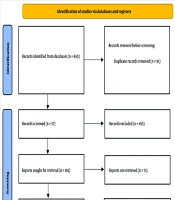
Both control-group and non-control-group studies were included, with pre-intervention and post-intervention data utilized for primary (HF/NS symptoms) and secondary (depression, anxiety, and sleep quality) outcome assessment. All stages were independently performed by two researchers, and the final data were consolidated. Initially, a total of 790 records were identified from databases. After screening the titles and abstracts, 101 articles were selected for further assessment. Subsequently, 12 full-text articles were examined to determine their eligibility for inclusion in the analysis.
5. Data Extraction
Finally, relevant data were extracted and organized from a total of 8 articles for the meta-analysis (Figure 1).

Figure 1.
PRISMA flow diagram for included searches of databases
5.1. Evaluation of the Quality
Study quality was independently assessed by two researchers using the Cochrane Risk of Bias checklist for clinical trials to ensure methodological rigor and consistency. Inter-reviewer agreement was measured using Cohen’s kappa statistic (κ = 0.85), indicating strong agreement. Any disagreements between the two reviewers were first discussed to reach consensus, and when consensus could not be achieved, a third reviewer was consulted to make the final decision. The overall quality of evidence was subsequently evaluated using the Grading of Recommendations, Assessment, Development, and Evaluation (GRADE) approach (17, 18).
5.2. Data Analysis
Statistical analyses were conducted using Stata 17 software (StataCorp LLC, College Station, Texas). A random-effects model was applied to account for potential heterogeneity across studies. Heterogeneity was evaluated using both the I² index and Cochran’s Q-test, and study quality was used as a criterion for subgroup analyses. Publication bias and potential influencing factors on treatment effects were assessed using Egger’s test, funnel plots, and metaregression analyses. A p-value of < 0.05 was considered statistically significant.
For outcomes measured using different scales, a standardized mean difference (SMD) approach was employed to enable comparability across studies. This method expresses effect sizes in standard deviation units, allowing the synthesis of results from studies using varying measurement scales.
6. Results
6.1. Study Selection
The study selection process is detailed in the PRISMA 2020 flow diagram (Figure 1). Our systematic search of PubMed, Web of Science, Scopus, and the Cochrane Library initially identified 790 records. After removing 235 duplicate records, 365 records flagged as ineligible by automation tools, and 89 records removed for other reasons, a total of 101 records were screened based on their titles and abstracts. Of these, 76 records were excluded, leaving 25 reports sought for retrieval. We were unable to retrieve 13 of these reports. The remaining 12 full-text articles were assessed for eligibility. Following this assessment, four reports were excluded due to language limitations, inadequate study methodology, or interventions that did not conform to the pre-defined third-generation behavioral therapy criteria. Ultimately, eight studies met all inclusion criteria and were included in the systematic review. These studies were published between 1988 and January 31, 2025, and included sample sizes ranging from 21 to 225 participants. The reasons for exclusion at each stage are summarized in Figure 1 and Table 1.
Table 1.
Characteristics of Studies Included in Systematic Review and Meta-Analysis
| Author (y) | Place | Design of the Study | Total Sample Size | Sample Size for the Control Group | Mean Age | Target Group | Type of Psychological Symptom | Type of Vasomotor Sign | Type of Psychological Intervention | No. of Sessions/Duration | Follow-Up | Questionnaire |
|---|---|---|---|---|---|---|---|---|---|---|---|---|
| Mann et al. (2012) (19) | London, UK | Randomised controlled trial | 101 | 49 | 53.16 | Women who have menopausal symptoms after breast cancer | Anxiety or fears, depressed mood, sleep problems | Hot flushes and night sweats | Cognitive behavioral treatment | Six weekly 90-minute sessions; baseline, 9 weeks, and 26 weeks | Baseline, 9 weeks, 26 weeks | WHQ, SSC monitoring, participant-reported flushes, hot flush rating scale assess menopausal symptoms. |
| Bower et al. (2015) (20) | University of California-LosAngeles | Randomized Controlled Trial | 71 | 32 | 46.1 | Younger Breast Cancer Survivors | Depression, Sleep quality | Hot flashes/night sweats | Mindfulness Meditation | 6-week program (weekly sessions; duration not specified) | Pre-, post-, and 3-month follow-up | CES-D, PSQI, and BCTPSC are assessment tools for depression, sleep quality, and breast cancer symptoms, respectively. |
| Fenlon et al.(2020) (11) | UK (England and Wales) | Randomized controlled trial | 130 | 67 | 53.5 | Women with breast cancer | Sleep, depression, anxiety | Hot flushes and night sweats | Nurse-led group CBT | 6 sessions, 90 min each, weekly × 6 weeks | 3-month follow-up | HF Beliefs and Behaviors Scale; hot flushes and night sweats; Hot Flush Related Daily Interference Scale, PHQ, GAD-7, PSQI |
| Hunter et al. (2009) (21) | London | A single-group design | 24 | Not applicable:single group | 53.7 | Women who have undergone treatment for breast cancer | Depressed mood, anxiety, sleep | HF, NS | Group cognitive behavioral intervention | Structured course (approx. 6 sessions) | 26 weeks after randomization | WHQ, HF Frequency, HFRS, HF Beliefs Scale |
| Atema et al. (2019) (10) | Netherlands | Randomized controlled trial | 255 | 84 | 47.7 | Breast cancer survivors | Sleep, depression, anxiety | HF NS | Internet-based cognitive behavioral therapy (self-managed iCBT group) | 6-week program (weekly modules; duration not specified) | Baseline, 10 weeks, 24 weeks | HFRS, Groningen Sleep Quality Scale, HFRS frequency subscale, HADS |
| Atema et al. (2017) (22) | Netherlands | Single group design (pilot) | 21 | Not applicable:single group | 47 | Breast cancer survivors | No | Hot flush/night sweats | Internet-based cognitive behavioral therapy | 6-week program (weekly modules) | Baseline, 10 weeks posttreatment | HFRS |
Abbreviation: BCTPSCC, breast cancer prevention trial symptom checklist; ES-D, center for epidemiologic studies depression; CBT, cognitive behavioral treatment; GAD-7, general anxiety disorder; HADS, Hospital Anxiety and Depression Scale; HF, hot flushes; HFRS, hot flush problem rating; NS, night sweats; HF/NS, hot flushes/ night sweats; PHQ, Patient Health Questionnaire; PSQI, Pittsburgh Sleep Quality Index; SC, sternal skin conductance; iCBT, internet-based cognitive behavioral therapy; WHQ, Women's Health Questionnaire.
6.2. Quality Assessment
The Cochrane checklist was used to identify two studies with a high risk of bias; the rest were of moderate quality. Predominantly, the absence of blinding of assessors and participants compromised the studies (Table 2).
Table 2.
Quality of Assessment of Included Study
| Variables | Mann et al. (2012) (19) | Bower et al. (2015) (20) | Fenlon et al. (11) | Hunter et al. (2009) (21) | Atema et al. (2019) (10) | Atema et al. (2017) (22) |
|---|---|---|---|---|---|---|
| 1- Was a method of randomization performed? | Yes | Yes | Yes | No | Yes | No |
| 2- Were the groups similar at baseline? | Yes | Yes | Yes | No | Yes | No |
| 3- Were the eligibility criteria specified? | Yes | Yes | Yes | Yes | Yes | Yes |
| 4- Is a sample size justification described? | No | No | No | No | No | |
| 5- Was the patient blinded? | No | No | No | No | No | No |
| 6- Was the care provider blinded? | No | No | No | No | No | No |
| Total score | 3 | 3 | 3 | 1 | 3 | 1 |
| Risk of bias | Moderate risk of bias | Moderate risk of bias | Moderate risk of bias | High risk of bias | Moderate risk of bias | High risk of bias |
6.3. Treatment Effects Evaluation
A random-effects model revealed significant improvement in the primary outcome, hot flash/night sweating (HF/NS) symptoms [standardized mean difference (SMD) = 0.961, 95% CI: 0.662 to 1.260, P < 0.001] in the intervention group (Table 3). To address the significant heterogeneity in the analysis (I² = 75.7%), a subgroup analysis by methodological quality was conducted. Secondary outcomes (sleep, depression, anxiety) were similarly assessed (Table 3).
Table 3.
The Effect of Treatment on Primary and Secondary Outcomes in the Study
| Variables | Number of Studies | Heterogeneity Chi-Squared | P-Value | Overall I-Squared (%) | Z | P-Value |
|---|---|---|---|---|---|---|
| Total result (primary outcome) | ||||||
| Hot flash/night Sweating | 8 | 28.81 | 0.000 | 75.7 | 6.31 | 0.000 |
| Subgroup analysis according to “quality assessment” | ||||||
| High risk of bias | 2 | 26.01 | 0.1 | 50.1 | 3.08 | 0.020 |
| Moderate risk of bias | 6 | 2.00 | 0.000 | 80.8 | 5.3 | 0.000 |
| Secondary outcomes | ||||||
| Anxiety | 4 | 0.79 | 0.853 | 0.0 | 3.50 | 0.000 |
| Depression | 6 | 57.61 | 0.000 | 91.3 | 2.65 | 0.008 |
| Sleep | 5 | 38.85 | 0.000 | 89.7 | 3.30 | 0.001 |
6.4. Meta-Regression
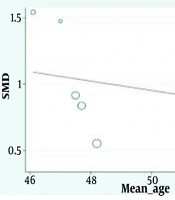
Meta-regression analysis was conducted to explore potential moderators influencing the treatment effects of CBT and mindfulness interventions on hot flashes and night sweats (HF/NS). A univariate meta-regression using mean participant age as the moderator showed a non-significant trend toward smaller effect sizes with increasing age (P = 0.30; Figure 2).

Figure 2.
Meta-regression diagram to investigate the effects of potential factors affecting heterogeneity
Due to the limited number of included studies (n = 8), a multivariate meta-regression including other moderators such as intervention type (CBT vs. mindfulness), intervention duration, and measurement instruments could not be performed. Future research with a larger number of eligible trials is needed to evaluate these potential moderators more comprehensively.
6.5. Publication Bias
Egger’s test showed no statistically significant evidence of publication bias (intercept = 2.801, SE = 2.401, P = 0.288). The funnel plot appeared slightly asymmetrical (Figure 3A), which may reflect the small number of included studies rather than true publication bias. Overall, both visual inspection and Egger’s test suggest that publication bias was unlikely to have materially influenced the pooled results (Figure 3B).

Figure 3.
A, Funnel plot; B, Egger's linear regression diagram
6.6. GRADE Quality Assessment
The primary and secondary outcome findings had moderate evidence strength, as determined using GRADE methodology. Notably, the primary outcome (HF/NS symptoms) had an effect size (SMD) of 0.961 (95% CI: 0.662 to 1.260, based on eight studies). The secondary outcomes of anxiety, depression, and sleep quality had SMDs of 0.332 (95% CI: 0.146 to 0.517, based on four studies), 0.766 (95% CI: 0.199 to 1.332, based on six studies), and 1.008 (95% CI: 0.411 to 1.602, based on five studies), respectively. The results should be interpreted with reference to potential risk of bias, inconsistency, indirectness, and imprecision (Table 4).
Table 4.
Evaluation of the quality of evidence using the GRADE method
| Subgroups | Number of Studies | Effect Size [SMD (95% CI); P-Value] | Inconsistency | Indirectness | Imprecision | Risk of Bias | Overall Quality Assessment |
|---|---|---|---|---|---|---|---|
| Hot flash/night sweating symptoms in menopausal women with breast cancer | 8 | 0.961 (0.66, 1.260); 0.000 | Medium | High | Medium | Medium | Medium |
| Anxiety in menopause women with breast cancer | 4 | 0.332, (0.146, 0.517); 0.000 | Medium | High | Medium | Medium | Medium |
| Depression in menopause women with breast cancer | 6 | 0.766, (0.199, 1.332); 0.008 | Medium | High | Medium | Medium | Medium |
| Sleep quality in menopause women with breast cancer | 5 | 1.008, (0.410, 1.607); 0.001 | Medium | High | Medium | Medium | Medium |
7. Discussion
This study evaluated the effectiveness of psychological interventions, including CBT and mindfulness-based approaches, in alleviating both physical and psychological symptoms in menopausal women with breast cancer. Our meta-analysis demonstrated that these interventions can significantly reduce vasomotor symptoms, anxiety, depressive symptoms, and sleep disturbances, corroborating findings from previous systematic reviews (15, 16, 23).
The significant reduction in vasomotor symptoms, such as hot flashes and night sweats, is of particular clinical importance, as these symptoms can severely disrupt daily functioning and exacerbate psychological distress in breast cancer survivors (24). The efficacy of psychological interventions likely stems from their ability to modify patients' perception of symptoms and enhance coping strategies, rather than directly altering underlying physiology. For instance, CBT helps patients reframe catastrophic thoughts about vasomotor symptoms, while mindfulness training fosters a non-judgmental awareness and acceptance of somatic sensations, collectively leading to reduced symptom-related distress and improved emotional well-being (15, 16, 23 ).
A key consideration in interpreting our findings is the substantial statistical heterogeneity observed across several outcomes, most notably for depression (I² = 91.3%). This high heterogeneity underscores the considerable clinical and methodological diversity among the included studies. Potential sources include variations in intervention characteristics (e.g., specific type of CBT or mindfulness, delivery mode, session frequency, and total duration), participant demographics (e.g., age, cancer treatment stage, time since diagnosis), and the instruments used to measure outcomes. In response to this, we conducted post-hoc subgroup analyses, which suggested that intervention type (CBT vs. mindfulness) and duration may partially explain the varying effect sizes for depressive symptoms, though these analyses were limited by the small number of studies in each subgroup. This heterogeneity does not invalidate the overall positive finding but rather highlights that the magnitude of benefit may depend on specific contextual factors. Consequently, the pooled estimates should be interpreted as evidence of a positive trend rather than a uniform effect size.
The generalizability of these interventions is supported by their demonstrated efficacy in managing symptoms across other chronic conditions, such as irritable bowel syndrome and chronic pain (25). Within the context of breast cancer, integrating CBT or mindfulness into standard care offers a low-risk, non-pharmacological strategy that may not only alleviate menopausal and psychological symptoms but also potentially improve adherence to cancer treatments by reducing their associated distress.
Overall, the findings suggest that CBT and mindfulness-based interventions are valuable, evidence-based strategies for enhancing the well-being of menopausal women with breast cancer. They provide a safe adjunct to conventional care, aiming to enhance quality of life and coping abilities. Future research should prioritize larger, rigorously designed trials that are powered to conduct pre-specified subgroup analyses. Investigating moderators such as specific intervention components, optimal dosing, and key patient characteristics will be crucial for developing personalized treatment recommendations and optimizing clinical outcomes.
7.1. Limitations
Our study has several limitations. First, the generalizability of the findings is constrained by the inclusion criteria, which focused exclusively on postmenopausal women or women aged older than 45 years old with breast cancer, potentially limiting the applicability to younger or premenopausal populations. Second, substantial heterogeneity existed across the included studies, including differences in intervention type (CBT vs. mindfulness), duration, frequency, intensity, and outcome measurement instruments, which may have influenced the pooled effect estimates. Third, most studies lacked blinding of participants and outcome assessors, introducing potential bias that could have affected the observed effectiveness of the interventions. Fourth, due to the limited number of included studies (n = 8), the meta-regression analysis could only examine one moderator (mean age), preventing a more comprehensive evaluation of other potential moderators such as intervention type, duration, and outcome measures. Fifth, the relatively small number of included studies may have limited the statistical power of some analyses and the robustness of subgroup findings. Finally, thirteen potentially relevant reports could not be retrieved during the screening process. The inability to access these studies may have introduced selection bias, as their inclusion could have altered the pooled estimates or influenced the assessment of publication bias. Although the number of unretrieved reports was relatively small, their absence should still be considered a potential source of uncertainty in interpreting the overall conclusions.
7.2. Clinical Implications
Despite these limitations, our review suggests that psychological interventions, including CBT and mindfulness-based therapies, can effectively manage vasomotor and psychological symptoms in menopausal women with breast cancer. Healthcare professionals are encouraged to integrate these interventions into standard care protocols, as they may improve symptom management, enhance psychological well-being, and support overall quality of life. Tailoring interventions based on patient characteristics, intervention type, and duration may further optimize outcomes.
7.3. Conclusions
This study demonstrates that psychological interventions — particularly CBT and mindfulness-based approaches — are effective in alleviating vasomotor and psychological symptoms in postmenopausal women with breast cancer. These interventions not only reduce hot flashes, anxiety, and depressive symptoms but also enhance sleep quality and overall well-being. Clinically, incorporating structured CBT or mindfulness programs into standard oncological care may provide a non-pharmacological, low-risk complement to existing treatments, improving patients’ quality of life. Future studies should employ larger, multicenter randomized controlled trials with standardized intervention protocols and longer follow-up periods to clarify the durability of benefits, identify optimal intervention components, and explore moderating factors such as treatment duration, cancer stage, and individual psychological profiles.