
1. Context
Leukemia is among the most prevalent childhood cancers and is characterized by the uncontrolled proliferation of blood cells in the bone marrow. Treatment often involves complex, prolonged, and sometimes invasive interventions, including chemotherapy, radiation therapy, and bone marrow transplantation (1). The impact of leukemia extends beyond the affected child, profoundly affecting the psychological, social, emotional, and functional well-being of the entire family (2).
In these circumstances, the primary focus of families, healthcare providers, and the broader health system is often on the child undergoing treatment. Consequently, siblings, particularly those of the affected child, frequently receive less attention, and their psychosocial needs are often overlooked (3). Siblings of pediatric cancer patients are often described as “silent survivors” because they experience a wide range of psychological, emotional, and social stressors. They may contend with complex emotions, including fear, anger, jealousy, guilt, anxiety, and feelings of rejection or isolation (4).
Changes in family dynamics, reduced parental attention, limited understanding of the illness, and involuntary caregiving responsibilities can significantly affect siblings’ mental health. Evidence suggests that these siblings are at elevated risk for psychological difficulties, including anxiety, depression, academic challenges, behavioral problems, and diminished self-esteem (5). From a developmental psychology perspective, childhood and adolescence are critical periods for shaping personality, social skills, identity, and coping strategies. Experiencing a sibling’s serious illness during these formative years can influence their perceptions of illness, mortality, fairness within the family, and interpersonal relationships (6).
Conversely, these experiences may also foster early maturity, enhanced empathy, increased responsibility, and stronger family bonds in some siblings (7). The overall impact on psychosocial well-being, however, varies depending on individual resilience and the availability of support systems. Despite the significance of these issues, most psychosocial interventions in pediatric oncology focus primarily on the patient or parents, leaving the unique needs of siblings largely unaddressed (8).
Addressing the mental health needs of siblings is not only a matter of equity in family-centered care but also plays a crucial role in enhancing overall family well-being, alleviating parental psychological stress, and promoting more effective adaptation to the child’s illness (9). Accordingly, comprehensive identification and analysis of the psychosocial challenges experienced by siblings of children with leukemia are essential for developing effective clinical, educational, psychotherapeutic, and supportive interventions (10).
This study aimed to comprehensively examine these multifaceted challenges and to use scientific evidence to guide families, mental health professionals, school counselors, and health policymakers in effectively addressing the needs of siblings of children with leukemia.
This systematic review was registered in PROSPERO (CRD420251150690).
2. Evidence Acquisition
2.1. Study Design and Search Strategy
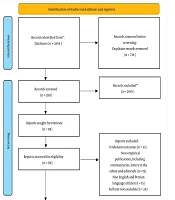
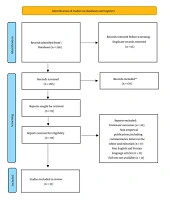
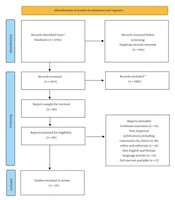
This systematic review aimed to identify and critically evaluate the psychosocial health challenges experienced by siblings of children diagnosed with leukemia. The review was conducted in accordance with the Preferred Reporting Items for Systematic Reviews and Meta-Analyses (PRISMA) guidelines (Figure 1), using structured procedures for literature searching, study selection, and data analysis.

Figure 1.
PRISMA Flow Diagram
PubMed, Scopus, Web of Science, CINAHL, PsycINFO, Embase, and SID were searched to identify studies addressing psychosocial challenges among siblings of children with leukemia. The final search across all databases was conducted on 1 June 2025. A combination of Medical Subject Headings terms and related text keywords was used, and no time or language restrictions were applied during the search. All retrieved articles were reviewed by two independent investigators, and relevant data were extracted (Table 1).
Table 1.
Databases and Search Strategies
| Databases | Search Strategy |
|---|---|
| Scopus, Science Direct, CINAHL, PsycINFO | (Siblings, Brother, Sister*), (Leukemia, Cancer, Childhood Cancer*), and (Psychosocial, Mental Health, Psychological, Social Adjustment, Anxiety, Depression, Well-Being), combined using AND and OR operators. |
| PubMed and Web of Science | (“Siblings” OR “Brother” OR “Sister”) AND (“Leukemia” OR “Cancer” OR “Childhood Cancer”) AND (“Psychological” OR “Social Adjustment” OR “Anxiety” OR “Depression” OR “Well-Being”) |
| SID, Embase | “Siblings,” “Brother,” “Sister,” “Leukemia,” “Cancer,” “Childhood Cancer,” “Mental Health,” “Psychological,” “Social Adjustment,” “Anxiety,” “Depression,” and “Well-Being” |
2.2. Inclusion and Exclusion Criteria
Studies were included in this systematic review if they met the following criteria:
- Population (P): Siblings of children diagnosed with leukemia, of any age or gender.
- Intervention/Exposure (I): The psychosocial impact of having a sibling with leukemia, including mental health, emotional well-being, social functioning, stress, anxiety, depression, or resilience. Studies evaluating targeted sibling support interventions were also included.
- Comparison (C): Studies with or without a comparison group were considered, including siblings of healthy children or children with other chronic illnesses.
- Outcomes (O): Psychosocial outcomes, quality of life, mental health, social functioning, or any indicator related to siblings’ adjustment and well-being.
- Timeframe: Only studies published between 2010 and 2025 were included.
- Language: English- and Persian-language publications were included.
Studies were excluded if they lacked original data or a clear methodological framework (e.g., commentaries, editorials, or letters), unless they reported structured empirical findings. Publications in languages other than English or Persian, or those that did not provide sufficient outcome information, were also excluded.
2.3. Study Selection Process
In this systematic review, 86 studies were initially deemed eligible; however, after full-text screening, 19 articles met the final inclusion criteria, comprising 19 eligible studies published between January 2010 and June 2025. Two independent reviewers first screened titles and abstracts to identify potentially relevant studies for full-text review. The full texts were then assessed against the predefined inclusion and exclusion criteria. Any discrepancies between reviewers were resolved through consultation with a third researcher.
2.4. Data Extraction
Data extraction was performed independently by two reviewers using a standardized form. Extracted information included the following:
- Study characteristics: Author(s), year of publication, study design, sample size, and setting.
- Outcomes: Psychosocial outcomes, quality of life, mental health, social functioning, or any indicator related to siblings’ adjustment and well-being.
- Methodological details: Tools used to assess outcomes, such as surveys, interviews, knowledge tests, and analytical approaches.
Initial reference records were organized in Google Sheets and subsequently managed in EndNote for deduplication and citation control. The search strategy was developed by the lead author and refined in consultation with two senior team members with expertise in literature synthesis. Although no formal librarian was involved, the final strategy underwent internal peer review.
Disagreements during study selection or data extraction were resolved through discussion or, when necessary, third-party adjudication. These procedures ensured consistency, transparency, and methodological rigor throughout the review process.
2.5. Quality Assessment
The methodological quality of the included studies was assessed using established appraisal tools: the Critical Appraisal Skills Programme checklist for qualitative studies, JBI or Critical Appraisal Skills Programme tools for quantitative studies, and the AMSTAR 2 tool for retrospective reviews. Assessments were conducted independently by two reviewers, and any discrepancies were resolved through consultation with a third reviewer.
2.6. Data Analysis
Given the methodological diversity of the included studies, design-specific validated tools were applied to ensure rigorous assessment. Randomized controlled trials were evaluated using the Cochrane Risk of Bias 2 tool, observational studies were assessed using the Newcastle-Ottawa Scale, and qualitative studies were assessed using the Critical Appraisal Skills Programme checklist. This stratified approach enabled precise and relevant quality assessment. All reviewers adhered to standardized scoring rubrics, and discrepancies were resolved through discussion. Studies were not excluded based on risk of bias; however, assessments informed the narrative synthesis, and findings from studies rated as moderate or high risk were interpreted with caution.
Continuous outcomes were summarized using means and standard deviations, when reported. Effect sizes were extracted or calculated where possible. Heterogeneity across studies was assessed descriptively, and, when appropriate, statistical measures such as I2 were reported to evaluate variability among studies.
2.7. Handling Missing Data
For studies with missing or incomplete data, attempts were made to contact the corresponding authors. If the data could not be obtained, the study was included only if sufficient information was available for analysis; otherwise, it was excluded.
2.8. Ethical Considerations
As this study is a systematic review based entirely on previously published research and did not involve primary data collection or interventions, ethical approval was not required. Nevertheless, ethical standards were maintained throughout the process, including appropriate citation practices, respect for intellectual property, and adherence to principles of scientific integrity.
3. Results
A total of 20 studies were included in this systematic review following a rigorous screening process. The distribution of study designs was as follows: qualitative studies, 3 (15%); case-control studies, 3 (15%); cross-sectional studies, 7 (35%); review articles, including systematic or scoping reviews, 3 (15%); clinical trials, 1 (5%); and descriptive studies, 3 (15%). Overall, these studies examined the psychosocial health challenges of siblings of children with leukemia using diverse research designs and methodologies. Cross-sectional studies were the most frequent, accounting for more than one-third of all included studies.
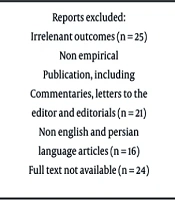
The initial search across seven major databases yielded a substantial body of literature on the psychosocial health challenges of siblings of children with leukemia. Figure 1 presents a comprehensive PRISMA flow diagram illustrating each stage of the study selection process, including the number of records identified, screened, assessed for eligibility, and ultimately included, along with specific reasons for exclusion at each stage. The key characteristics of the included studies are summarized in Table 2.
Table 2.
Characteristics and Thematic Classification of Included Studies
| Year | Author (First) | Study Type | Sampling Method | Participants | Conclusion |
|---|---|---|---|---|---|
| 2015 | Alderfer (11) | Case-control | Convenience | 67 | Siblings of children with cancer generally maintain peer relationships comparable to those of their classmates, although they may experience a modest decline in participation in activities and academic performance. |
| 2015 | Gerhardt (12) | Systematic review | Review of literature | N/A | There is a strong recommendation to provide dedicated psychosocial support services for siblings of children with cancer, alongside guidance for parents and healthcare professionals on effectively addressing the unique needs of these siblings. |
| 2013 | Kaplan (13) | Cross-sectional | Convenience | 125 | Siblings of children with cancer are at high risk of experiencing significant illness-related stress and require targeted psychological support. |
| 2013 | Long (14) | Cross-sectional | Convenience | 30 | Some siblings of children with cancer are at elevated risk of experiencing self-reported distress in response to their sibling’s illness. |
| 2012 | Prchal (15) | Controlled pilot trial | Randomized | 30 | A two-session sibling-focused intervention was found to enhance adjustment, particularly improving mental health during the early stages after a cancer diagnosis. |
| 2012 | Cordaro (16) | Case-control | Convenience | 63 | Parents often encounter difficulties in identifying psychological problems in the healthy siblings of children with cancer. |
| 2012 | Mishra (17) | Cross-sectional | Convenience | 343 | The study indicates that not only children with cancer but also their siblings exhibit higher levels of alexithymia compared with their healthy peers. |
| 2013 | Eilegård (18) | Case-control | Convenience | 240 | Bereaved siblings are at increased risk of low self-esteem, delayed personal maturity, and sleep disturbances compared with their non-bereaved peers. |
| 2010 | Kamibeppu (19) | Cross-sectional | Convenience | 185 | Siblings of children with cancer, particularly sisters, demonstrated evidence of post-traumatic growth. |
| 2015 | Rosenberg (20) | Longitudinal descriptive | Convenience | 64 | Emotional support and effective communication during the illness and after the child’s death play a critical role in mitigating negative outcomes and fostering personal growth among siblings. |
| 2024 | Faust (21) | Longitudinal descriptive | Convenience | 605 | Some siblings experienced increased family-related challenges after a child’s leukemia diagnosis. These individuals require targeted attention and appropriate support to mitigate potential long-term adverse effects. |
| 2024 | Wright (10) | Qualitative | Semi-structured interview | 95 | A parent’s leukemia diagnosis was found to strengthen sibling bonds while simultaneously creating tensions in task distribution and differences in coping strategies. |
| 2018 | Long (22) | Systematic review | Review of literature | N/A | It is essential to identify siblings at risk and develop interventions aimed at enhancing family communication, increasing siblings’ social support, improving their cancer-related knowledge, and promoting their participation in the treatment process. |
| 2017 | Long (23) | Qualitative | Semi-structured interview | 46 | Families highlighted the importance of psychological screening for siblings and proposed strategies to overcome existing barriers and implement such assessments effectively. |
| 2023 | Faust (24) | Cross-sectional | Purposive | 689 | Siblings of survivors of childhood acute leukemia experience psychological challenges, particularly in adulthood, which can adversely affect their quality of life. |
| 2019 | Masoudifar (25) | Descriptive-analytical | Consecutive | 188 | Adolescent siblings of children with cancer reported various unmet needs, particularly related to receiving information about their sibling’s illness and obtaining support for emotional coping. |
| 2022 | Huang (26) | Cross-sectional | Convenience | 222 | More than half of the siblings of cancer survivors reported experiencing moderate to severe levels of anxiety. |
| 2021 | Van Schoors (27) | Cross-sectional | Convenience | 81 | Family and social resources play a crucial role in siblings’ adjustment to a cancer diagnosis. To support their mental and emotional well-being, interventions should actively involve the entire family and broader support network. |
| 2021 | Wawrzynski (28) | Scoping review | Review of literature | N/A | Social support emerged as a recurring theme in research on siblings of children with cancer; however, the specific types of support that are most effective remain unclear due to variability in how support is defined and measured across studies. |
Several studies were relevant to multiple thematic categories, with numerical indicators reflecting their primary thematic alignment, as outlined in Table 2. Collectively, these findings highlight the psychosocial challenges experienced by siblings of children diagnosed with leukemia. A comprehensive overview of the selected studies, along with their thematic categorizations, is presented in Table 2.
3.1. Thematic Synthesis and Discussion
The findings of this systematic review suggest that siblings of children with leukemia experience a range of psychosocial challenges, including anxiety, depression, and feelings of neglect. Importantly, these outcomes appear to arise from multiple interacting mechanisms. Emotional distress is not only a reaction to the illness itself but also results from shifts in family dynamics, such as reduced parental attention and increased caregiving responsibilities (29). Some studies highlighted that inconsistent family communication and parental stress can amplify these negative effects, suggesting a mediating role for family functioning (30).
The review also indicates dual patterns in psychosocial outcomes. While many siblings exhibit psychological vulnerability, others demonstrate resilience. Protective factors identified across studies include supportive family communication, involvement in caregiving, and access to external social networks (31). These findings suggest that interventions should be individualized, considering both risk and protective factors, rather than applying a uniform approach (32). Developmental stage further moderates siblings’ experiences. Younger children, with limited cognitive and emotional coping capacity, tend to report heightened anxiety and behavioral problems. In contrast, adolescents may experience identity conflicts, social isolation, and academic disruption. These findings underscore the need for age-appropriate psychosocial support tailored to developmental needs (33).
Cultural context also shapes siblings’ experiences. In collectivist cultures, caregiving may foster resilience but simultaneously increase role burden. In individualist cultures, siblings more often report loneliness and reduced social support. Recognizing these cultural differences is crucial for designing culturally sensitive interventions. Sociocultural contexts substantially influence the psychosocial health outcomes of siblings of children diagnosed with leukemia. Illness-related cultural beliefs, social stigma, and culturally mediated restrictions on emotional expression may heighten the risk of psychological distress in this population. Moreover, in collectivist societies, culturally prescribed family roles and expectations of early responsibility and emotional self-sacrifice can impose additional psychosocial strain on healthy siblings. Accordingly, integrating culturally responsive supportive interventions is critical to enhancing psychosocial adaptation and mitigating long-term adverse outcomes.
Despite these insights, the reviewed studies have several limitations. Most relied on cross-sectional designs, limiting causal inferences, and sample sizes varied considerably. Measurement tools differed across studies, potentially introducing bias and hindering comparability (34). Furthermore, only a few studies assessed long-term psychosocial trajectories or incorporated sibling-reported outcomes, highlighting gaps in the literature (35).
Overall, siblings of children with leukemia face considerable psychosocial risks shaped by developmental, familial, and cultural factors. Addressing these challenges requires integrated care models that consider siblings as active participants in pediatric oncology programs (36). Tailored interventions, informed by identified risk and protective mechanisms, may enhance resilience, reduce psychological harm, and promote healthier family adaptation throughout the illness trajectory (37).
4. Conclusions
This systematic review demonstrates that siblings of children with leukemia commonly experience anxiety, depression, guilt, and reduced social engagement. Evidence from the reviewed studies, most of which involved small sample sizes and cross-sectional designs, suggests that these psychosocial difficulties can negatively affect both sibling well-being and overall family functioning. Only a few longitudinal studies exist, highlighting a significant gap in understanding the long-term impact.
Given these limitations, future research should focus on larger, longitudinal studies to examine trajectories of psychosocial outcomes in siblings. Standardized measures of mental health, social functioning, and family dynamics should be employed to allow comparability across studies. Additionally, targeted interventions, such as structured family counseling and sibling-focused psychological support, should be tested for effectiveness and sustainability. Addressing these gaps will help inform evidence-based guidelines and improve holistic care for families affected by pediatric leukemia.
4.1. Implications for Practice
Addressing the psychosocial needs of siblings of children with leukemia requires incorporating care approaches that are responsive to cultural diversity. Systematic identification of emotional and social difficulties among siblings should be embedded in routine care, recognizing that psychological distress may be expressed differently across cultural contexts. Supportive interventions must extend beyond the patient to include the family environment, taking into account culturally shaped expectations, responsibilities, and communication patterns. Increasing caregiver awareness and strengthening cultural competence among healthcare providers are critical to ensuring that siblings receive appropriate and equitable psychosocial support.
4.2. Limitations of the Study
This review focused on studies published in Persian and English, which means that some influential and high-quality research may have been overlooked. Although a thorough search was conducted to identify relevant studies, a meta-analysis was not feasible because of the lack of homogeneous and aggregated quantitative data on psychosocial indicators across the included studies. Most studies employed qualitative designs, varied conceptual frameworks, different measurement tools, and diverse outcome variables, preventing statistical comparability and the calculation of combined effect sizes. Because meta-analysis requires a certain degree of consistency in study design, measurement variables, and indicators, attempting it under these conditions could produce misleading or invalid results. Consequently, a systematic qualitative analysis was considered the most reliable and appropriate method to address the research question.