
1. Background
Cancer is not merely a biological illness but also a profound psychosocial crisis that significantly affects patients and their families, particularly spouses (1). As informal caregivers, spouses often shoulder emotional and practical caregiving responsibilities, resulting in elevated psychological strain. This burden frequently manifests as anxiety, depressive symptoms, anticipatory grief, and reduced existential well-being (2, 3).
In this context, hope emerges as a key psychological construct for sustaining resilience among caregivers. Defined as a multidimensional psychological strength, hope is closely associated with improved quality of life, mental health, and adaptive coping strategies in caregiving populations (4, 5). Among spouses of patients with cancer, hopelessness may arise from uncertainty about the future and diminished perceived control over life circumstances. Anticipatory grief related to the partner’s illness trajectory may further intensify this experience (6).
Previous studies have demonstrated the efficacy of various therapeutic modalities, including cognitive-behavioral therapy (CBT) and existential psychotherapy, in improving emotional outcomes among caregivers (7, 8). However, research on integrative frameworks that combine cognitive restructuring with existential meaning-making remains limited, particularly for interventions tailored to spouses of male cancer patients. As Vehling and Kissane (9) have argued, existential distress constitutes a fundamental layer of suffering in cancer care, arising from disruptions in meaning, identity, and the perceived future. Similarly, Vehling and Philipp (10) emphasize that psychosocial interventions must extend beyond symptom reduction to address these existential domains directly, underscoring the importance of integrative approaches that combine cognitive restructuring with existential meaning-making.
Cognitive-existential therapy (CET) provides such an integrative framework by addressing dysfunctional thought patterns alongside deeper existential dilemmas related to meaning, freedom, isolation, and mortality. Foundational research by Kissane et al. (11-14) has provided robust empirical support for CET in alleviating psychological distress and enhancing well-being among oncology populations.
Subsequent studies have further extended these findings; for example, Heidenreich et al. (15) applied CET to address death anxiety in a non-clinical population, illustrating its broader existential relevance, whereas Brédart et al. (16) implemented CET in couple-based interventions to reduce cancer-related relational distress.
In Iran, other studies have shown that cognitive-existential interventions significantly improve hope and existential awareness among patients and caregivers. These outcomes underscore the cross-cultural relevance and therapeutic utility of CET.
Nonetheless, empirical studies applying single-case experimental designs (SCED) to evaluate such interventions in caregivers remain scarce, particularly among spouses of male cancer patients. Single-case methodologies offer a sensitive, individualized approach to capturing within-person therapeutic changes, which is particularly relevant in psychosocial oncology research.
2. Objectives
Accordingly, this study aimed to examine the impact of a 12-session cognitive–existential rehabilitation counseling protocol on hope among the wives of men with cancer. A replicated single-case AB design with repeated baseline and follow-up assessments was used to evaluate preliminary intervention effectiveness and individual patterns of change.
3. Methods
3.1. Study Design
A replicated single-case AB design with follow-up assessments was employed to examine the preliminary effectiveness of a 12-session cognitive–existential rehabilitation counseling protocol on hope among wives of men with cancer. For novel treatments or intervention protocols, the primary objective is to determine whether the intervention produces a reliable effect at the individual level.
Each participant completed repeated baseline assessments before the intervention, followed by repeated measurements during the intervention and at post-intervention follow-up. As summarized in Table 1, this design was selected because it allows detailed monitoring of individual change trajectories (17) and is particularly suitable for preliminary intervention evaluation and feasibility research in psychosocial oncology populations.
Table 1.
Measurement Time Points Across Study Phases
| Phases | Time Points (Sessions / Days) | Description |
|---|---|---|
| Baseline (A) | 4 time points before intervention | Repeated assessments before intervention |
| Intervention (B) | Sessions 3, 6, 9, and 12 | Measurements during selected intervention sessions |
| Follow-up (A′) | Days 15, 30, and 45 post-intervention | Post-intervention follow-up assessments |
All participants completed the same number of baseline assessments before intervention initiation. Therefore, the study should be interpreted as a replicated AB single-case design with follow-up rather than a multiple-baseline design involving staggered intervention onset across participants.
3.2. Participants
Five wives of men with cancer were purposively selected from the oncology department of Firuzgar Hospital, Tehran.
A total of 22 potential participants were initially screened for eligibility. Seventeen individuals were excluded because they did not meet one or more inclusion criteria or met one or more exclusion criteria.
The most common reasons for exclusion were not being the primary caregiver, currently receiving psychotherapy or psychiatric medication, having experienced a major concurrent life crisis unrelated to caregiving, or not meeting the study’s availability requirements for completing the intervention and follow-up assessments.
No eligible participant declined participation or withdrew from the study. Consequently, 5 participants who fulfilled all eligibility requirements and demonstrated relatively low baseline hope scores were enrolled.
Purposive sampling was used to identify participants expected to benefit most from the intervention and to provide meaningful information regarding its preliminary effectiveness. Selection was based on fulfillment of all inclusion criteria, absence of exclusion criteria, and relatively low levels of hope at baseline assessment.
Inclusion criteria included being the legal spouse and primary caregiver, having no diagnosed mental illness, being willing to attend all sessions and assessments, and being literate in Farsi.
Exclusion criteria included current psychotherapy or psychiatric medication use, a history of cancer diagnosis in the spouse herself, or any critical life crisis unrelated to caregiving during the intervention.
3.3. Intervention Protocol
The researcher developed a structured 12-session intervention protocol grounded in 3 main foundations:
Phase 1: Content analysis of in-depth interviews with wives of men with cancer yielded thematic categories that formed the empirical foundation of the protocol.
Phase 2: The protocol integrated cognitive and existential therapy models, supported by a review of relevant clinical frameworks and evidence-based practices. This theoretical synthesis enabled a deeper understanding of the data and strengthened the protocol’s conceptual reliability.
Phase 3: The protocol was validated through expert panel review and focus group feedback.
To establish a strong conceptual and clinical grounding, the protocol incorporated principles from both cognitive therapy (18, 19) and existential psychotherapy (20-22).
Otto Rank’s theory of the will (23) received particular emphasis, especially his dialectic of negative and positive will as a pathway to creative action. This concept directly informed the protocol’s focus on fostering agency and creative resistance.
The protocol also incorporated contemporary models, such as Menzies et al.’s framework (24), which bridges cognitive restructuring and existential meaning-making.
Additional grounding was drawn from established protocols in psychosocial oncology, particularly those developed by Kissane et al. (12, 25).
Complementary evidence from Iranian studies provided further grounding (in Persian).
Furthermore, the conceptualization of hope in this protocol was explicitly guided by Snyder’s hope theory, which defines hope as a cognitive set involving both agency (goal-directed energy) and pathways (planning to meet goals) (26).
This multi-source integration ensured that the 12-session cognitive–existential rehabilitation counseling protocol was both theoretically grounded and clinically relevant.
3.3.1. Validation Procedures
Content validity was assessed using Lawshe’s Content Validity Ratio (CVR) method (27) to examine the extent to which the protocol components adequately and accurately captured the intended conceptual construct. The expert panel consisted of therapists specializing in cognitive-existential counseling. Ten experienced professors in cognitive and existential psychotherapy were initially contacted, and the full protocol was provided to them via email. Expert feedback was systematically collected, synthesized, and incorporated into protocol revisions.
A focus group was conducted with 12 wives of men with cancer who were eligible based on demographic and psychological criteria. Focus group discussion, a widely used qualitative method, enables participants with shared experiences to engage in guided conversations to express their perceptions, beliefs, and perspectives on a specific topic. Participants reviewed the protocol both individually and in groups, responding to structured evaluative questions developed for this session. Sample questions included: “Is the language and text of the protocol simple, fluent, and understandable to you?” “Is the content of each section sufficient for understanding the concept?” “Which sections require further elaboration?” “Does the designed protocol adequately address your needs?”
3.3.2. Core Themes Addressed in the Sessions
The cognitive-existential rehabilitation counseling protocol was developed based on core themes extracted from qualitative content analysis of in-depth interviews with wives of men with cancer.
Conceptually, the protocol was grounded in the existential concern of preserving identity—"being" as an autonomous self—in the face of a threatening "Other", symbolized by cancer and its destructive tradition. This oppressive force (negative authority) imposed feelings of hopelessness and passivity, loss of control over personal destiny, a pervasive sense of surrender, and the disintegration of family cohesion.
In the present study, the term "cancer tradition" refers to a culturally embedded narrative-existential construct; a hegemonic force undermining autonomy, individuality, and hope (28). Rather than referring to a social tradition in the conventional sense, the concept describes how some caregivers experienced and represented cancer as an oppressive and totalizing order that extends beyond the disease itself. Participants perceived cancer as a coercive authority that sought to dominate multiple domains of life, including personal agency, family relationships, future aspirations, daily routines, and meaning systems. Within this narrative framework, cancer was not viewed merely as a medical condition but as an oppressive and destructive discourse or order that imposed passivity, fear, uncertainty, and psychological subjugation. The reconstruction of hope often involved resisting this perceived “cancer tradition,” challenging its dominance, and reclaiming agency, meaning, and authorship over one’s life narrative.
Accordingly, the intervention aimed to help participants understand and reinterpret cancer and its tradition as "a negative authority" that, drawing on the conceptual frameworks of Sontag and Goffman (29, 30), can be said to have threatened their identity as unique, narrative–linguistic beings.
Building on this insight, participants were guided to adopt a dialectical stance of resistance by engaging with positive external authorities, such as physicians, therapists, and experienced peers.
Through a gradual process of modeling and internalization, the constructive voices and standards of these positive figures were assimilated, fostering agency, autonomy, responsibility, authentic meaning-making, and creative action.
This central dialectical framework provided the emotional and motivational foundation for enhancing hope.
Core therapeutic concepts included freedom, creative will, responsibility, and existential dialogue through guided exploration and clarification of personal values. These were combined with cognitive restructuring of hopelessness-related beliefs and systemic meaning-making, forming the conceptual foundation of the 12-session protocol (Table 2).
Table 2.
Summary of the 12-Session Cognitive-Existential Rehabilitation Counseling Protocol
| Sessions and Titles | Main Goal | Core Technique | Homework |
|---|---|---|---|
| Session 1. Initial assessment, rapport building, and intervention framework | Establish trust and treatment contract; introduce hope framework | Psychoeducation; existential dialogue; orientation to dialectical atmosphere | Write goals and concerns |
| Session 2. Highlighting hope-reducing factors and forming the ‘Thesis’ | Recognize negative authorities (Cancer Tradition) | Guided discovery; downward arrow; identifying Cancer Tradition as negative authority and a dominant discourse perceived as oppressive and totalizing (early Fluid Compensation activation) | Self-monitoring negative thoughts & routines |
| Session 3. Preparing space for acceptance and adaptation | Foster acceptance and flexible adjustment | Narrative therapy; cognitive reframing; strengthening adaptive acceptance | Daily thought records; family organization tasks |
| Session 4. Highlighting hope-enhancing factors and forming the ‘Antithesis’ | Identify strengths and supportive figures | Strengths exploration; modeling Positive Authorities to counterbalance Cancer Tradition (Fluid Compensation in action) | Positive self-talk; supportive communication |
| Session 5. Discovering personal responsibility and the ‘Self-as-Builder’ | Strengthen ownership of choices and actions | Existential dialogue; role play; internalization of Positive Authority to strengthen the ‘Inner Philosopher’ | Journaling; challenging negative thoughts |
| Session 6. Cultivating will and confrontation (from negative to positive will) | Activate willpower and agency against passivity | Guided imagery; confrontation with avoidance; transforming negative will into creative agency (full Fluid Compensation engagement) | Behavioral experiments; hope journaling |
| Session 7. Preparing for decision and choice | Identify aspirations and manage guilt. | Imagery; aspirational dialogue; managing impulsive/compulsive/suppressive patterns | Identify obstacles; reflective writing |
| Session 8. Entering decision-making and action | Commit to meaningful goals and action | Goal-setting; planning; problem-solving; confronting decision-related anxiety | Implement action plan |
| Session 9. Goal-setting, planning and operationalization | Operationalize goals with resilience | SMART planning; problem-solving; assertiveness ('self-command') | Apply solutions; monitor barriers |
| Session 10. Consolidating meaning reconstruction | Rebuild coherent meaning system around hope | Meaning-making; narrative integration; mapping values and hopeful beliefs | Map personal values & hopeful beliefs |
| Session 11. Stabilizing and integrating meaning system & the ‘Inner Sage’ | Stabilize new meaning system and inner wisdom (Internal Positive Authority) | 7-column thought record; inner dialogue; strengthening autonomy and agency | Anticipate stressors; strengthen philosopher-self |
| Session 12. Final integration, meaningful farewell & standing in agency | Summarize gains and prepare for independence | Review; future planning; closure work; consolidating agency | Hope-maintenance strategies; supportive networking |
3.3.3. Delivery and Format
Sessions were conducted individually each week (60 - 90 minutes per session) in a quiet setting within a private counseling center. The therapist, the principal investigator, had formal training in CET. Each session (except the first, which was dedicated to establishing rapport and trust and clarifying the goals) followed a common structured format: reviewing previous exercises, providing psychoeducation when necessary, facilitating guided dialogue and exploration, applying specific techniques, and assigning homework tasks.
All intervention sessions were delivered by the principal investigator, who had received training in the cognitive–existential approach and was responsible for implementing the protocol across all participants. Delivering the intervention through a single therapist enhanced procedural consistency across cases; however, it also increased the possibility that therapist-specific factors may have contributed to participant outcomes.
Treatment fidelity was supported through several procedural strategies. First, the intervention was delivered according to a structured 12-session cognitive–existential rehabilitation counseling protocol that served as an intervention manual and specified the objectives, therapeutic content, techniques, and assignments for each session. Second, all counseling sessions were audio-recorded with participants’ consent. Third, the principal investigator used session-specific content checklists derived from the intervention protocol to monitor coverage of the planned therapeutic components. In addition, regular supervisory meetings were conducted with the research supervisors and advisors, during which audio recordings and session reports were reviewed and discussed to evaluate adherence to the intervention framework and to ensure consistency in protocol implementation across participants. However, no formal independent fidelity rating or adherence assessment by reviewers outside the research team was conducted.
A structured summary of the 12-session protocol, including the main theme, objectives, core techniques, and homework assignments, is presented in Table 2.
3.4. Measures
To assess hope levels across time points, the Snyder Hope Scale (SHS), developed by Snyder et al. (31), was administered. The scale consists of 12 items comprising 2 subscales: Agency Thinking and Pathways Thinking. Each item is rated on a 5-point Likert scale (1 = definitely false to 5 = definitely true), resulting in a total score ranging from 12 to 60, with higher scores reflecting greater dispositional hope.
The Persian version, validated by Vakili et al., demonstrated satisfactory psychometric properties, including internal consistency (Cronbach’s α = 0.82) and construct validity in Iranian samples. Further studies confirmed its reliability, reporting a Cronbach’s α of 0.86 and a test–retest reliability of 0.81. Cross-cultural validation studies have also supported the scale’s two-factor structure in diverse populations, including Japan, Portugal, Iran, and the United States (32, 33).
3.5. Data Analysis
Data analysis employed complementary methods appropriate for SCED to ensure both visual and quantitative evaluation of intervention effects.
Visual Analysis: Graphical trend analysis was conducted across 3 phases (baseline, intervention, and follow-up). In accordance with Gast and Ledford’s guidelines (34), 3 key features were evaluated: level (the relative magnitude of the dependent variable within each phase), trend (the direction of change over time), and variability (the degree of fluctuation around a central tendency). Both within-phase and between-phase comparisons were conducted to evaluate consistency and phase-related changes.
Percentage of Improvement: To evaluate clinical significance, improvement rates were calculated using Kazdin’s formula (35):
Percentage Improvement (%) = ((Mean New Phase − Mean Baseline) / Mean Baseline) × 100.
Rates ≥ 50% were considered clinically meaningful.
Three indices were calculated: (a) improvement during intervention, based on the difference between the intervention-phase mean and the baseline mean; (b) improvement at follow-up, based on the difference between the follow-up mean and the baseline mean; and (c) total improvement, based on the difference between the combined mean of intervention and follow-up observations and the baseline mean.
Effect Size (Cohen’s d): Effect sizes were computed using Cohen’s d (36) to quantify the magnitude of change between baseline and intervention phases:
Cohen’s d = (Mean Treatment – Mean Baseline) / SD pooled.
Interpretation followed Cohen’s benchmarks: small (< 0.41), medium (0.41 - 1.15), large (1.15 - 2.70), and very large (> 2.70).
The pooled standard deviation was calculated from the standard deviations of the baseline and intervention phases. Follow-up observations were not included in effect size calculations and were analyzed separately to evaluate maintenance of treatment gains.
Percentage of Nonoverlapping Data (PND): PND was calculated as the percentage of intervention-phase observations that exceeded the highest baseline observation. Specifically,
PND = (k / nB) × 100,
where k represents the number of intervention data points exceeding the most favorable baseline score, and nB represents the total number of intervention observations. PND values above 90% indicate highly effective interventions; values between 70% and 90% indicate effective interventions; values between 50% and 70% indicate questionable effectiveness; and values below 50% indicate ineffective interventions (37).
All findings were reported descriptively for each participant and presented visually through individualized trend graphs.
3.6. Ethical Considerations
This study was approved by the Ethics Committee of the University of Rehabilitation Sciences and Social Health (ethics code: IR.USWR.REC.1398.194). All participants provided written informed consent before participation. Confidentiality and anonymity were ensured at all stages of the study.
4. Results
4.1. Participant Characteristics
Five wives of men with cancer were included in the study. Their ages ranged from 30 to 50 years (M = 40.6). All participants were married and served as the primary caregivers for their husbands. Educational attainment ranged from middle school to a master’s degree. Family circumstances varied with respect to the number of children and caregiving responsibilities. The duration of the husbands’ cancer diagnoses ranged from 1 to 4 years and included colorectal, prostate, brain, blood, and laryngeal cancers. Regarding disease severity, none of the patients had metastatic cancer. Three patients (husbands of Participants 1, 2, and 4) were diagnosed at Stage II, whereas 2 patients (husbands of Participants 3 and 5) were diagnosed at Stage III. Available clinical records further indicated that all patients had received chemotherapy, and 2 patients (husbands of Participants 3 and 5) had additionally undergone radiotherapy.
Recruitment feasibility was supported by the successful identification and enrollment of eligible participants in a clinical oncology setting. Of the 22 individuals screened, 5 met the eligibility criteria, and all agreed to participate. No participant withdrew during the intervention or follow-up phases, resulting in complete data collection across all measurement points (Table 3).
Table 3.
Demographic and Clinical Characteristics of the Participants
| Participant | Age (y) | Education | Children | Husband’s Cancer Type | Duration of Illness (y) | Cancer Stage | Previous Psych. Services |
|---|---|---|---|---|---|---|---|
| P1 | 38 | Master’s | 1 | Colorectal | 2 | II | Yes |
| P2 | 40 | Master’s | 1 | Prostate | 1 | II | No |
| P3 | 45 | High School | 2 | Brain tumor | 2 | III | Yes |
| P4 | 30 | High School | 0 | Blood cancer | 1 | II | No |
| P5 | 50 | Middle School | 3 | Laryngeal cancer | 4 | III | No |
4.2. Group-Level Analyses
Visual and quantitative analyses indicated consistent improvements in hope scores across all participants. The mean improvement rate during the intervention was 51.6%, and all participants surpassed the 50% benchmark for clinical significance at follow-up (35).
Effect size estimates (Cohen’s d) ranged from 1.92 to 2.78, suggesting large estimated treatment effects. Although not all participants reached clinical significance during the intervention, all exceeded the threshold at follow-up, reflecting variability in response timing.
As detailed in Table 4, PND values indicated highly effective intervention outcomes across all participants, with values of 100% for the hope variable (PND ≥ 90%).
Table 4.
Percentage of Nonoverlapping Data and Effectiveness Classification by Participant
| Participant | PND (%) | Classification |
|---|---|---|
| P1 | 100 | Highly effective |
| P2 | 100 | Highly effective |
| P3 | 100 | Highly effective |
| P4 | 100 | Highly effective |
| P5 | 100 | Highly effective |
4.3. Individual Change Patterns
Although the raw participant scores at each time point are presented in Table 5, the analysis of individual trajectories, which revealed both shared and divergent patterns of therapeutic response, is presented in Table 6.
Table 5.
Raw Hope Scores Across Baseline, Intervention, and Follow-Up Assessments a
| Participant | A1 | A2 | A3 | A4 | B3 | B6 | B9 | B12 | F15 | F30 | F45 |
|---|---|---|---|---|---|---|---|---|---|---|---|
| P1 | 19 | 19 | 18 | 18 | 20 | 24 | 29 | 31 | 30 | 32 | 31 |
| P2 | 24 | 23 | 23 | 23 | 28 | 33 | 38 | 42 | 40 | 42 | 45 |
| P3 | 18 | 17 | 18 | 18 | 19 | 22 | 28 | 30 | 28 | 30 | 30 |
| P4 | 20 | 23 | 21 | 22 | 24 | 30 | 39 | 41 | 43 | 45 | 41 |
| P5 | 21 | 16 | 20 | 18 | 24 | 30 | 34 | 40 | 41 | 42 | 45 |
a A = baseline assessment; B = intervention assessment; F = follow-up assessment.
Table 6.
Summary of Hope Outcomes, Improvement Rates, and Effect Sizes by Participant a
| Participant | PND (%) | Baseline Mean | Treatment Mean | Follow-up Mean | Improvement Treatment (%) | Improvement Follow-up (%) | Improvement Total (%) | Cohen’s d |
|---|---|---|---|---|---|---|---|---|
| P1 | 100 | 18.50 | 26.00 | 31.0 | 40.5 | 67.6 | 52.1 | 2.71 |
| P2 | 100 | 23.25 | 35.25 | 42.3 | 51.6 | 82.1 | 64.7 | 2.78 |
| P3 | 100 | 17.75 | 24.75 | 29.3 | 39.4 | 65.3 | 50.5 | 1.92 |
| P4 | 100 | 21.50 | 33.50 | 43.0 | 55.8 | 100.0 | 74.8 | 2.11 |
| P5 | 100 | 18.75 | 32.00 | 42.7 | 70.7 | 127.6 | 95.0 | 2.64 |
a Abbreviation: PND, Percentage of nonoverlapping data.
During the intervention phase, 3 participants (P2, P4, and P5) demonstrated clinically meaningful improvements (≥ 50%), whereas 2 participants (P1 and P3) showed more moderate gains, with improvement rates of 40.5% and 39.4%, respectively. Notably, all participants reached or exceeded the 50% improvement threshold by the follow-up phase, indicating continued gains after the completion of the intervention.
Participant P5 exhibited the largest and most sustained gains, whereas P3 showed a more modest improvement during the intervention that reached clinical significance only at follow-up. In all cases, effect size estimates (Cohen’s d) ranged from 1.92 to 2.78, suggesting potentially large treatment effects.
Effect size estimates were derived exclusively from baseline and intervention-phase observations. Follow-up data were not incorporated into the Cohen’s d calculations; instead, they were used to evaluate the maintenance of intervention-related changes over time.
Improvement during intervention = ((Treatment Mean − Baseline Mean) / Baseline Mean) × 100.
Improvement at follow-up = ((Follow-up Mean − Baseline Mean) / Baseline Mean) × 100.
Total improvement = ((Combined Treatment-and-Follow-up Mean − Baseline Mean) / Baseline Mean) × 100.
Cohen’s d was calculated using baseline and intervention-phase data only.
4.4. Figures for Participants
Figures 1-5 illustrate individual trajectories of hope scores across the baseline, intervention, and follow-up phases. Visual analysis indicated stable baselines, notable increases in hope scores during the intervention for most participants, and sustained or further gains at follow-up. Participants 2, 4, and 5 achieved the clinical significance threshold during the intervention phase, whereas Participants 1 and 3 reached this threshold only at follow-up, indicating both immediate and delayed therapeutic responses.
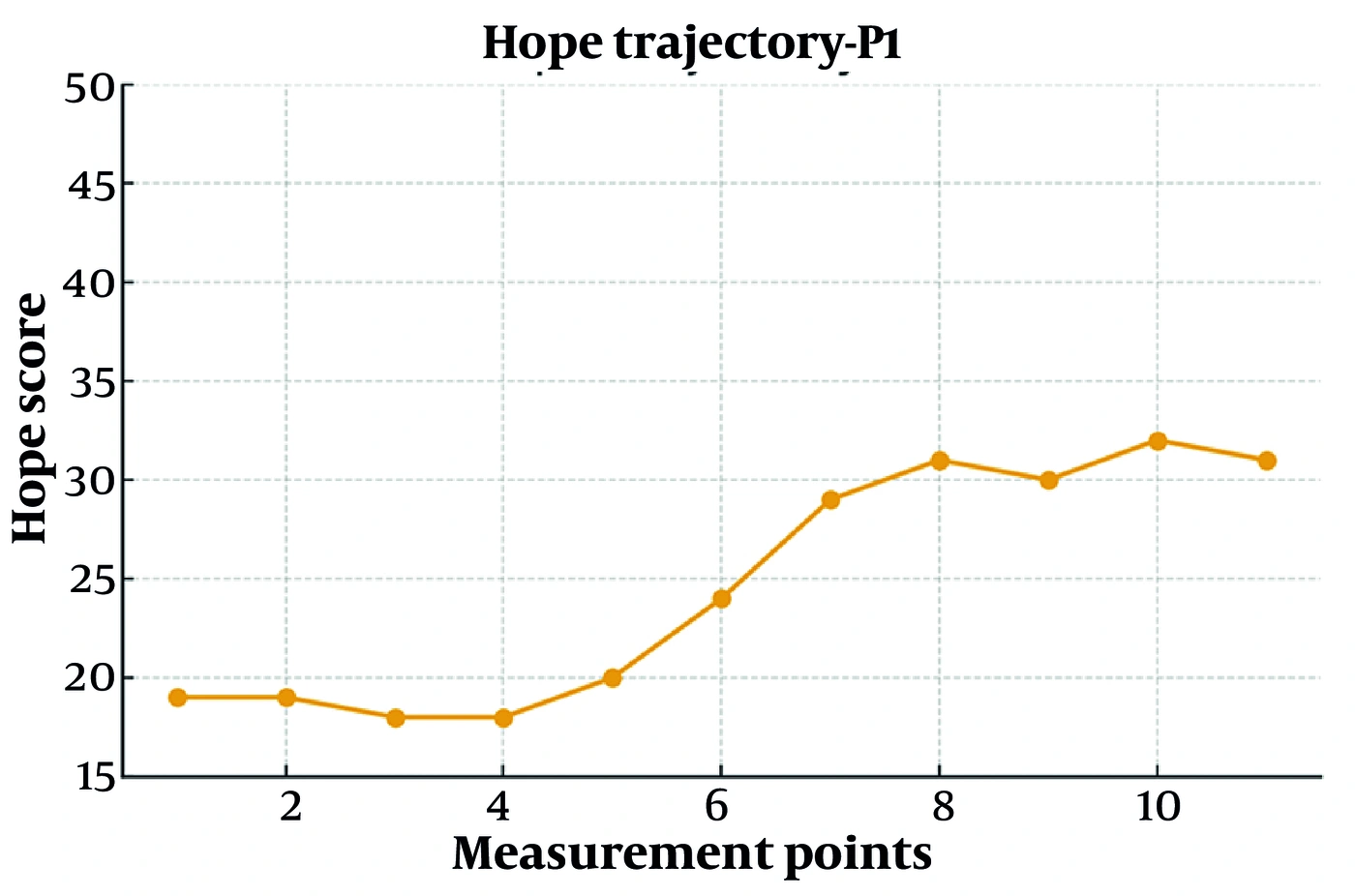
Figure 1.
Hope Trajectory - P1.
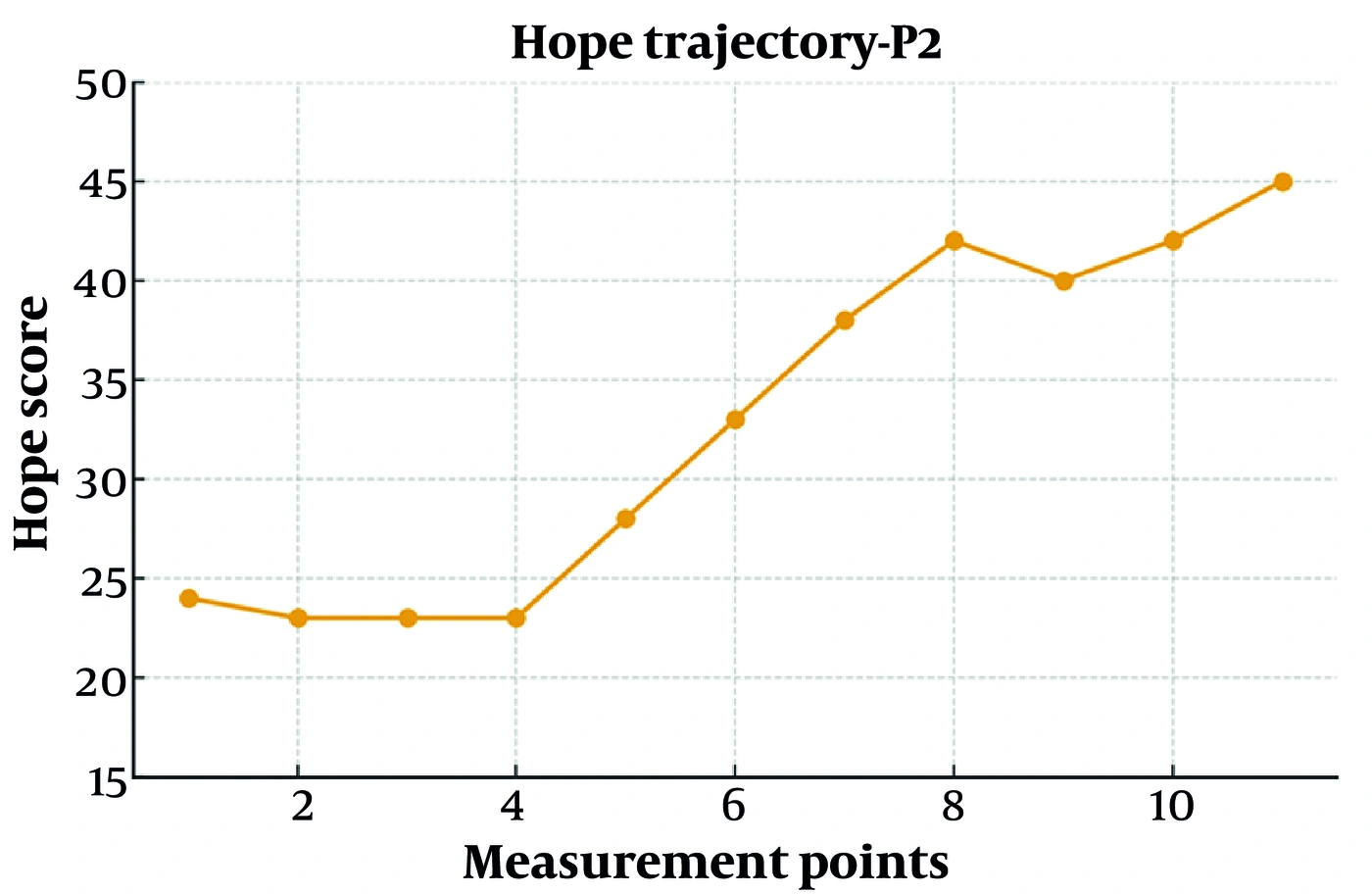
Figure 2.
Hope Trajectory - P2.
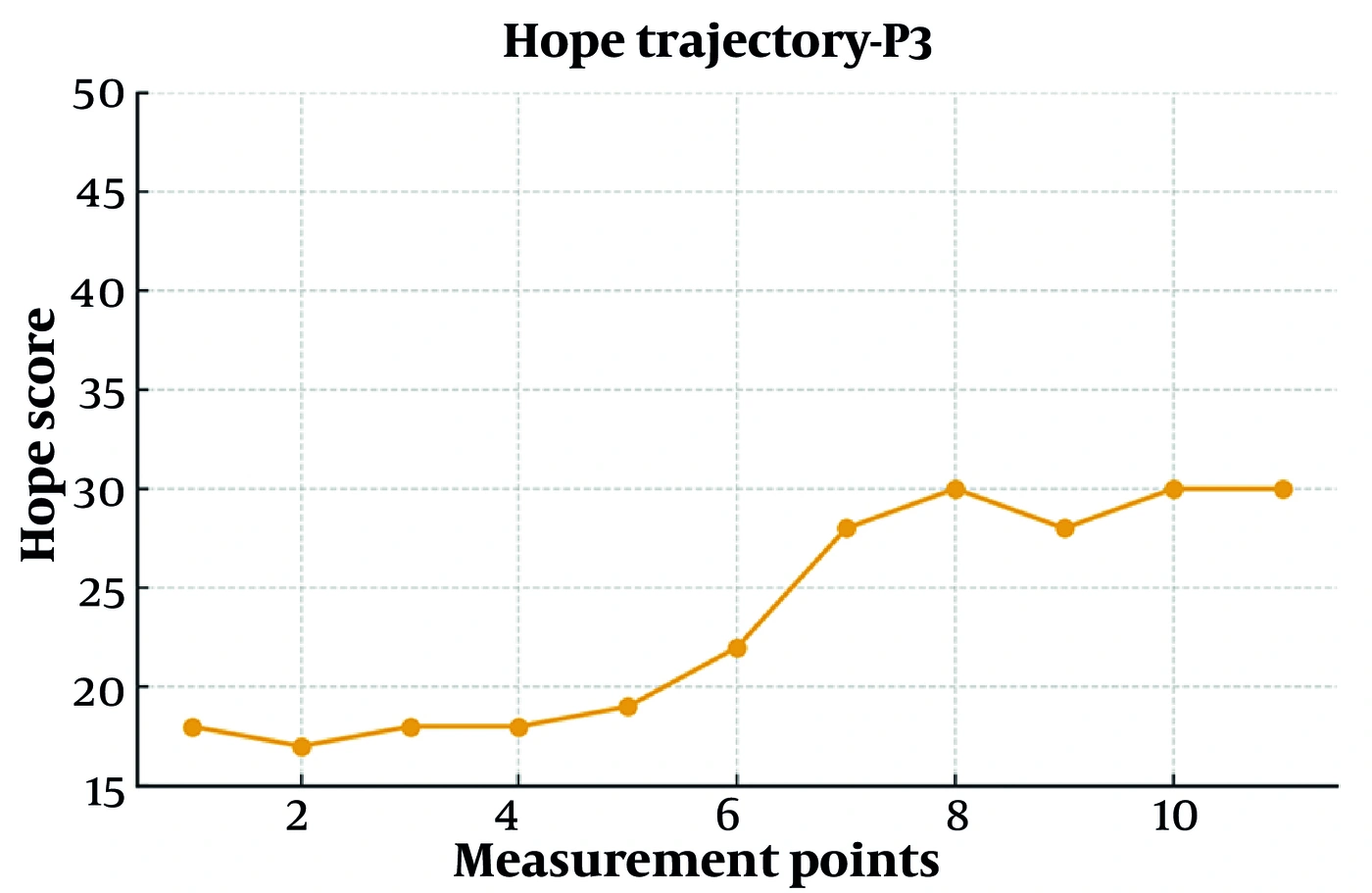
Figure 3.
Hope Trajectory - P3.
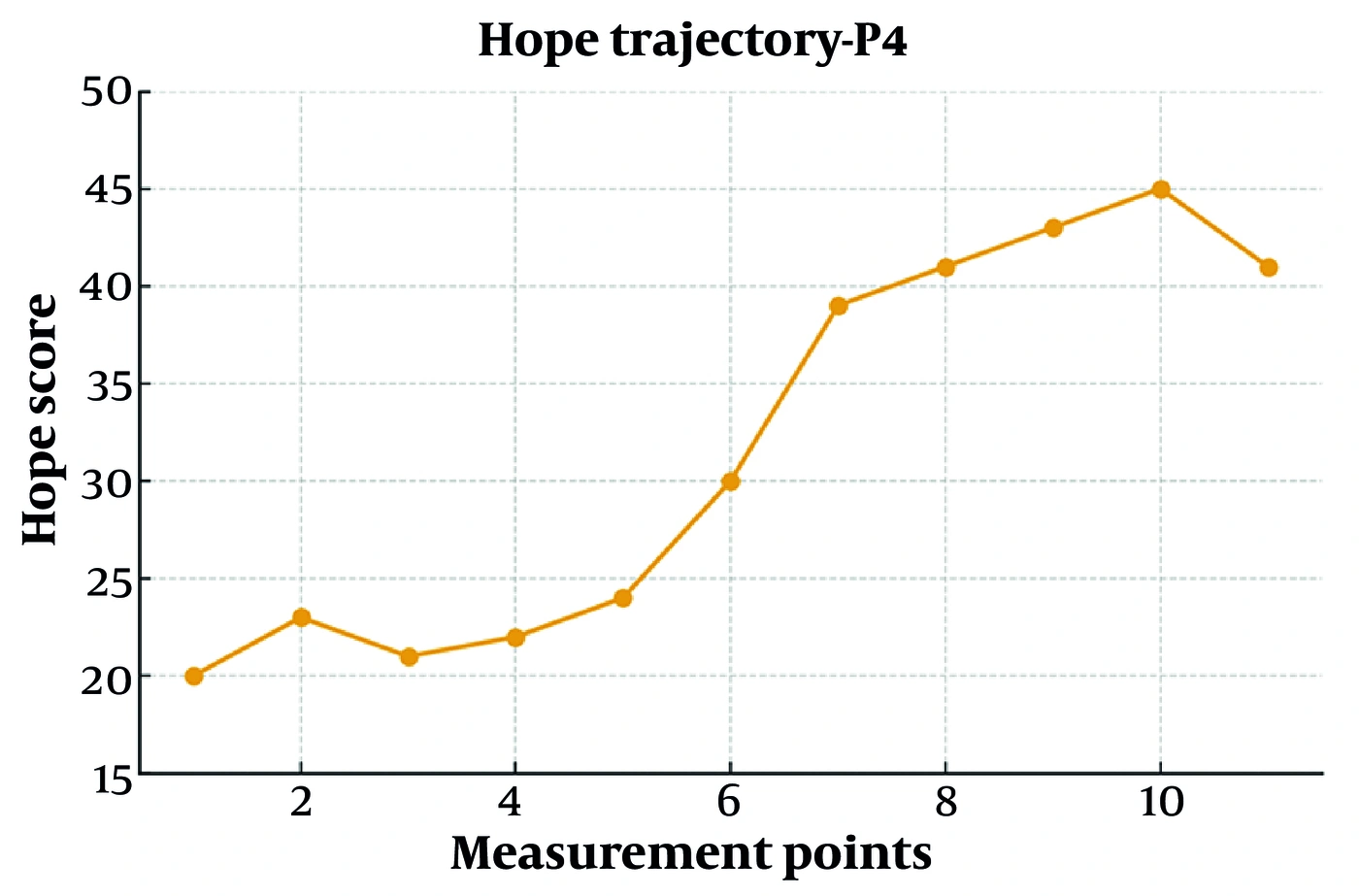
Figure 4.
Hope Trajectory - P4.
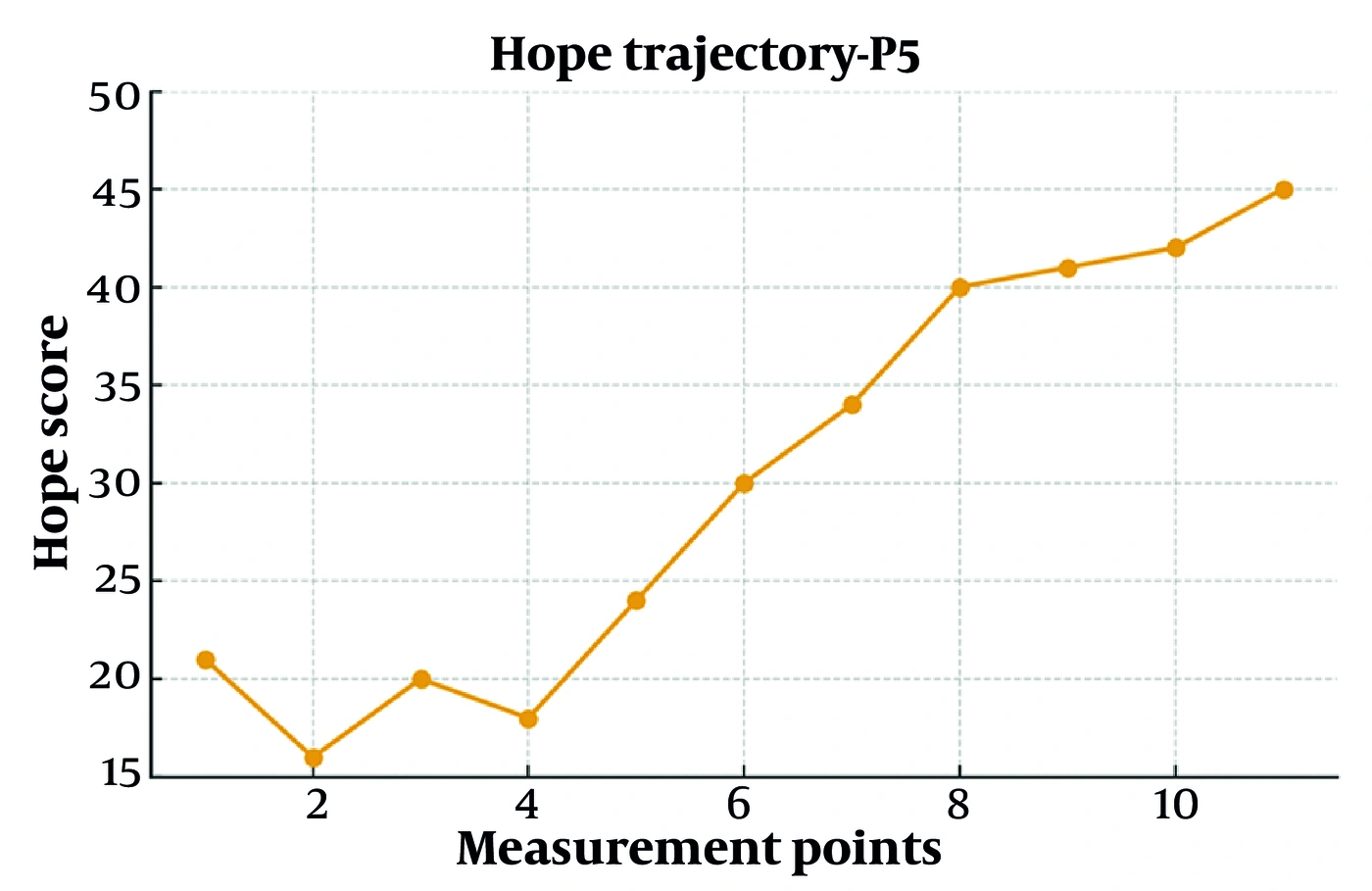
Figure 5.
Hope Trajectory - P5.
Hope levels for Participant 1 were low and stable during the baseline phase. A moderate increase was observed during the intervention (+40.5%), which did not meet the 50% clinical significance threshold. However, clinically meaningful improvement occurred at follow-up (+67.6%), resulting in a stable and elevated level of hope. The effect size was large (d = 2.71), indicating a meaningful therapeutic impact realized during follow-up.
Participant 2 exhibited steady and progressive improvements across all phases. Hope scores increased by 51.6% during the intervention, exceeding the predefined threshold for clinical significance, and continued to rise to 82.1% at follow-up. This clinically meaningful improvement was achieved and maintained, with a large effect size (d = 2.78) indicating a robust response to the intervention.
Participant 3 presented stable but low baseline hope scores. A moderate improvement was observed during the intervention (+39.4%), falling short of the clinical benchmark. At follow-up, scores rose substantially (+65.3%), surpassing the clinical significance threshold and reflecting a large therapeutic effect (d = 1.92).
Participant 4 experienced a marked increase in hope during the intervention (+55.8%), exceeding the predefined threshold for clinical significance. At follow-up, hope scores doubled (+100%), indicating durable and substantial gains. The effect size (d = 2.11) confirmed a large treatment impact.
Participant 5 showed the most pronounced gains among all participants. Hope scores rose by 70.7% during the intervention and increased to 127.6% at follow-up, exceeding the predefined threshold for clinical significance. The corresponding effect size (d = 2.64) reflected durable and meaningful improvement.
4.5. Summary of Effectiveness
Figure 6 presents a bar chart illustrating the percentage improvement in hope scores from baseline to post-intervention across all participants. These values reflect individual responsiveness to the intervention before follow-up assessment.
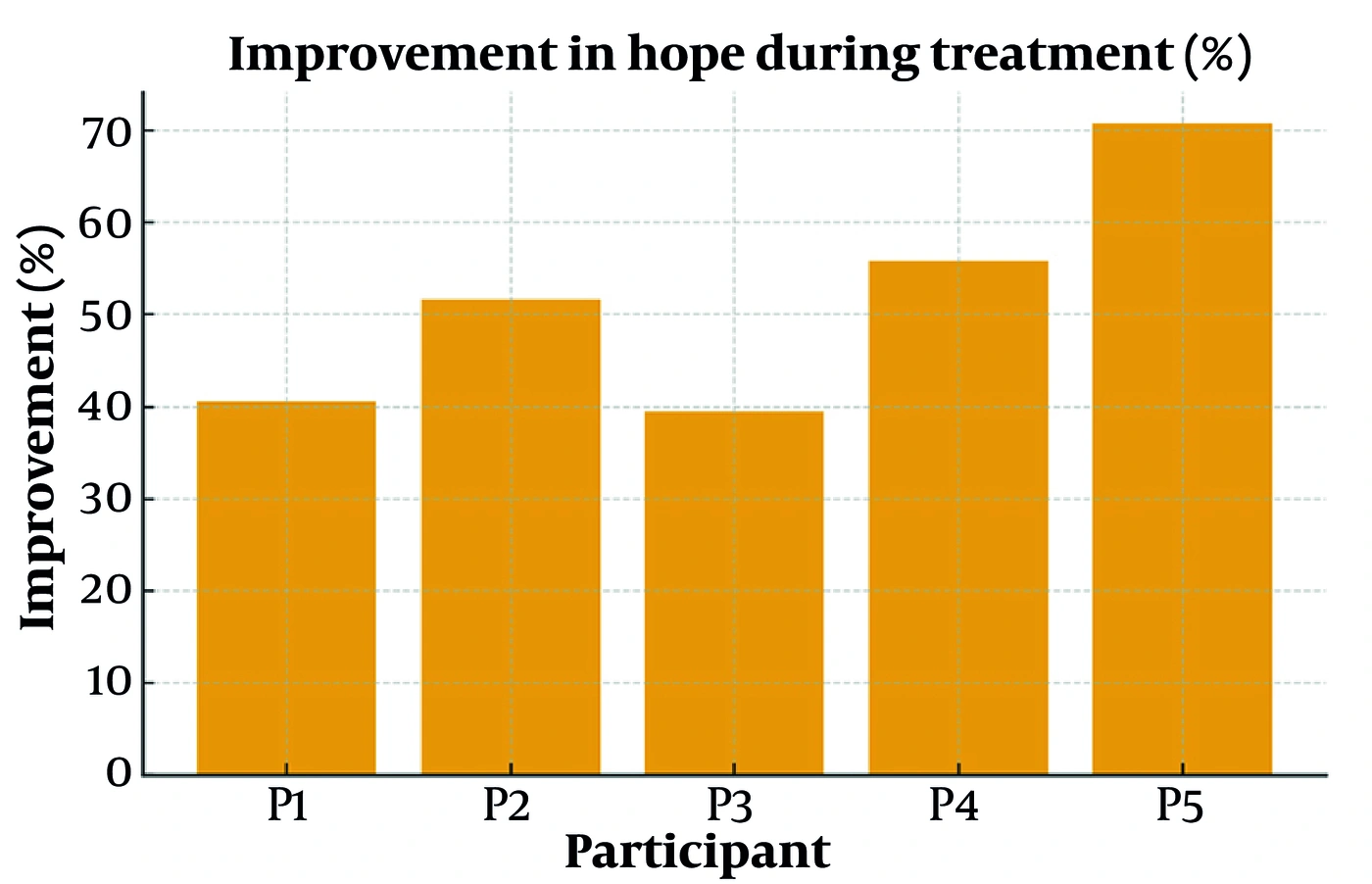
Figure 6.
Improvement in hope during intervention across participants.
Figure 7 presents a line graph illustrating trends in hope scores (Snyder Scale) across the baseline (A1–A4), intervention (B3–B12), and follow-up (F15–F45) phases for all 5 participants. The graph highlights interindividual variability in response patterns, as well as the overall trend of improvement maintained beyond the intervention phase.
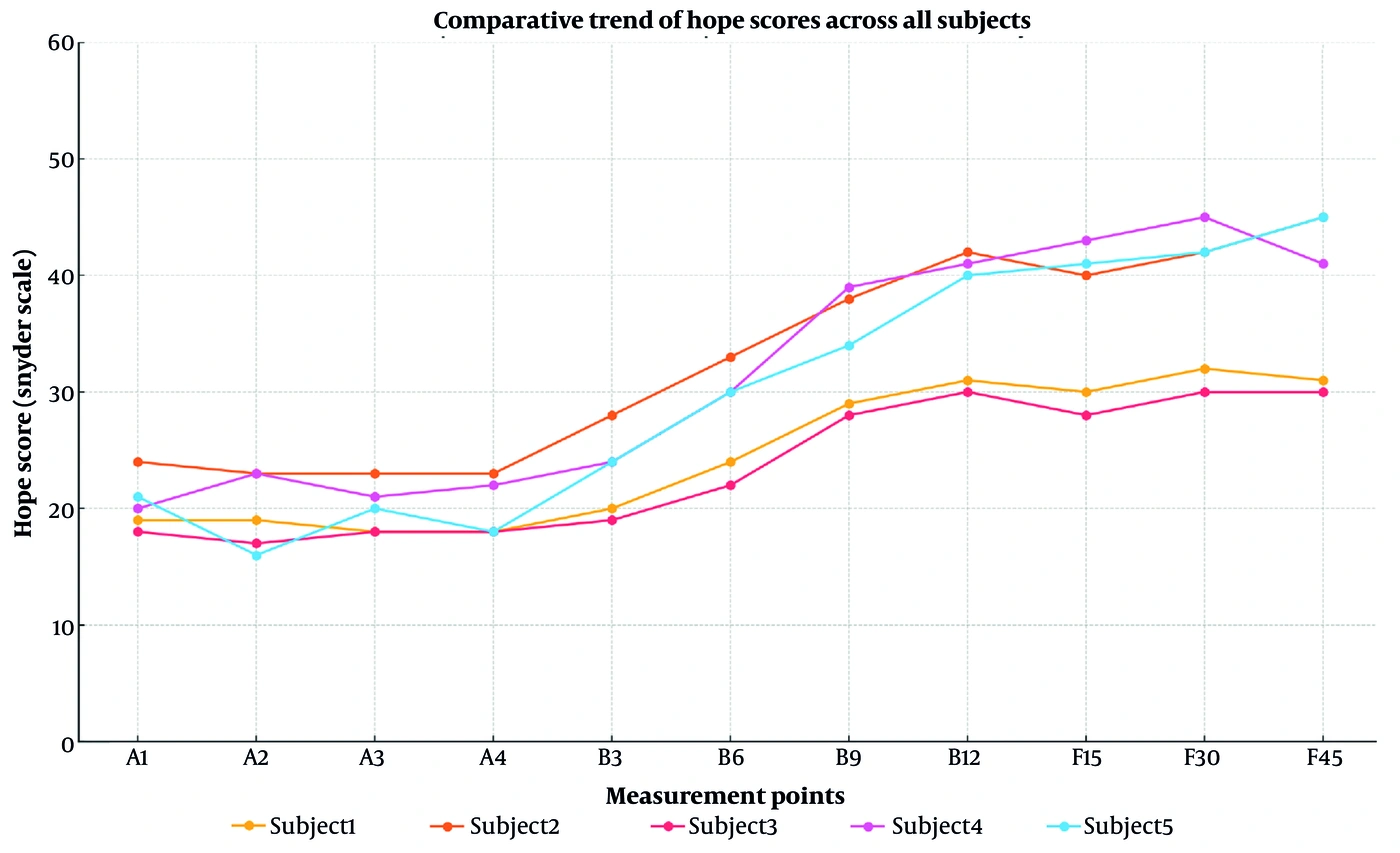
Figure 7.
Comparative trajectories of hope scores across all participants.
Visual analyses indicated stable baselines, marked improvements during the intervention phase, and sustained gains at follow-up, supporting the consistency and strength of the observed effects. Across all 5 participants, hope scores increased from baseline to the end of the intervention, with most gains retained during follow-up. Improvement rates during the intervention ranged from 39.4% to 70.7% (Table 6), with 3 participants (P2, P4, P5) surpassing the 50% threshold for clinical significance (35) and 2 others (P1, P3) exhibiting moderate but notable improvements.
At the aggregated level, the cognitive–existential rehabilitation counseling protocol yielded a mean improvement rate of 51.6%, and effect sizes (Cohen’s d) ranged from 1.92 to 2.78.
These outcomes underscore the value of integrating group-level metrics, such as mean improvement rates, standardized effect sizes, and PND classifications, with individual-level analyses, including participant-specific trajectories and percentage changes. While aggregate indices provide an overall estimate of intervention impact, individual-level data reveal nuanced and meaningful changes experienced by participants. Collectively, these findings support both the efficacy and applied relevance of the intervention for preliminary improvement in hope among wives of men with cancer.
5. Discussion
5.1. Interpretation of Findings
The present study provided preliminary evidence that the cognitive–existential rehabilitation counseling protocol was associated with clinically meaningful improvements in hope among wives of men with cancer. On average, participants experienced a 51.6% increase in hope, with 3 of the 5 individuals exceeding the clinical significance threshold of ≥ 50% improvement (35). Effect size estimates (36) (Cohen’s d = 1.92 - 2.78) suggested large estimated treatment effects and provided preliminary evidence of improvements in hope.
However, these large effect sizes should be interpreted within the methodological context of SCED. Because Cohen’s d was calculated only from baseline and intervention-phase observations, the relatively low variability of baseline scores may have contributed to larger effect size estimates. This phenomenon is common in single-case experimental studies. Therefore, interpretation of the findings should rely on converging indicators, specifically visual trend analyses and percentage improvement values, which jointly confirmed the clinical significance of the observed gains.
Crucially, the observed improvements were not short-lived. Follow-up assessments conducted at 15, 30, and 45 days post-intervention demonstrated the stability of elevated hope levels, suggesting that the intervention was associated with durable improvements in psychological functioning.
The observation that some participants achieved clinically meaningful improvement only at follow-up, rather than during the intervention phase, may reflect a delayed impact of the intervention. Beyond the inherent strengths of cognitive and existential approaches in enhancing hope and meaning and reducing existential distress, the present protocol uniquely emphasizes resistance against the “destructive and oppressive other,” the internalization of positive external authorities, and the development of an active and responsible stance toward freedom, self-narration, and identity reconstruction. These deeper processes often require time to consolidate beyond the therapy setting. Thus, improvements became more pronounced during follow-up as participants had the opportunity to apply and integrate therapeutic insights into their daily lives, with internalized insights maturing into real-life behavior change. This aligns with Yalom’s existential framework (20), which posits that authentic therapeutic encounters can help individuals reconstruct meaning and mitigate existential despair.
In addition to these conceptual foundations, several practical elements appear to have contributed to the effectiveness of the intervention. The structured, multi-phase format of the 12-session protocol, with clearly defined assessment points (baseline, intervention, follow-up), provided a coherent therapeutic framework. Participants demonstrated a high level of commitment and engagement in both in-session and between-session tasks, which likely reinforced treatment outcomes. Moreover, the therapist’s ability to establish an empathic, collaborative, and motivational therapeutic alliance may have played a pivotal role in fostering adherence and facilitating sustained psychological change.
Collectively, these observations suggest that the intervention’s benefits were not only durable but also consolidated over time. This pattern of delayed but lasting improvement underscores the potential utility of the protocol in broader clinical settings.
5.2. Comparison with Previous Studies
These findings align with Snyder’s hope theory (4), which conceptualizes hope as a dynamic construct composed of agency and pathways thinking. The protocol’s systematic focus on cognitive restructuring of hopelessness, meaning-making, and value clarification may have directly strengthened these components, enabling participants to maintain goal-oriented thinking despite the existential challenges of caregiving for a spouse with cancer.
The results are consistent with pioneering work by Kissane et al. (11-14), who demonstrated the value of cognitive-existential interventions in improving psychological outcomes and quality of life among individuals with cancer. However, whereas those studies primarily targeted patients, the present study extends this application to spouses as primary caregivers, thereby broadening the reach of CET in psychosocial oncology.
Consistent with the outcomes of Aghajani et al. in Iran (28), our study suggests that similar therapeutic principles can be effectively applied to wives of men with cancer, thereby extending the relevance of such approaches to a caregiving population that has often been overlooked.
The convergence of the present findings with previous studies indicates that the therapeutic benefits previously reported for cognitive and existential interventions are not merely replicated but meaningfully extended in this study. As Vehling and Kissane (9) argued, existential distress represents a core dimension of suffering in cancer care, rooted in disrupted meaning, identity, and future orientation, and Vehling and Philipp (10) emphasized that psychosocial interventions must transcend symptom management to address these existential domains through meaning reconstruction. In line with these perspectives, integrative approaches such as cognitive–existential counseling may extend the benefits of prior interventions by specifically targeting the unique challenges faced by caregivers—namely, the disruption of narrative identity and the loss of agency.
5.3. Clinical and Theoretical Implications
Clinically, the findings suggest that the protocol is applicable as a structured, culturally sensitive 12-session intervention that may enhance hope in real-world caregiving contexts. Beyond its clinical utility, the findings also provide preliminary support for the theoretical foundations on which the intervention was built.
It can be inferred that the most essential foundation for the emergence of hope in these women lies in the creation of a dialectical context of existential confrontation between the wife-caregiver and cancer and its destructive and coercive tradition (i.e., a dominant cancer-related discourse perceived as oppressive and totalizing). At the core of this process is the existential struggle for the survival and preservation of identity when facing cancer as a negative and oppressive “Big Other”—invoking Lacan’s concept of the ‘Big Other’ (38). This dialectical context, grounded in the need to safeguard identity, generates a powerful emotional force that facilitates resistance and self-reconstruction.
Within a narrative identity framework (39) and consistent with Lacan’s notion of the symbolic order (38), our findings show that the narrative and linguistic identity of caregivers were threatened by cancer but were reconfigured through the establishment of an active, dialectical stance grounded in a process of “fluid compensation” (40). This transformation involved the discovery of existential givens, such as freedom and responsibility, and culminated in what is described as the creative act of bringing forth a new version of the self, a process based on projecting oneself into future possibilities oriented toward an authentic life. Ultimately, this reconstruction of identity fostered greater hope. Such transformations resonate with Sontag’s and Goffman’s (29, 30) recognition that illness is not merely a biological fact but also a stigmatizing cultural narrative that can “spoil” identity. This process of identity reconstruction can be conceptualized as creative action: resisting imposed meanings, reclaiming agency, and enacting value-oriented change in the face of existential threat. As Rank (23) described, the will evolves from negative rebellion, through positive and spontaneous striving, toward creative will, the capacity to reshape one’s life meaningfully. This progression echoes Arendt’s concept of “Natality” (41), the human ability to begin anew, and Nietzsche’s vision of affirming life through creative defiance of suffering. It also aligns with Yalom’s emphasis on authentic therapeutic encounters (20) with existential concerns. Accordingly, the improvements observed in this study elevate hope from a mere psychological state to an existential achievement—a creative, dialectical act born of resisting identity-threatening discourses, reclaiming narrative identity, and generating new beginnings, all of which were categorized as foundations for hope formation in our baseline studies for designing this protocol (28, 42).
5.4. Limitations
Several limitations should be acknowledged. First, the small sample size (n = 5) limits the generalizability of the findings. The small single-case design sample (n = 5) may have resulted in relatively larger effect sizes than those in group designs, given the repeated measures and intensive individual focus. Estimates derived from small pilot and single-case studies are often unstable and may overestimate treatment effects that are subsequently observed in larger controlled trials. Consequently, the effect sizes reported in the present study should be viewed as preliminary indicators of intervention promise rather than precise estimates of the magnitude of treatment effects in the broader group.
In addition, purposive sampling from a single oncology center may have introduced selection bias and may limit the representativeness of the sample. However, SCEDs are methodologically justified for assessing the preliminary efficacy of interventions.
Second, the absence of a control group precludes definitive causal inference. Third, the study was conducted in a specific cultural context (Iran), which may limit cross-cultural applicability. Fourth, self-report measures may have been subject to cultural or social desirability bias. Despite these limitations, the consistent improvement among participants, stability at follow-up, and large effect sizes provide preliminary evidence supporting the effectiveness of the protocol.
Another limitation concerns treatment fidelity assessment. No formal independent fidelity rating or adherence assessment by reviewers outside the research team was conducted, and independent fidelity assessment and multiple therapists should be used in future studies.
5.5. Conclusions
The study demonstrated that a structured 12-session cognitive-existential rehabilitation counseling protocol, developed through qualitative exploration of lived experiences and expert validation, provided preliminary evidence supporting the enhancement of hope among wives of men with cancer. Across participants, hope improved from baseline to intervention and remained stable during follow-up, with a mean improvement rate exceeding the threshold for clinical significance. Specifically, the protocol is designed around the dialectical tension between the self and the “Other” as a conceptual foundation for growth, enabling participants to confront existential threats while reconstructing the narrative system and agency. The findings indicated clinically meaningful improvements in hope (mean improvement rate of 51.6%), which were maintained during follow-up. These preliminary findings suggest that the protocol may have the capacity not only to generate short-term improvements but also to facilitate the consolidation of enduring psychological resources. From a conceptual perspective, the findings provide preliminary support for the underlying hypothesis that cancer, as a “negative Other,” may threaten caregivers’ existential identity and autonomy. By fostering a therapeutic dialectic between this negative Other and positive external authorities (such as therapists, physicians, or supportive peers), participants gradually internalized empowering voices, developed a more active stance, and engaged in creative action. This process of “fluid compensation” (40) may have contributed to improvements in narrative identity integration, the will to resist, autonomy, and hope.
5.6. Theoretical or Conceptual Contributions
Thus, the intervention not only provides preliminary support for clinical utility but also contributes to theoretical understanding by conceptualizing hope as a dialectical and creative act. The counseling process served as a transformative, and arguably liberating, process, encouraging individuals to resist passivity and reclaim agency in the face of oppressive existential conditions. Clinically, the protocol underscores the importance of creating a dialectical therapeutic atmosphere, strengthening volitional capacity—transforming passive resignation into creative will—reconstructing meaning, addressing existential guilt, and supporting clients in arriving at a “new beginning.” Despite the study’s limitations, such as the small, homogeneous sample and the cultural specificity of the findings, the results provide preliminary support for the promise of cognitive–existential rehabilitation counseling; however, confirmation through larger and methodologically rigorous controlled studies remains necessary.
5.7. Practical Implications and Future Directions
From a clinical implementation perspective, the protocol may be integrated into rehabilitation counseling centers and oncology clinics as a structured supportive intervention for caregivers. The intervention may also be adapted into group-based formats or psychoeducational workshops to facilitate broader accessibility.
Therapist training programs should focus on identifying and activating “positive authorities” while facilitating guided exploration toward creative actions that cultivate resilience and enhance hope among caregivers.
Future research should aim to:
- Replicate and extend the findings of the present study using more rigorous controlled designs, given the exploratory nature of the present single-case pilot study.
- Conduct randomized controlled trials (RCTs) with larger and more heterogeneous samples—incorporating gender, intergenerational, and cross-cultural dimensions—to enhance external validity.
- Compare the cognitive–existential counseling protocol with alternative therapeutic approaches (e.g., mindfulness-based interventions, narrative therapy) to assess relative efficacy.
- Examine potential gender-based differences by incorporating male caregivers of female cancer patients.
- Investigate long-term effects to evaluate whether sustained hope enhancement leads to improved psychosocial and health outcomes for both caregivers and patients.