
1. Introduction
Renal cell carcinoma (RCC) has known as the most frequent urological malignancy affecting adults, which occured mainly among male patients. It has included up to 90% - 95% of neoplasms originated from the kidney, and roughly 3% of adult malignancies (1). The rapid development of agents blocking the vascular endothelial growth factor (VEGF) pathway (eg, Pazopanib, Axitinib, Sunitinib, Sorafenib, Bevacizumab) or the mTOR pathway (Temsirolimus, Everolimus) has established molecularly-targeted therapy as the preferred treatment approach for most of the patients with advanced clear cell RCC (2). Sunitinib malate (SUTENT®, Pfizer Inc., New York, NY, USA) is an oral, multitargeted tyrosine kinase (TKI) inhibitor, which acts on VEGF receptors 1 - 3 (3). Additionally, recent results have demonstrated that patients on the sunitinib arm also had significantly better quality of life in comparison with whose receiving interferon (IFN) -a (4). Knowledge about and optimal management of side effects has been mandatory, and might help avoiding unnecessary dose reductions, treatment interruptions or even early treatment terminations, as well as reducing patient discomfort during treatment with sunitinib. Proactive assessment and management of side effects wiould help to optimize treatment with sunitinib (5). The most common adverse effects were fatigue, diarrhea, hand-foot syndrome, skin discoloration and hematological alterations (leukopenia, anemia and thrombocytopenia) (6). Aortic dissection associated with sunitinib therapy was a rare adverse effect (< 1%) (7). Aortic dissection has generally occured among the patients with predisposing factors: hypertension, atherosclerosis, diabetes and Marfan’s syndrome (8).
This report has emphasized on two simultaneous adverse effects (nail changes and erythematous lesions over the knuckles) from high risk RCC in our patient during the sunitinib therapy, even we could say, two side effects for the first time in the report.
2. Case Presentation
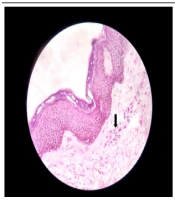
Our patient was a 26-year-young woman, who has undergone left radical nephrectomy in December 2013. This case has presented at first to urologist with complaint of left flank pain and in her ultrasound evaluation has detected a single renal mass. She has not shown any history of malignancy in her family. Past history about drug was negative. She had one normal pregnancy with normal delivery. The patient has presented with depression, blood pressure, hemoglobin at 13.7 g/dL, white blood cell count of 4.5 × 10⁹/L, and platelet count of 139 × 109/L. She was a nonsmoker and a negative familial history of renal malignancies. Microscopic pathological analysis has shown a 40 mm clear cell carcinoma of grade 2 and in pathological staging nodal involvement in bed of RCC tumor established, meant the aggressiveness of the tumor, that it needed adjvant therapy. In June 2014, after clinical evaluation has shown normal blood pressure levels, she has started on target therapy with sunitinib, at over 3 months of TKI Sutent 50 mg four weeks on and two weeks off in this drug. We have seen, nails changes and erythematous lesions over the knuckles (Figure 1). After decreasing the dosage of the drug to 12.5 mg four weeks on and two weeks off the severity of lesions decreased and subside the complaints of patients.
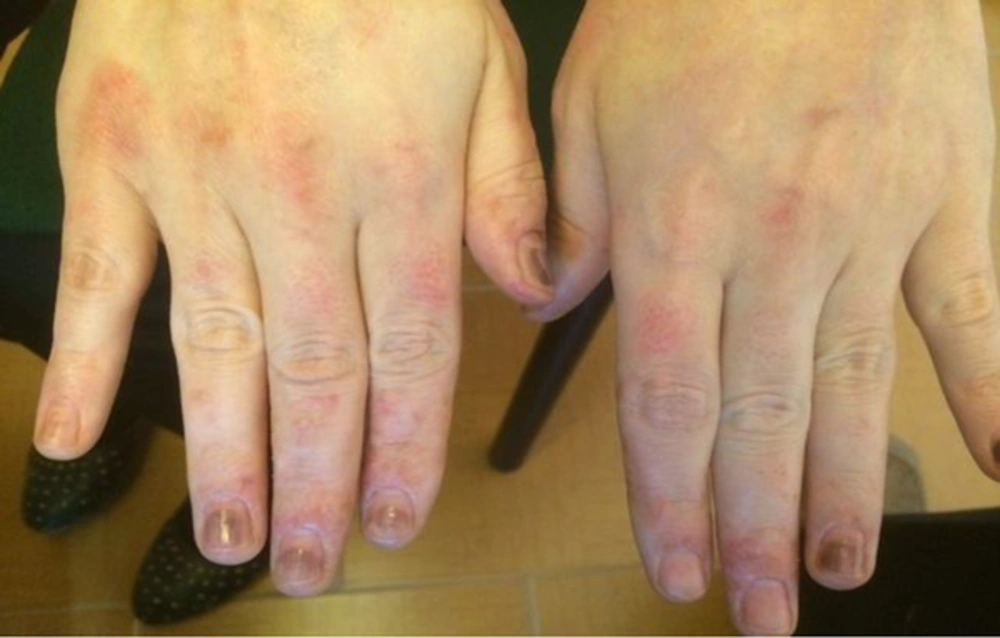
Figure 1.
Changes and Erythematous Lesions on Nails and Knuckles, Respectively
3. Discussion
Presently, at least 6 agents (sunitinib, sorafenib, bevacizumab, pazopanib, temsirolimus, and everolimus) have approved by the federal drug agency with several more in the pipeline (9). In this study, we have used sunitinib for the patient. Since a pivotal phase III trial found that sunitinib was more effective than interferon-a, sunitinib has been generally considered a first-line treatment of choice for metastatic RCC (10). The most common adverse were fatigue (81%), stomatitis (60%), thrombocytopenia (56%), anemia (55%) and hand-foot syndrome (48%), although these were mostly Grade 1 or 2 events. Grade 3 or 4 events due to hand-foot syndrome, thrombocytopenia and stomatitis were more common in our study (16%, 16% and 10%, respectively) than in previous Phase III trials (5%, 8% and 1%, respectively) (3). Another study, in the phase III trial comparing sunitinib versus IFN-Ain untreated metastatic RCC has reported a 21% decline in Left Ventricular Ejection Fraction for sunitinib patients versus 12% for those receiving IFN-a (11). However, some distinct side effects require monitoring and treatment. Because of the metabolism and mode of action of sunitinib and the distinct pattern of toxicity, the management of side effects becomes an important issue (5). We have decreased the dosage of drug from 50 mg to 12.5 mg four weeks on and two weeks off the severity of side effect decreased. Severe adverse events were acceptable, with neutropenia (12%), thrombocytopenia (8%), hyperamylasemia (5%), diarrhea (5%), hand and foot (5%) and hypertension (8%) being noteworthy in the Sunitinib arm, while fatigue more common in the interferon arm (12% vs. 7%) (2). Where diarrhea was the dominant adverse event 61%, while hypertension 12% and fatigue 11% were the most frequent grade 3 non hematological toxicity. Neutropenia and lymphopenia (16% each) were the most common hematological adverse events encountered (12). Most common adverse events were fatigue (81%), stomatitis (60%), thrombocytopenia (56%), anemia (55%) and hand-foot syndrome (48%). Grade 3 or 4 events were for hand-foot syndrome 16%, thrombocytopenia 16% and stomatitis 10% (3).
3.1. Conclusion
Sunitinib therapy could have different side effects among the patients. We have not known that a benign side effect could affect a female patient like discoloration despite. This matter that you had not any interference for its treatment, but it has exited so we must try to know more about it.