In the present study we have examined sera from TCC patients for levels of circulating M30 and M65.During apoptosis CK18 is cleaved by caspases and subsequently released into the extracellular environment and blood (
9,
29). These fragments can be detected by ELISA using the M30 monoclonal antibody which recognizes the CK18Asp396 neo-epitope. Therefore, M30 can be postulated to be a selective apoptotic marker.
The M65 assay is based on two antibodies, M5 and M6, directed against two different epitopes of CK18. All CK18 fragments that contain epitopes in the 300 to 390 amino acid region of the protein are recognized. In addition to apoptosis, M65 is thought to measure intact CK18 released during cell necrosis (
30-
32). Therefore, CK18 levels can be considered as a surrogate marker of cell death activity in tumors and non-tumor conditions. Determining its level in patients can be useful for diagnosis of tumor recurrence, prognosis and monitoring. Additionally, in some experiments circulating CK18 has been used to assess the efficiency of different anticancer drugs during chemotherapy (
14). Olofsson et al. suggested that the CK18 marker could be useful for early prediction of the response to chemotherapy in breast cancer and a useful biomarker for clinical trials (
33). Circulating CK18 was considered as a biomarker of chemotherapy-induced cell death in testicular cancer (
23). Post-surgical plasma CK18 levels showed a correlation with tumor recurrence and presence of residual disease in colorectal cancer (
34).
The first report of using CK18 as a diagnostic value in TCC patients was in 2002 by Ramazan Sekeroglu et al. (
35). These researchers used a solid-phase two-site chemiluminescence assay to measure CK18 levels. The results suggested that serum CK18 could not be a diagnostic or screening tool in early stages of bladder cancer, but was helpful in diagnosis of higher tumor stages. Song et al. studied TCC of the bladder and benign bladder diseases. They determined that a significant relationship between urinary NMP 22, a tumor marker of bladder cancer, and CK18 levels existed which suggested that NMP22 and CK18 were useful markers for diagnosis and monitoring of TCC. Levels of urinary CK18 significantly differed according to pathological grade and stage of patients’ tumors (
36).
In the phase I study of intravesical adenoviral transduction of human bladder cells with human interferon-α (Ad-IFN-α) treatment in patients with bladder cancer (
37), significant apoptosis and necrosis in the patients’ tumors was observed. This study was the first to suggest that analysis of urinary M30 and M65 levels might be used as a potential surrogate biomarker for tumor cell death and prognosis after treatment of non-muscle invasive bladder cancer with any therapeutic agent.
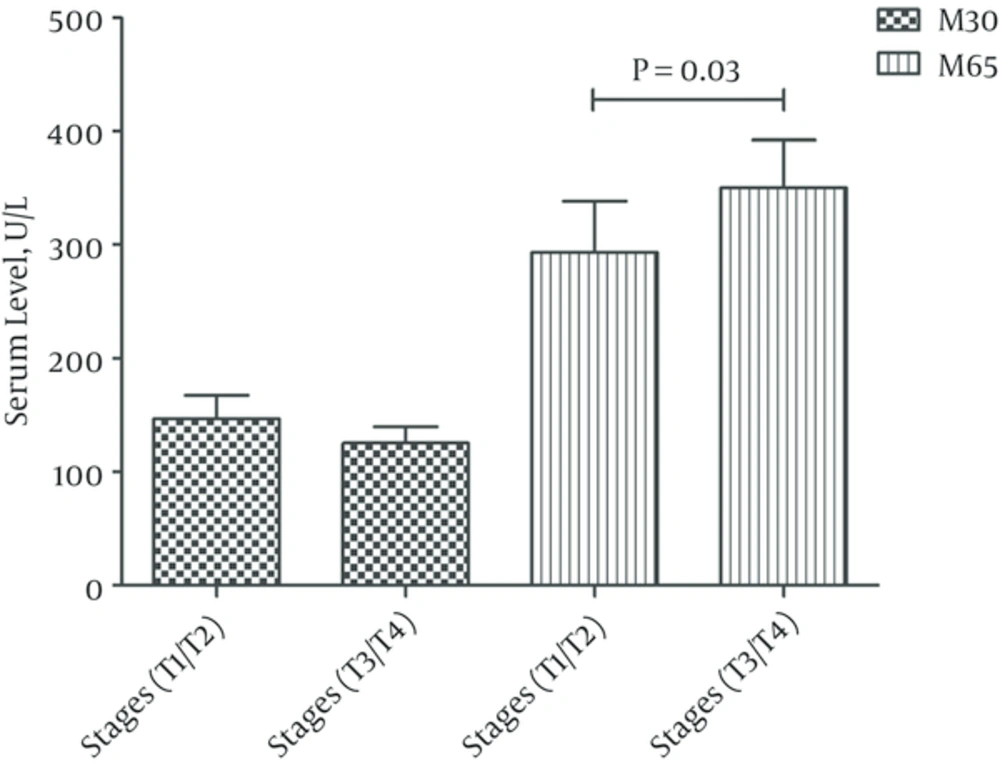
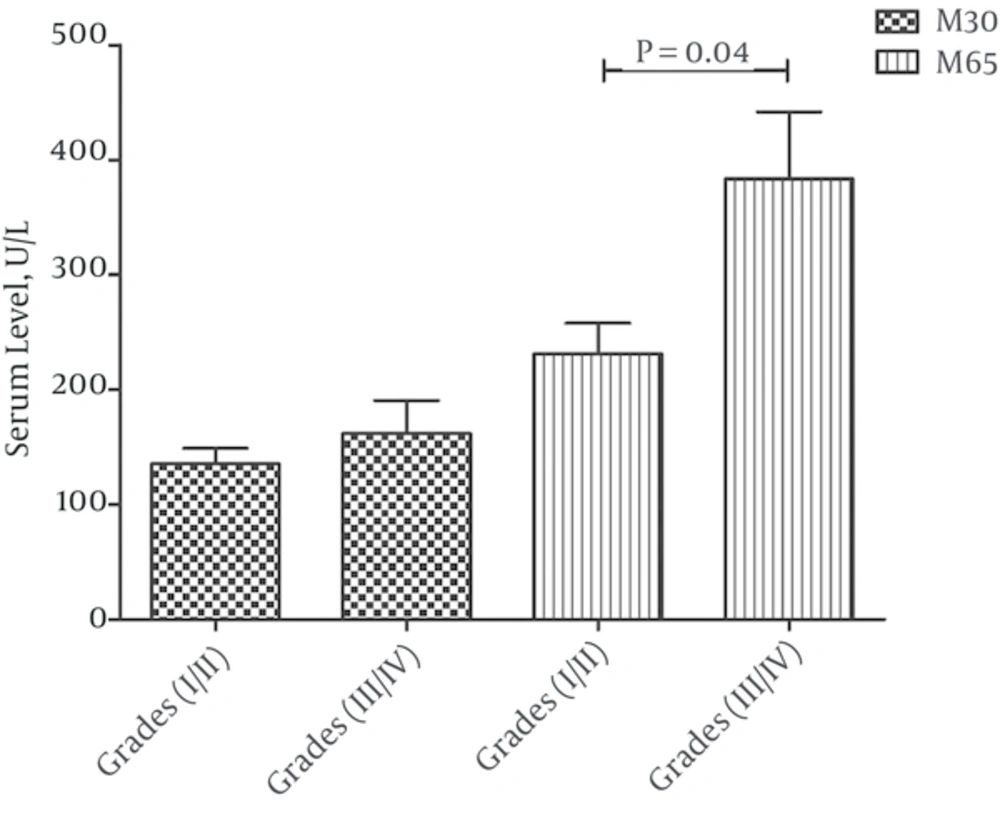
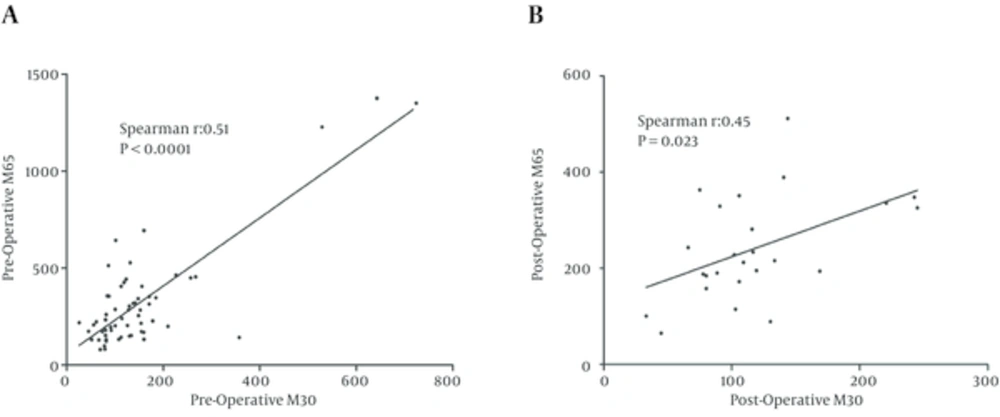
However, to the best of our knowledge no studies examined both M30 and M65 levels in serum of TCC patients. In the current study, we evaluated M30 and M65 serum levels in a group of Iranian patients with TCC. We sought to have an insight regarding the relationship of these markers to patient characteristics and prognostic factors such as tumor stage and grade. Moreover, we measured the changes in the quantity of these markers in a number of our patients after surgery to determine their value for disease monitoring. The results of the study showed a significant correlation between M30 and M65 levels in patients prior to surgery. The levels of M65, but not M30, were significantly related to stage and grade of patients’ tumors which emphasized the importance of cell necrosis in TCC biology. Higher levels of M65 in patients with greater stages and grades might suggest the relation of this biomarker with tumor progression. These results were consistent with results obtained by Ramazan Sekeroglu et al. who reported that serum CK18 could be helpful in the diagnosis of higher stage tumors (
35). In previous studies, serum levels of M30 and/or M65 significantly correlated with tumor stage in breast (
24) and colorectal cancers (
38). Unlike these studies, Ozturk et al. observed no difference in serum M30 and M65 levels between patients with stages III and IV of locally advanced head and neck tumors (
39). Ausch et al. showed that in colorectal cancer patients, despite the tendency for M65 to decrease with increasing tumor grade, differences between the groups did not reach statistical significance as withM30 (
34).
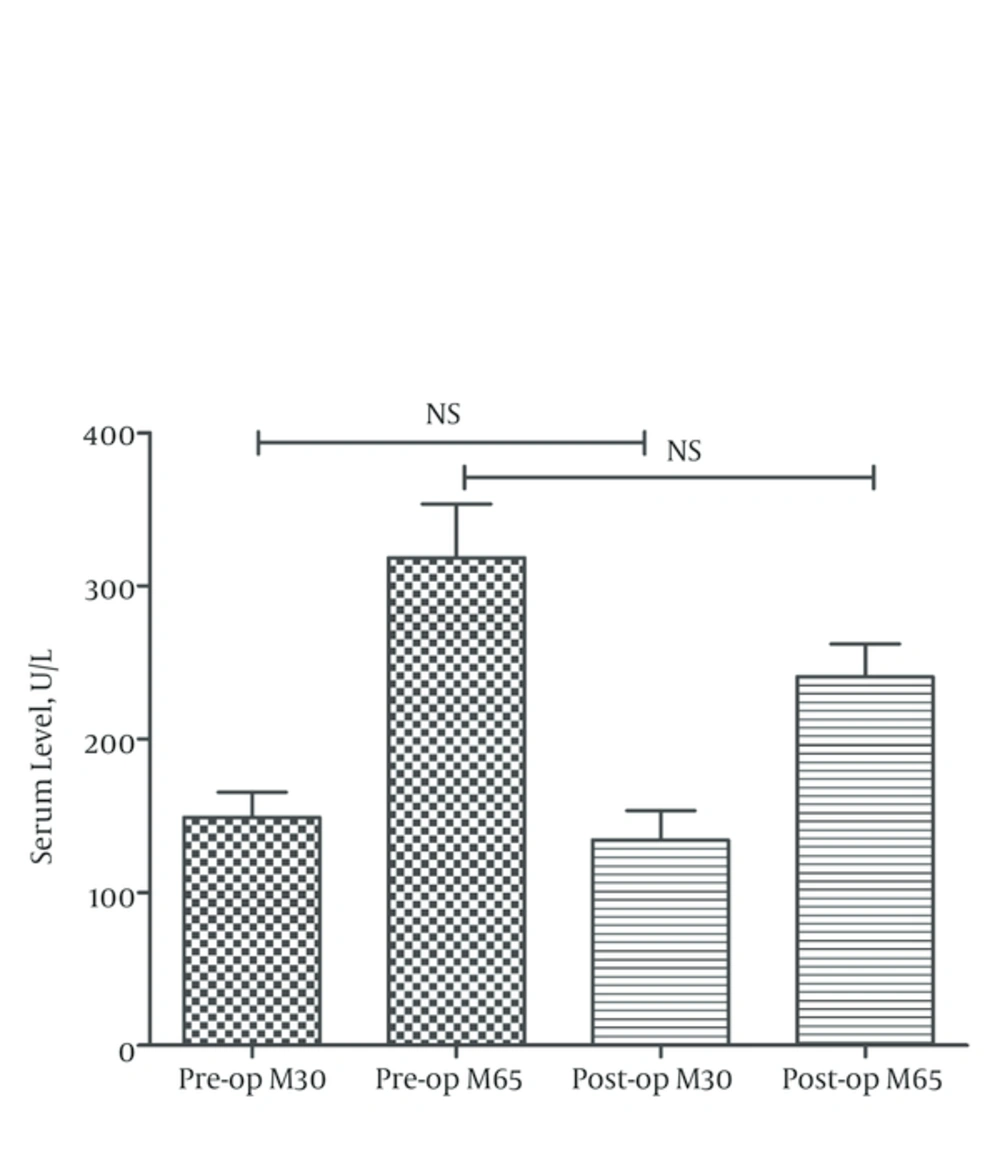
We measured post-operative M30 and M65 levels to determine a possible relation of these marker levels with tumor burden. However M30 and M65 serum concentrations failed to show any decrease following tumor removal. This finding did not agree with the study by Koelink et al. (
38) on colorectal cancer patients that showed good correlation with M30 and M65 levels in the plasma of patients before and after surgical resection. This inconsistency might be due to the type of tumor. In addition, we measured M30 and M65 levels only once after surgery; possibly, by measuring these markers at different time intervals and in a higher number of patients, different results would be obtained.
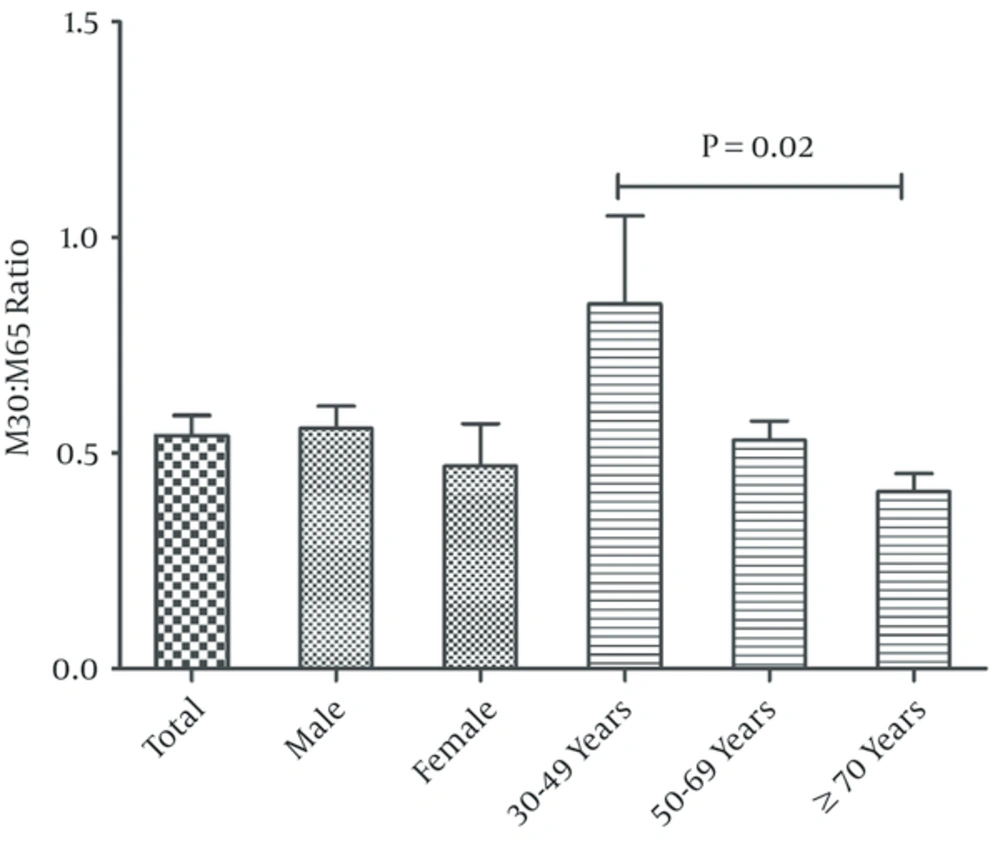
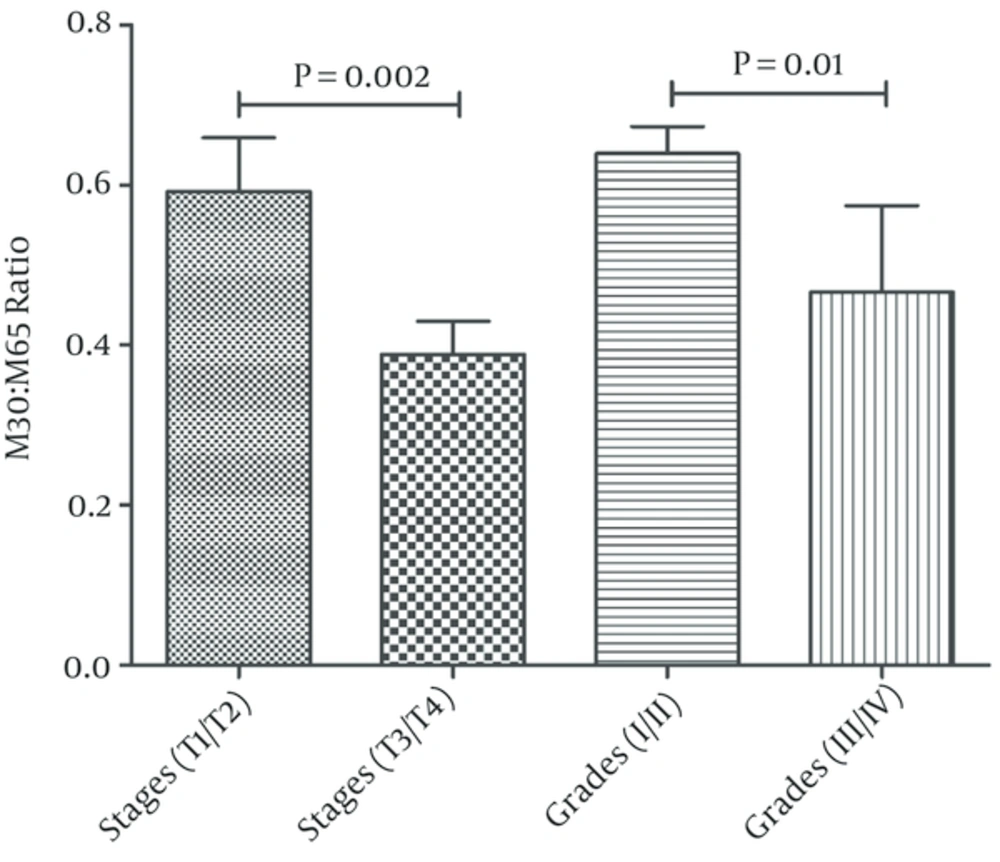
Various studies conducted on different tumors compared the extent of apoptosis to total cell death by calculating the M30:M65 ratio. This ratio might be an important factor to select an appropriate treatment strategy for patients. The M30:M65 ratio decreased in endometrial cancer stages III and IV when compared with stage II, which indicated less apoptosis and/or more necrosis during tumor progression (
14). In colorectal cancer (
38) the M30:M65 ratio tended to decrease with tumor progression. Our results showed a relationship between this ratio and age, tumor stage and grade. The M30:M65 ratio was higher in younger patients compared to older patients. This finding was in line with the positive correlation obtained in this study between M65 levels and age which might suggest a predominance of apoptosis in younger patients versus necrosis in older patients. The pre-operative M30:M65 ratio has shown a tendency to decrease with increase in tumor stage and tumor grade. In this regard, because M30 is considered an indicator of apoptosis, it can be assumed that in TCC patients with more aggressive tumors the rate of apoptosis may be lower than those with less aggressive tumors and cell death is mostly due to necrosis in these types of tumors. We did not find a significant difference between the pre- and post-operative M30:M65 ratio in total patients (P = 0.08). However, a correlation between the pre-and post-operative ratio in patients ≥ 70 years was observed.
In conclusion, the serum levels of M65, but not M30, showed a significant correlation with stage and grade of patients’ tumors. This suggested a relationship of this marker to tumor progression in TCC. The pre-operative M30:M65 ratio has shown a tendency to decrease with increase in tumor stage and tumor grade. The significantly decreased ratio after surgery in the older group of patients may imply the importance of this ratio for tumor monitoring in this group of patients. Further studies on a larger number of patients along with follow-up of the patients for tumor recurrence and presence of residual disease will determine the exact value of these markers for TCC monitoring.