
1. Background
Transforming growth factor beta (TGF-β), a super family of growth factors has shown implicated in the regulation of cellular and molecular processes which have involved in cancer initiation and promotion (1). Moreover, the function of TGF-β through specific signal transduction pathway had a critical and significant effect in many cellular processes which have changed in several human cancers (2-5). The dual effect of TGF-β1 on the carcinogenesis such as tumor suppressor in early stage, and tumor promotion and metastasis propagation in later stages of breast cancer has demonstrated in several studies (6-9). The significance effect of TGF-β for initiation and progression of cancer have examined in stem cells (10, 11) and the molecular mechanism of TGF-β signal transduction downstream modulators have evaluated in-vitro on the breast cancer cell line model (12). Lastly, TGF-β has suggested as a possible purpose for managing of several cancers (13-15) and for cancer treatment the inhibition of signal transduction pathway though downstream modulators related to TGF-β, has evaluated, but results have been conflicting (16-21).
The human TGF-β family has comprised three isoforms including TGF-β1, TGF-β2, and TGF-β3 which were very homologous and each isoform has encoded by a distinct gene (22). As the main isoform, TGF-β1, found abundant in the circulation and epithelial area of the mammals breast cancer tissues (22). It has suggested that there was an association between increased serum levels of TGF-β1, and increased metastasis of tumor cells to lymph node, poor histological grades, and advanced grade of breast cancer (23).
The human TGF-β1 gene, which has encoded by 7 exons to be found on chromosome 19, had more than 100 single nucleotide polymorphism (SNP) and its mRNA to be expressed by many cell types (24, 25). Numerous polymorphisms in the TGF-β1 gene have been studied, that two of the most reviewed were 800G/A and -509C/T which have located in the promoter area, and affecting the amount serum levels of TGF-β1 protein (26). A study has conducted by Grainger et al. obtained by medical record review using a standard protocol,
as previously found the polymorphism at position -509C/T has significantly associated with increased (27) and substitution at position -800G/A with decreased production and serum levels of TGF-β1 (28). The impacts of TGF-β gene polymorphism and breast cancer risk have been examined in several populations and due to the controversial results has been attention topic for further investigations (29-32).
2. Objectives
The aim of the present study was to investigate the effect of two common polymorphisms (TGF-β1-509C/T and -800G/A) and their haplotypes on breast cancer risk in a sample of Iranian population.
3. Patients and Methods
3.1. Study Population
The subjects in this study have consisted of 100 unrelated women with histologically confirmed breast cancer, attending to the department of radiation and oncology of Ahvaz Golestan university hospital, Ahvaz, Iran. The cancer diagnoses for all patients have confirmed by pathologist through evaluation of pathologic slides. Clinical characteristics of breast cancer patients including tumor grade, cancer treatment, estrogen and progesterone status, have obtained by medical record review using a standard protocol, as previously described elsewhere (33). The control group consisted of 100 ethnically matched women have recruited from the same geographic area during the same period and have matched with the breast cancer cases by age and BMI. The control subjects have randomly selected among the health volunteers without history of breast cancer whom admitted to the same hospital. Details of data collection, processing and relevant corresponding characteristics of studied population, anthropometric and biochemical results have described elsewhere (34).
3.2. PCR and RFLP Analysis
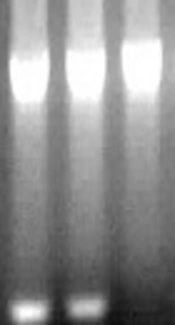
For DNA extraction, venous blood has collected into K3-EDTA-treated tube and has stored at -20°C. Genomic DNA has extracted from whole blood using the salting out method. The PCR primers for both SNPs were as follow: 5′- CAGTTGGCGAGAACAGTTGG -3′ (forward) and 5′- ACCAGAGAAAGAGGACCAGG -3′ (reverse). Conditions for PCR amplification were 12.5 µL commercially available PCR premix (AccuPower PCR PremiX; BIONEER, Daejeon, Korea) contained (dNTP, TaqDNA polymerase, MgCl2, 10x buffer), 2.0 µL (10 pmol/ μL) forward and reverse primers, 100 ng of genomic DNA, and 6.5 µL sterile nuclease free water. The PCR cycle conditions have consisted of an initial denaturation at 95°C for 5 minutes, followed by 40 cycles of 95°C for 30 seconds, at 60°C for 30 seconds, and a final elongation at 72°C for 5 minutes. Genotype determination has performed after restriction enzyme digestion (Eco81I for TGF- β1-509C/T and TaiI for TGF- β1 -800 G/A). Digested fragments was separated by electrophoresis on 3% agarose gel and stained with ethidium bromide for visualization under UV light. Fragment with 670 bp length of -509 C/T with C allele was digested into two fragments with 486 and 184 bp, whereas products with T allele could not cut by Eco81I restriction enzyme (New England Biolabs, Beverly, MA). Also, Fragment with 670 bp length of -800G/A with G allele have digested into two fragments with 473 and 197 bp, whereas products with A allele could not cut by TaiI restriction enzyme (New England Biolabs, Beverly, MA).
3.3. Statistical Analyses
Data have expressed as mean ± standard deviation, and all statistical analyses have performed using SPSS software for Windows version 20.0 (IBM Corporation New York, USA). The statistical significance difference of genotype distributions between cases and controls has determined by Chi square analysis. In order to estimate odds ratios (ORs) for breast cancer risk and the corresponding 95% confidence intervals (CI) logistic regression model was used. The haplotype distribution in two groups was estimated according to the two-stage iterative method named expectation maximization algorithm (EM algorithm) by using the software SNPStats (http://www bioinfo.iconcologia.net/SNPstats). The risk for every haplotype has compared respect to the reference category; it is the most frequent haplotype. Multinomial logistic regression analysis has also examined, and results have expressed as p value, OR and 95% CI. A P value of < 0.05 has considered as the criterion for statistical significance.
4. Results
4.1. General Characteristics of the Study Subjects
General characteristics of breast cancer cases and controls was presented elsewhere (34). Briefly, there were no statistically significant differences between the breast cancer cases and controls for age and BMI. In addition, there were no statistically significant differences between two groups for the means of biochemical characteristics including total cholesterol, triglyceride and LDL-C. However, there was a statistically significant difference between two groups for the means of HDL-C (P < 0.001).
4.2. TGF-β1-509C/T and -800G/A Genotype Analysis
Amplification of DNA consisting of the two SNPs by using specific primers has resulted in a fragment with 670 bp length. The observed genotype distribution of two SNPs in the both breast cancer cases and controls, were in accordance with the Hardy-Weinberg lows of equilibrium. After digestion of the amplified fragment with Eco81I restriction endonuclease for -509C/T, fragments with 486 bp and 184 bp (CC genotype), 670 bp, 486 bp, 184 bp (CT genotype), and 670 bp (TT) was observed. The frequencies of the CC, CT, and TT genotypes were 31%, 50%, and 19% in breast cancer cases and 21%, 48%, and 31% in controls, respectively (Table 1). Between two studied groups, the frequency of genotypes were not different (Table 1, χ2 = 4.844, P = 0.089). Likewise, regarding to the allele frequency, which for C and T alleles were 77.6% 22.4% in breast cancer cases, and 75.9 and 24.1 in controls, respectively, no significant difference between two groups was observed (Table 1, χ2 = 1.073, P = 0.300). The OR for breast cancer was 2.409 (95% CI = 1.08 - 5.337, P = 0.030) for TT genotype, which was significant.
Table 1.
Genotype Distribution and Allele Frequencies of Two Studied SNPs in Breast Cancer Cases and Controlsa
| SNP | Genotype Frequency | Χ2 | P Value | Allele Frequency | Χ2 | P Value | |||
|---|---|---|---|---|---|---|---|---|---|
| CC | CT | TT | C | T | |||||
| Controls | 21 | 48 | 31 | 4.844 | 0.089 | 121 | 79 | 1.073 | 0.300 |
| Cases | 31 | 50 | 19 | 131 | 69 | ||||
| GG | GA | AA | G | A | |||||
| Controls | 24 | 54 | 22 | 5.536 | 0.063 | 124 | 76 | 2.498 | 0.114 |
| Cases | 39 | 46 | 15 | 139 | 61 | ||||
Abbreviation: SNP, single nucleotide polymorphism.
aAllele frequencies and genotype distribution of the studied SNPs in breast cancer cases have compared to those in controls by chi-square (χ2) test.
Similarly, after digestion of the amplified fragment with TaiI restriction endonuclease for -800G/A, fragments with 473 bp and 197 bp (GG genotype); 670 bp, 473 bp, 197 bp (GA genotype), and 670 bp (AA) was observed. The frequencies of the GG, GA, and AA genotypes were 39%, 46%, and 15% in breast cancer cases and 24%, 54%, and 22% in controls, respectively (Table 1). Between two studied groups, the frequency of genotypes were not different (Table 1, χ2 = 5.536, P = 0.063). Likewise, regarding to the allele frequency, which for G and A alleles were 69.5% and 30.5% in breast cancer cases, and 62% and 38% in controls, respectively, no significant difference between two groups was observed (Table 1, χ2 = 2.498, P = 0.114) .The ORs for breast cancer cases were 1.908 (95% CI = 1.003 - 3.628, P = 0.049) for GA genotype and 2.383 (95% CI = 1.039 - 5.407, P = 0.040, Table 2) for the TT genotype, respectively, which were significant.
Table 2.
Genotypic Association Between SNPs-509C/T and -800G/A of TGF-β1 Gene and Breast Cancer Risk
| SNP | Group | OR (95% CI) | P Value | |
|---|---|---|---|---|
| CC | 21 | 31 | 1.0 | |
| CT | 48 | 50 | 1.417 (0.717 - 2.80) | 0.316 |
| TT | 31 | 19 | 2.409 (1.087 - 5.337) | 0.030 |
| GG | 24 | 39 | 1.0 | NA |
| GA | 54 | 46 | 1.908 (1.003 - 3.628) | 0.049 |
| AA | 22 | 15 | 2.383 (1.039 - 5.407) | 0.040 |
Abbreviations: CI, confidence interval; OR, odds ratio.
4.3. Haplotype Distribution
Table 3 shows two-locus TGF-β1 haplotype analysis which have stratified by study subjects. Of the four possible TGF-β1 haplotypes, none was associated with breast cancer. A ‘double-mutant’ haplotype (-509T/-800A) was uncommon, and present at very low frequencies in both controls and breast cancer cases. Using the haplotype including the wild allele of each SNP (-509C/-800G) as reference, no significant association between the two remaining common haplotypes and breast cancer was observed.
Table 3.
Estimation of Haplotype Frequencies and Haplotype Association With Breast Cancer
| Haplotype | Controls | Cases | OR (95% CI) | P Value |
|---|---|---|---|---|
| 0.277 | 0.294 | 1.00 | ||
| 0.343 | 0.215 | 0.64 (0.34 - 1.22) | 0.18 | |
| 0.217 | 0.234 | 1.02 (0.58 - 1.80) | 0.94 | |
| 0.163 | 0.255 | 1.64 (0.76 - 3.54) | 0.21 |
4.4. Risk Factors for Breast Cancer
Predictors of breast cancer have examined by performing multinomial logistic regression model, with the dependent variable being breast cancer, and the independent potentially confounding variables being age, BMI, serum levels of LDL-C, HDL-C, total cholesterol, triglyceride and TGF-β1-509C/T and -800G/A genotypes (Table 4). Among the congenital risk factors, homozygous for -800G/A (OR = 0.570; 95% CI = 0.362 - 0.896, P = 0.015) was the selected variable associated with presence of breast cancer (Table 4). Among the no-congenital risk factors, HDL-C (OR = 0.935; 95% CI = 0.906 - 0.965, P < 0.001) was associated with presence of breast cancer (Table 4).
Table 4.
Results of Multinomial Logistic Regression Analysis
| Variables | OR | 95% CI | P Value |
|---|---|---|---|
| 1.011 | 0.975 - 1.049 | 0.554 | |
| 1.054 | 0.981 - 1.132 | 0.150 | |
| 1.003 | 0.996 - 1.010 | 0.377 | |
| 1.003 | 0.998 - 1.008 | 0.228 | |
| 0.935 | 0.906 - 0.965 | < 0.001 | |
| 0.993 | 0.973 - 1.013 | 0.480 | |
| 0.570 | 0.362 - 0.896 | 0.015 | |
| 0.686 | 0.443 - 1.060 | 0.090 |
5. Discussion
As a case-control study model, we could not find differences between breast cancer cases and controls for polymorphism of two promoter TGF-β1 gene which has either positively or negatively associated with the risk of this disease in several previous studies.
In fact, gene polymorphisms were mechanisms through which individuals might reveal variations within the range of what has considered as genetically normal (18). Further than 100 single nucleotide polymorphisms (SNPs) and other genetic variations have identified among the genes controlling TGF-β signaling pathway, and a few important of these have related to several diseases (19).
There was a strong motivation for investigating the effect of this genetic variation as a possible source for many cancer predispositions (26, 27, 35, 36). Experimental studies have shown that TGF-β was an important regulator of several cellular and molecular processes in the normal and malignant mammary epithelial cell lines (1). Acting through its specific downstream signal pathway molecules, particularly Smad proteins and its receptors, TGF-β has inhibited cell proliferation and motility in lobular and ductal of mammary tissues, consequently had tumor suppressor effect in the early stages of breast cancer development (2-4). As a result of changes in tumor cell sensitivity, in the later stages, TGF-β has acted as a promoter by enhancing tumor cell proliferation and metastasis (17). This dual effect of TGF-β has clearly assessed among several transgenic animal models (18) some of them have highly related to the initiation and progression of human breast cancer (6). Also, suggestive of a role for signaling pathway of TGF-β in the progression of human breast cancers were the results of mutations in type I and II TGF-β receptor genes (TBR1 and TBR2) in persistent or metastatic breast tumors (19, 20). It has suggested the expression of TGF-RII has inversely correlated with breast tumor propagation, which as determined by stage of tumor, cell division count, and change the clinical characteristics (21).
It has reported there were three common polymorphisms in the promoter region of the TGF-β1 gene at locus -988, -800 and -509 relative to the transcription start codon (29, 30). In our study, the genotype distribution and allele frequencies at locus -509C/T and -800G/A were not significantly different between breast cancer cases and controls. Mu et al. in a study suggested -509C/T polymorphism of TGF-β1 gene was significantly associated with the plasma levels of TGF-β1 (31). Serum levels of TGF-β1 have increased among the dose-dependent model, with differences in TGF-β1 levels in TT homozygotes being twice, in comparison with the subjects with TC genotype when CC genotype considered as reference. It has suggested that polymorphisms in the promoter region of TGF-β1 resulted in altered transcriptional regulation, and so might affect the extension and seriousness of diseases which have associated with TGF-β1. The -800G/A polymorphism has seemed to down regulate a common binding site of the CRE-binding protein as a transcription factor, resulted to a lower serum levels of TGF-β1 (32). Whereas, the association of T allele of the -509C/T polymorphism with a higher transcriptional activity of TGF-β1 was observed (37) and therefore consider as higher producer of total and active TGF-β1 (31, 32). In our study, although, the frequency of genotype and allele of two studied polymorphisms were not significantly different between breast cancer cases and controls. However, the T allele frequency of -509C/T polymorphism in controls was higher than patients, and this might be consistent with findings of Grainger et al. (27) in which subjects bearing T allele of this polymorphism have increased serum levels of TGF-β1. The -509C/T polymorphism in the promoter region of the TGF-β1 gene might alter TGF-β1 expression levels, whereas the downstream component involved in this pathway was unclear till now. Since the -509C/T polymorphism has found among the negative regulatory region of the TGF-β1 promoter (37), thus, C allele of -509C/T polymorphism might selectively down regulate expression of TGF-β1, and amplified levels of TGF-β1 might related to T allele of -509 polymorphism due to the loss of negative regulation (38). The association between T allele of the -509C/T polymorphism and increased risk of diseases such as breast cancer, endometriosis, and asthma was reported (39-41). However, a recent meta-analysis reported TGF-β1-509C/T variants might not involve in the risk of breast cancer. Though, they have found T allele might be a possible protecting allele for the developing of breast cancer in the subjects with estrogen receptor positive (42).
In conclusion, although, our findings have indicated there was no significant difference for genotype distribution of two promoter polymorphisms in TGF-β1 gene between breast cancer cases and controls. However, the TT genotype of -509C/T and AA genotype of -800G/A have significantly associated with breast cancer risk in a sample of Iranian population. This was the first study to investigate the association between these two polymorphism and breast cancer risk in Ahvazian women as a sample of Iranian population.