1. Background
Long non coding RNAs (lncRNAs) are an important group of functional non coding RNAs with a defined role in critical cellular pathways implicated in normal development as well as cancer (1). For instance, they participate in chromatin rearrangement, histone modification, and modification of alternative splicing genes as well as regulation of gene expression (1). All these functions are implicated in cancer development as well as metastasis. Considering the immerse burden of breast cancer and challenges in its screening programs (2), determination of genetic factors which contribute to breast cancer risk among women is of value. In order to find their contribution in breast cancer risk, lncRNAs role in breast cancer has been evaluated in different studies with focus on their differential expression (3) as well as their variants at DNA sequence (4). Hox transcript antisense intergenic RNA (HOTAIR) is among lncRNAs with a defined role in regulation of cancer stem cell (CSC) plasticity and a possible target for anti-CSC treatments (1). Considering the role of CSC in breast cancer pathogenesis and development (5), evaluation of its significance in breast cancer is of value. HOTAIR is transcribed from HOXC locus and inhibits transcription in trans across long distance of the HOXD locus (6). HOTAIR interaction with the polycomb repressive complex 2 (PRC2) is implicated in regulation of the methylation at histone H3K27 and subsequent modulation of gene expression (7). In addition, HOTAIR binds to the LSD1/CoREST/REST complex and influences the demethylation of histone H3K4, through which it regulates genes expression (8). It inhibits the expression of numerous tumor suppressor genes namely the protocadherin family, such as HOXD10 and PGR, in addition to several metastasis suppressor genes such as PCDH10, PCDHB5, and JAM2 (9). HOTAIR overexpression has been associated with tumor invasiveness in a broad range of cancers (10). In breast cancer, its overexpression has been demonstrated in primary tumors and metastases. Notably, its expression level in primary tumors is predictive of ultimate metastasis and death. While its overexpression changes gene expression pattern of breast epithelial cells to an expression pattern associated with embryonic cells, its downregulation would result in decreased invasiveness via epigenetic modulations (7). In addition, functional polymorphisms within this gene have been shown to be associated with breast cancer (4) as well as cervical cancer (11) and esophageal squamous cell carcinoma risk (12) in certain populations. However, to the best of our knowledge, HOTAIR polymorphisms and their relation with cancer risk have not been evaluated in Iranian population yet. In the present study, we investigated the association between three single nucleotide polymorphisms (SNPs) in HOTAIR gene (rs12826786, rs1899663 and rs4759314) and breast cancer risk in an Iranian population. The rational for selection of these SNPs was the observed association with breast cancer risk as well as patients’ clinicopathological characteristics in other populations (4, 13, 14).
2. Objectives
The aim of the present study was to investigate the effect of three HOTAIR polymorphisms and their haplotypes on breast cancer risk in a sample of Iranian population considering the fact that these SNPs have been shown to be associated with breast cancer risk in some other populations.
3. Methods
3.1. Study Population
This study is a case-control study and has been approved by the local ethical committee. The patient group consisted of 122 unrelated breast cancer patients from the department of surgery, Hamadan University hospital whose breast cancer diagnosis had been confirmed by pathologic study. None of the patients received chemotherapy or radiotherapy prior to sampling. The control group included 200 normal females who were referred to a routine health survey during 2015. Informed consent was acquired from all participants. Clinical and pathological data of patients were obtained from their medical records.
3.2. Genotype Determination
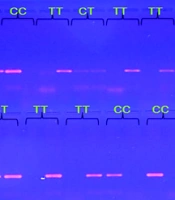
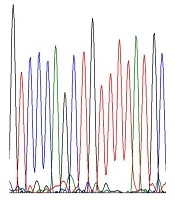
Genomic DNA was extracted from blood samples of all participants using the standard salting out method. Tetra-primer ARMS-PCR method was used for analyses of rs12826786, rs1899663 and rs4759314 genotypes. In brief, 100 ng of genomic DNA was amplified in a total volume of 25 mL reaction mixture by Taq DNA polymerase master mix red (Ampliqon, Denmark). The PCR condition consisted of a preliminary denaturation at 94°C for 4 minutes, subsequent 35 cycles of 94°C for 45 seconds, specific annealing temperatures for 45 seconds, and 72°C for 55 seconds, with the final extension of 72°C for 5 minutes. Specific annealing temperatures were as follows: 60°C for rs12826786, 57°C for rs1899663, and 54.5°C for rs4759314 respectively. The primers used in the genotyping analysis are listed in Table 1.
Table 1.
Sequence of Primers
| Primer Position | Primer Sequence | PCR Product Size (bp) |
|---|---|---|
| rs12826786 | for C allele: 203, for T allele: 145, by outer primers: 293 | |
| Forward inner primer (C allele) | CGCAGGACGGGCTTCGTGAATTAAAC | |
| Reverse inner primer (T allele) | CGGCAGAGGGAAGGAGCTTAGGATAATGA | |
| Forward outer primer (5’ - 3’) | ATCTGTCCAGTCGCTCGTACCTGAG | |
| Reverse outer primer (5’ - 3’) | TGTGTTTGGTCTTGTCGAGGTCCAGTTT | |
| rs1899663 | for T allele: 226, for G allele: 284, by outer primers: 457 | |
| Forward inner primer (T allele) | CCATTATTCCAGTTGAGGAGGGTGAAT | |
| Reverse inner primer (G allele) | CCAAAAGCCTCTAATTGTTGTCGCC | |
| Forward outer primer (5’ - 3’) | TGAAAGCCACGATCATTTAACATAACCA | |
| Reverse outer primer (5’ - 3’) | TATCTACGGAGGACTTACCTTATTCCTG | |
| rs4759314 | for A allele: 181, for G allele: 121, by outer primers: 24 | |
| Forward inner primer (A allele) | GCATGGAAGAGATATAAACAGGCGAA | |
| Reverse inner primer (G allele) | TTATCACGTTTTATTAACTTGCATCCTCC | |
| Forward outer primer (5’ - 3’) | AAACCATATCCTGACAGAAGCCAAATAC | |
| Reverse outer primer (5’ - 3’) | CCAAGGTAGGGAAGTCTCTATTTCTCTG |
3.3. Statistical Analysis
The genotype frequencies were determined by direct counts, while the allele frequencies were calculated by dividing the overall allele counts with the total sum of chromosomes. Goodness of fit to Hardy-Weinberg equilibrium was assessed. For this purpose, the expected frequencies of each genotype were compared with the observed values by means of Chi-square test. SPSS 16.0 (SPSS Inc., Chicago, IL, USA) was used for the statistical analysis. Comparison of genotype and allele frequency between the breast cancer patients and the control group was performed using Pearson chi-square test considering odds ratio (OR) and 95% confidence intervals (CI) for calculation of the relative risk. Haplotype frequencies for HOTAIR were calculated using SNPStats online programme (http://bioinfo.iconcologia.net/SNPstats). Differences were considered significant when P < 0.05.
4. Results
The frequencies of HOTAIR alleles in both patients and control groups have been shown to be in agreement with the assumption of Hardy-Weinberg equilibrium (P > 0.05), which shows that they were randomly distributed. No significant difference has been demonstrated in age between cases and controls (mean age of patients: 38.9 ± 2.1 and mean age of healthy controls: 39.1 ± 1.8). The allele and genotype frequencies of the polymorphisms in both groups, and the statistical analysis data are demonstrated in Table 2. No significant difference has been found in allele and genotype frequencies of polymorphisms between case and control groups. Distribution of HOTAIR haplotype frequencies in breast cancer patients and controls are shown in Table 3. No specific HOTAIR haplotype was shown to be associated with breast cancer risk in the analyzed population.
Table 2.
Allele and Genotype Frequencies of the HOTAIR Gene Polymorphisms in the Case and Control Groups
| Allele/Genotype | Patients | Controls | P Value | OR (95%CI) |
|---|---|---|---|---|
| rs4759314 | ||||
| Alleles | N = 244 | N = 400 | ||
| A | 216 (0.89) | 345 (0.86) | 0.403 | 1.23 (0.757 - 1.999) |
| G | 28 (0.11) | 55 (0.14) | ||
| Genotypes | N = 122 | N = 200 | ||
| AA | 96 (0.79) | 148 (0.74) | 0.341 | 1.297 (0.759 - 2.218) |
| AG | 24 (0.2) | 49 (0.24) | 0.316 | 0.755 (0.435 - 1.309) |
| GG | 2 (0.01) | 3 (0.01) | 0.922 | 1.094 (0.18 - 6.644) |
| rs12826786 | ||||
| Alleles | N = 244 | N = 400 | ||
| C | 133 (0.55) | 212 (0.53) | 0.71 | 1.063 (0.772 - 1.462) |
| T | 111 (0.45) | 188 (0.47) | ||
| Genotypes | N = 122 | N = 200 | ||
| CC | 37 (0.3) | 61 (0.3) | 0.974 | 0.992 (0.608 - 1.618) |
| CT | 59 (0.48) | 90 (0.45) | 0.557 | 1.145 (0.729 - 1.797) |
| TT | 26 (0.21) | 49 (0.24) | 0.511 | 0.835 (0.486 - 1.432) |
| rs1899663 | ||||
| Alleles | N = 244 | N = 400 | ||
| G | 136 (0.56) | 237 (0.59) | 0.381 | 0.866 (0.628 - 1.195) |
| T | 108 (0.44) | 163 (0.41) | ||
| Genotypes | N = 122 | N = 200 | ||
| GG | 36 (0.3) | 75 (0.38) | 0.143 | 0.698 (0.43 - 1.131) |
| GT | 64 (0.52) | 87 (0.44) | 0.118 | 1.433 (0.912 - 2.252) |
| TT | 22 (0.18) | 38 (0.19) | 0.829 | 0.938 (0.524 - 1.677) |
Table 3.
Haplotype Frequencies of the HOTAIR Polymorphisms in the Case and Control Groupsa
| Haplotypes | Patients | Controls | P Value | OR (95%CI) |
|---|---|---|---|---|
| A C G | 96 (0.39) | 140 (0.35) | 0.99 | 0.99 (0.55 - 1.5) |
| A T T | 70 (0.28) | 104 (0.26) | 0.98 | 0.99 (0.65 - 1.53) |
| A T G | 25 (0.10) | 56 (0.14) | 0.33 | 1.34 (0.75 - 2.41) |
| A C T | 25 (0.10) | 44 (0.11) | 0.83 | 1.07 (0.60 - 1.88) |
| G C G | 14 (0.06) | 28 (0.07) | 0.47 | 1.38 (0.58 - 3.28) |
| G T T | 12 (0.05) | 16 (0.04) | 0.81 | 0.89 (0.32 - 2.44) |
| G T G | 2 (0.01) | 12 (0.03) | 0.29 | 2.11 (0.53 - 8.43) |
aLoci chosen for hap-analysis: Site1 (rs4759314), Site2 (rs12826786), Site3 (rs1899663)
5. Discussion
HOTAIR has been shown to exert an active role in altering the cancer epigenome and has been proposed as an important target for cancer detection and treatment (7). In addition, HOTAIR has been demonstrated to regulate expression of many oncogenes (HER2, MMP3/9), tumor suppressor genes (PTEN and P21), and key signaling pathways (PI3K/AKT/S6/mTOR, STAT3, and wnt/b-catenin) all of which implicated in cancer development and progression (11). Further supports for the role of HOTAIR in cancer development has originated from a study which has shown that HOTAIR could indirectly downregulate Mir-7 expression and consequently promotes epithelial-mesenchymal transition (EMT) and contributes to tumor invasion and metastasis in breast cancer cell lines (15). Accordingly, evaluation of association of functional polymorphisms within this gene with cancer risk is of practical significance. In the present study, we evaluated the association of three HOTAIR SNPs with breast cancer risk in an Iranian population. However, we could not find any significant difference between patients and the control group in allele and genotype frequencies of these three SNPs. Previous studies have evaluated the association between these functional polymorphisms in HOTAIR and risk of breast cancer in different populations such as Chinese (14) and Turkish (4, 13). For instance, rs12826786 polymorphism has been shown to be associated with an increased risk of breast cancer in a Turkish population. Besides, the same polymorphism has been shown to be significantly associated with advanced TNM stage, larger tumor size, and distant metastasis, as well as poor histological grade (13). Such interethnic differences in association of certain SNPs with a specific disorder can be attributed to several factors including linkage disequilibrium between the analyzed SNP and another variant or the existence of different haplotypes in diverse populations. Another study which has been conducted in a Chinese population has revealed that rs1899663 genotypes have been associated with breast cancer risk only in subgroups of breast cancer patients whose age at menarche was above 14 and patients whose number of pregnancies were more than two. In addition, rs4759314 genotypes have been linked with breast cancer risk only in a subgroup of patients whose age at menopause was below 50 (14). As a result of the limited number of patients in the present study, it was not possible to analyze associations in certain patient subgroups. However, although we could not find any significant relationship between these polymorphisms and breast cancer risk in our patient population, patient follow up may reveal an association with these polymorphisms and patients’ survival or resistance to chemotherapeutic agents as revealed for cervical cancer patients (11). Furthermore, evaluation of the effects of these polymorphisms on expression of HOTAIR in tumor samples would help in better recognition of their role in cancer progression which should be undertaken in future studies.
Similar to other functional polymorphisms within other genes, the effect of these polymorphisms on expression of HOTAIR would be modified by other factors within this gene or even other genes and should be interpreted in a population specific basis. Other studies are needed to be conducted in larger patient samples with regards to certain clinical and pathological subgroups. In addition, evaluation of association of other functional polymorphisms within this gene with breast cancer risk may result in determination of practical marker for cancer prediction.