
1. Background
Around 80% of all non-melanoma skin cancer cases suffer from basal cell carcinoma (BCC) (1). In the United States, 3.5 million cases of non-melanoma skin cancer are reported every year, 80% of whom are BCC (2-4). In 2004, the incidence of BCC in Iran was 7.5 cases per 100,000 persons (5). BCC tends to appear on the parts of the skin that have direct contact with sun such as face, scalp, neck, and arms, which are highly visible and can cause severe deformities in advanced cases of BCC (6). There are several treatment methods for primary BCC. One of these methods is Mohs micrographic surgery (Mohs surgery), which has become popular in recent years.
2. Objectives
The aim of this study was to investigate the costs, 4-year recurrence, and factors affecting it in BCC patients undergoing Mohs surgery.
3. Methods
This is a retrospective cohort study. The study population included all BCC patients undergoing Mohs surgery in Alzarha Hospital in Isfahan between 2007 and 2014, all of whom were followed-up for 4 years after the surgery for the relapse of the disease. The collection of data from 2007 to 2010, that is, patients who were admitted to study in 2007, those who were followed-up to 2011, and those who entered the study in 2010, were tracked by 2014.
All patients were followed-up for 4 years after diagnosis and their information was recorded in the event of recurrence; the next recurrences in each case from the time of initial diagnosis is considered. It should be noted that the relevant information was considered for each patient.
Considering that Mohs surgery in Isfahan Province is performed only in the one clinic, if the disease recurs, the person will return to the same clinic. Otherwise, we can assume that they were cured because the morality of disease is nearly zero. The follow-up time was considered by reviewing the patient hospital records, as well as telephone contacts with the patients, who had not visited the clinic for re-examination.
Hospital records, direct phone calls to patients if applicable, data regarding recurrence of BCC, and its related direct costs were collected. All BCC patients visiting the hospital in this period were recruited. It should be noted that the relevant information was considered for each patient and the unit of the measurement of relapse has been based on the day.
Patients with cancer on previous scar tissue or recurred cases of disease as well as patients for whom it was not possible to investigate the possible recurrence due to death or any other reason, were excluded from the study. Considering that the study was a retrospective cohort type, initial data were extracted from the patient hospital records. The records were incomplete and, unfortunately, the information of variables such as stage and grade of disease was not available. But, as the majority of the patients were in the stage of Mohs surgery 1 and 2, we could assume that these two variables were not varied between the patients. The cases that could not be followed were excluded (8.6%). In total, 211 lesions from 198 patients were included in the study.
After the pathological confirmation of BCC, all patients underwent Mohs surgery by dermatologist surgeon. Using color coding of the edges of the lesion, the tumor is removed layer by layer. In the first stage of Mohs surgery, a bowl-shaped sample was processed, using frozen section method and, then, were pathologically tested. In the second stage, the process would be carried out if any signs of cancer were found. This method continued until the entire area was free of cancer cells. In other words, this method tested 100% of the edges of the surgery area and facilitated more accurate mapping of the tumor (7) and reduced the amount of healthy tissue removed during the process (8). After the complete removal of the tumor, the scar was treated, using secondary treatments such as stitches, local skin flap, or a skin graft.
The demographic information (gender, age, residency, and workplace) of the patients, location and size of the lesion, number of Mohs stages, and tumor recurrence were extracted from patients’ files. In cases, where the file was incomplete, the necessary information was obtained through phone calls. It is worth mentioning that cases, in whom tumor appears 3 months or more after the surgery, were considered recurrences otherwise were not.
In this study, direct payments were calculated and indirect costs were not measured. Costs are extracted from the patient accounting records. The cost information is about the costs of before, during, and after surgery, including visit a doctor before and after surgery, pathology, operating room, gloves, blade bistoury, sample glass, dressing, mupirocin ointment, insulin syringe, carpool, dental needle, normal saline, nylon thread, vikril yarn, dermatome blade, shaver blade, bandage, cephalexin, vaseline gas, and helin cream.
All cost unites from the diagnosis time to the end of the 4-year follow-up period were extracted from the patients’ files and hospital records. Then, using the service tariffs of the Ministry of Health in 2015, all costs were converted to US dollar with the exchange rate of 1$ = 29980 Rials.
Statistical analysis was carried out by SPSS18 (SPSS Inc. Chicago, Illinois, United States), using the significance level of 0.05. Cox regression test was used to determine the factors affecting time to recurrence.
4. Results
The mean ± SD age of the patients was 63 ± 12.9, with 61% and 39% male and female, respectively; 84.4% of the patients lived in urban areas with the ratio of BCC in urban to rural areas (6.8). The workplace of patients was in closed spaces (58%), open spaces (28%), and unemployed (14%), showing that people working in closed spaces are about twice more likely to be affected by BCC.
The size of the lesion in 91.5% of the patients was less than 2 cm. The location of the lesion in 69.2% of the cases was face, eyelids, ear, nose, or lips. During the follow-up period, 20 cases out of 211 cases showed recurrence (9.5%), among whom 13 (65%) were male and 7 (35%) were female. The size of the lesion in 92.3% of the recurrence cases was less than 2 cm. In 18 cases, the recurrence happened only once (90%) and only in 2 cases, the recurrence happened twice (10%); 85% of the cases of recurrence were in the first 2 years and the rest were from third year onward. The number of stages of Mohs surgery was 1 (47.5%), 2 (42%), 3 (6.5%), and 4 or more stages (4%).
According to the results, the most and least frequent locations of the lesion were nose (30.3%) and body (0.5%). The most common locations of recurrence were scalp (50%), nose (15%), and around the eye (15%). The most and least frequent lesion sizes were less than 1 cm (71.6%) and more than 4 cm (3.3%), respectively.
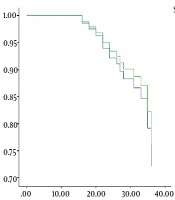
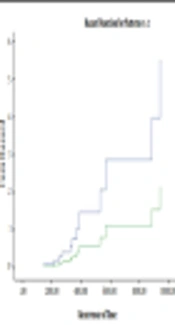
The hazard ratio of recurrence in women is 3.6 times higher than man, which is not statistically significant (HR = 0.273, P = 0.152). In patients working in closed spaces, it was 6.55 times higher than patients working in open spaces, but there was no statistically significance (HR = 6.55, P = 0.194). People with an initial lesion size of larger than 2 cm have 1.77 times higher hazard of recurrence compared to people with initial lesions less than 2 cm (HR = 0.564, P = 0.681). Patients in whom the initial lesion is in body, arms, feet, head, neck, hands, legs or genital organs, have a 2.57 times higher hazard of recurrence compared to patients in whom the initial lesion is in face, eyelids, nose, and lips, which is not statistically significant based on Cox regression analysis (HR = 2.57, P = 0.270). More details are shown in Table 1 and Figure 1.
Table 1.
Cox Regression Analysis of Factors Affecting Time to Recurrence for BCC Patients with Mohs Surgery in Isfahan, Iran (2007 - 2014)a
| Variable | Recurrence | Non-Recurrence | Exp(B) | P Value |
|---|---|---|---|---|
| Age | 7.14 ± 8.60 | 7.12 ± 2.63 | 1.005 | 0.903 |
| Gender | 0.273 | 0.152 | ||
| Male | 13 (10.1) | 116 (89.9) | ||
| Female | 7 (8.5) | 75 (91.5) | ||
| Residence | 4.429 | 0.387 | ||
| Urban | 18 (10.1) | 160 (89.9) | ||
| Rural | 2 (7.7) | 24 (92.3) | ||
| Missing | 0 | 7 | ||
| Workplace | 6.55 | 0.194 | ||
| Outdoor worker | 4 (7.4) | 50 (92.6) | ||
| Indoor worker | 15 (10.8) | 124 (89.2) | ||
| Missing | 1 | 17 | ||
| Tumour sizes, cm | 0.564 | 0.681 | ||
| < 2 | 12 (6.9) | 160 (93.1) | ||
| ≥ 2 | 1 (6.3) | 15 (93.7) | ||
| Missing | 7 | 16 | ||
| Tumour location | 2.570 | 0.270 | ||
| Body, arms, scalp, neck, hands, legs, genital organs | 10 (15.6) | 54 (84.4) | ||
| Face, ears, eyelids, nose, lips | 10 (6.9) | 134 (93.1) | ||
| Missing | 0 | 3 |
aValues are expressed as No. (%).
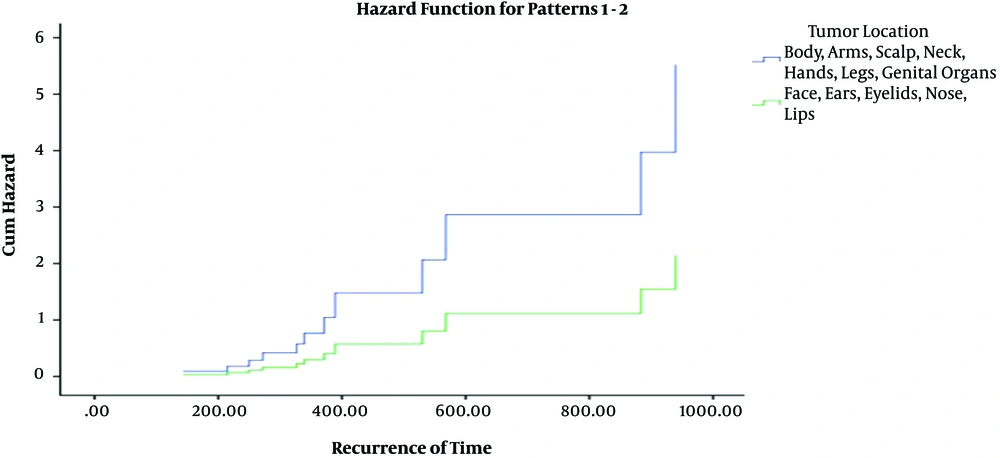
Figure 1.
Graph of hazard function of factors affecting time to recurrence for BCC patients with Mohs surgery in Isfahan, Iran (2007 - 2014)
The information regarding the cost of treatment based on demographic factors and lesion types is shown in Table 2. The costs from the highest to the lowest include surgery and related medicines, visiting the doctor and after surgery medicines, recovery, and pathology costs, respectively. Among the factors mentioned in Table 2, the only significant relationship is between lesion size and treatment costs; this means that the cost of treatment for lesions smaller than 2 cm was higher than for lesion equal to or bigger than 2 cm.
Table 2.
Factors Affecting Cost for BCC Patients with Mohs Surgery in Isfahan, Iran (2007 - 2014)
| Variables | Frequency | Surgery and Drug Surgery | Reparation | Pathology | Visit and Drug After Surgery | Total | |||||
|---|---|---|---|---|---|---|---|---|---|---|---|
| Mean ± SD | Total Cost $ | Mean ± SD | Total Cost $ | Mean ± SD | Total Cost $ | Mean ± SD | $ Total Cost | Mean ± SD | Total Cost $ | ||
| Age, y | |||||||||||
| < 50 | 21 | 206 ± 103 | 4325 | 71 ± 65 | 1495 | 32 ± 16 | 675 | 150 ± 66 | 3155 | 459 ± 207 | 9651 |
| 50 ≤ | 190 | 173 ± 80 | 32948 | 67 ± 51 | 12673 | 30 ± 15 | 5812 | 133 ± 51 | 25346 | 404 ± 165 | 67780 |
| P value | 0.289 | 0.862 | 0.504 | 0.199 | 0.214 | ||||||
| Gender | |||||||||||
| Male | 129 | 175 ± 87 | 22594 | 68 ± 56 | 8783 | 30 ± 18 | 3933 | 134 ± 60 | 17325 | 408 ± 192 | 52636 |
| Female | 82 | 179 ± 75 | 14679 | 65 ± 48 | 5385 | 31 ± 10 | 2554 | 136 ± 39 | 11177 | 412 ± 130 | 33794 |
| P value | 0.874 | 0.396 | 0.5 | 0.116 | 0.338 | ||||||
| Residence | |||||||||||
| Urban | 178 | 175 ± 83 | 31164 | 66 ± 52 | 11780 | 30 ± 16 | 5401 | 134 ± 53 | 23897 | 406 ± 172 | 72242 |
| Rural | 26 | 182 ± 78 | 4745 | 70 ± 53 | 1824 | 33 ± 12 | 851 | 134 ± 44 | 3485 | 419 ± 146 | 10906 |
| Missing | 7 | ||||||||||
| P value | 0.706 | 0.775 | 0.308 | 0.983 | 0.559 | ||||||
| Work place | |||||||||||
| Indoor | 139 | 176 ± 82 | 24528 | 68 ± 52 | 9515 | 31 ± 16 | 4285 | 136 ± 56 | 18927 | 412 ± 174 | 57256 |
| Outdoor | 54 | 178 ± 88 | 9636 | 64 ± 54 | 3445 | 30 ± 13 | 1614 | 129 ± 42 | 6973 | 401 ± 158 | 21669 |
| Missing | 18 | ||||||||||
| P value | 0.902 | 0.918 | 0.877 | 0.606 | 0.665 | ||||||
| Tumour location | |||||||||||
| Trunk, arms, shanks, scalp, neck, hands, legs, genital organs | 64 | 190 ± 96 | 12198 | 66 ± 58 | 4257 | 29 ± 13 | 1849 | 137 ± 64 | 8804 | 423 ± 198 | 27108 |
| Face, ears, eyelids, nose, lips | 144 | 170 ± 76 | 24562 | 68 ± 50 | 9817 | 31 ± 16 | 4549 | 134 ± 48 | 19307 | 404 ± 158 | 58237 |
| Missing | 3 | ||||||||||
| P value | 0.809 | 0.456 | 0.293 | 0.387 | 0.409 | ||||||
| Tumour sizes, cm | |||||||||||
| < 2 | 172 | 182 ± 80 | 31672 | 69 ± 53 | 12043 | 31 ± 15 | 5489 | 138 ± 49 | 24030 | 421 ± 161 | 73235 |
| ≥ 2 | 16 | 122 ± 63 | 1957 | 58 ± 46 | 930 | 25 ± 18 | 411 | 106 ± 54 | 1700 | 312 ± 159 | 4999 |
| Missing | 23 | ||||||||||
| P value | 0.007 | 0.411 | 0.127 | 0.017 | 0.025 | ||||||
| Mohs phase | |||||||||||
| 1 | 95 | 172 ± 82 | 16390 | 66 ± 54 | 6313 | 30 ± 18 | 2847 | 133 ± 55 | 12649 | 402 ± 177 | 38200 |
| 2 | 84 | 177 ± 84 | 14901 | 67 ± 52 | 5627 | 32 ± 13 | 2700 | 137 ± 51 | 11549 | 414 ± 165 | 34778 |
| ≥ 3 | 21 | 194 ± 94 | 4080 | 76 ± 48 | 1590 | 28 ± 6 | 587 | 134 ± 63 | 2827 | 432 ± 191 | 9084 |
| Missing | 11 | ||||||||||
| P value | 0.533 | 0.741 | 0.207 | 0.432 | 0.584 | ||||||
| Total | 211 | 176 ± 82 | 37273 | 67 ± 53 | 14168 | 31 ± 15 | 6487 | 135 ± 53 | 28502 | 409 ± 170 | 86430 |
5. Discussion
In the current study, the recurrence rate for BCC after Mohs surgery in 4 years was 9.5%, which is significantly higher than the recurrence rate in all previous studies. This might be due to the fact that in this study, BCC in all parts of the body was investigated, while most other studies investigated the recurrence rate for face BCC. Because of different follow-up periods in different studies, an exact comparison is not possible.
Different studies have used different methods in order to determine the recurrence rate in BCC after Mohs surgery. Essers et al. conducted a randomized clinical trial in 408 cases of BCC, a treated in a skin clinic of Netherland’s University Hospital with a 30-month statistical follow-up. Their results showed that the recurrence rate in face BCC after Mohs surgery is 1.47% (9). Mosterd et al. in another randomized clinical trial on 408 cases of face primary BCC in 7 hospitals in the Netherlands and after a 5-year follow-up period concluded that the recurrence rate in this surgery is 2.5% (10). In another randomized clinical trial on 408 cases of BCC in 7 hospitals in southern Netherlands by van Loo et al. the 10-year cumulative incidence of face BCC recurrence after Mohs surgery was 4.4% (11). In another study in Sweden, the recurrence rate of BCC in 5 years after Mohs surgery was 6.5% (12). Paoli et al. also conducted a study in order to determine the recurrence rate in face BCC tumors in 5 years after Mohs surgery, which showed a 2.1% recurrence rate (13).
The results of several non-randomized prospective studies show a 1% to 3.4% recurrence rate in BCC after Mohs surgery in 5 years (13-16). Rowe et al. in their study showed that 66% of the recurrences in BCC after Mohs surgery happen in less than 3 years after treatment, while 18% of the recurrences happen between 6 to 10 years after initial surgery (17, 18). The results of the current study show that 85% of the recurrence cases happen in the first 2 years after surgery.
In this study, the majority of BCC patients were male, while in a study conducted by Leibovitch et al. (19), the majority of the cases were female. In Iran, women usually use clothes with more protection against sunlight compared to men. In this study, the most common location of BCC was in the head and face area. Leibovitch et al. reported that 98% of the BCC cases were in the face and head area (19). Scrivener et al. (20) reported that 85% of the BCC tumors were in the face area, while McGovern et al. reported that 70% of BCC occur in the face area (21). In another study investigating the location of face BCC, the most common location of tumors was the nose (13). The study conducted by Leibovitch et al. also showed that the most common location of recurrence in BCC lesion is in the nose and cheek area (14). The results of the current study show that the most common locations of BCC recurrence are the scalp, nose, and around the eye.
Previous results indicate that lesions between 1 cm to 3 cm had a higher recurrence rate than those of > 3 cm (14); but, the result of this study showed that the highest recurrence rate was in lesions smaller than 2 cm. This can be due to the different accuracy of surgeons performing Mohs surgery. Also, Mohs surgery is a more suitable treatment method for larger lesions due to lower recurrence rate. Some studies report that the rate of recurrence in BCC is related to factors such as larger lesion size, location of the lesion in face area, and invasiveness of histological procedures (21-23). In a study carried out by Smeets et al. the results showed that having more than 4 stages of Mohs surgery and lesion size of 4 cm or higher increase the chances of recurrence (15), while Paoli et al. showed no significant relationship between different factors and recurrence (13). Leibovitch et al. showed that previous recurrence, longer tumor lifetime, and the higher number of surgery stages increase the chances of recurrence (14). However, the results of this study showed that the recurrence was related to the location of initial lesion with lesions in body, arms, feet, head, neck, hands, legs, or genital organs having a higher recurrence rate, while in Leibovitch’s study, which is similar to the current study, there was no significant relationship between the size and location of lesion and recurrence.
The results of this study showed that only the lesion size had a significant effect on treatment cost; it means that the treatment cost in tumor size less than 2 cm was more than lesion size ≥ 2 cm. Other studies investigate factors affecting the cost of treatment for Mohs surgery in BCC. The study by Smeets et al. showed that the cost of BCC treatment with a 5-year follow-up period was 405.79 Euros. The details of these costs included the direct costs of personnel involved in treatment based on work hours, the cost of materials used, procedure costs, and the costs of histopathological tests (24).
In a study by Essers et al. the average cost of BCC treatment with a 5-year follow-up was 254 Euros with the costs being divided based on pre-surgery costs, surgery costs (personnel, materials, pathological costs, and hospitalization), complication costs, treatment, after surgery visits, and phone consultations. The highest and lowest costs belonged to surgery (406 Euros) and pre-surgery (147 Euros), respectively (9).
Mosterd et al. calculated that the average cost of 5-year initial BCC Mohs surgery treatment including personnel, procedures, and materials used during surgery, pathology tests, and doctor visits was 1248 Euros (10). In this study, the cost of treatment along with 4-year follow-up period was 409 US dollars including surgery cost and surgery medicine (176 $), after surgery visits and medicines (135 $), restoration (67 $), and pathology tests (31 $).
Although the average surgery costs calculated in this study are lower than the costs reported in other mentioned studies, given that some of these studies consider personnel costs while others, like our study, ignore these costs, and because different studies use different calculating methods and different number of follow-up years, it is difficult to compare the costs between different studies.
Some other studies investigated the cost of Mohs surgery in non-melanoma skin cancer. Cook et al. calculated the total cost of Mohs surgery for skin cancer with a 5-year follow-up to be 1243 $. These costs include initial diagnosis, skin biopsy, diagnostic pathology, the costs of a 5-year follow-up period, and the cost of treatment for recurrent tumors (25). Bialy et al. reported that the cost of treatment for non-melanoma skin cancer with a 3-year follow-up period was 937 $ (26). In a study carried out by Seidler et al., the cost of Mohs surgery and 5-year follow-up for non-melanoma skin cancer were divided into surgery and reparation costs, which were in average 745.4 $ and 79.9 $, respectively (27). Ravitskiy et al. reported the average cost of 804.72 $ for Mohs surgery and 5-year follow-up for non-melanoma skin cancer including the costs of initial diagnosis, skin biopsy, and diagnostic pathology (28).
Due to a retrospective cohort method of the study, the information about patients was extracted from their medical files. Therefore, it is entirely possible that at different times, different surgeons were responsible for the treatment. Given the difference in the proficiency of different surgeons and increase in surgeon proficiency over time, it is possible for the number of recurrence cases to chance over time, which can lead to information bias. Another limitation of this study is the lack of histology report on BCC and its possible effects on recurrence. Also, in order to increase the sample size and improve the power of the study, the follow-up period was 4 years. However, some studies have used a 5-year follow-up period, which can be another limitation of this study.
5.1. Conclusions
In this study, the results showed that the most common location for BCC lesions is in the face area and lesions in this area can lead to scarring and future psychological problems for patients.
The causes of recurrence can include the less use of protective equipment in front of sunlight or low precision of doctors in the lesion surgery in locations of the body, arms, feet, head, neck, hands, legs, or genital organs.