
1. Background
Lymphoid neoplasms are one of the most common malignancies worldwide (1). Gastrointestinal (GI) tract is the most common site for extranodal lymphoma with a rate between 4% and 20% of all NHL cases (2-6). Primary GI lymphoma is rare and accounts for 1% to 4% of all GI malignancies (1-3) especially in elderly male subjects (7). The distribution and the prognosis in various regions are different, and better prognosis is expected in Europe and the United States due to earlier diagnosis and better treatment (1) that is not feasible in Asian and developing countries. In the GI part, stomach is the most commonly involved site and thereafter the ileocecal, small intestine, pharynx, colon, and occasionally the esophagus are affected (3-5). Diagnosis should be made according to the Dawson’s criteria that include (1) absence of peripheral lymphadenopathy at the time of presentation; (2) lack of enlarged mediastinal lymph nodes; (3) normal total and differential white blood cell count; (4) predominance of bowel lesion at the time of laparotomy with only lymph nodes obviously affected in the immediate vicinity; and (5) no lymphomatous involvement of liver and spleen (4, 5, 7). The stomach is the main GI location in 55% to 75% of GI lymphoma cases (5). Also, lymphoma is responsible for 1% to 7% of all gastric malignancies (3). It is generally DLBCL or MALT lymphoma (MALToma) (1, 8-10). In 15% to 35% of patients with GI lymphoma, the small intestine or ileocecal region are primary sites (3). Lymphoma is responsible for 25% of small intestinal neoplasms and the ileum is more affected in comparison with the duodenum. Colon is the principal involved location in 3% to 20% of GI lymphoma especially in the cecum and rectum and also sometimes the lymphoma is multifocal (3). Lymphoma in the esophagus is rare (3). The majority of the cases are seen in elderly and middle-aged subjects with a female predominance and primary pancreatic lymphoma (PPL) is rare and responsible for only less than 0.7% of NHL cases (3)).
2. Objectives
Head and neck are the second common locations for extranodal lymphoma especially in the oral region (3). Also, rhino nasal involvement has been reported (3). This study was done to determine the clinical and pathological characteristics of primary GI lymphoma in Tehran, Hamedan, and Mashhad regions in Iran.
3. Methods
3.1. Participants and Procedures
In this cross-sectional comparative-descriptive study 200 patients with primary GI lymphoma in Tehran (Taleghani Hospital-gastroenterology research center, with the mean referral of 20 cases per month), Hamadan, (Ebnesina Center- cancer research center, with mean referral of 5 cases per month), and Mashhad (Imam-Reza Hospital- cancer research center, with the mean referral of 5 cases per month) regions in Iran from 2011 to 2016 were enrolled in a consecutive manner. The study was approved by the local ethical committee and informed consent form was received from all patients.
3.2. Data Sources/Measurement
Data including symptoms, location, pathological type, age, sex, geographical region, and survival were assessed by revision of the existing slides and also the subtypes were determined by the IHC method. Data were recorded in checklists by observational methods and prepared for analysis.
3.3. Statistical Analysis
Data analysis was carried out by SPSS (Statistical Procedures for Social Sciences; Chicago, Illinois, USA) version 24.0 software. The utilized tests included Fisher, chi-square, and independent-sample-T tests and the P-values less than 0.05 were considered statistically significant.
4. Results
In this study among 200 patients, 141 (70.5%) subjects were male and 59 (29.5%) were female. The mean age was 54.3 ± 19.3 years ranging from 12 to 92 years. As shown in Table 1, 57% were aged younger than 60 years. Also, 84%, 8.5%, and 7.5% of the patients were from Tehran, Hamadan, and Mashhad, respectively. As shown in Table 2, the stomach was the main site of involvement that was observed in nearly half of the patients.
Table 1.
Demographic Data in the Patients
| Variable | No. (%) |
|---|---|
| Age, y | |
| < 60 | 114 (57) |
| ≥ 60 | 86 (43) |
| Sex | |
| Male | 141 (70.5) |
| Female | 59 (29.5) |
| Residence | |
| Tehran | 168 (84) |
| Hamedan | 17 (8.5) |
| Mashhad | 15 (7.5) |
Table 2.
Tumor Location in the Patients
| Location | No. (%) |
|---|---|
| Stomach | 99 (49.5) |
| Small bowel | 45 (22.5) |
| Colon | 26 (13) |
| Tonsil | 22 (11) |
| Mouth | 5 (2.5) |
| Lingual base | 2 (1) |
| Pancreas | 1 (0.5) |
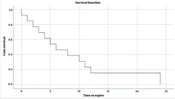
The DLBCL was the main subtype that was observed in 64% of patients (Table 3). The used treatment was combined surgery and chemotherapy in 72% of patients. Also, surgery alone, surgery plus radiotherapy, and surgery plus both chemotherapy and radiotherapy were used in 8, 13, and 7% (rechecked and rates are correct). The 5-year survival was assessed in 147 patients with a rate of 68%.
Table 3.
Tumor Pathological Subtype in the Patients
| Subtype | No. (%) |
|---|---|
| DLBCL | 128 (64) |
| MALToma | 53 (26.5) |
| Burkitt | 8 (4.0) |
| Mantle cell | 6 (3.0) |
| T Cell | 5 (2.5) |
As shown in Table 4, there was a significant association between age and pathological type (P = 0.027). But the sex in patients was not related to pathological type (P > 0.05). As demonstrated in Table 5, the pathological type was related to anatomical site (P = 0.035). Type of the tumor was related to survival (Table 6) and MALToma and Mantle cell lymphoma had the highest 5-year survival (P < 0.001).
Table 4.
Pathological Type According to Age (P-Value = 0.027)a
| Type Age | < 60 | > 60 | Total |
|---|---|---|---|
| DLBCL | 67 (52.3) | 62 (48.4) | 128 (100.0) |
| T Cell | 5 (100.0) | 0 (0.0) | 5 (100.0) |
| MALToma | 32 (60.4) | 21 (39.6) | 53 (100.0) |
| Mantle cell | 3 (50.0) | 3 (50.0) | 6 (100.0) |
| Burkitt | 8 (100.0) | 0 (0.0) | 8 (100.0) |
| Total | 114 (57.0) | 86 (43.0) | 200 (100.0) |
aValues are expressed as No. (%).
Table 5.
Pathological Type According to Anatomical Site(P-Value = 0.035)a
| Location Pathology | Stomach | Colon | Tonsil | Small Bowel | Others | Total |
|---|---|---|---|---|---|---|
| DLBCL | 56 (43.7) | 20 (15.6) | 18 (14.1) | 27 (21.1) | 7 (5.5) | 128 (100.0) |
| T Cell | 2 (40.0) | 1 (20.0) | 1 (20.0) | 1 (20.0) | 0 (0.0) | 5 (100.0) |
| MALToma | 38 (71.7) | 2 (3.8) | 1 (1.9) | 12 (22.6) | 0 (0.0) | 53 (100.0) |
| Mantle cell | 3 (50.0) | 2 (33.3) | 0 (0.0) | 1 (16.7) | 0 (0.0) | 6 (100.0) |
| Burkitt | 0 (0.0) | 1 (12.5) | 2 (25.0) | 4 (50.0) | 1 (12.5) | 8 (100.0) |
| Total | 99 (49.5) | 26 (13.0) | 22 (11.0) | 45 (22.5) | 8 (4.0) | 200 (100.0) |
aValues are expressed as No. (%).
Table 6.
Pathological Type According to Survival (P-Value < 0.001)a
| Location Pathology | < 5 years | > 5 years | Total |
|---|---|---|---|
| DLBCL | 63 (62.3) | 38 (37.7) | 101 (100.0) |
| T Cell | 1 (100) | 0 (0) | 1 (100.0) |
| MALToma | 6 (15.4) | 33 (84.6) | 39 (100.0) |
| Mantle cell | 2 (40) | 3 (60) | 5 (100.0) |
| Burkitt | 1 (100) | 0 (0) | 1 (100.0) |
| Total | 47 (32.0) | 100 (68.0) | 147 (100.0) |
aValues are expressed as No. (%).
5. Discussion
This study was done to assess the clinicopathological characteristics of primary GI lymphoma and it was found that there was a male predominance and the mean age of the patients was 54.3 years. The tumors were usually located in the stomach and were mainly DLBCL histological type. The main used treatment protocol was chemotherapy plus surgery. Age, anatomical location, and survival rate were related to pathological type. Primary GI lymphoma has a better prognosis in European and American countries than the Asian population (11-13). The patients in our study received chemotherapy and surgery as palliative care other than therapeutic approaches. In a study in Iran (2) 110 patients were assessed with the stomach as the main site of lymphoma and it was usually DLBCL as well as ours.
As shown by Dehghan et al. (9), there was male predominance and a peak age in the sixth decade of life. In line with our study, MALToma and DLBCL were the most common types but MALToma was more frequent than DLBCL that is not in coherence with our study that may be due to ethnic variations and smaller sample volume. Similarly, the stomach was the main location. Also in Behdad et al.’s (10) study nearly half of the cases were less than 50 years old. The majority of the cases were male and abdominal pain was the main symptom. All cases were Non-Hodgkin’s lymphoma type and small non-cleaved-cell type was the most common histological diagnosis. The results were totally in accordance with our findings. Contradictory, another Chinese study (7) revealed that the intestinal location was the main site of the tumor that was accompanied by older age and the histologic type was usually high-grade and T-cell types with a 5-year survival of 56.4%. The divergence in location may be due to demographic data, differences in inclusion/exclusion criteria, and confounding factors.
In our study, the worst prognosis and the least survival rate was in DLBCL, which is similar to Behdad et al.’s study in 2000 (10). But, a Chinese study (6) showed that the progression-free and overall survival rates were worse in T-cell lymphoma cases. We had only one case of T-cell lymphoma and it is not reliable for judgment. Also, similar to our findings, in a review article by Cardona in 2012, large cell was the most common type (14). Also, in another review article by Ghimire et al. in 2011, in most parts of GI tract diffuse large B-cell lymphoma was the most common pathological type of gastrointestinal lymphoma (4). Both these review articles depict the same results as ours.
In Iran, the stomach is the most common site and the most common lymphoma is diffuse large B-cell lymphoma which is similar to the Middle East and the Mediterranean and Western countries, however, the relative percentage of DLBCL in the Middle East is somewhat higher than in the West countries. Many causes are to be mentioned, for example, the effect of various environmental factors such as habitual factors in the Middle East population (15).
5.1. Conclusions
The results demonstrated that primary GI lymphoma was seen in male subjects younger than 60 years of age with non-specific symptoms. Also, DLBCL and MALToma were the main histological types, and totally for all cases, the 5-year survival was 68%. The clinical symptoms showed no specific pattern and accordingly in patients with weight loss and abdominal pain assessment for lymphoma should be carried out. Also, educating physicians would be beneficial. Large-sample studies, and also the use of systematic reviews and meta-analysis would be beneficial.