Full Text
Full text is available in PDF
International Journal of Endocrinology and Metabolism
Research Institute for Endocrine Sciences
Authors
Disturbance of the hypothalamopituitary- thyroid axis and alteration of circulating thyroid hormones levels are common in non-thyroidal illness (NTI) including infection, burns, and trauma. The commonest abnormality is the low T3 syndrome due to reduced activity of 5’-deiodinase. In acute illness this is associated with an increase in reverse T3 but in more chronic illness reverse T3 is not usually raised. Serum T3 shows a negative correlation with serum concentrations of soluble receptors for TNF and IL-2. Low T3 syndrome may be an appropriate energy-saving adaptation. In critical illness the low T4 syndrome is common. Both total T4 and T3 levels are low. Serum total T4 inversely correlates with mortality. fT4 measurement in critical illness is problematic because of marked method-dependence of results. Direct measurement yields normal/high values but two-step immunoassays used clinically show low values. Falls in the levels of serum thyroid hormone binding proteins and alteration to the affinity of hormone binding due to exogenous and endogenous inhibitors of binding generated in illness further complicate in vivo and in vitro assessment. T4 clearance by deiodination is impaired but non-deiodinative pathways are accelerated. Cellular uptake of free hormone is impaired but expression of nuclear thyroid hormone receptors is increased in critical illness. Serum TSH is normal in the low T3 syndrome but can be low in the low T4 syndrome. Low TSH can be a hypothalamo-pituitary manifestation of illness due to the effect of cytokines on TRH release and TSH synthesis, but TSH is also suppressed by dopamine or glucocorticoid therapy. After drug cessation or in recovery, TSH can transiently increase above the normal range. TSH in critical illness is less glycosylated and less bio-active. Limited trials of T4 and T3 therapy in critical illness have not shown benefit on mortality. No adequate large-scale trial has been conducted.
© 2009, Author(s). This open-access article is available under the Creative Commons Attribution 4.0 (CC BY 4.0) International License (https://creativecommons.org/licenses/by/4.0/), which allows for unrestricted use, distribution, and reproduction in any medium, provided that the original work is properly cited.
Sayarifard F, Yaghmaie B, Sayarifard A, Mohammadpour M, Sharifzadeh M, et al. Thyroid Function Tests in Critically Ill Children; Any Correlation with Disease Severity or Outcome?. Inn J Pediatr. 2018;28(6):e69397. doi: https://doi.org/10.5812/ijp.69397
Kashani M, Barzekar S, Gozashti MH. Thyroid Dysfunction in COVID-19 Patients: A Study at Imam Reza Hospital, Sirjan. Arch Clin Infect Dis. 2025;20(5):e158902. doi: https://doi.org/10.5812/archcid-158902
Mansouri F, Janbakhsh A, Afsharian M, Vaziri S, Sayyad B, et al. The relationship between thyroid and adrenal hormone levels and the outcome of Sepsis patients. J Kermanshah Univ Med Sci. 2012;16(2):e78824. doi:
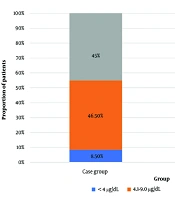
Waddankeri S, Swaraj Waddankeri M. Lazy Adrenals in Severe Hypothyroidism - Myth or Mirage?. Int J Endocrinol Metab. 2025;23(2):e158985. doi: https://doi.org/10.5812/ijem-158985
Sehgal V, Jit Singh Bajwa S, Sehgal R, Bajaj A. Clinical Conundrums in Management of Hypothyroidism in Critically Ill Geriatric Patients. Int J Endocrinol Metab. 2014;12(1):e13759. doi: https://doi.org/10.5812/ijem.13759
Last Update: 3 weeks ago
Last Update: 3 weeks ago
Last Update: 3 weeks ago
Last Update: 3 hours ago
Last Update: 1 day ago
Last Update: 4 days ago
